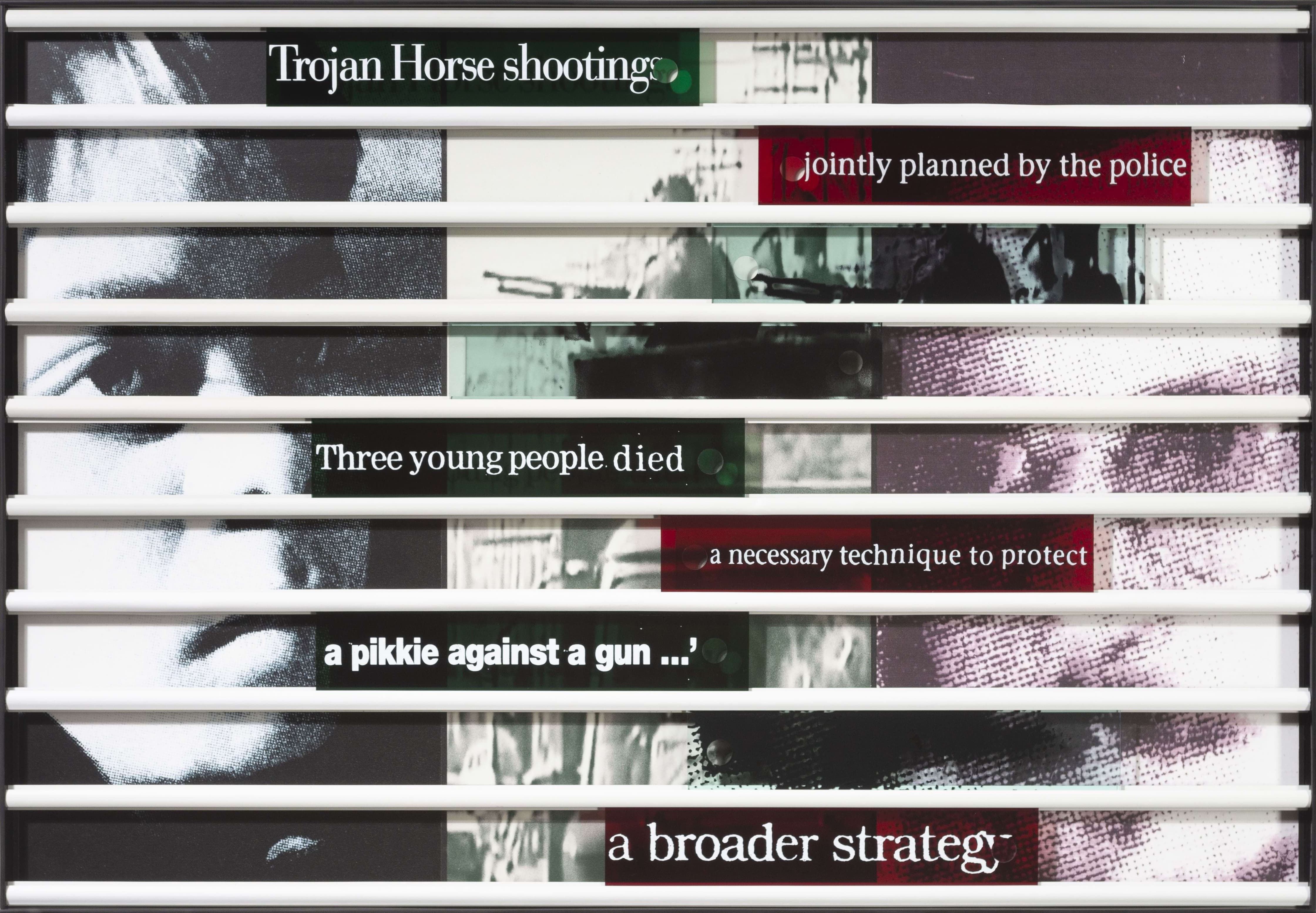
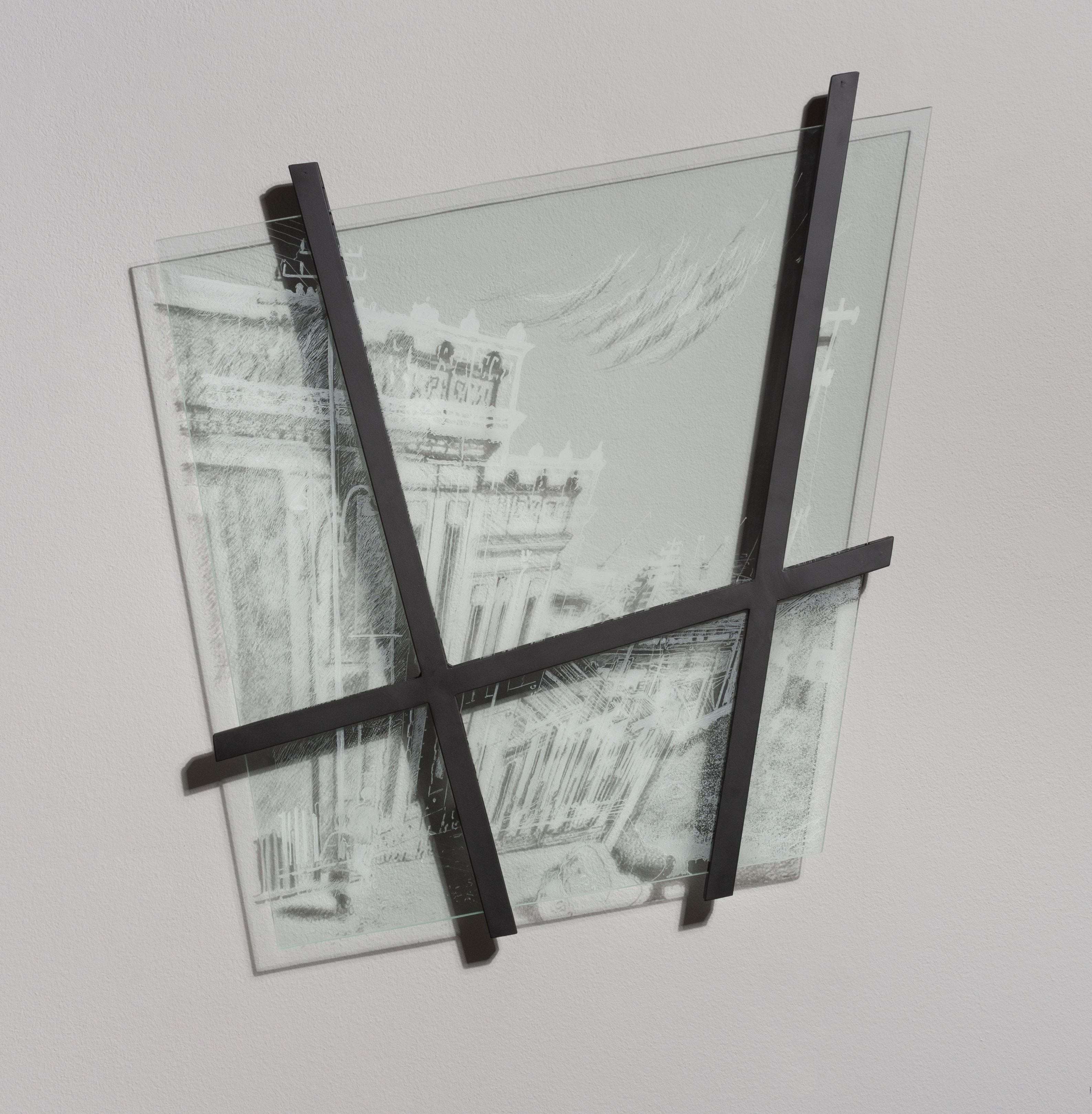
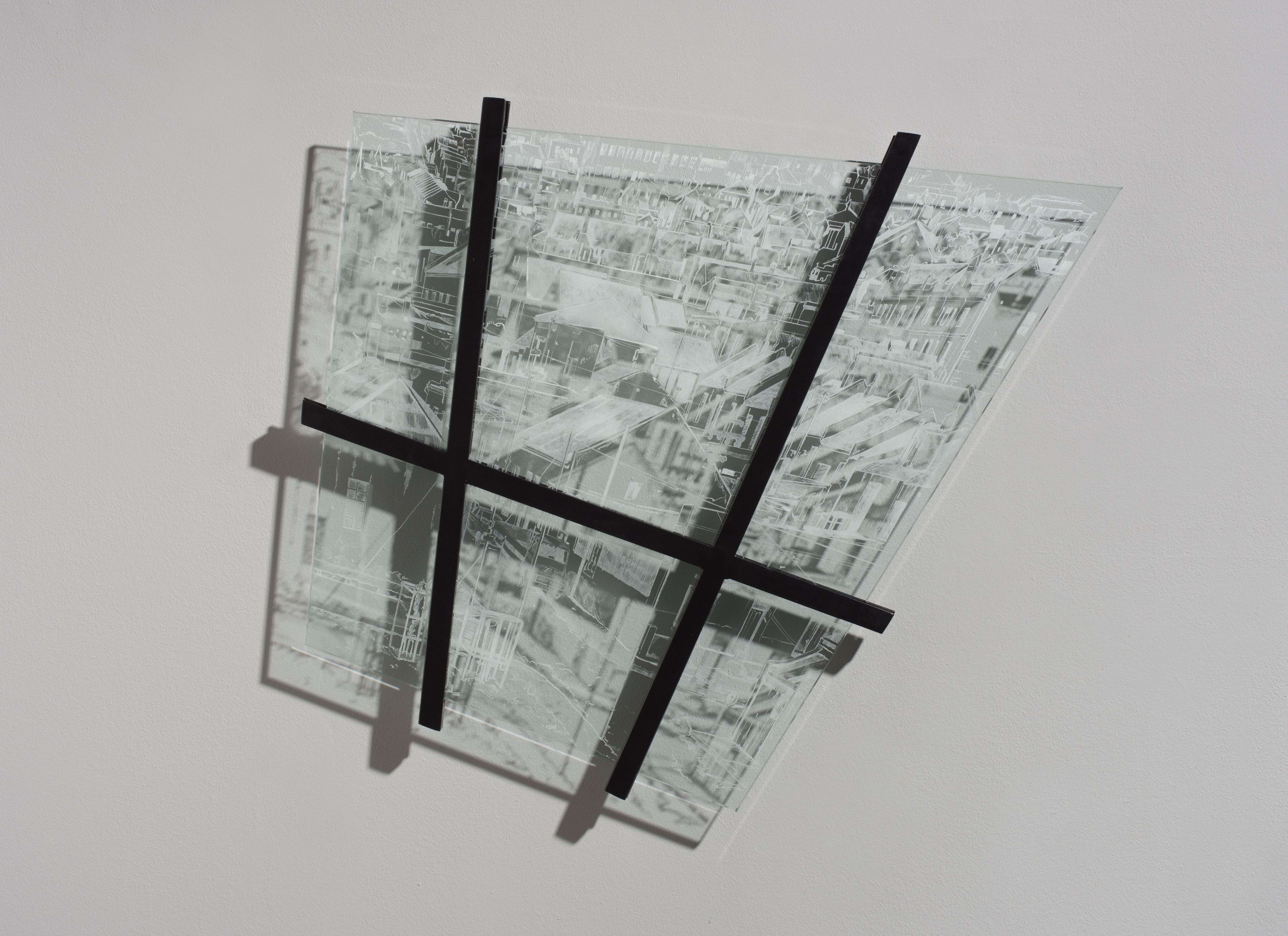
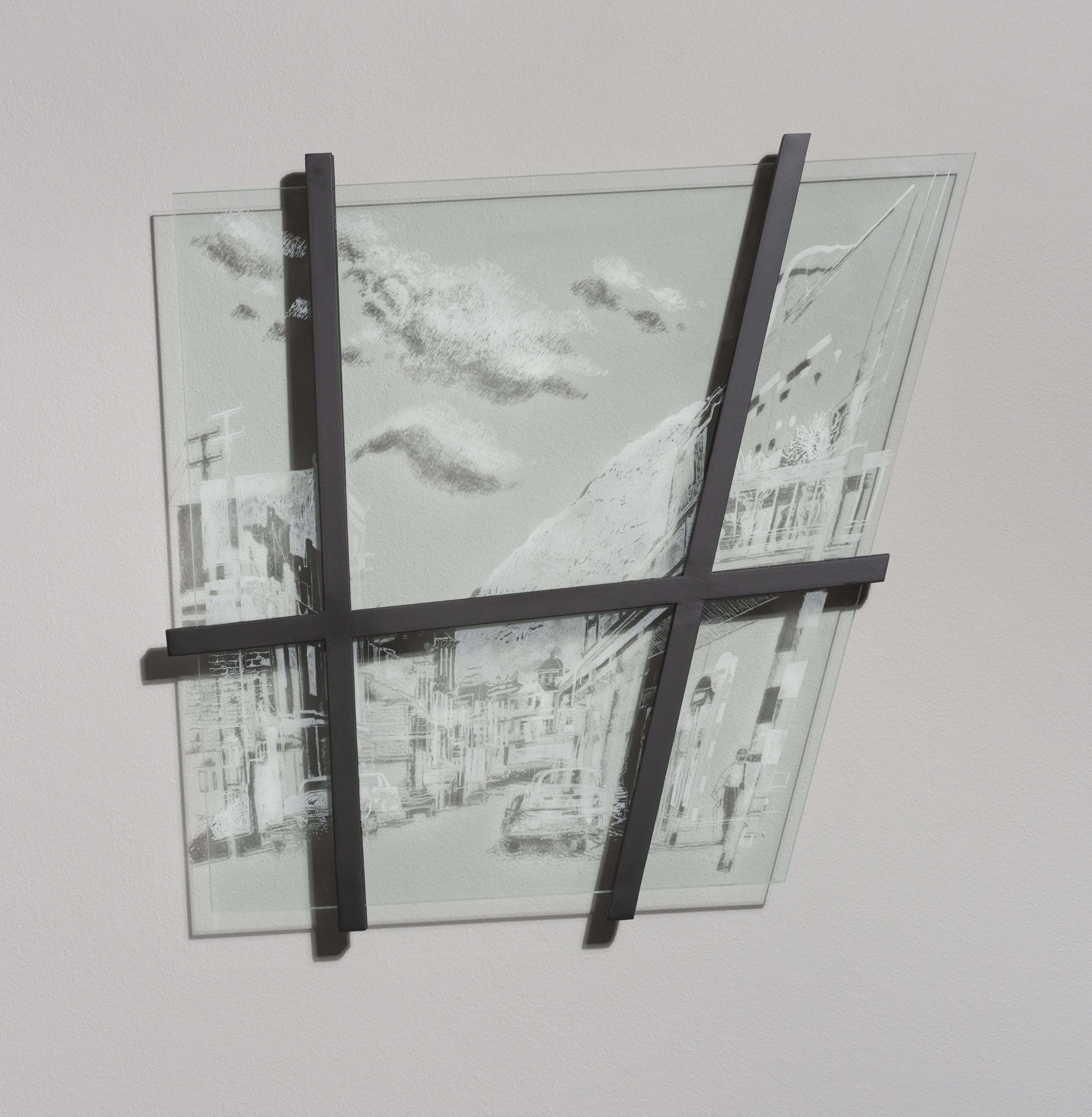
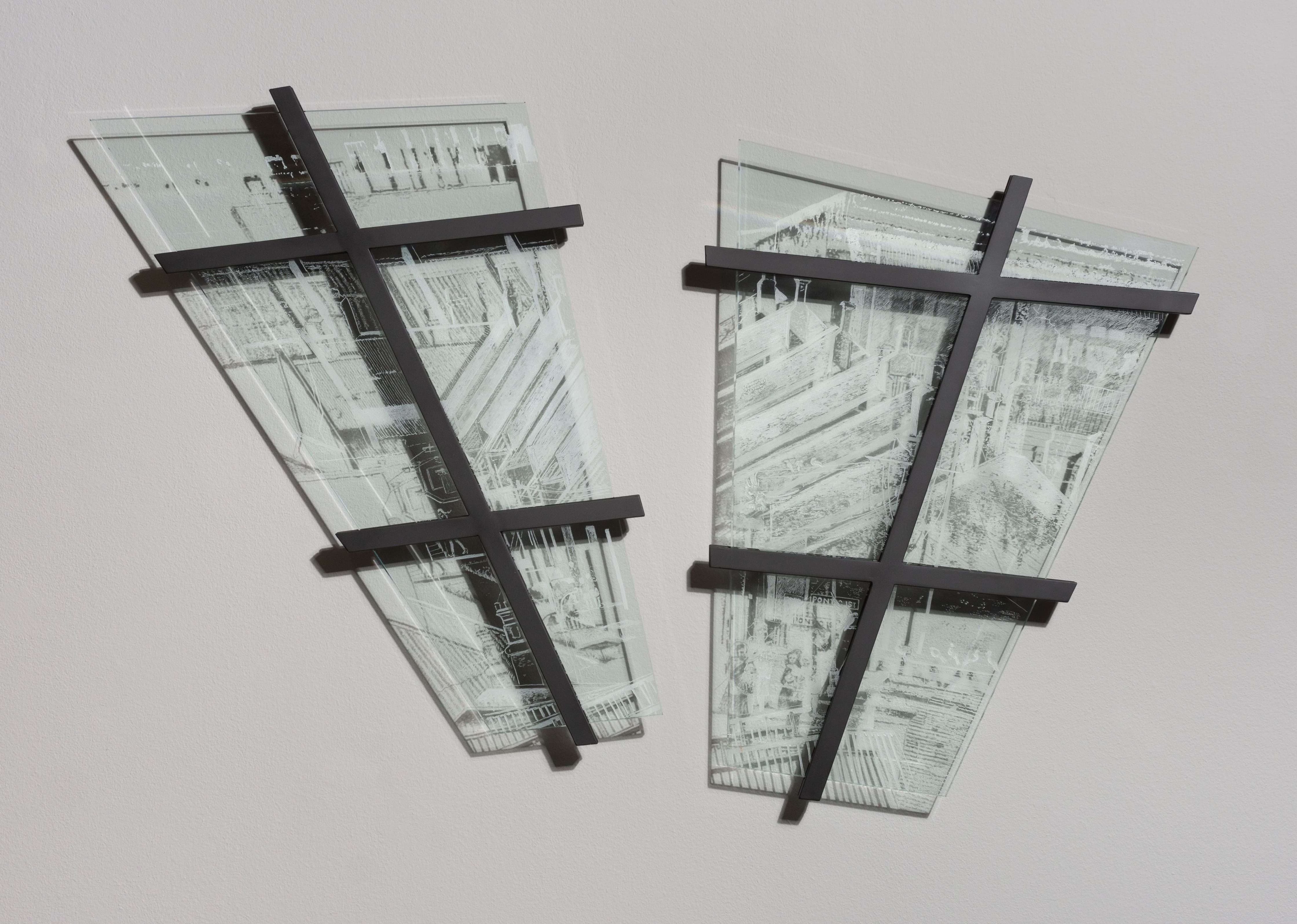
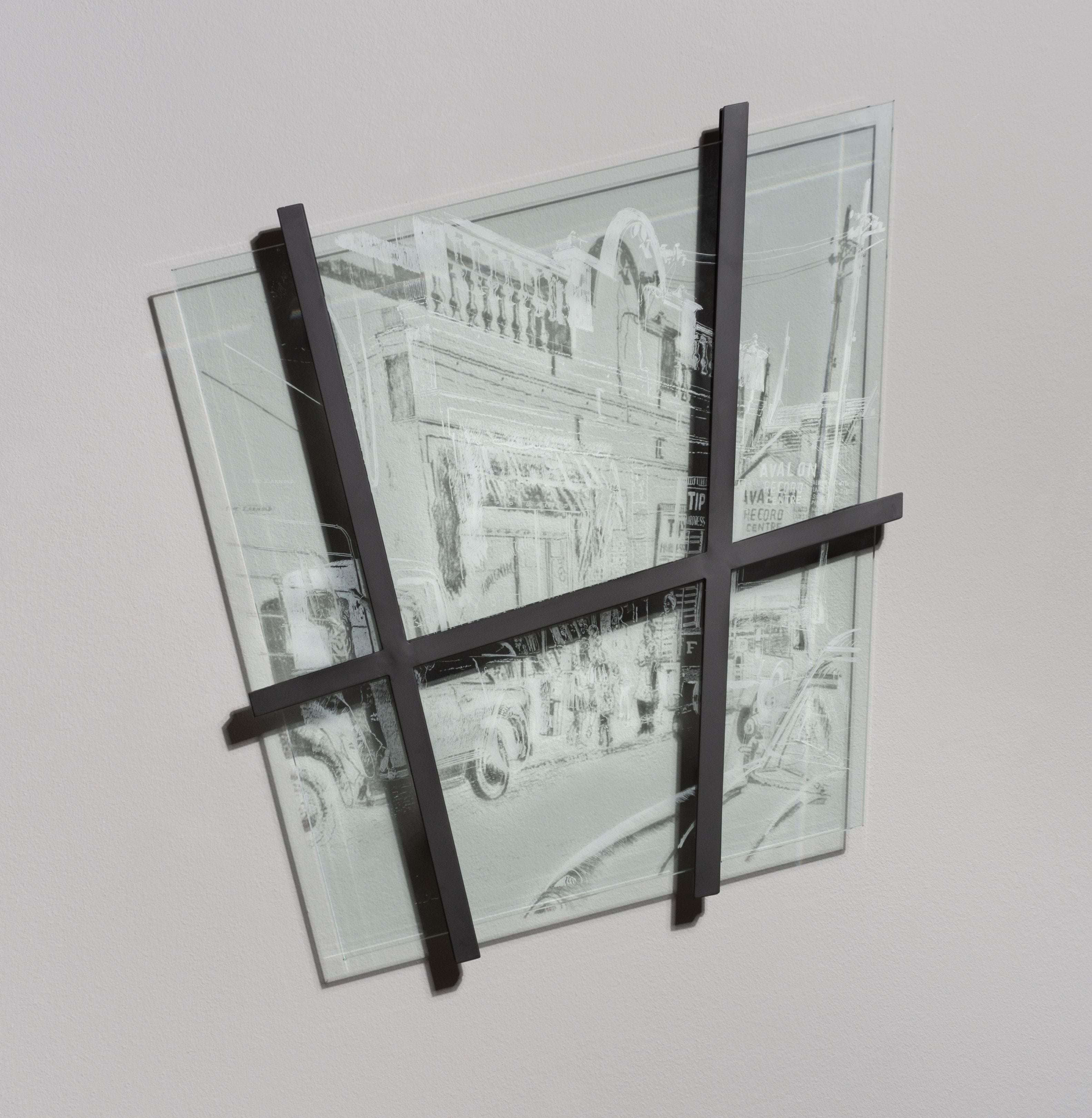

The ‘Truth Games’ series reflects on the role of South Africa’s Truth and Reconciliation Commission (TRC) in the country’s process of healing – or not healing – after apartheid. The Commission was set up in 1995 by President Mandela, who named Archbishop Demond Tutu as its chairman, and invited witnesses who were identified as victims of gross human rights violations to give statements about their experiences. Hearings were held across the country. Perpetrators of violence could also give testimony and request am- nesty from both civil and criminal prosecution, on the condition that they told the whole truth and had acted from political belief, whether on the right or the left.
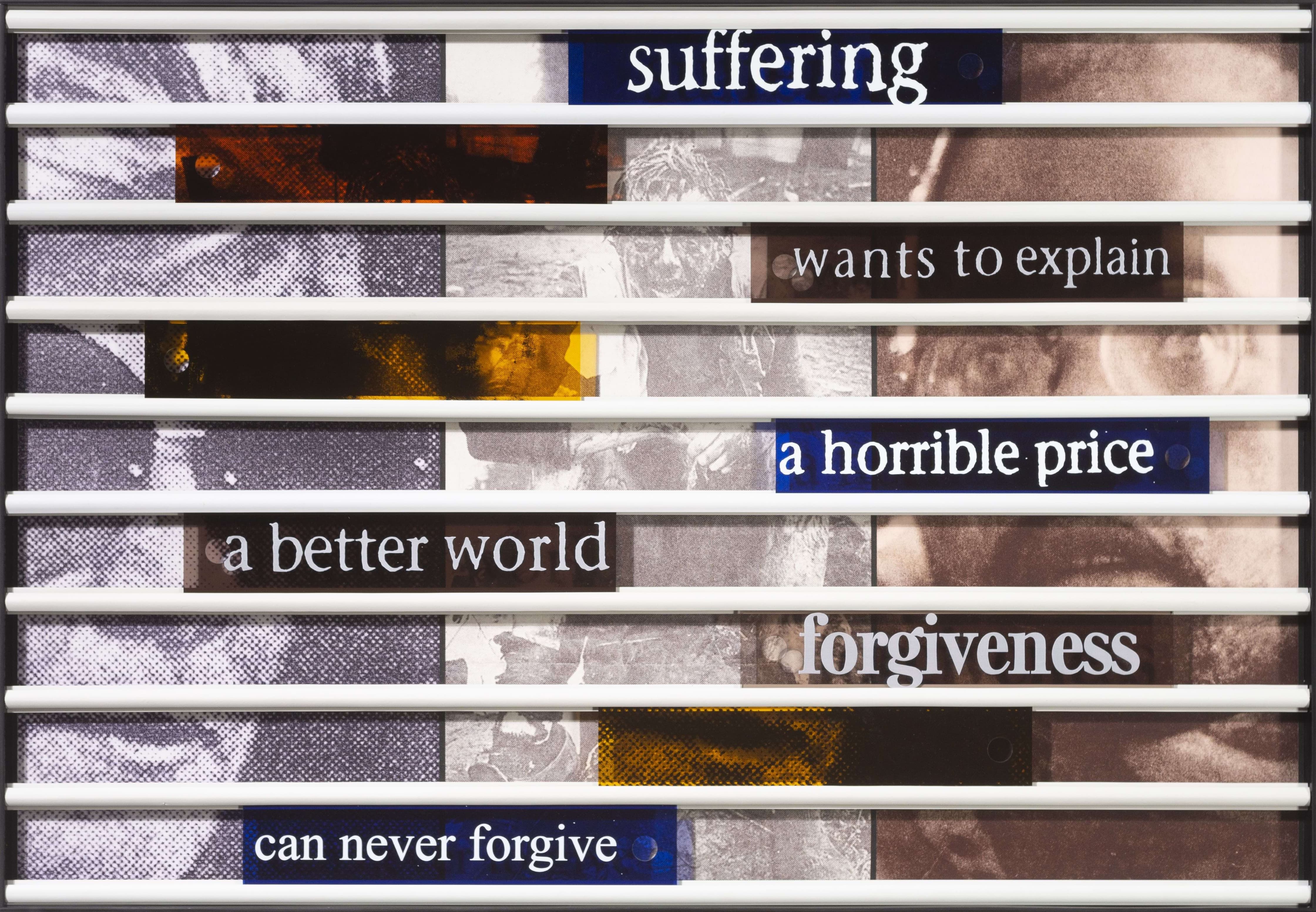
Sue Williamson kept daily newspapers through the entire process of the hearings, cutting out images and texts relating to the hearings. Each piece in the ‘Truth Games’ series presents a triptych of images drawn from this file: on the left, the accuser, in the centre, an image of the event, on the right, the defender. On the sliding perspex slats which run horizontally across the work, are scraps of texts from the evidence of the accusers and the defenders, giving an epigrammatic summary of the proceedings. However, at no point are all three visible at once. Text drawn from TRC transcripts is printed on sliding slats that obscure parts of the images. Viewers are encouraged to move these slats, revealing or concealing portions of the work as they attempt to piece together a fuller picture, echoing the nation’s collective attempt to uncover the truth.
ANC leader Chris Hani was assassinated in his driveway in 1993. At the hearing, his widow, Limpho, says he was ‘gunned down’, that his killers had ‘shown no remorse’ and concludes the hearings ‘will not bring my husband back’. Right wing activist Gaye Derby Lewis admits that she ‘gave Hani’s address to his killer’, that Hani was ‘third on hitlist’ and that her group’s motive was a ‘plan to create chaos’. By mediating the flood of images and narratives that circulate in public discourse and mass media, Williamson aimed to offer a more focused, reflective space - a space in which to engage with difficult truths, and consider the layers of meaning that often remain hidden.
The Truth Games series reflects on the role of South Africa’s Truth and Reconciliation Commission (TRC) in the country’s process of healing – or not healing – after apartheid. The Commission was set up in 1995 by President Mandela, who named Archbishop Desmond Tutu as its chairman, and invited witnesses who were identified as victims of gross human rights violations to give statements about their experiences. Hearings were held across the country. Perpetrators of violence could also give testimony and request amnesty from both civil and criminal prosecution, on the condition that they told the whole truth and had acted from political belief, whether on the right or the left.
To make the work, Sue Williamson kept daily newspapers through the entire process of the hearings, cutting out images and texts relating to the hearings. Each piece in the Truth Games series presents a triptych of images drawn from this file: on the left, the accuser, in the centre, an image of the event, on the right, the defender. On the sliding perspex slats which run horizontally across the work, are scraps of texts from the evidence of the accusers and the defenders, giving an epigrammatic summary of the proceedings.
However, at no point are all three visible at once. Text drawn from TRC transcripts is printed on sliding slats that obscure parts of the images. Viewers are encouraged to move these slats, revealing or concealing portions of the work as they attempt to piece together a fuller picture, echoing the nation’s collective attempt to uncover the truth.
ANC leader Chris Hani was assassinated in his driveway in 1993. At the hearing, his widow, Limpho, says he was “gunned down”, that his killers had “shown no remorse” and concludes the hearings “will not bring my husband back”. Right wing activist Gaye Derby Lewis admits that she “gave Hani’s address to his killer”, that Hani was “third on hitlist” and that her group’s motive was a “plan to create chaos”.
By mediating the flood of images and narratives that circulate in public discourse and mass media, Williamson aimed to offer a more focused, reflective space – one in which to engage with difficult truths, ask questions and consider the layers of meaning that often remain hidden.
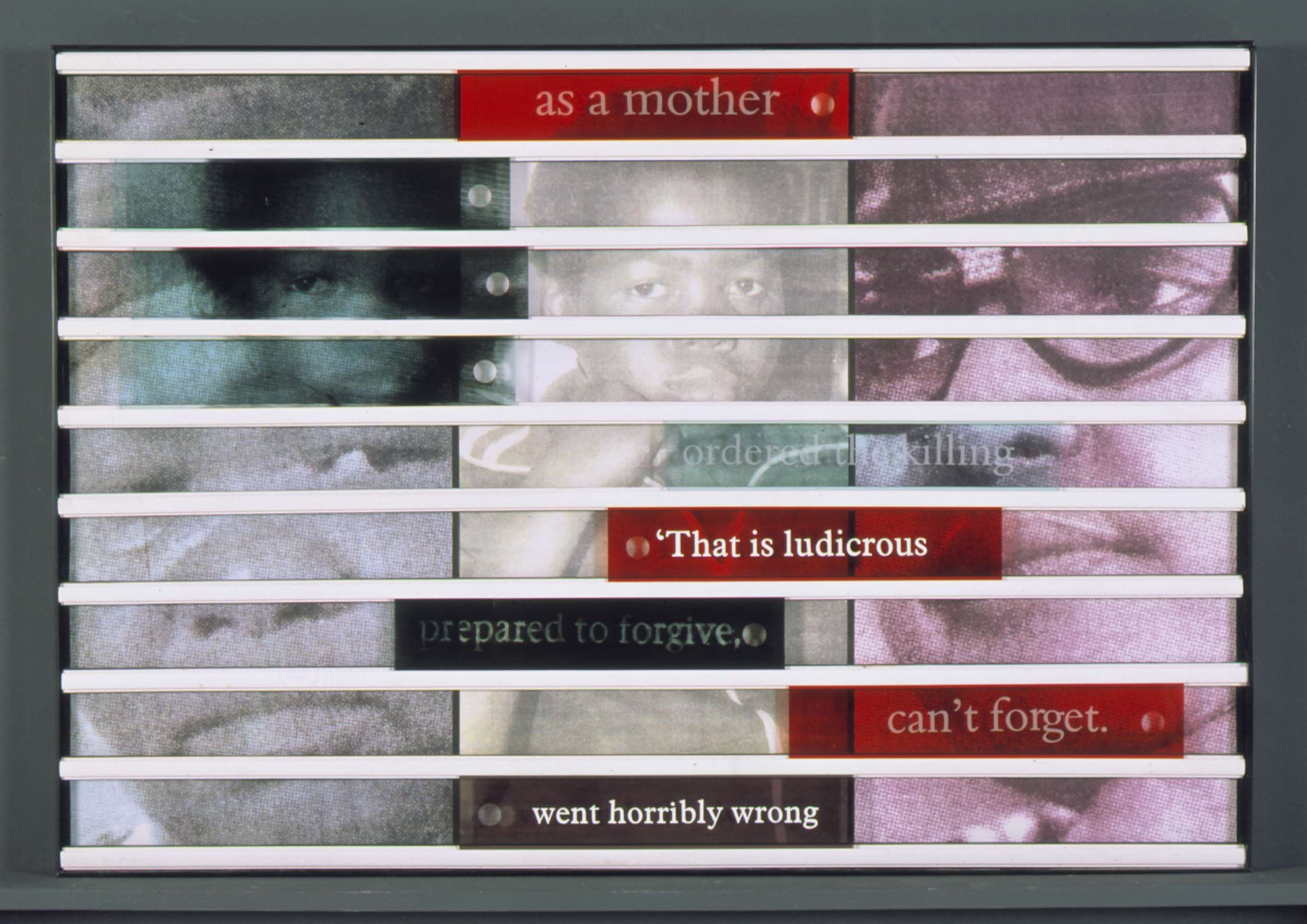
In one of its most closely followed hearings, the TRC attempted to establish the degree of culpability of Winnie Madikizela Mandela, known during the apartheid years as ’The Mother of the Nation' in the death of teenage activist Stompie Seipei. Suspected by the Mandela Football Club of being an informer, Seipei had been abducted from the Methodist manse in Soweto. Subsequently, his throat was cut by Mandela's driver, Jerry Richardson. At the TRC hearing, Joyce Seipei's appeal to Mandela for the truth 'as a mother' had little effect, though after an appeal to her by Archbishop Desmond Tutu, Mandela admitted that things had gone 'horribly wrong’.
The Truth Games series reflects on the role of South Africa’s Truth and Reconciliation Commission (TRC) in the country’s process of healing – or not healing – after apartheid. The Commission was set up in 1995 by President Mandela, who named Archbishop Desmond Tutu as its chairman, and invited witnesses who were identified as victims of gross human rights violations to give statements about their experiences. Hearings were held across the country. Perpetrators of violence could also give testimony and request amnesty from both civil and criminal prosecution, on the condition that they told the whole truth and had acted from political belief, whether on the right or the left.
To make the work, Sue Williamson kept daily newspapers through the entire process of the hearings, cutting out images and texts relating to the hearings. Each piece in the Truth Games series presents a triptych of images drawn from this file: on the left, the accuser, in the centre, an image of the event, on the right, the defender. On the sliding perspex slats which run horizontally across the work, are scraps of texts from the evidence of the accusers and the defenders, giving an epigrammatic summary of the proceedings.
However, at no point are all three visible at once. Text drawn from TRC transcripts is printed on sliding slats that obscure parts of the images. Viewers are encouraged to move these slats, revealing or concealing portions of the work as they attempt to piece together a fuller picture, echoing the nation’s collective attempt to uncover the truth.
ANC leader Chris Hani was assassinated in his driveway in 1993. At the hearing, his widow, Limpho, says he was “gunned down”, that his killers had “shown no remorse” and concludes the hearings “will not bring my husband back”. Right wing activist Gaye Derby Lewis admits that she “gave Hani’s address to his killer”, that Hani was “third on hitlist” and that her group’s motive was a “plan to create chaos”.
By mediating the flood of images and narratives that circulate in public discourse and mass media, Williamson aimed to offer a more focused, reflective space – one in which to engage with difficult truths, ask questions and consider the layers of meaning that often remain hidden.
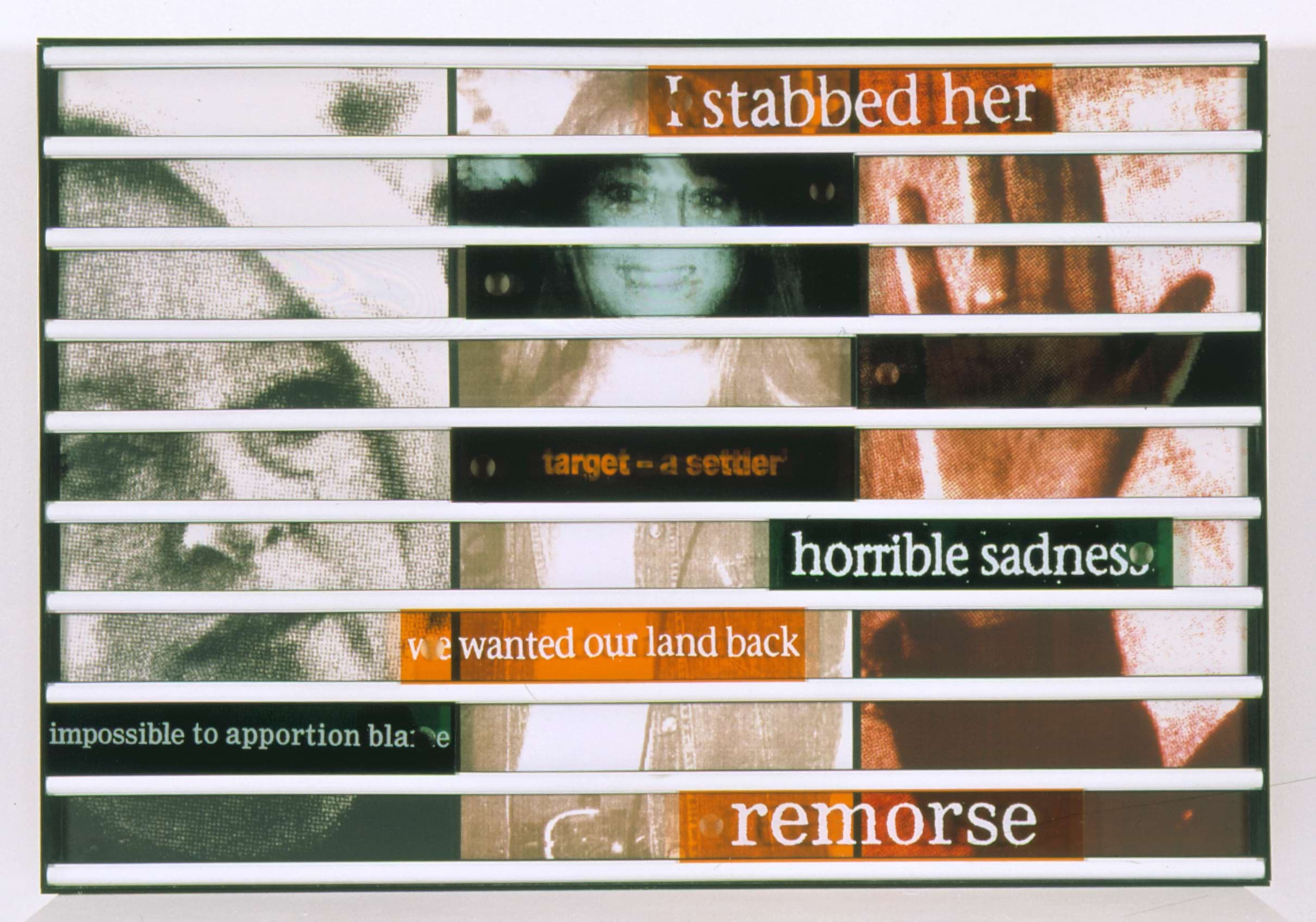
Amy Biehl was a 26-year-old American Fulbright Scholar working at the University of Western Cape, near Cape Town. Dropping off friends in the black township of Gugulethu during a schools boycott in April 1993, Biehl was stoned and stabbed to death. Four men were found guilty of her murder and sent to jail the following year; in 1997 they applied for amnesty, claiming the murder to be politically motivated. Biehl's parents Linda and Peter, supported amnesty for the killers, saying that they understood the context in which she was killed. The four were granted amnesty and released.
The Truth Games series reflects on the role of South Africa’s Truth and Reconciliation Commission (TRC) in the country’s process of healing – or not healing – after apartheid. The Commission was set up in 1995 by President Mandela, who named Archbishop Desmond Tutu as its chairman, and invited witnesses who were identified as victims of gross human rights violations to give statements about their experiences. Hearings were held across the country. Perpetrators of violence could also give testimony and request amnesty from both civil and criminal prosecution, on the condition that they told the whole truth and had acted from political belief, whether on the right or the left.
To make the work, Sue Williamson kept daily newspapers through the entire process of the hearings, cutting out images and texts relating to the hearings. Each piece in the Truth Games series presents a triptych of images drawn from this file: on the left, the accuser, in the centre, an image of the event, on the right, the defender. On the sliding perspex slats which run horizontally across the work, are scraps of texts from the evidence of the accusers and the defenders, giving an epigrammatic summary of the proceedings.
However, at no point are all three visible at once. Text drawn from TRC transcripts is printed on sliding slats that obscure parts of the images. Viewers are encouraged to move these slats, revealing or concealing portions of the work as they attempt to piece together a fuller picture, echoing the nation’s collective attempt to uncover the truth.
ANC leader Chris Hani was assassinated in his driveway in 1993. At the hearing, his widow, Limpho, says he was “gunned down”, that his killers had “shown no remorse” and concludes the hearings “will not bring my husband back”. Right wing activist Gaye Derby Lewis admits that she “gave Hani’s address to his killer”, that Hani was “third on hitlist” and that her group’s motive was a “plan to create chaos”.
By mediating the flood of images and narratives that circulate in public discourse and mass media, Williamson aimed to offer a more focused, reflective space – one in which to engage with difficult truths, ask questions and consider the layers of meaning that often remain hidden.
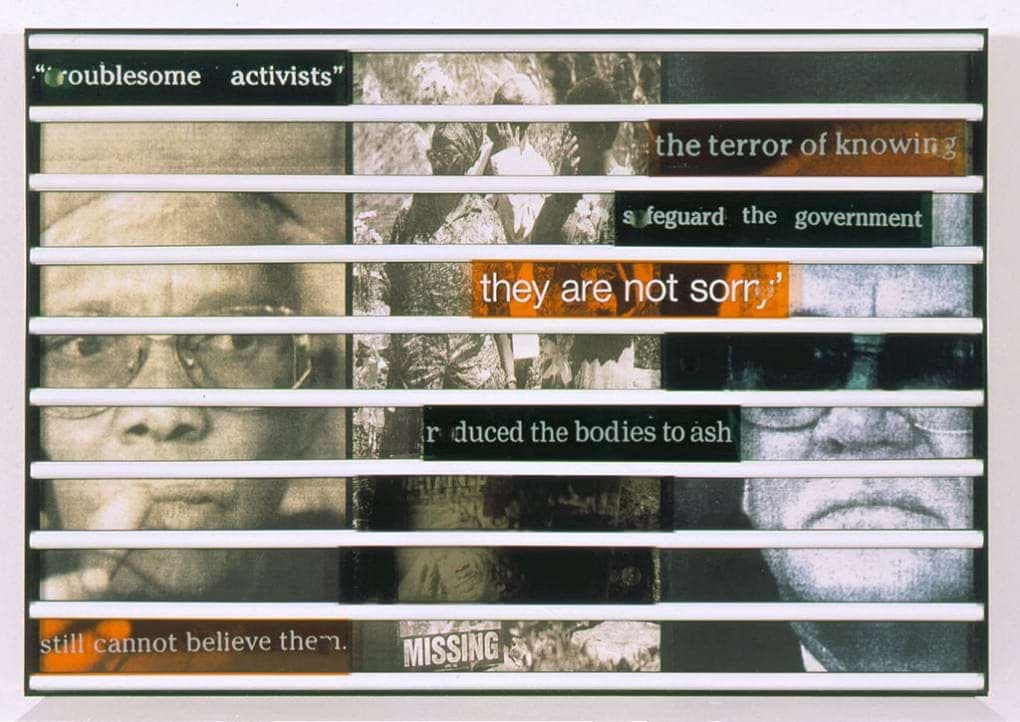
Siphiwo Mtimkulu was an Eastern Cape student jailed for his consciousness-raising activities. He was fed rat poison in jail, his hair fell out, and he was made to stand on two upended bricks for hours on end. He was hospitalised, then released. Soon after his return to home in 1982, he disappeared, and his abandoned car was ‘discovered’ by the police near the South African border. At the TRC, the police admitted responsibility for killing him and burning his body, but his mother, Joyce, still did not believe she had heard the whole truth.
The Truth Games series reflects on the role of South Africa’s Truth and Reconciliation Commission (TRC) in the country’s process of healing – or not healing – after apartheid. The Commission was set up in 1995 by President Mandela, who named Archbishop Desmond Tutu as its chairman, and invited witnesses who were identified as victims of gross human rights violations to give statements about their experiences. Hearings were held across the country. Perpetrators of violence could also give testimony and request amnesty from both civil and criminal prosecution, on the condition that they told the whole truth and had acted from political belief, whether on the right or the left.
To make the work, Sue Williamson kept daily newspapers through the entire process of the hearings, cutting out images and texts relating to the hearings. Each piece in the Truth Games series presents a triptych of images drawn from this file: on the left, the accuser, in the centre, an image of the event, on the right, the defender. On the sliding perspex slats which run horizontally across the work, are scraps of texts from the evidence of the accusers and the defenders, giving an epigrammatic summary of the proceedings.
However, at no point are all three visible at once. Text drawn from TRC transcripts is printed on sliding slats that obscure parts of the images. Viewers are encouraged to move these slats, revealing or concealing portions of the work as they attempt to piece together a fuller picture, echoing the nation’s collective attempt to uncover the truth.
ANC leader Chris Hani was assassinated in his driveway in 1993. At the hearing, his widow, Limpho, says he was “gunned down”, that his killers had “shown no remorse” and concludes the hearings “will not bring my husband back”. Right wing activist Gaye Derby Lewis admits that she “gave Hani’s address to his killer”, that Hani was “third on hitlist” and that her group’s motive was a “plan to create chaos”.
By mediating the flood of images and narratives that circulate in public discourse and mass media, Williamson aimed to offer a more focused, reflective space – one in which to engage with difficult truths, ask questions and consider the layers of meaning that often remain hidden.
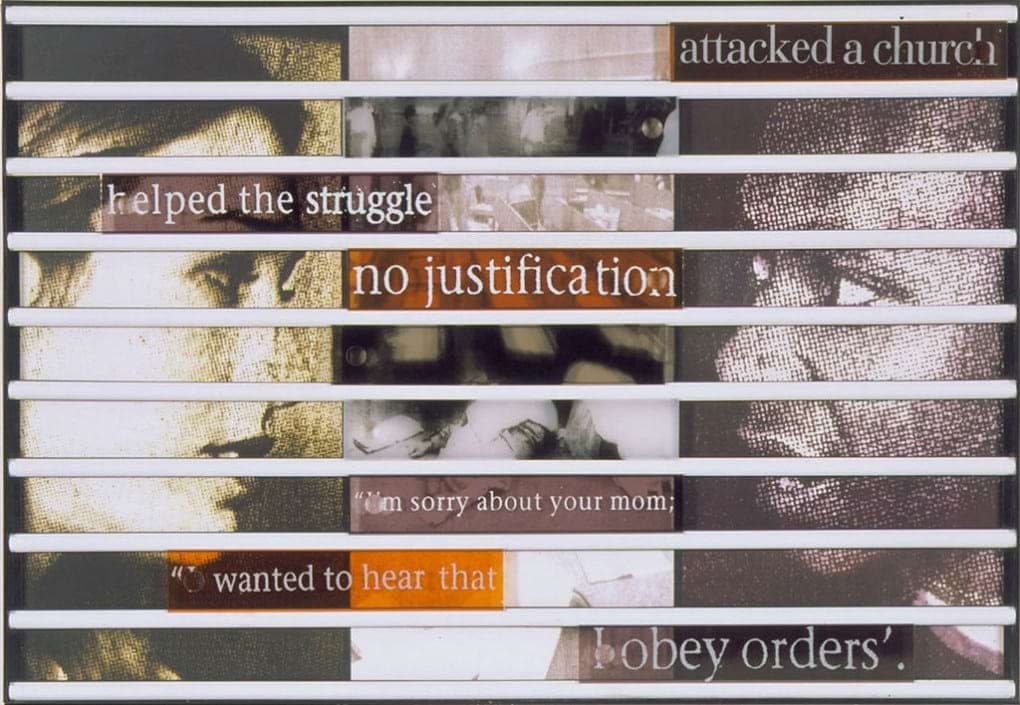
In July 1993, five young members of the APLA - the Azanian People’s Liberation Army, attacked the congregation of St James Church, in Kenilworth, Cape Town, and 11 people died in the gunfire. Marita Ackermann, mother of Liezl Ackermann, was one of those killed. In a confrontation five years later between Liezl and Gcinkhaya Makoma, the only member of the group convicted of the attack, he tells her that although he believed he was helping the struggle, he was sorry about her mother. She answers that she wanted to hear that. In June 1998, the TRC granted Makoma amnesty.
The Truth Games series reflects on the role of South Africa’s Truth and Reconciliation Commission (TRC) in the country’s process of healing – or not healing – after apartheid. The Commission was set up in 1995 by President Mandela, who named Archbishop Desmond Tutu as its chairman, and invited witnesses who were identified as victims of gross human rights violations to give statements about their experiences. Hearings were held across the country. Perpetrators of violence could also give testimony and request amnesty from both civil and criminal prosecution, on the condition that they told the whole truth and had acted from political belief, whether on the right or the left.
To make the work, Sue Williamson kept daily newspapers through the entire process of the hearings, cutting out images and texts relating to the hearings. Each piece in the Truth Games series presents a triptych of images drawn from this file: on the left, the accuser, in the centre, an image of the event, on the right, the defender. On the sliding perspex slats which run horizontally across the work, are scraps of texts from the evidence of the accusers and the defenders, giving an epigrammatic summary of the proceedings.
However, at no point are all three visible at once. Text drawn from TRC transcripts is printed on sliding slats that obscure parts of the images. Viewers are encouraged to move these slats, revealing or concealing portions of the work as they attempt to piece together a fuller picture, echoing the nation’s collective attempt to uncover the truth.
ANC leader Chris Hani was assassinated in his driveway in 1993. At the hearing, his widow, Limpho, says he was “gunned down”, that his killers had “shown no remorse” and concludes the hearings “will not bring my husband back”. Right wing activist Gaye Derby Lewis admits that she “gave Hani’s address to his killer”, that Hani was “third on hitlist” and that her group’s motive was a “plan to create chaos”.
By mediating the flood of images and narratives that circulate in public discourse and mass media, Williamson aimed to offer a more focused, reflective space – one in which to engage with difficult truths, ask questions and consider the layers of meaning that often remain hidden.
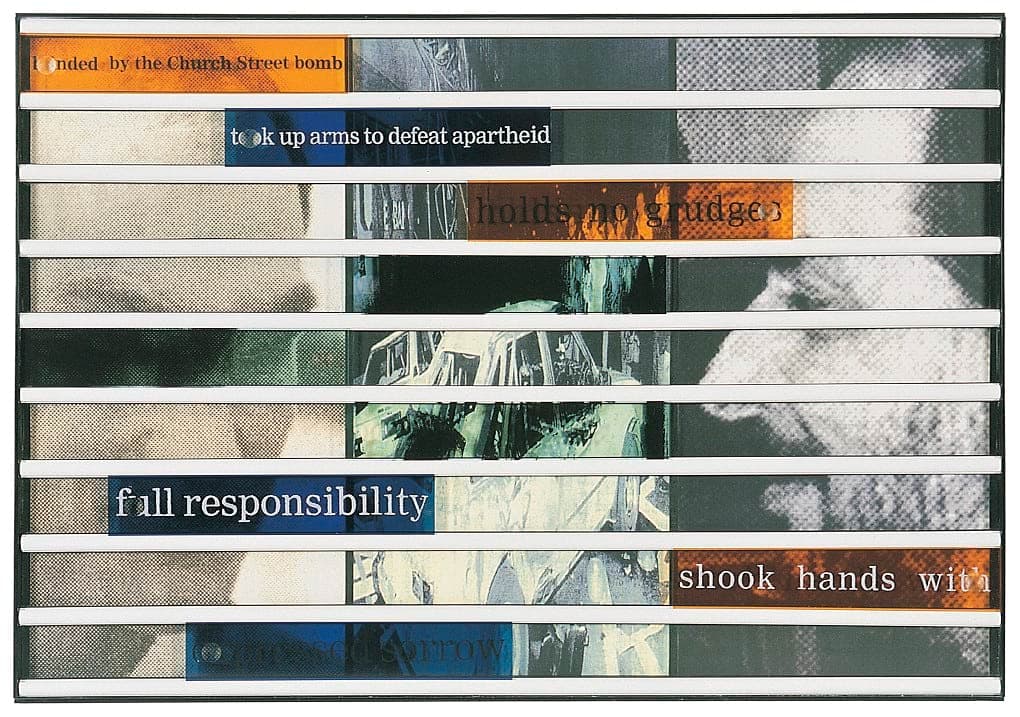
Neville Clarence was an officer of the South African Air Force when he lost his sight in a car-bomb attack on the SAAF headquarters in Church Street, Pretoria, in 1983. More than 200 people were injured in the attack and 19 died. The attack was perpetrated by Umkhonto weSizwe, the armed wing of the ANC. At the TRC hearing in May 1998, the current Chief of Policy and Planning in the Defence Force, Aboobaker Ismael, took full responsibility for the attack. Clarence said he understood the circumstances, and the two men shook hands.
The Truth Games series reflects on the role of South Africa’s Truth and Reconciliation Commission (TRC) in the country’s process of healing – or not healing – after apartheid. The Commission was set up in 1995 by President Mandela, who named Archbishop Desmond Tutu as its chairman, and invited witnesses who were identified as victims of gross human rights violations to give statements about their experiences. Hearings were held across the country. Perpetrators of violence could also give testimony and request amnesty from both civil and criminal prosecution, on the condition that they told the whole truth and had acted from political belief, whether on the right or the left.
To make the work, Sue Williamson kept daily newspapers through the entire process of the hearings, cutting out images and texts relating to the hearings. Each piece in the Truth Games series presents a triptych of images drawn from this file: on the left, the accuser, in the centre, an image of the event, on the right, the defender. On the sliding perspex slats which run horizontally across the work, are scraps of texts from the evidence of the accusers and the defenders, giving an epigrammatic summary of the proceedings.
However, at no point are all three visible at once. Text drawn from TRC transcripts is printed on sliding slats that obscure parts of the images. Viewers are encouraged to move these slats, revealing or concealing portions of the work as they attempt to piece together a fuller picture, echoing the nation’s collective attempt to uncover the truth.
ANC leader Chris Hani was assassinated in his driveway in 1993. At the hearing, his widow, Limpho, says he was “gunned down”, that his killers had “shown no remorse” and concludes the hearings “will not bring my husband back”. Right wing activist Gaye Derby Lewis admits that she “gave Hani’s address to his killer”, that Hani was “third on hitlist” and that her group’s motive was a “plan to create chaos”.
By mediating the flood of images and narratives that circulate in public discourse and mass media, Williamson aimed to offer a more focused, reflective space – one in which to engage with difficult truths, ask questions and consider the layers of meaning that often remain hidden.
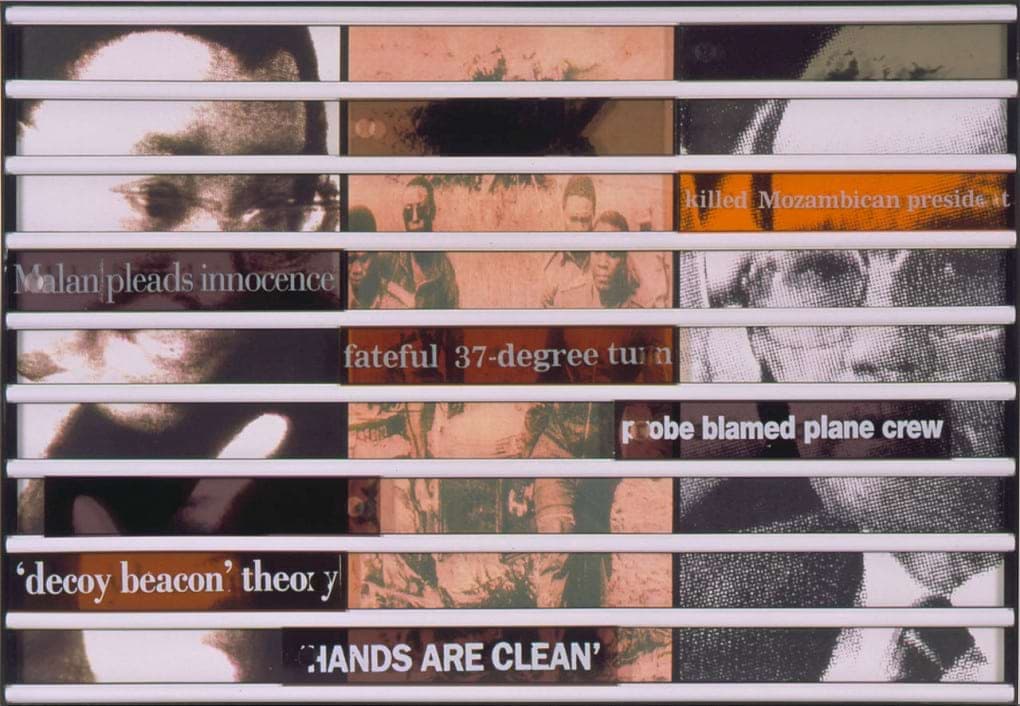
Many people, including Graca Machel, still believe that the plane crash which killed her husband, Mozambican President Samora Machel, was in some way caused by the South African Defence Force. At the TRC hearing into SADF operations, ex-head General Magnus Malan asserted that he had never given orders for such an operation, and that his hands were clean.
The Truth Games series reflects on the role of South Africa’s Truth and Reconciliation Commission (TRC) in the country’s process of healing – or not healing – after apartheid. The Commission was set up in 1995 by President Mandela, who named Archbishop Desmond Tutu as its chairman, and invited witnesses who were identified as victims of gross human rights violations to give statements about their experiences. Hearings were held across the country. Perpetrators of violence could also give testimony and request amnesty from both civil and criminal prosecution, on the condition that they told the whole truth and had acted from political belief, whether on the right or the left.
To make the work, Sue Williamson kept daily newspapers through the entire process of the hearings, cutting out images and texts relating to the hearings. Each piece in the Truth Games series presents a triptych of images drawn from this file: on the left, the accuser, in the centre, an image of the event, on the right, the defender. On the sliding perspex slats which run horizontally across the work, are scraps of texts from the evidence of the accusers and the defenders, giving an epigrammatic summary of the proceedings.
However, at no point are all three visible at once. Text drawn from TRC transcripts is printed on sliding slats that obscure parts of the images. Viewers are encouraged to move these slats, revealing or concealing portions of the work as they attempt to piece together a fuller picture, echoing the nation’s collective attempt to uncover the truth.
ANC leader Chris Hani was assassinated in his driveway in 1993. At the hearing, his widow, Limpho, says he was “gunned down”, that his killers had “shown no remorse” and concludes the hearings “will not bring my husband back”. Right wing activist Gaye Derby Lewis admits that she “gave Hani’s address to his killer”, that Hani was “third on hitlist” and that her group’s motive was a “plan to create chaos”.
By mediating the flood of images and narratives that circulate in public discourse and mass media, Williamson aimed to offer a more focused, reflective space – one in which to engage with difficult truths, ask questions and consider the layers of meaning that often remain hidden.
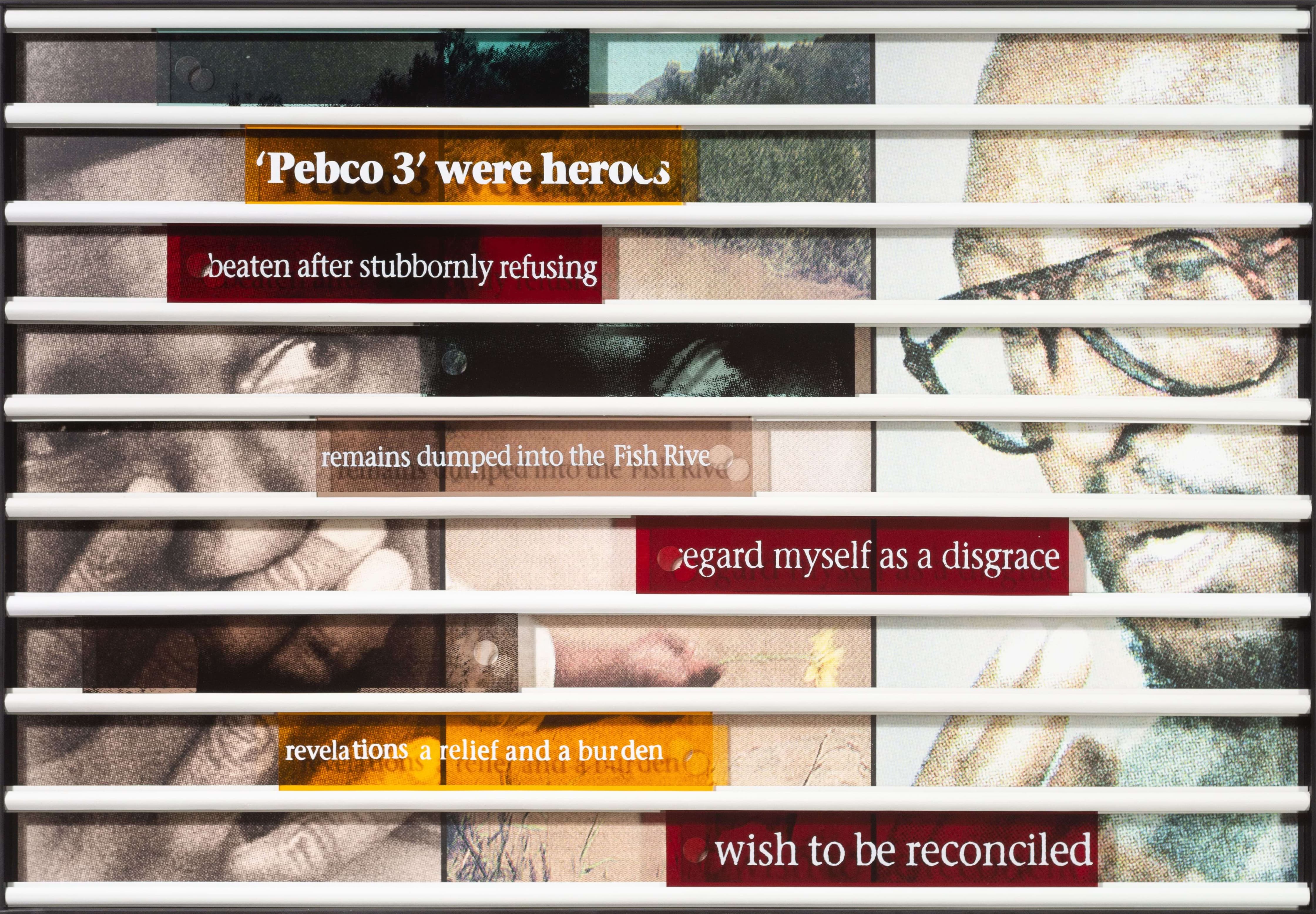
Qaqawuli Godlozi was one of three leaders of the Port Elizabeth Black Civic Organisation (PEBCO) abducted by security police from the Port Elizabeth airport on May 8, 1985 and taken to a remote spot where the three men were killed, and their remains were thrown in the Fish River. When the truth came out, 20 years later, the families held a memorial service next to the river, throwing flowers into the water.
Kimpani Peter Mogoai and seven security policeman appeared before the Truth and Reconciliation Commission seeking amnesty. Mogoai expressed his deep regret over what happened, and said he wished to be reconciled to the families.
Video
The ‘Truth Games’ series reflects on the role of South Africa’s Truth and Reconciliation Commission (TRC) in the country’s process of healing after apartheid. The Commission was set up in 1995 by President Mandela, who named Archbishop Demond Tutu as its chairman, and invited witnesses who were identified as victims of gross human rights violations to give statements. Hearings were held across the country. Perpetrators of violence could also give testimony and request amnesty from both civil and criminal prosecution, on the condition that they told the whole truth and had acted from political belief, whether on the right or the left.
Sue Williamson kept daily newspapers through the entire process of the hearings, cutting out images and texts relating to the hearings. Each piece in the ‘Truth Games’ series presents a triptych of images drawn from this file: on the left, the accuser, in the centre, an image of the event, on the right, the defender. On the sliding perspex slats which run horizontally across the work, are scraps of texts from the evidence of the accusers and the defenders, giving an epigrammatic summary of the proceedings. However, at no point are all three visible at once. Text drawn from TRC transcripts is printed on sliding slats that obscure parts of the images. Viewers are encouraged to move these slats, revealing or concealing portions of the work as they attempt to piece together a fuller picture, echoing the nation’s collective attempt to uncover the truth.
ANC leader Chris Hani was assassinated in his driveway in 1993. At the hearing, his widow, Limpho, says he was ‘gunned down’, that his killers had ‘shown no remorse’ and concludes the hearings ‘will not bring my husband back’. Right wing activist Gaye Derby Lewis admits that she ‘gave Hani’s address to his killer’, that Hani was ‘third on hitlist’ and that her group’s motive was a ‘plan to create chaos’. By mediating the flood of images and narratives that circulate in public discourse and mass media, Williamson aimed to offer a more focused, reflective space - a space in which to engage with difficult truths, and consider the layers of meaning that often remain hidden.
Video
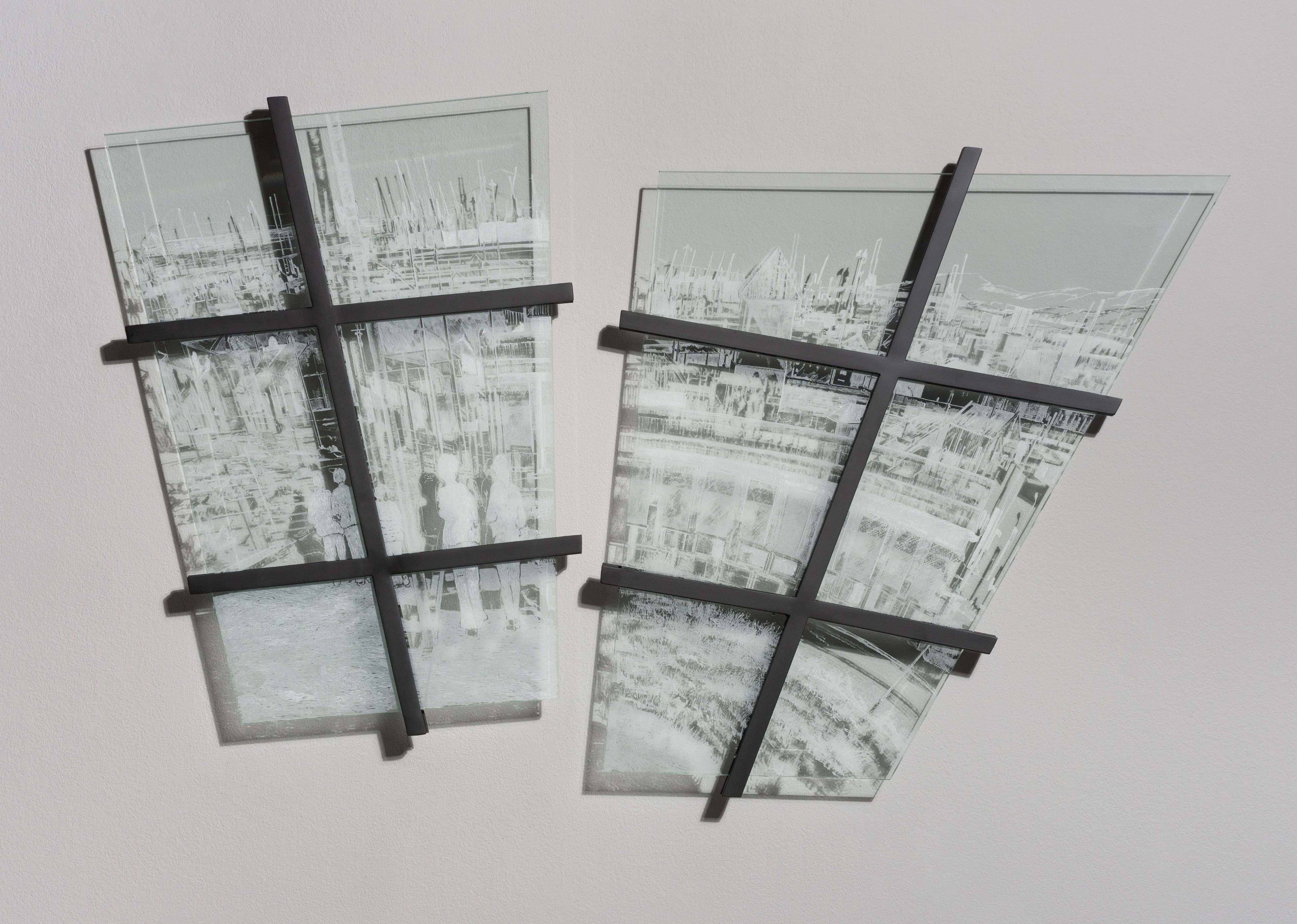
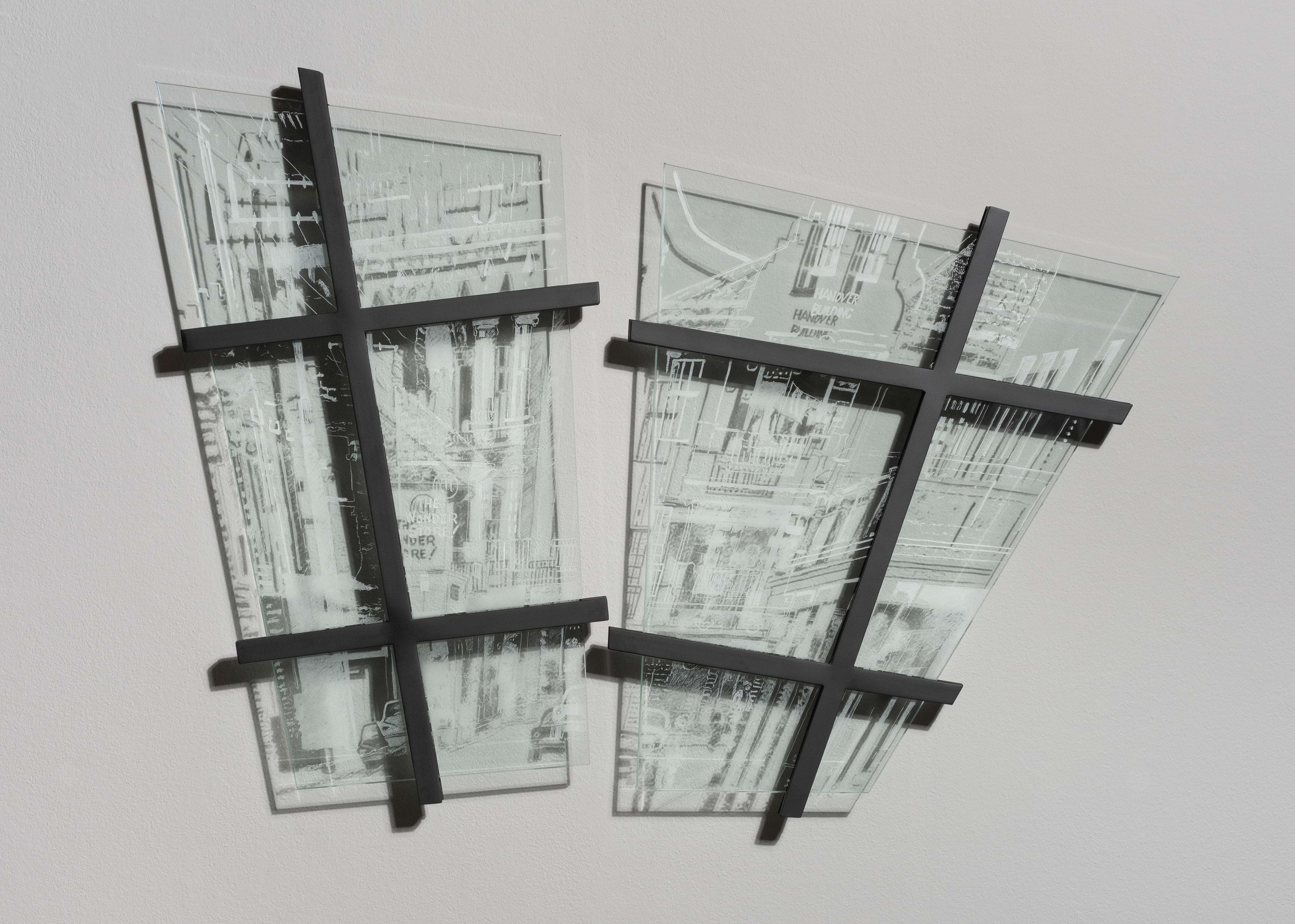
District Six in Cape Town, once home to a vibrant and diverse community of around 55,000 people, was declared a “slum” by the apartheid government in 1966, leading to its eventual demolition. This displacement, which began in the early 1970s, disrupted not only the physical landscape but the deep social and cultural connections that had bound generations together.
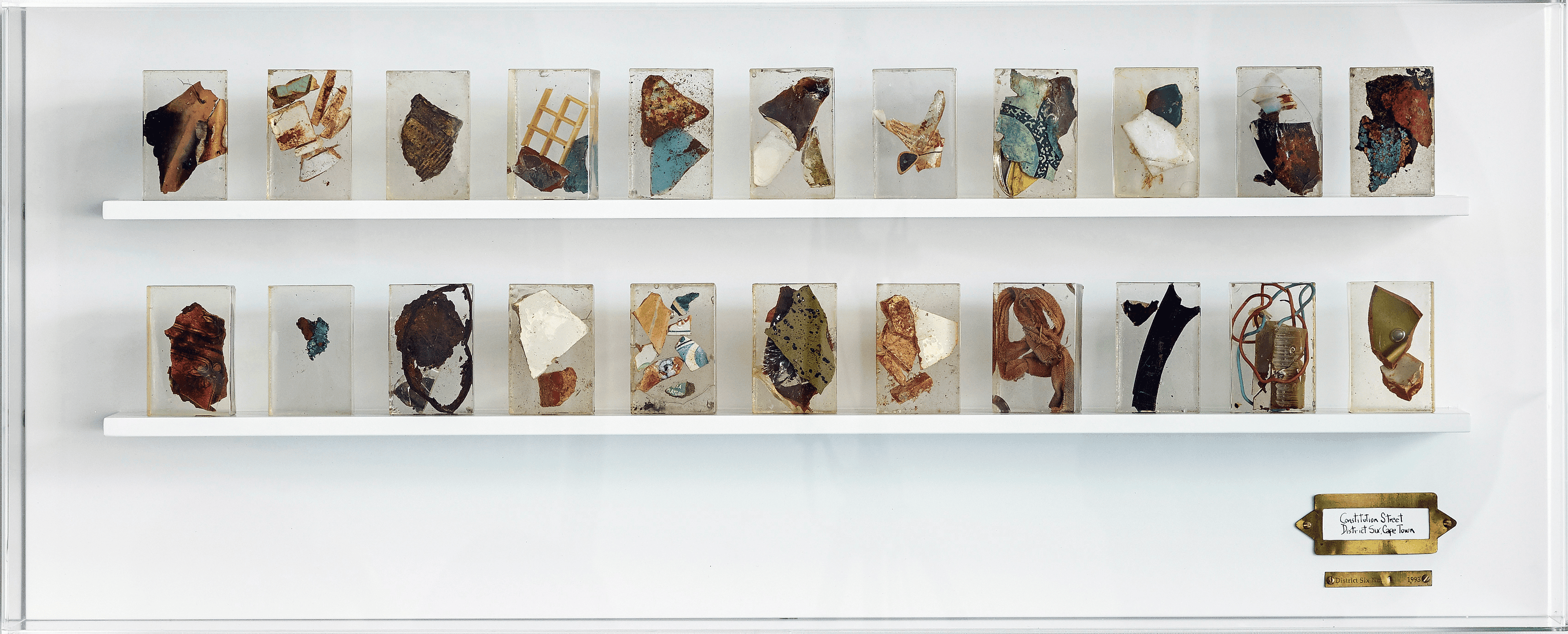
For the 'Museum Case' series Sue Williamson visited the site formerly known as District Six. Williamson gathered fragments of various objects that had remained in the area following demolition and cast these fragments in small resin blocks.
‘The pieces both celebrate the liveliness of the community that once was, and are also an indictment of a society which allowed a community to be destroyed until there was nothing left but inert fragments. We are used to seeing fragments of pre-Columbian clay figures or Roman glass displayed in museums – but in my role as fake ‘museum director’ I have preserved these fragments of a community which was very much alive only fifteen years before the piece was made.’ - Sue Williamson
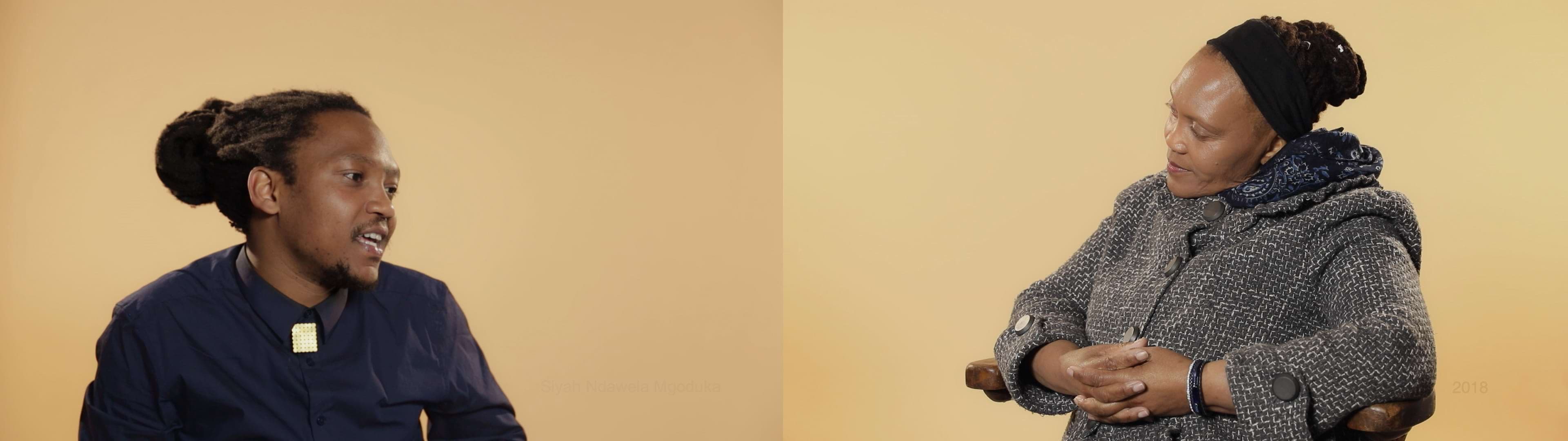
The follow up video to It’s a pleasure to meet you (2016) , is called That particular morning (2018), which was made in collaboration with Siyah Ndawela Mgoduka. Here, Mgoduka is again a participant, and, on camera with his mother Doreen, he vocalises the questions about his dead father that he has held back for years. The work brings into focus the profound impact of this familial rupture and highlights differing generational attitudes towards the process of forgiveness initiated by the TRC hearings.
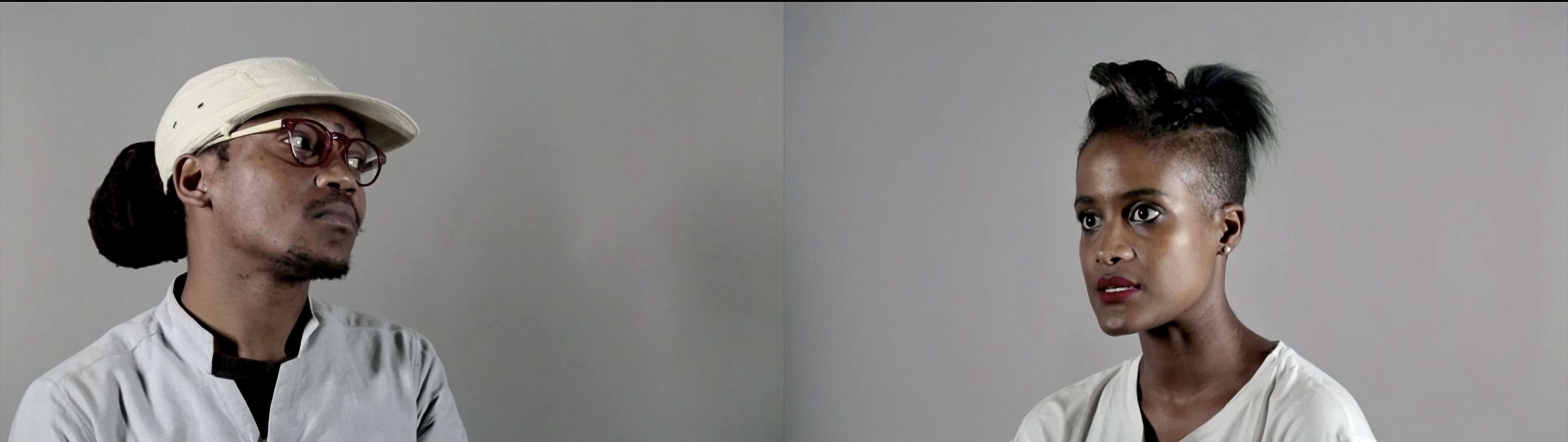
In this film, Siyah Ndawela Mgoduka appears in conversation with Candice Mama, whose father was killed by apartheid assassin Eugene de Kock. The pair, who are both in their twenties, discuss their lives, what it has meant not to have a father, how it has affected their mothers and their family life, as well as delving further into the failures of the TRC’s process of forgiveness. The title of the film refers to the greeting apartheid assassin Eugene de Kock gave each member of the Mama family when they visited him in jail.
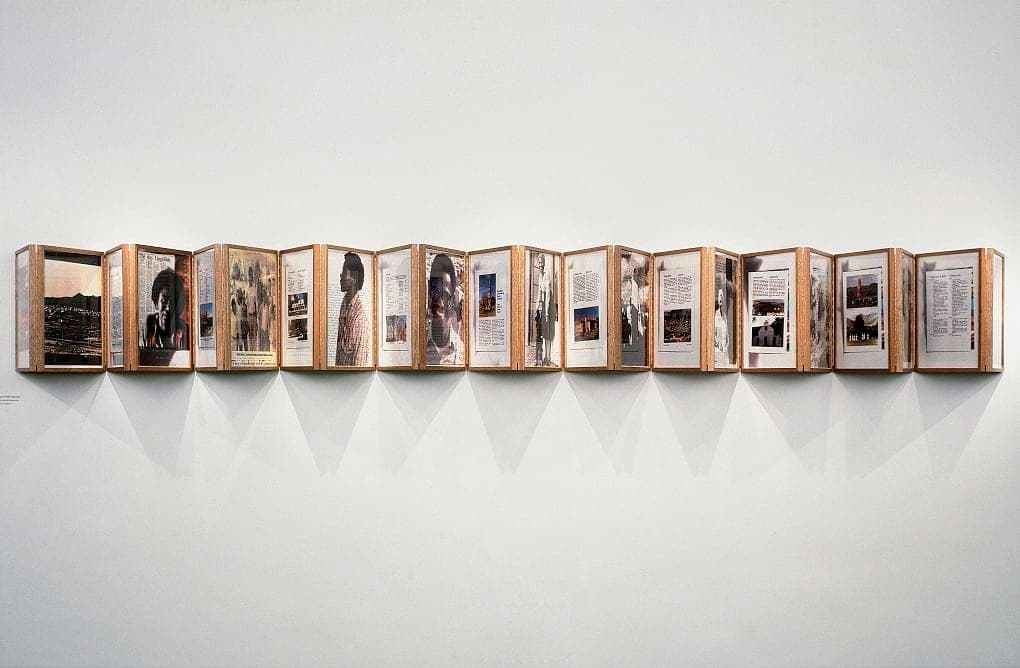
A Tale of Two Cradocks explores the life and legacy of anti-apartheid activist Matthew Goniwe, as recounted by his widow, Nyameka, in an interview with the artist. The work traces the couple’s journey – from how they met and married, to raising children, and ultimately to the tragic loss of Matthew.
Cradock, the family’s hometown in the Eastern Cape, is portrayed as a picturesque town divided by apartheid. During those years, daily life for Black and White residents unfolded on opposite sides of a near-impermeable wall. A tourist brochure from the 1980s describes Cradock’s churches, schools and sporting facilities – all exclusively for White residents. It fails to mention Lingelihle, the neighbouring Black township. The artist’s interest in uncovering the truths hidden within seemingly neutral public documents emerges strongly in this work.
Formally, A Tale of Two Cradocks functions like a screen: much like apartheid itself, it allows only one side of the story to be visible at a time, depending on where the viewer stands. This duality echoes the divided realities of the town and its people.
Goniwe, a respected teacher and charismatic leader, was viewed as a threat by the apartheid government. In June 1985, while travelling with three comrades, he was stopped at a police roadblock. The men were abducted, murdered, and their bodies burned. A chilling photograph from police archives shows two officers leaning over the charred remains. Superimposed on the work is a copy of the faxed order – written in Afrikaans – authorising Goniwe’s “removal”.
In a powerful twist of history, Nyameka Goniwe, who once mourned her husband under apartheid, returned to Cradock in 2012 – as its mayor.