Video
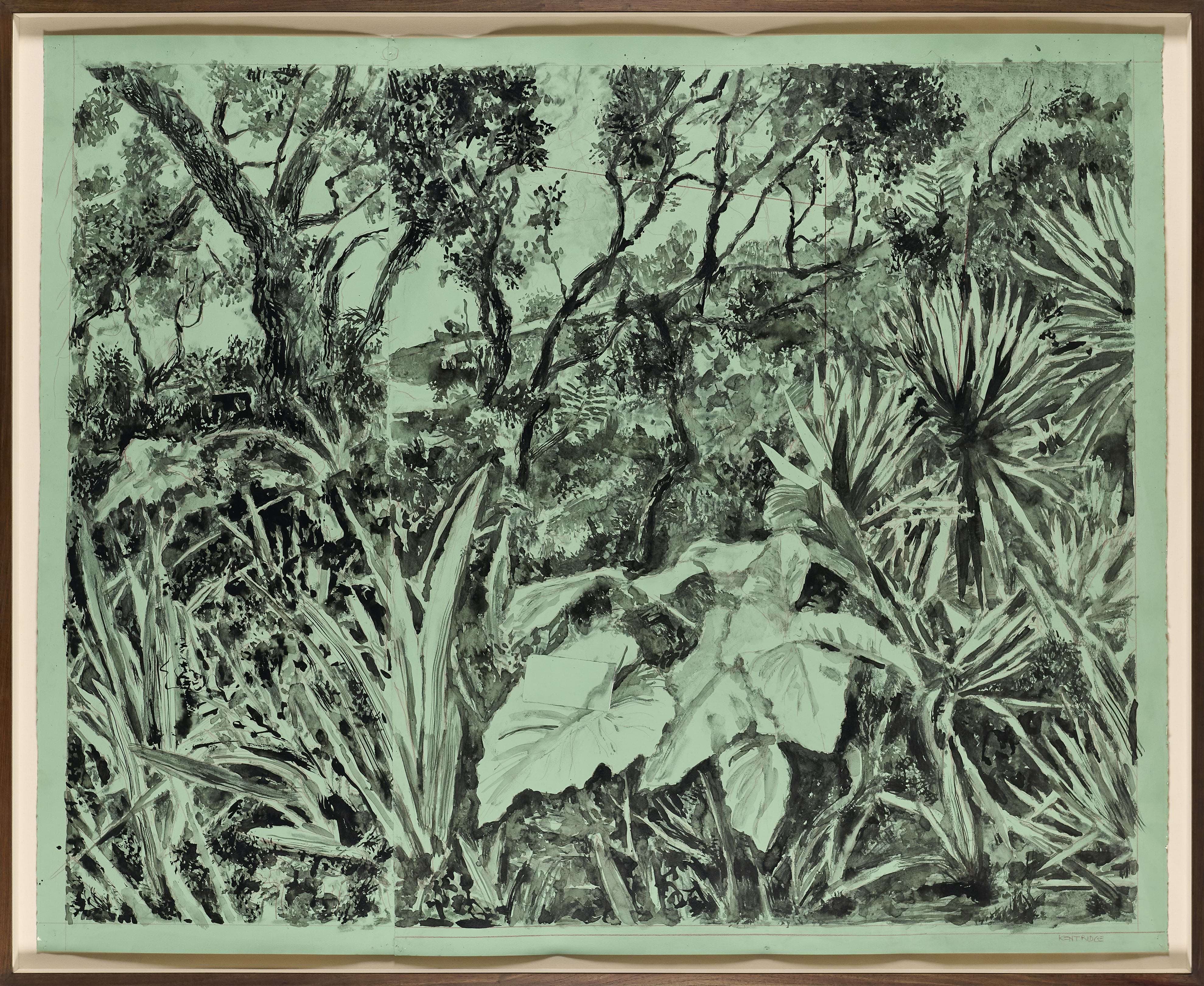
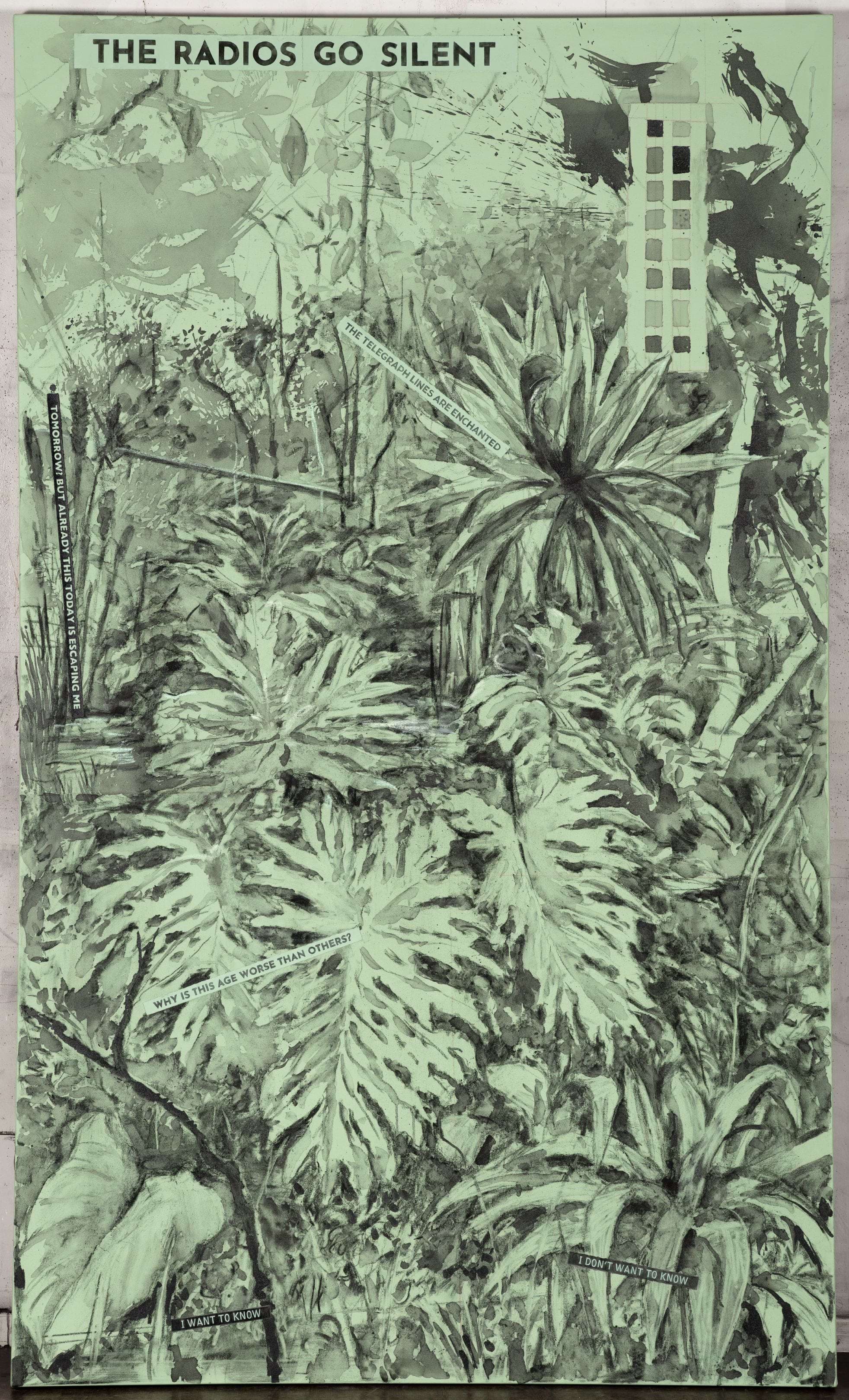
'Drawing for The Great Yes, The Great No (Jungle III)' is from Kentridge's new series of drawings that relate to his new theatre production in the making, titled 'The Great Yes, The Great No', in which the artist uses the journey of a ship from Marseille to Martinique as a prompt for unpacking power, colonialism and migration. The drawings are used as backdrops in the performance and portray imagined scenes from the boat’s arrival in Martinique - an idea of the exotic Caribbean, which is in fact the domestic garden of Kentridge’s Johannesburg studio. Densely packed vegetation is punctuated by fragments of text - phrases such as “the house of justice has collapsed” or “we want no prophets in this garden”. The phrases come from the theatre production and prompt the idea of a drawing being what you read as a text, or a text that, in this case, turns into a garden. In Kentridge’s words “How much do you glean from what you read, and how much of what you read is changed by what you’re seeing around it?”
Video
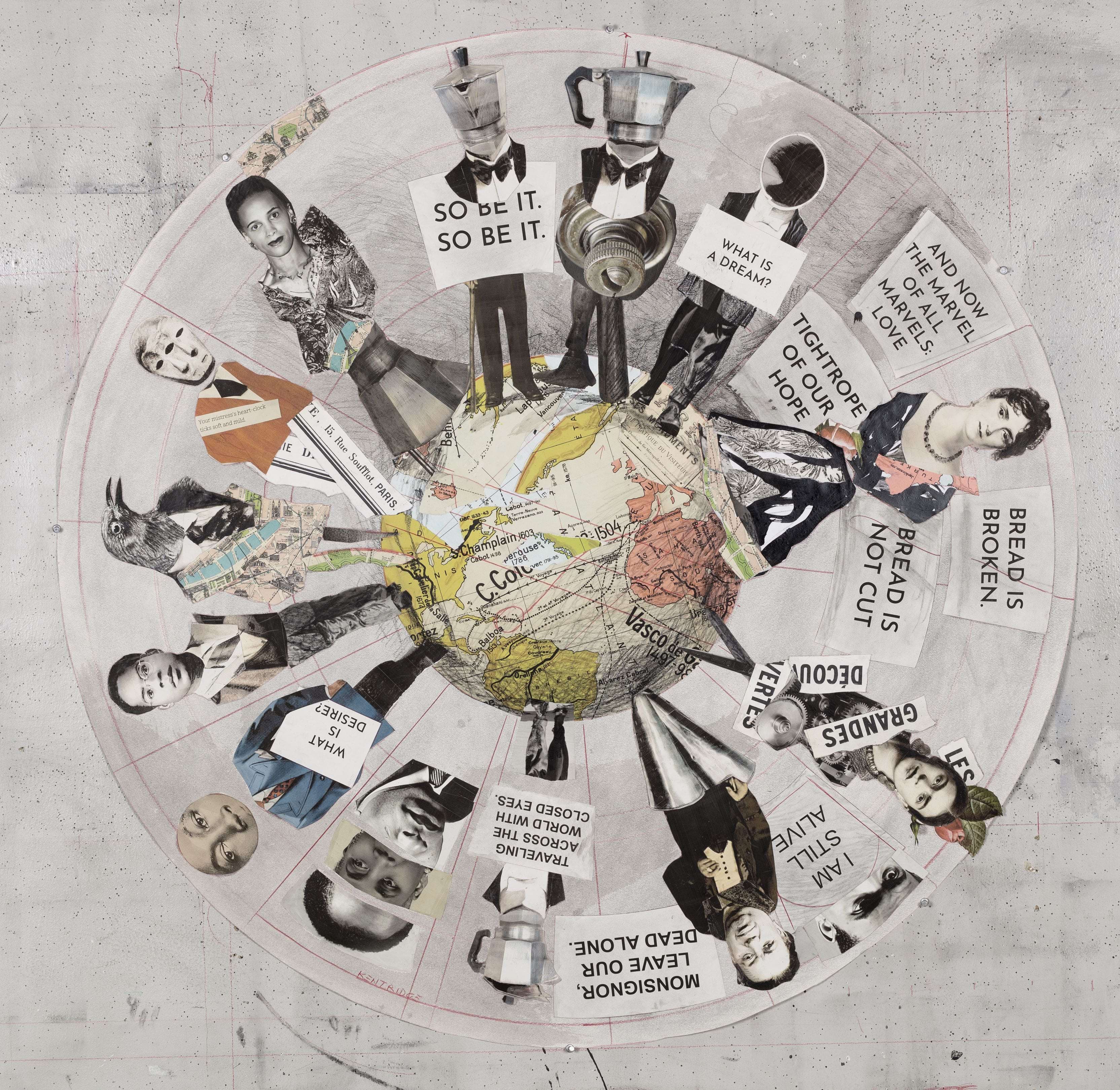
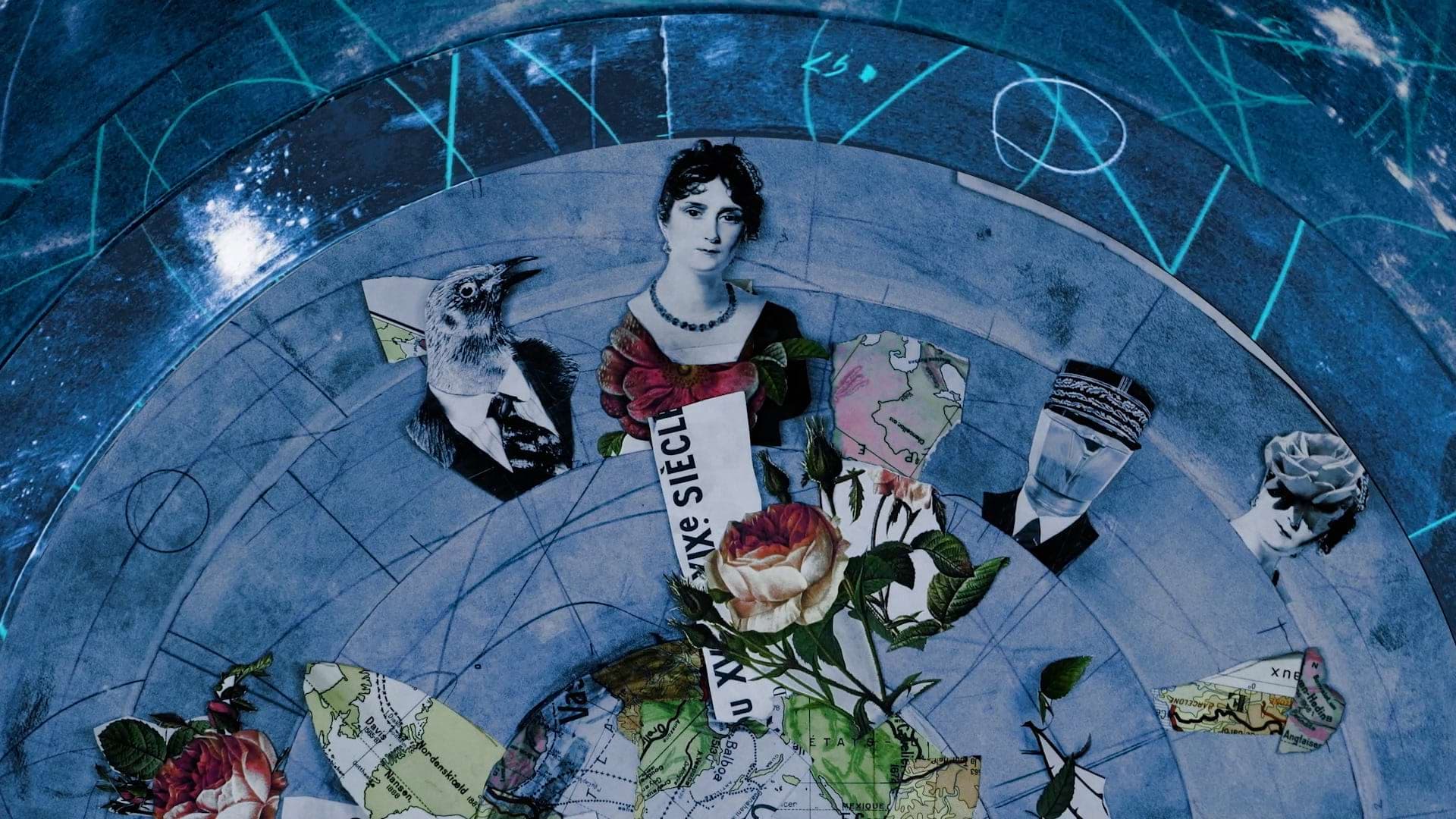
‘To Cross One More Sea’ is a three-channel film that premiered at LUMA, Arles, in July 2024. Created in parallel with ‘The Great Yes, The Great No’, Kentridge’s semi-historical, semi-fictional chamber opera which was also first performed there, this triptych relives an Atlantic odyssey between Marseilles and Martinique in 1941. The boat is populated with myriad figures ostensibly escaping occupied Vichy France, including those who were on that actual journey, and those who couldn’t possibly have been on the same vessel together.
So, two André Bretons argue with each other and converse with key figures of the Negritude Movement, such as Suzanne and Aimé Césaire, Frantz Fanon, the Nardal sisters and Leon-Gontran Damas; Josephine Baker vaudevilles alongside Josephine Bonaparte; whilst Claude Levi-Strauss, Stalin, Trotsky, Kahlo and Riviera complicate the deck’s dynamics and dances.
Through its layered, powerful imagery, searingly emotive songs, interwoven historic doctrine and letter extracts, ‘To Cross One More Sea’ revisits complex narratives of exile and resilience as this rusty, fetid merchant ship and its strange cargo journeys through literal and figurative storms and doldrums - with choruses and a libretto sung, spoken and shouted in French, English, Isizulu, Setswana, Isiswati, Isixhosa and Xitsonga - finally reaching the shores of the Caribbean.