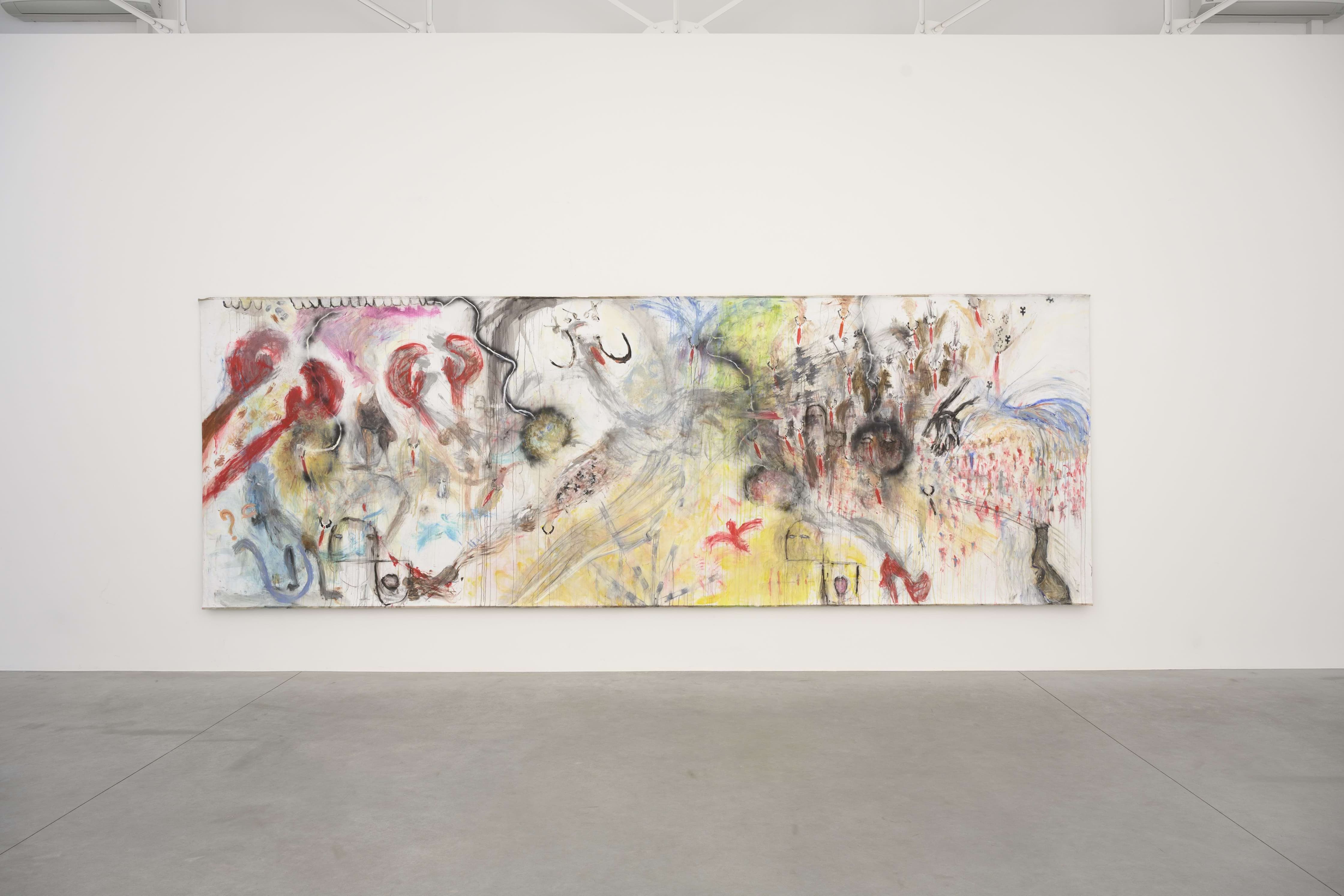
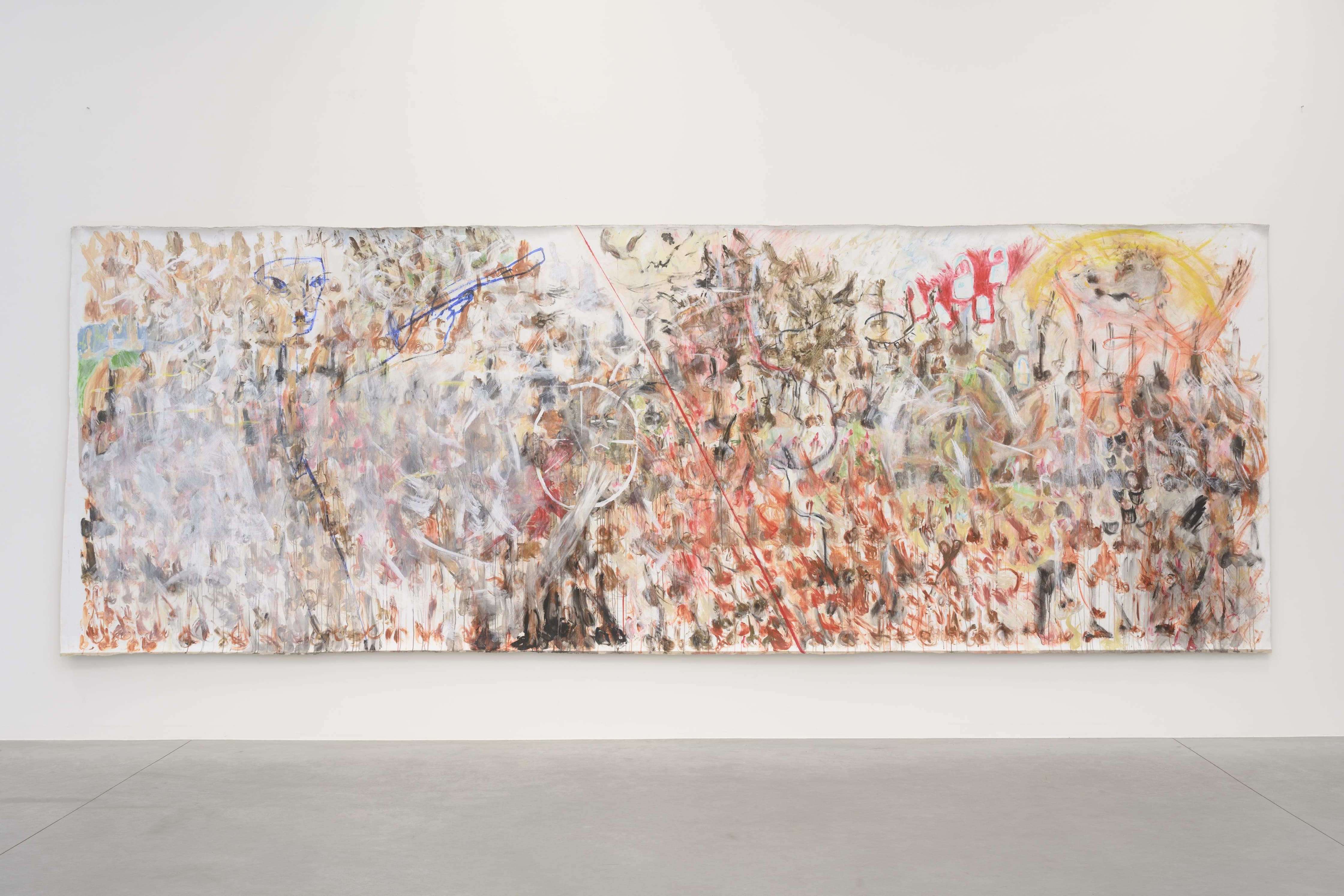
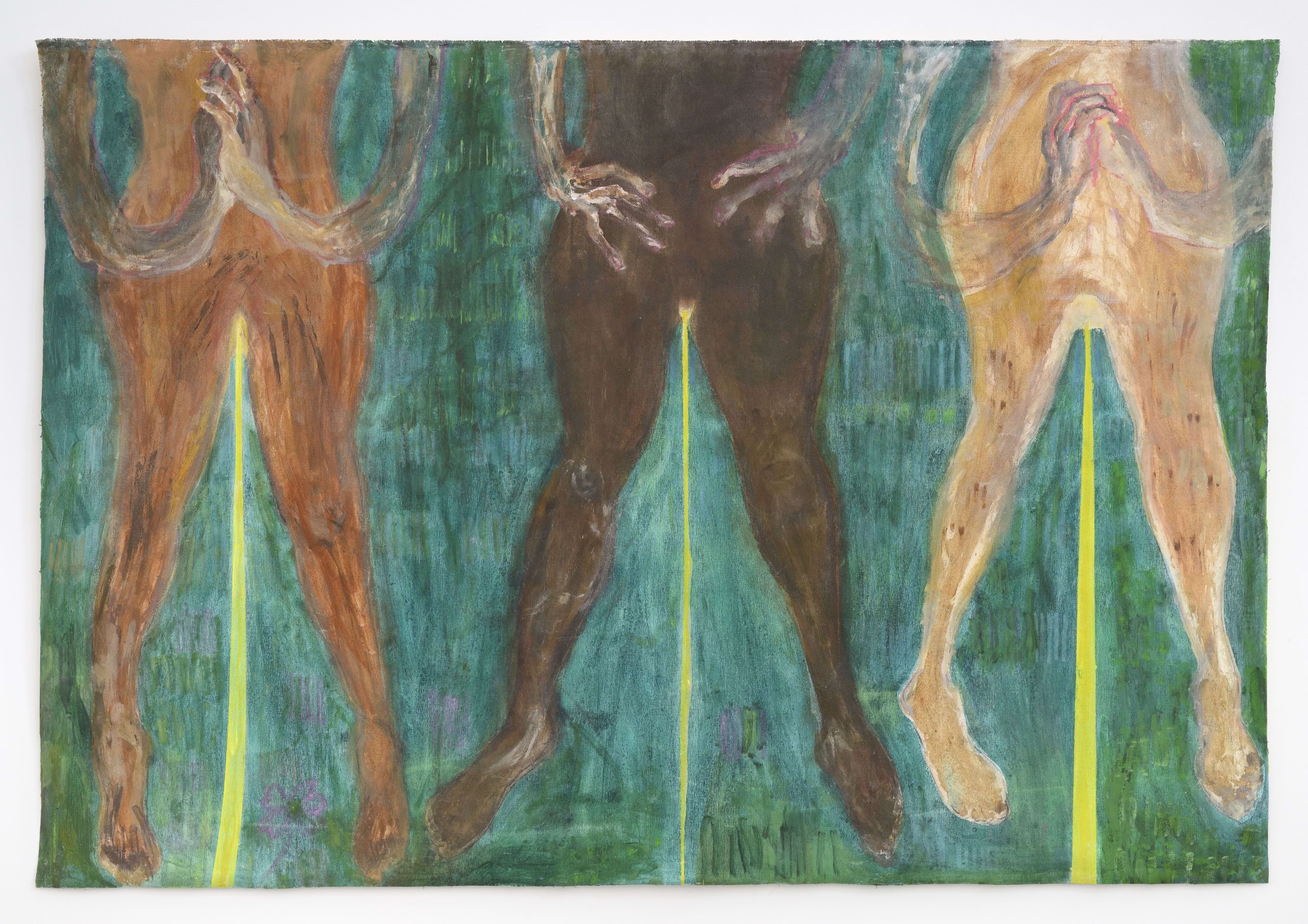
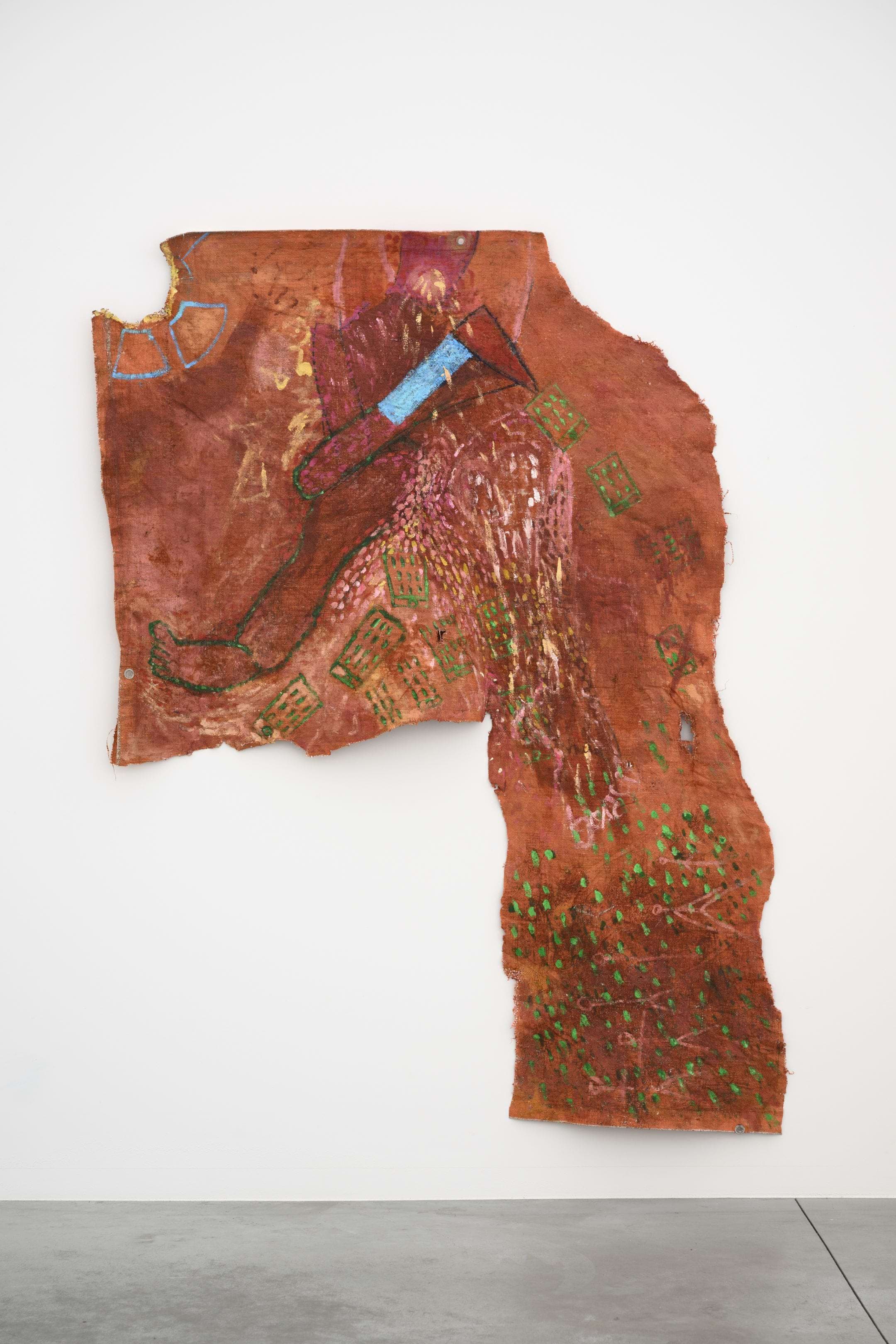
Pélagie Gbaguidi’s work incorporates paintings, drawings and mixed media works in an exploration of the “big and small stories that take our beings towards the burning questions of the world, urging us to go beyond the surface” - Pélagie Gbaguidi
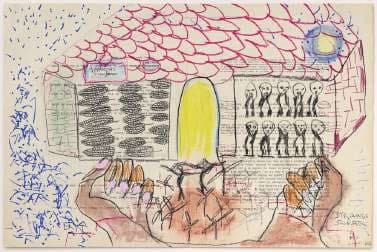
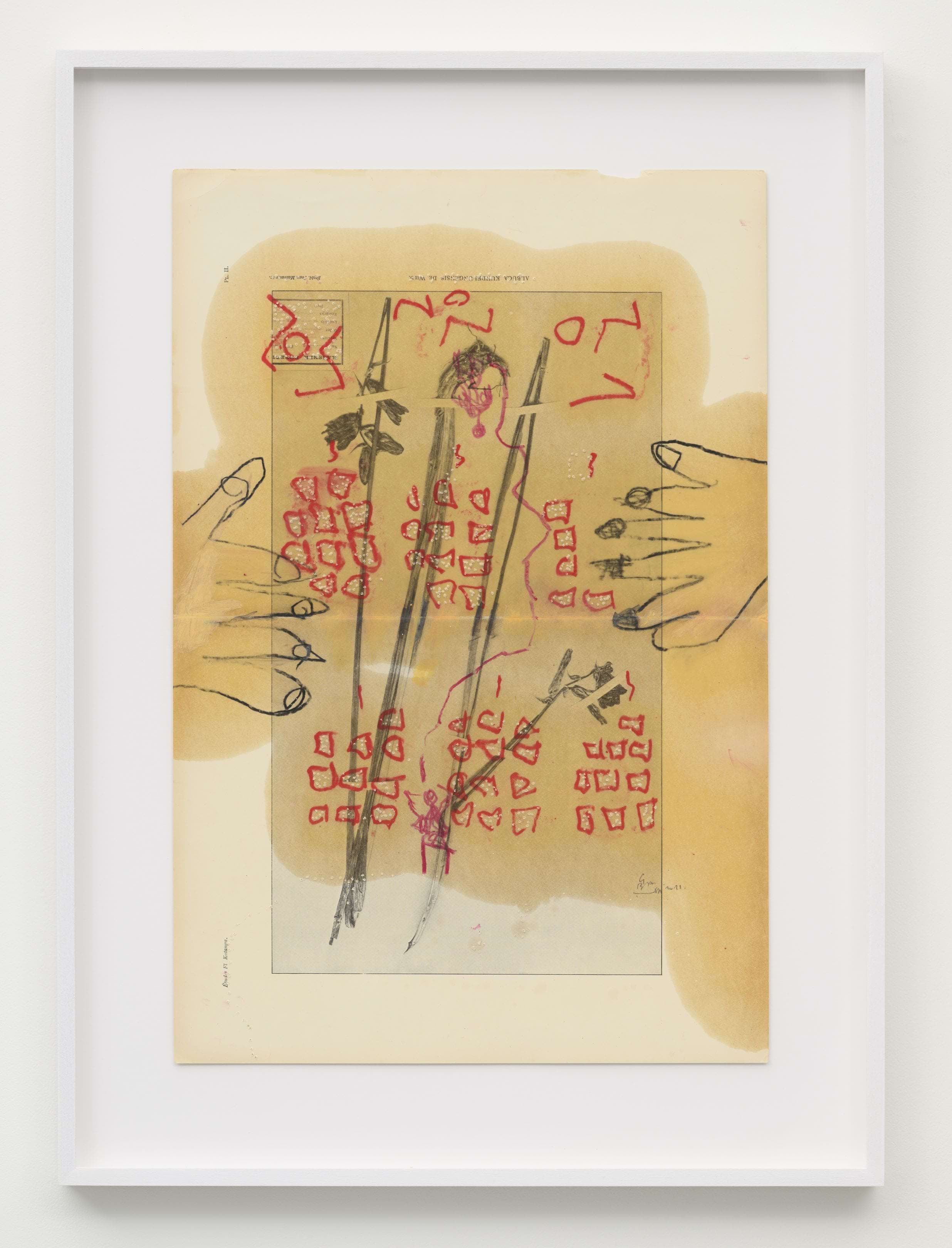
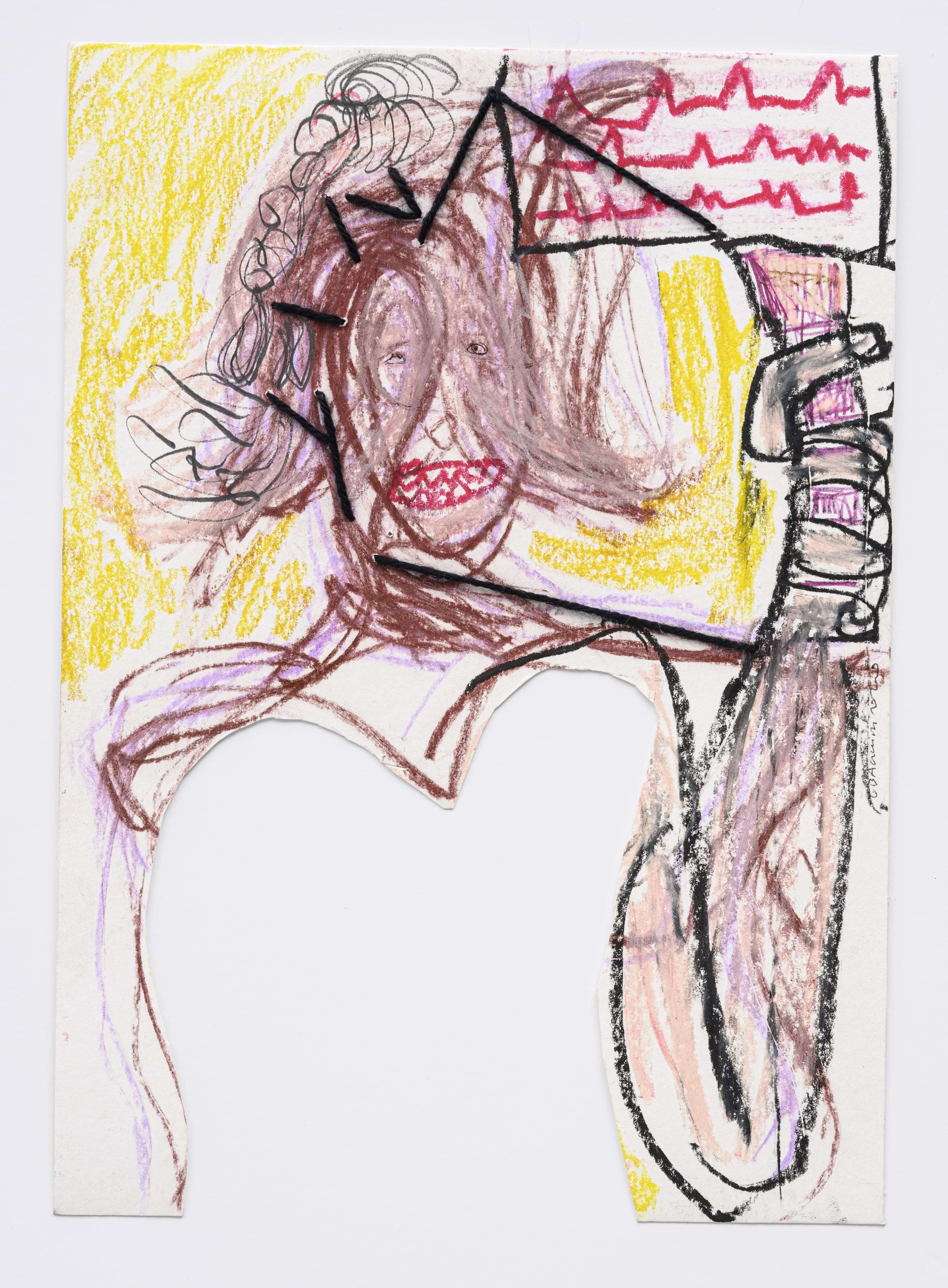
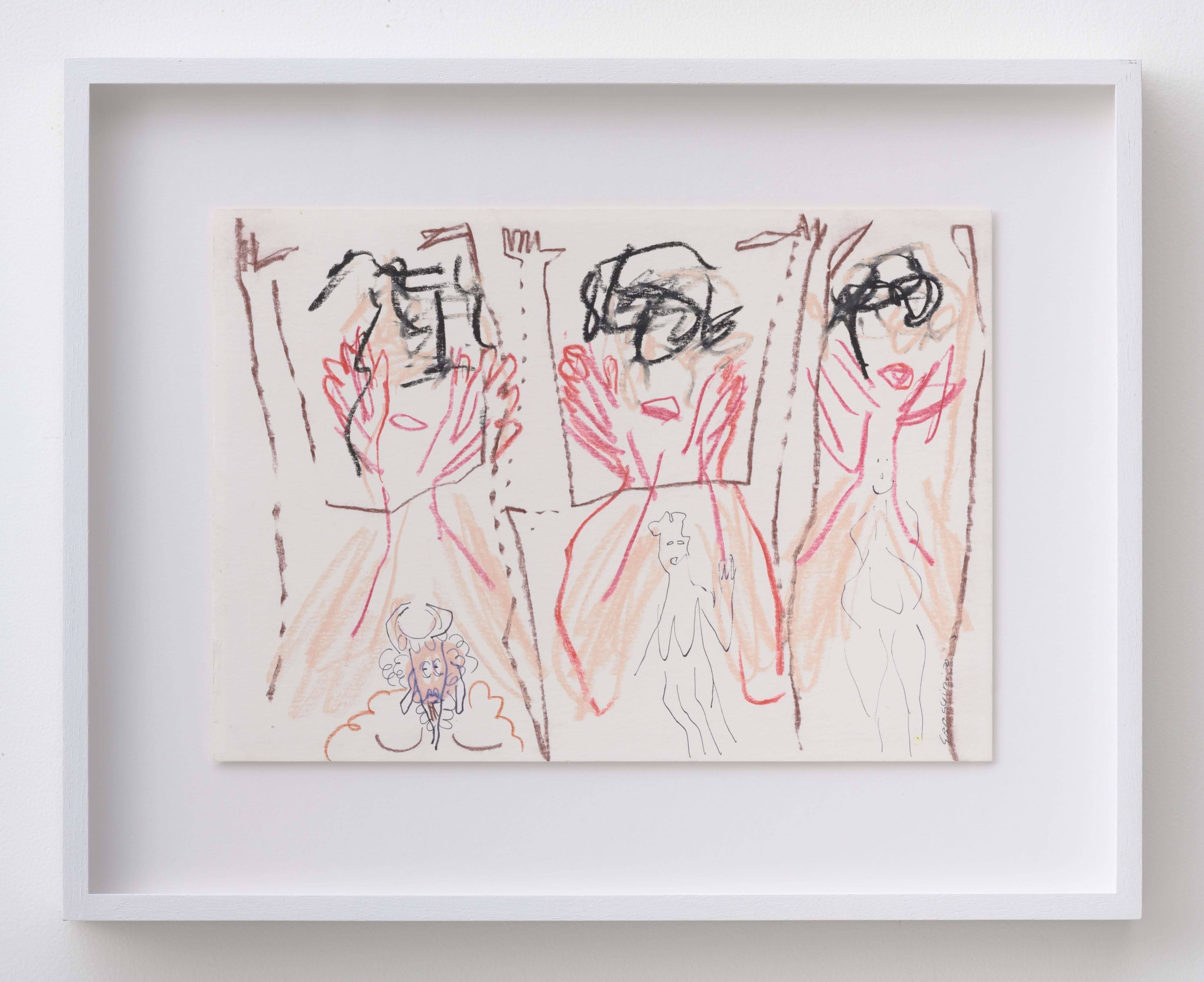
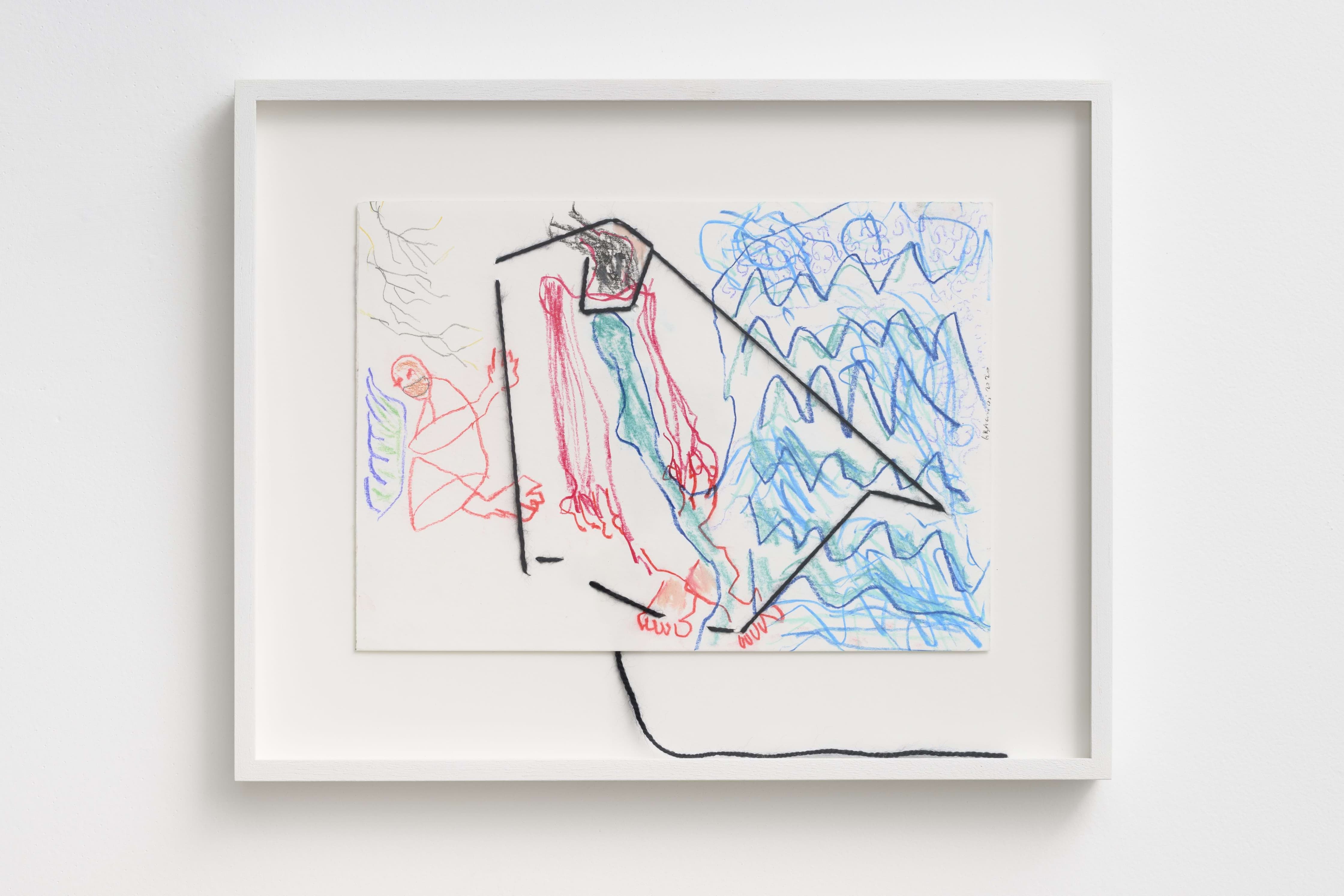
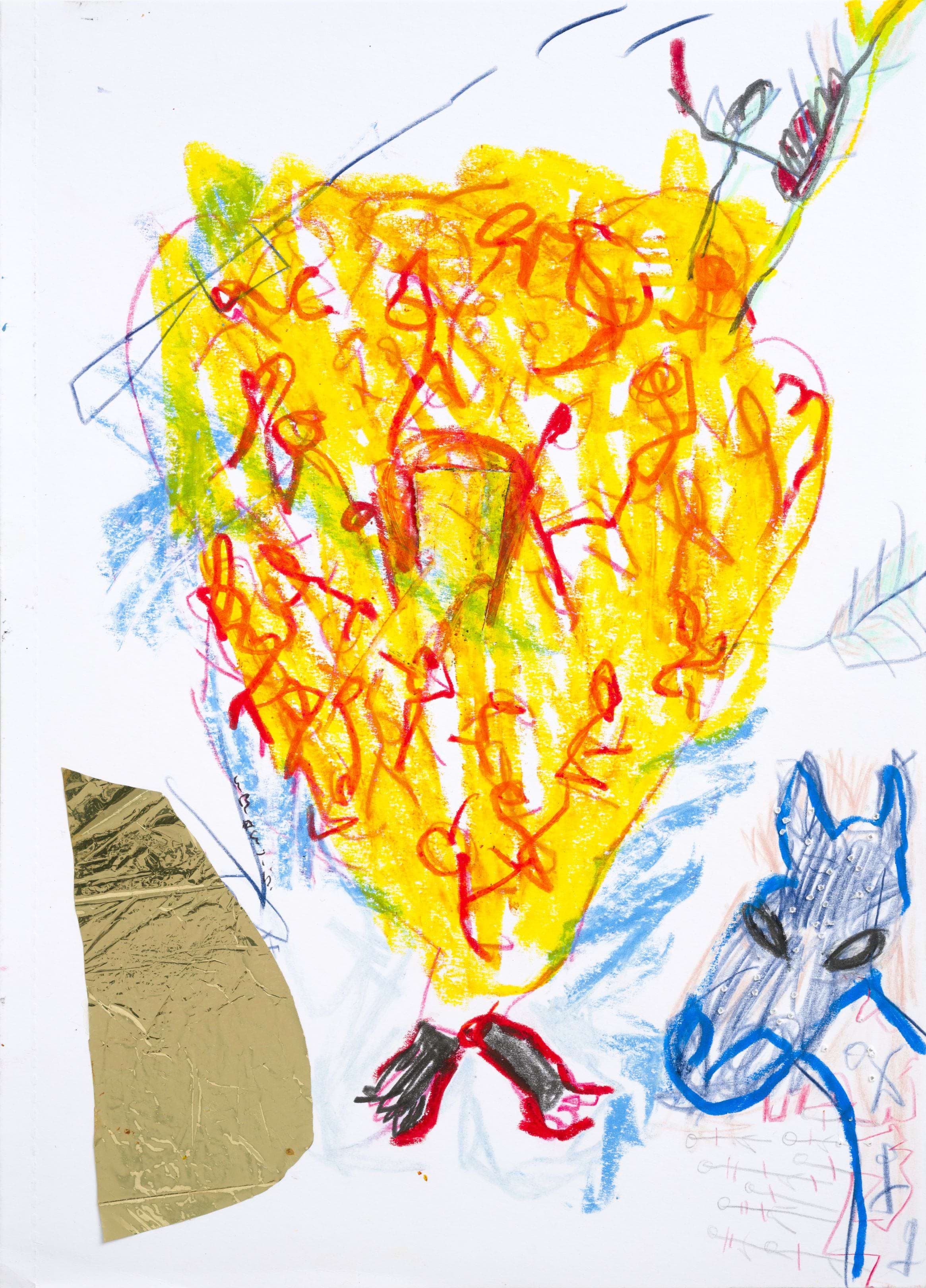
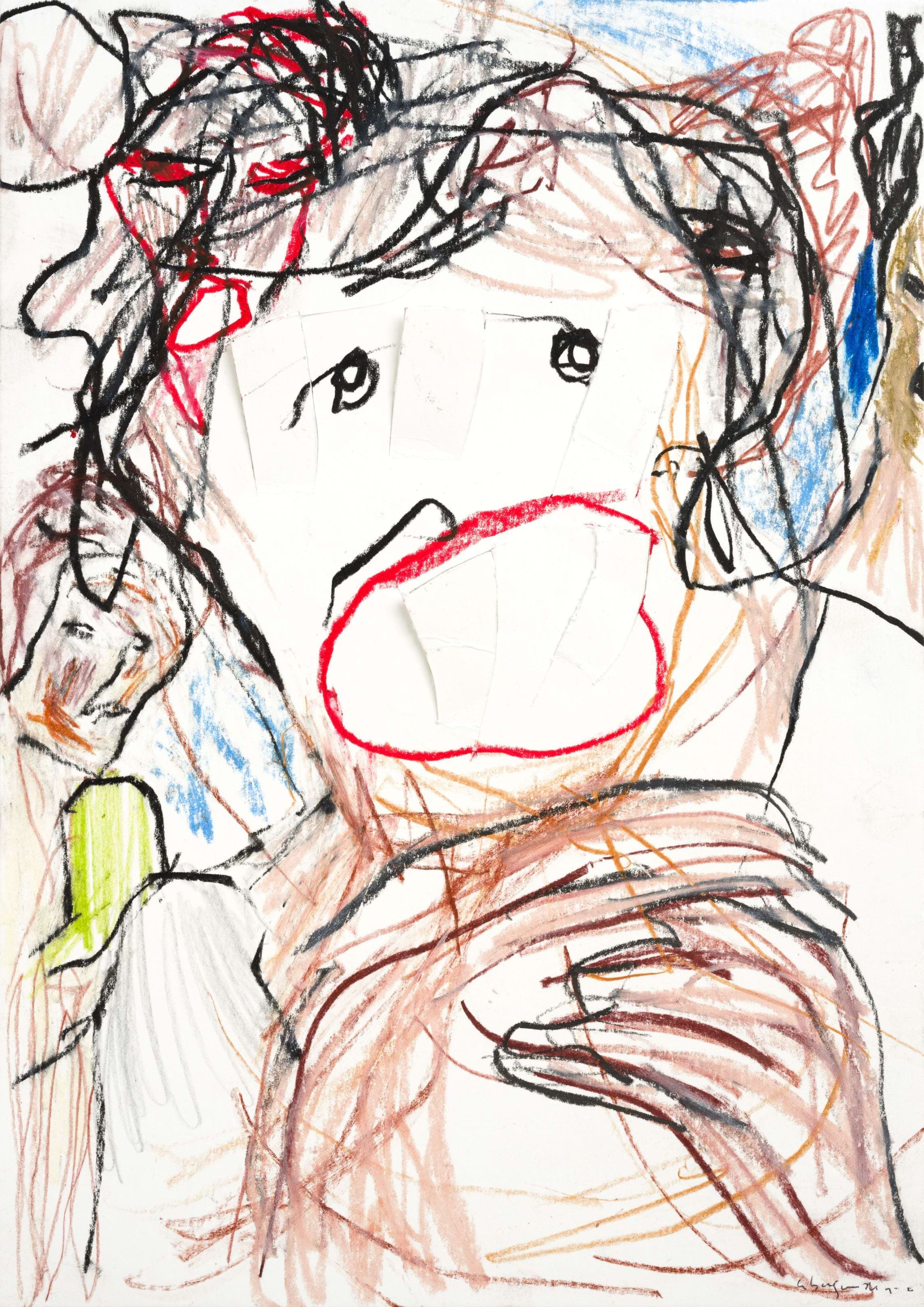
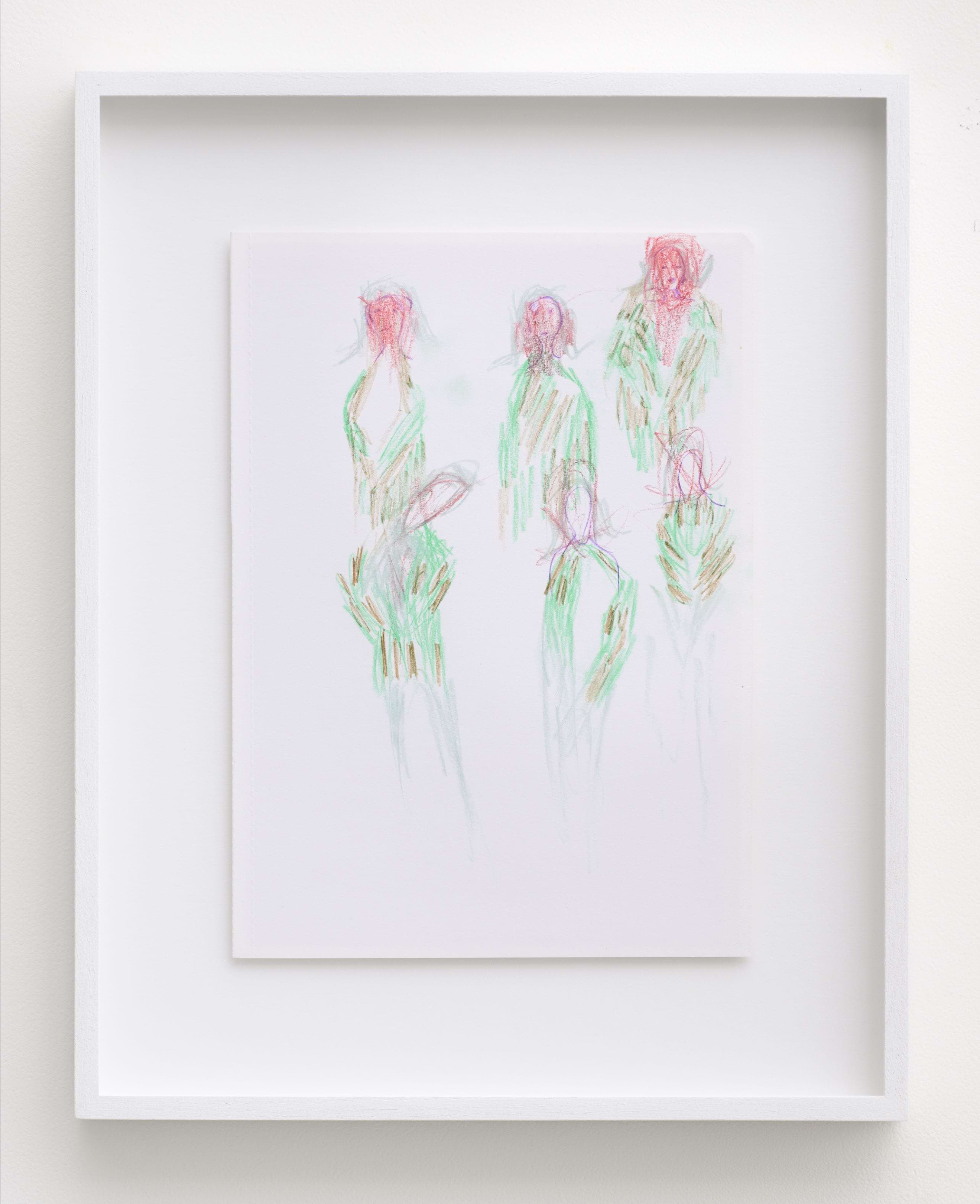
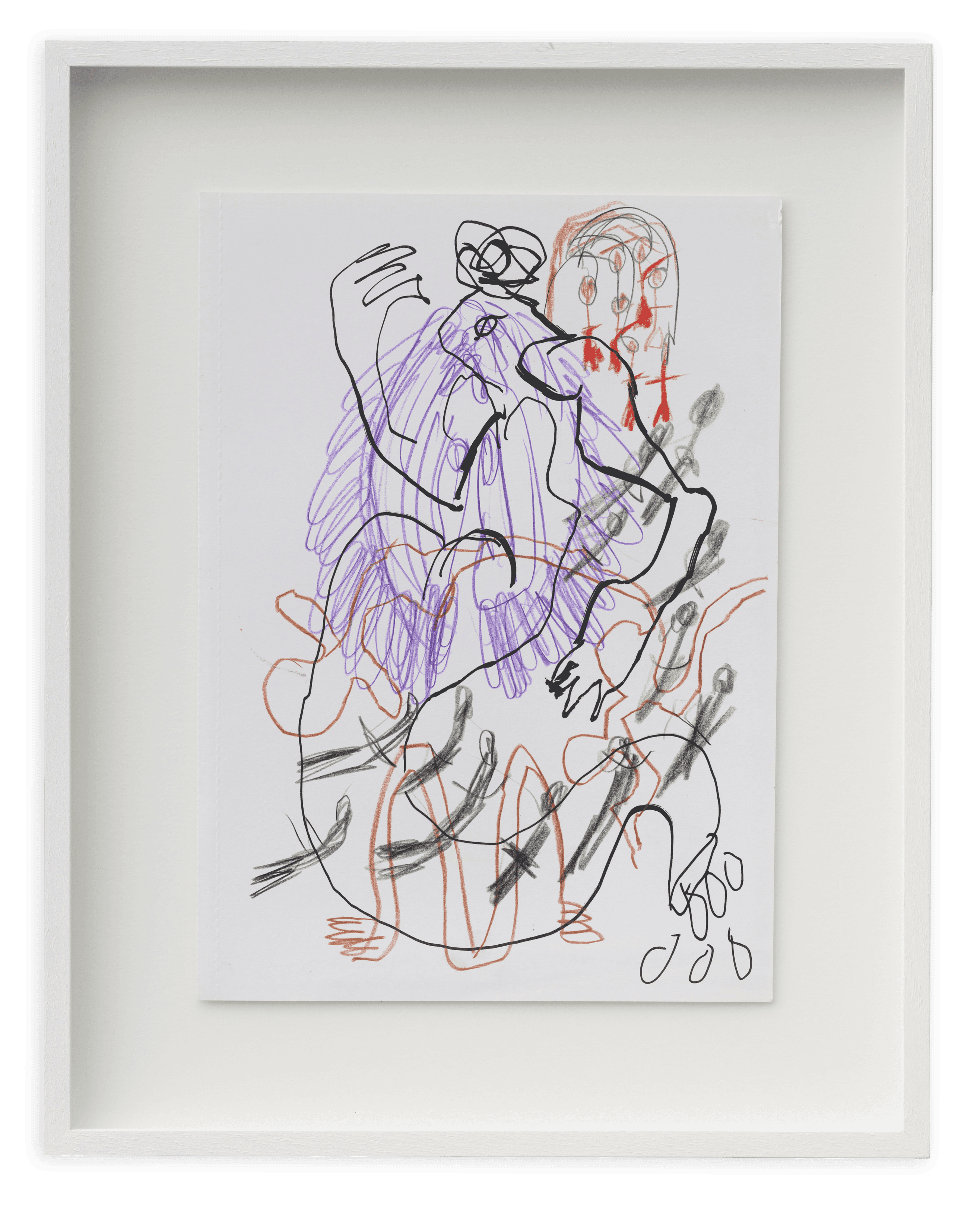
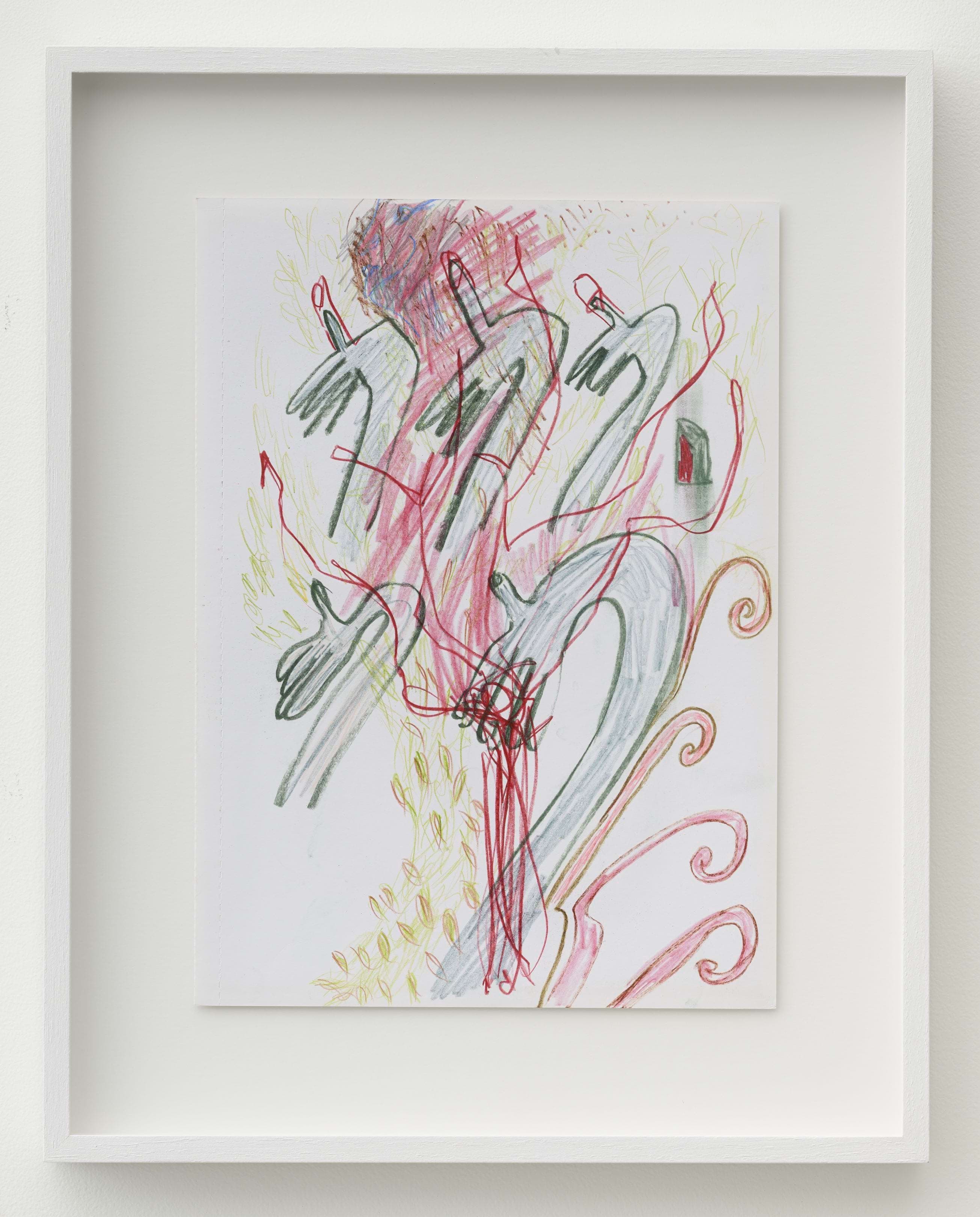
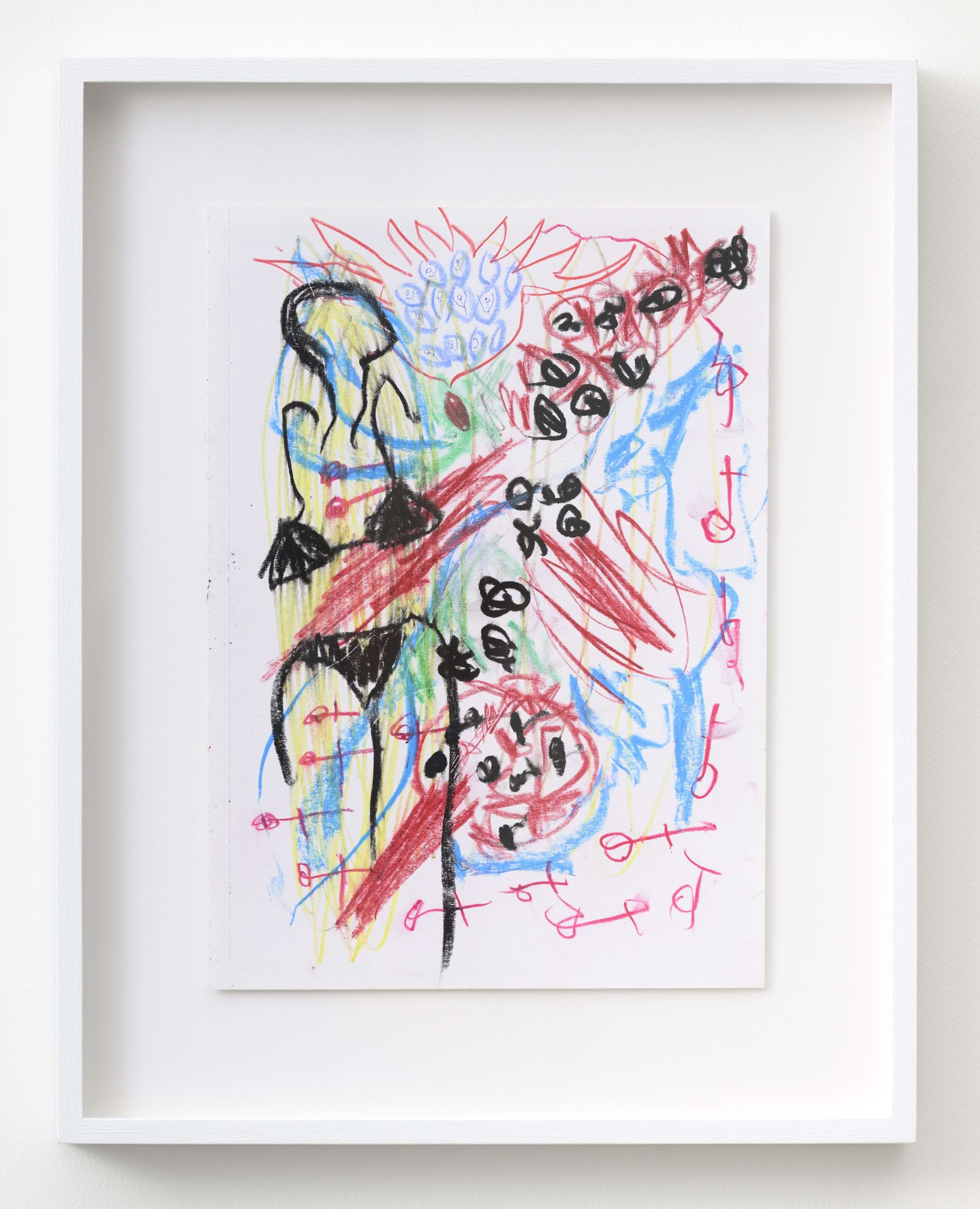
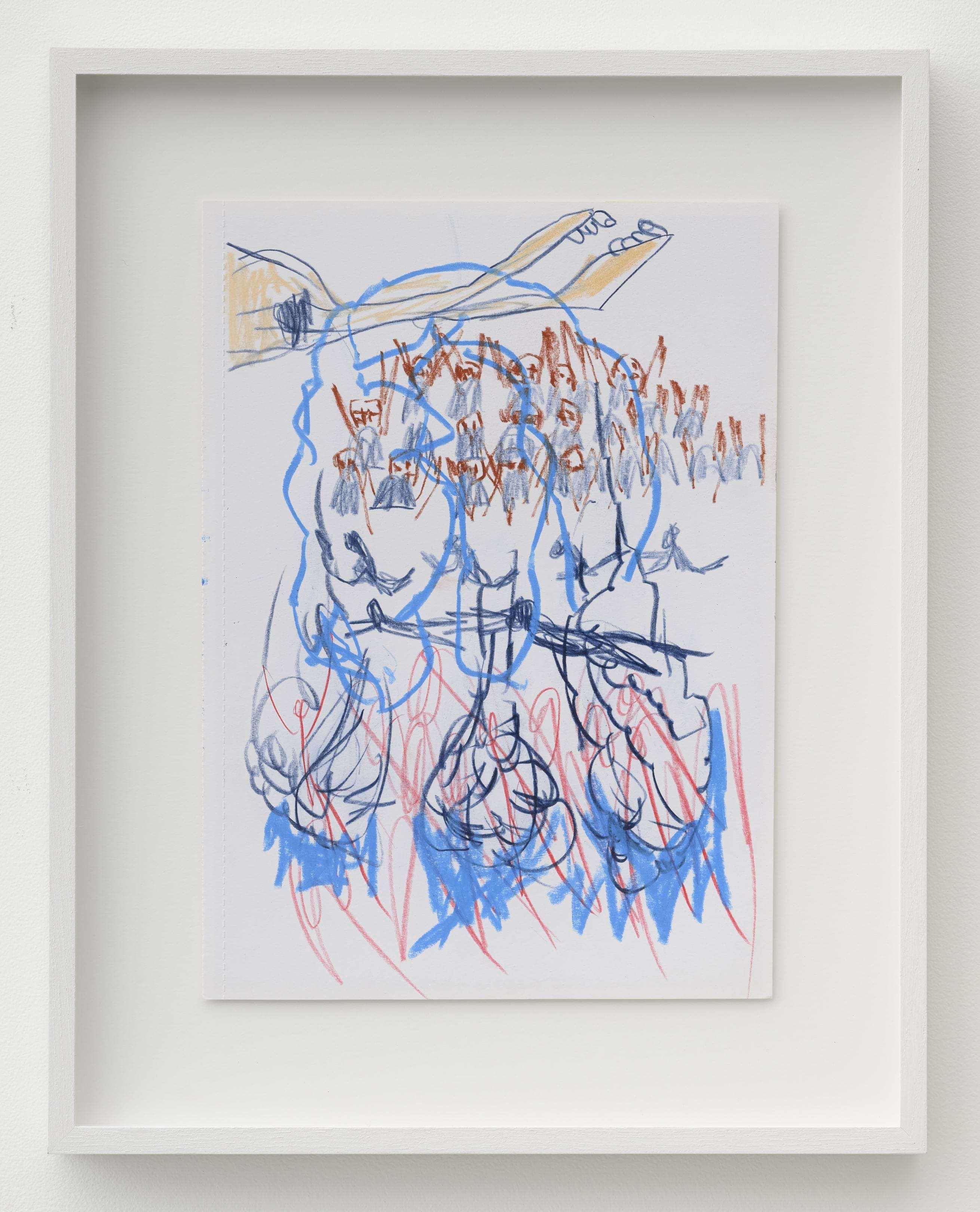
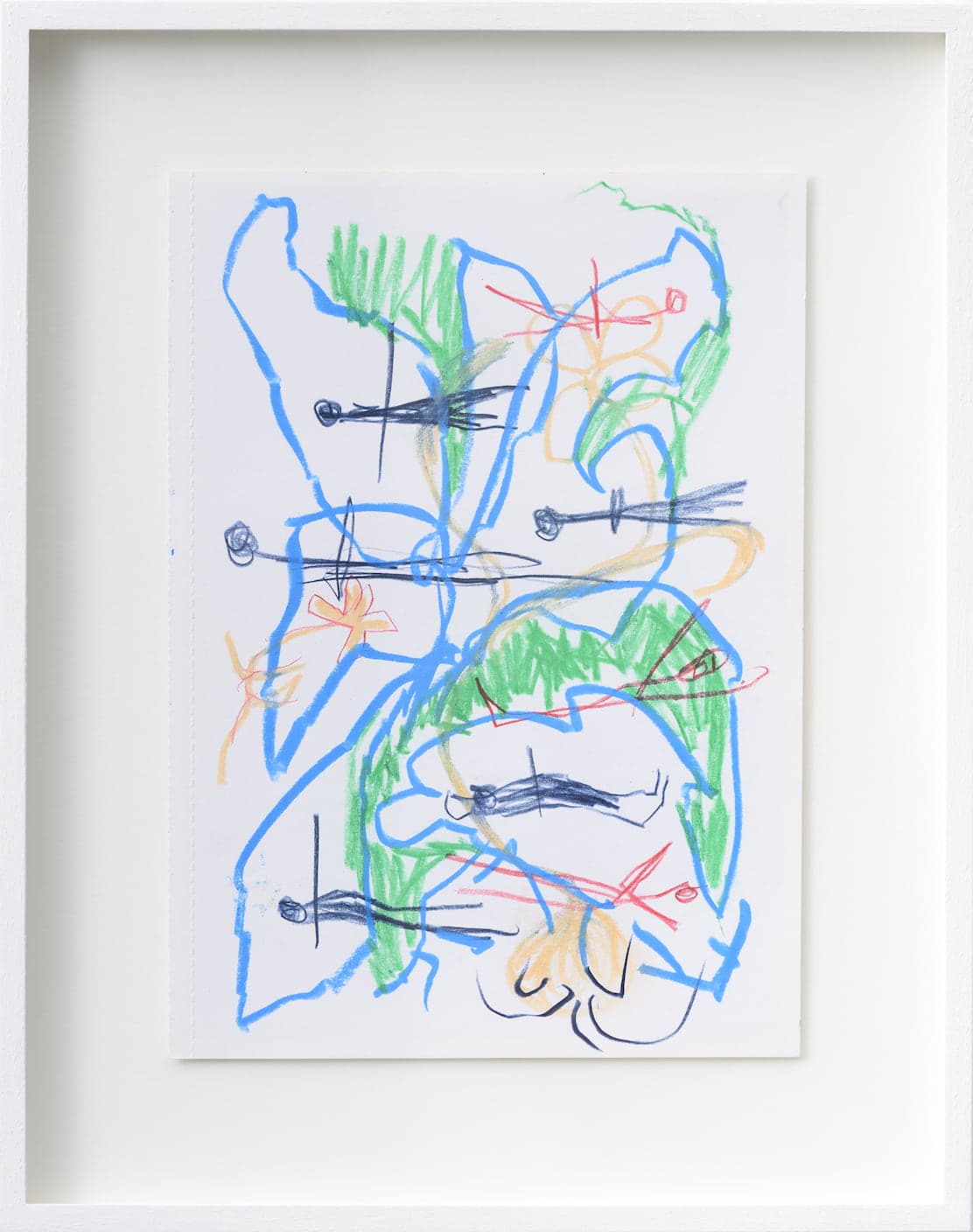
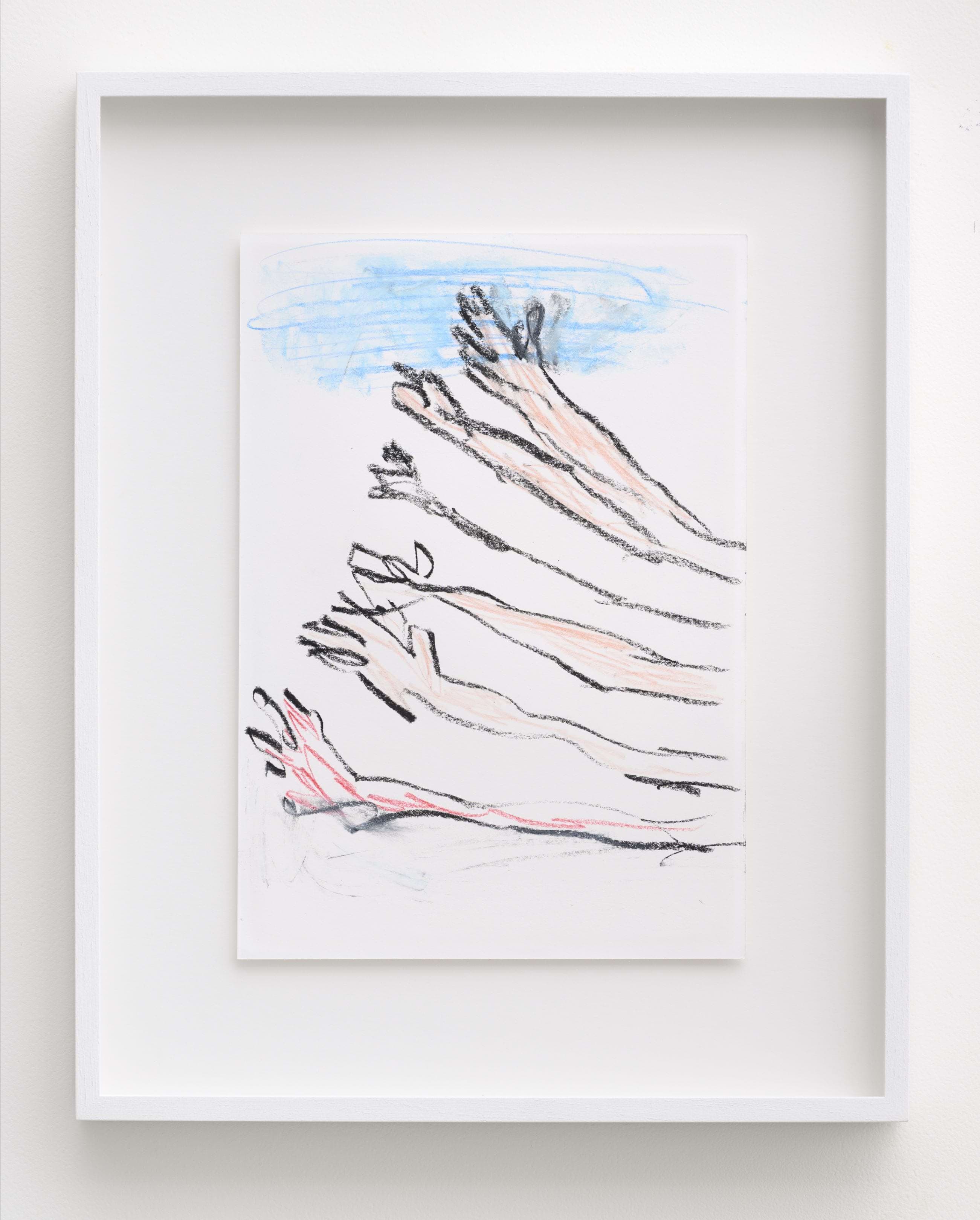
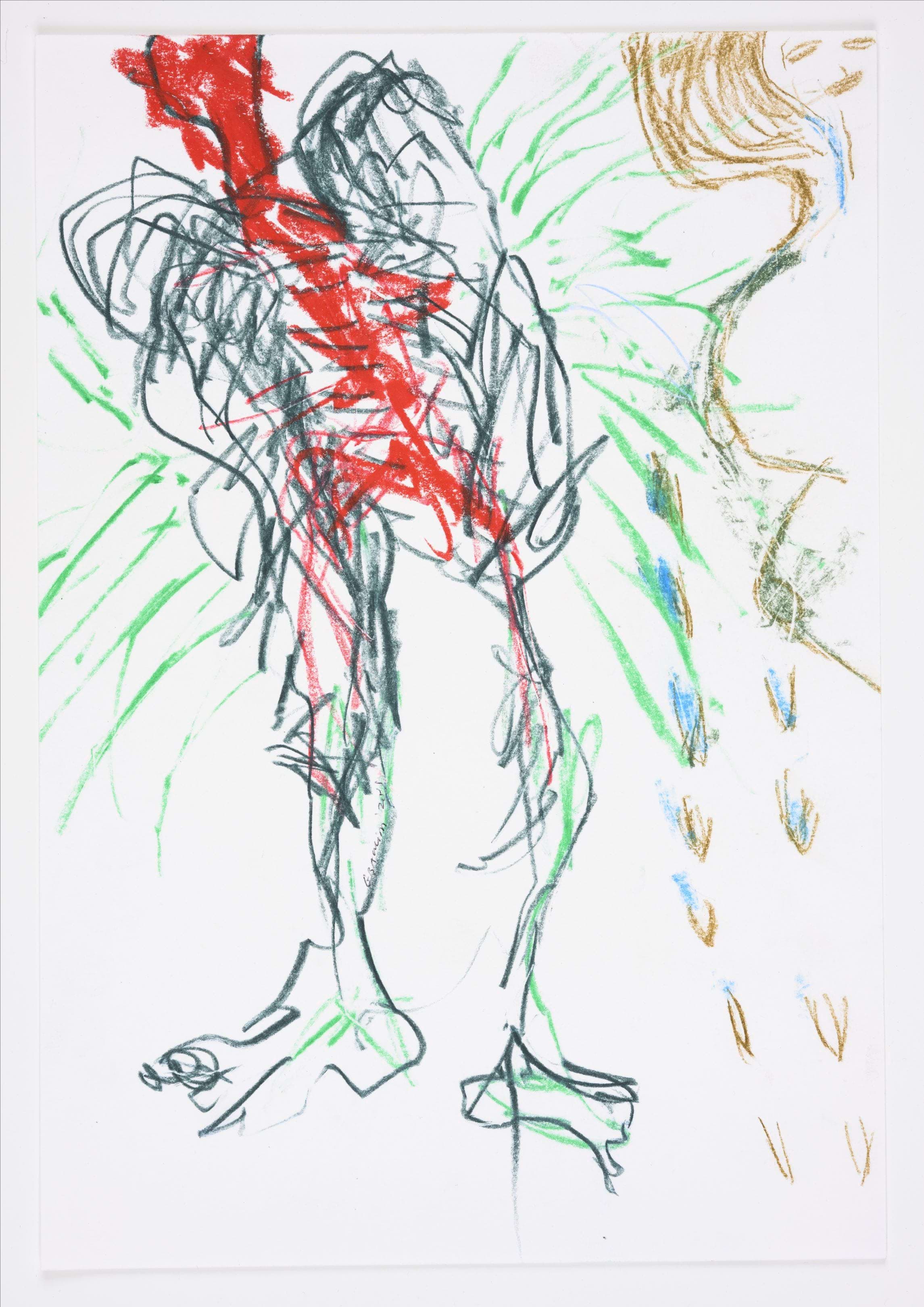
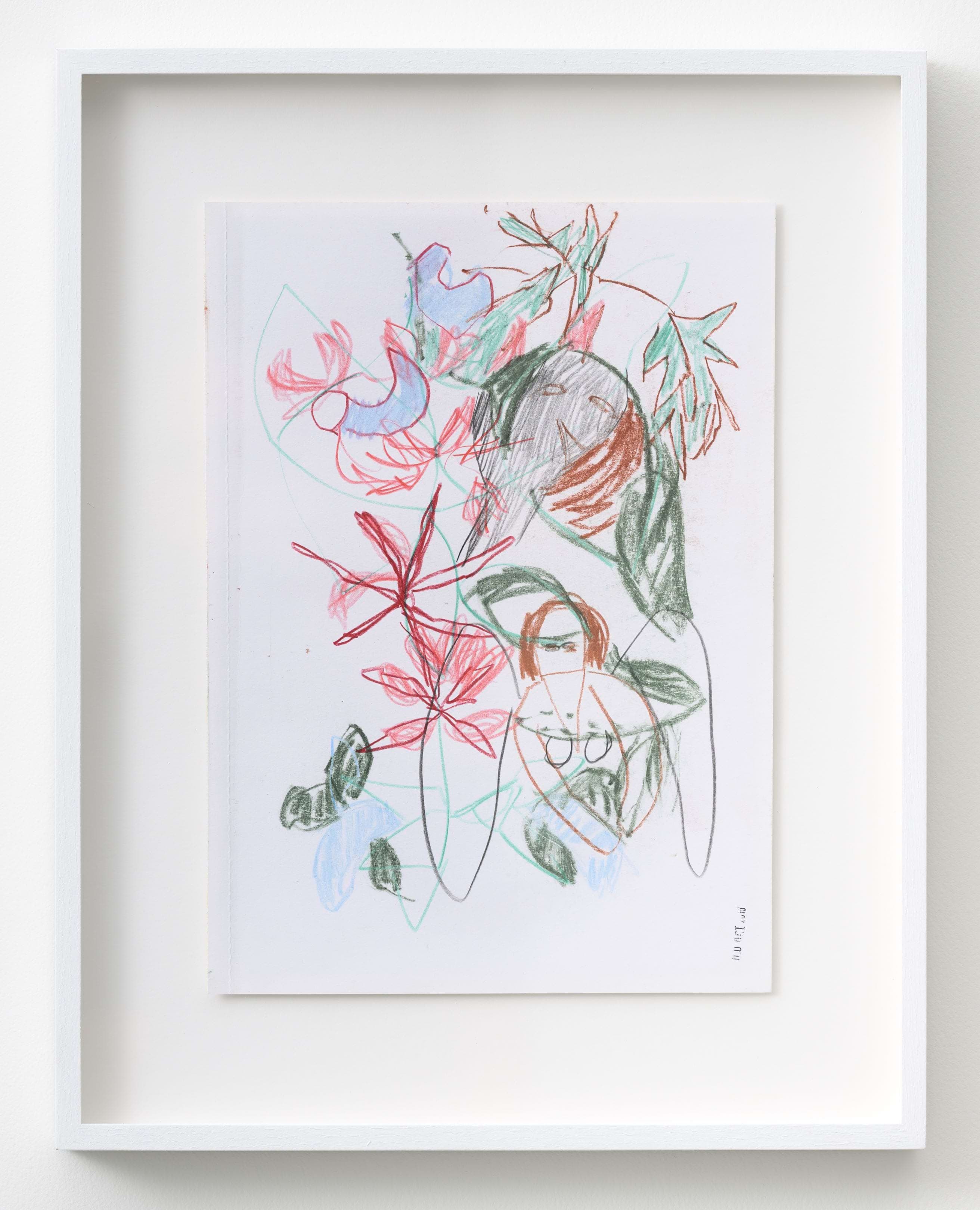
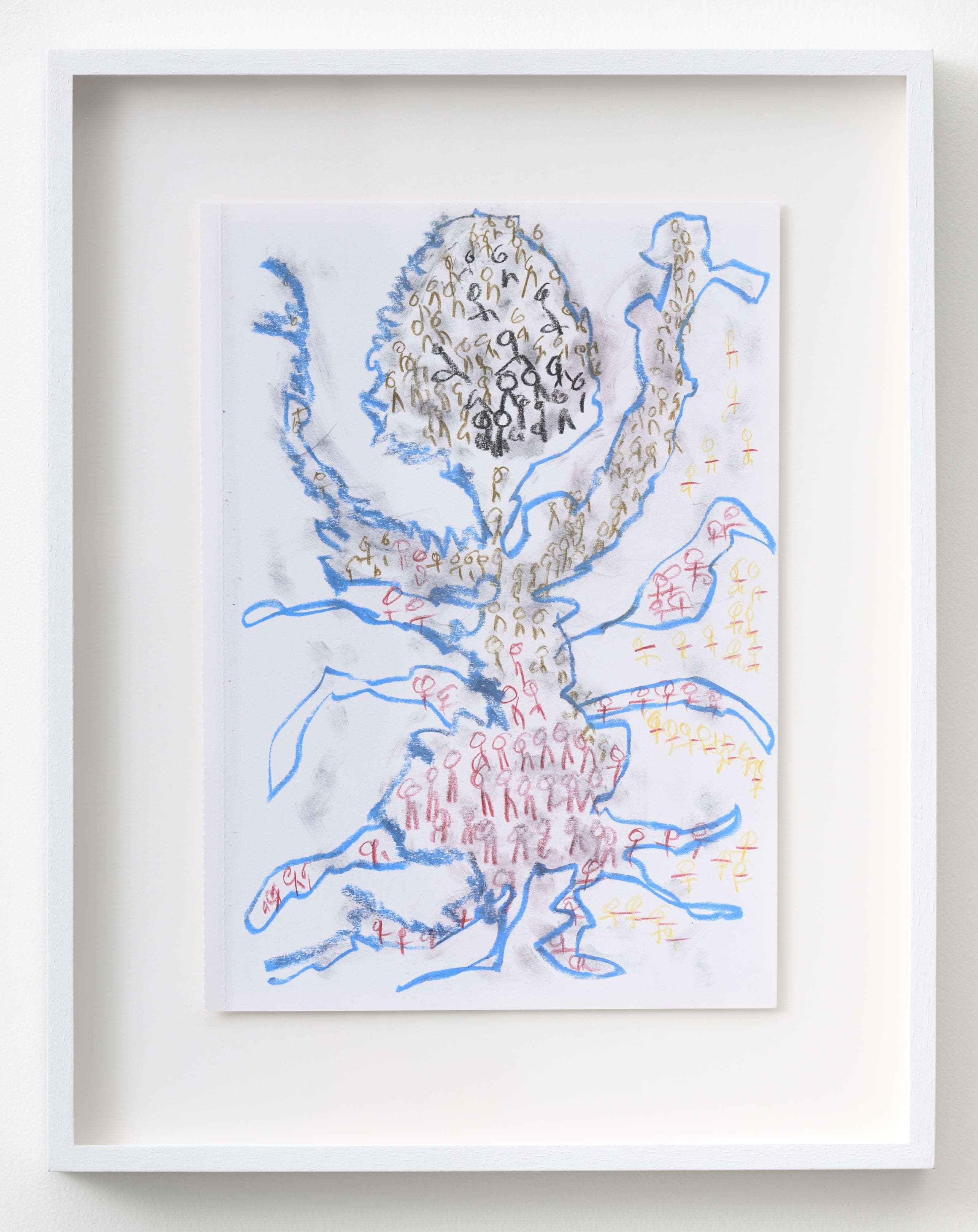
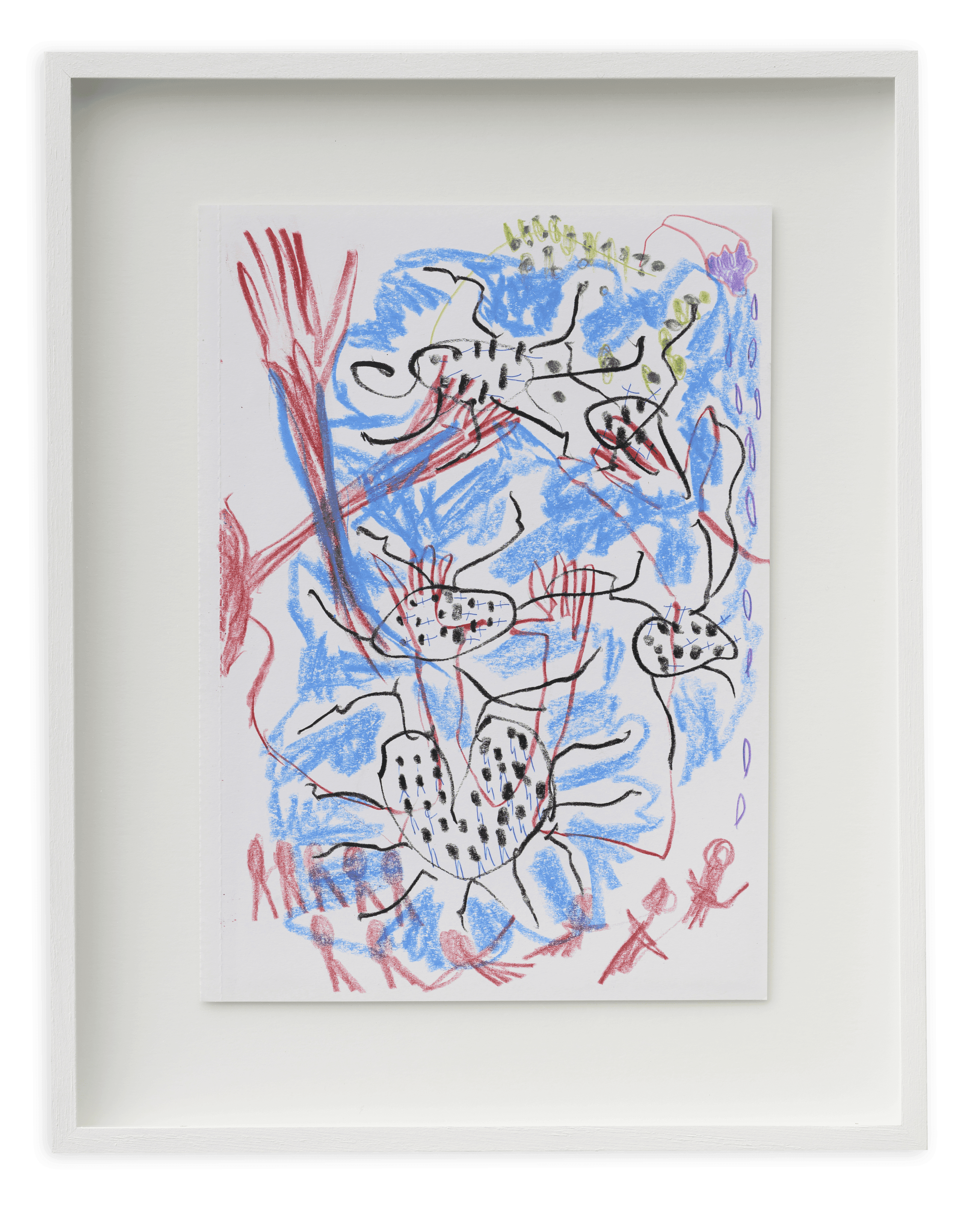
Gbaguidi’s candid and sometimes tongue-in-cheek creations depict splintered figures in different forms and settings - moving, contorting, shapeshifting. As riotous colour erupts alongside subtle hues, creatures lay next to other creatures, they merge with animal and plant life and other objects, breaking the hard edges between me/us/them/it.
Often using natural pigments, alongside paint, ink, pencil, wool, wax and crayons and materials such as flour sacks and tarpaulin, Gbaguidi confronts colonial histories by repurposing discarded materials and integrating them into new contexts. She questions legacies of colonialism that continue to impact migration, trade and the environment.
Her practice, phenomenological and embodied, involves a performative element where the body serves as a medium. She often uses own body to paint and make marks on the surfaces (instead of brushes or other tools). These scratches and smudges become imprints that allow the work to absorb memory into form, she explains; “thus, the body becomes a language that translates sociopolitical issues into a poetic choreography composed of paintings, drawings and textiles....”
Gbaguidi confronts histories of oppression, particularly through women’s experiences, exposing how history, (un)recorded and remembered, continues to impact on women’s lives. Her practice can be understood through several key thematic threads — assemblage, fragmentation and intersections reflected through a focus on the female body; how the body is encountered and read, alongside its relationship with the environment, in a technological age. Seeing herself as a modern day griot and carrying on a long tradition of lyrical storytelling she engages in transgenerational and intercontinental dialogue, particularly between her birth place in West Africa and Europe.
Pélagie Gbaguidi’s work incorporates paintings, drawings and mixed media works in an exploration of the “big and small stories that take our beings towards the burning questions of the world, urging us to go beyond the surface” - Pélagie Gbaguidi
Gbaguidi’s candid and sometimes tongue-in-cheek creations depict splintered figures in different forms and settings - moving, contorting, shapeshifting. As riotous colour erupts alongside subtle hues, creatures lay next to other creatures, they merge with animal and plant life and other objects, breaking the hard edges between me/us/them/it.
Often using natural pigments, alongside paint, ink, pencil, wool, wax and crayons and materials such as flour sacks and tarpaulin, Gbaguidi confronts colonial histories by repurposing discarded materials and integrating them into new contexts. She questions legacies of colonialism that continue to impact migration, trade and the environment.
Her practice, phenomenological and embodied, involves a performative element where the body serves as a medium. She often uses own body to paint and make marks on the surfaces (instead of brushes or other tools). These scratches and smudges become imprints that allow the work to absorb memory into form, she explains; “thus, the body becomes a language that translates sociopolitical issues into a poetic choreography composed of paintings, drawings and textiles....”
Gbaguidi confronts histories of oppression, particularly through women’s experiences, exposing how history, (un)recorded and remembered, continues to impact on women’s lives. Her practice can be understood through several key thematic threads — assemblage, fragmentation and intersections reflected through a focus on the female body; how the body is encountered and read, alongside its relationship with the environment, in a technological age. Seeing herself as a modern day griot and carrying on a long tradition of lyrical storytelling she engages in transgenerational and intercontinental dialogue, particularly between her birth place in West Africa and Europe.
Pélagie Gbaguidi’s work incorporates paintings, drawings and mixed media works in an exploration of the “big and small stories that take our beings towards the burning questions of the world, urging us to go beyond the surface” - Pélagie Gbaguidi
Gbaguidi’s candid and sometimes tongue-in-cheek creations depict splintered figures in different forms and settings - moving, contorting, shapeshifting. As riotous colour erupts alongside subtle hues, creatures lay next to other creatures, they merge with animal and plant life and other objects, breaking the hard edges between me/us/them/it.
Often using natural pigments, alongside paint, ink, pencil, wool, wax and crayons and materials such as flour sacks and tarpaulin, Gbaguidi confronts colonial histories by repurposing discarded materials and integrating them into new contexts. She questions legacies of colonialism that continue to impact migration, trade and the environment.
Her practice, phenomenological and embodied, involves a performative element where the body serves as a medium. She often uses own body to paint and make marks on the surfaces (instead of brushes or other tools). These scratches and smudges become imprints that allow the work to absorb memory into form, she explains; “thus, the body becomes a language that translates sociopolitical issues into a poetic choreography composed of paintings, drawings and textiles....”
Gbaguidi confronts histories of oppression, particularly through women’s experiences, exposing how history, (un)recorded and remembered, continues to impact on women’s lives. Her practice can be understood through several key thematic threads — assemblage, fragmentation and intersections reflected through a focus on the female body; how the body is encountered and read, alongside its relationship with the environment, in a technological age. Seeing herself as a modern day griot and carrying on a long tradition of lyrical storytelling she engages in transgenerational and intercontinental dialogue, particularly between her birth place in West Africa and Europe.
Pélagie Gbaguidi’s work incorporates paintings, drawings and mixed media works in an exploration of the “big and small stories that take our beings towards the burning questions of the world, urging us to go beyond the surface” - Pélagie Gbaguidi
Gbaguidi’s candid and sometimes tongue-in-cheek creations depict splintered figures in different forms and settings - moving, contorting, shapeshifting. As riotous colour erupts alongside subtle hues, creatures lay next to other creatures, they merge with animal and plant life and other objects, breaking the hard edges between me/us/them/it.
Often using natural pigments, alongside paint, ink, pencil, wool, wax and crayons and materials such as flour sacks and tarpaulin, Gbaguidi confronts colonial histories by repurposing discarded materials and integrating them into new contexts. She questions legacies of colonialism that continue to impact migration, trade and the environment.
Her practice, phenomenological and embodied, involves a performative element where the body serves as a medium. She often uses own body to paint and make marks on the surfaces (instead of brushes or other tools). These scratches and smudges become imprints that allow the work to absorb memory into form, she explains; “thus, the body becomes a language that translates sociopolitical issues into a poetic choreography composed of paintings, drawings and textiles....”
Gbaguidi confronts histories of oppression, particularly through women’s experiences, exposing how history, (un)recorded and remembered, continues to impact on women’s lives. Her practice can be understood through several key thematic threads — assemblage, fragmentation and intersections reflected through a focus on the female body; how the body is encountered and read, alongside its relationship with the environment, in a technological age. Seeing herself as a modern day griot and carrying on a long tradition of lyrical storytelling she engages in transgenerational and intercontinental dialogue, particularly between her birth place in West Africa and Europe.
Pélagie Gbaguidi’s work incorporates paintings, drawings and mixed media works in an exploration of the “big and small stories that take our beings towards the burning questions of the world, urging us to go beyond the surface” - Pélagie Gbaguidi
Gbaguidi’s candid and sometimes tongue-in-cheek creations depict splintered figures in different forms and settings - moving, contorting, shapeshifting. As riotous colour erupts alongside subtle hues, creatures lay next to other creatures, they merge with animal and plant life and other objects, breaking the hard edges between me/us/them/it.
Often using natural pigments, alongside paint, ink, pencil, wool, wax and crayons and materials such as flour sacks and tarpaulin, Gbaguidi confronts colonial histories by repurposing discarded materials and integrating them into new contexts. She questions legacies of colonialism that continue to impact migration, trade and the environment.
Her practice, phenomenological and embodied, involves a performative element where the body serves as a medium. She often uses own body to paint and make marks on the surfaces (instead of brushes or other tools). These scratches and smudges become imprints that allow the work to absorb memory into form, she explains; “thus, the body becomes a language that translates sociopolitical issues into a poetic choreography composed of paintings, drawings and textiles....”
Gbaguidi confronts histories of oppression, particularly through women’s experiences, exposing how history, (un)recorded and remembered, continues to impact on women’s lives. Her practice can be understood through several key thematic threads — assemblage, fragmentation and intersections reflected through a focus on the female body; how the body is encountered and read, alongside its relationship with the environment, in a technological age. Seeing herself as a modern day griot and carrying on a long tradition of lyrical storytelling she engages in transgenerational and intercontinental dialogue, particularly between her birth place in West Africa and Europe.
Pélagie Gbaguidi’s work incorporates paintings, drawings and mixed media works in an exploration of the “big and small stories that take our beings towards the burning questions of the world, urging us to go beyond the surface” - Pélagie Gbaguidi
Gbaguidi’s candid and sometimes tongue-in-cheek creations depict splintered figures in different forms and settings - moving, contorting, shapeshifting. As riotous colour erupts alongside subtle hues, creatures lay next to other creatures, they merge with animal and plant life and other objects, breaking the hard edges between me/us/them/it.
Often using natural pigments, alongside paint, ink, pencil, wool, wax and crayons and materials such as flour sacks and tarpaulin, Gbaguidi confronts colonial histories by repurposing discarded materials and integrating them into new contexts. She questions legacies of colonialism that continue to impact migration, trade and the environment.
Her practice, phenomenological and embodied, involves a performative element where the body serves as a medium. She often uses own body to paint and make marks on the surfaces (instead of brushes or other tools). These scratches and smudges become imprints that allow the work to absorb memory into form, she explains; “thus, the body becomes a language that translates sociopolitical issues into a poetic choreography composed of paintings, drawings and textiles....”
Gbaguidi confronts histories of oppression, particularly through women’s experiences, exposing how history, (un)recorded and remembered, continues to impact on women’s lives. Her practice can be understood through several key thematic threads — assemblage, fragmentation and intersections reflected through a focus on the female body; how the body is encountered and read, alongside its relationship with the environment, in a technological age. Seeing herself as a modern day griot and carrying on a long tradition of lyrical storytelling she engages in transgenerational and intercontinental dialogue, particularly between her birth place in West Africa and Europe.
Pélagie Gbaguidi’s work incorporates paintings, drawings and mixed media works in an exploration of the “big and small stories that take our beings towards the burning questions of the world, urging us to go beyond the surface” - Pélagie Gbaguidi
Gbaguidi’s candid and sometimes tongue-in-cheek creations depict splintered figures in different forms and settings - moving, contorting, shapeshifting. As riotous colour erupts alongside subtle hues, creatures lay next to other creatures, they merge with animal and plant life and other objects, breaking the hard edges between me/us/them/it.
Often using natural pigments, alongside paint, ink, pencil, wool, wax and crayons and materials such as flour sacks and tarpaulin, Gbaguidi confronts colonial histories by repurposing discarded materials and integrating them into new contexts. She questions legacies of colonialism that continue to impact migration, trade and the environment.
Her practice, phenomenological and embodied, involves a performative element where the body serves as a medium. She often uses own body to paint and make marks on the surfaces (instead of brushes or other tools). These scratches and smudges become imprints that allow the work to absorb memory into form, she explains; “thus, the body becomes a language that translates sociopolitical issues into a poetic choreography composed of paintings, drawings and textiles....”
Gbaguidi confronts histories of oppression, particularly through women’s experiences, exposing how history, (un)recorded and remembered, continues to impact on women’s lives. Her practice can be understood through several key thematic threads — assemblage, fragmentation and intersections reflected through a focus on the female body; how the body is encountered and read, alongside its relationship with the environment, in a technological age. Seeing herself as a modern day griot and carrying on a long tradition of lyrical storytelling she engages in transgenerational and intercontinental dialogue, particularly between her birth place in West Africa and Europe.