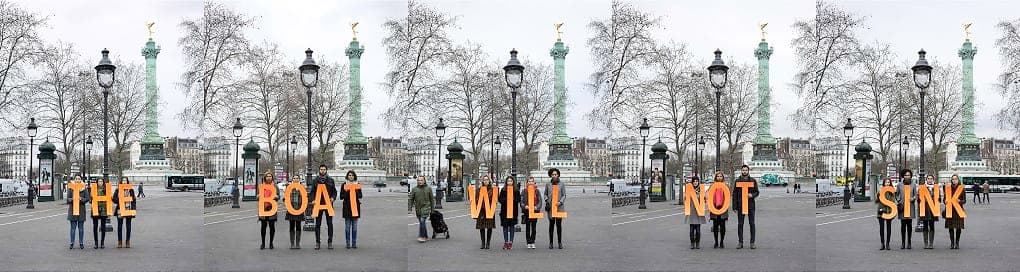

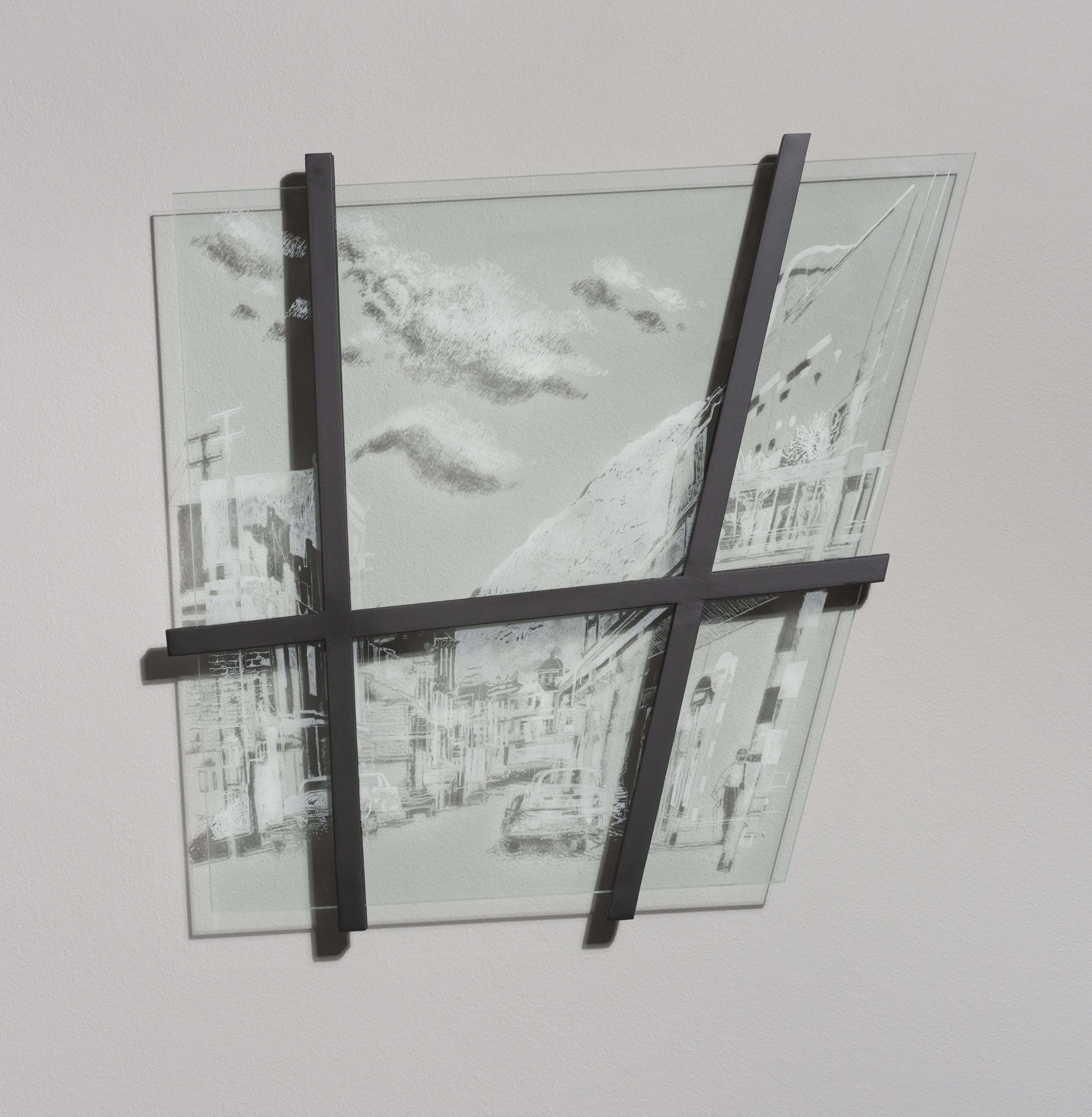
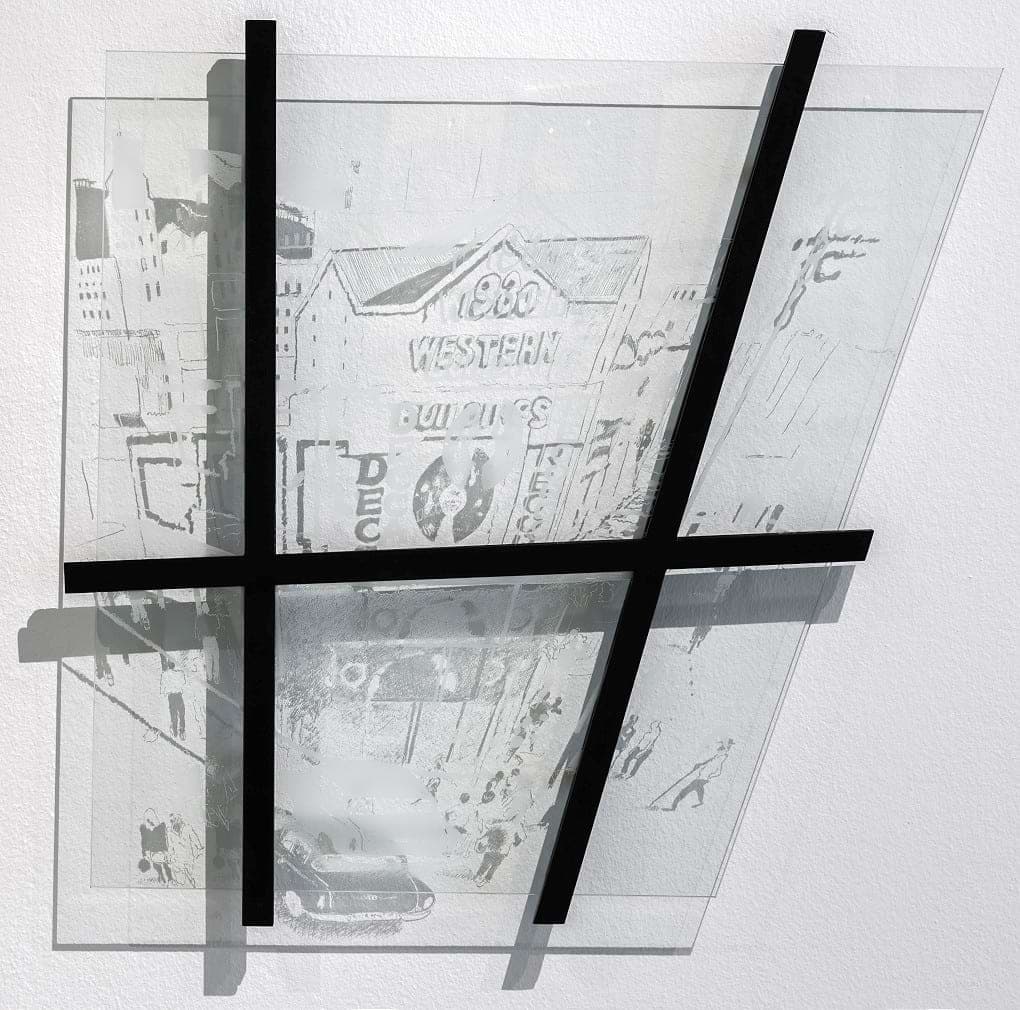
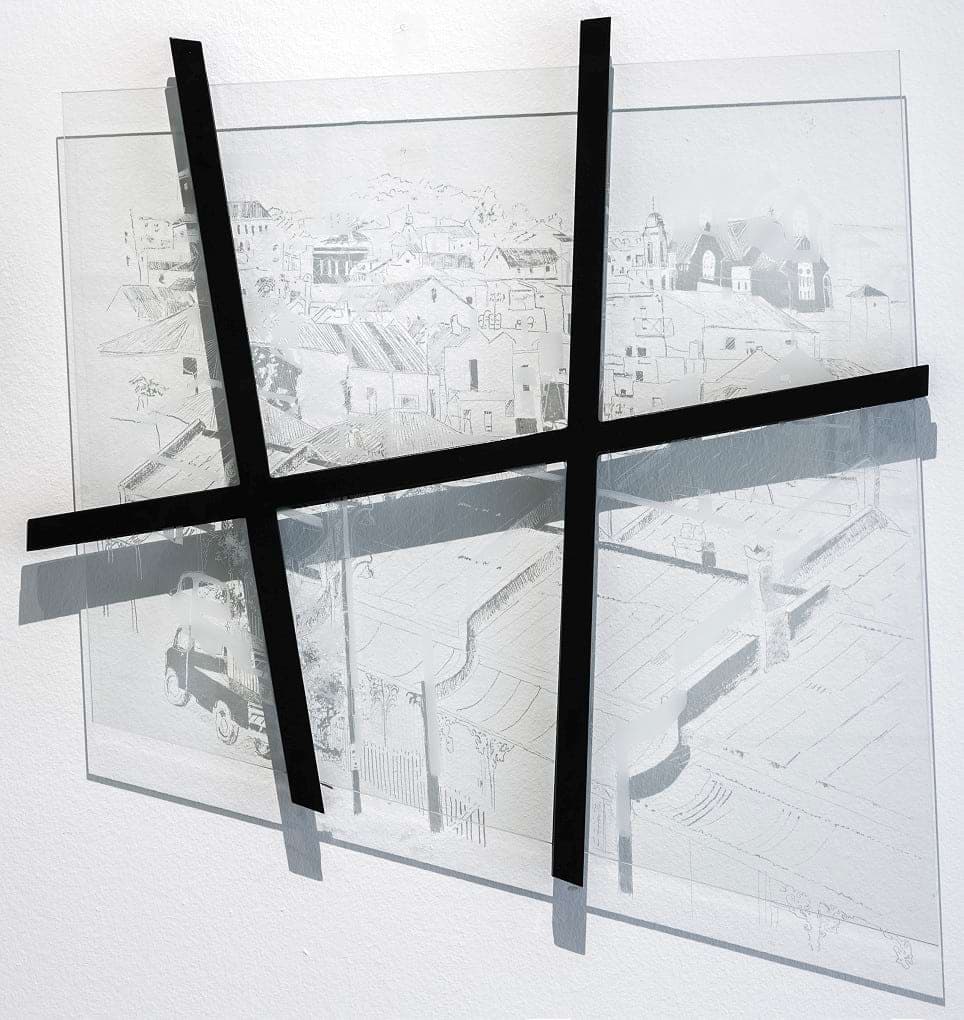
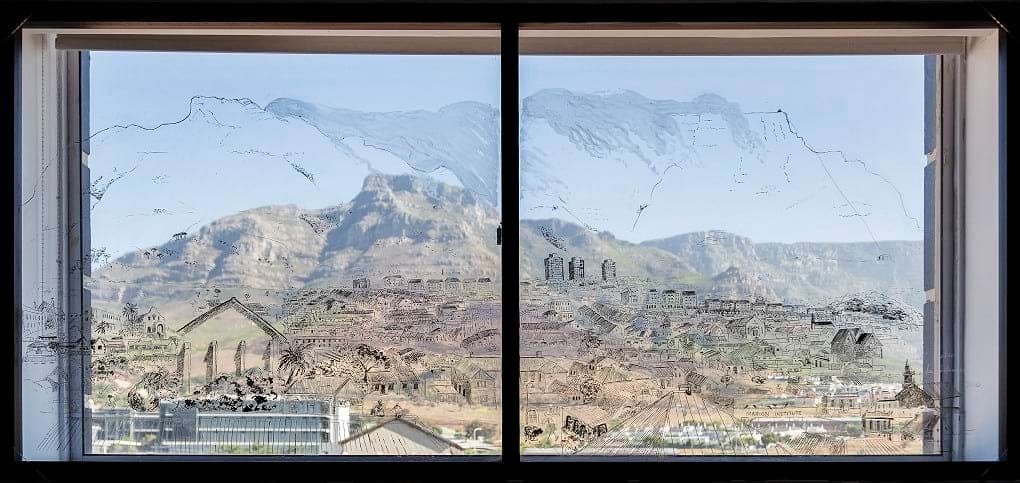
Sue Williamson (b. 1941, Lichfield, UK) emigrated with her family to South Africa in 1948. In the 1970s, Williamson started to make work which addressed social change and by the late 1980s she was well known for her series of portraits of women involved in the country’s political struggle, titled A Few South Africans (1980s).
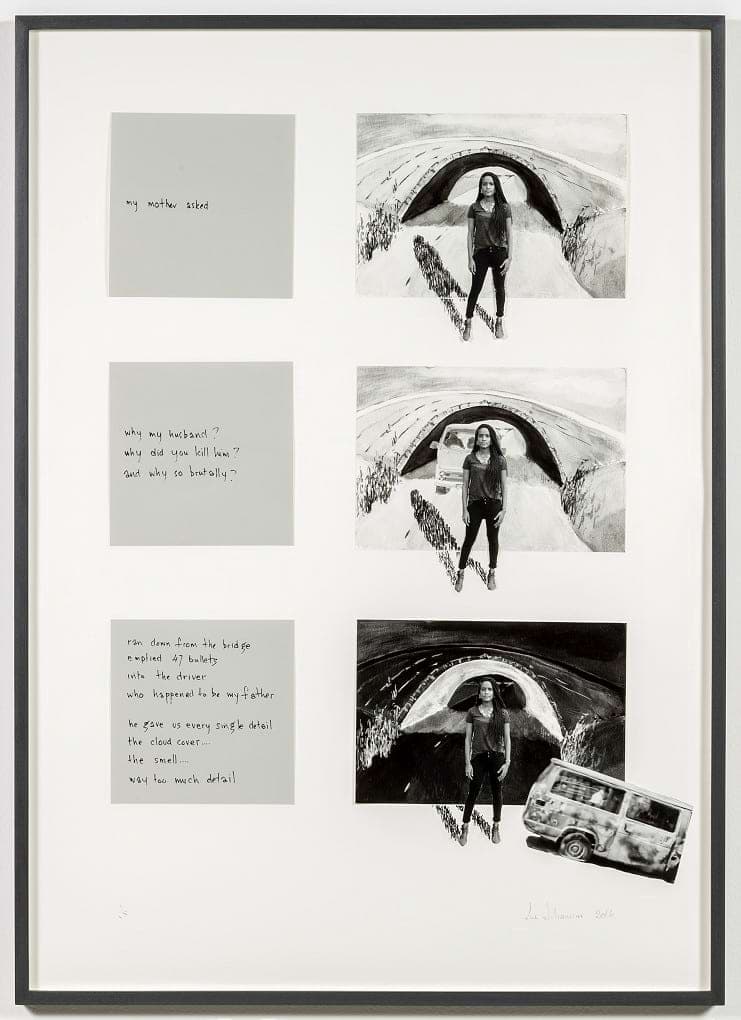
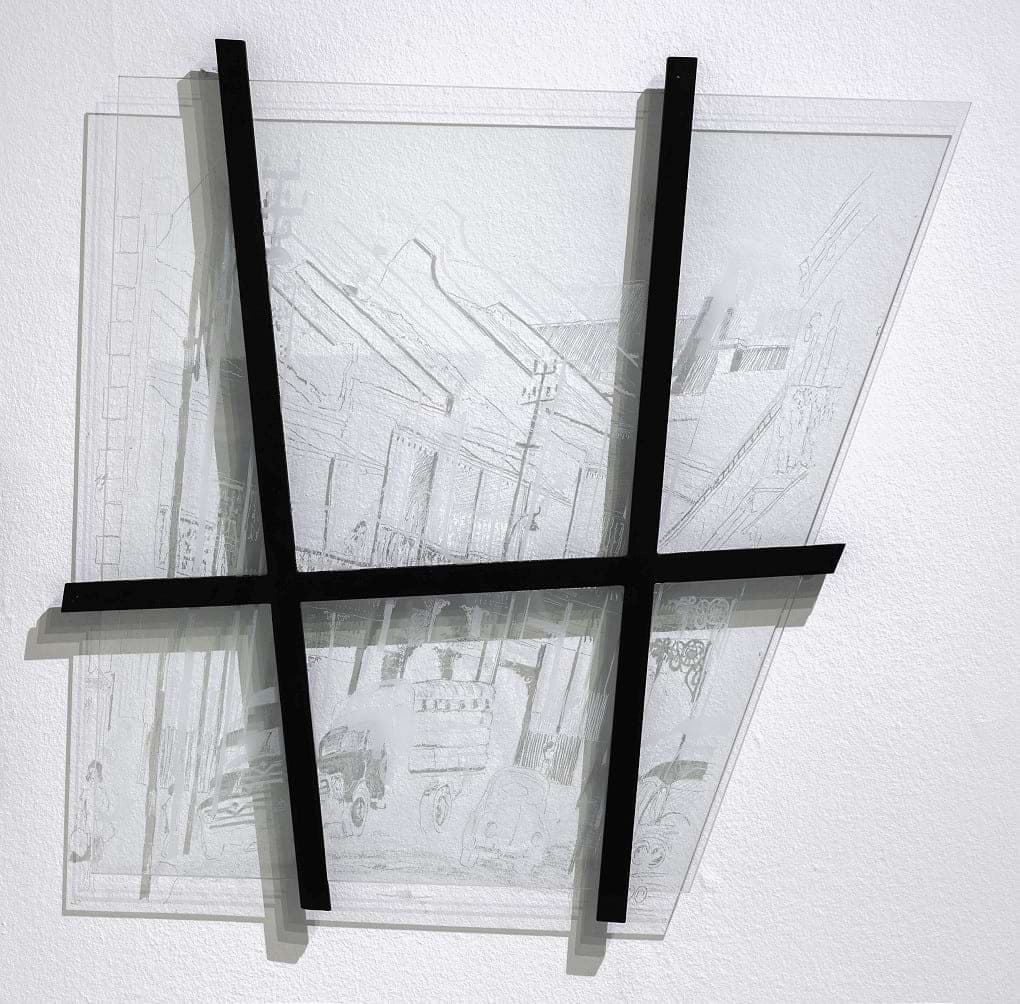
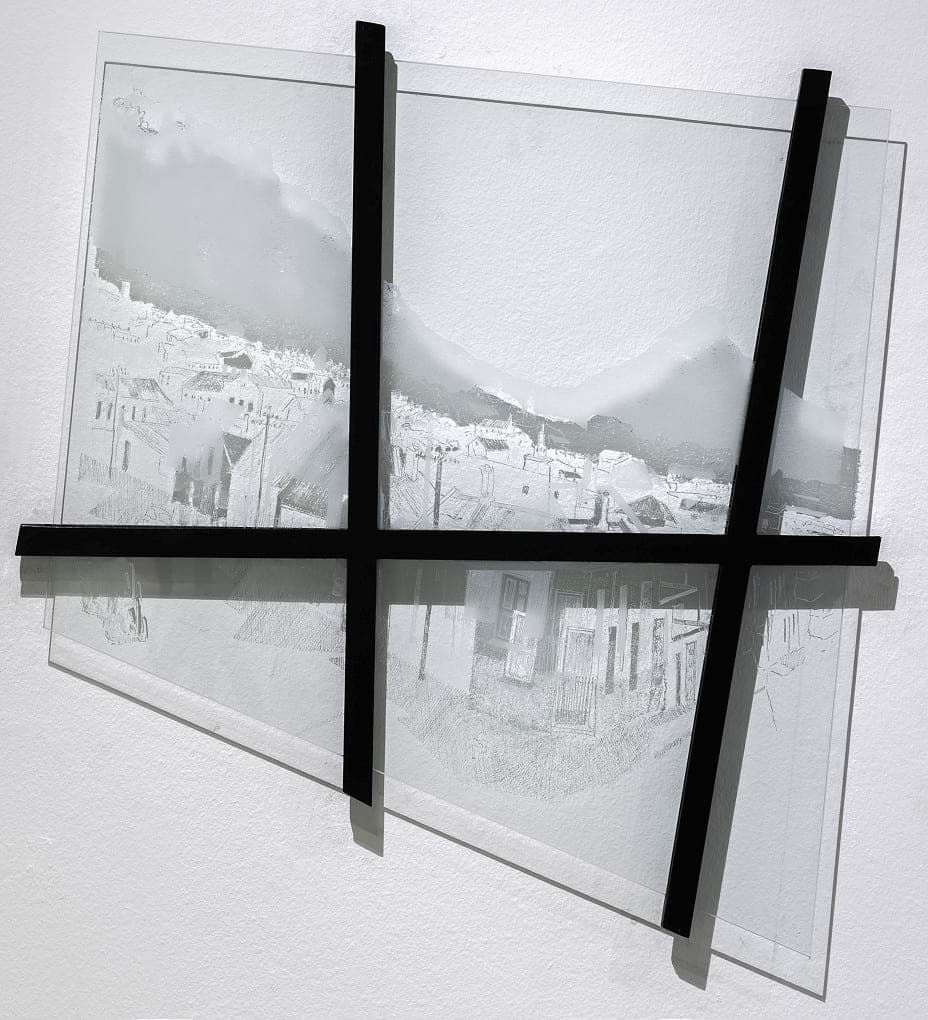
On the audio side of Storyboard: Candice Mama, a preparatory work for the two channel video, It’s a pleasure to meet you, (2017) we read the words of Candice Mama, describing her encounter with her father’s killer, apartheid assassin Eugene de Kock. The Mama family went to visit him in jail in order to learn exactly how and why Glenack Masilo Mama had been killed. On the video side of this mixed media collage, Sue Williamson’s photo of Candice Mama is set against a drawing of the bridge on which De Kock stood, waiting for the approach of the minibus driven by Mama’s father. This work was recently shown at Williamson’s joint exhibition with Lebohang Kganye, Tell Me What You Remember, at the Barnes Foundation in Philadelphia in June.
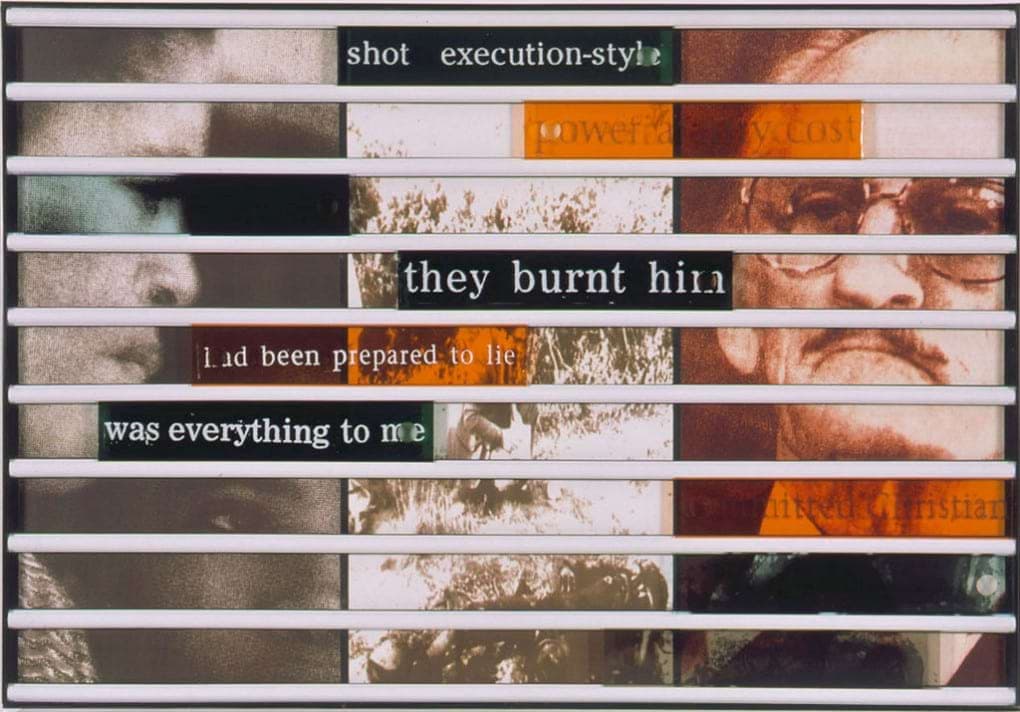
The Truth Games series reflects on the role of South Africa’s Truth and Reconciliation Commission (TRC) in the country’s process of healing – or not healing – after apartheid. The Commission was set up in 1995 by President Mandela, who named Archbishop Desmond Tutu as its chairman, and invited witnesses who were identified as victims of gross human rights violations to give statements about their experiences. Hearings were held across the country. Perpetrators of violence could also give testimony and request amnesty from both civil and criminal prosecution, on the condition that they told the whole truth and had acted from political belief, whether on the right or the left.
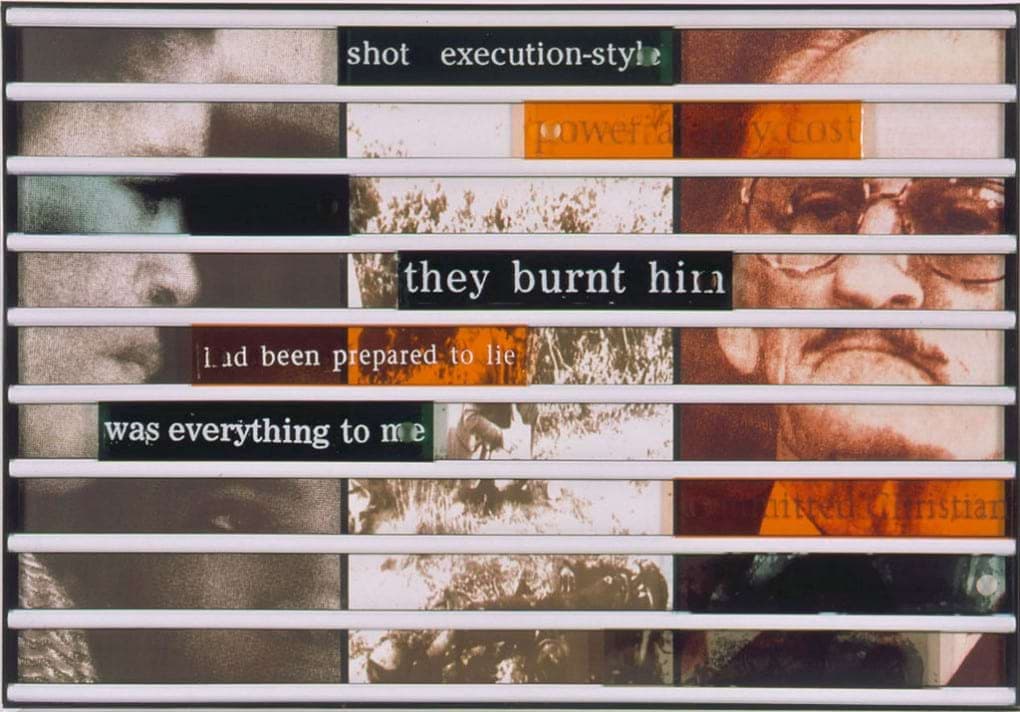
To make the work, Sue Williamson kept daily newspapers through the entire process of the hearings, cutting out images and texts relating to the hearings. Each piece in the Truth Games series presents a triptych of images drawn from this file: on the left, the accuser, in the centre, an image of the event, on the right, the defender. On the sliding perspex slats which run horizontally across the work, are scraps of texts from the evidence of the accusers and the defenders, giving an epigrammatic summary of the proceedings.
However, at no point are all three visible at once. Text drawn from TRC transcripts is printed on sliding slats that obscure parts of the images. Viewers are encouraged to move these slats, revealing or concealing portions of the work as they attempt to piece together a fuller picture, echoing the nation’s collective attempt to uncover the truth.
ANC leader Chris Hani was assassinated in his driveway in 1993. At the hearing, his widow, Limpho, says he was “gunned down”, that his killers had “shown no remorse” and concludes the hearings “will not bring my husband back”. Right wing activist Gaye Derby Lewis admits that she “gave Hani’s address to his killer”, that Hani was “third on hitlist” and that her group’s motive was a “plan to create chaos”.
By mediating the flood of images and narratives that circulate in public discourse and mass media, Williamson aimed to offer a more focused, reflective space – one in which to engage with difficult truths, ask questions and consider the layers of meaning that often remain hidden.
The Cradock Four – Matthe Goniwe, Fort Calata, Sparrow Mkonto and Sicelo Mhlauli – were abducted and killed by security police in 1987. Colonel Harold Snyman was implicated not only in these deaths, but in many other deaths, including that of Steve Biko.
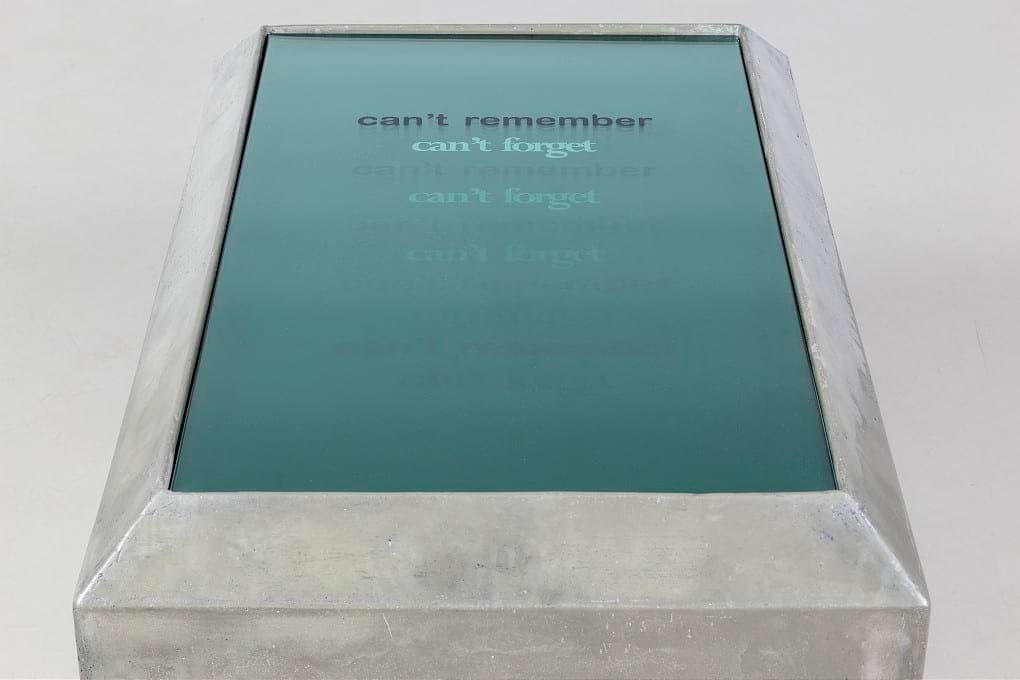
Memorial to the Truth and Reconciliation Commission of South Africa is a homage to Michael Goldberg’s 1978 work, Monument to the Nationalist Government. Again, a brass plaque labels an unlikely public monument. But Goldberg’s sardonic filing cabinet stuffed with manila folders of apartheid legislation has been replaced by a concrete plinth with layers of green glass sheets. Leaning over it, the viewer can read the two phrases which came up consistently through the TRC hearings. “Can’t remember”, most often said by perpetrators, and “can’t forget”, the grief-stricken response of the victims.
In the work, as the viewer reads downwards, the words become less and less easy to distinguish, sinking at last into the depths, as if through water.
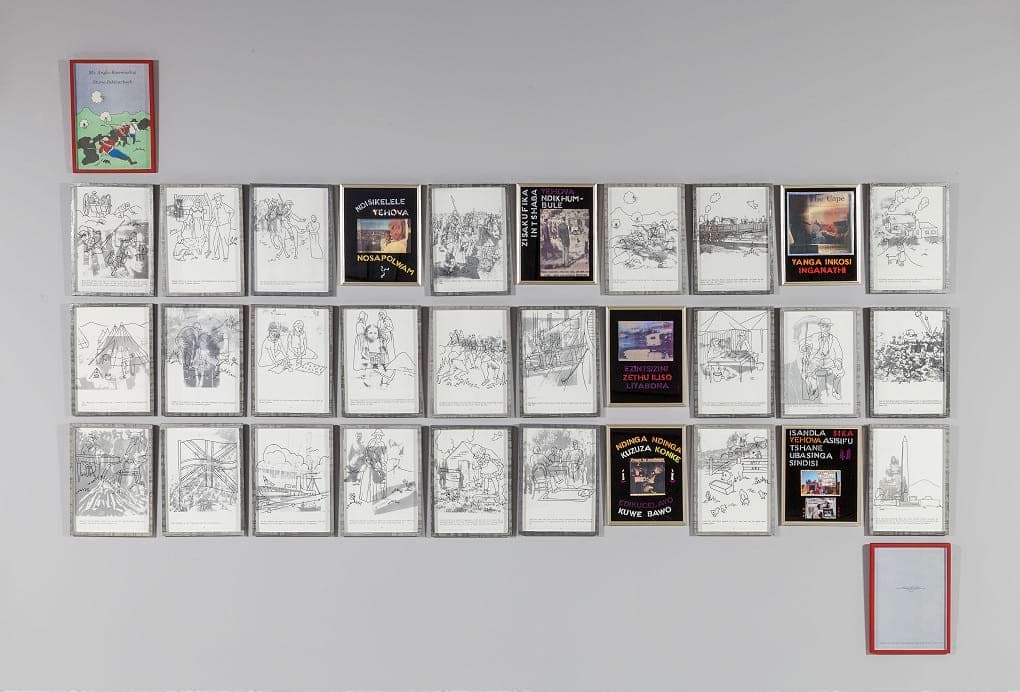
Colouring In (1990) places two distinct moments in South African history in parallel: the suffering of Boer families in tented British concentration camps during the Anglo-Boer War, and the forced removals of Black communities under apartheid in the 1970s.
At its foundation is a children’s colouring book purchased at the Boer War Museum in Bloemfontein. Onto its pages with their simple line drawings, the artist has underlaid archival photographs dating from the war, their softly toned grey images emerging from behind the black lines. The frames are collaged with lists of captured Boers soldiers sent overseas to prisoner-of-war camps in other British colonies, further anchoring the work in this earlier moment of trauma.
Layered into this visual narrative are newspaper clippings from the late 1970s, documenting the evictions and demolitions of Cape Town’s squatter camps. The juxtaposition of these two historical periods — both marked by suffering, loss and displacement – invites reflection on the continuity of state-enforced hardship across time.
The final page in the colouring book is a drawing of the Women’s Monument at the Boer War Museum in Bloemfontein, which commemorates the almost 27,000 Boer women and children who died of illness and malnutrition in the British concentration camps. The ashes of the British activist Emily Hobhouse, who was a heroine of the war, are preserved in a niche at the base.
By bringing these events into dialogue, Colouring In draws attention to the ways histories are taught, remembered, and obscured— particularly in how trauma is framed for future generations.
5 pieces damaged from mould
The Truth Games series reflects on the role of South Africa’s Truth and Reconciliation Commission (TRC) in the country’s process of healing – or not healing – after apartheid. The Commission was set up in 1995 by President Mandela, who named Archbishop Desmond Tutu as its chairman, and invited witnesses who were identified as victims of gross human rights violations to give statements about their experiences. Hearings were held across the country. Perpetrators of violence could also give testimony and request amnesty from both civil and criminal prosecution, on the condition that they told the whole truth and had acted from political belief, whether on the right or the left.
To make the work, Sue Williamson kept daily newspapers through the entire process of the hearings, cutting out images and texts relating to the hearings. Each piece in the Truth Games series presents a triptych of images drawn from this file: on the left, the accuser, in the centre, an image of the event, on the right, the defender. On the sliding perspex slats which run horizontally across the work, are scraps of texts from the evidence of the accusers and the defenders, giving an epigrammatic summary of the proceedings.
However, at no point are all three visible at once. Text drawn from TRC transcripts is printed on sliding slats that obscure parts of the images. Viewers are encouraged to move these slats, revealing or concealing portions of the work as they attempt to piece together a fuller picture, echoing the nation’s collective attempt to uncover the truth.
ANC leader Chris Hani was assassinated in his driveway in 1993. At the hearing, his widow, Limpho, says he was “gunned down”, that his killers had “shown no remorse” and concludes the hearings “will not bring my husband back”. Right wing activist Gaye Derby Lewis admits that she “gave Hani’s address to his killer”, that Hani was “third on hitlist” and that her group’s motive was a “plan to create chaos”.
By mediating the flood of images and narratives that circulate in public discourse and mass media, Williamson aimed to offer a more focused, reflective space – one in which to engage with difficult truths, ask questions and consider the layers of meaning that often remain hidden.
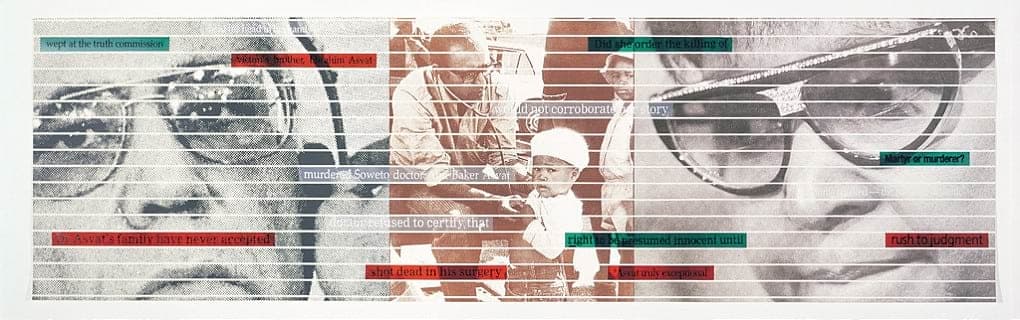
This lithograph, produced in 1999 at the Rutgers Center for Innovative Print and Paper, responds to Winnie Madikizela-Mandela’s testimony before the Truth and Reconciliation Commission concerning the death of Dr Abu Baker Asvat.
A deeply respected Soweto doctor, Asvat was assassinated in his clinic in 1989, with many believing his murder was linked to his refusal to falsify medical records that could distance Madikizela-Mandela from the killing of teenager Stompie Seipei.
In this work, as in all the Truth Games works, the elements have been sourced from press reports and photographs. On the left is the brother of Dr Abu Baker Asvat, Dr Ebrahim Asvat, gazing upwards as he listens to the evidence being given at the TRC hearing. In the centre is Dr Abu Baker Asvat, listening to the breathing of a Soweto child through his stethoscope. On the right, biting her lip as she refuses to acknowledge responsibility in the matter, is Winnie Mandela.
The textual elements of the work reflect contrasting media responses: the white press took a critical stance, while the Black press offered a more forgiving view.