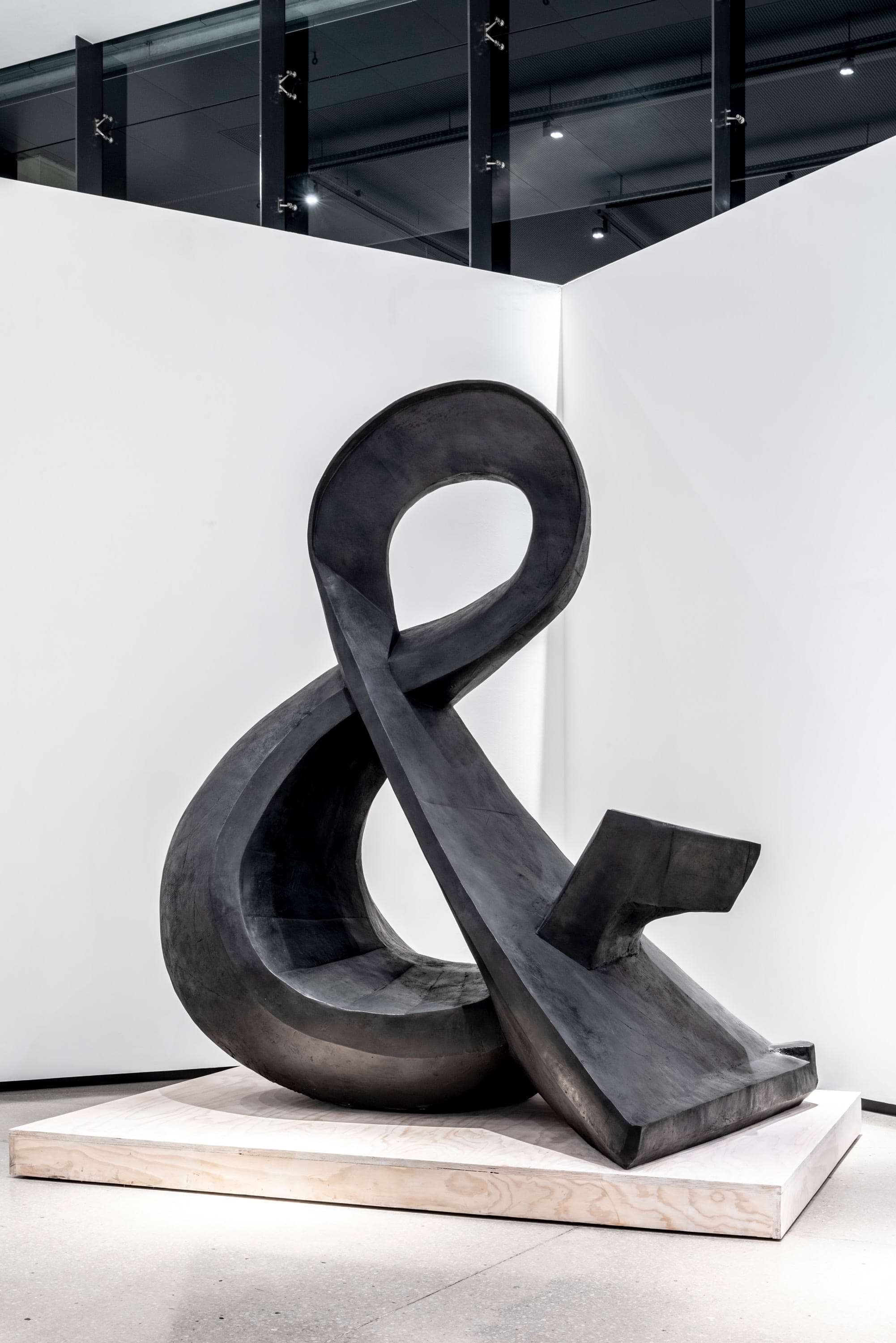
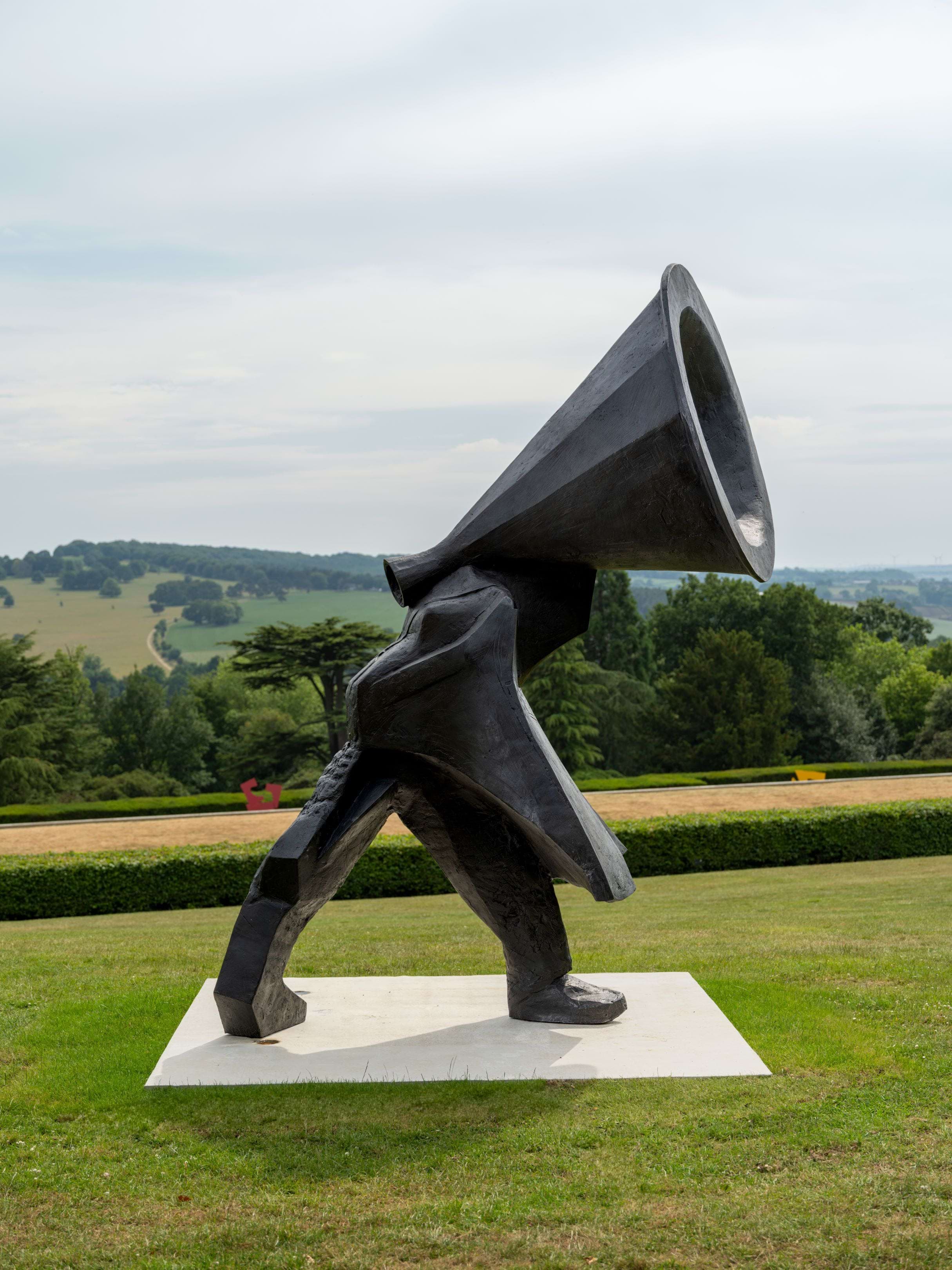
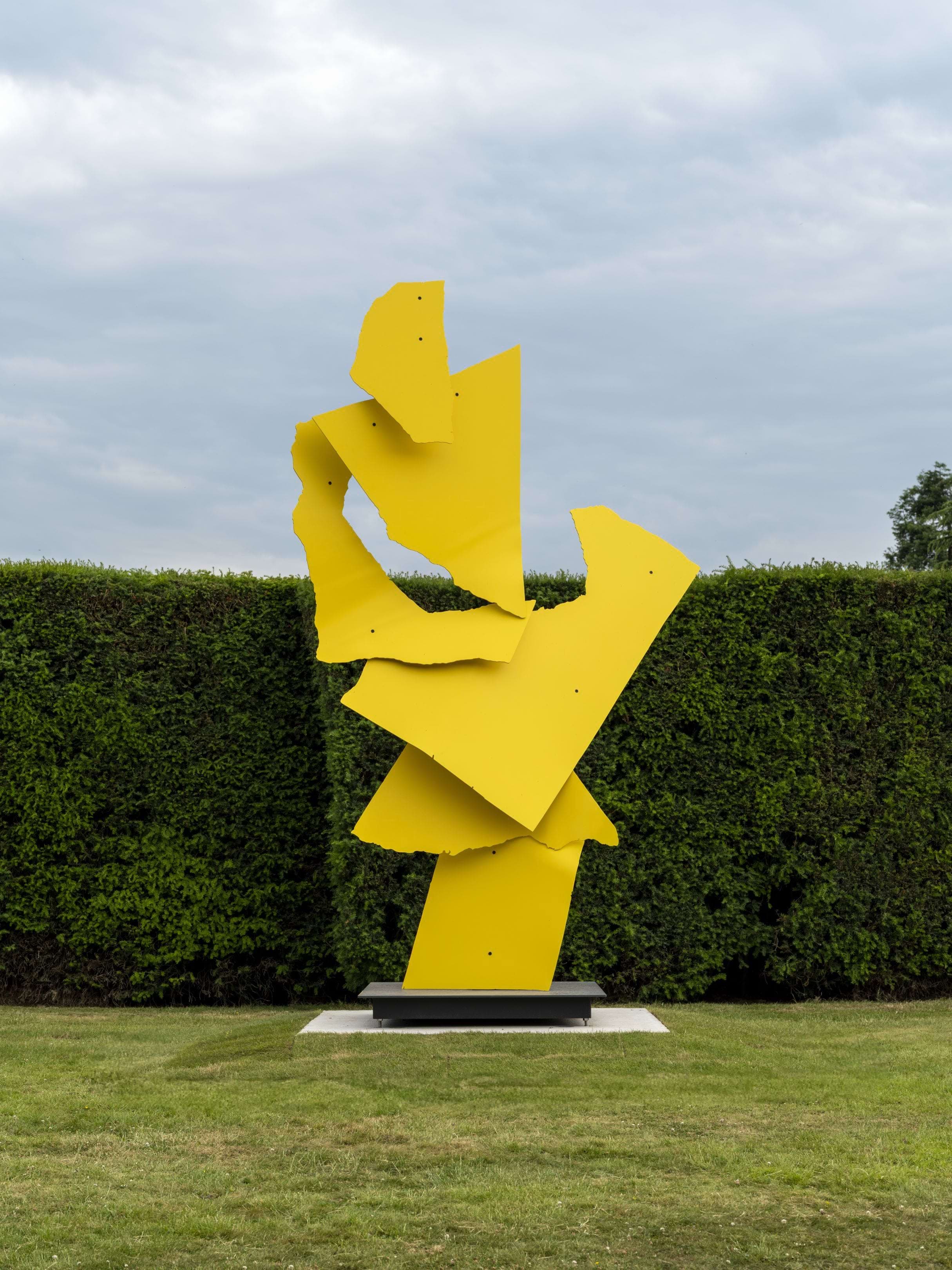
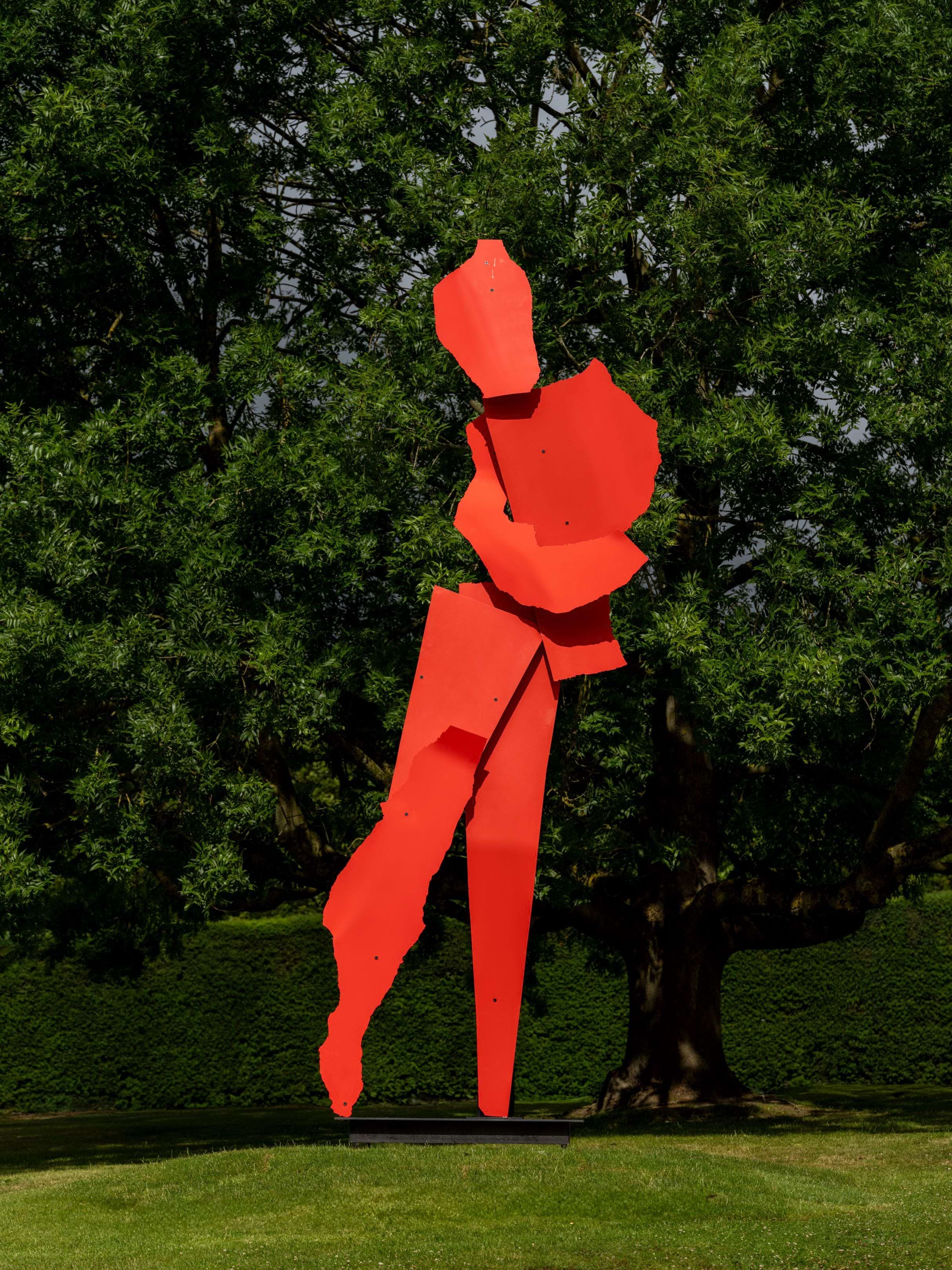
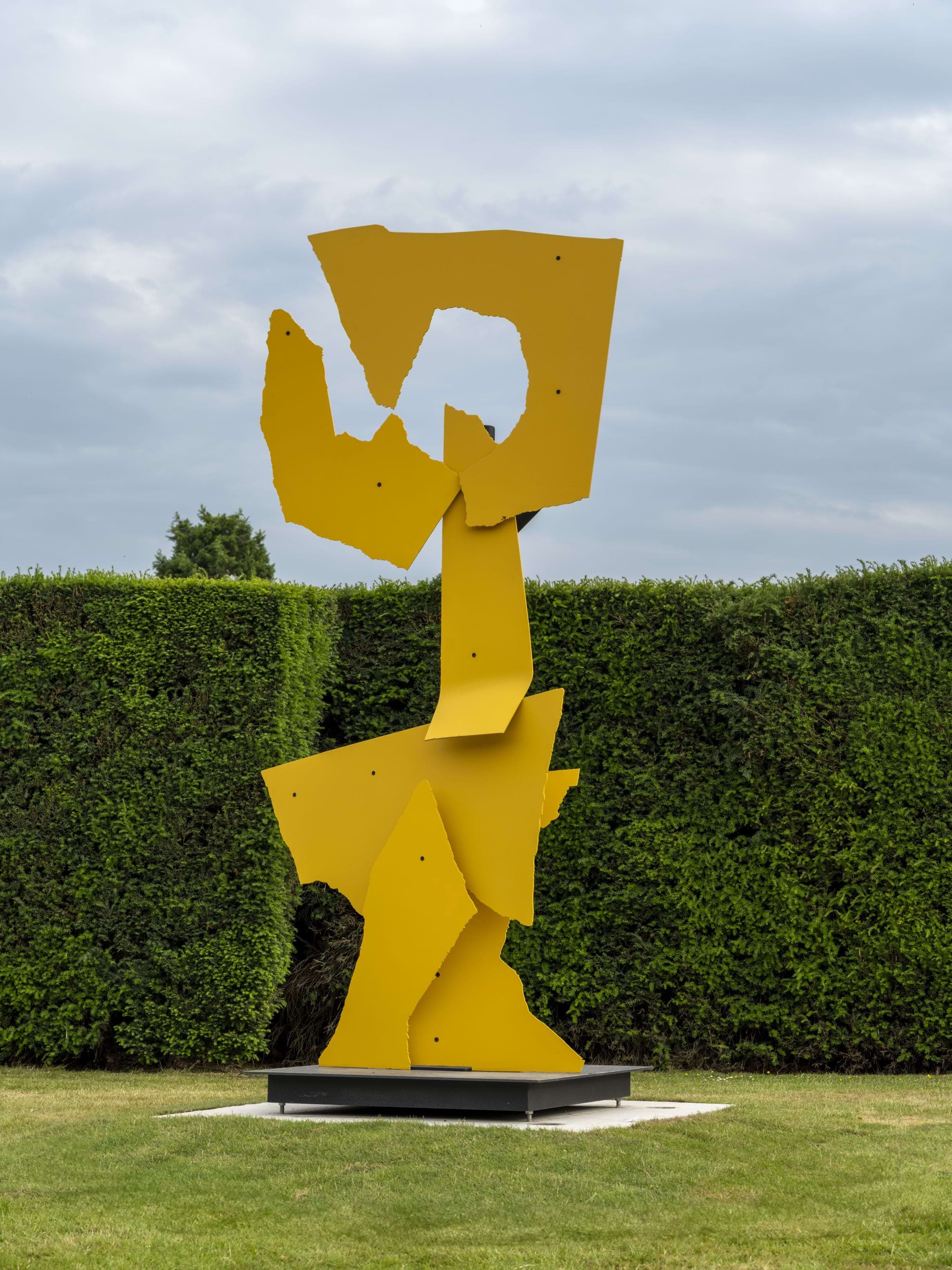
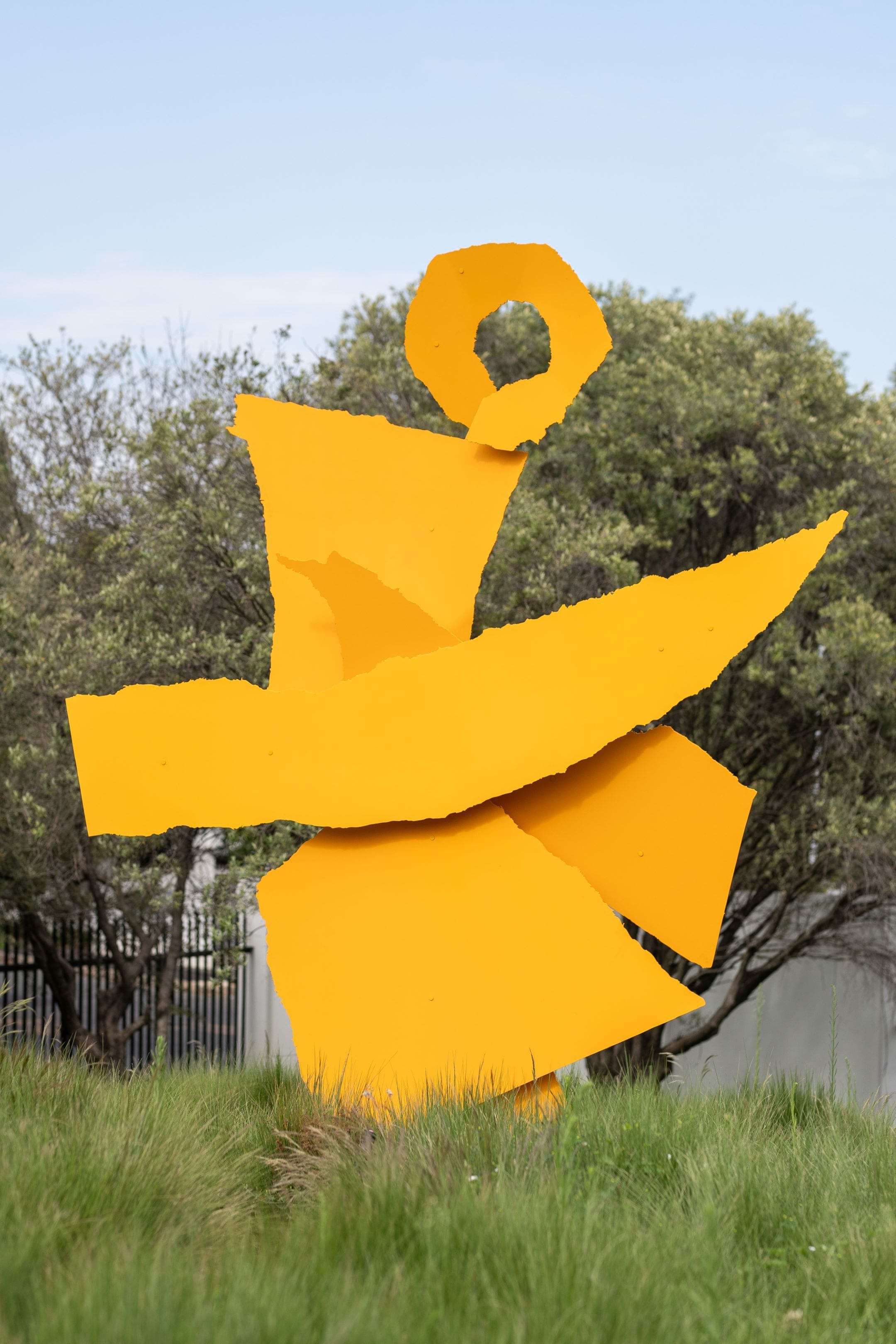
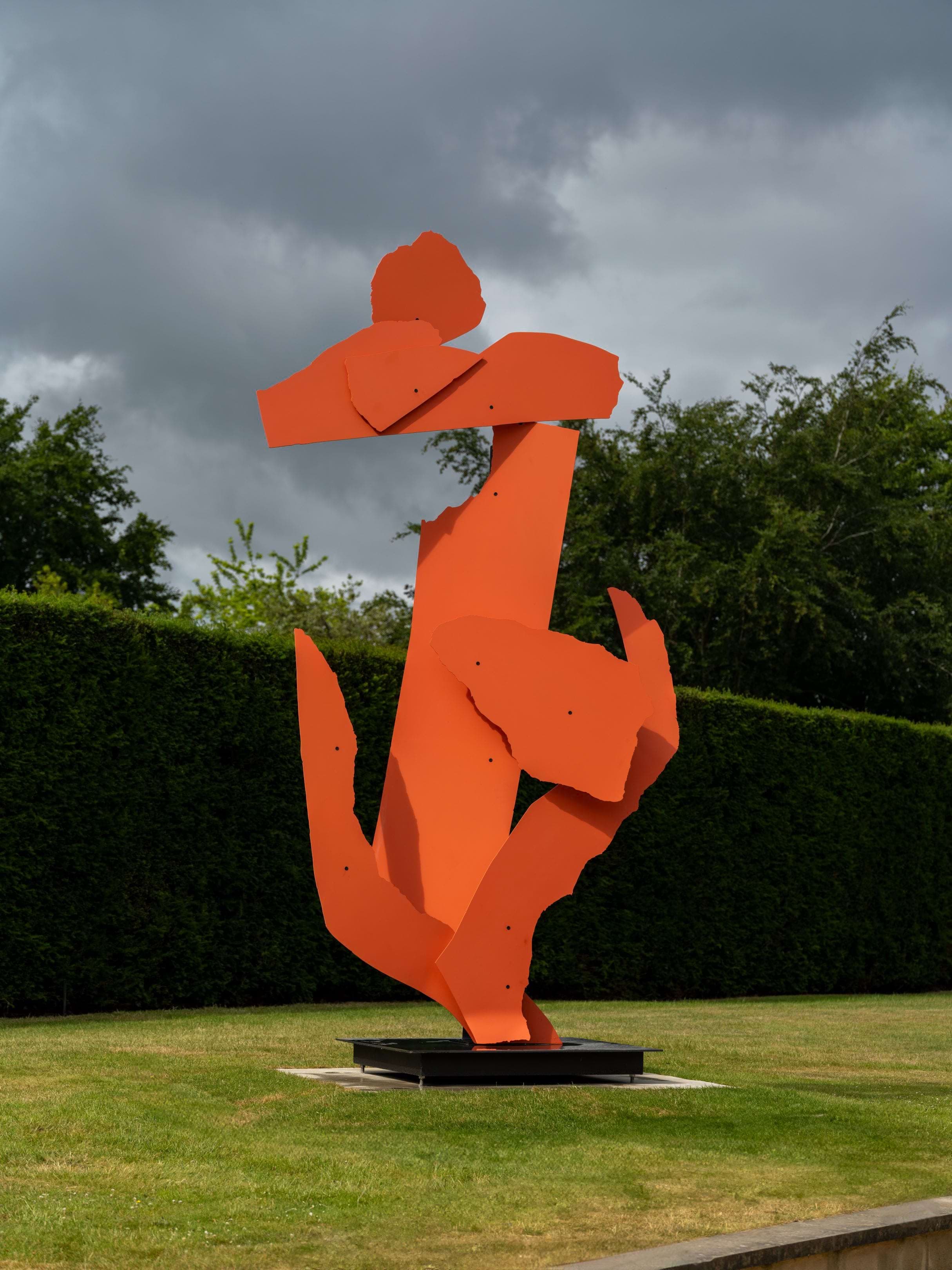
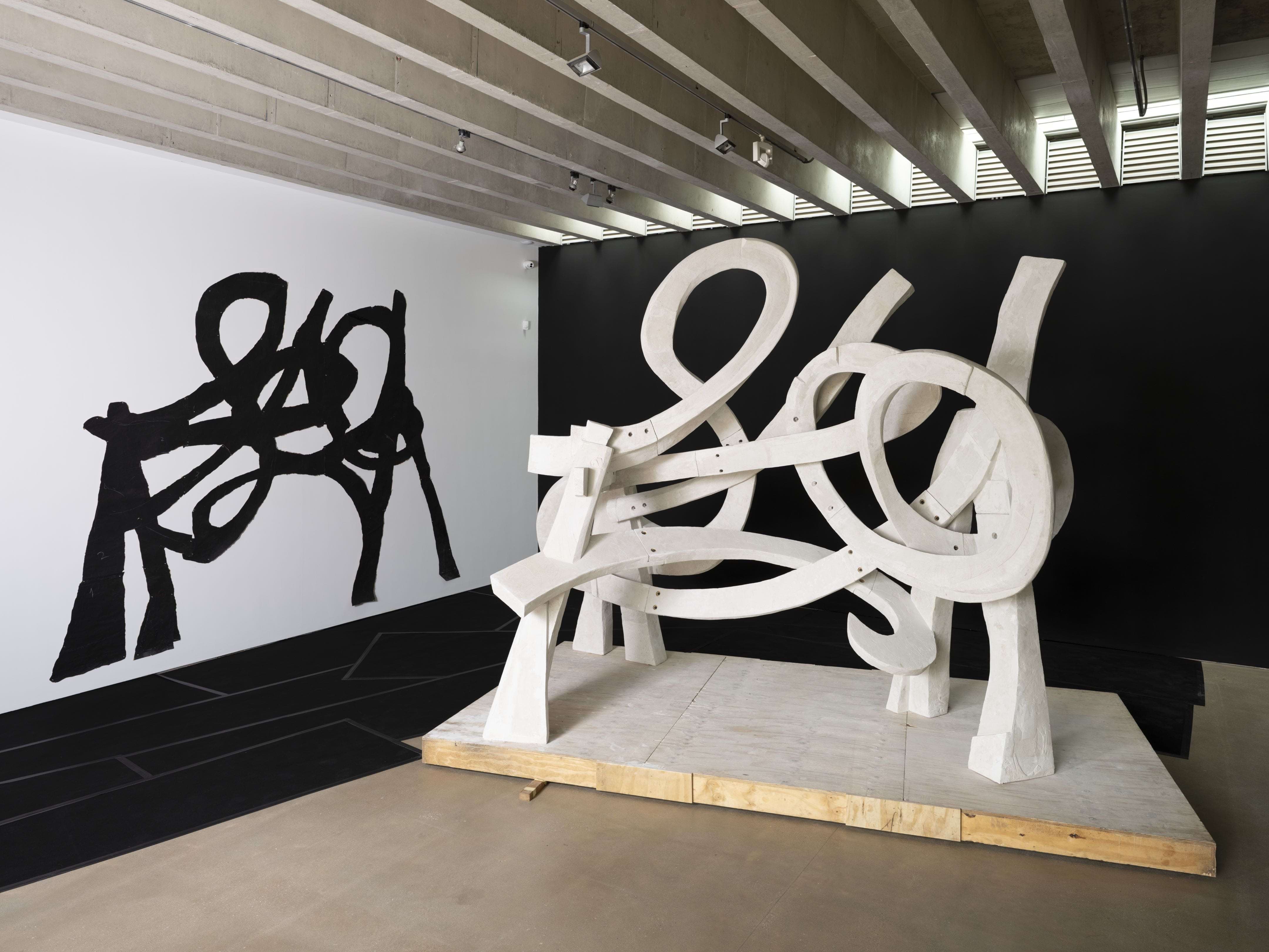
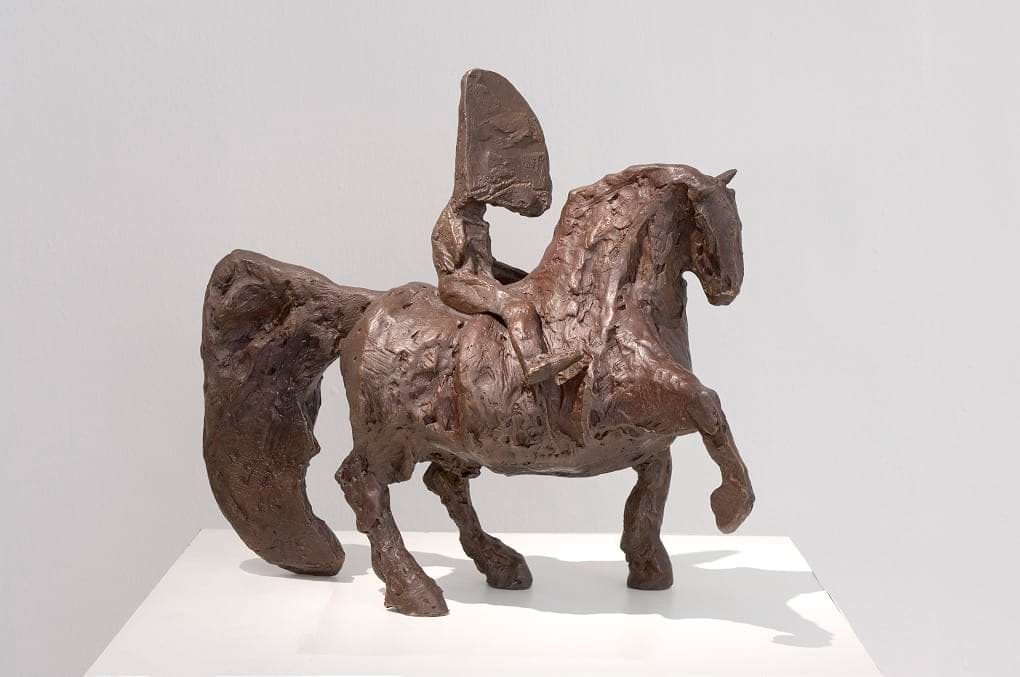
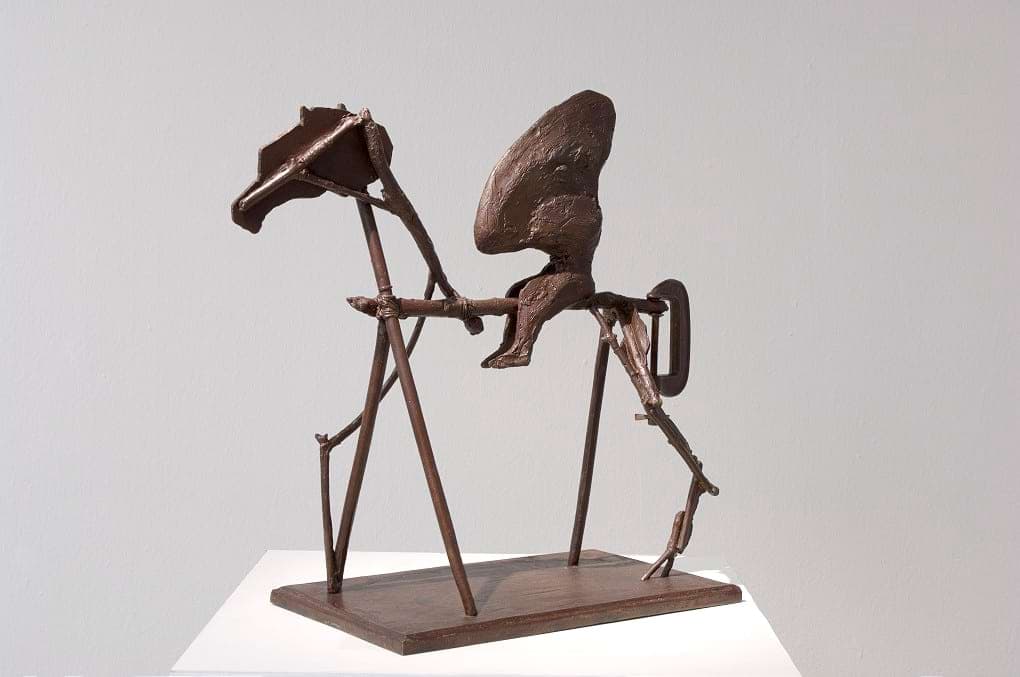
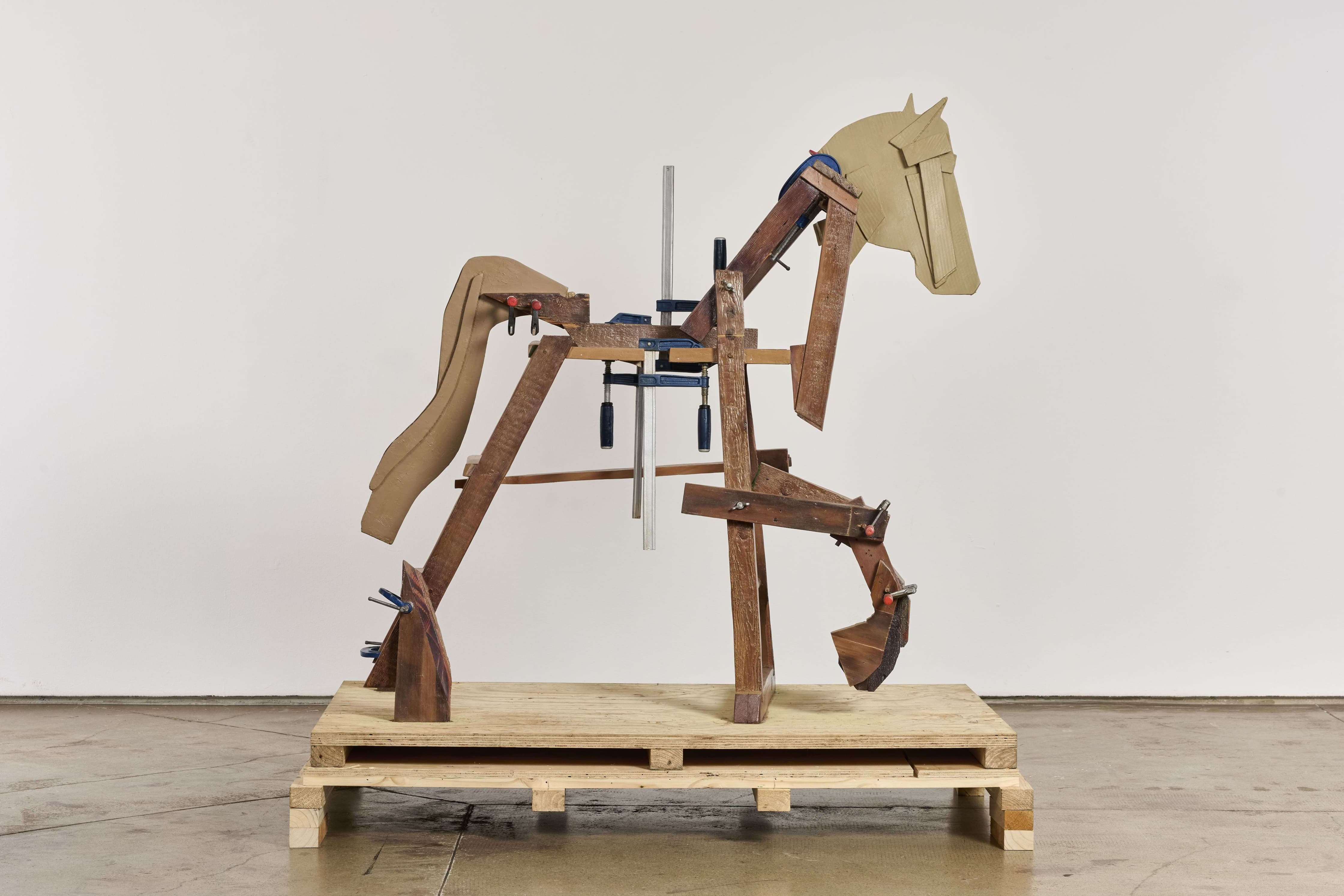
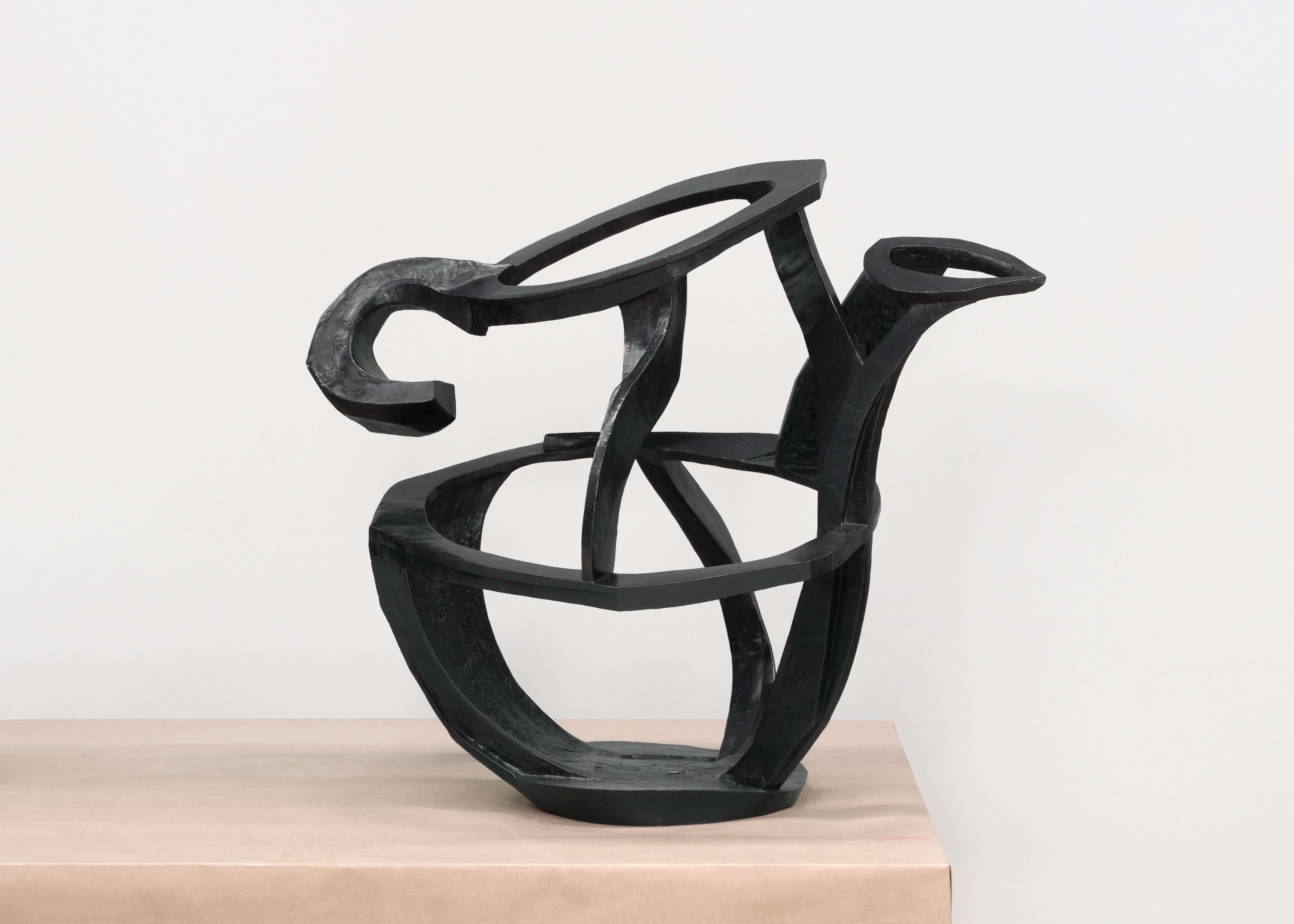
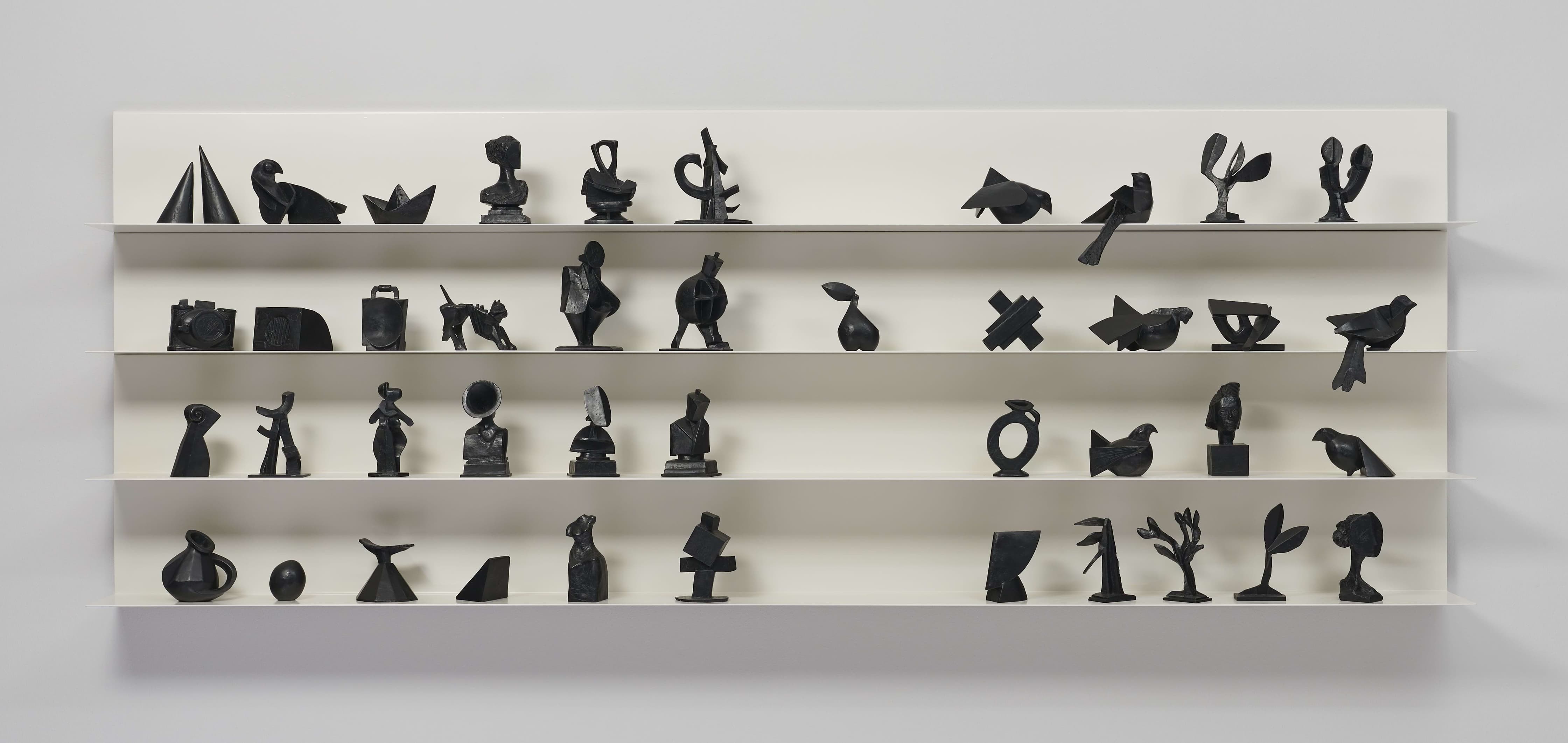

In its original incarnation, William Kentridge’s Lexicon is a series of 44 small scale bronzes created by the artist in 2017. The series is an accumulation of elemental symbols within his larger practice. This sculptural vocabulary is comprised of the icons, ubiquitous in Kentridge's creations, which are dispersed throughout all of the media in which he works.
Kentridge has chosen just three of the original set of 44 to translate into bronzes on a monumental scale, each standing 3.5 metres high. These bronzes are to be shown for the first time in his forthcoming solo exhibtion, at the Norval Foundation in Cape Town, which opens in late August 2019.
Steel specifications: 25×25×5 mm [Stainless Steel | Angle iron | Estimated amount used ×6 lenghts
Video
Video
William Kentridge’s glyphs are a visual dictionary of sorts made up of a series of sculptures that form a vocabulary of symbols, representing a collection of everyday objects, suggested words, or icons that reoccur throughout the artist’s practice.
The glyphs started as ink drawings and paper cut-outs, each transformed into bronzes, to embody the weight and character their shapes on paper suggested. In their smaller form, they can be arranged in order to construct sculptural sentences and rearranged to deny meaning. In late 2017 and early 2018, Kentridge chose a selection of glyphs from the small-scale Lexicon set and made larger-scale versions, each close to a metre in height.
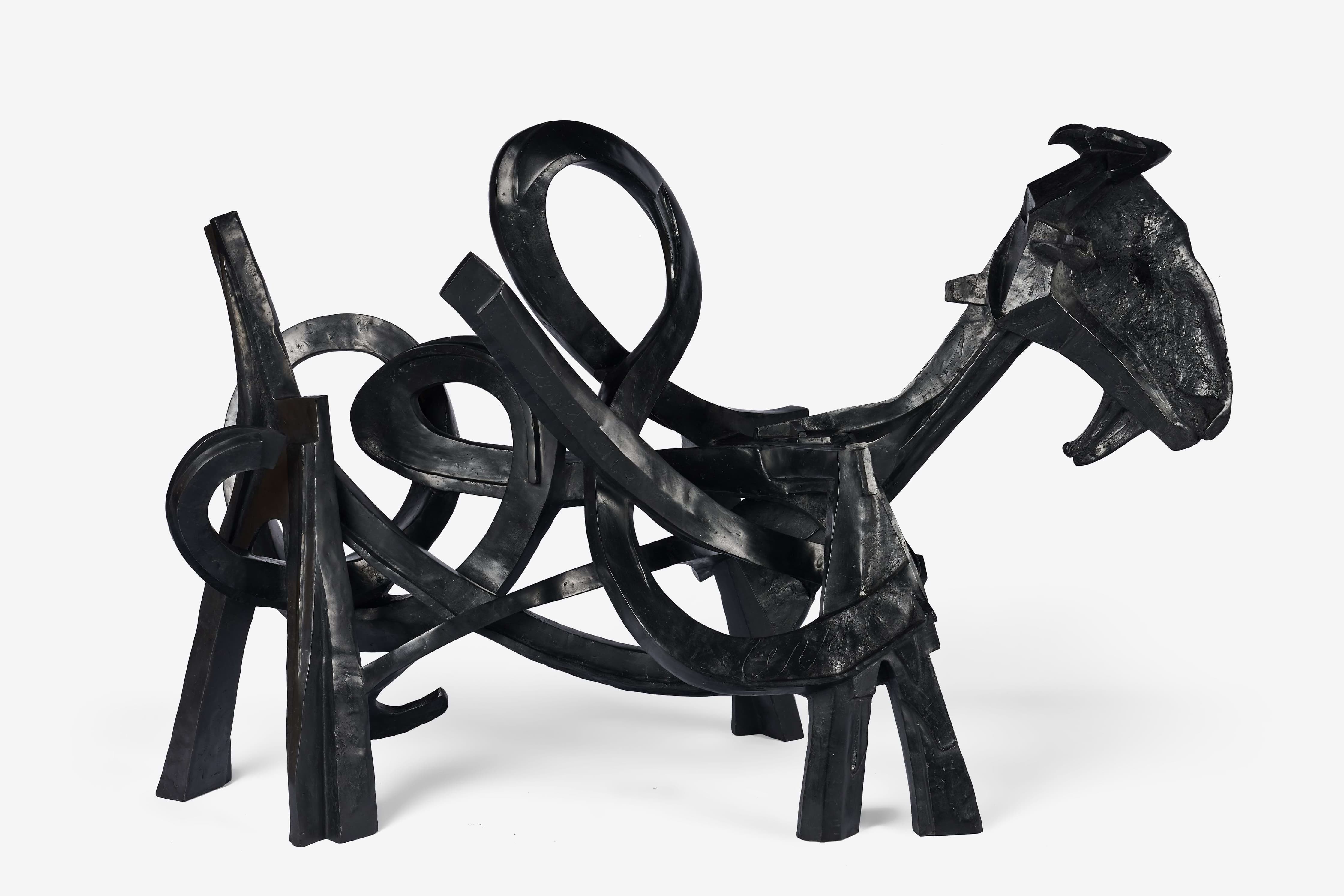
“I always thought of one of the small Cursive pieces as barbed wire – two trestles holding this loop of curls and swirls – the way it looked when gathered from the work I was doing on Wozzeck from the First World War, which included landscape drawings with barbed wire fairly similar to this. It struck me that the small Cursive piece was standing on four legs, which were in fact the edges of the trestles supporting the swirling suspended in the middle. That the central swirls were something of the belly, and the shape altogether, reminded me of the outline of Picasso’s goat – one of the great sculptures of the 20th Century. Without adjusting the body of the sculpture, I simply cut out a cardboard schematic goat’s head and suddenly this abstract set of swirls turned into the creature. So, the goat was a discovery – I hadn’t really known at the beginning that it would become one.” - William Kentridge, Johannesburg, November 2021
Walking Frame forms part of an accumulation of elemental symbols within Kentridge’s broader practice. This series of bronze sculptures functions as a form of visual dictionary. The sculptures are symbols and ‘glyphs’, a repertoire of everyday objects or suggested words and icons, many of which have been used repeatedly across previous projects. The glyphs can be arranged to construct sculptural sentences and rearranged to deny meaning. “The glyphs started as a collection of ink drawings and paper cutouts, each on a single page from a dictionary. Previously I had taken a drawing or silhouette and given it just enough body to stand on its own feet - paper, added to cardboard and put on a stand. With the glyphs, I wanted a silhouette with the weight that the shape suggested. A shape not just balancing in space, but filling space. Something to hold in your hand, with both shape and heft.” - William Kentridge
William Kentridge’s Lexicon (2017) is an accumulation of elemental symbols within the artist’s larger practice. The series of bronze sculptures, functions as a form of visual dictionary. These sculptures are symbols, glyphs, suggested words or icons, many of which have been used repeatedly across projects and bodies of work. The glyphs can be arranged in order to construct sculptural sentences and rearranged to deny meaning. In late 2017 and early 2018, Kentridge chose a group of ten glyphs from the small-scale Lexicon set and made medium scale versions, each of close to a metre in height.
Video
Shipped via KPL
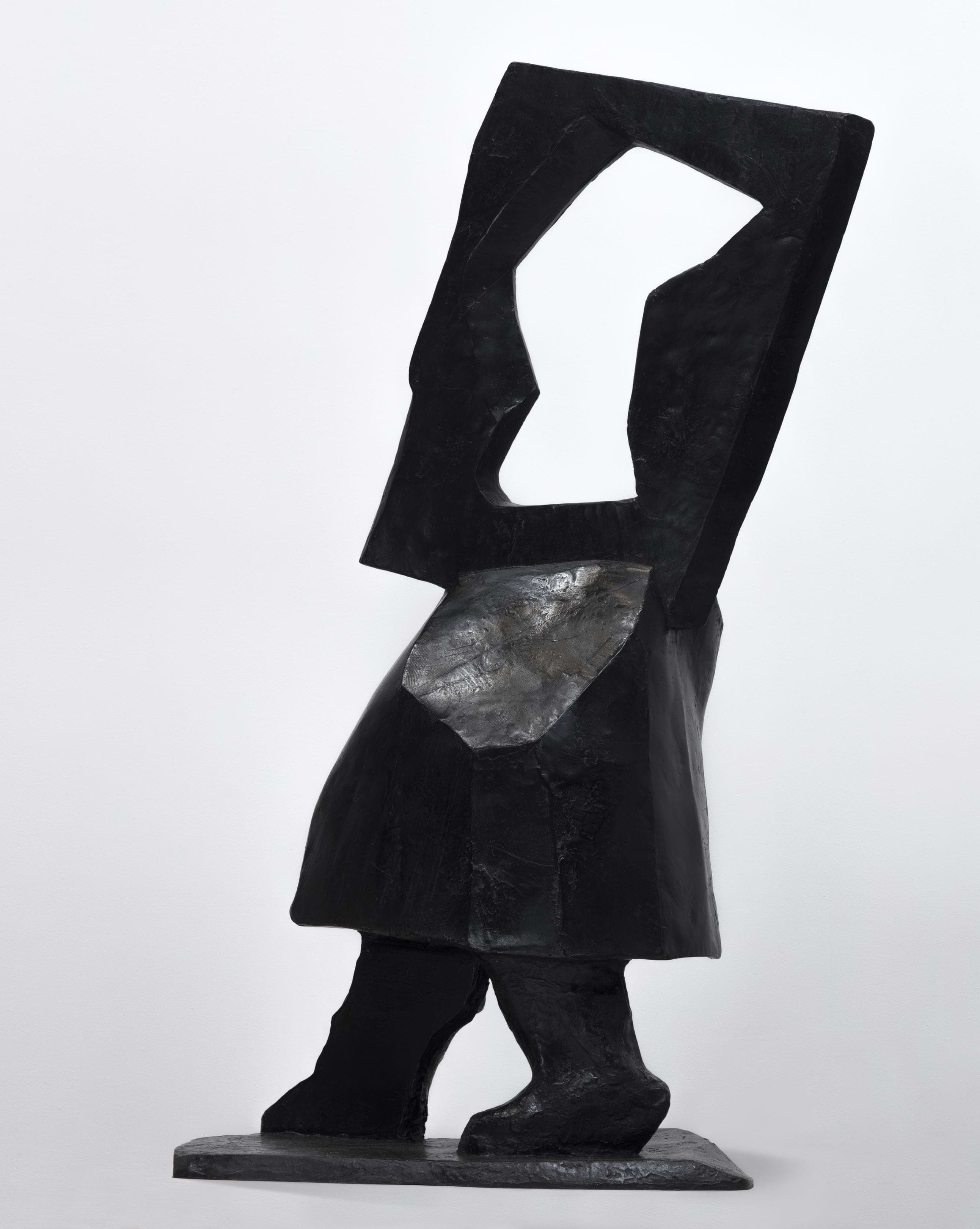
Apron, Cursive (Fish) and Milk (2023) are part of an accumulation of elemental symbols within Kentridge’s broader practice. This series of bronze sculptures functions as a form of visual dictionary, giving thought to form. The sculptures are symbols and ‘glyphs’, a repertoire of everyday objects or suggested words and icons, many of which have been used repeatedly across previous projects. The glyphs can be arranged to construct sculptural sentences and rearranged to deny meaning.
Video
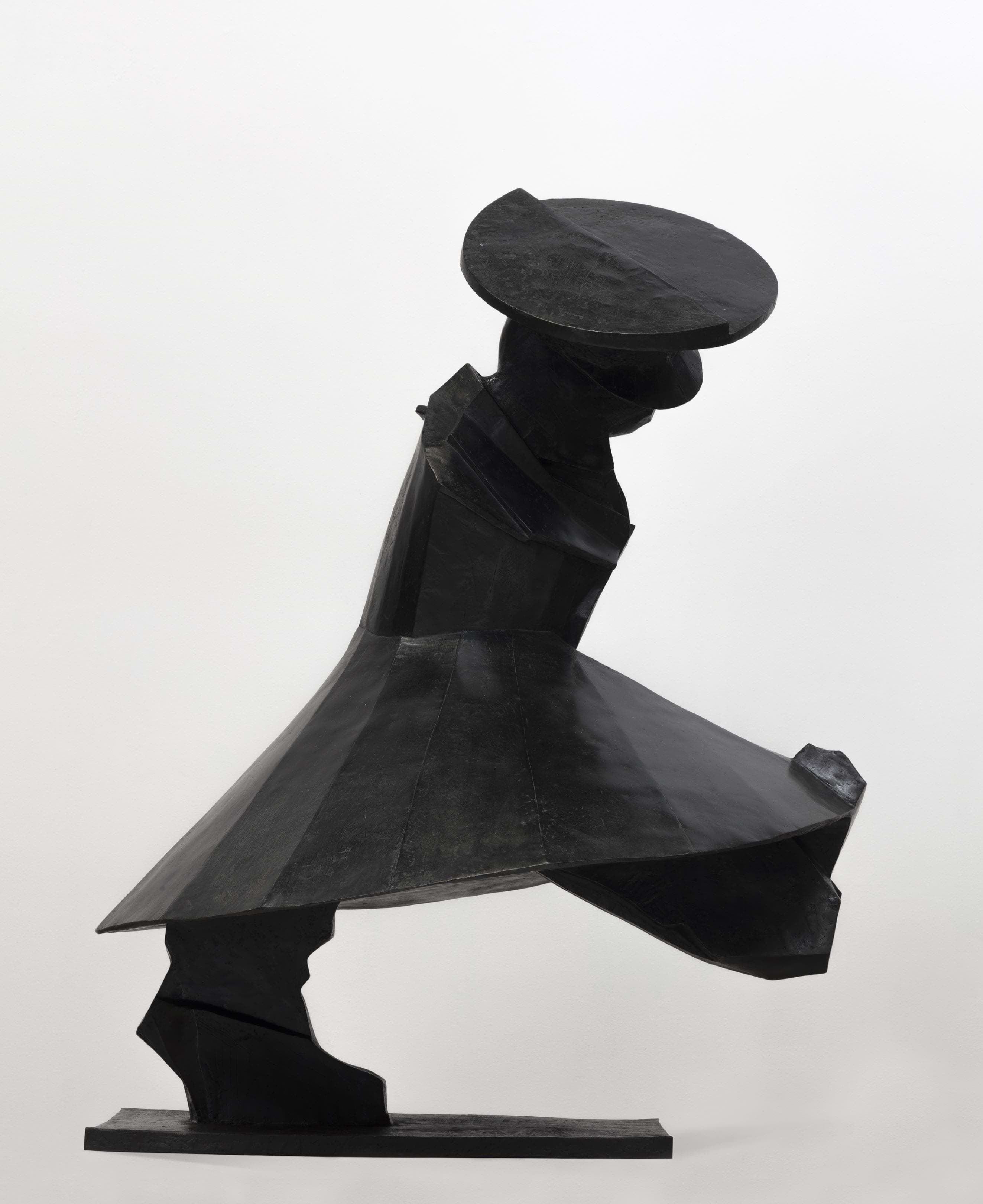
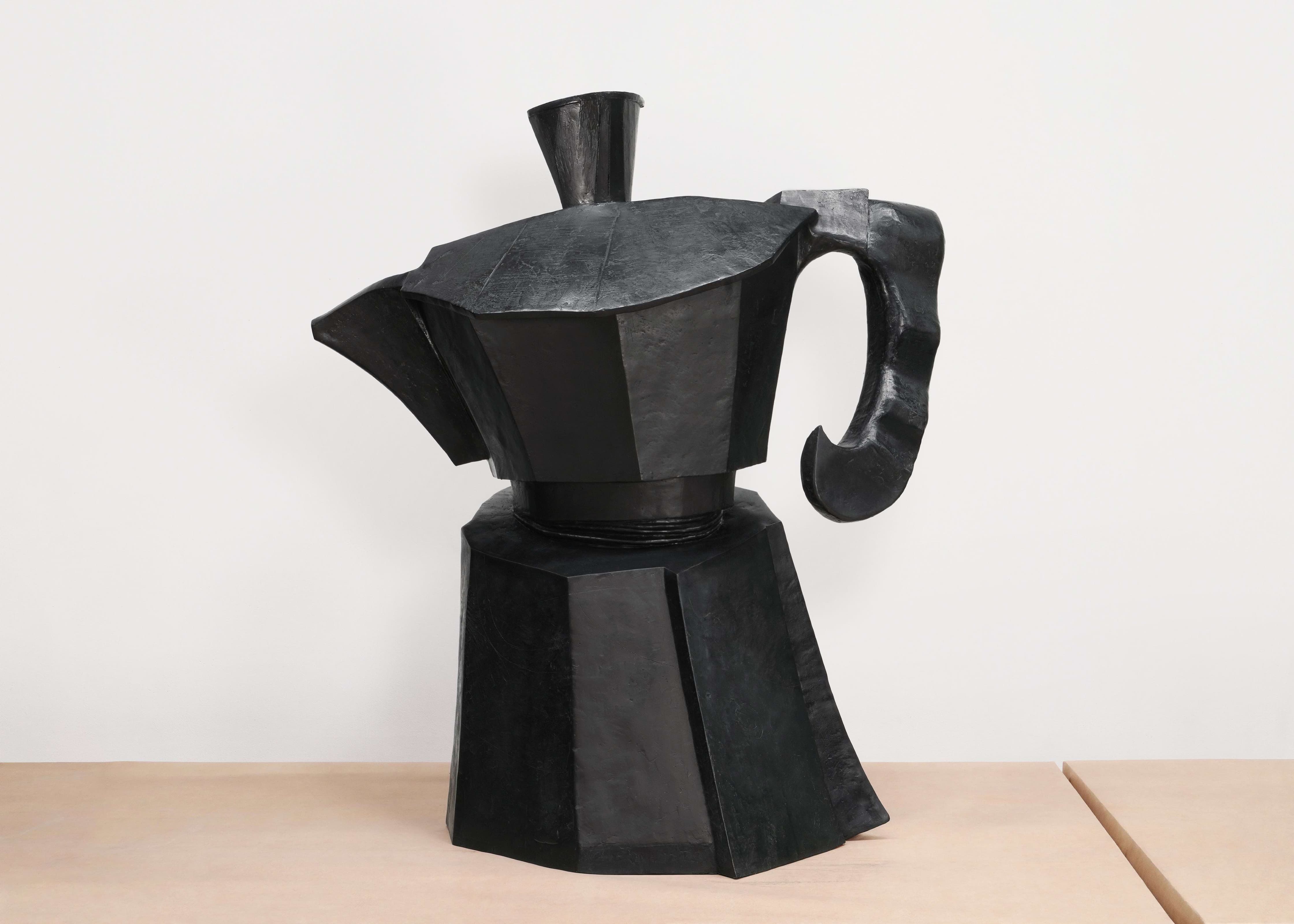
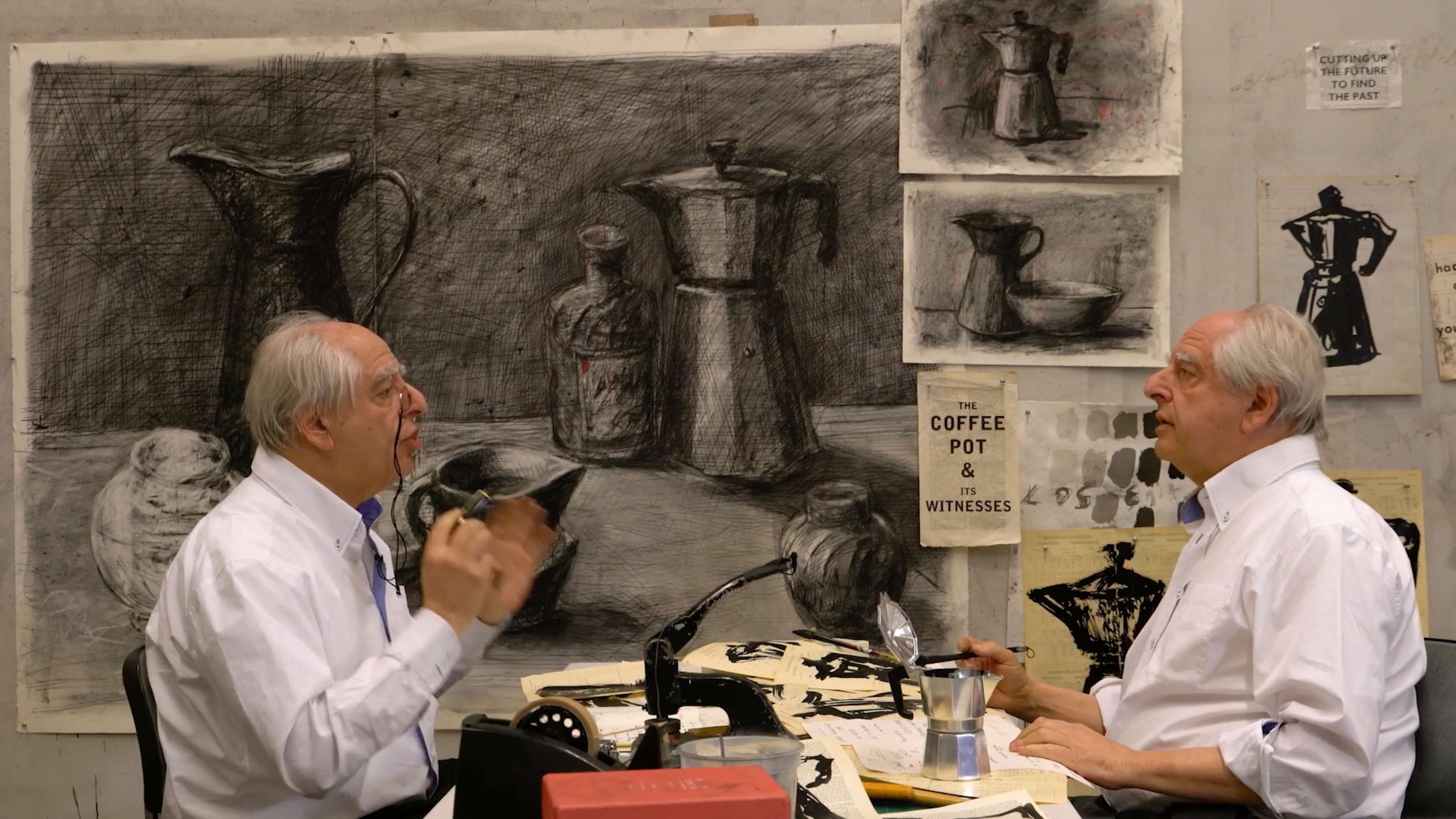
Kentridge’s ‘Pour’ is both a reference to his ‘Self-Portrait as a Coffee Pot’ Venice Biennale and episodic streamed series, and very much in keeping with the initial aspiration of his bronze glyphs, in giving a shadow heft: “I never thought of myself as a sculptor, but I had worked a lot with shadows in performance and in drawings and I was interested in the possibility of making something like a shadow – so ephemeral and without any substance – to be solid.”
As one of the most immediately recognisable forms of all of Kentridge's medium-sized bronze glyphs, and a silhouette that has existed in his oeuvre for several decades before he started creating them, ‘Pour’ has been omnipresent in Kentridge museum shows ever since he created it, and is currently on display in his exhibitions at Yorkshire Sculpture Park, Wakefield, and Palazzo Collicola, Spaleto.
Whilst the other sculptures, drawings, etchings, and tapestries of the ‘Self-Portrait as a Coffee Pot’ series tend, as the title suggests, to be premised on himself, with all the typical Kentridgean self-deprecation that entails, this particular rendition is deliberately female, as he puts it:
“There is something feminine about the skirt of a coffee pot that I love. And in this bronze sculpture, I’ve deliberately given her a hip and a shoulder to emphasize the anthropomorphic component of it. In this case it’s got, if not a corset, a pinched waist and a large bottom.”
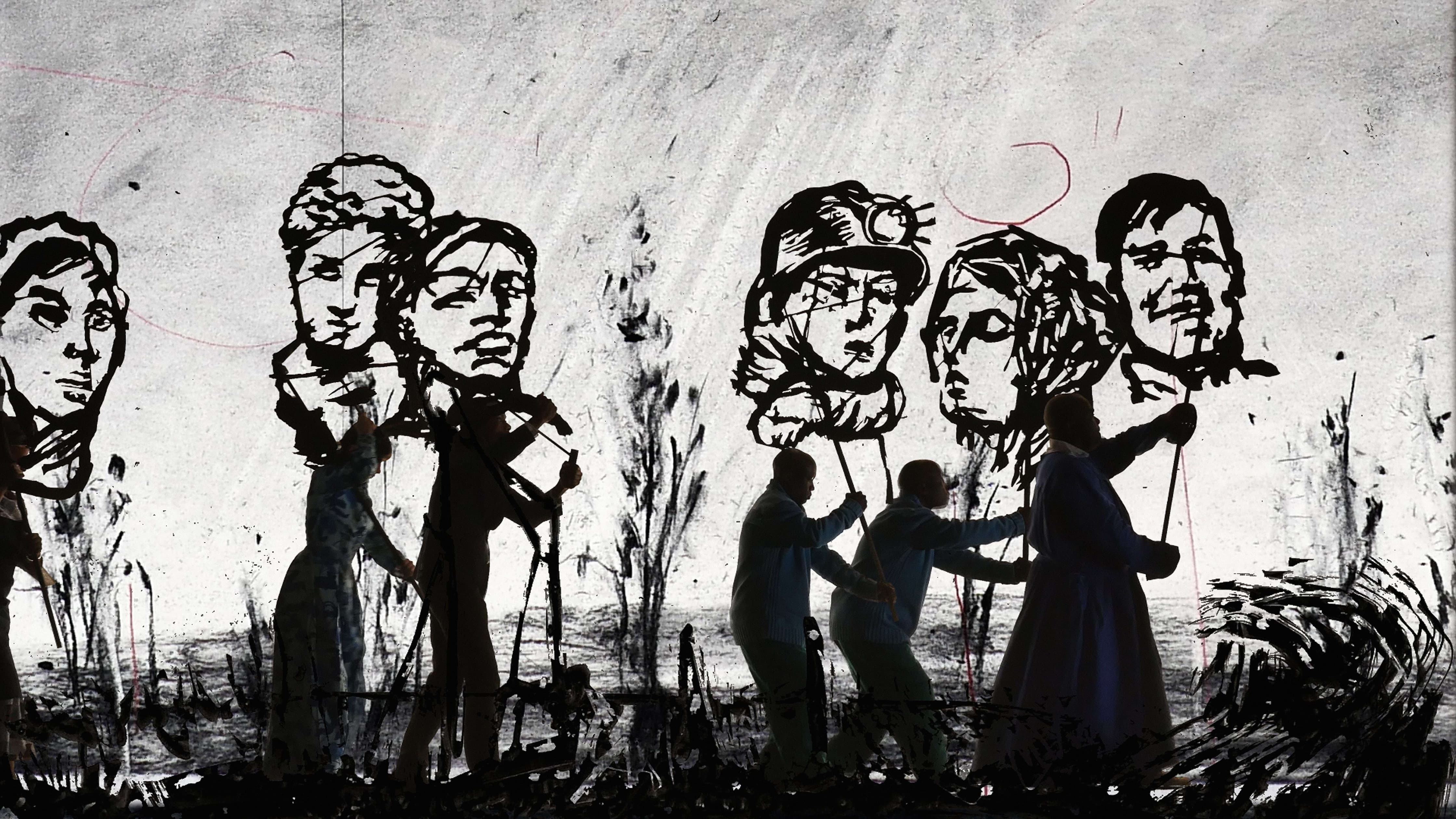
Originally commissioned for the EYE filmmuseum in 2015, More Sweetly Play the Dance is an eight-screen danse macabre, reminding one of the medieval tradition summoning diverse vestiges of humanity in the paradox of revelry and mourning. Kentridge presents us with part carnival, protest, and exodus: a 45 metre caravan traversing in a sphere around us with figures in procession, a form the artist invoked in his 1999 Shadow Procession. About the processional form, Kentridge says: “In some ways we first come across it in Plato’s Allegory of the Cave. In a prelude to talking about the responsibility of the philosopher king, he describes people walking behind a screen carrying wooden and stone objects in their hands, their shadows thrown onto the wall opposite the prisoners shackled in the cave watching the shadows.”
In this ironic dance of life an entire brass band leads the procession with a wailing but vital, defiant anthem addressing the “Sisyphean task of showing people in the cave the necessity of viewing the light” : skeletal silhouettes, robed figures, priests, anonymous carriers, fleeing refugees, itinerants carrying saints, stick fighters, the sick, miners performing spade dances, in short, representatives of history personifying the march from one country to another, from one civilization to another, from one identity to an uncertain future. From genesis to the end, an endless procession, all of history carried by them. Represented by cut out profiles transcribed from Kentridge drawings they move in succession across a barren mining landscape, figures coalescing into a roving frieze of images with uncanny resonance to modern day refugees and current political events.
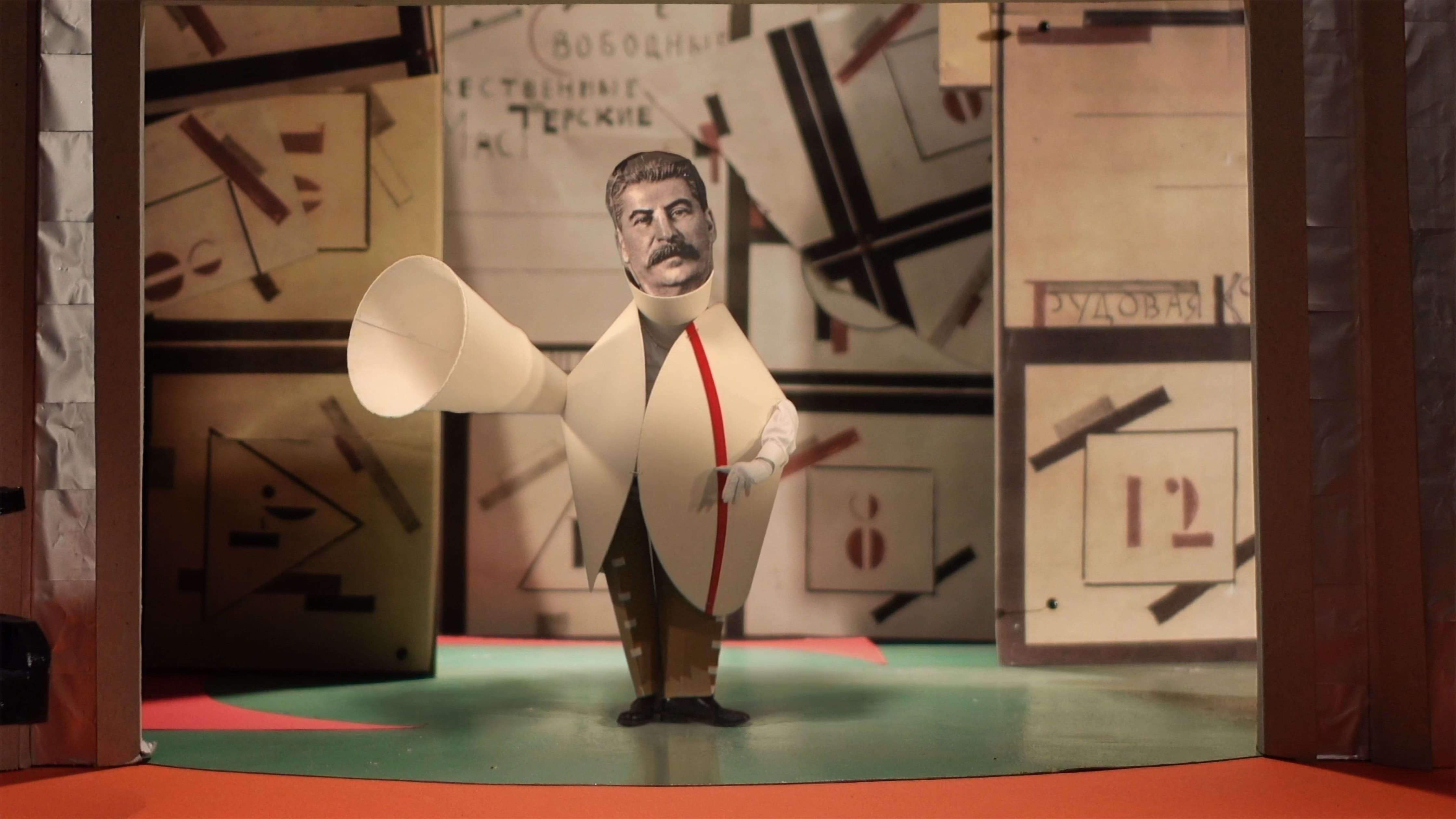
Oh To Believe in Another World expands on decades of critical engagement with life and culture under the Soviet Union, explored in Kentridge’s I am not me, the horse is not mine (2008) and The Nose (2010), based on the absurdist opera of the same name directed by Shostakovich in the 1920s, which was suppressed shortly after opening. Of Shostakovich’s pieces, his 10th Symphony – composed in anticipation of Stalin’s death – has always been most pertinent for Kentridge because of its humanity: “we can still feel the emotional journey of the symphony, independent of its historical moorings.”
Shostakovich’s life story involved navigating a complex relationship to the state of the Soviet Union, which provides the core inspiration for the projection. While the Russian composer and pianist was initially lauded as a sound voice to project Soviet values, Shostakovich was denounced twice under Stalin’s rule, leading him to fear for his life and compose music under intense state pressure. His 10th Symphony violated many of the Soviet restrictions on cultural production, experimenting formally with contrast and ambivalent tonalities, and was only made public once Stalin died in 1953.
Oh To Believe in Another World constitutes a retrospective look at four decades of the Soviet Union – from the death of Lenin in the 1920s; the suicide of Mayakovsky. In the 1930s; the assassination of Trotsky in the 1940s; and the death of Stalin in the 1950s. Protagonists include pianist and composer Elmira Nazirova; poet Vladimir Mayakovsky; author Lilya Brik; Vladimir Lenin; Leon Trotsky; Joseph Stalin and Shostakovich himself. The projection is set inside what appears to be an abandoned Soviet museum. It is made of cardboard and sits on a table in the artist’s studio. Using a miniature camera, we are guided – as if in a dream – through the deserted halls into a host of symbolic imagined spaces, including a community theatre hall, a public swimming pool, a quarry and a corridor of vitrines holding stuffed historical figures.
The audio component includes the collaging of music by Russian composers, sampled and sliced to cacophonous effect to create an assemblage of sound. The work leans into the “deliberately dissonant, muddled stream of sounds” that defined Stalin’s damning response to Shostakovich’s Lady Macbeth of Mtsensk (1934). By embracing the creative possibilities of “muddle” and fragmentation, denied to Shostakovich for decades, Kentridge turns Stalin’s denouncement into a quality to be celebrated.
The protagonists in the film feature partially as small paper puppets – a characterisation which evolved as Kentridge began working with costume designer Greta Goiris to experiment with the possibility of using actors inside of puppets.
Edition of 7 plus 2 APs
USD 500,000
Video
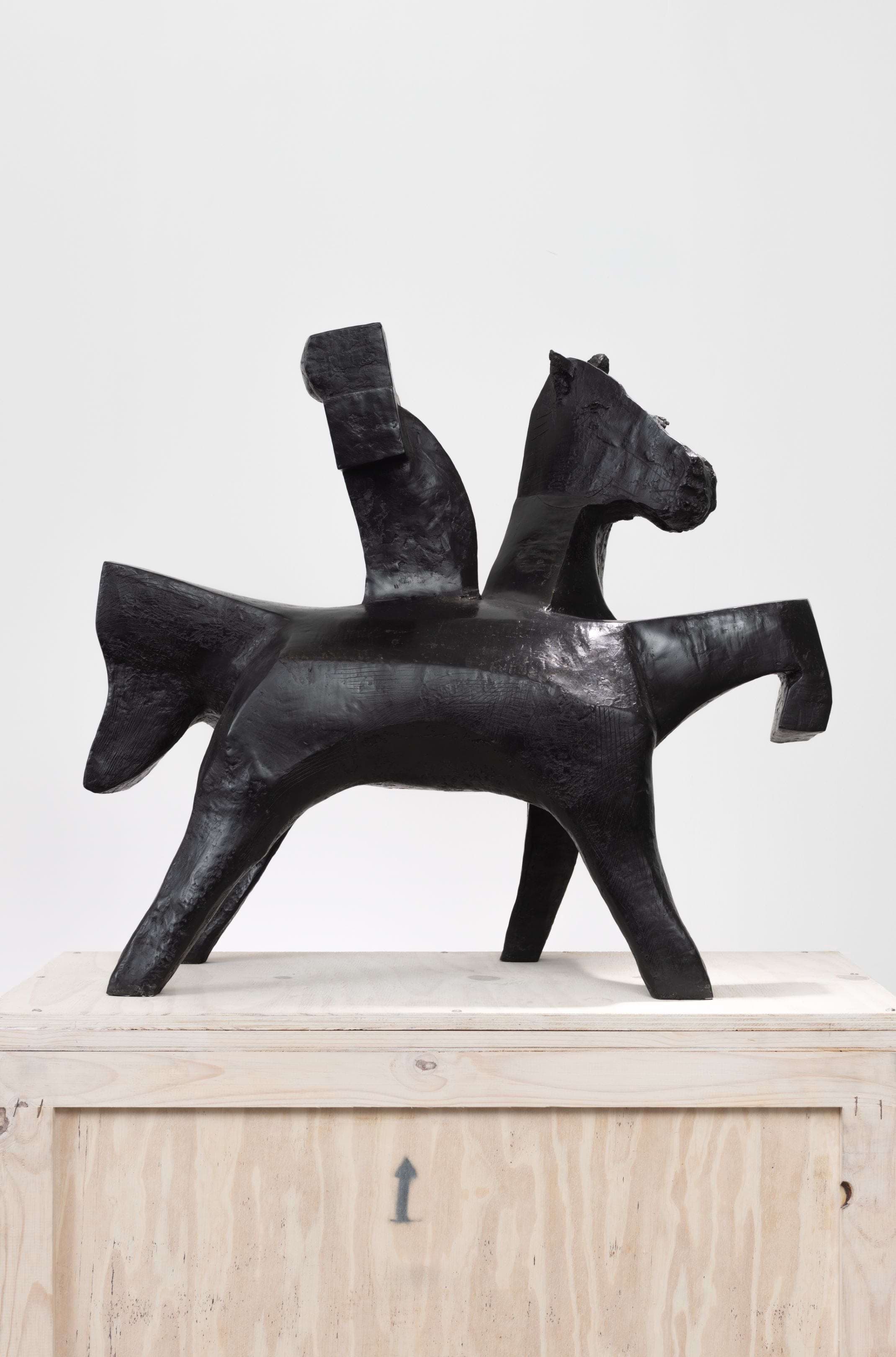
The public, site-specific installation, Processione di Riparazioniste by William Kentridge was unveiled in 2017 and took the form of a procession of colossal outdoor sculptures. The piece was commissioned by Carolyn Christov-Bakargiev and Kentridge was inspired by the ex-industrial life of the Officine Grandi Riparazioni. The work is composed of a procession of symbolic figures, in silhouette, which allude to the work of repairing trains and bodies, as well as the struggle between the Catholic church and Italian Marxists for the soul of the worker.
These sculptures exist in the form of a set of small-scale maquettes, as well as full-size, outdoor sculptures.
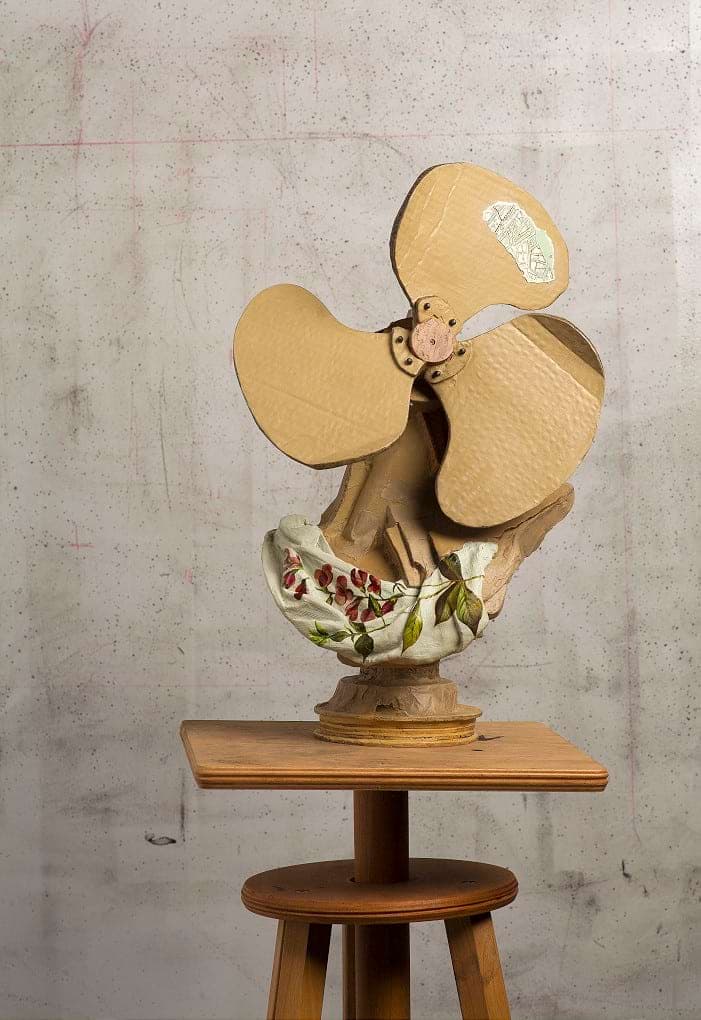
In the Three Sisters, South African artist William Kentridge
continues an ongoing series of painted bronzes. They are
experiments in trompe l'oeil, visual illusions, deceiving the eye:
cardboard and wood sculptures are turned into bronze, which is
painted to look like cardboard and wood. Picasso’s Glass of
Absinthe and polychrome sculptures of classical antiquity
(which we see as white marble, but which were originally
painted) are particular historical references for the series. As is
Kentridge’s trademark, these series of painted bronze heads
interweave symbols as disparate as Chinese maps and scraps
torn from a 1906 South African cash book.