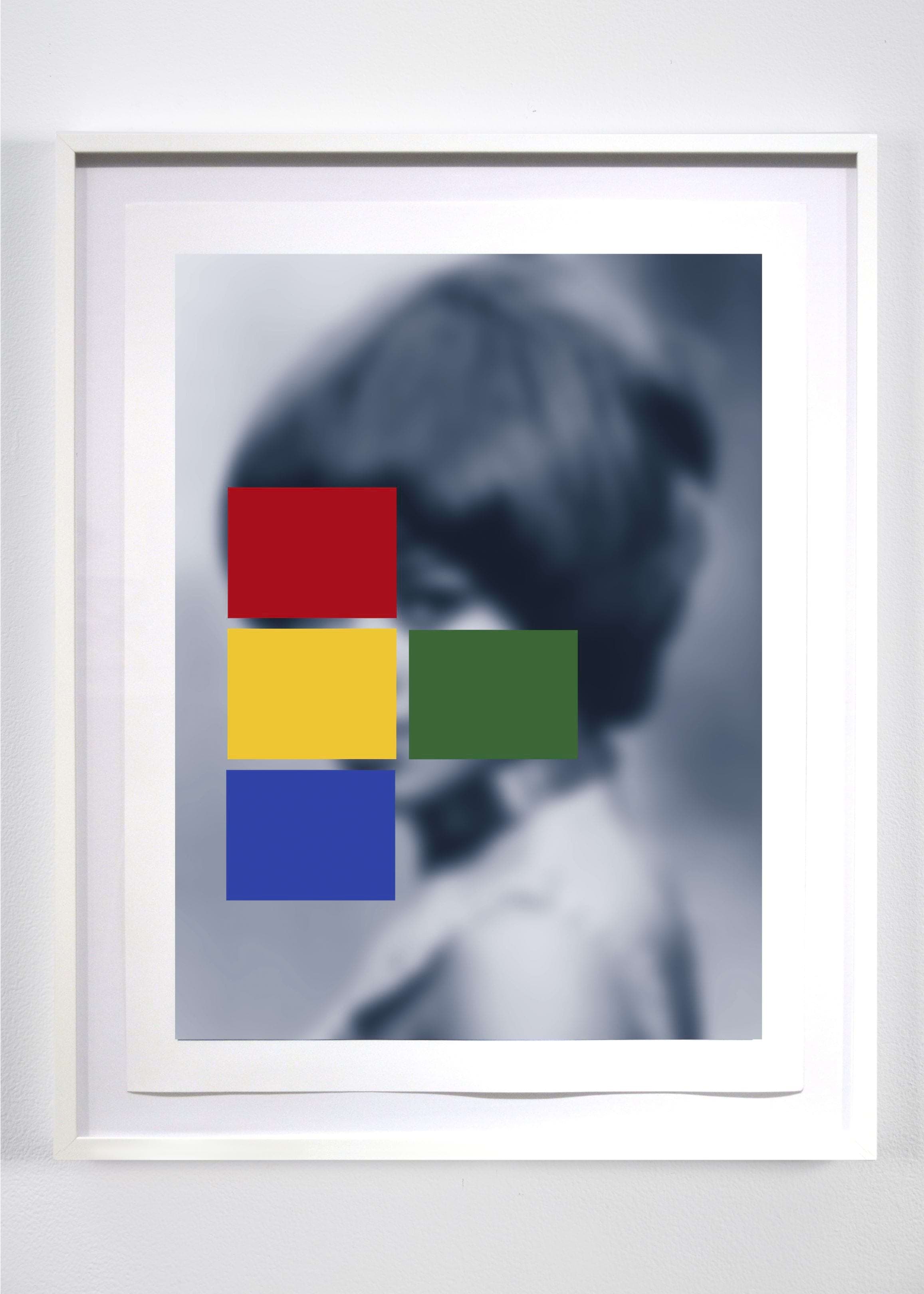
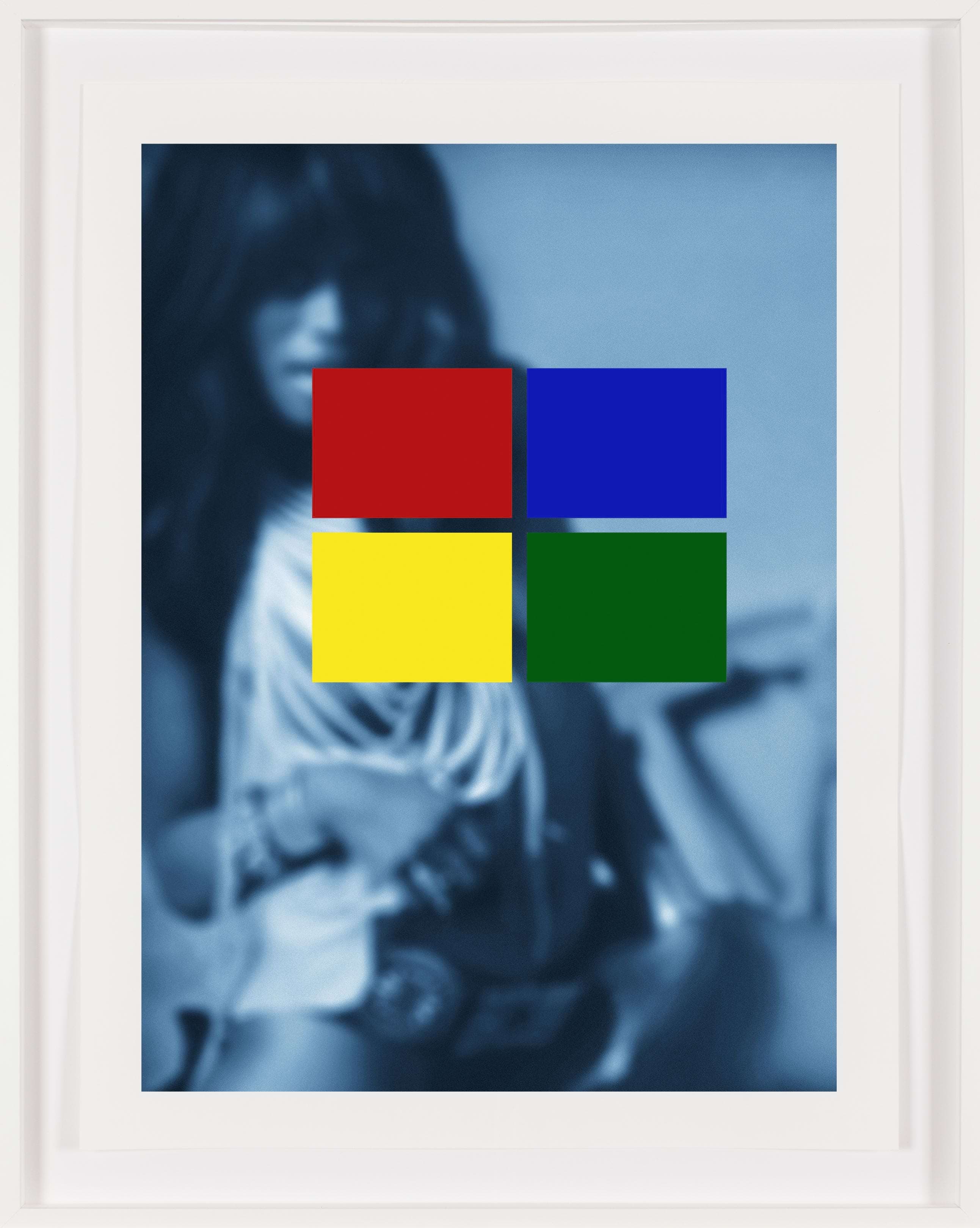
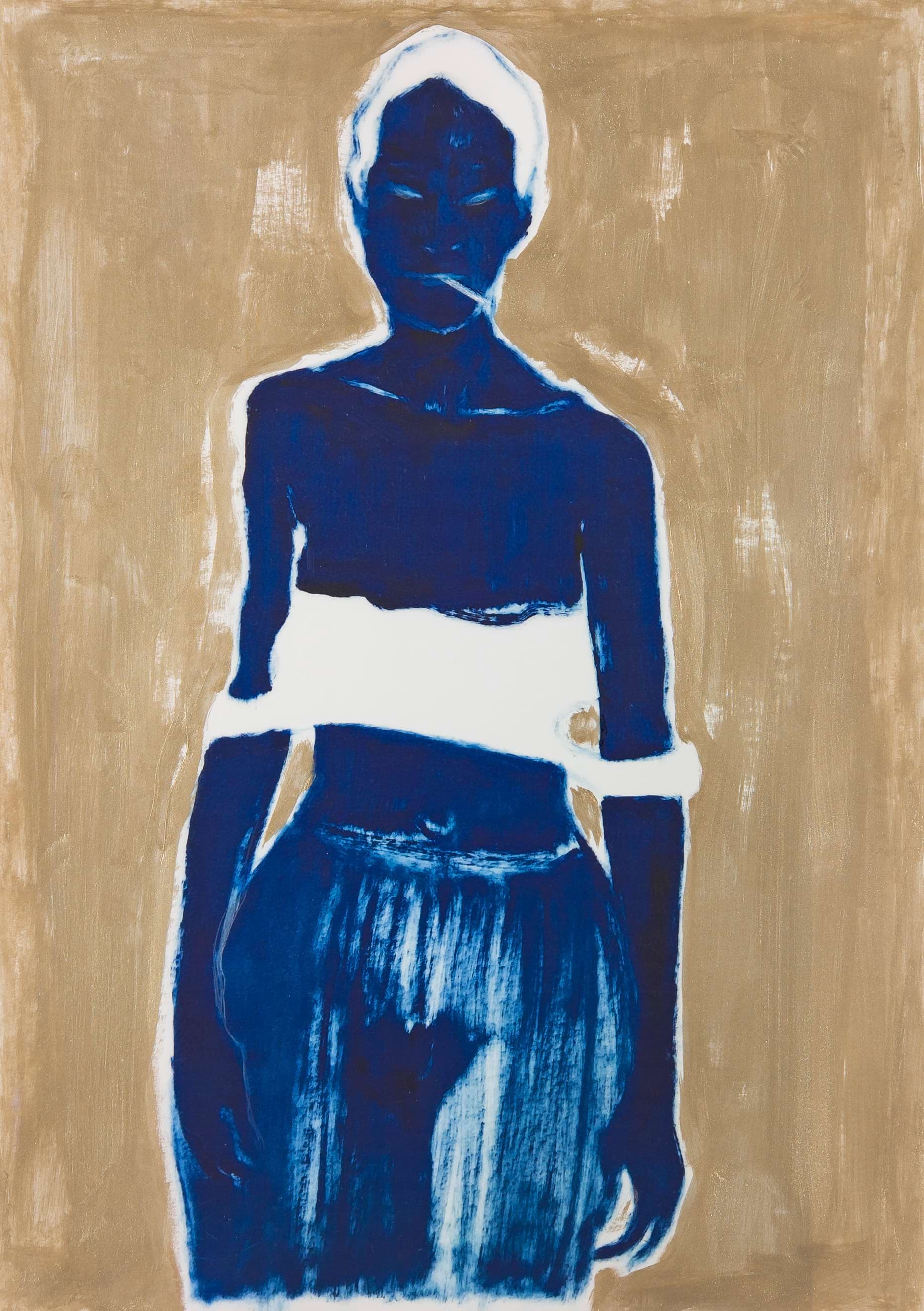
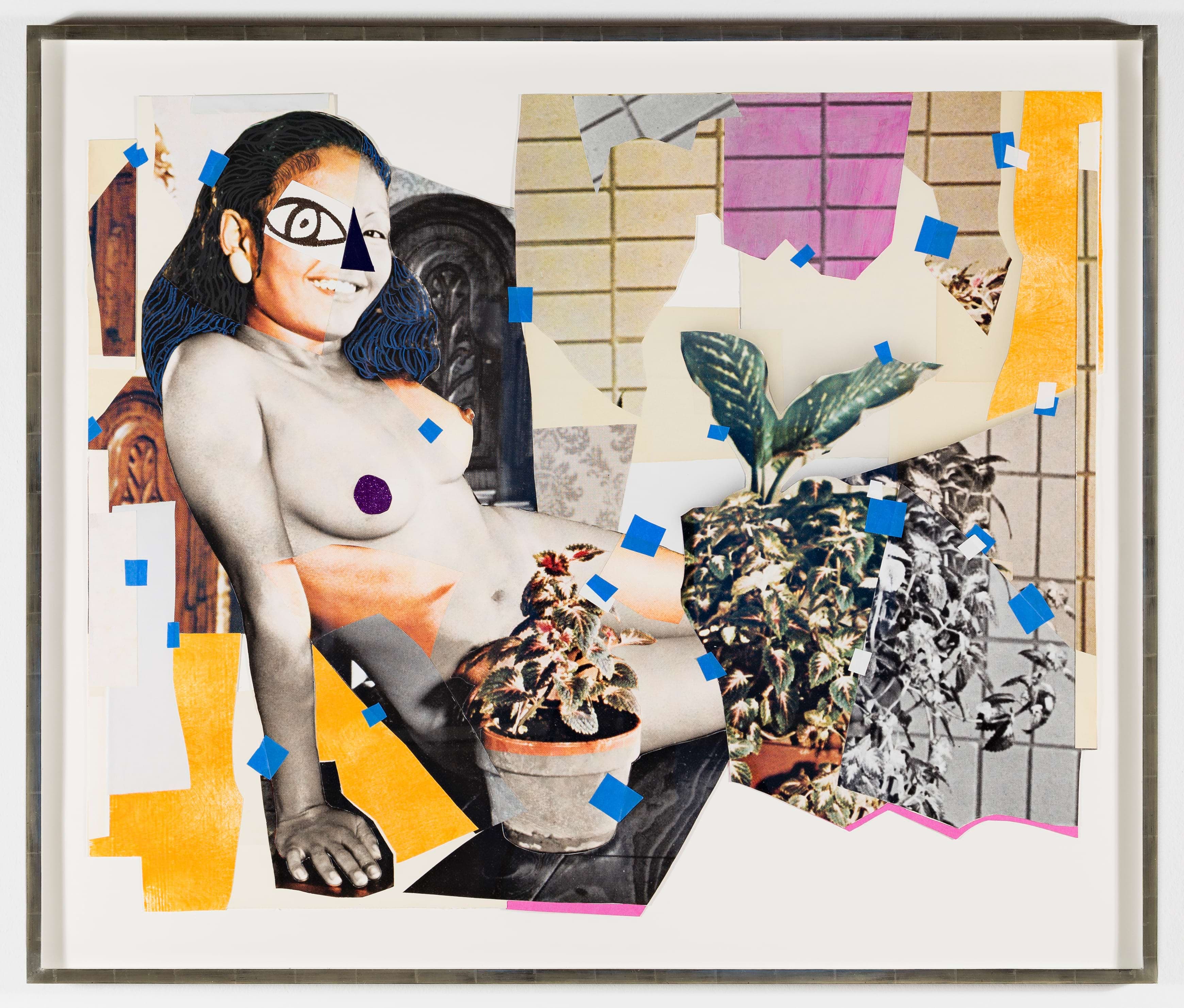
Blue Notes features grainy blue portraits of black artists and back-up dancers whose faces are covered by blocks of solid color. The formal vandalism is at once a reflection and critique of America’s historical erasure of black artists. All the Boys uses a similar technique, to more disturbing effect. This time, Weems photographs several black men in hoodies. Beside them, text panels provide the basic information about ten unarmed black victims of police shootings. It’s a damning gesture. These “usual suspects” may have different personal histories. But, in the end, they are united by the following fact: “Matching the description of the alleged, perpetrator was stopped and/or apprehended, physically engaged, and shot at the scene. Suspect killed. To date, no one has been charged in the matter.”
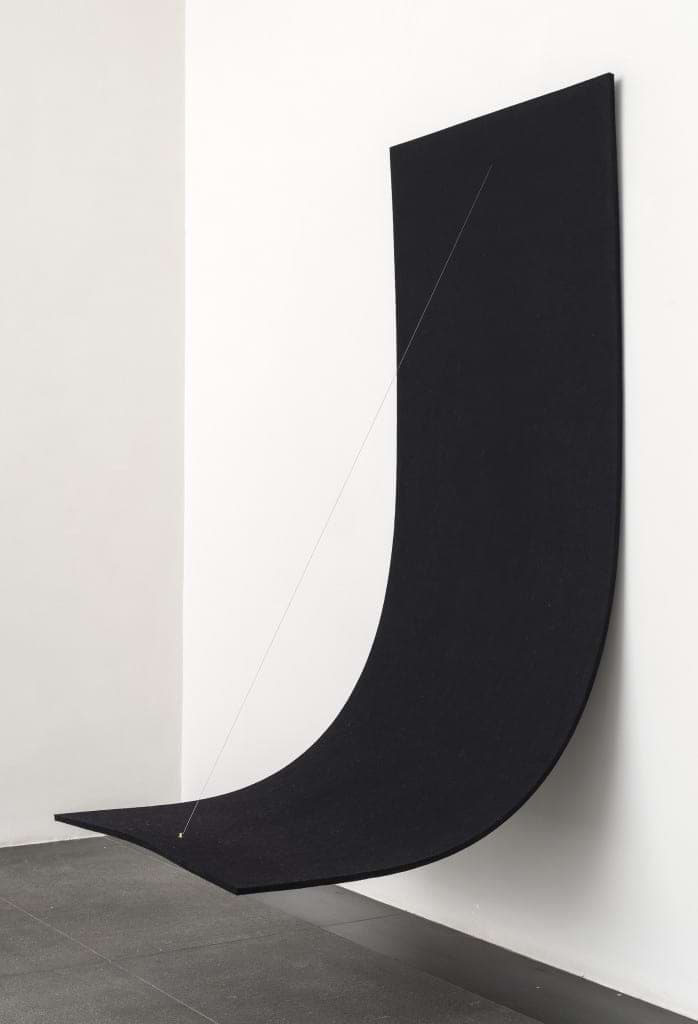
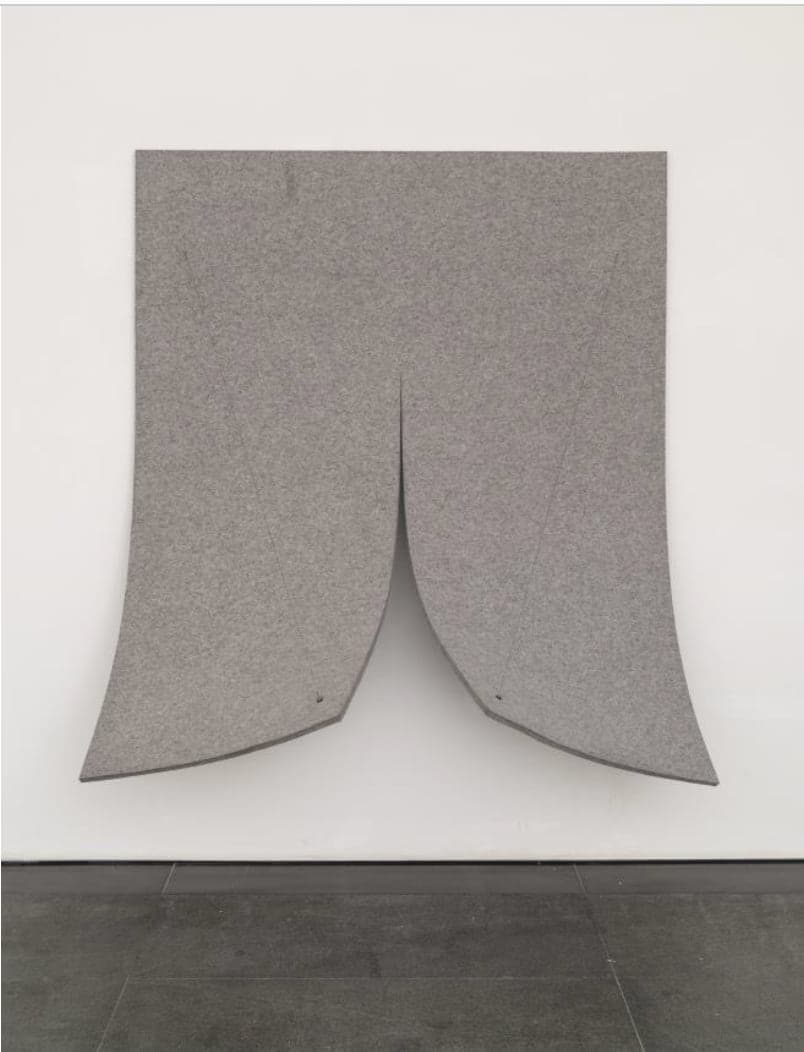
In this ongoing series of work, Naama Tsabar transforms raw industrial felt into modifiable stringed instruments. Through the addition of carbon fibre and guitar tuning pegs, the felt pieces take on new features that contradict their natural character. The work recalls the post-Minimalist art of the 1970s, extending its application by merging minimal aesthetics with performativity. Viewers are invited to directly engage with the works by plucking the strings and creating a new acoustic landscape. The works output sound through human encounter —tightening or loosening the strings changes the degree of the bowing of the sculptures as well as the sound they emit. The transformative nature of the work is such that the appearance of the sculptures, their erectness or flatness, directly corresponds to the pitch they produce.
Reflecting on the use of felt as a material in her earlier works, Tsabar notes; “I was thinking about Robert Morris’s post-Minimalist gravity felt sculptures, and the deadening of sound in relation to Joseph Beuys’s felt suit for a piano. My first two pieces were on the floor, and in late 2015 I moved up to the wall.” [Bomb Magazine, Sculpture and Sound: Naama Tsabar Interviewed by Naomi Lev, 2018].
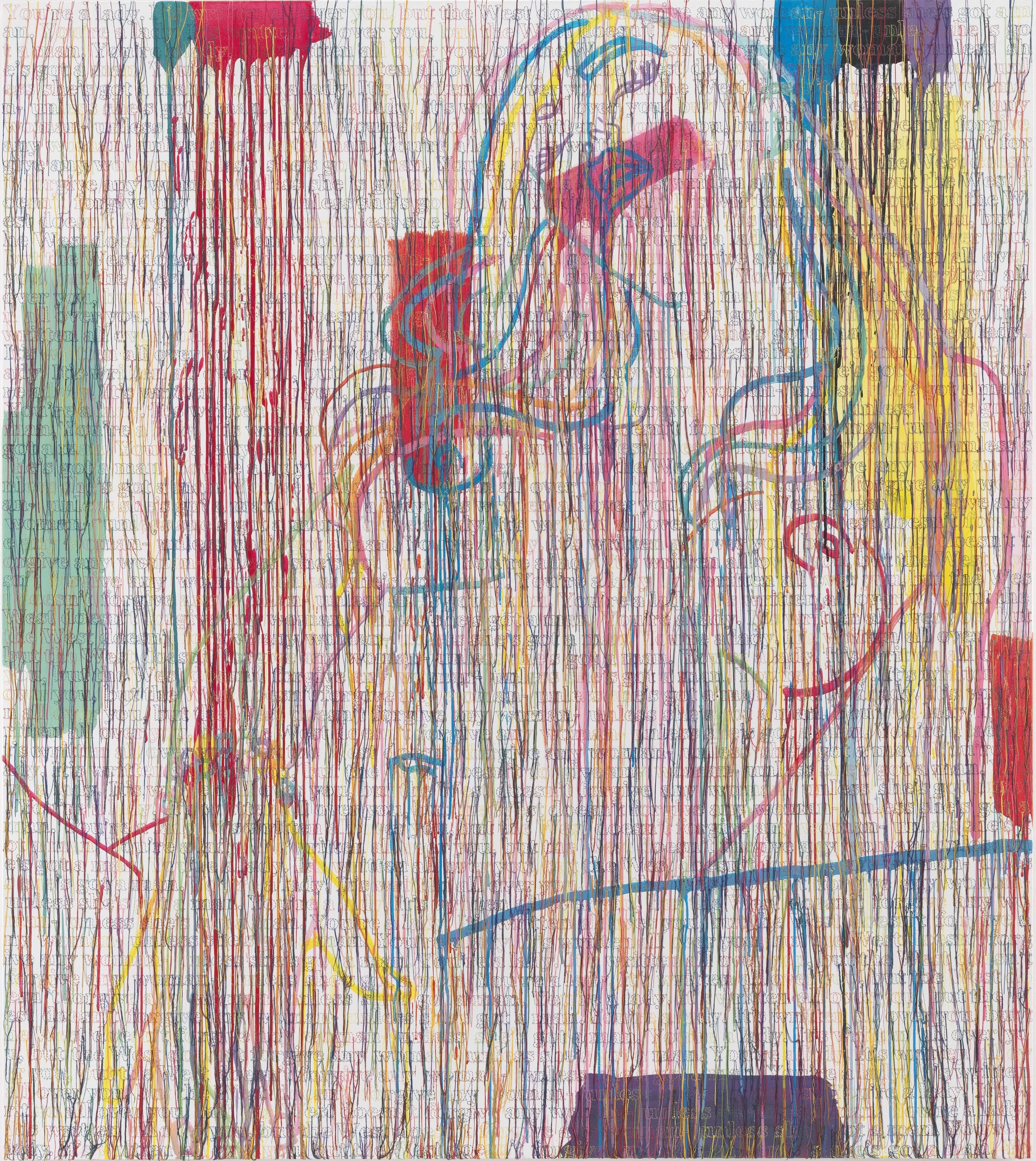
Ghada Amer is a contemporary Egyptian artist best known for her erotic embroideries that negotiate social issues, including sexuality, female identity, and Islamic culture. Through her intricate fabric work, the artist seeks to present a representation of the nude female body which is autonomous from the burden of the male gaze through needlework, a traditionally female discipline. The title of Ghada Amer’s work, You are a Lady, is drawn from Liliana Shelbrook’s book, Lantern in the Mist,"You are a Lady, it is written all over you, but the West does not forgive any woman-unless she's got a man".
You are a Lady was included on a group exhibition entitled, Entangled: Threads and Making, which took place at Turner Contemporary in 2017.
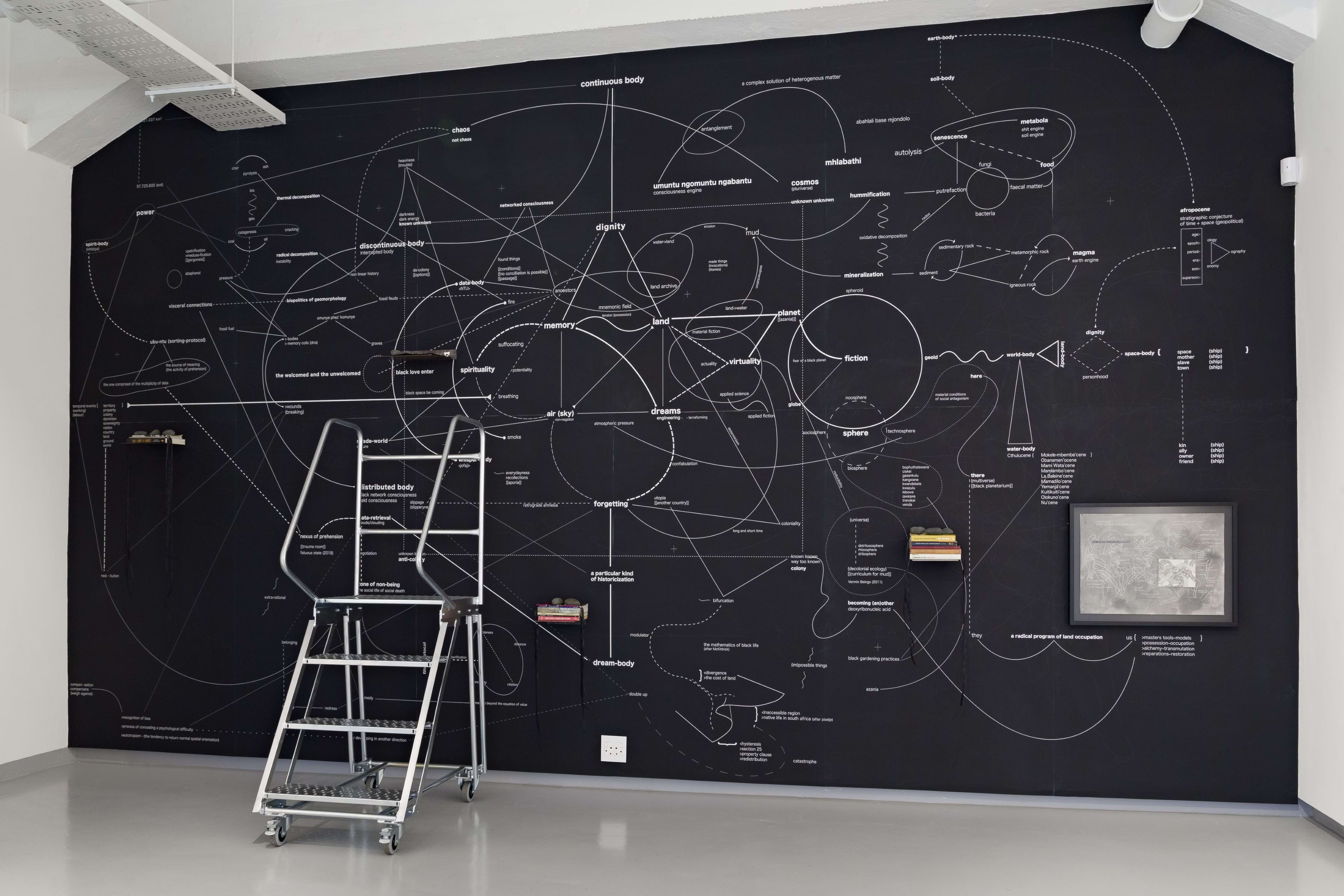
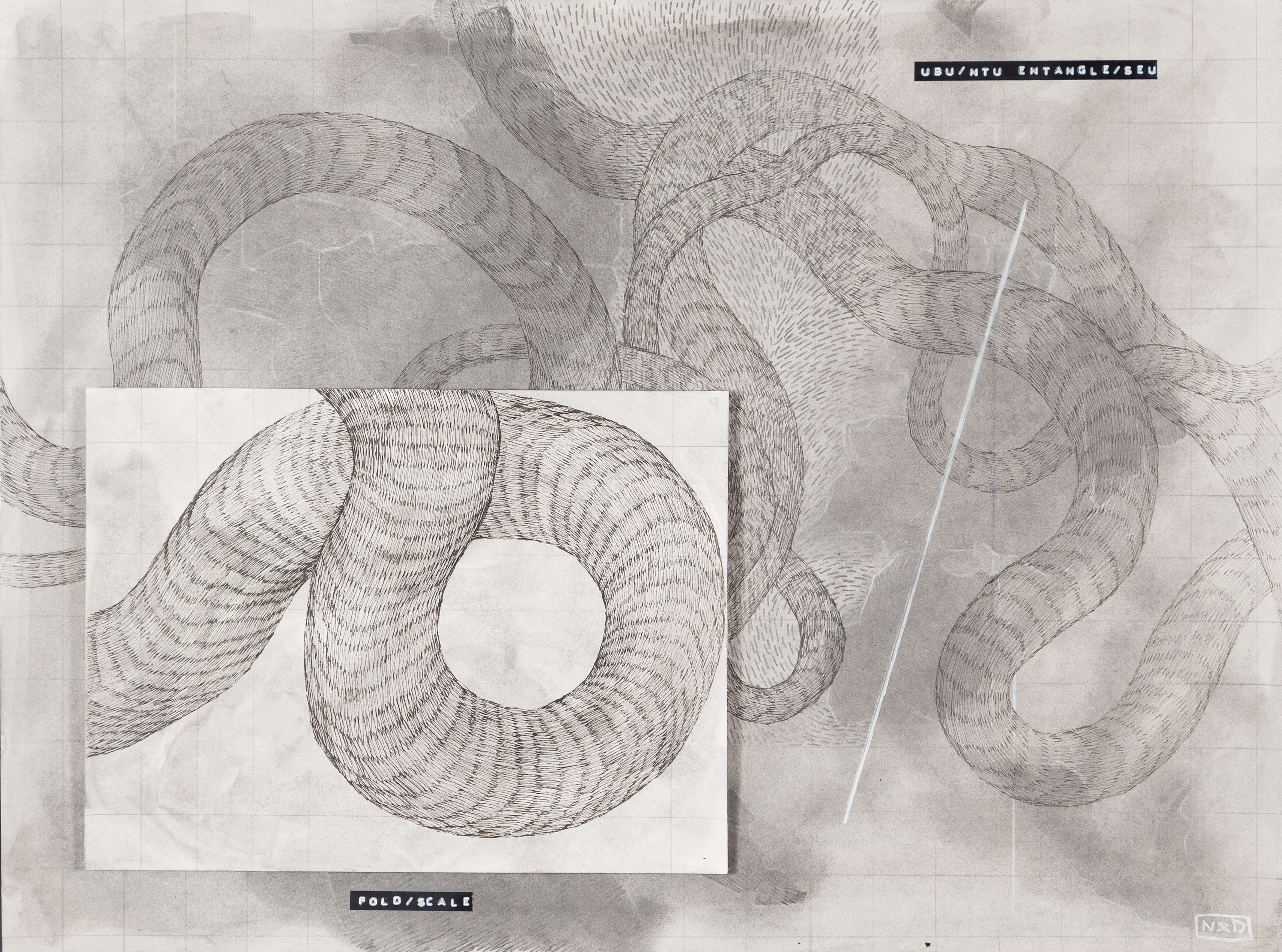
In this work No Compensation is Possible, the word compensation is diagrammed as a non-linear account of the terrible historical negotiation between antagonistic readings of the meaning and significance of the notion (and dream) of western compensation. Readings that oscillate between notions of repair and punishment, healing and trauma, payment and silence, memorialisation and forgetting, forgiveness and guilt.
These ideas are parsed through a network of complimentary systems, such as dreams; dignity; memory; ecology; embodied trauma; representation and the metaphysics of healing.
The diagram is shown as a mind map wallpaper in the tradition of the map room, where the wall map functions as a critical backdrop for a certain kind of world-thinking. Here the diagram wallpaper inscribes a mindmap room, where a certain kind of world-thinking is possible which operates in the in-between of these difficult questions.
Extending the idea of the map room, the wallpaper is fitted with a series of shelves each carrying a different indexical object of world-thinking (eg, books, maps, rocks, etc); pinned onto of the wallpaper is a series of drawings and notes engaging the symbolic structure of compensation, and finally an industrial step ladder sits in the space in front of the wall, a gesture of access, labour, and construction.
In this ongoing series of work raw industrial felt is transformed into modifiable stringed instruments. Through the addition of carbon fibre, piano strings and guitar tuning pegs, the felt pieces take on new features that contradict their natural character. The work recalls the Postminimalist art of the 1970s extending its application by merging minimal aesthetics with performativity. Viewers are invited to directly engage with the works by plucking the strings and creating a new acoustic landscape. The works output sound through human encounter —tightening or loosening the strings changes the degree of the bowing of the sculptures and the sound they make. The transformative nature of the work is such that the appearance of the sculptures, their erectness or flatness, directly corresponds to the pitch they produce.
Reflecting on the use of felt as a material in her earlier works Tsabar notes; “I was thinking about Robert Morris’s post-Minimalist gravity felt sculptures, and the deadening of sound in relation to Joseph Beuys’s felt suit for a piano. My first two pieces were on the floor, and in late 2015 I moved up to the wall.” [Bomb Magazine, Sculpture and Sound: Naama Tsabar Interviewed by Naomi Lev, 2018]
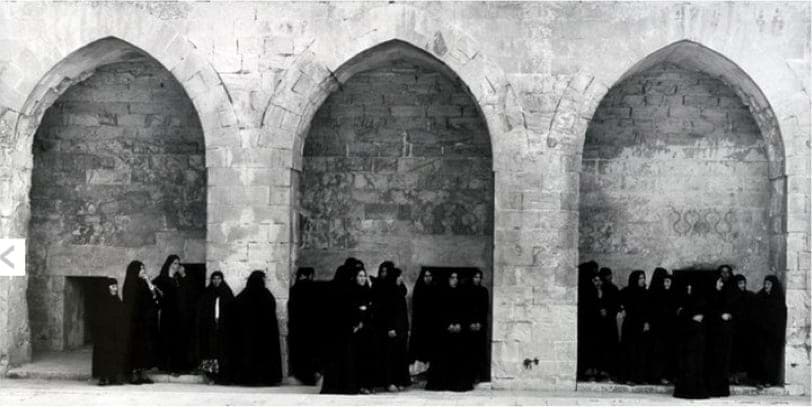
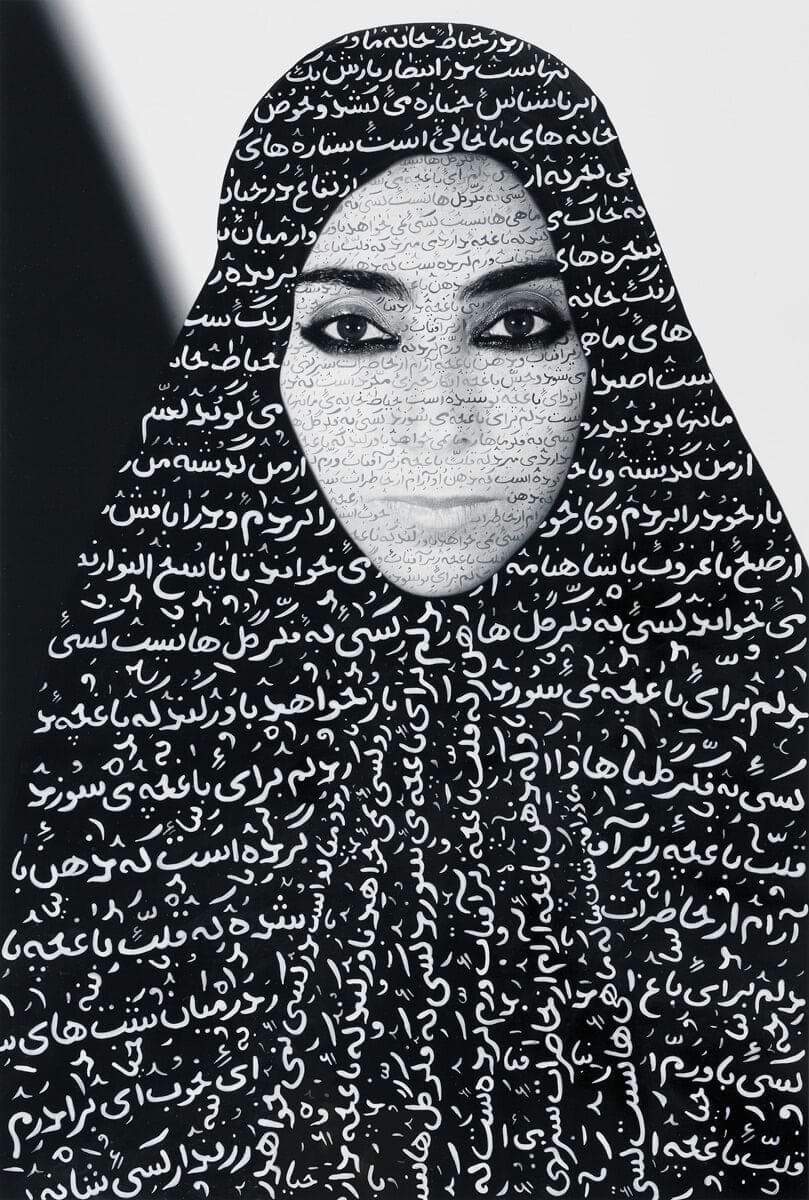
Neshat’s Study of “Unveiling” from Women of Allah Series continues the artist’s ongoing exploration into the politics of women living behind ‘the veil’ in Islamic countries, and expressing women’s affective experiences of wearing the garment. The photograph integrates text by Forugh Farrokhzad, a contemporary Iranian poet, whose work is considered to be one of the most radical expressions of female sensuality and independence. Interestingly, as demonstrated in the work, Neshat notes the complexities of the veil but does not criticise the garment’s traditional values for contemporary women. For the artist, the fundamental question is what shapes the female experience: the veil or the body? As a result, Neshat also brings into focus the problems of transposing Western feminist identity politics onto Islamic cultures. Ultimately, she creates new understandings of the veil, while challenging stereotypes about female identity in Islam.
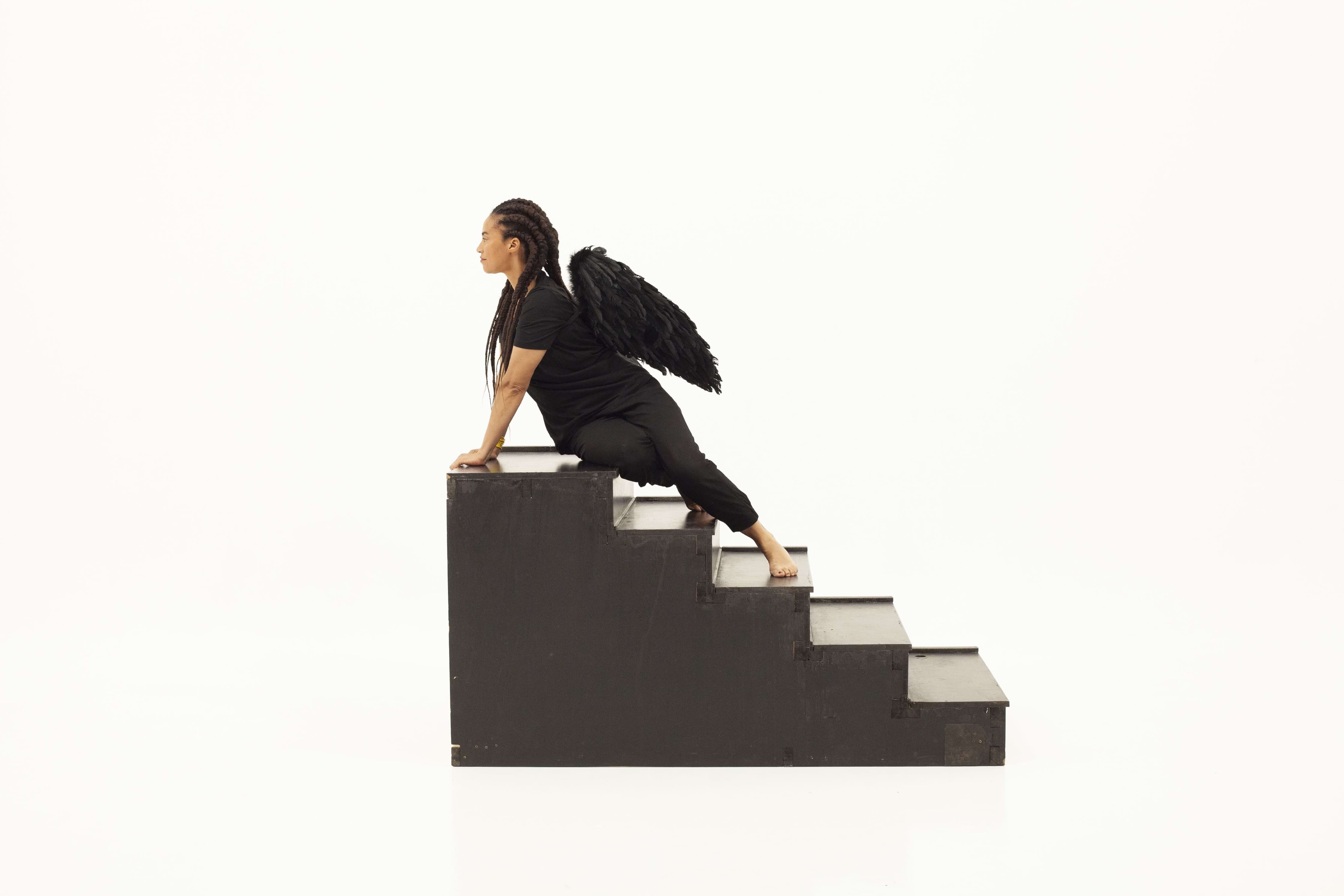
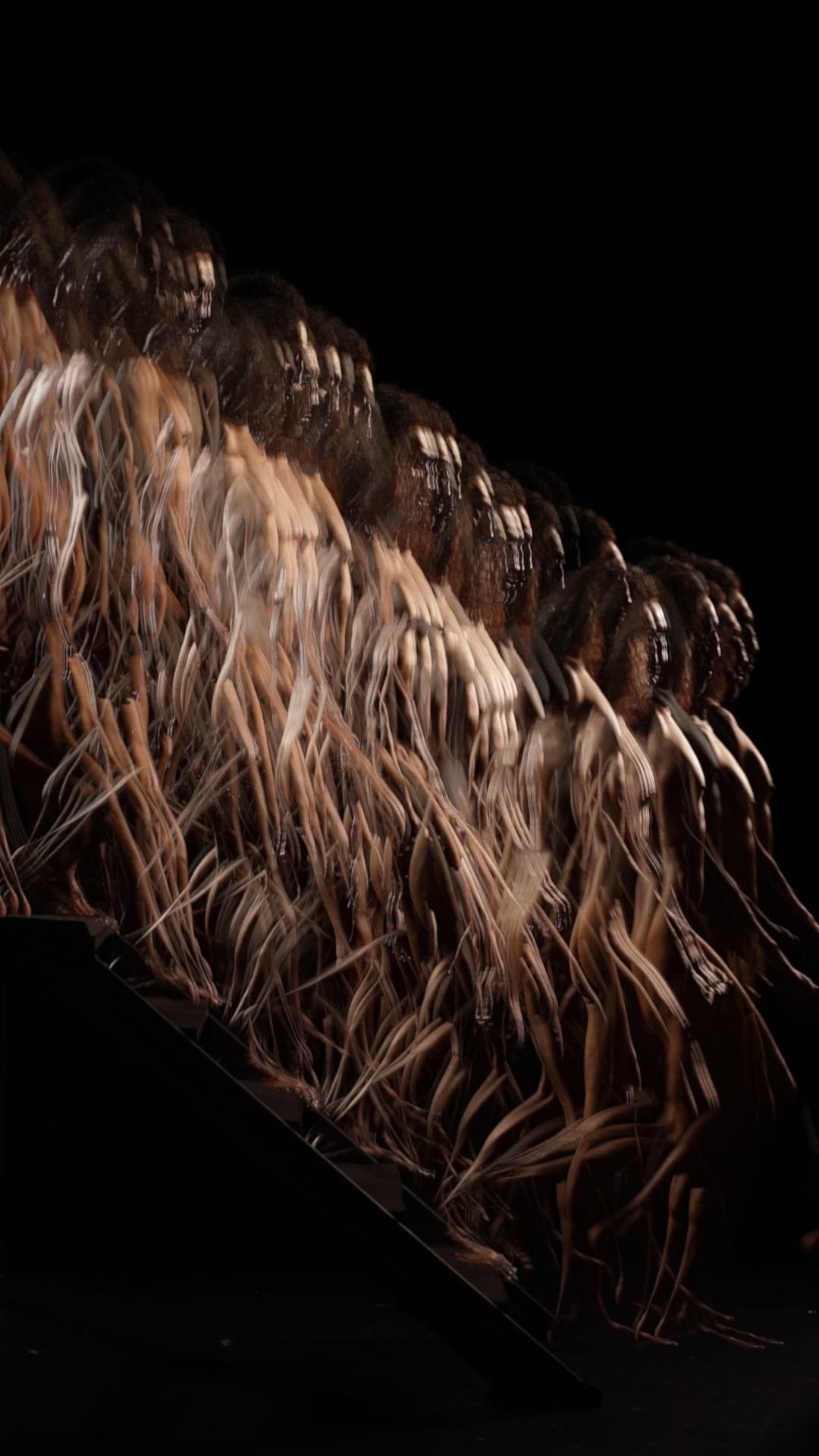
Credits: Written, Directed, and Edited by Grada Kilomba. Produced by Moses Leo.
Performed by Martha Fessehatzion, Errol Trotman Harewood, Moses Leo, Sara-Hiruth Zewde,
Zé de Paiva, Grada Kilomba, Kalaf Epalanga, Tito Casal. Music composed by Neo Muyanga.
Director of Photography by Zé de Paiva. Camera Assistance by Kathleen Kunath, Tito Casal.
Costume and Set Design by Moses Leo, Grada Kilomba. Sound Engineering by Gabriel do Val.
Commissioned and coproduced by the 10. Berlin Biennale. Coproduced by Bildmuseet,
Umeå University, Sweden. With the support of Outset Germany/Switzerland.