Video
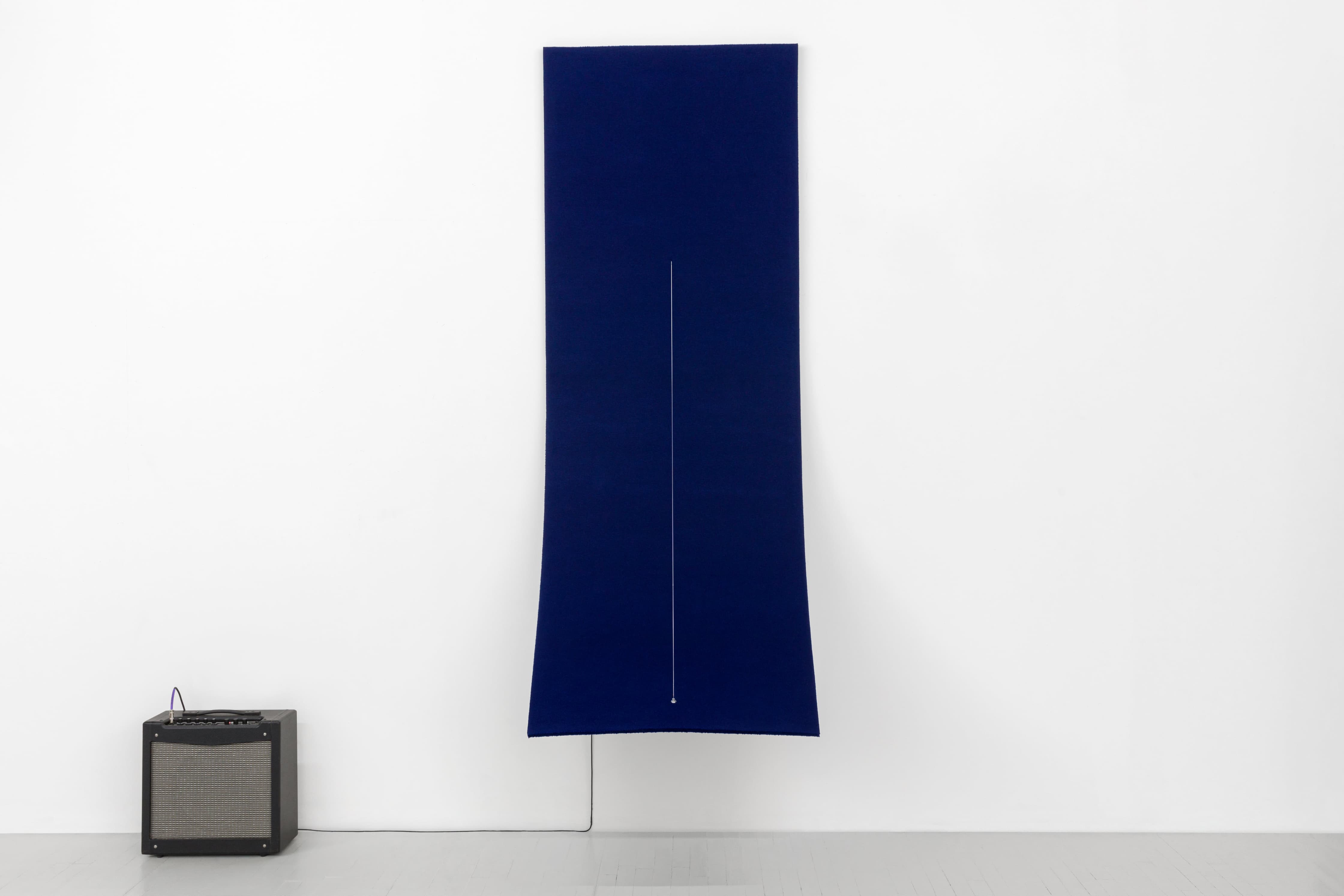
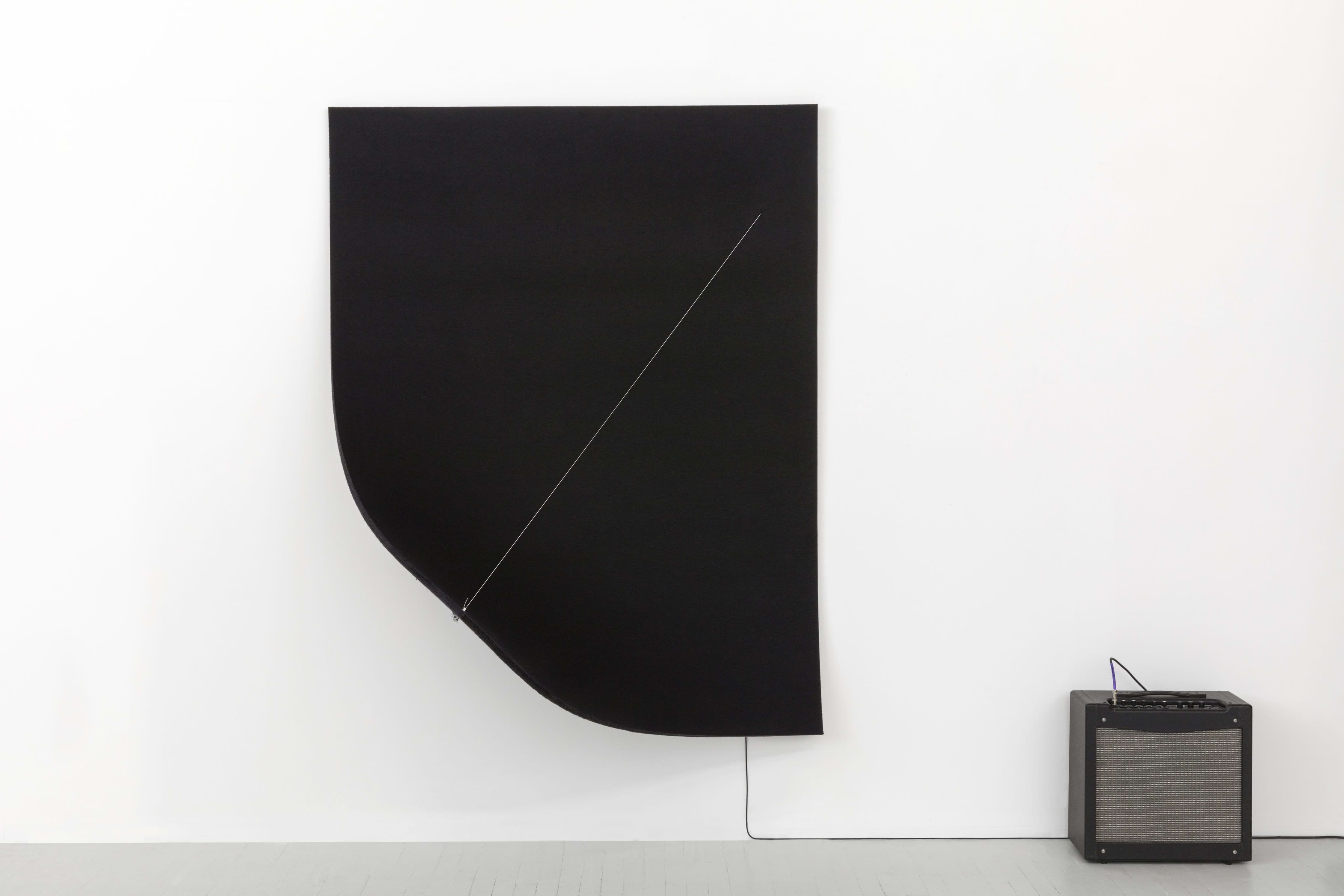
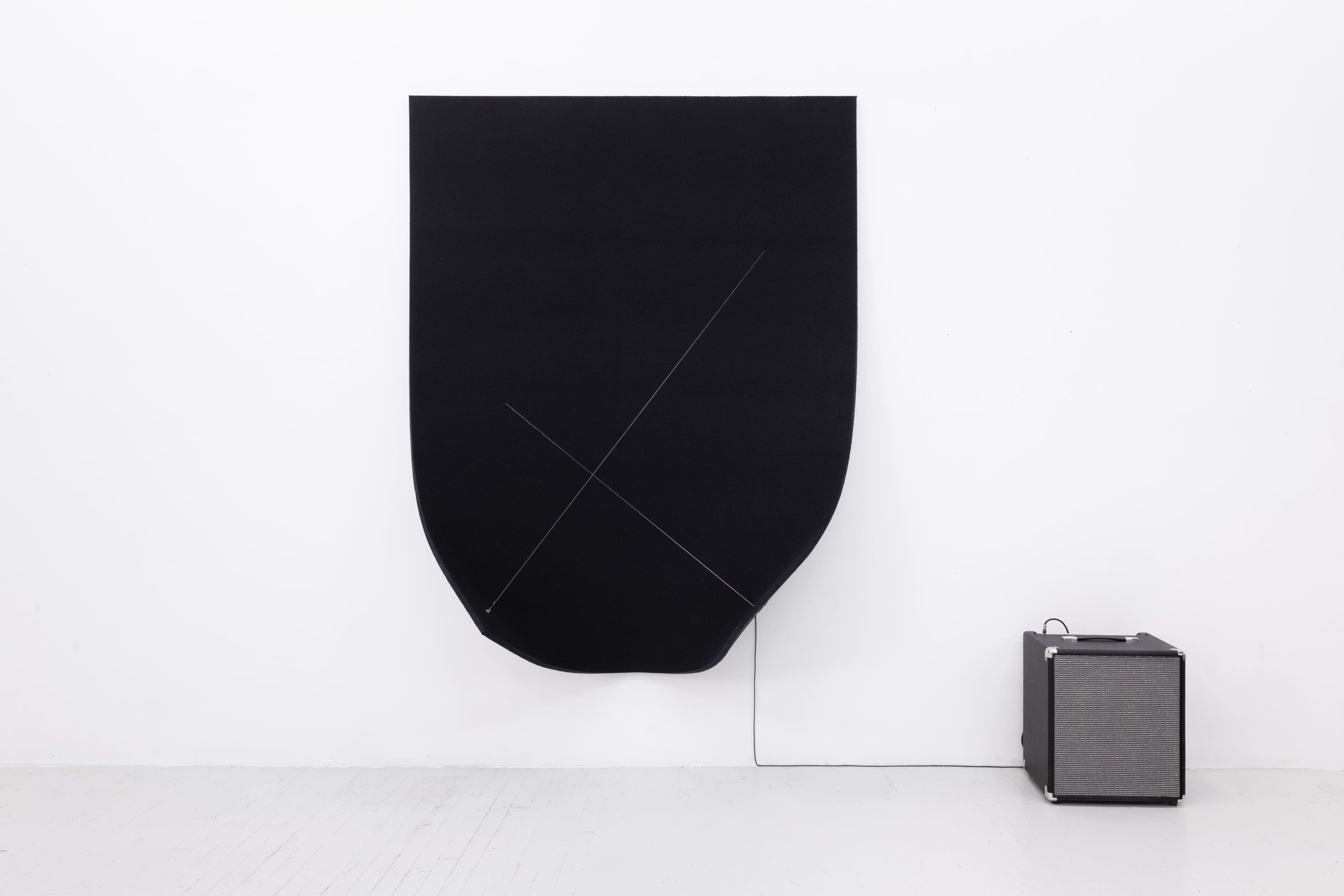
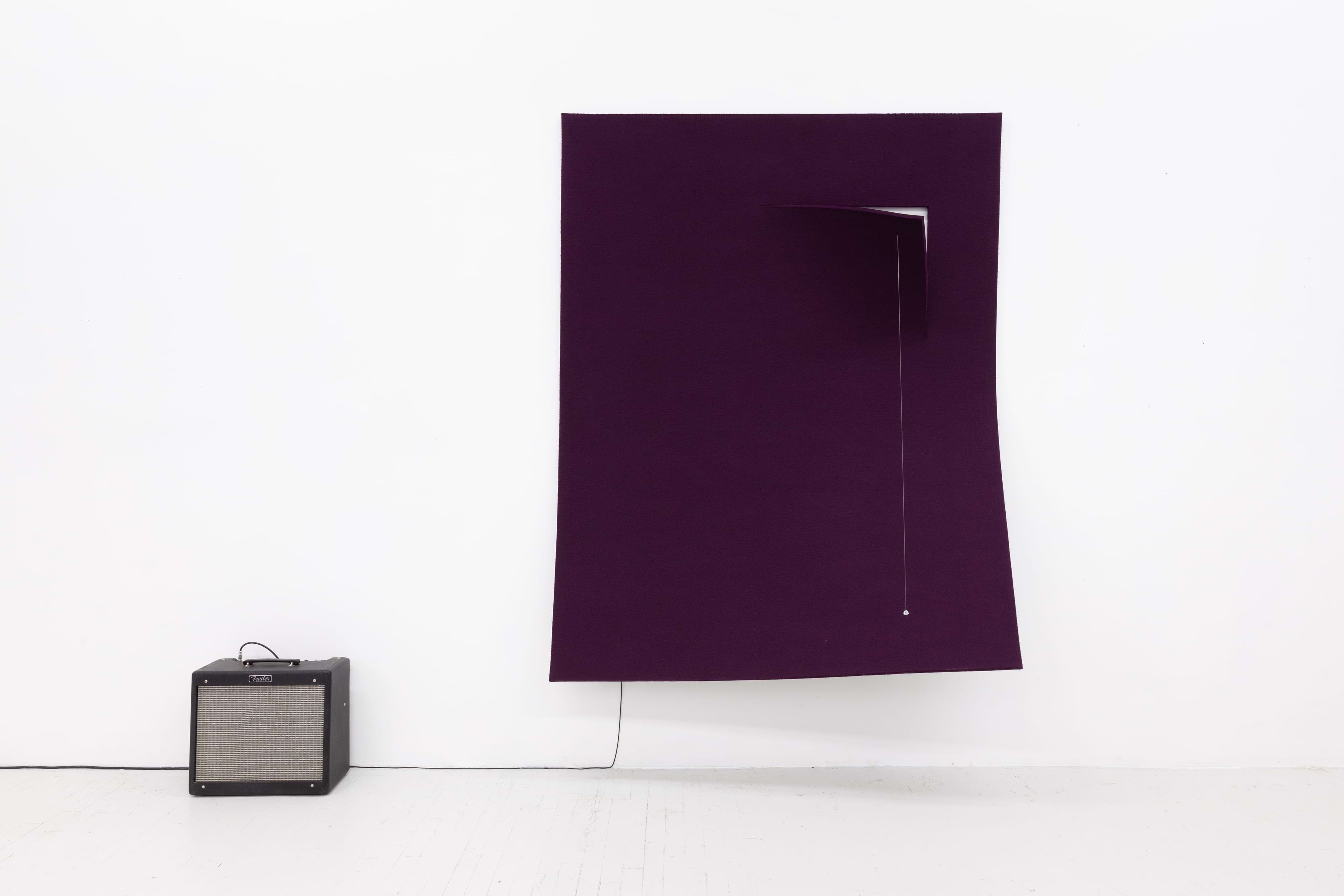
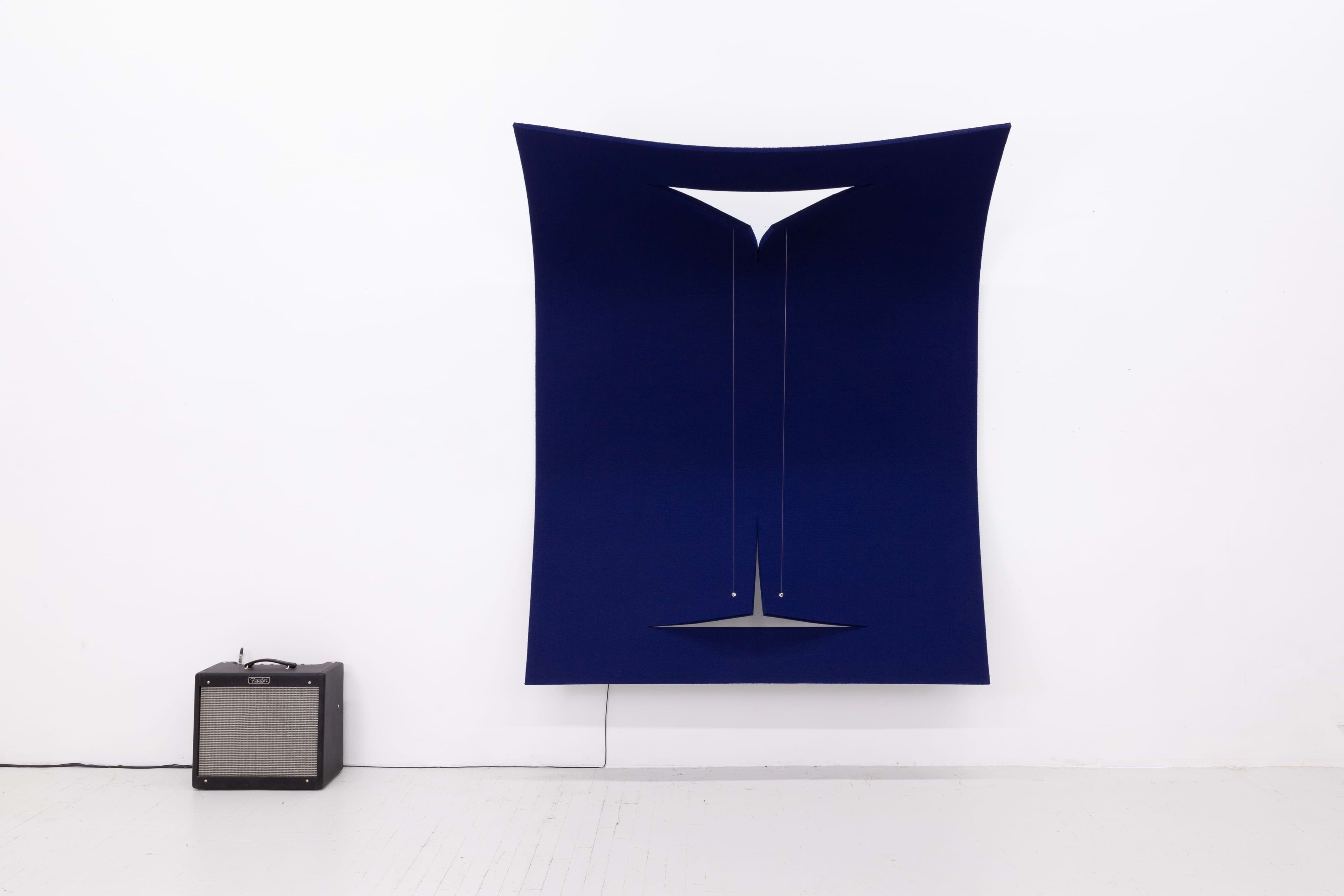
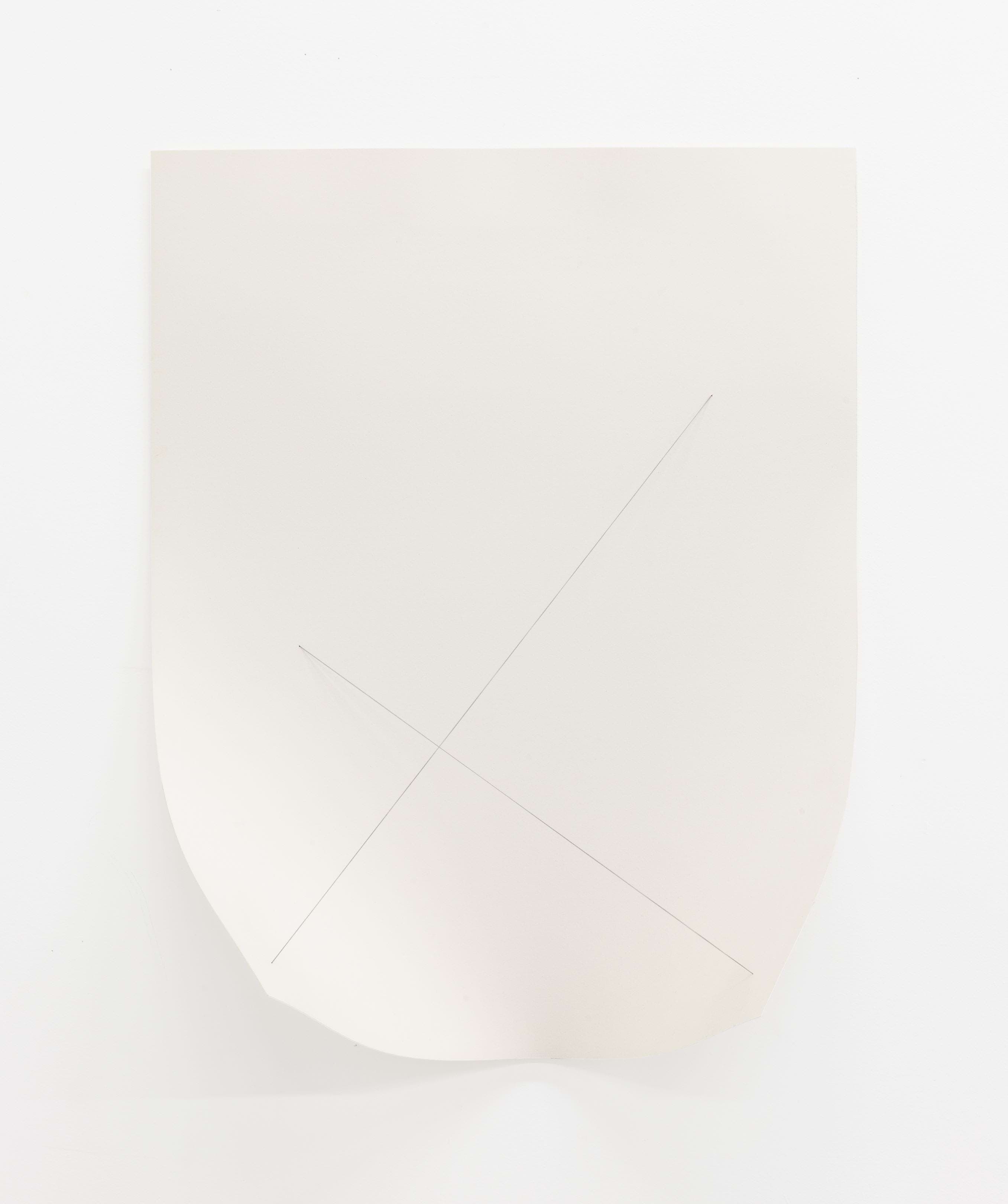
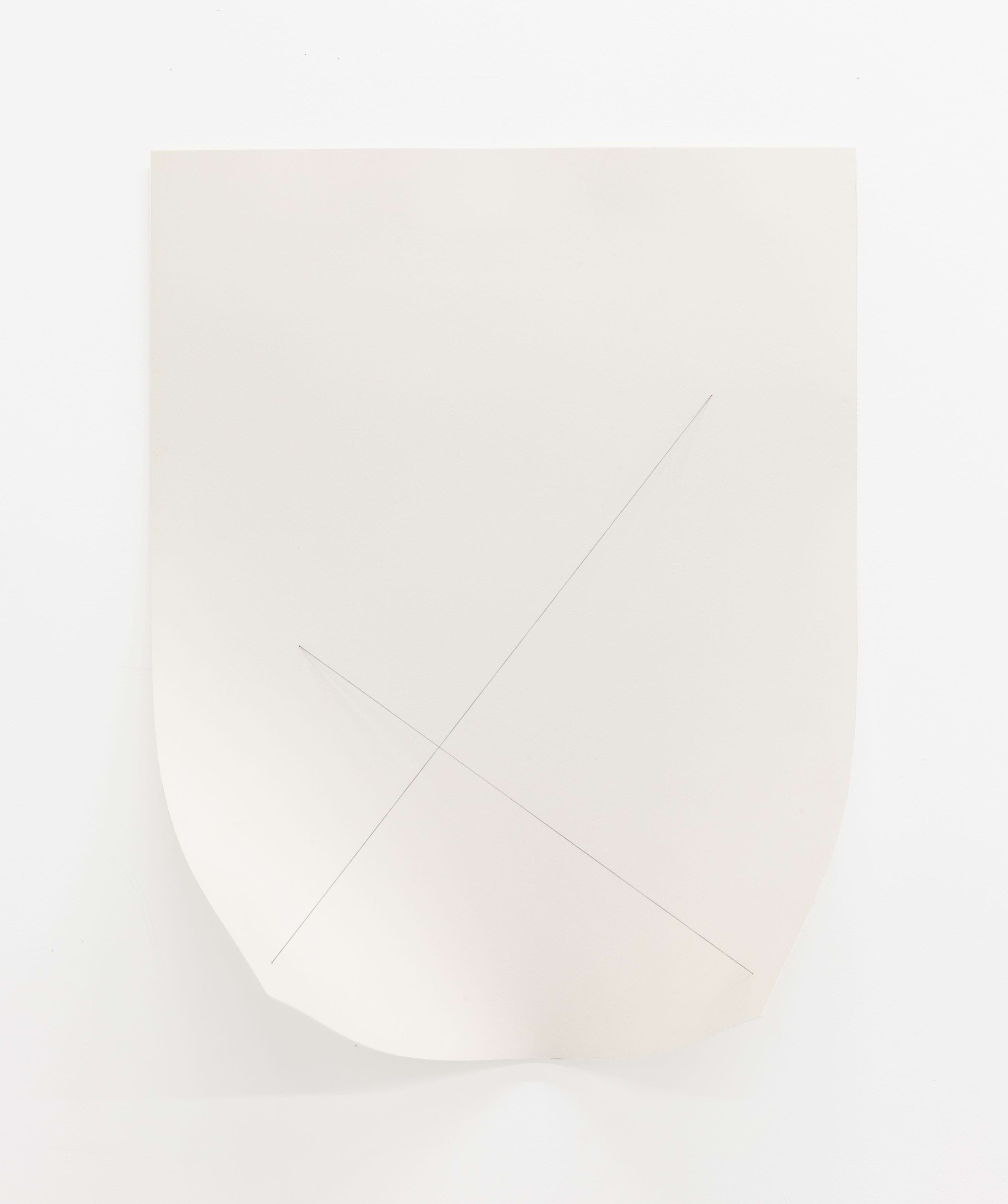
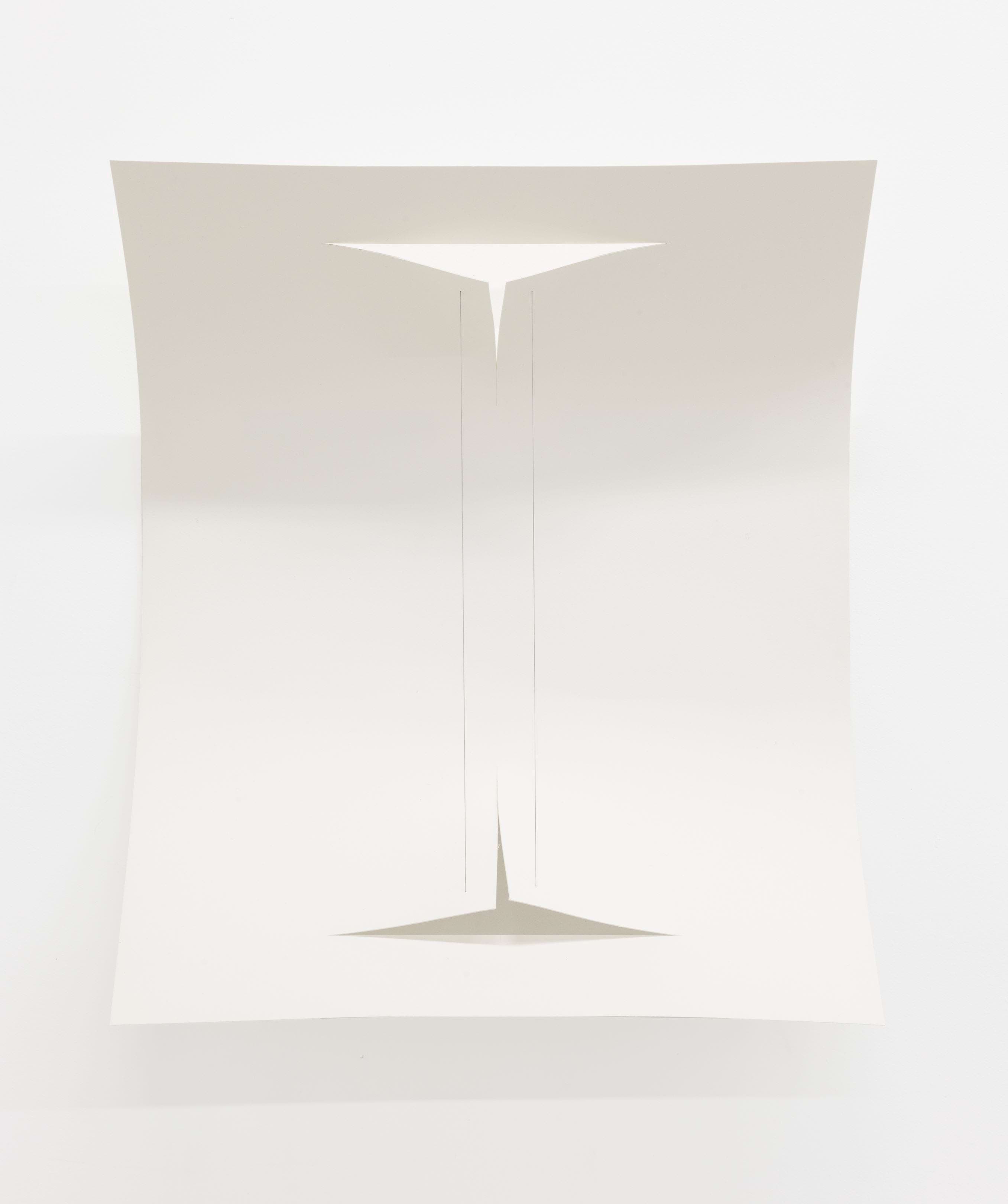
Tsabar’s ongoing series Works On Felt includes works that are between the sculptural and the sonic. With the addition of carbon fibre, piano strings, and guitar tuning pegs, the felt gains new features that contradict its natural characteristics. Through their visible materiality and size, they engage the body, to be touched, activated, felt. One is immediately confronted with their minimal design and then given a chance to directly engage with the work itself by plucking the strings, creating sounds from them.
In this ongoing series of work, Naama Tsabar transforms raw industrial felt into modifiable stringed instruments. Through the addition of carbon fibre and guitar tuning pegs, the felt pieces take on new features that contradict their natural character. The work recalls the post-Minimalist art of the 1970s, extending its application by merging minimal aesthetics with performativity. Viewers are invited to directly engage with the works by plucking the strings and creating a new acoustic landscape. The works output sound through human encounter —tightening or loosening the strings changes the degree of the bowing of the sculptures as well as the sound they emit. The transformative nature of the work is such that the appearance of the sculptures, their erectness or flatness, directly corresponds to the pitch they produce. Reflecting on the use of felt as a material in her earlier works, Tsabar notes; “I was thinking about Robert Morris’s post-Minimalist gravity felt sculptures, and the deadening of sound in relation to Joseph Beuys’s felt suit for a piano. My first two pieces were on the floor, and in late 2015 I moved up to the wall.”
[Bomb Magazine, Sculpture and Sound: Naama Tsabar Interviewed by Naomi Lev, 2018].
Video
2021
24-1/4’’ x 21-9/16’’ x 6.5’’
price: ?
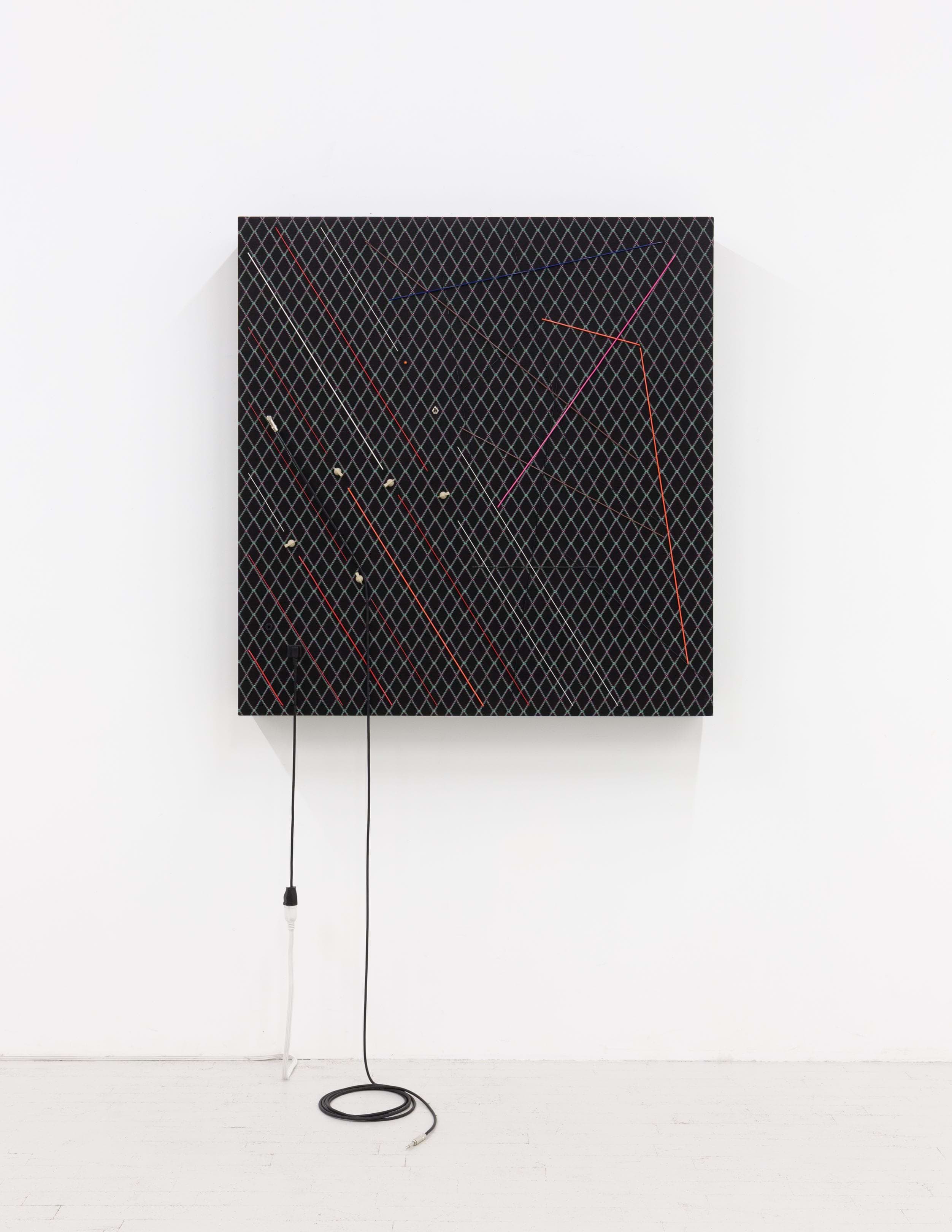
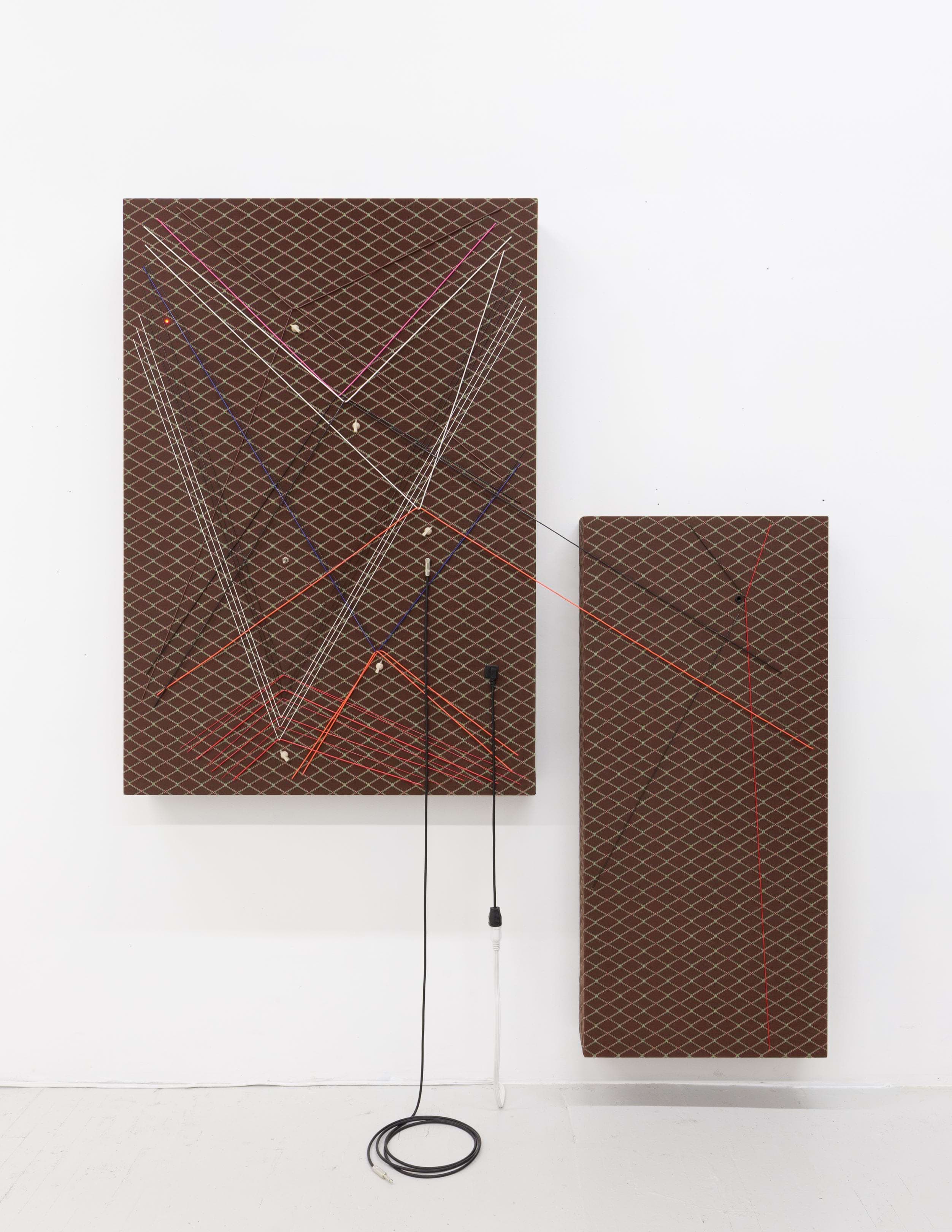
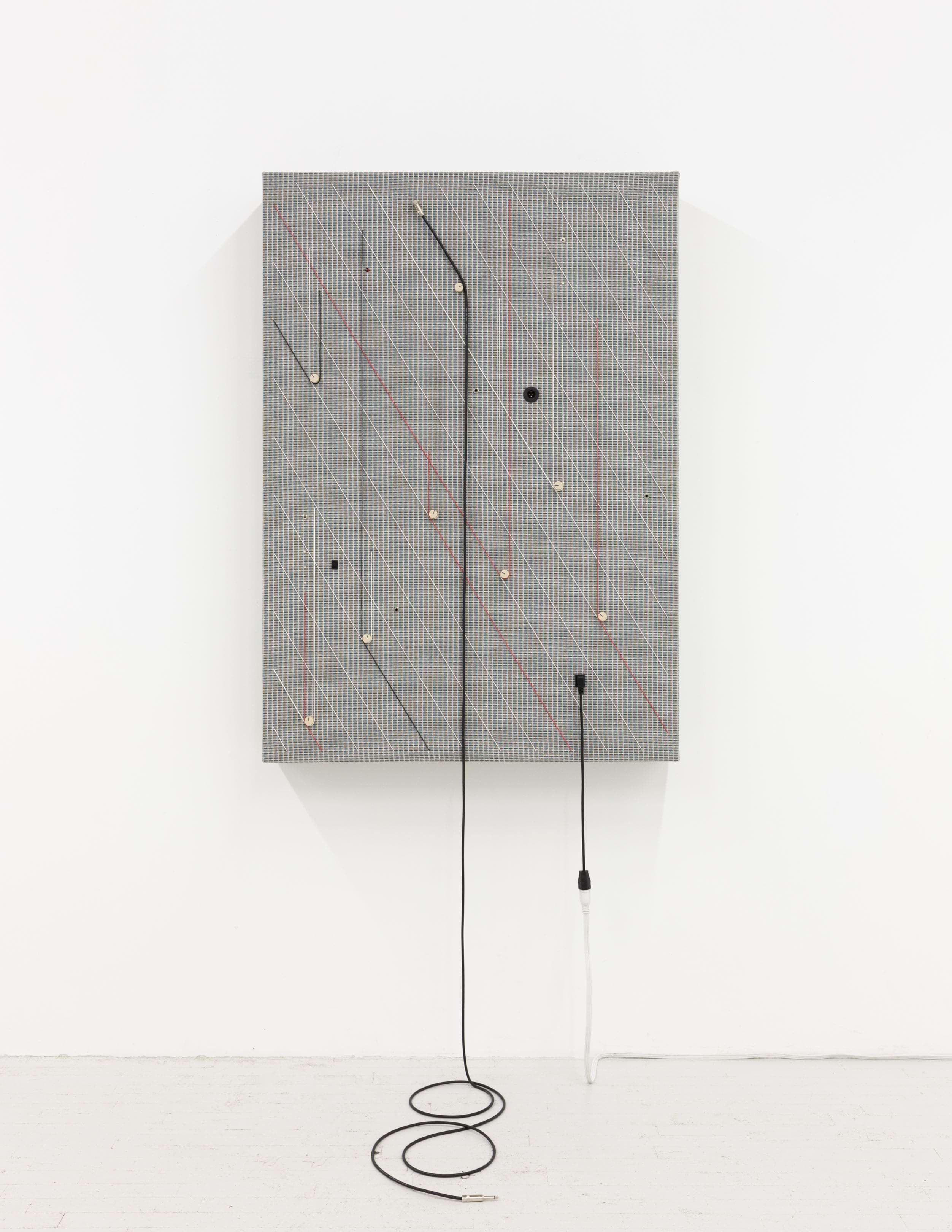
Tsabar’s Transition canvases resemble large-scale paintings or drawings from afar. Cables, buttons, connectors and parts from amplifiers and speakers form geometric compositions on amplifier fabric. The amplifiers used in the works have been disassembled and reassembled with the exact same components. Each amplifier retains its functional order while exposing the very wires that make it work. The Transition works create an experiential installation which the artist describes as “sculptural paintings that have the ability to output sound.”