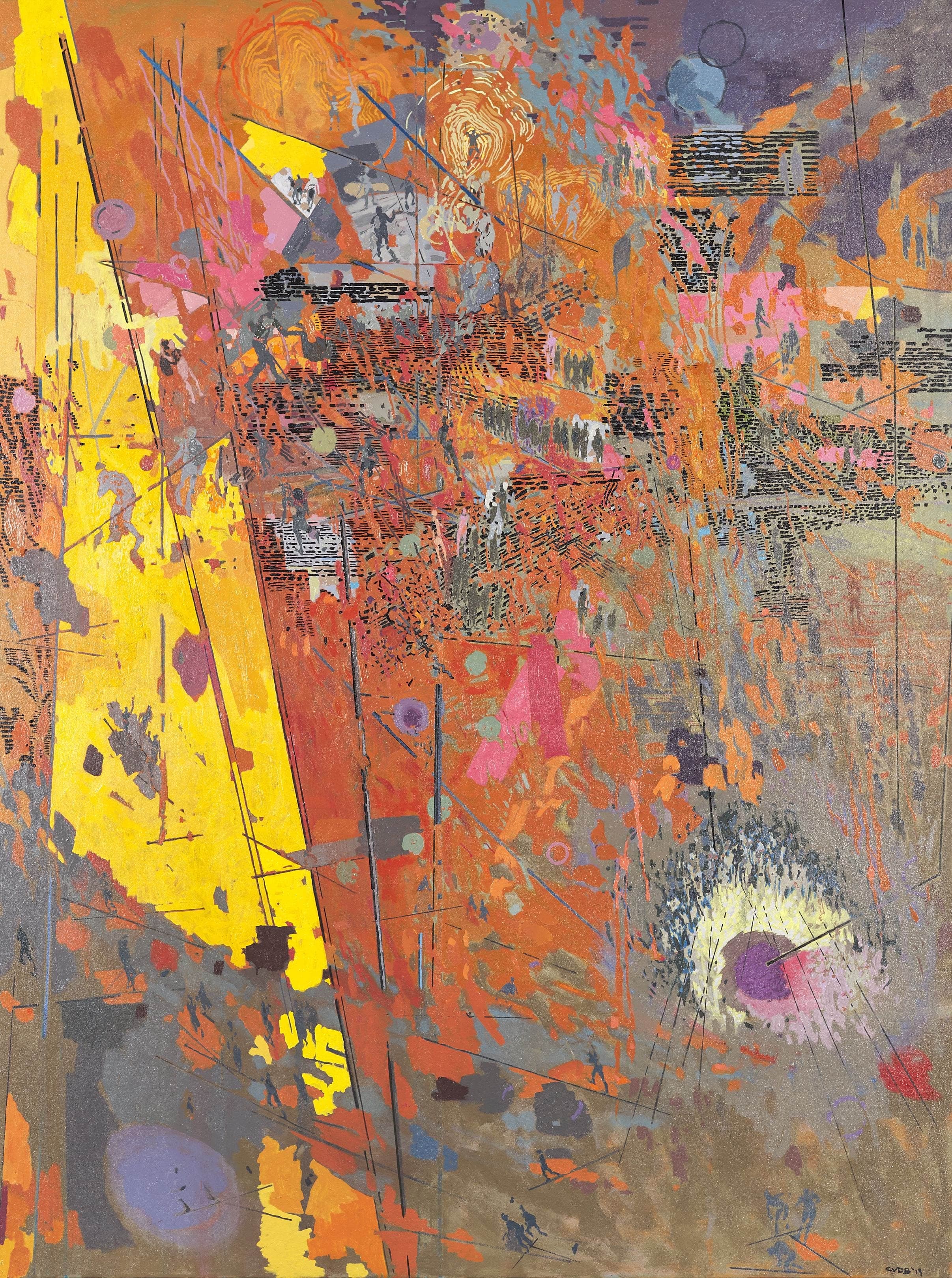
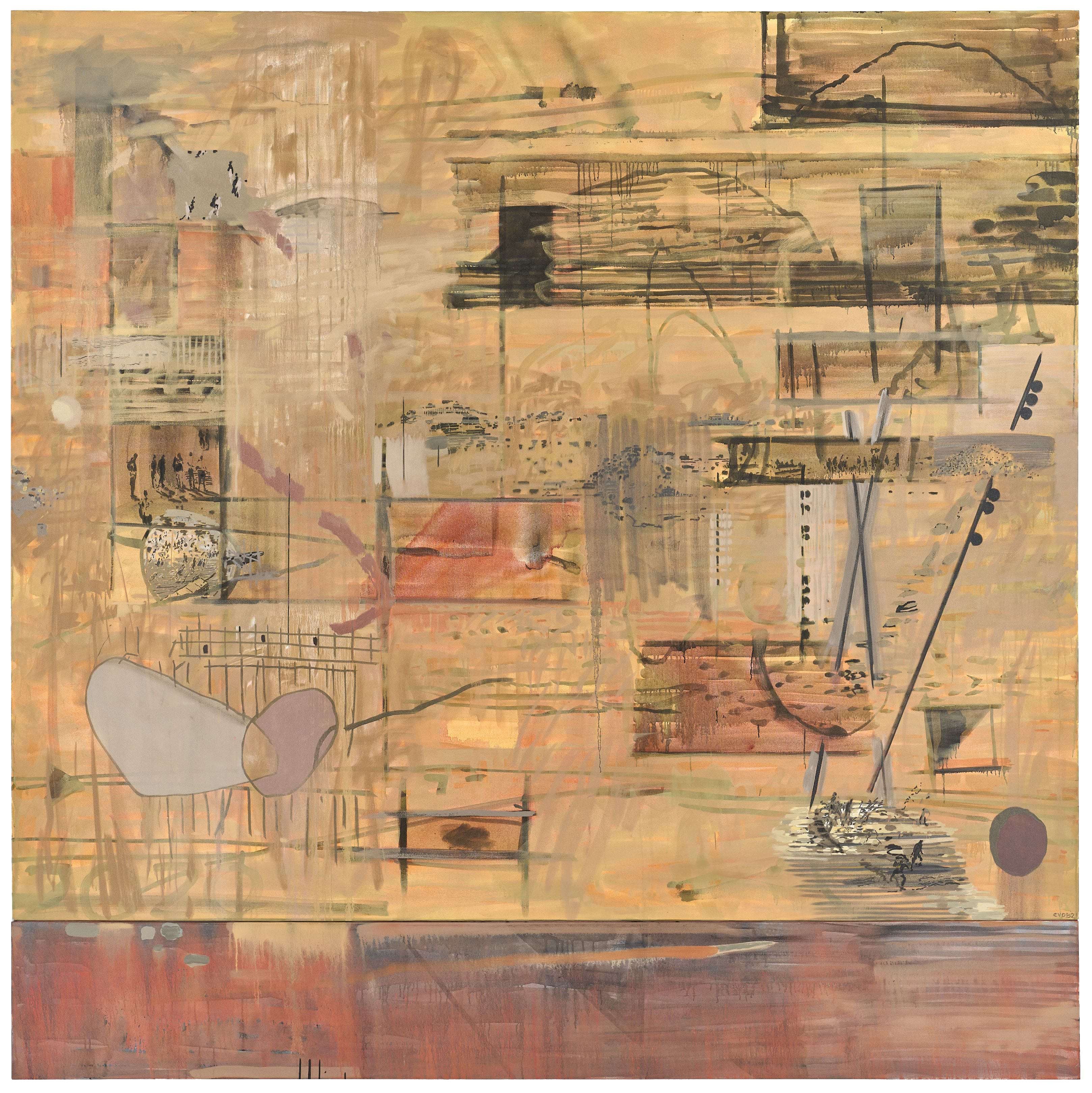
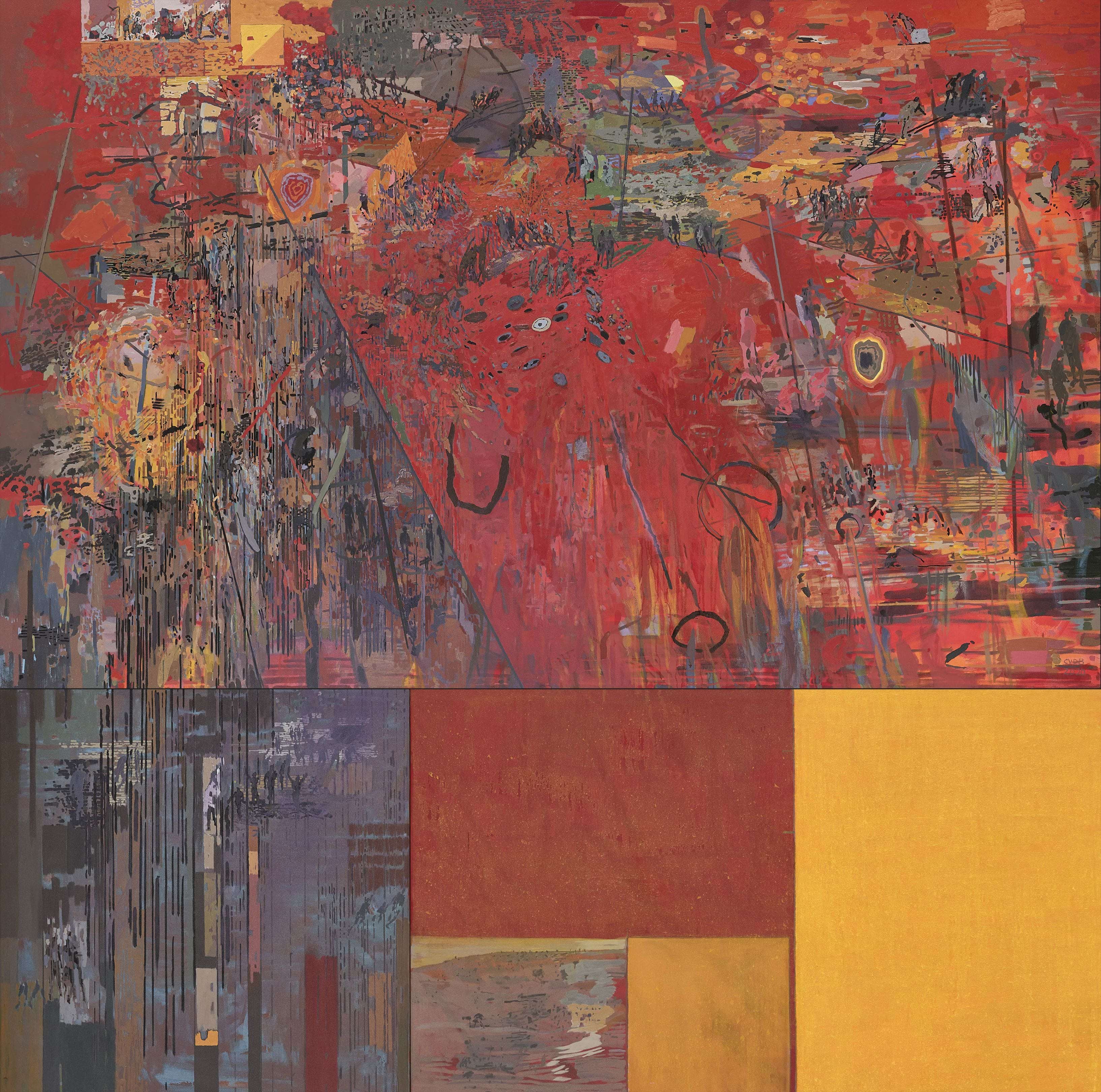
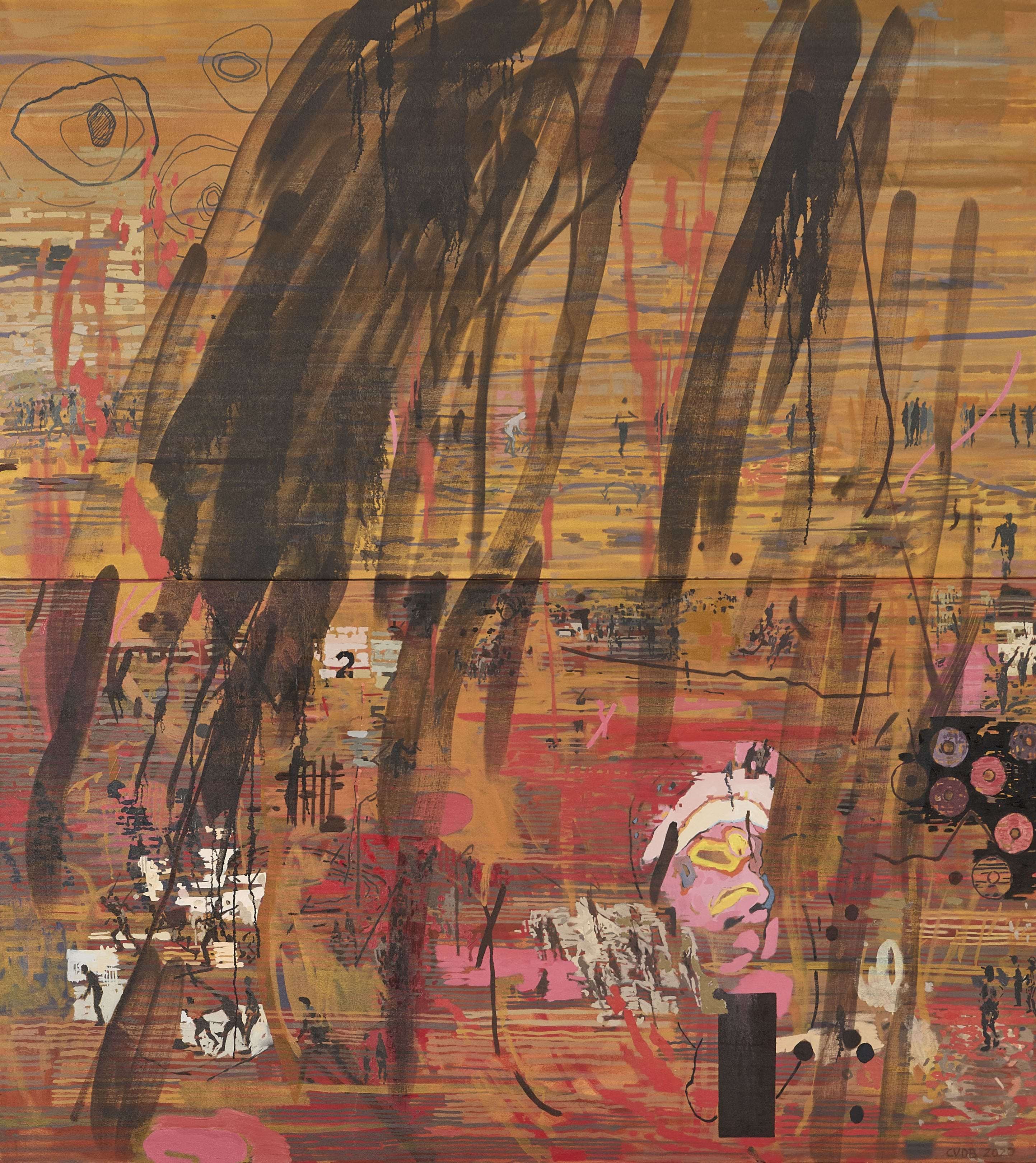
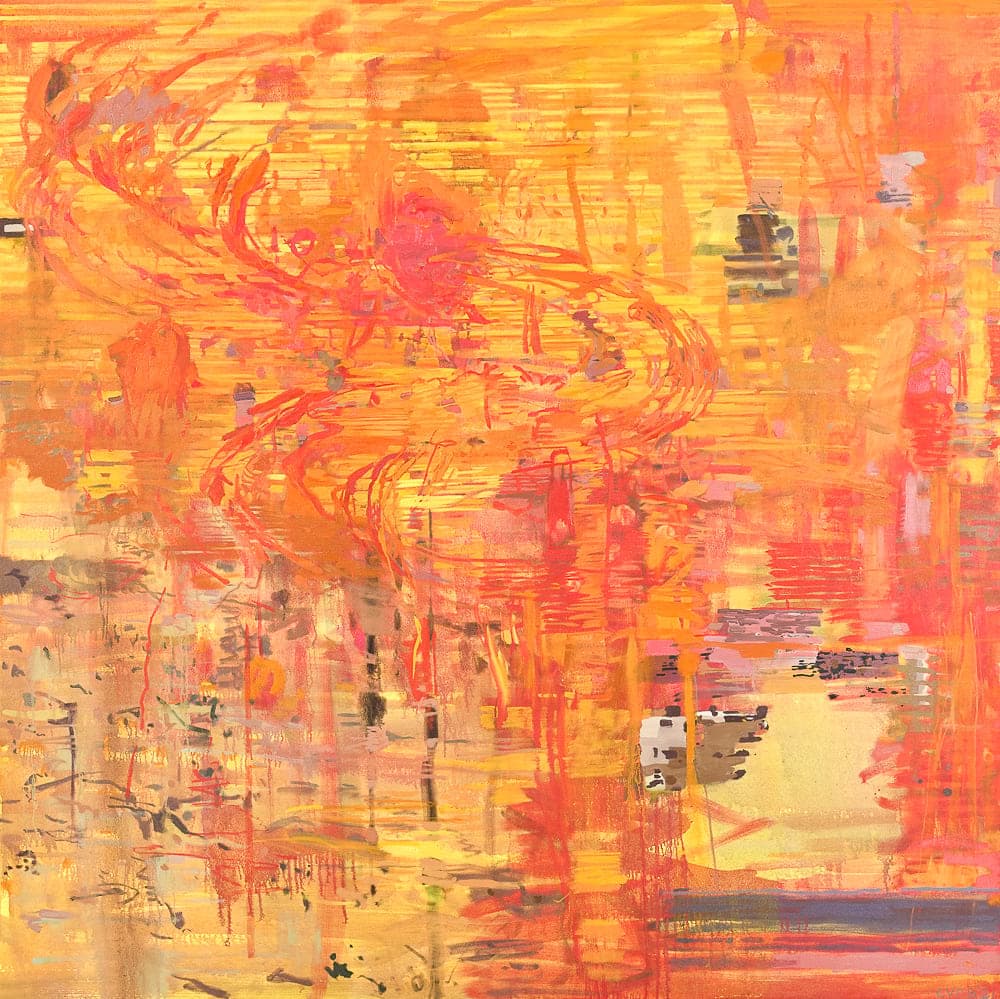
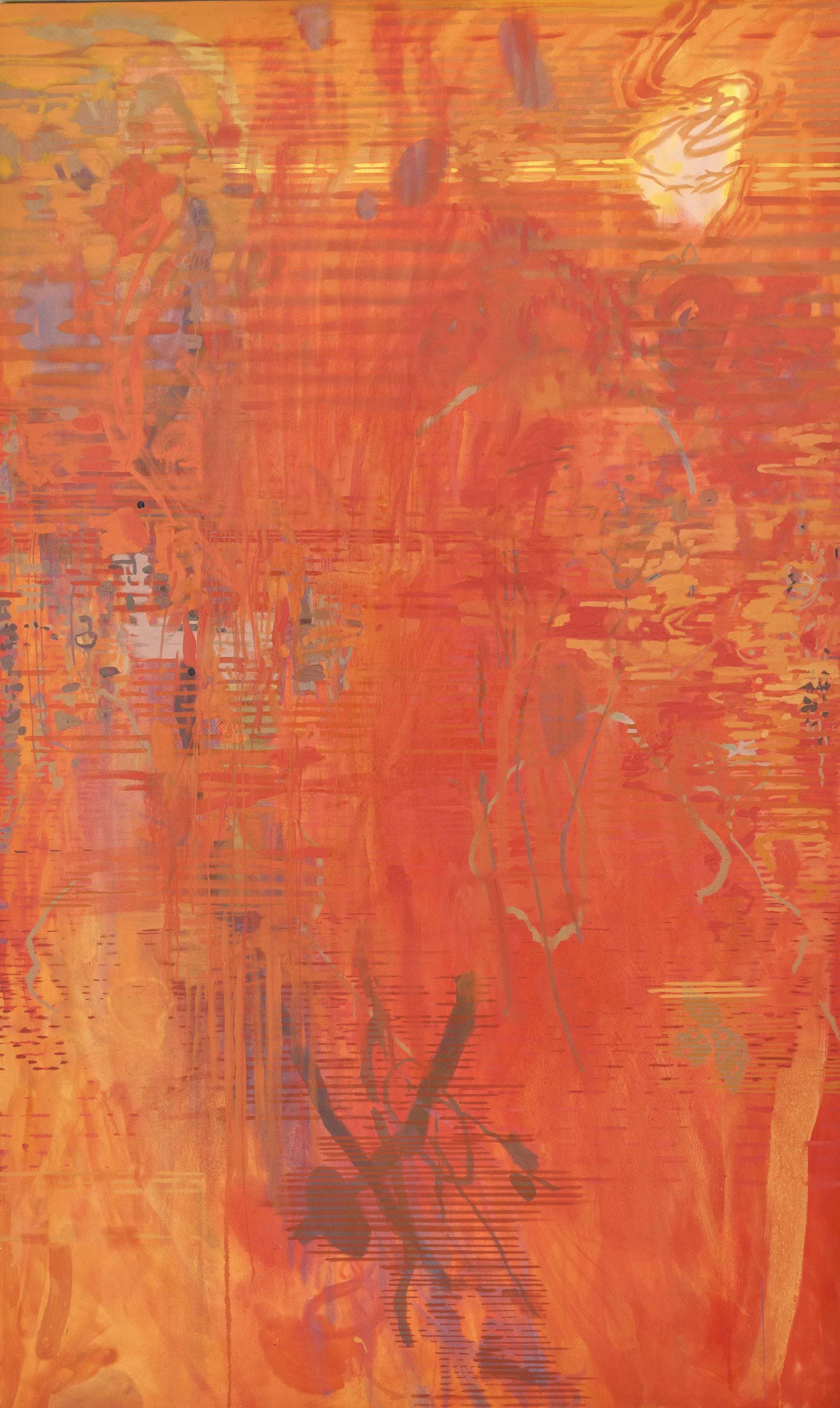
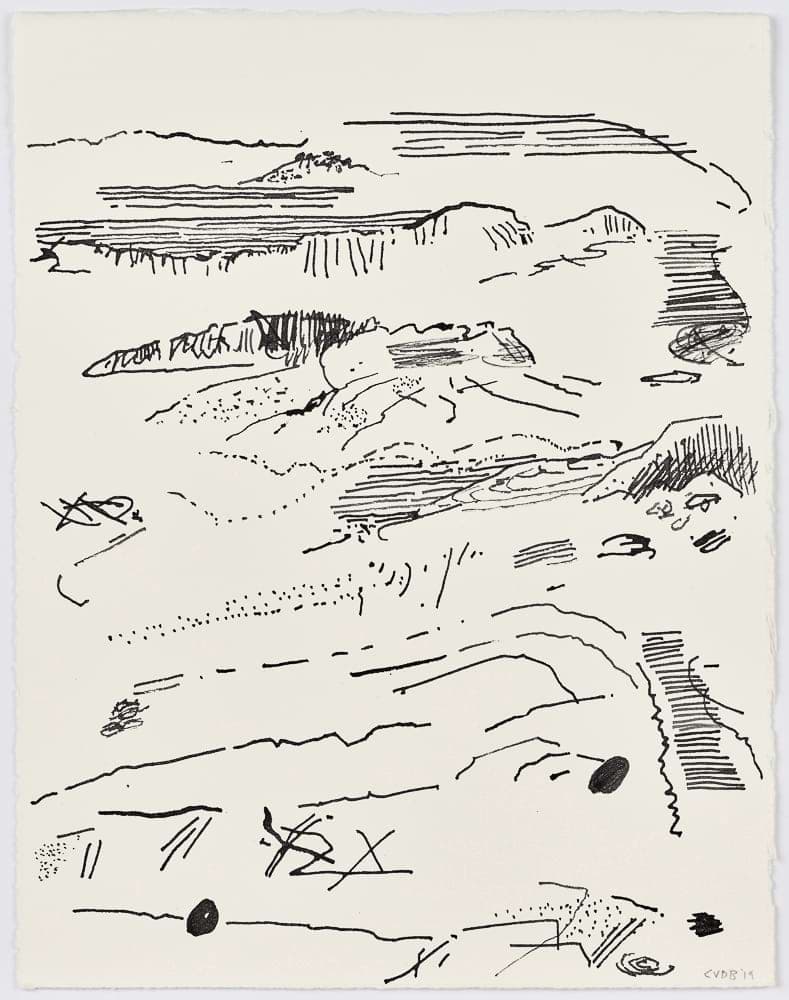
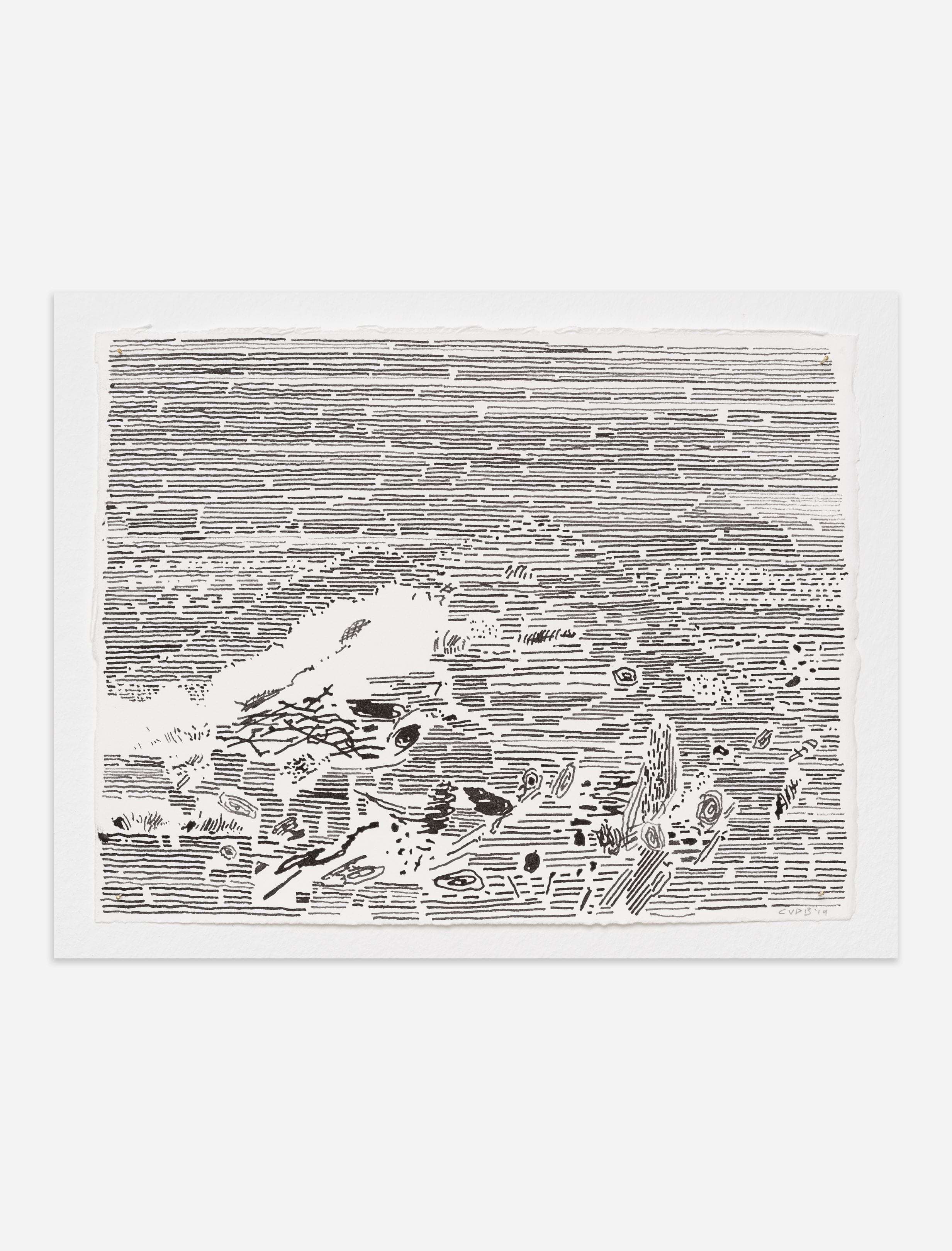
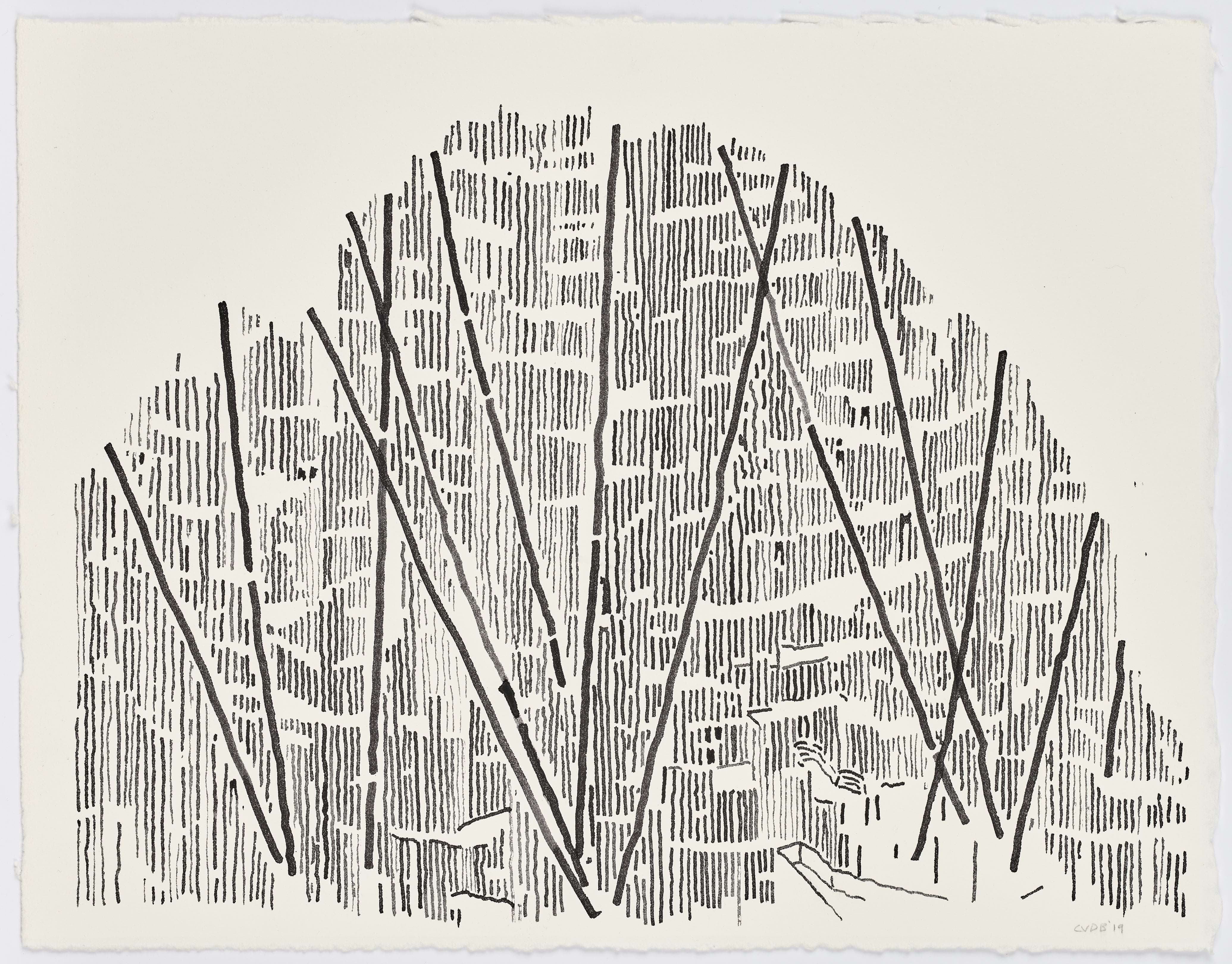
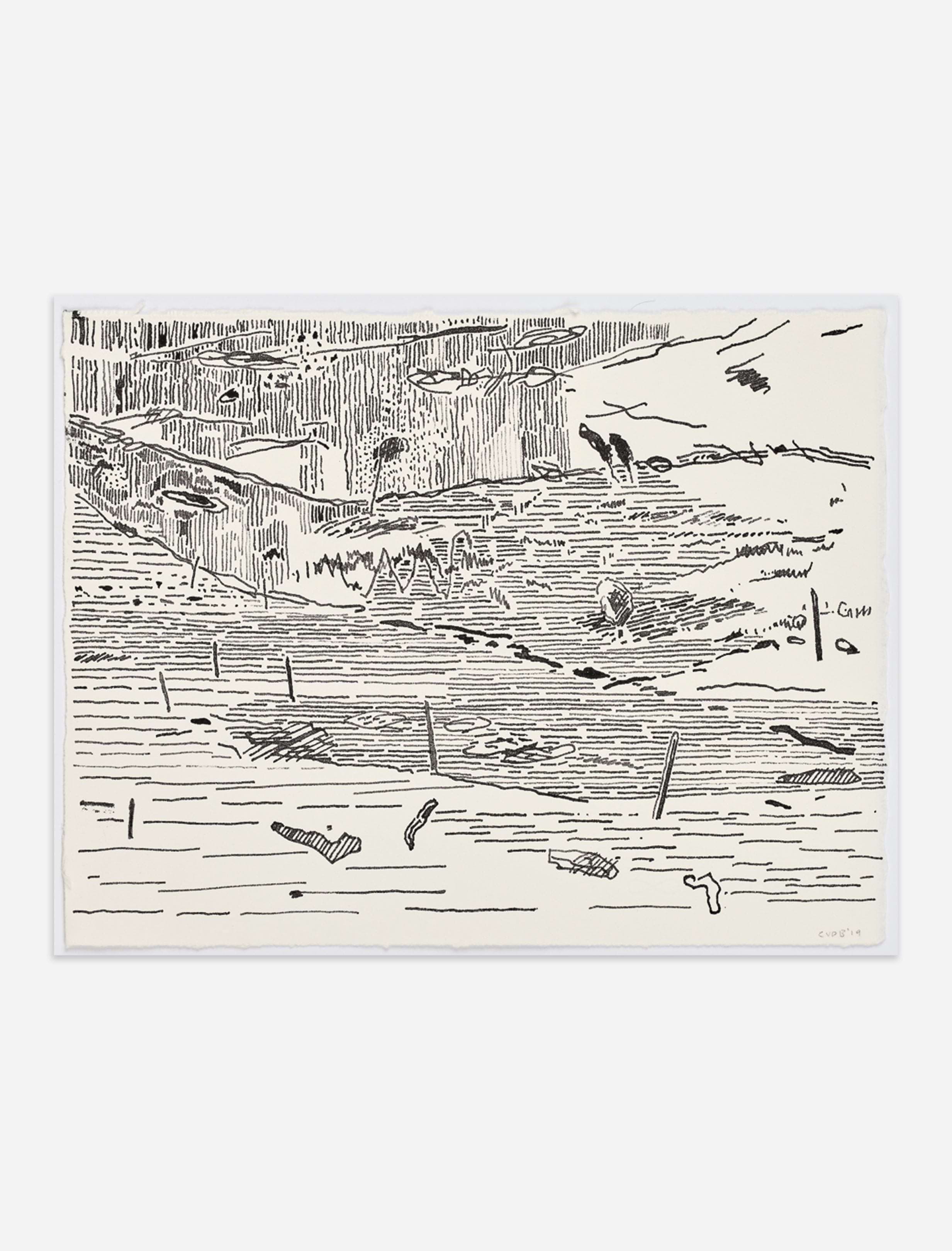
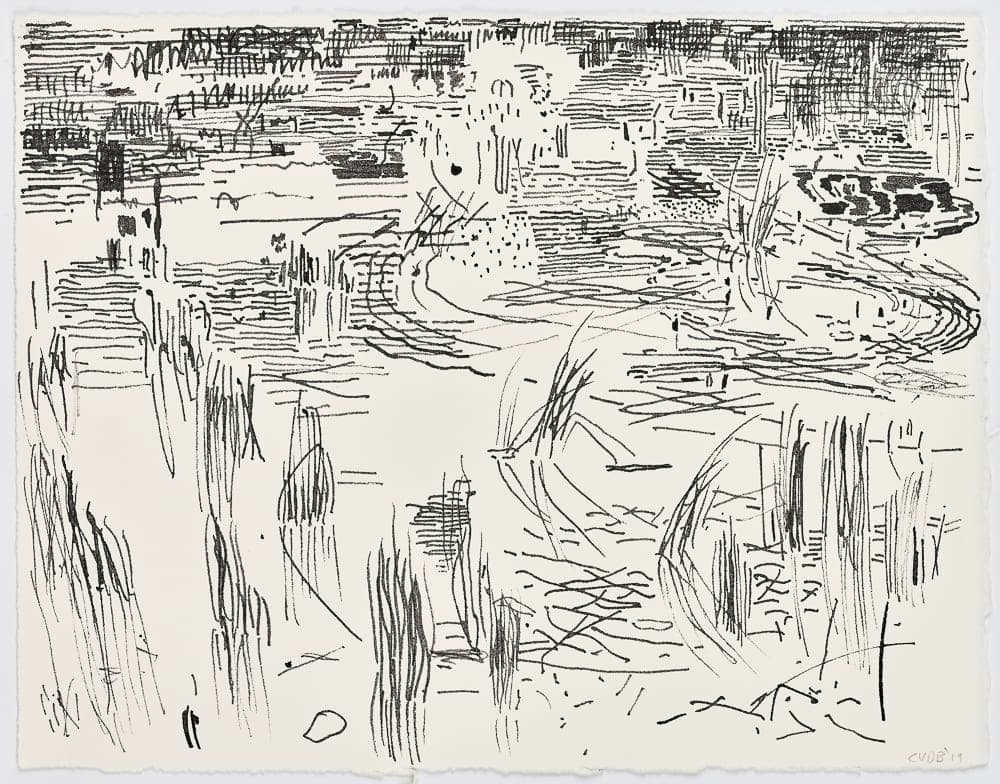
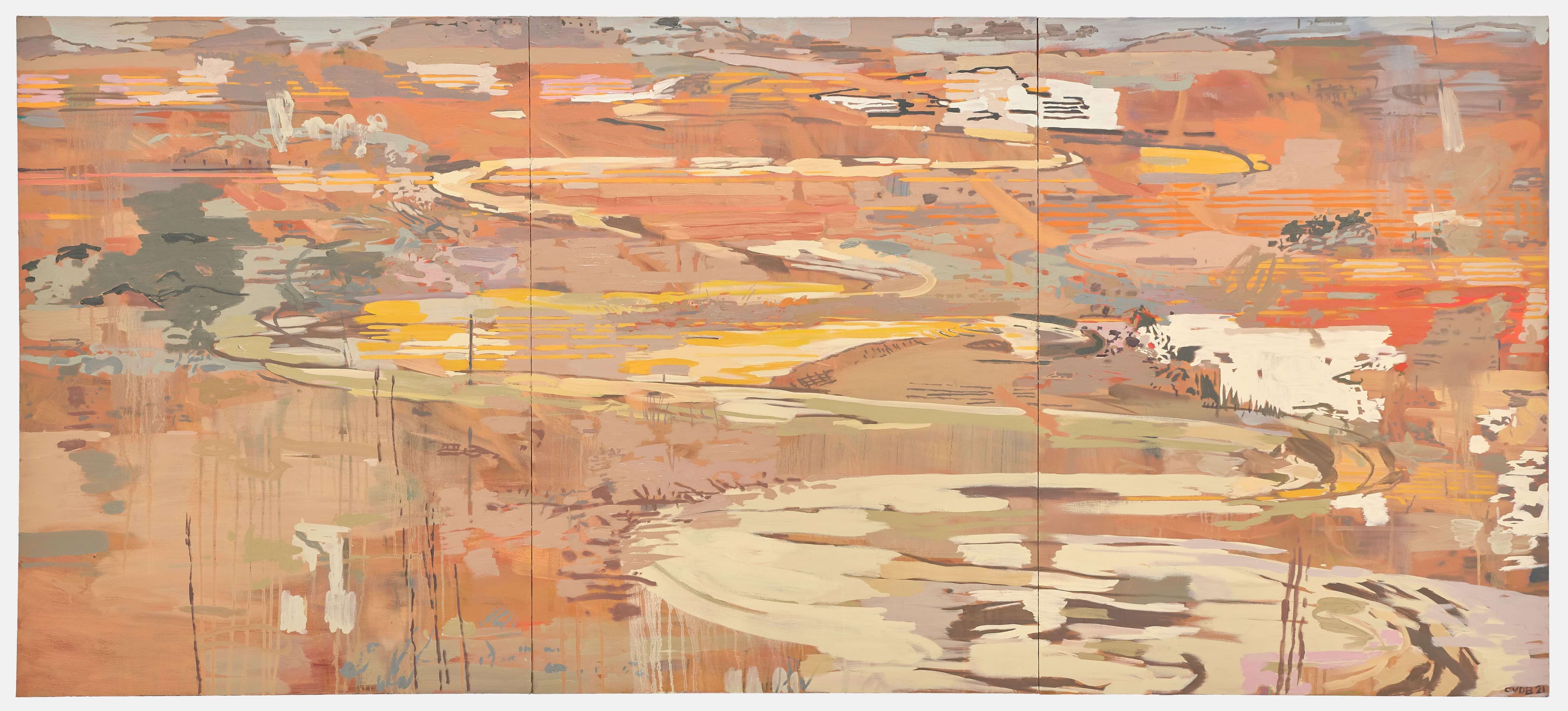
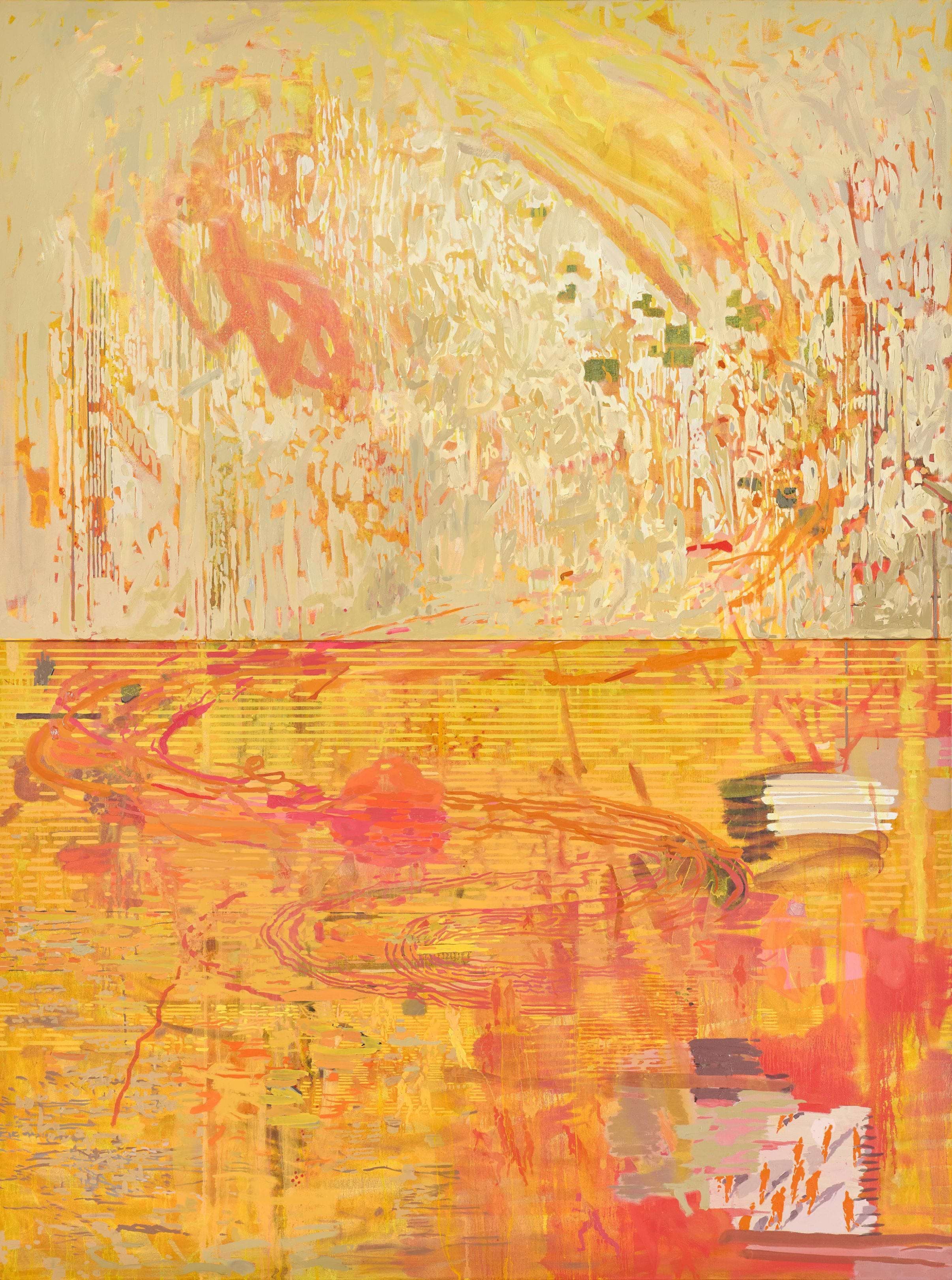
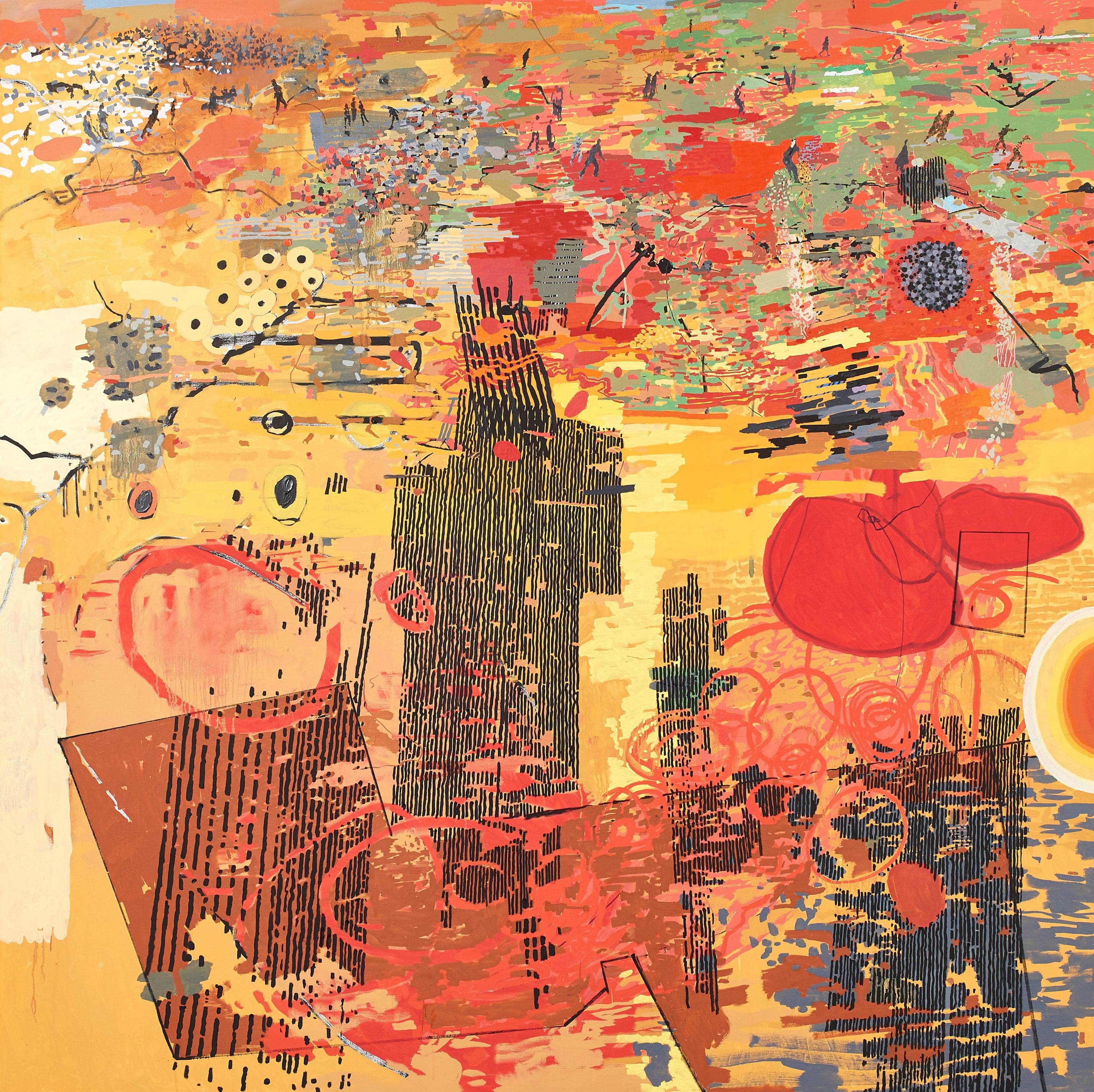
‘African Landscape XIII’ was included in Clive van den Berg’s Johannesburg solo exhibition ‘Underscape’ following his survey at the KwaZulu Natal Society of Arts in 2021. The painting forms part of a larger body of work that considers the “distemper” of our lived experience in relation to landscape.
For Van den Berg, land serves as a powerful marker for the anxieties contained in both the personal and the political. The artist seeks to unpack this by separating the idea of land into the spheres of ‘above’ and ‘below’ ground. Using this dichotomy the artist is able to differentiate between what we idealise on the surface, and what exists unresolved below. Historical depictions of land, which were primarily filtered through Western perception, sought to possess the territory by recording its surface image. In turn, Van den Berg confronts the tradition of South African landscape painting, by peeling “the surface off the land and making the landscapes porous”.
On the nature of this theme in his work, Van den Berg notes: “A swelling of earth, a hollow or dispersed pile of stones that once marked a grave or embattlement, are the grammar of my landscape vocabulary. These vestigial mutterings of geography are the prompts that I respond to in making my work, a kind of interstitial speech, connecting the remnant to its repressed or forgotten source… I grew up in Luanshya, a small mining town in Zambia and now live in Johannesburg, one of the largest of all mining towns. Perhaps it is the occasional shaking of the land, its stuttering as a shaft collapses or a plate realigns, or indeed the sudden appearance of sinkholes, those most compelling of negative spaces that first made me curious about that other landscape, the underscape.” For Van den Berg, land serves as a powerful marker for the anxieties contained in both the personal and the political. The artist seeks to unpack this by separating the idea of land into the spheres of ‘above’ and ‘below’ ground. Using this dichotomy the artist is able to differentiate between what we idealise on the surface, and what exists unresolved below. Historical depictions of land, which were primarily filtered through Western perception, sought to possess the territory by recording its surface image. In turn, Van den Berg confronts the tradition of South African landscape painting, by peeling “the surface off the land and mak[ing] the landscapes porous”.
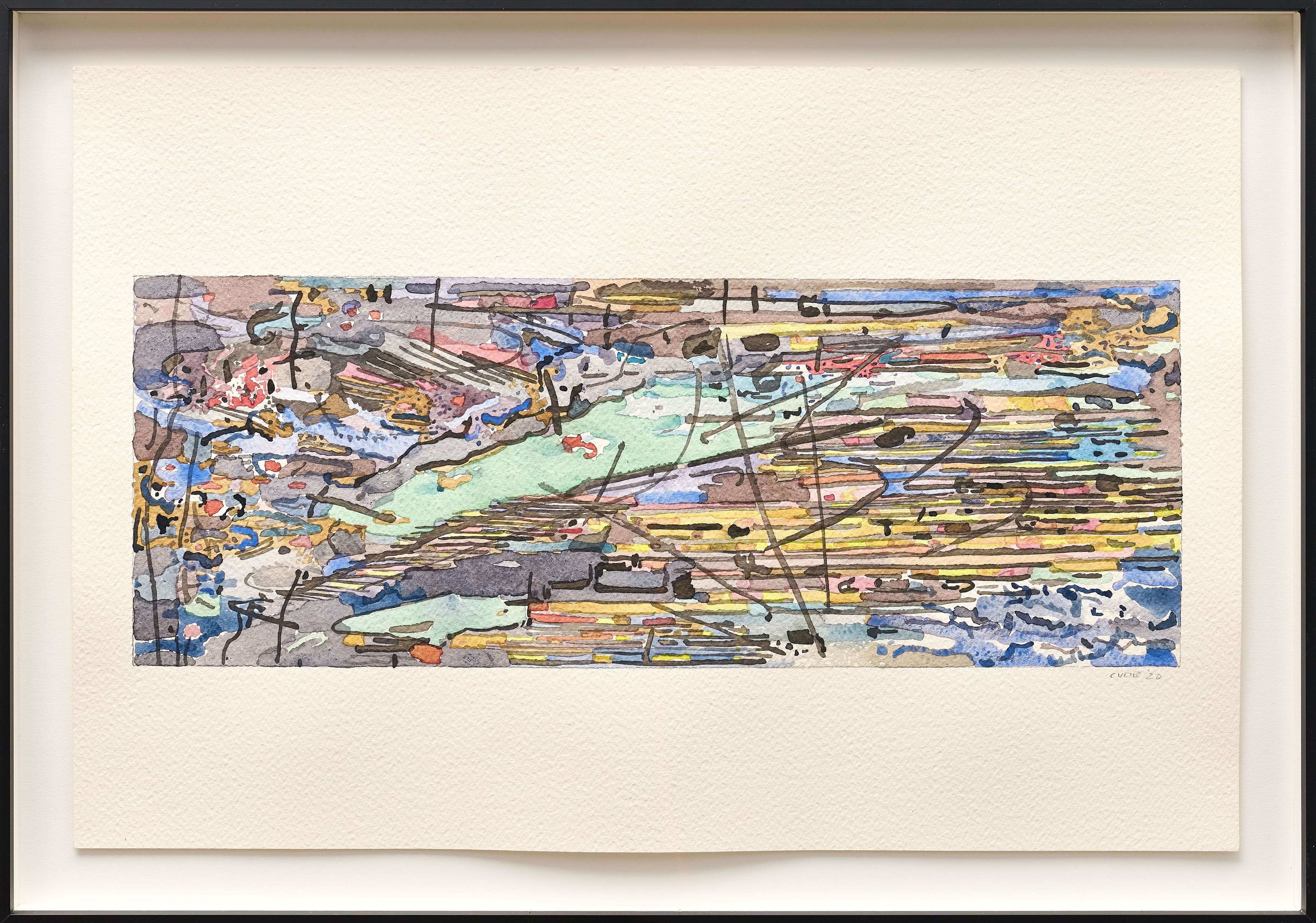
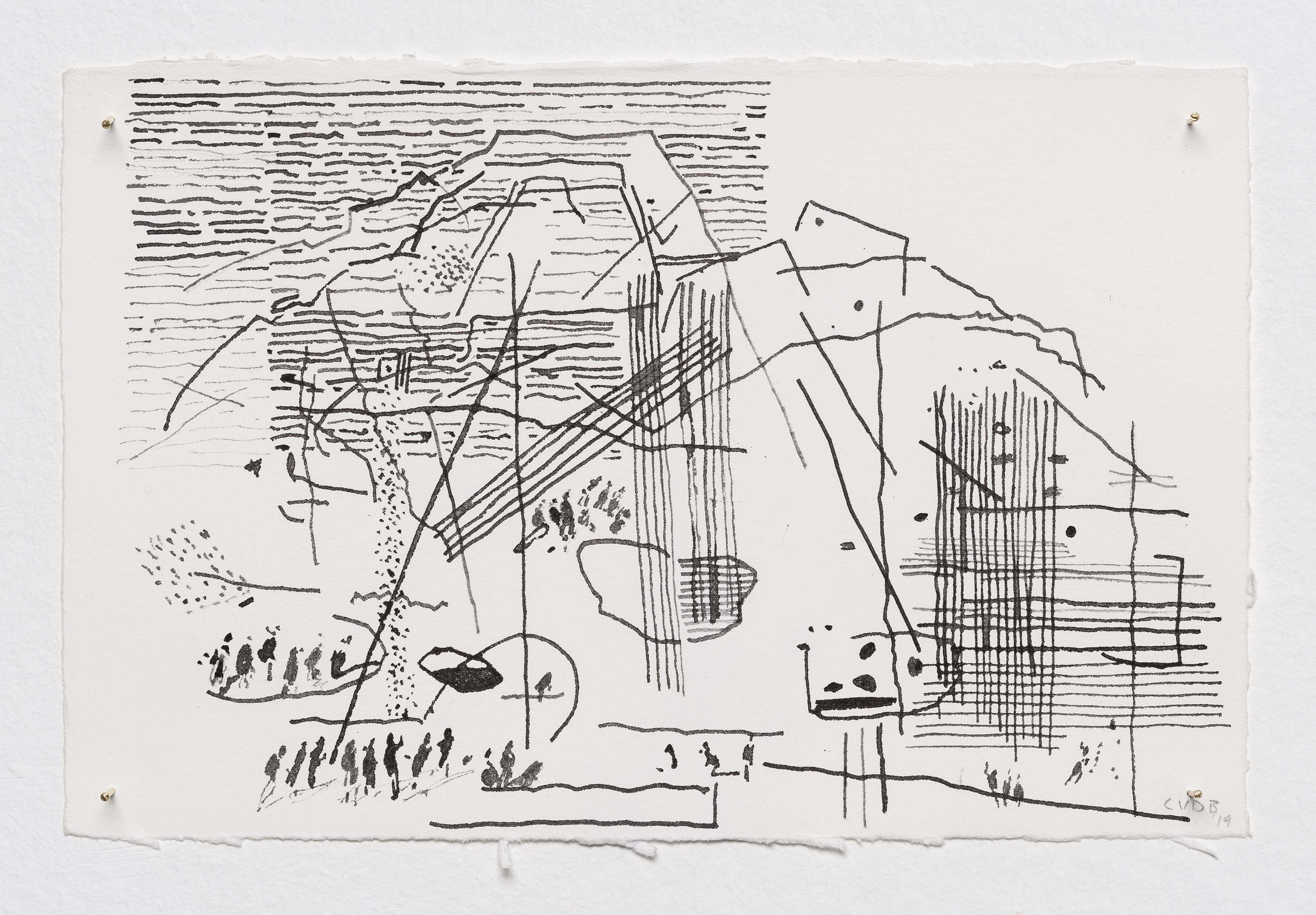
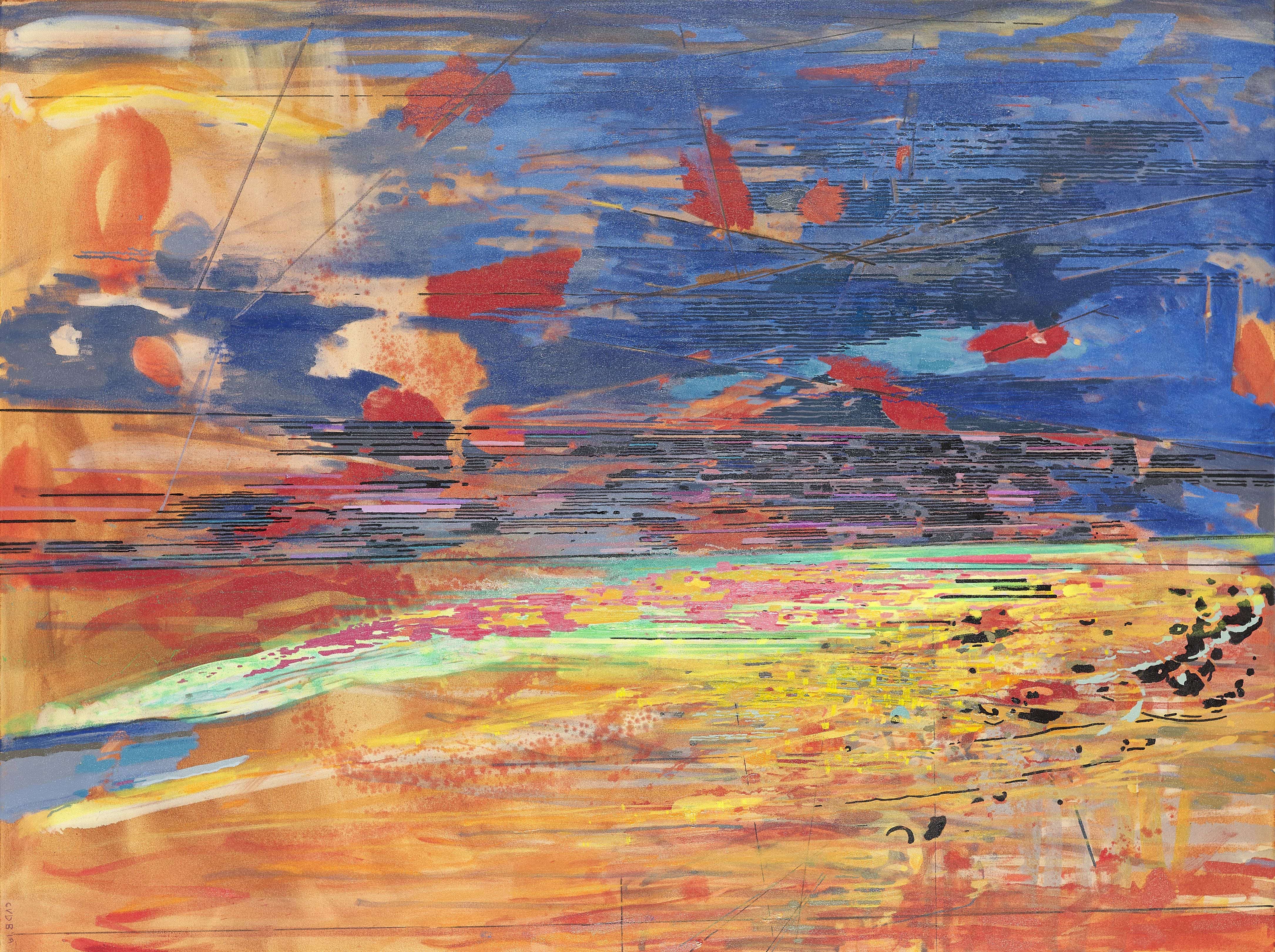
Clive van den Berg’s gestural painting practice transforms landscape into a charged site of emotional and historical excavation. With an intuitive command of mark-making and a sensitivity to surface, he renders the land as a porous and unstable vessel – one that holds memory, trauma, and lived experience within its folds. Rather than depict recognisable geography, Van den Berg creates abstracted terrains that resist fixed meaning. The layered forms and shifting chromatic fields suggest topographies shaped by what lies beneath the surface, inviting viewers into a space where presence and absence co-exist.
With his paintings, Van den Berg considers how history settles into landscape, how physical sites become repositories of collective memory, and how those memories can be reawakened through the language of painting. His works reveal the land not as an active participant in processes of rupture, remembrance, and renewal. The landscapes, fragmented and fluid, speak to the entanglements of identity and the endurance of memory across generations. In tracing gestures that evoke both geological strata and psychic scars, van den Berg offers a meditation on the interwoven nature of past and present by confronting what has been buried.