
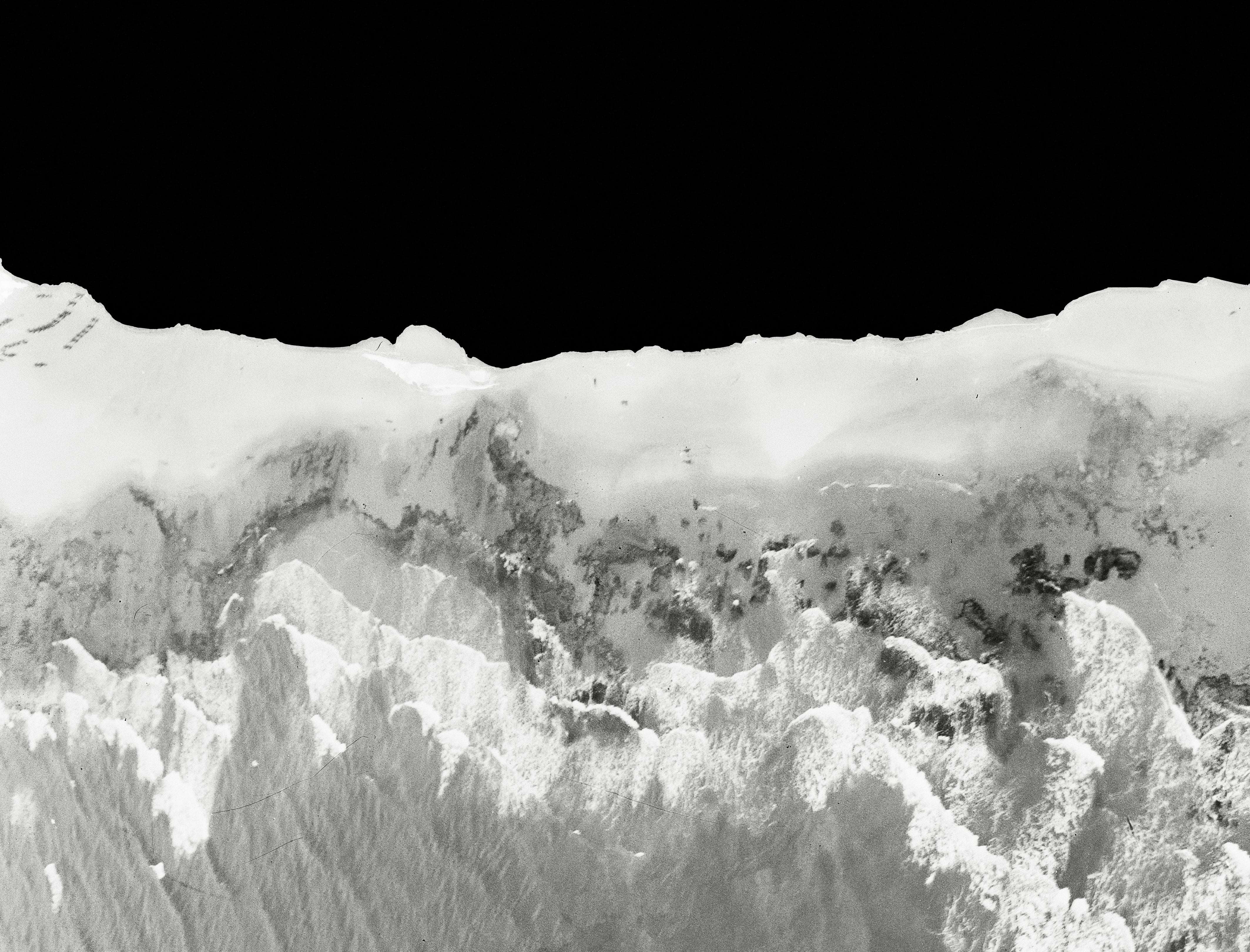
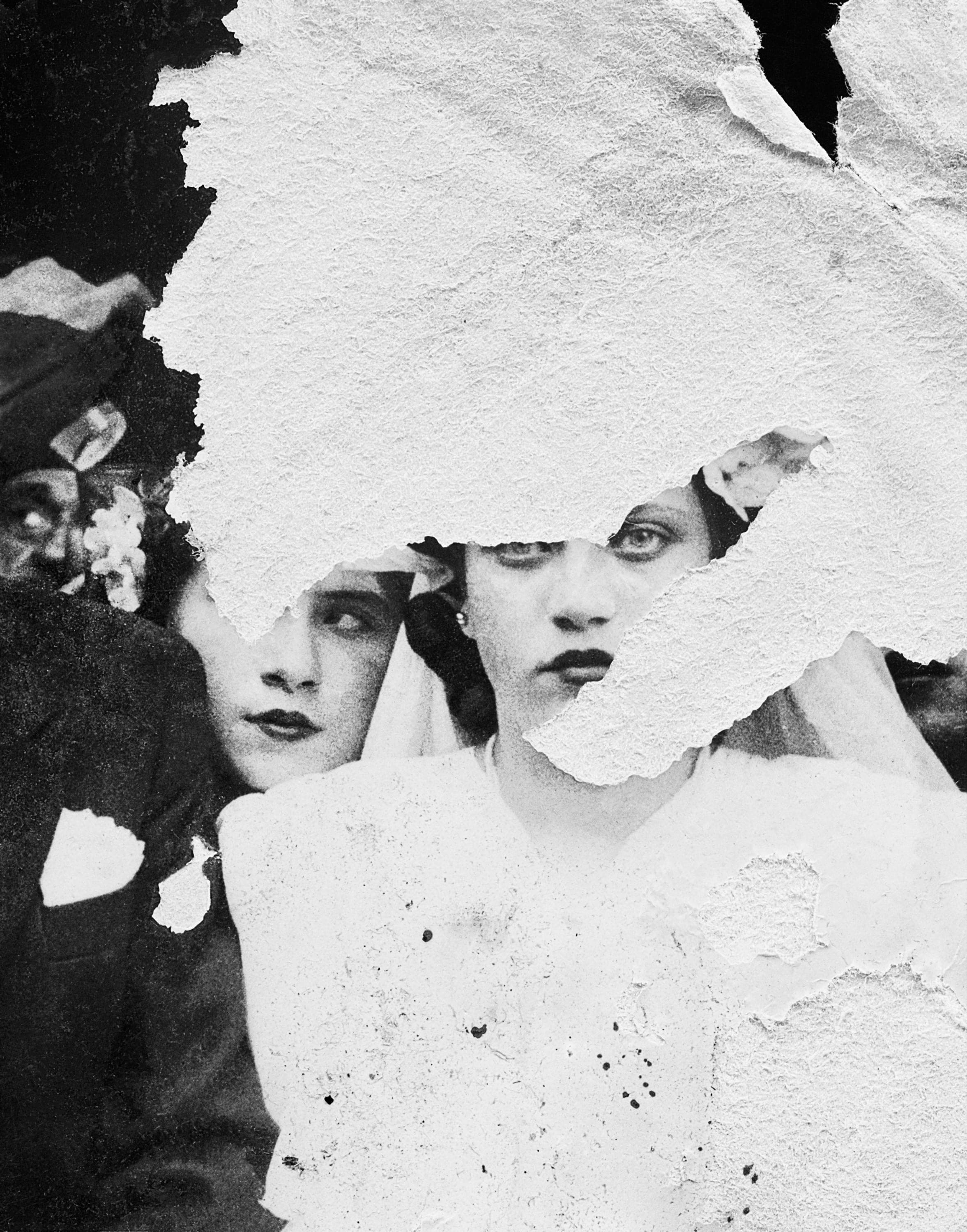
Work based on a damaged negative from the American Colony Archive at the Library of Congress. By enlarging and reprinting the degraded image, Guez draws attention to the physical scars of the negative—scratches, cracks, and chemical blemishes—that obscure the original content and become part of the composition. The photograph’s title, taken from Shakespeare’s Julius Caesar, evokes the unpredictable currents of human history, particularly in relation to the Eastern Mediterranean. Through this work, Guez reflects on the fragility of archival memory and the ways in which historical narratives are shaped, lost, or distorted over time.
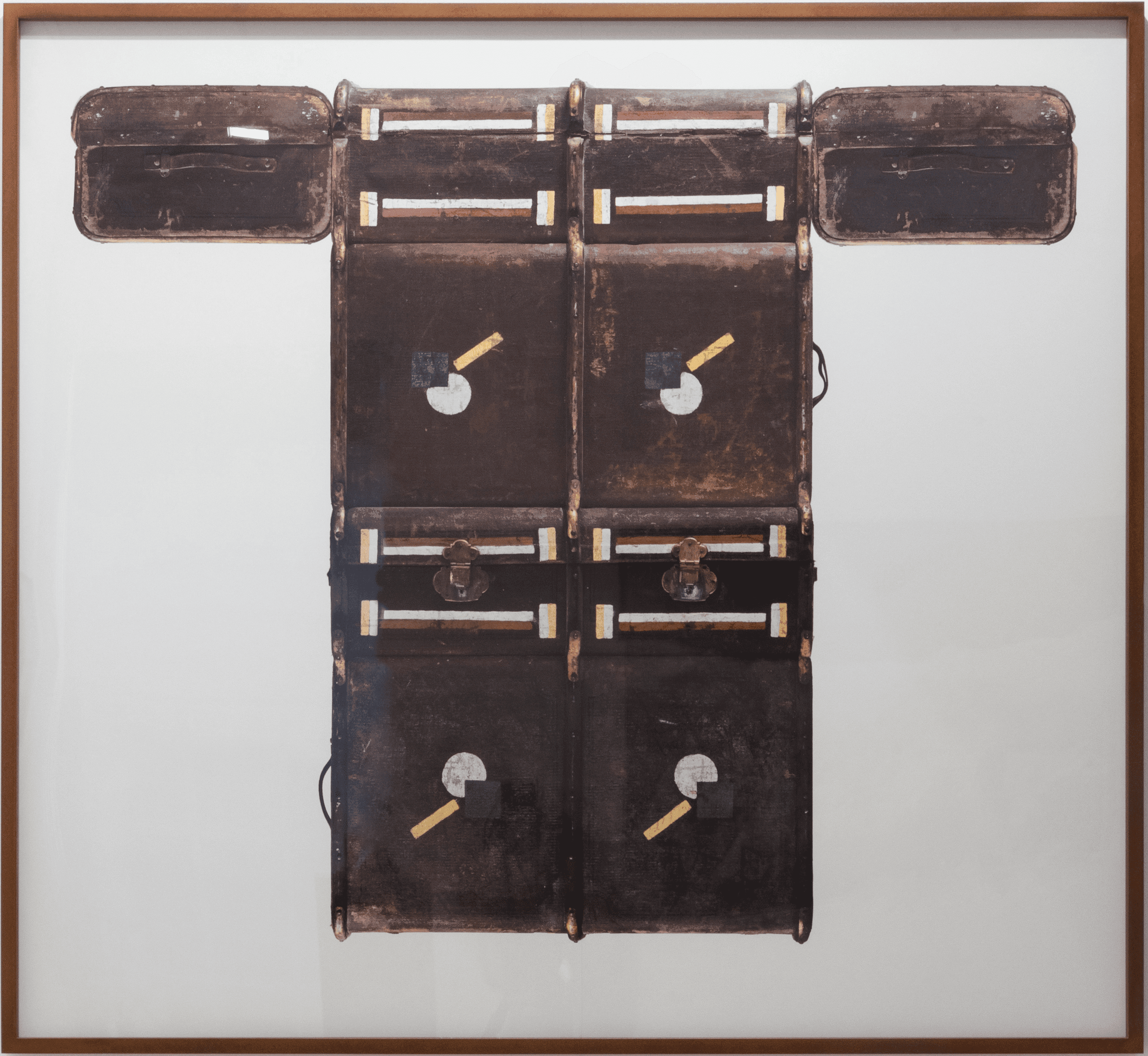
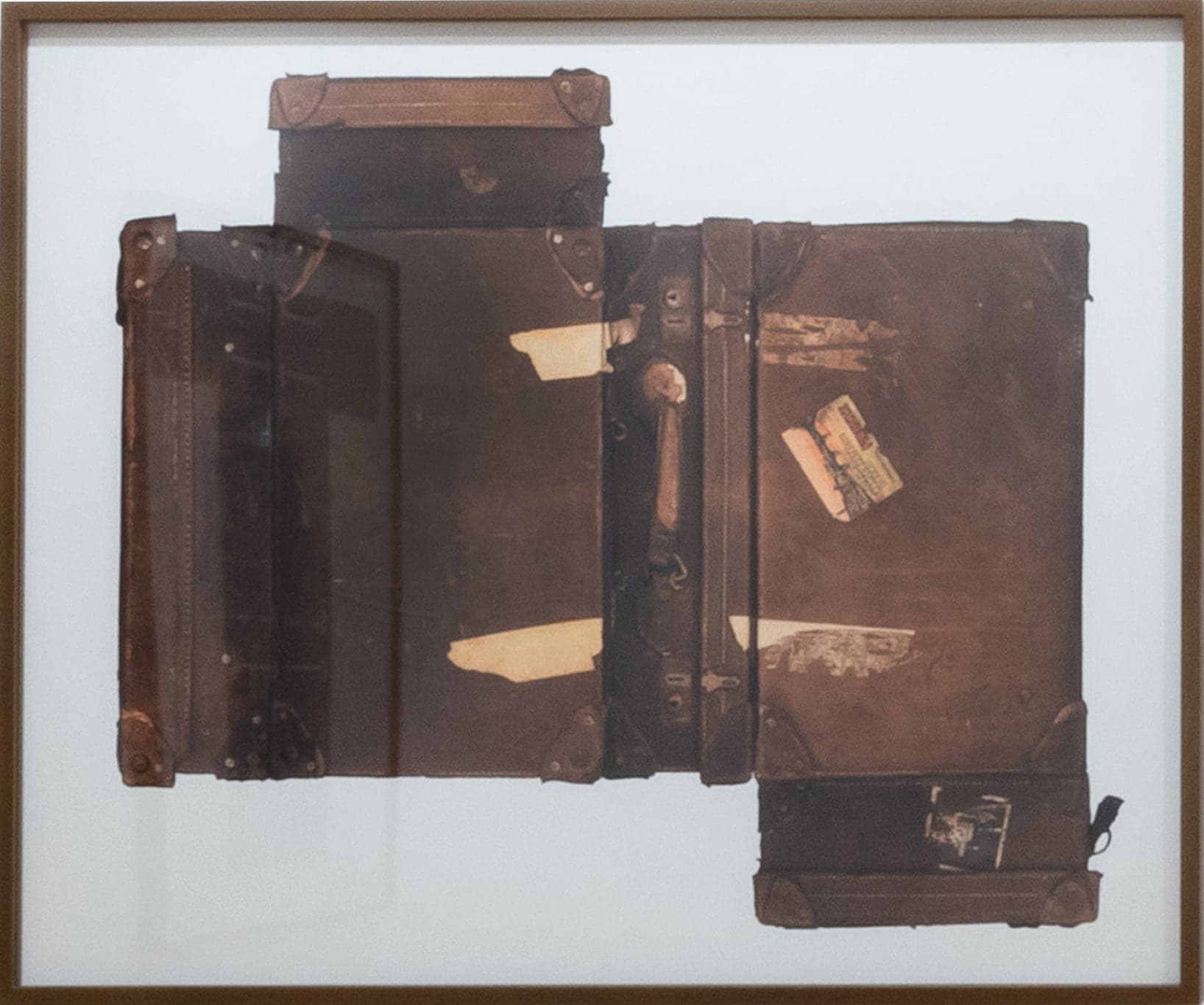
Suitcase #4 is part of Dor Guez’s photographic series exploring the inherited objects of displacement. Referencing his own family’s histories of exile from Tunisia and Lydda, Guez photographs all six sides of a refugee’s suitcase and merges them into a single, flattened image. This composite view unfolds the object’s volume and latent contents into one plane, inviting reflection on what people choose to carry when forced to leave home. Every detail—scratches, wear, and marks—bears witness to the passage of time and the weight of personal and collective memory.
Suitcase #3 is part of Dor Guez’s photographic series exploring the inherited objects of displacement. Referencing his own family’s histories of exile from Tunisia and Lydda, Guez photographs all six sides of a refugee’s suitcase and merges them into a single, flattened image. This composite view unfolds the object’s volume and latent contents into one plane, inviting reflection on what people choose to carry when forced to leave home. Every detail—scratches, wear, and marks—bears witness to the passage of time and the weight of personal and collective memory.