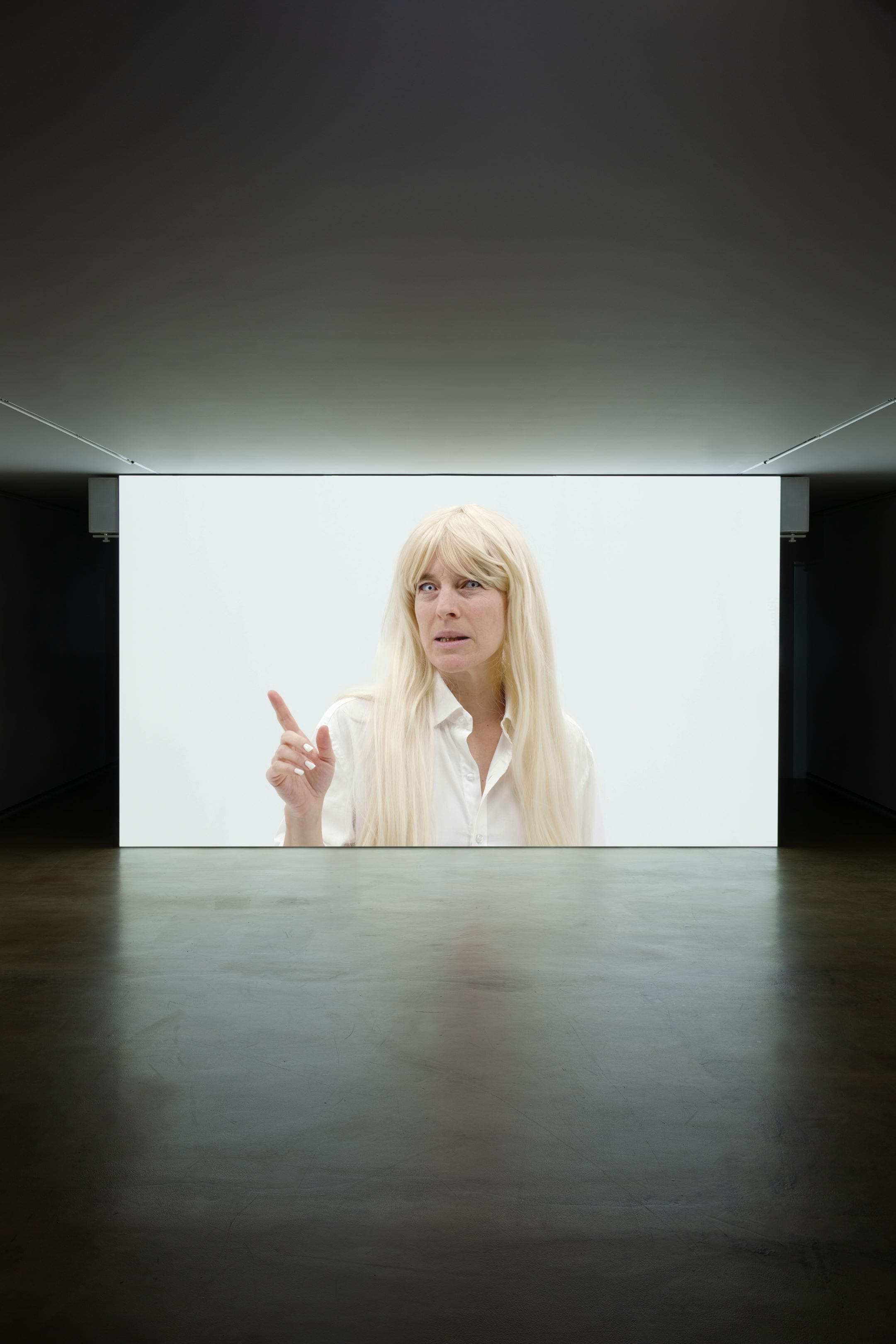
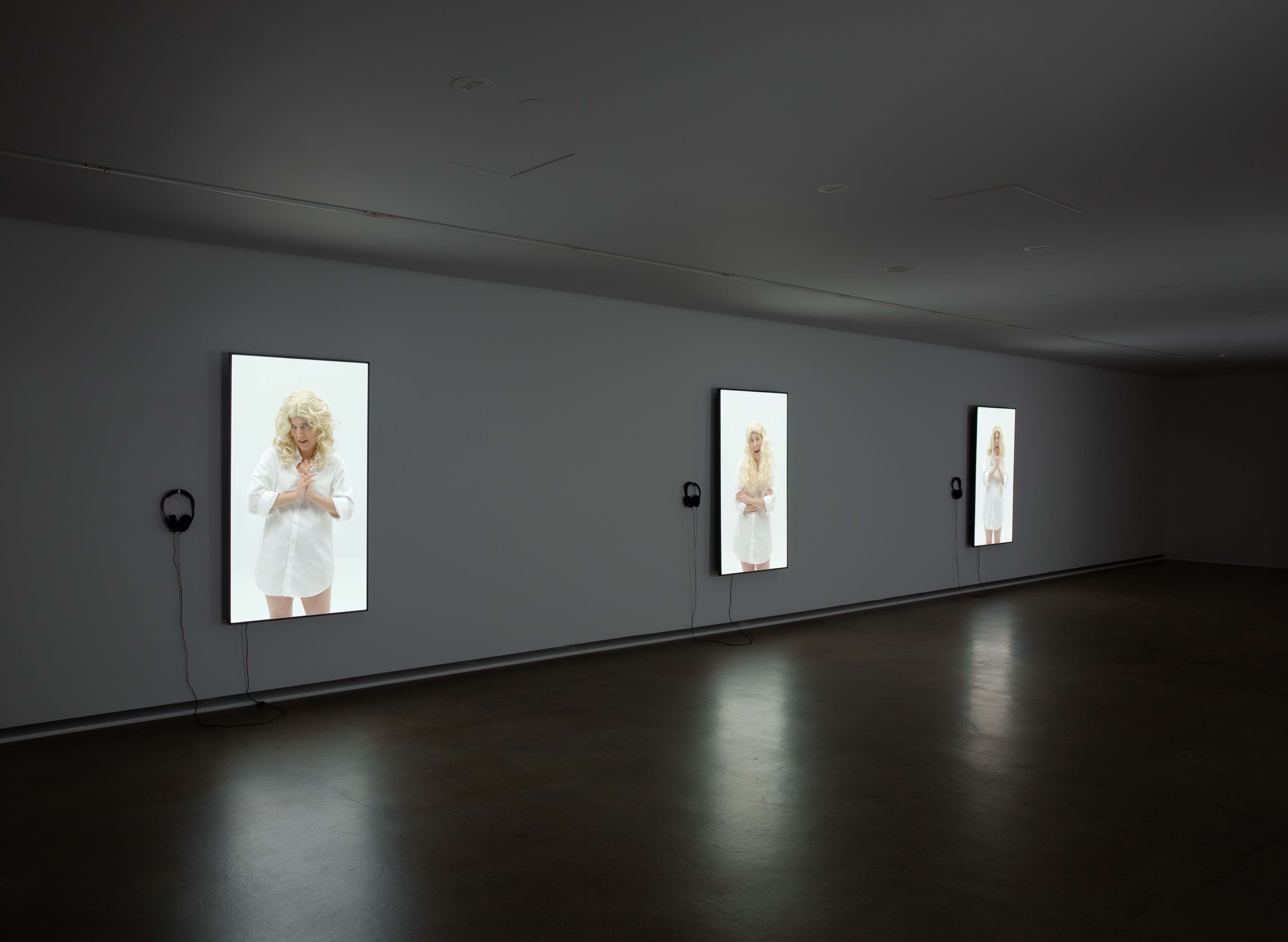
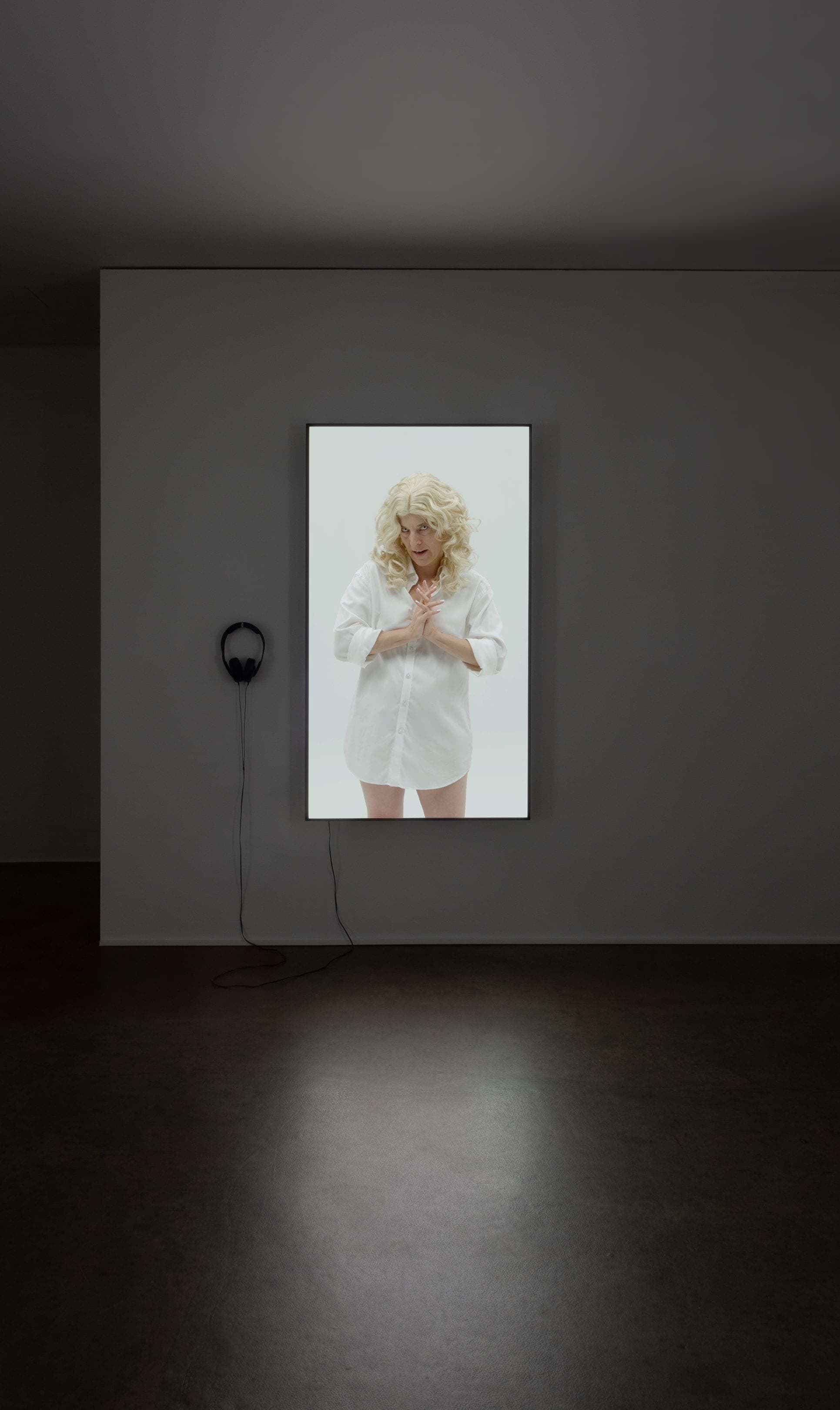
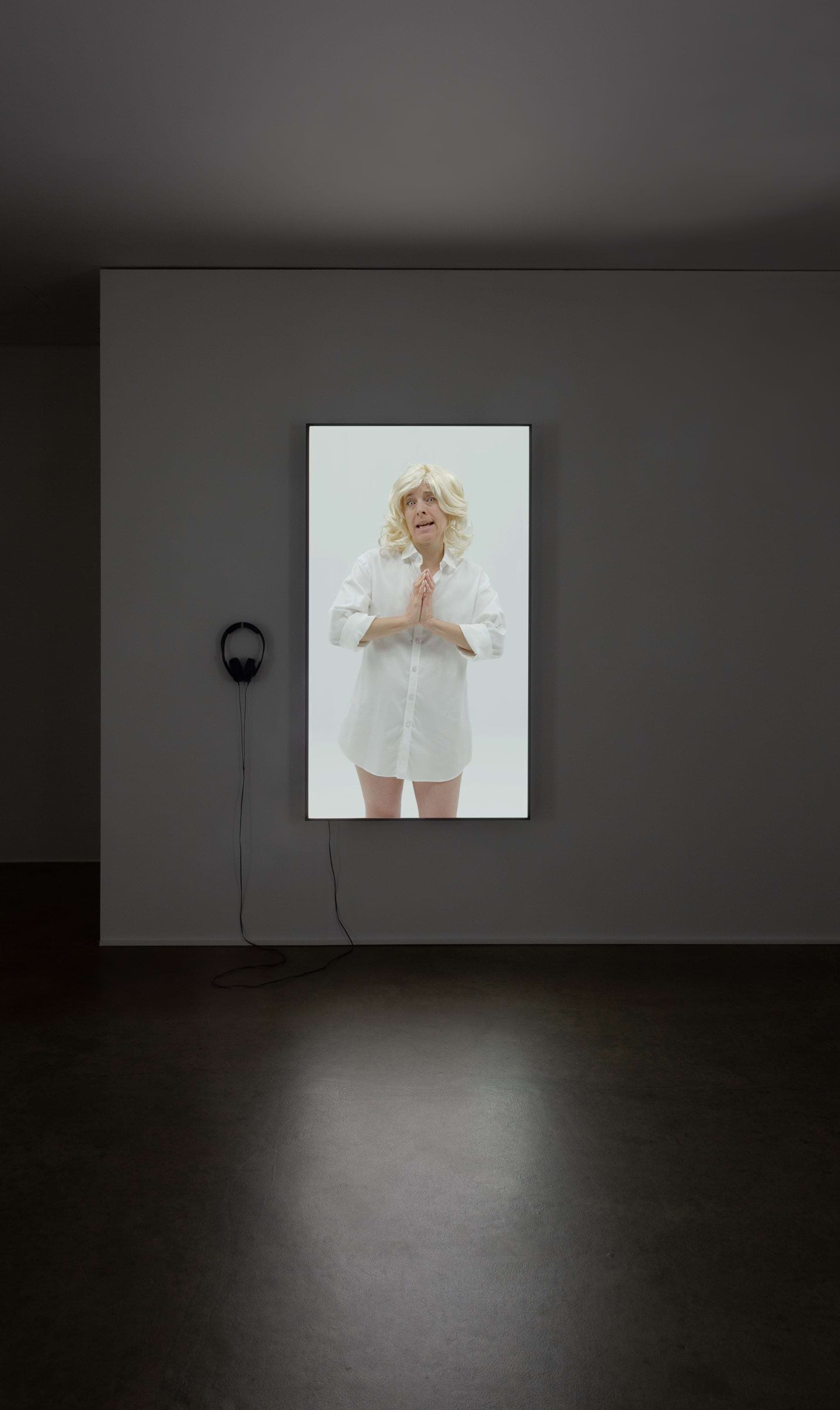
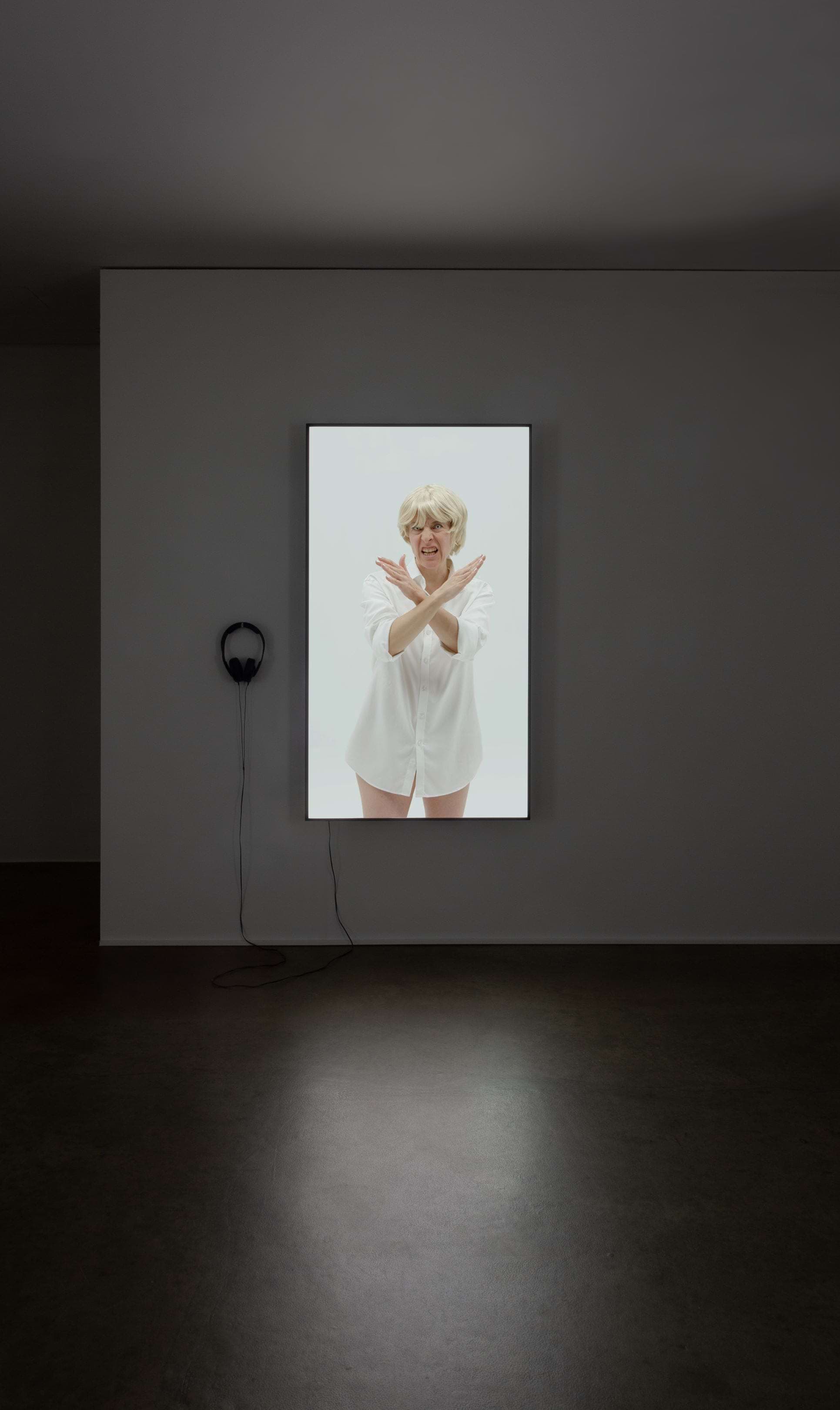
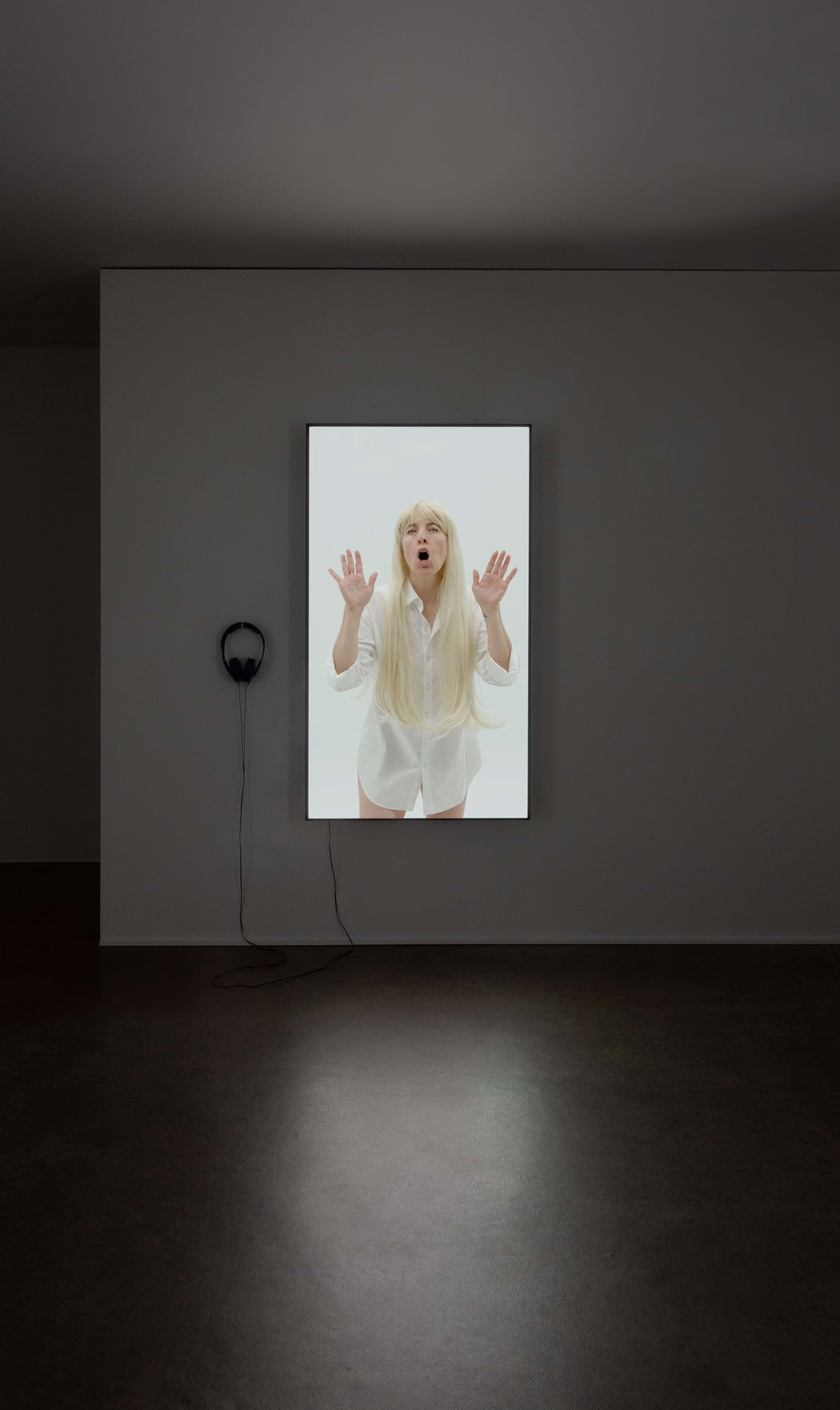
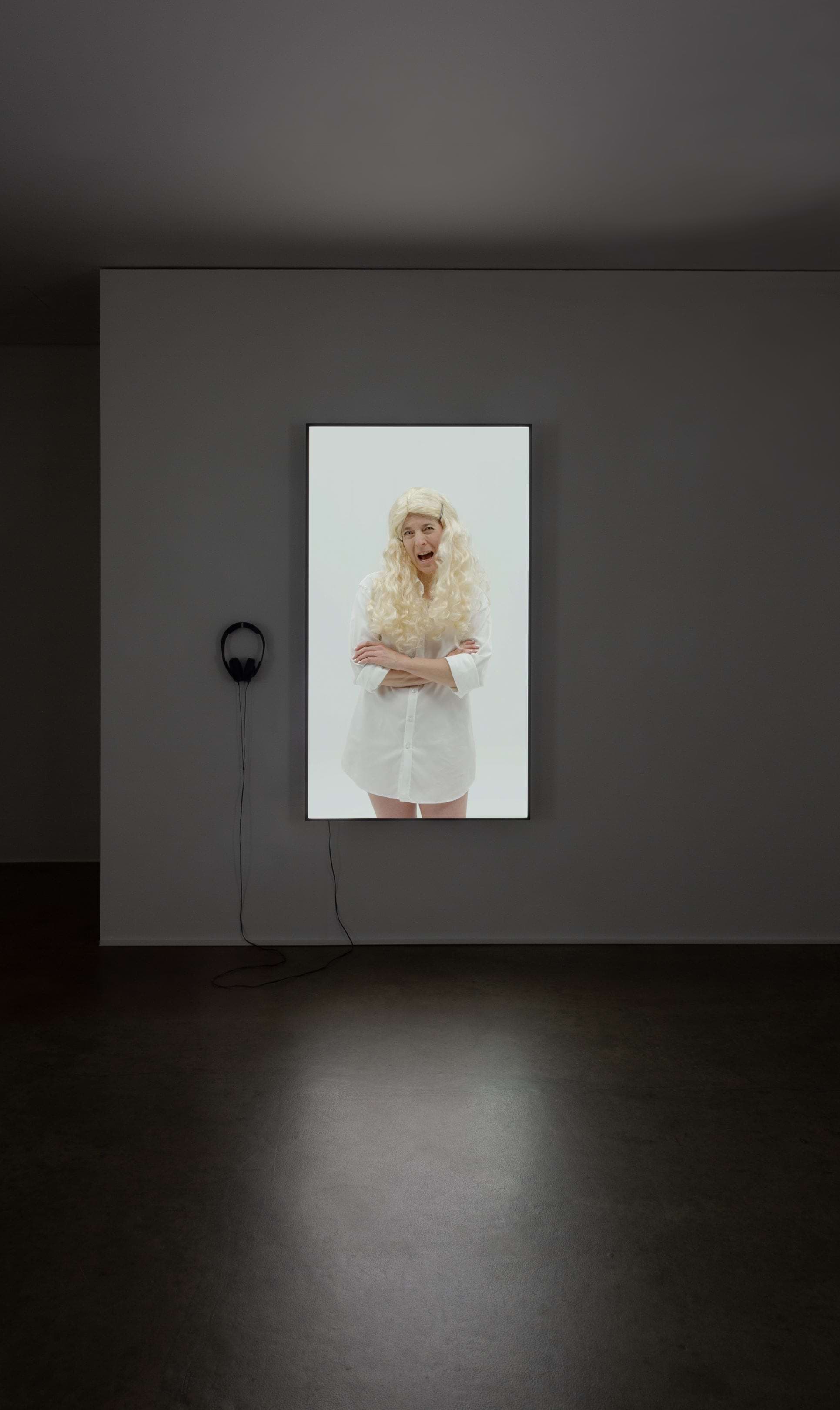
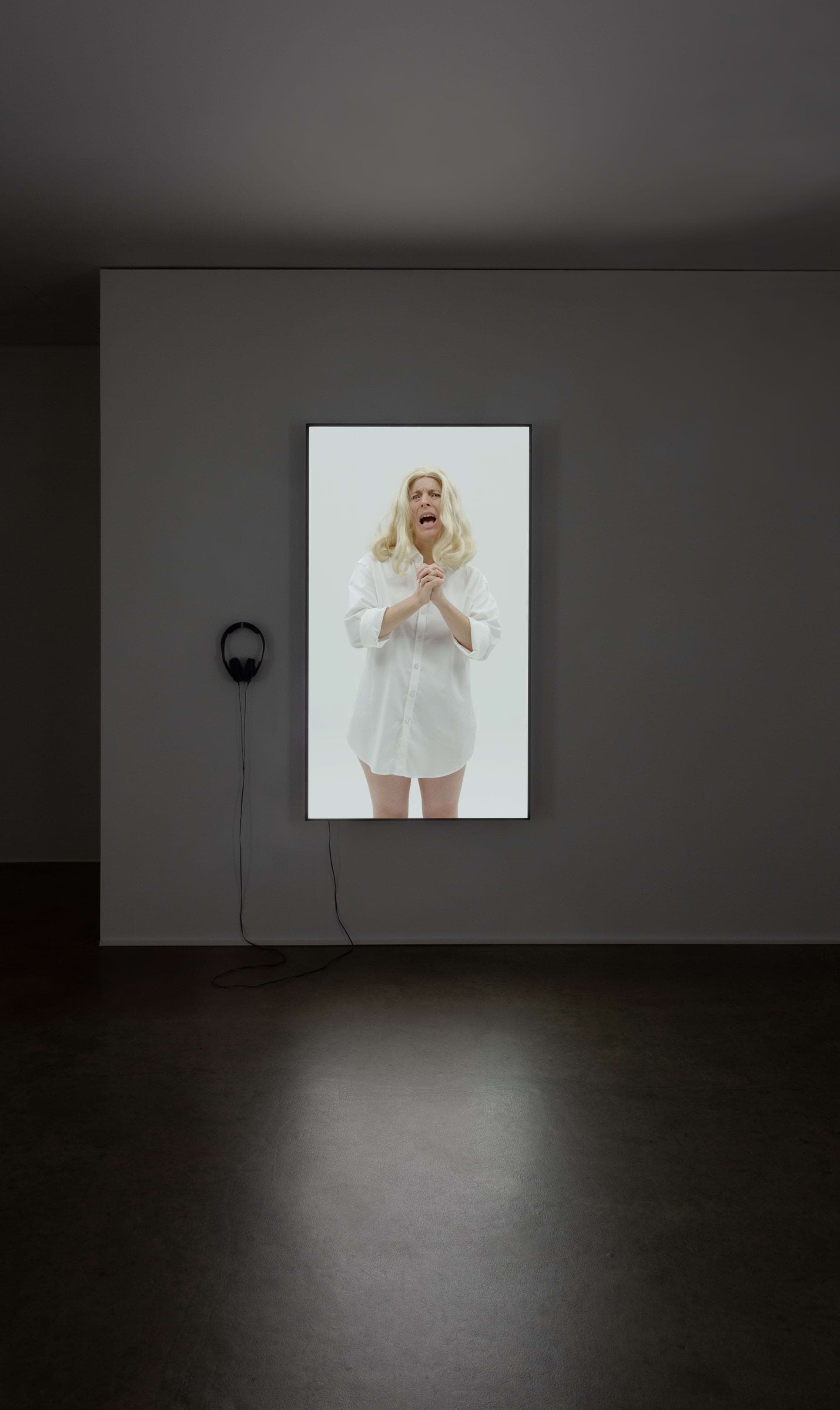
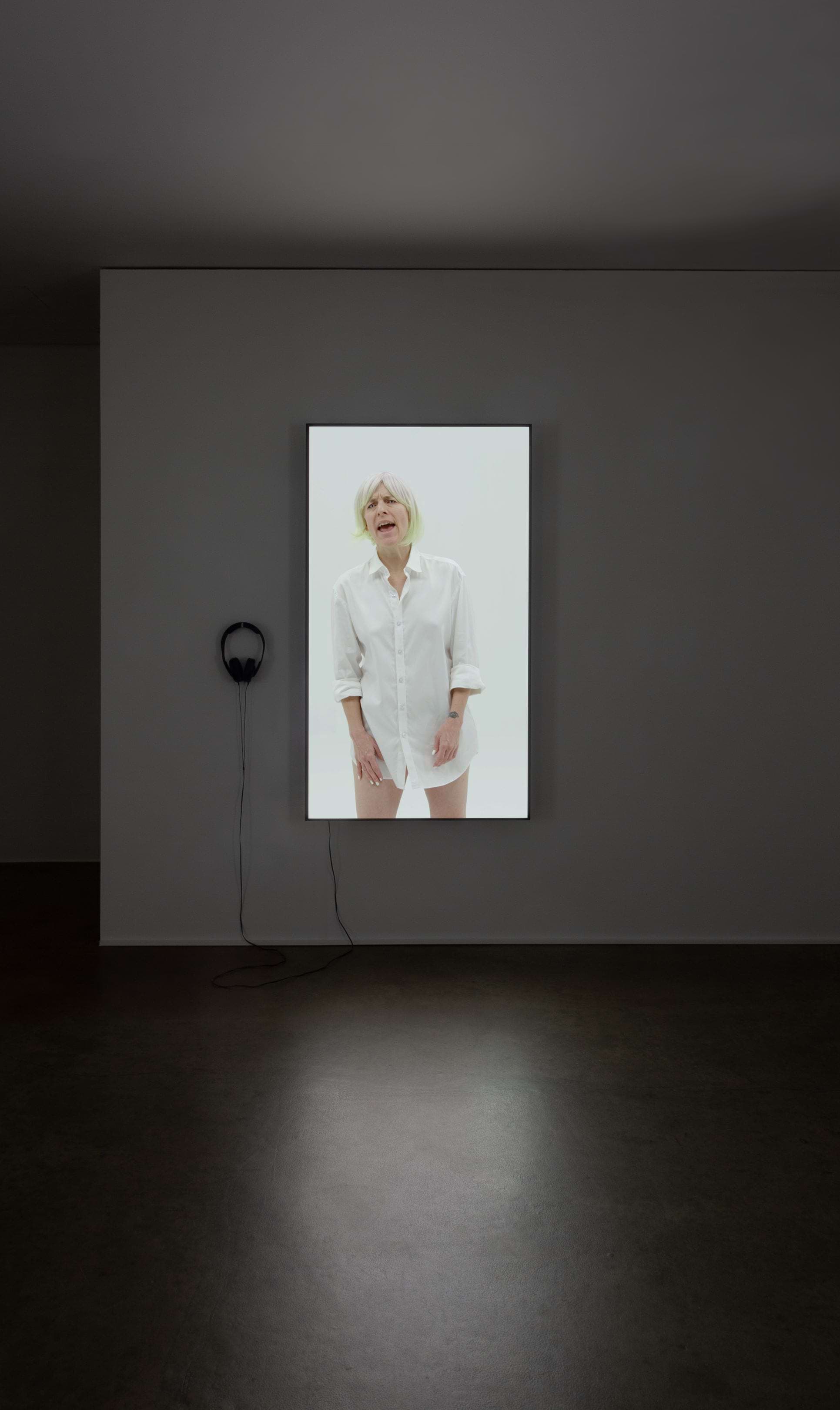
‘Candice Breitz’s ‘Whiteface’ is a two-channel video installation, first exhibited in 2022, which takes aim at the performance of whiteness in contemporary culture. Drawing from a vast archive of found footage, the work samples voices of white individuals speaking about race – ranging from right-wing commentators and media figures to YouTubers and self-identified liberal whites. By compiling and recontextualising this material, Breitz exposes the recurring language and anxieties that underpin public and private discourse on whiteness, privilege and identity.
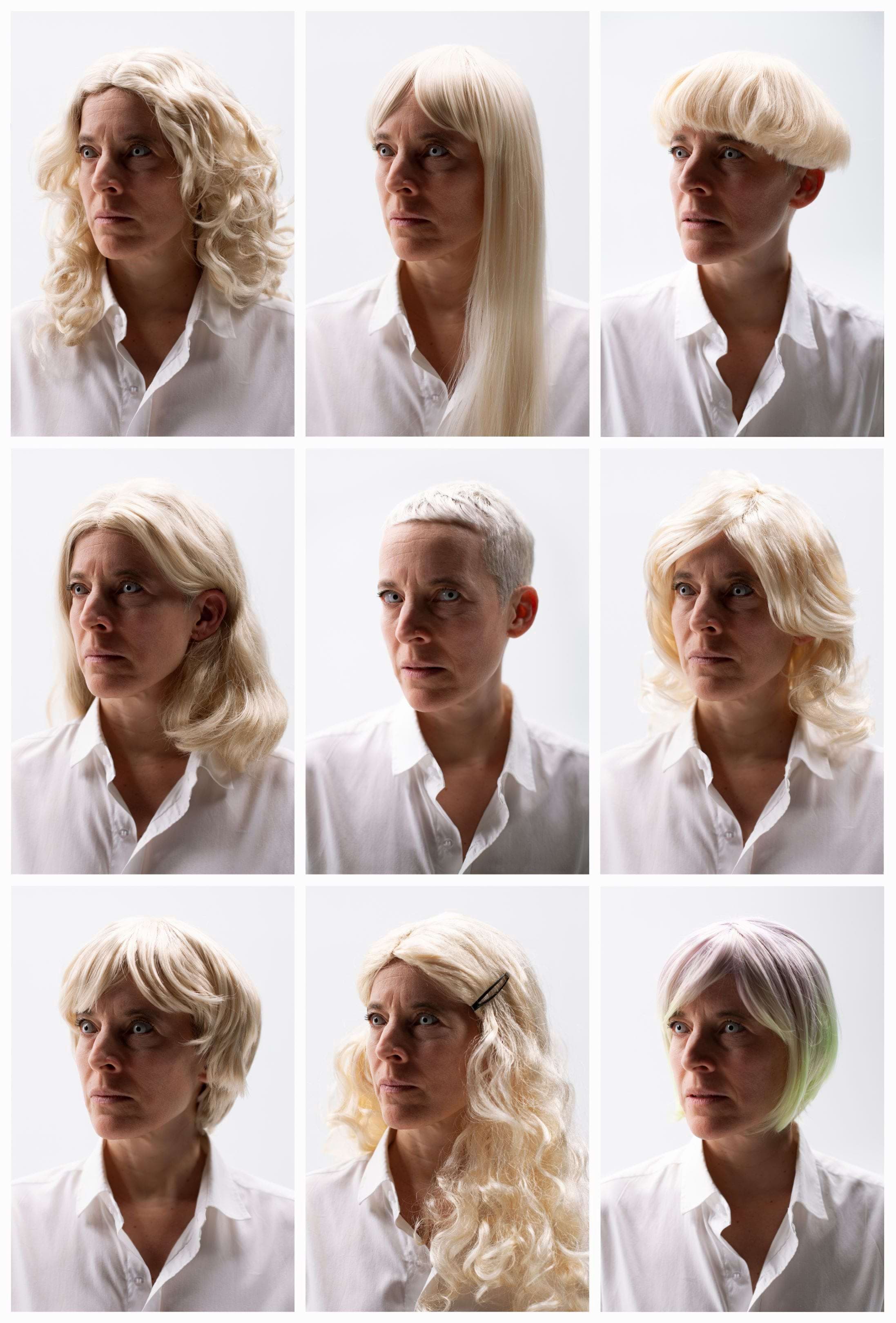
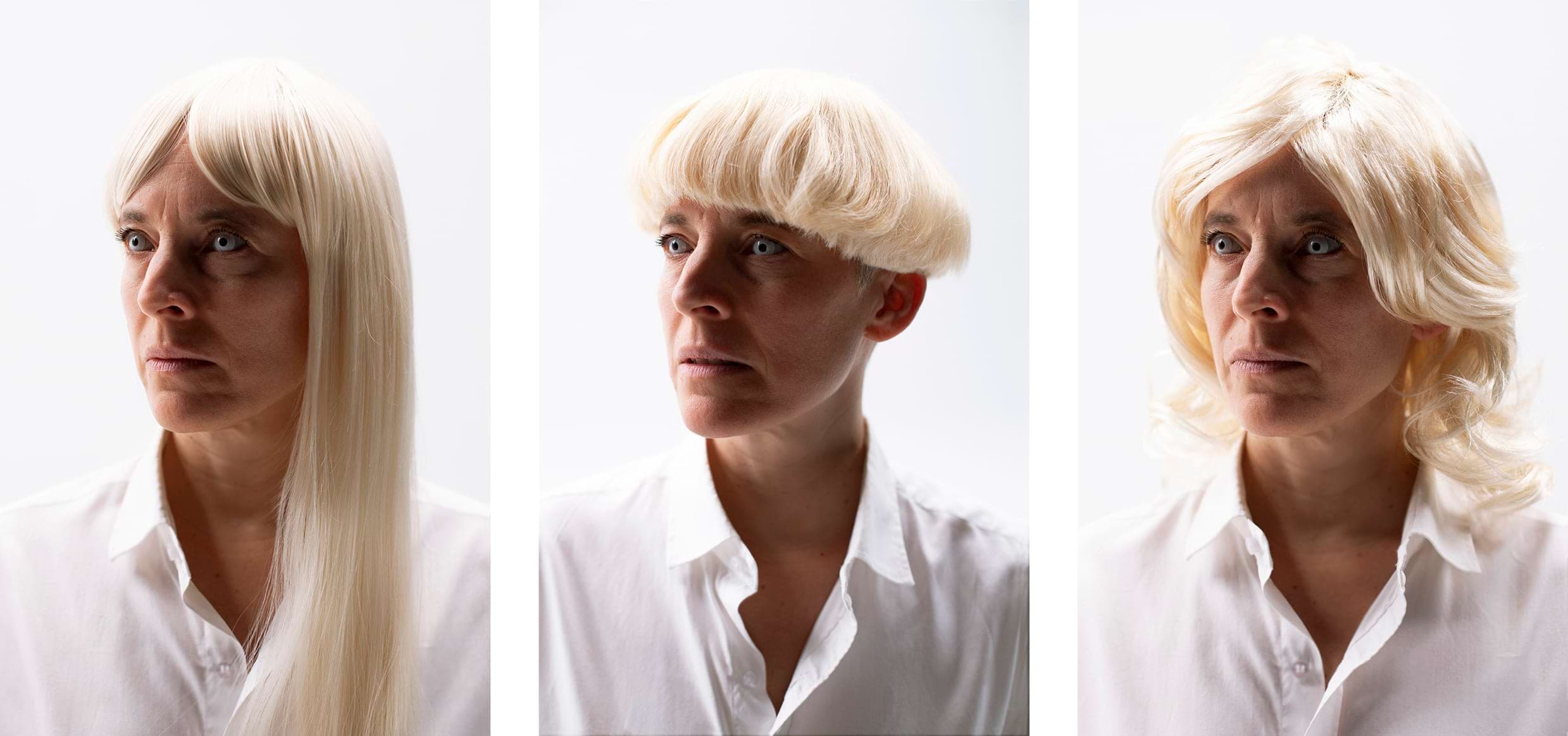
The installation features Breitz herself performing these sampled voices in a minimal, white cyclorama. Dressed in a white shirt and donning a series of inexpensive blonde wigs, she lip-syncs to clips that span casual ignorance, victimhood, defensiveness and outright hostility. Her eerie use of pale contact lenses further destabilises the gaze, making her appear both hyper-visible and strangely vacant. The effect is disorienting and darkly satirical: by reproducing these monologues with precision and affective detachment, Breitz lays bare the ways in which whiteness reasserts itself through habitual speech and self-referential logic.
Presented across two screens, the work invites viewers to reflect on the performative nature of identity and the language through which racial power structures are maintained. ‘Whiteface’ does not target individual speakers, but instead critiques whiteness as an ideological framework and cultural construct. Breitz’s mimicry operates as both exposure and confrontation, using her own body to reflect the contradictions and evasions embedded in racial discourse. In so doing, she creates a space for viewers to examine how whiteness is rehearsed, normalised and protected within everyday speech.
In Whiteface, Breitz appropriates and ventriloquizes dozens of voices drawn from this archive, channelling them through her own white body. Wearing nothing but a white dress shirt and zombie contact lenses, the artist conjures up whiteness in a variety of its guises, rotating through a series of cheap blonde wigs as the work unfolds, among which her own platinum head of hair is featured. Breitz’s un-wigged appearance among the characters that populate the piece, serves to acknowledge the artist’s own embeddedness in whiteness.
Yet, while Breitz and many of the disembodied voices that she lip-syncs may be recognisable in Whiteface (Tucker Carlson, Rachel Dolezal, Bill Maher, Richard Spencer and Robin Di Angelo all make vocal cameos), specific white folks are not the primary target of this stinging satire. Rather, it is the condition of whiteness that Breitz seeks to prod into visibility. Dislocated from the white people who originally uttered them, the words that stream through Breitz
accumulate to provide a scathing study of the vocabulary and grammar underlying this condition, a critical survey of the language via which whiteness frames, normalises and leverages its power.
The white dogma that flows through Breitz will be deeply familiar to those whose lives are impacted by racism. Whiteface is a portrait of whiteness in a state of panic. As the privileged status of white people comes under increasing pressure, narratives about white extinction have multiplied across the political spectrum. At a time when we are all threatened by possible extinction in light of the climate change crisis and other looming threats, Whiteface parodies the absurdity of white extinction anxiety—which, perhaps more than any other expression of whiteness, points to the delusional narcissism at the heart of the condition. Breitz’s deliberately theatrical performance in Whiteface draws attention to the constructed nature of whiteness and other racial categories. Her bleached presence and deadened eyes locate the fictions that naturalise and perpetuate white supremacy squarely within the genre of horror. Race is a dangerous fiction that continues to exert real and violent consequences.
Voice: Jane Elliot
Voice: Pauline Hanson
Commissioned by the Museum Folkwang
File Name:
Whiteface_Mantra_05_
Voice: Anonymous YouTube blogger
‘Candice Breitz’s ‘Whiteface’ is a two-channel video installation, first exhibited in 2022, which takes aim at the performance of whiteness in contemporary culture. Drawing from a vast archive of found footage, the work samples voices of white individuals speaking about race – ranging from right-wing commentators and media figures to YouTubers and self-identified liberal whites. By compiling and recontextualising this material, Breitz exposes the recurring language and anxieties that underpin public and private discourse on whiteness, privilege and identity.
The installation features Breitz herself performing these sampled voices in a minimal, white cyclorama. Dressed in a white shirt and donning a series of inexpensive blonde wigs, she lip-syncs to clips that span casual ignorance, victimhood, defensiveness and outright hostility. Her eerie use of pale contact lenses further destabilises the gaze, making her appear both hyper-visible and strangely vacant. The effect is disorienting and darkly satirical: by reproducing these monologues with precision and affective detachment, Breitz lays bare the ways in which whiteness reasserts itself through habitual speech and self-referential logic.
Presented across two screens, the work invites viewers to reflect on the performative nature of identity and the language through which racial power structures are maintained. ‘Whiteface’ does not target individual speakers, but instead critiques whiteness as an ideological framework and cultural construct. Breitz’s mimicry operates as both exposure and confrontation, using her own body to reflect the contradictions and evasions embedded in racial discourse. In so doing, she creates a space for viewers to examine how whiteness is rehearsed, normalised and protected within everyday speech.
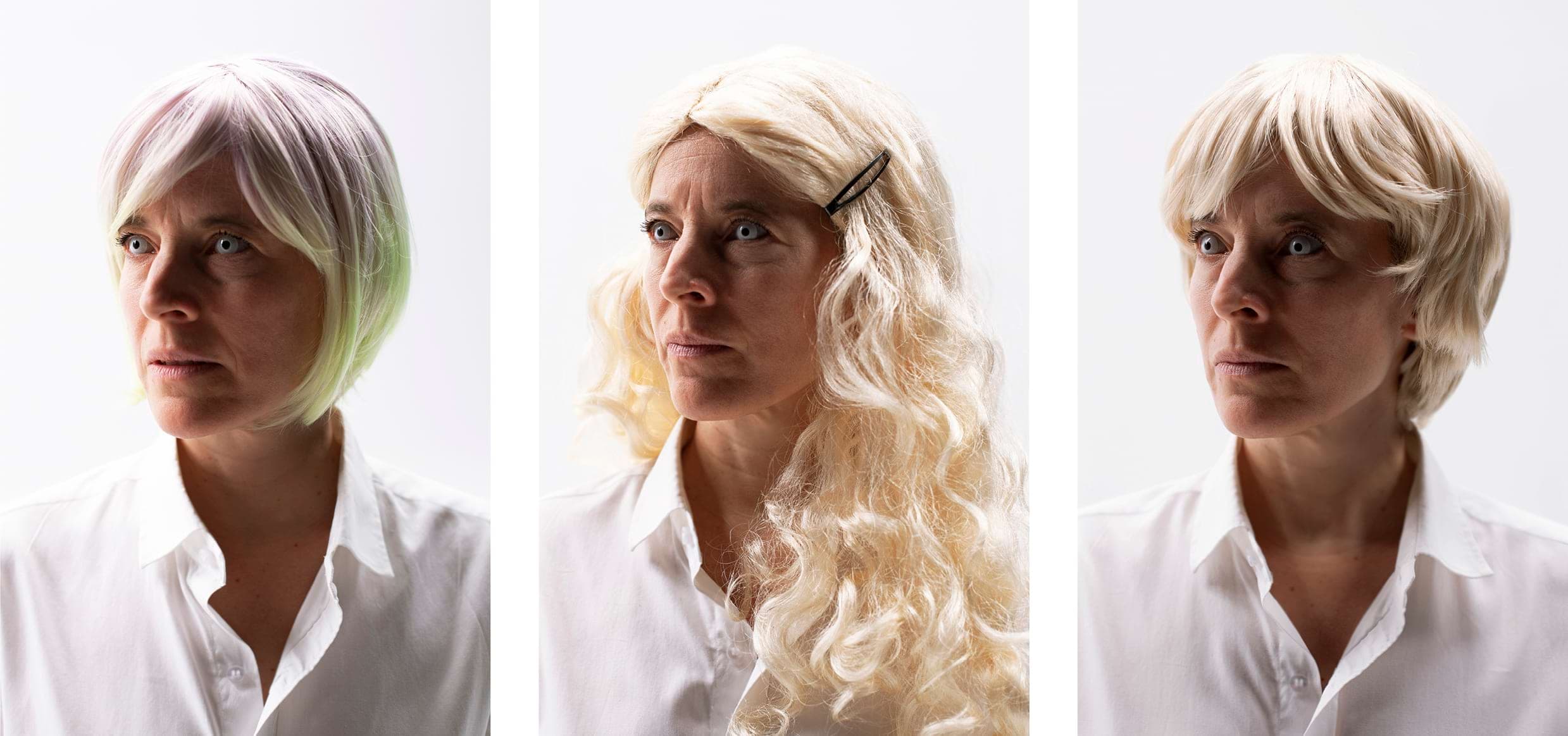
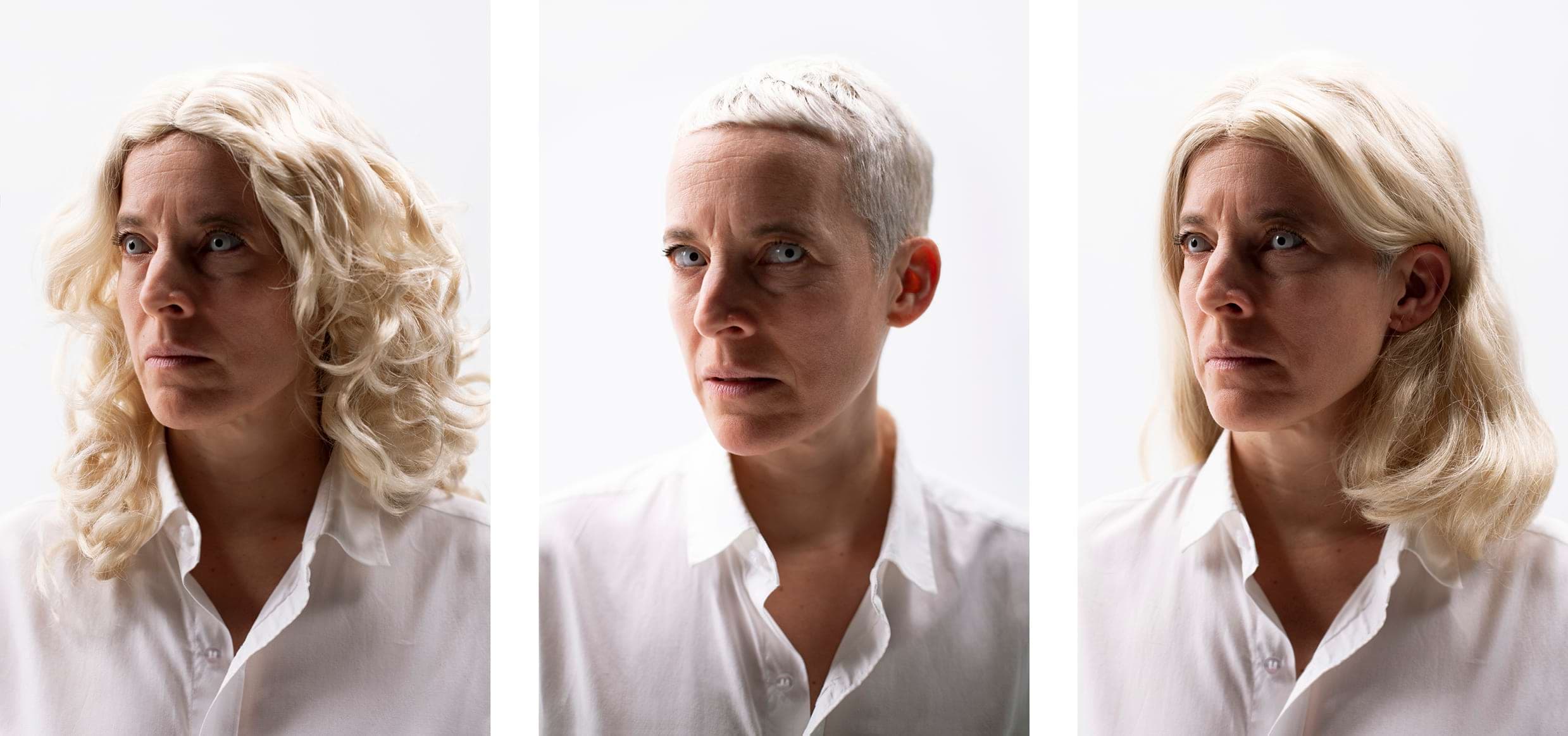
‘Whiteface #’1' and ‘Whiteface #3’ belong to a series of photographic portraits that extend Candice Breitz’s two-channel video installation ‘Whiteface’. In each of the triptych works, Breitz embodies and isolates three personas drawn from the original video, each styled to reflect a particular strand of white identity as expressed through found language and online media. Using costume, wigs and unsettling contact lenses, the artist constructs exaggerated avatars that draw directly from her performative interventions in the film. Stripped of movement and speech, the still images focus attention on the surface of the performance – the costume, the gaze, the posture – transforming the ephemeral act of mimicry into an enduring visual study.
Each portrait invites reflection on the performative nature of whiteness and the visual codes that support its authority, entitlement or fragility. Breitz’s self-portraits do not offer psychological portraits of individuals but instead act as distilled symbols of whiteness as it manifests in public discourse. By turning the camera on herself, the artist implicates her own position while also creating a space for viewers to consider how racial identity is rehearsed, constructed and projected. The portraits, like the video work, ask how whiteness is seen, how it sees itself, and how it speaks – often in ways that seek to preserve power while disavowing responsibility.
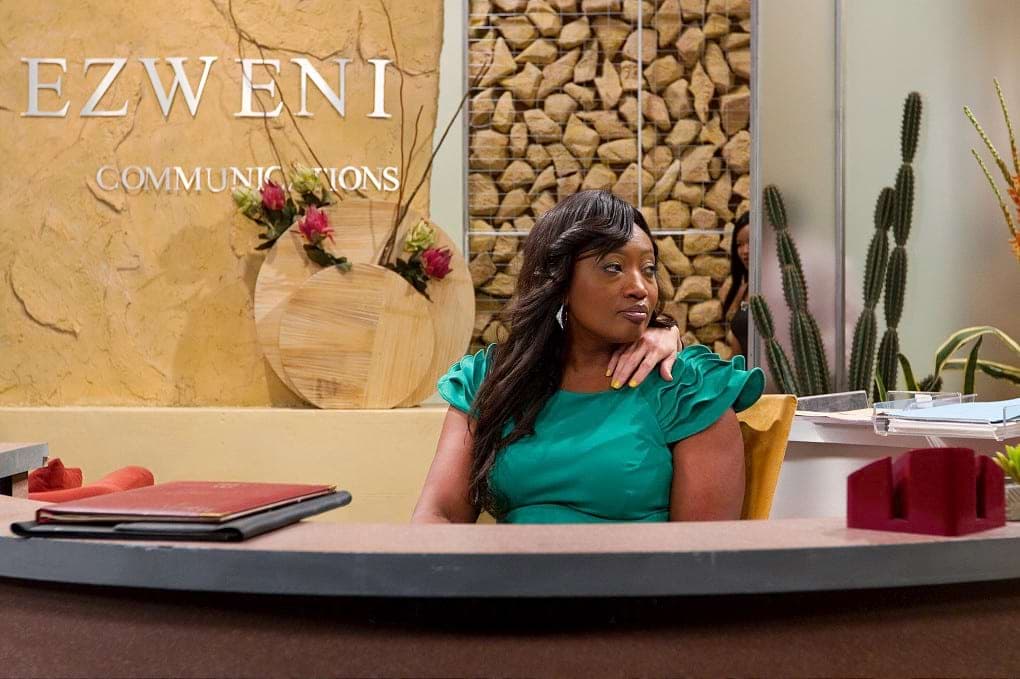
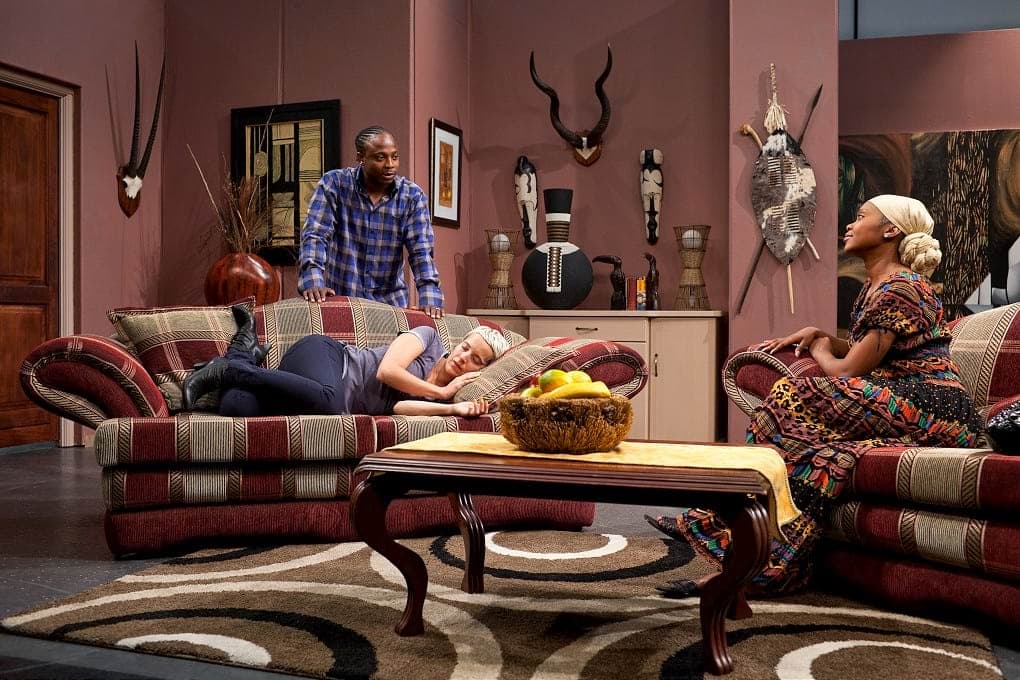
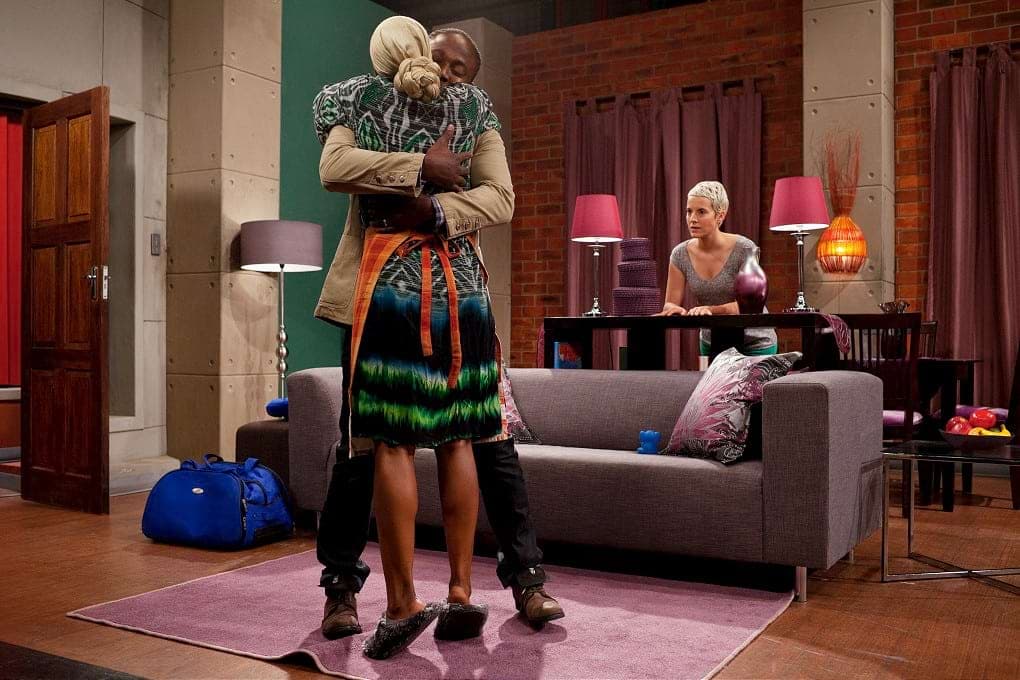
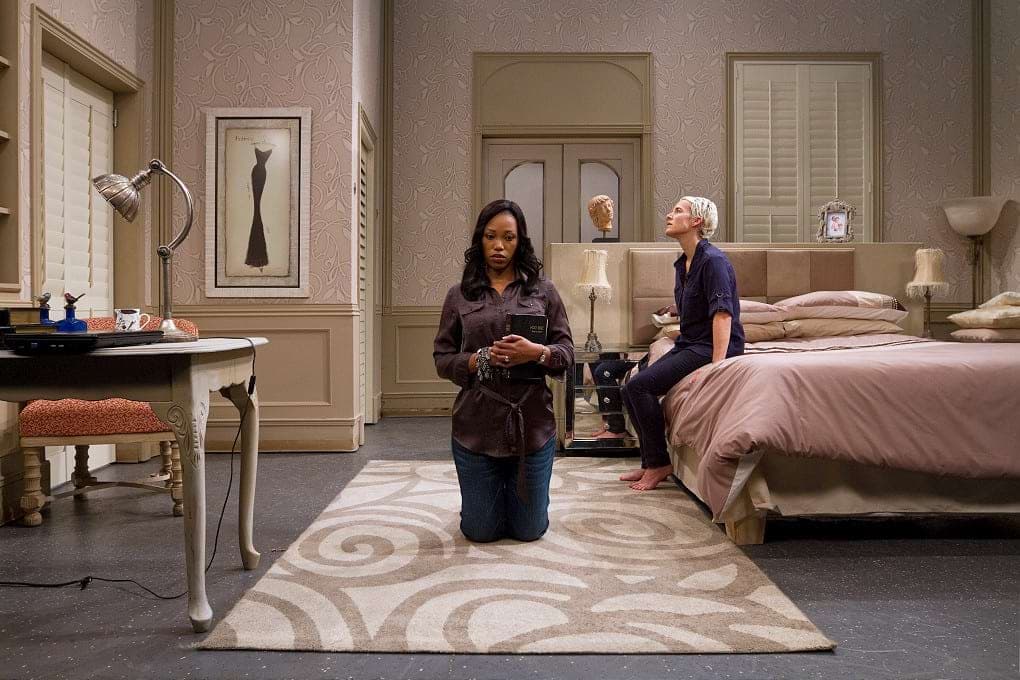
Extra was shot on the set of Generations, South Africa’s most loved soap opera, and the most watched television programme on the African continent at the time the work was made. Broadcast since 1994, Generations paints a picture of the country’s emerging Black middle class against the backdrop of the media industry. Because much of the script is delivered in Nguni languages, white South Africans—who at this historical juncture rarely speak indigenous African languages—simply don’t fit into this aspirational landscape. As such, Generations does not include any major white characters in its cast.
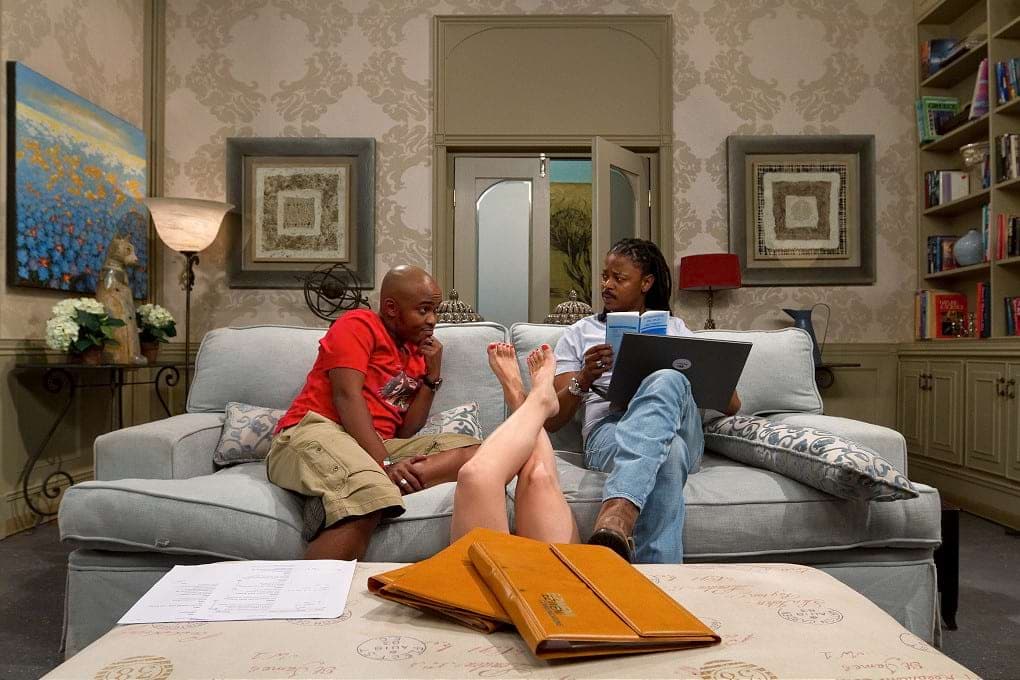
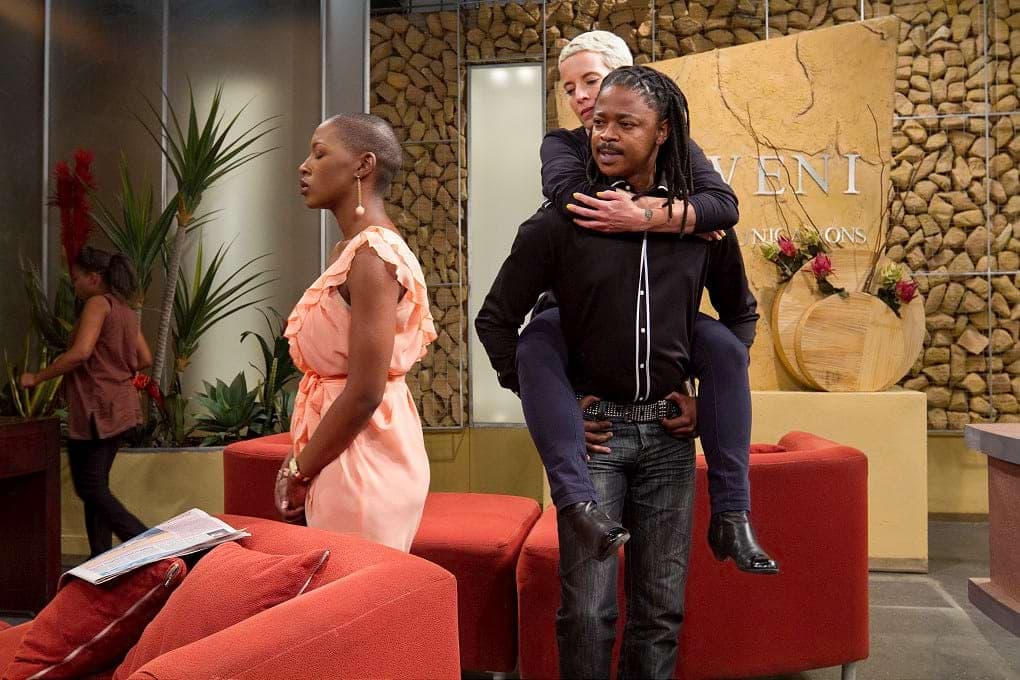
The shoot for Extra took place over a two-week period. Once each scene had been filmed for broadcast purposes, an extra take was captured, this time with Breitz visible on camera. Scene after scene, the artist inserts herself into the unfolding narrative; sometimes subtly, sometimes awkwardly and absurdly, always without easy explanation. Breitz’s performative interventions offer a grammar via which to consider the role of white South Africans in the post-apartheid context, providing a slew of gratingly uncomfortable visual metaphors which, over time, render visible the privileges that still very much attach to whiteness:
Breitz’s ‘extra’ is less a character than an embodiment of white privilege, a figure mired in self-absorption and self-entitlement, a being that occupies more than its fair share of space and, in doing so, distracts from the labour—both fictional and actual—that is performed by the Black bodies around it (which become background to its presence). The disproportionate visibility of this mute white body, which greedily leverages attention for itself at the expense of the larger plot (and at the expense of the fictional community that it occupies), speaks to the violent insistence with which whiteness demands foreground.
Extra was shot on the set of Generations, South Africa’s most loved soap opera, and the most watched television programme on the African continent at the time the work was made. Broadcast since 1994, Generations paints a picture of the country’s emerging Black middle class against the backdrop of the media industry. Because much of the script is delivered in Nguni languages, white South Africans—who at this historical juncture rarely speak indigenous African languages—simply don’t fit into this aspirational landscape. As such, Generations does not include any major white characters in its cast.
The shoot for Extra took place over a two-week period. Once each scene had been filmed for broadcast purposes, an extra take was captured, this time with Breitz visible on camera. Scene after scene, the artist inserts herself into the unfolding narrative; sometimes subtly, sometimes awkwardly and absurdly, always without easy explanation. Breitz’s performative interventions offer a grammar via which to consider the role of white South Africans in the post-apartheid context, providing a slew of gratingly uncomfortable visual metaphors which, over time, render visible the privileges that still very much attach to whiteness:
Breitz’s ‘extra’ is less a character than an embodiment of white privilege, a figure mired in self-absorption and self-entitlement, a being that occupies more than its fair share of space and, in doing so, distracts from the labour—both fictional and actual—that is performed by the Black bodies around it (which become background to its presence). The disproportionate visibility of this mute white body, which greedily leverages attention for itself at the expense of the larger plot (and at the expense of the fictional community that it occupies), speaks to the violent insistence with which whiteness demands foreground.
Extra was shot on the set of Generations, South Africa’s most loved soap opera, and the most watched television programme on the African continent at the time the work was made. Broadcast since 1994, Generations paints a picture of the country’s emerging Black middle class against the backdrop of the media industry. Because much of the script is delivered in Nguni languages, white South Africans—who at this historical juncture rarely speak indigenous African languages—simply don’t fit into this aspirational landscape. As such, Generations does not include any major white characters in its cast.
The shoot for Extra took place over a two-week period. Once each scene had been filmed for broadcast purposes, an extra take was captured, this time with Breitz visible on camera. Scene after scene, the artist inserts herself into the unfolding narrative; sometimes subtly, sometimes awkwardly and absurdly, always without easy explanation. Breitz’s performative interventions offer a grammar via which to consider the role of white South Africans in the post-apartheid context, providing a slew of gratingly uncomfortable visual metaphors which, over time, render visible the privileges that still very much attach to whiteness:
Breitz’s ‘extra’ is less a character than an embodiment of white privilege, a figure mired in self-absorption and self-entitlement, a being that occupies more than its fair share of space and, in doing so, distracts from the labour—both fictional and actual—that is performed by the Black bodies around it (which become background to its presence). The disproportionate visibility of this mute white body, which greedily leverages attention for itself at the expense of the larger plot (and at the expense of the fictional community that it occupies), speaks to the violent insistence with which whiteness demands foreground.
Extra was shot on the set of Generations, South Africa’s most loved soap opera, and the most watched television programme on the African continent at the time the work was made. Broadcast since 1994, Generations paints a picture of the country’s emerging Black middle class against the backdrop of the media industry. Because much of the script is delivered in Nguni languages, white South Africans—who at this historical juncture rarely speak indigenous African languages—simply don’t fit into this aspirational landscape. As such, Generations does not include any major white characters in its cast.
The shoot for Extra took place over a two-week period. Once each scene had been filmed for broadcast purposes, an extra take was captured, this time with Breitz visible on camera. Scene after scene, the artist inserts herself into the unfolding narrative; sometimes subtly, sometimes awkwardly and absurdly, always without easy explanation. Breitz’s performative interventions offer a grammar via which to consider the role of white South Africans in the post-apartheid context, providing a slew of gratingly uncomfortable visual metaphors which, over time, render visible the privileges that still very much attach to whiteness:
Breitz’s ‘extra’ is less a character than an embodiment of white privilege, a figure mired in self-absorption and self-entitlement, a being that occupies more than its fair share of space and, in doing so, distracts from the labour—both fictional and actual—that is performed by the Black bodies around it (which become background to its presence). The disproportionate visibility of this mute white body, which greedily leverages attention for itself at the expense of the larger plot (and at the expense of the fictional community that it occupies), speaks to the violent insistence with which whiteness demands foreground.
Extra was shot on the set of Generations, South Africa’s most loved soap opera, and the most watched television programme on the African continent at the time the work was made. Broadcast since 1994, Generations paints a picture of the country’s emerging Black middle class against the backdrop of the media industry. Because much of the script is delivered in Nguni languages, white South Africans—who at this historical juncture rarely speak indigenous African languages—simply don’t fit into this aspirational landscape. As such, Generations does not include any major white characters in its cast.
The shoot for Extra took place over a two-week period. Once each scene had been filmed for broadcast purposes, an extra take was captured, this time with Breitz visible on camera. Scene after scene, the artist inserts herself into the unfolding narrative; sometimes subtly, sometimes awkwardly and absurdly, always without easy explanation. Breitz’s performative interventions offer a grammar via which to consider the role of white South Africans in the post-apartheid context, providing a slew of gratingly uncomfortable visual metaphors which, over time, render visible the privileges that still very much attach to whiteness:
Breitz’s ‘extra’ is less a character than an embodiment of white privilege, a figure mired in self-absorption and self-entitlement, a being that occupies more than its fair share of space and, in doing so, distracts from the labour—both fictional and actual—that is performed by the Black bodies around it (which become background to its presence). The disproportionate visibility of this mute white body, which greedily leverages attention for itself at the expense of the larger plot (and at the expense of the fictional community that it occupies), speaks to the violent insistence with which whiteness demands foreground.
Extra was shot on the set of Generations, South Africa’s most loved soap opera, and the most watched television programme on the African continent at the time the work was made. Broadcast since 1994, Generations paints a picture of the country’s emerging Black middle class against the backdrop of the media industry. Because much of the script is delivered in Nguni languages, white South Africans—who at this historical juncture rarely speak indigenous African languages—simply don’t fit into this aspirational landscape. As such, Generations does not include any major white characters in its cast.
The shoot for Extra took place over a two-week period. Once each scene had been filmed for broadcast purposes, an extra take was captured, this time with Breitz visible on camera. Scene after scene, the artist inserts herself into the unfolding narrative; sometimes subtly, sometimes awkwardly and absurdly, always without easy explanation. Breitz’s performative interventions offer a grammar via which to consider the role of white South Africans in the post-apartheid context, providing a slew of gratingly uncomfortable visual metaphors which, over time, render visible the privileges that still very much attach to whiteness:
Breitz’s ‘extra’ is less a character than an embodiment of white privilege, a figure mired in self-absorption and self-entitlement, a being that occupies more than its fair share of space and, in doing so, distracts from the labour—both fictional and actual—that is performed by the Black bodies around it (which become background to its presence). The disproportionate visibility of this mute white body, which greedily leverages attention for itself at the expense of the larger plot (and at the expense of the fictional community that it occupies), speaks to the violent insistence with which whiteness demands foreground.
Candice Breitz is a Berlin-based artist whose practice investigates the politics of representation, authorship and visibility. Working across moving image, installation and sculpture, she often draws attention to systems of cultural production and the voices they amplify – or exclude. Her work frequently engages with the intersection of personal testimony and collective narrative, examining how identity is constructed and performed within the structures of media, language and power.
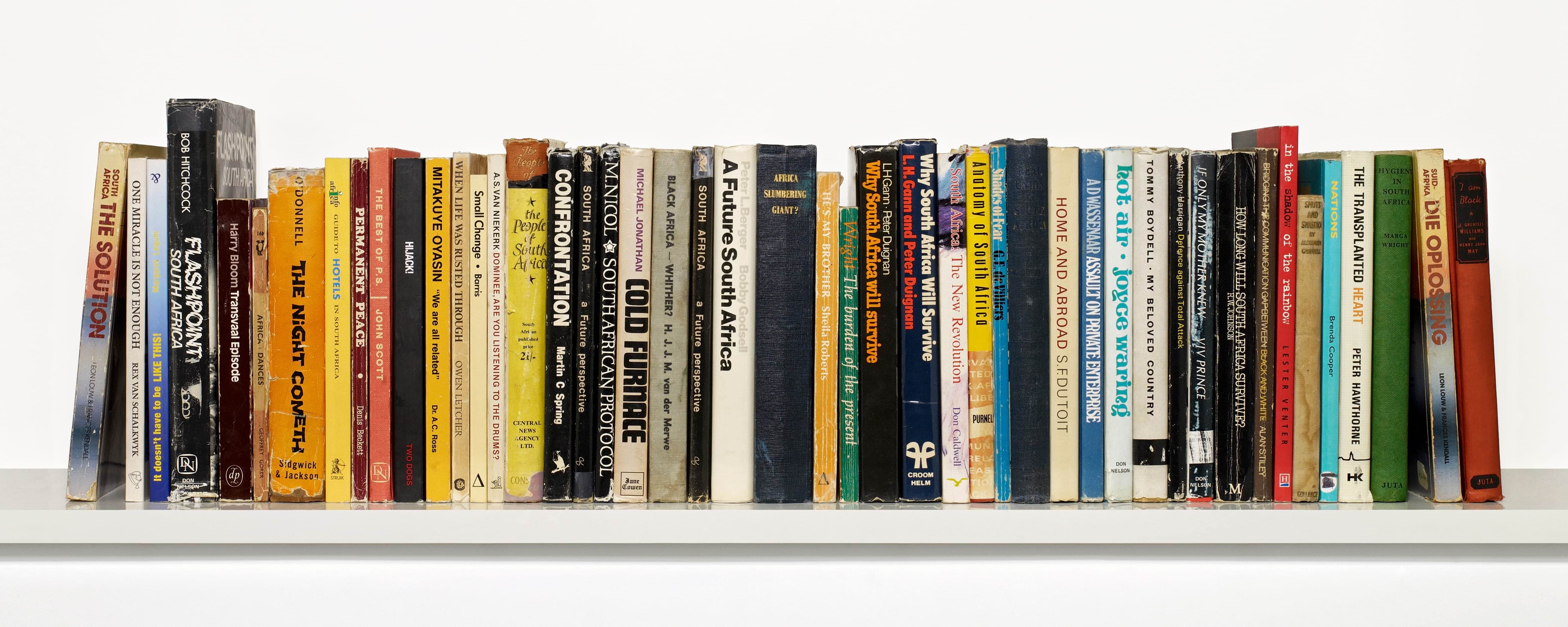
‘Ex Libris South Africa’ is a sculptural work rooted in an act of casual discovery. In January 2009, Breitz came across a single dusty and neglected bookshelf in Bikini Beach Books, a second-hand bookshop in Gordon’s Bay, South Africa. The shelf held a disparate collection of books that, while unrelated in subject matter, shared a common geography and reflected the prevailing ideas and concerns circulating in South Africa over the course of nearly a century. The titles speak volumes – charting a broad spectrum of hopes, fears, prejudices and projections that, together, form a portrait of a society wrestling with its own complexity.
Since 2009, the shelf has hung in Breitz’s studio, quietly occupying space as both object and archive. ‘Ex Libris South Africa’ offers a sculptural snapshot of the ideological landscape preserved in the everyday ephemera of cultural life. The work invites reflection on how belief systems take shape not only through official discourse, but also through the books we publish, purchase and discard. It draws attention to the silent authority of printed matter and how even the most unassuming bookshelf can become a mirror of national consciousness.
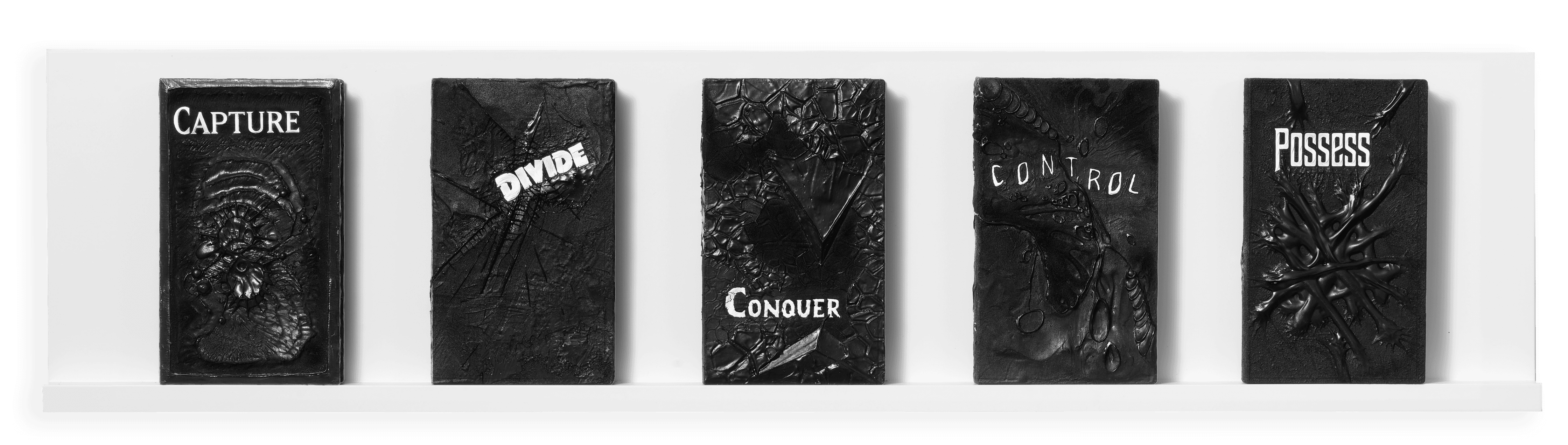
‘A History of White People, 1934–2020’ is a discrete sculptural work drawn from Candice Breitz’s larger ‘Digest’ installation, a project that commemorates the analogue era of home video while meditating on the shifting nature of embodied subjectivity in the digital age. Comprising five silenced videotapes, each sealed in transparent sleeves and mounted on shallow wooden racks reminiscent of video rental displays, this work distills a violent and enduring legacy into a restrained visual form. The selected verbs – to capture, to divide, to conquer, to control, to possess – are drawn from film titles once in circulation during the height of the home video era. Removed from their original narrative contexts, they are reassembled here into a minimalist script that evokes centuries of colonial, imperial and racial domination.
Breitz’s choice of language speaks not to cinematic action, but to historical practices and systemic behaviours enacted by those in power. These five verbs, arranged without ornamentation, evoke the mechanisms through which white subjectivity has asserted and maintained dominance across time. As part of a limited number of smaller works conceived alongside ‘Digest’, this work reflects the artist’s intent to extract and reframe individual elements from the larger archive to propose open-ended yet pointed narratives. In Breitz’s words, these verbs are “the things that white people have done and continue to do.” Presented as buried content – sealed, silenced and abstracted – the tapes resist consumption, instead asking viewers to confront the legacy of power inscribed not in images, but in the language of action.
Voice: Bill O’Reilly
Commissioned by the Museum Folkwang
Voice: Tomi Lahren
Voice: Tucker Carlson
Commissioned by the Museum Folkwang
File Name:
Whiteface_Mantra_08_