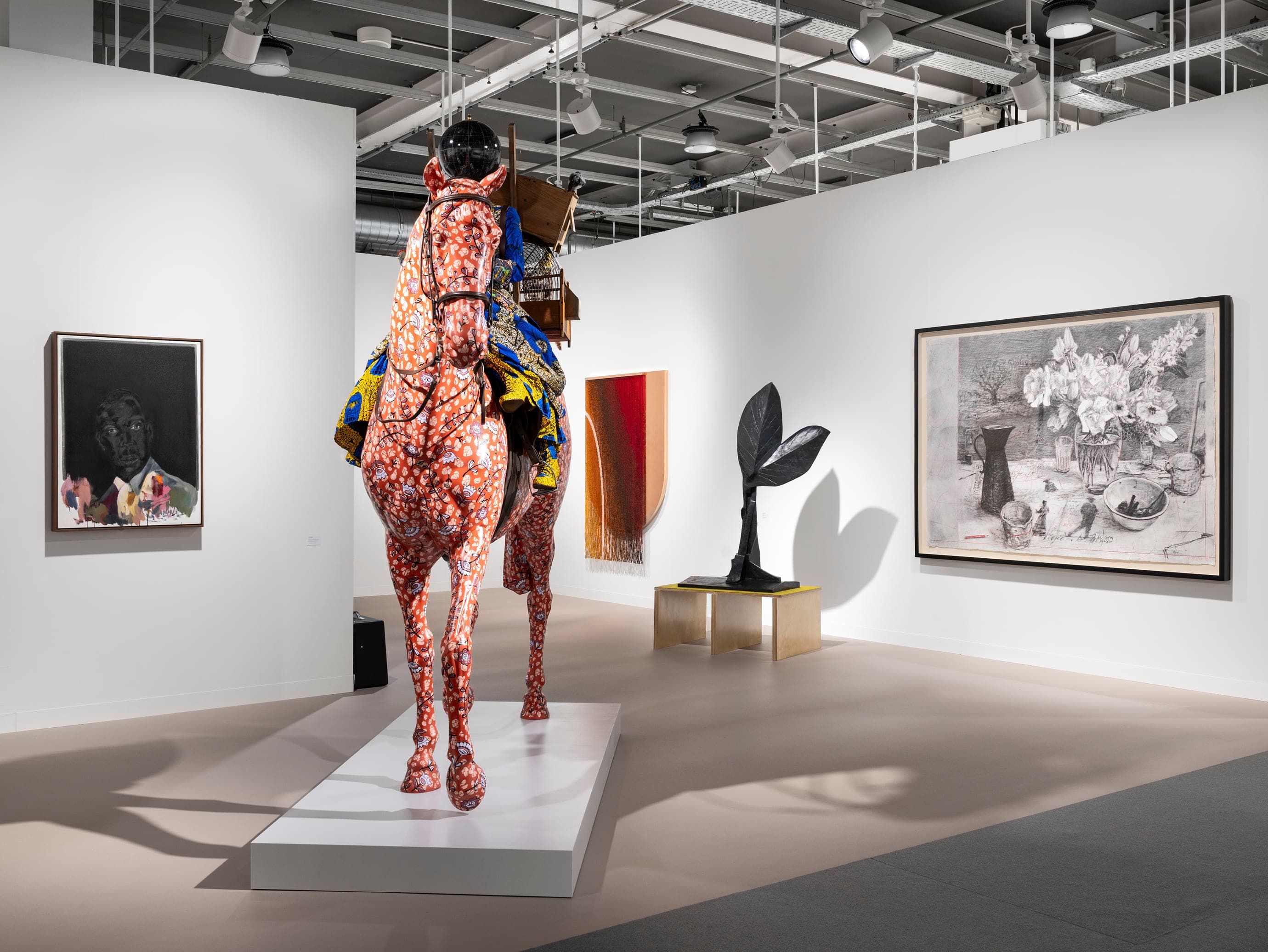
Goodman GalleryBasel Exclusive 2026
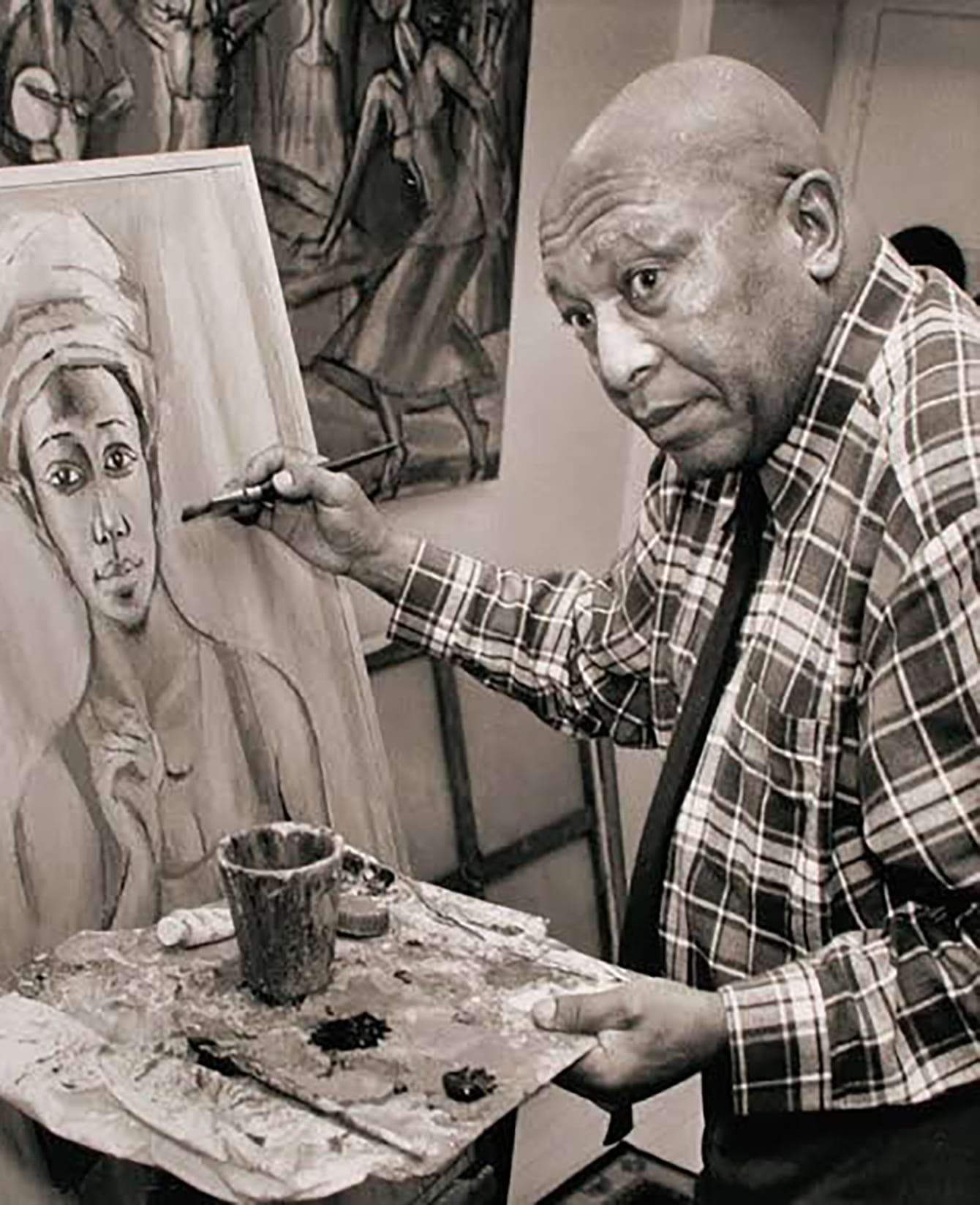
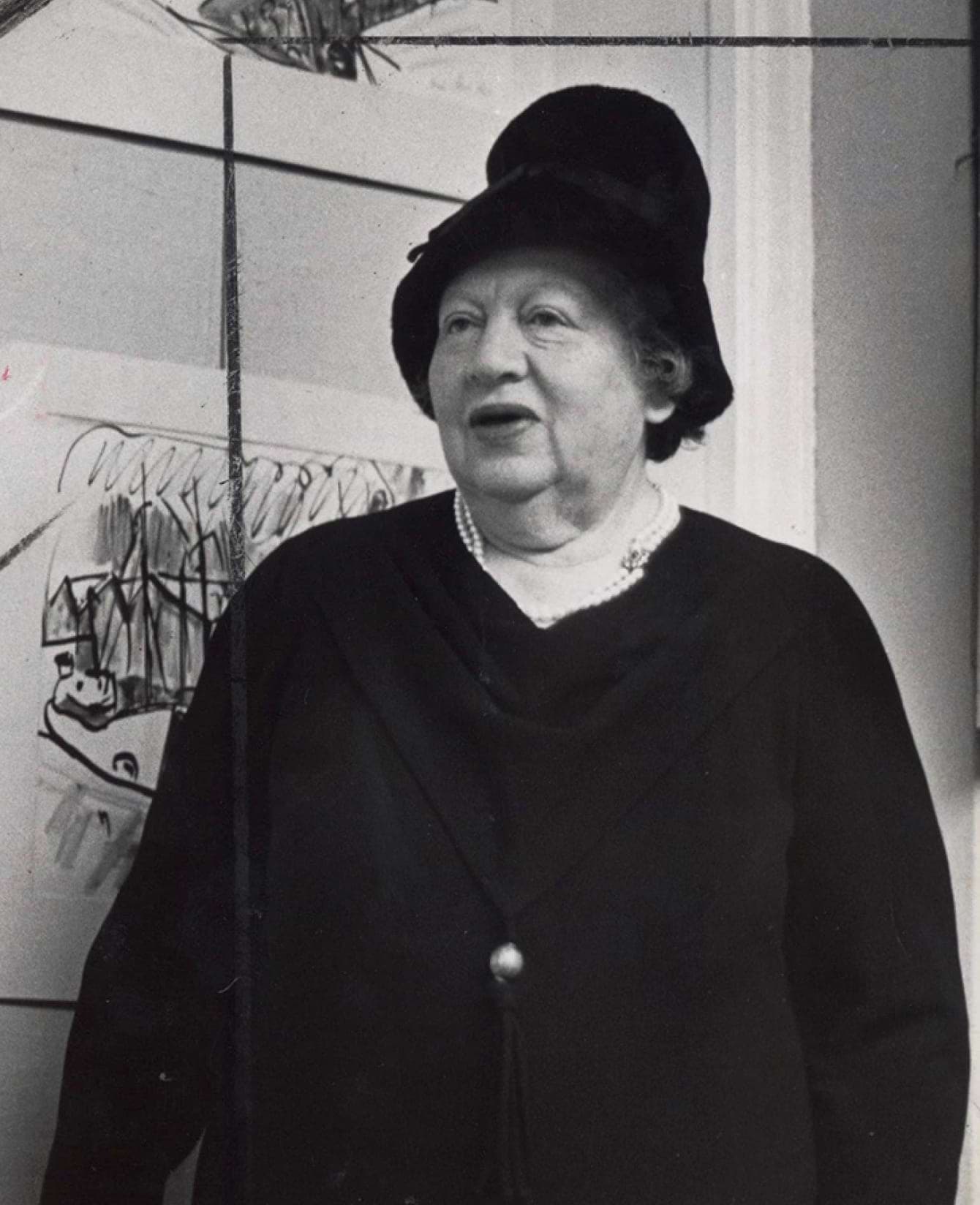
The booth includes work by two very different yet equally significant South African painters: Gerard Sekoto (b. 1913, Botshabelo, South Africa – d. 1993, Paris, France) and Irma Stern (b. 1894, Schweizer-Reneke, South Africa – d. 1966, Cape Town). Sekoto is one of the most influential painters in South African history. He achieved early prominence through his nuanced, painterly depictions of Black urban life in South Africa’s major cities, before the formal advent of apartheid. In 1947, seeking to expand his career prospects, Sekoto moved to Paris and never returned to South Africa. Stern is a foundational figure in the history of South African modernism. Born on a farm in the country’s interior but raised and academically trained in Wilhelmine Germany, Stern briefly participated in Berlin’s painterly avant-garde before settling permanently in Cape Town in 1920.
Recent major European institutional exhibitions have renewed international attention on both artists. Sekoto and Stern were both included in the central exhibition of the 60th Venice Biennale (2024), curated by Adriano Pedrosa, followed in 2025 by Sekoto’s inclusion in Paris Noir: Artistic Circulations and Anti-Colonial Resistance, 1950–2000 at the Centre Pompidou and a major retrospective of Stern’s work at Berlin’s Brücke-Museum. Their inclusion in Goodman Gallery’s Art Basel presentation underscores the gallery’s sustained commitment to advancing African artists within global art historical discourse.

Explore African Masters
Create a Goodman Gallery account to view our full selection of available works, access pricing and check out online.

Born on a farm in the country’s interior but raised and academically trained in Wilhelmine Germany, Stern briefly participated in Berlin’s painterly avant-garde before settling permanently in Cape Town in 1920. Her work initially scandalised critics, who branded her “revolutionary” and “ultra-modern”. By the mid-1930s, however, she had achieved national acclaim, later representing South Africa four times at the Venice Biennale during the 1950s.
Stern worked across a range of genres, notably portraiture and still life. Her prodigious output includes numerous autonomous studies of flowers in vases. An avid gardener, painting flowers was a sensuous delight. But, from the late 1920s onwards, when her high-Expressionist phase softened, Stern increasingly used flower painting to develop a more luxuriant and gestural handling of colour. This shift attracted the admiration of critics and collectors alike. Art historian Marion Arnold has described these compositions as among Stern’s “most sumptuous and sensual images”.


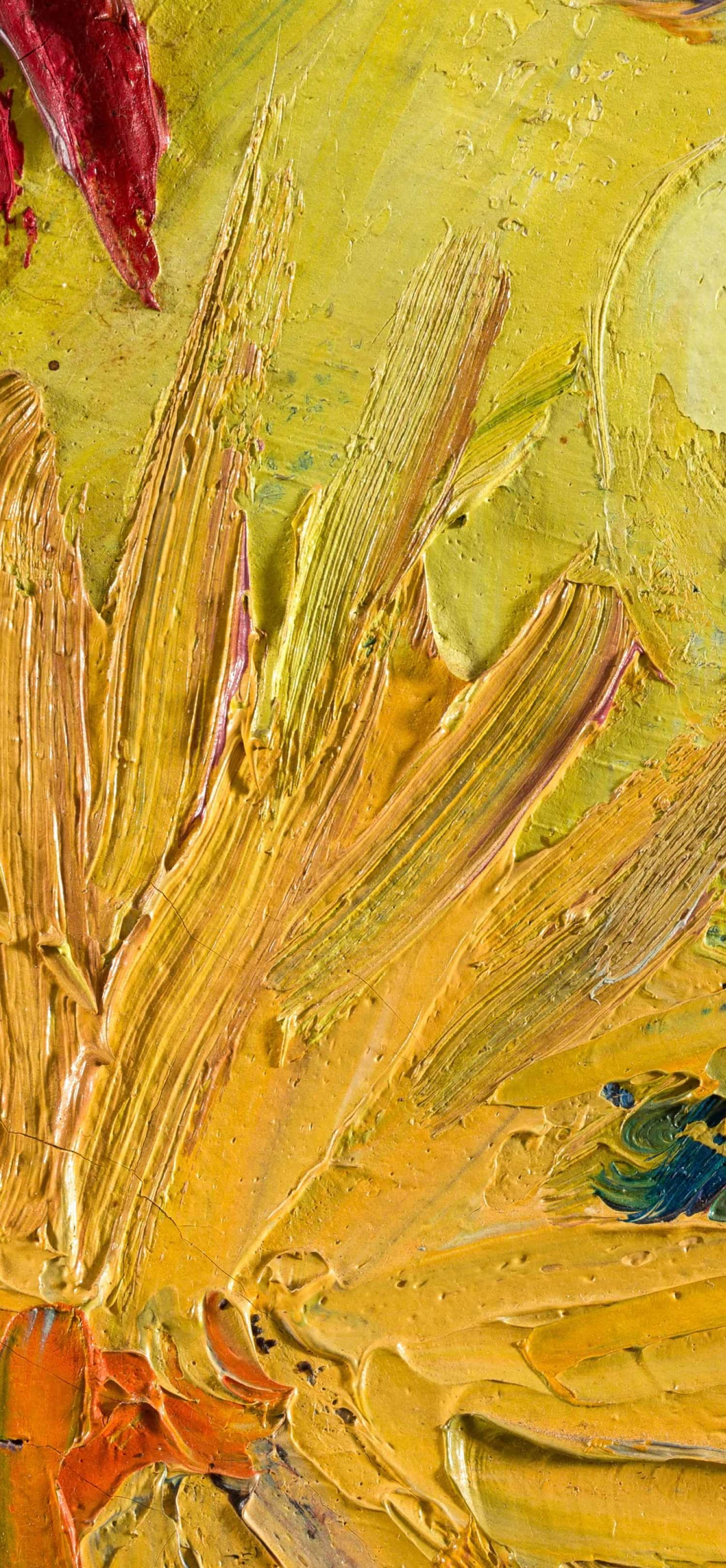
Painted when she was 66, this late work is less theatrically abundant than the floral compositions of the 1940s. It nonetheless demonstrates her assured use of colour to animate a composition dominated by luminous, sunlit dahlias set against a vase of complementary tones. The decorative detailing of the tablecloth recalls the jewel-like precision with which Stern described the bridal crowns of her Cape Muslim sitters. More richly worked than some examples from this period, the painting balances looseness of handling with an unwavering commitment to radiant, life-affirming colour – recalling Stern’s enduring admiration for Paul Cézanne, whose late paintings similarly reconciled structural freedom with chromatic intensity.

SELECTED SOLO EXHIBITIONS
2025: Irma Stern: A Modern Artist between Berlin and Cape Town, Brücke-Museum, Berlin
2021: Irma Stern Nudes 1916–1965, UCT Irma Stern Museum, Cape Town
2006: Journeys to the Interior: Unseen works by Irma Stern, South African Jewish Museum, Cape Town
2003: Expressions of a Journey, Standard Bank Art Gallery, Johannesburg
SELECTED GROUP EXHIBITIONS
2024: Stranieri Ovunque – Foreigners Everywhere, curated by Adriano Pedrosa, 60th Venice Biennale
2021: The Art of Society 1900–1945: The Nationalgalerie Collection, Neue Nationalgalerie, Berlin
MUSEUM COLLECTIONS
Centre Pompidou, France
Qatar Museums (formerly the Qatar Museums Authority), Qatar
Royal Collection Trust, through acquisition of Queen Elizabeth the Queen Mother
National Gallery (Nationalgalerie) Collection, Berlin

Mission educated and shaped by the modernising ethos of Christianity, Sekoto’s early intellectual formation informed his nuanced and cosmopolitan depictions of black urban life in South Africa’s major cities.
Following an extended stay in Cape Town, he moved to Pretoria in 1945 to live with his mother and stepfather in Eastwood, a small freehold settlement on the eastern outskirts of the administrative capital. Two years later, in 1947, he departed for Paris, where he lived and worked for the remainder of his life. Works from Sekoto’s brief Eastwood period are widely regarded, both critically and at market, as the high point of his artistic career.
It was in Eastwood that his formal command of painting, notably of colour and mood, cohered with exceptional clarity. Sekoto’s Eastwood paintings are characterised by his emotionally resonant observation of ordinary people. This snapshot-like composition is emblematic. Positioned as attentive observer, Sekoto portrays three barefoot adolescents huddled around a brazier, seeking warmth. Their short trousers and youthful physiques suggest adolescence, yet their solemn expressions and grave bearing lend them an air of premature adulthood. While grounded in close observation, the painting avoids anecdotal realism. Sekoto’s palette, notably in the foreground bands of pink and light blue, is sensuous without extravagance.
The outcome is a painting that balances social description with painterly subtlety, transforming an everyday scene into a quietly monumental meditation on endurance amidst crisis. Writing of Sekoto’s Eastwood works, N. Chabani Manganyi noted that his works restore dignity to his subjects as oppressed people.


Sekoto’s post-1947 work varies in subject, theme and formal style. His Paris output includes various depictions of the city’s vibrant post-war café society. An acute observer, this work possesses a documentary immediacy. In 1959, the year Sekoto produced ‘Le Café Parisien’, the Saint-Germain-des-Prés quarter was the beating heart of Paris’s bohemian, intellectual and cultural life. Far from being a mere bystander, Sekoto’s allegiance to, and immersion in, the quarter’s lively cafés and smoky jazz bars was absolute. An accomplished pianist who for decades earned a second income playing in jazz ensembles, in 1959 Sekoto released a vinyl single of negro spirituals on Roger Fasnacht’s Deva label.
The convivial subject matter of ‘Le Café Parisien’ directly corresponds with Sekoto’s earlier, pre-exile works portraying bar scenes in Cape Town and Johannesburg. Compositionally, it showcases Sekoto’s transforming style, when the umber tones of his earlier post-impressionist works were replaced by a more zestful palette. The predominance of blue, here skilfully used in variegated tones to describe the modish patrons and their milieu, is a notable hallmark of Sekoto’s later work.

SELECTED SOLO EXHIBITIONS
1989: Gerard Sekoto: Unsevered Ties, Johannesburg Art Gallery, Johannesburg
2005: Gerard Sekoto: From the Paris Studio, Iziko South African National Gallery, Cape Town
SELECTED GROUP EXHIBITIONS
2025: Paris Noir: Artistic Circulations and Anti-Colonial Resistance, 1950–2000, Centre Pompidou, Paris
2025: A Protea Is Not a Flower, Zeitz MOCAA, Cape Town
2024: Stranieri Ovunque – Foreigners Everywhere, curated by Adriano Pedrosa, 60th Venice Biennale
2006: Revisions: Expanding the Narrative of South African Art, Iziko South African National Gallery, Cape Town
2002: The Short Century: Independence and Liberation Movements in Africa, 1945–1994, curated by Okwui Enwezor, MoMA PS1, New York
1988: Paris and South African Artists, 1850–1965, Iziko South African National Gallery, Cape Town
1988: The Neglected Tradition: Towards a New History of South African Art 1930–1988, Johannesburg Art GalleryODL
MUSEUM COLLECTIONS
Johannesburg Art Gallery, JohannesburgStandard Bank Collection, Johannesburg
The South African Reserve Bank Collection, PretoriaPretoria Art Gallery, PretoriaUniversity of South Africa Art Gallery, PretoriaIziko South African National Gallery, Cape TownWilliam Humphreys Art Gallery, Kimberley
Wits Art Museum, JohannesburgPhiladelphia Museum of Art, Philadelphia
Artists