Our Artistsin Venice

‘In Minor Keys’
9 May – 22 November 2026
Across the Giardini, the Arsenale and various locations in Venice
Goodman Gallery is proud to support a significant group of artists participating in In Minor Keys, curated by the late Koyo Kouoh, at the 61st International Art Exhibition of La Biennale di Venezia – a milestone edition that reflects Kouoh’s far-reaching curatorial legacy.
Participating artists include Nolan Oswald Dennis, Tabita Rezaire and Alfredo Jaar, as well as Guest Artists Space (GAS) Foundation, founded by Yinka Shonibare. The gallery also supports the participation of Georgina Maxim, who, while not formally represented, is part of a wider network of artists with whom it maintains ongoing relationships, following her 2024 solo exhibition at Goodman Gallery London.
The gallery’s engagement with Kouoh developed over several years both prior to and following her appointment at Zeitz Museum of Contemporary Art Africa (MOCAA) in Cape Town, taking shape through a number of specific initiatives and projects. The South South platform brought together artists, curators, galleries and nonprofit organisations, including support for RAW Material Company in Dakar, founded by Kouoh. In 2020, Goodman presented The Rwanda Project by Alfredo Jaar, at its gallery in London, supporting its travel to Zeitz MOCAA. In 2024, Nolan Oswald Dennis’s exhibition UNDERSTUDIES at Zeitz MOCAA – their first major South African museum solo – marked a further point of engagement.
Our Artists Featured


In The End of the World, Alfredo Jaar condenses the planet into a small cube composed of critical minerals – cobalt, lithium, copper, and rare earth elements – foregrounding the material substratum of contemporary life. The work traces the global supply chains that sustain digital technologies and the energy transition, linking everyday devices to sites of extraction marked by intensive labour and environmental degradation. By framing natural resources as drivers of geopolitical tension, Jaar points to the ways in which new regimes of power and dependency are shaped through competition over these materials. Extending his longstanding engagement with mining and inequality, the work proposes “the end of the world” not as a distant event, but as an ongoing condition produced through extractive systems, while its restrained form reflects on the ecological and material conditions of exhibition-making itself


This large-scale textile work, composed almost entirely of found red fabrics – including domestic worker uniforms and personal garments – unfolds as a meditation on memory, absence, and inheritance. Incorporating pockets containing everyday objects, from dolls to tissues, the work accumulates fragments of lived experience, suggesting lives partially known or interrupted. The piece emerges from questions Maxim has asked about her childhood and her need to understand her mother, who died when she was three years old. The title evokes the metaphor of a borrowed book – marked by others, returned late, and subject to penalty – as a way of thinking through personal and collective histories shaped by loss and dislocation. Through processes of stitching and assemblage, Maxim positions textile as both archive and gesture, holding together what cannot be fully recovered.

Installed along the stairway of the Arsenale, 33 letters of knowing you will reply comprises a series of intimate textile works referencing correspondence between the artist and her late sister. Each piece, encased in silk forms resembling envelopes, carries traces of clothing and personal material, embedding memory within fabric. The number 33 marks the age at which her sister passed away, structuring the work as both commemoration and ongoing dialogue. Through slow, meticulous handwork, Maxim reflects on care, grief, and the persistence of connection, positioning memory as an active, relational process.


black earth calendar extends Dennis’s investigation into geological time through a spatial installation composed of three interconnected stations. Sculptural bowls of soil collected in Johannesburg and Venice vibrate in response to composed seismic data, while stone-like forms evoke ancient standing structures associated with early timekeeping systems. A magnetic wall-based calendar proposes multiple, overlapping temporal logics, shifting orientation away from linear, human-centred chronologies. Drawing on sites such as Inzalo Ye Langa in Mpumalanga – the only “standing stone” or ancient timekeeping device in the Southern hemisphere – the work considers how violent geological events precede and exceed human experience, offering a model of time grounded in the rhythms of the earth itself.


Omo Elu comprises seven indigo-dyed textile works arranged in a circular formation, each accompanied by calabash vessels containing water. The title combines the Yoruba words for “child” (omo) and “indigo” (elu), invoking both lineage and material knowledge. Each textile embodies an aspect of Yemoja, the Yoruba Orisha associated with water, motherhood, and creation, while indigo itself carries layered histories of ritual, healing, and cultural transmission across geographies. Through this constellation of forms, Rezaire creates a space of offering and continuity, linking spiritual cosmology with embodied practices of making.

In Mother Sun, Mother Moon, Mother Earth, Rezaire presents three hand-embroidered works developed in collaboration with Saramaka women from French Guiana, drawing on ancestral textile traditions. The works invoke elemental forces as living entities, articulating a cosmology grounded in relationality between the human, the ecological, and the spiritual. Extending the artist’s broader practice – which spans technology, healing, and agriculture – the series reflects an engagement with embodied knowledge systems that address historical rupture while proposing modes of restoration and balance.


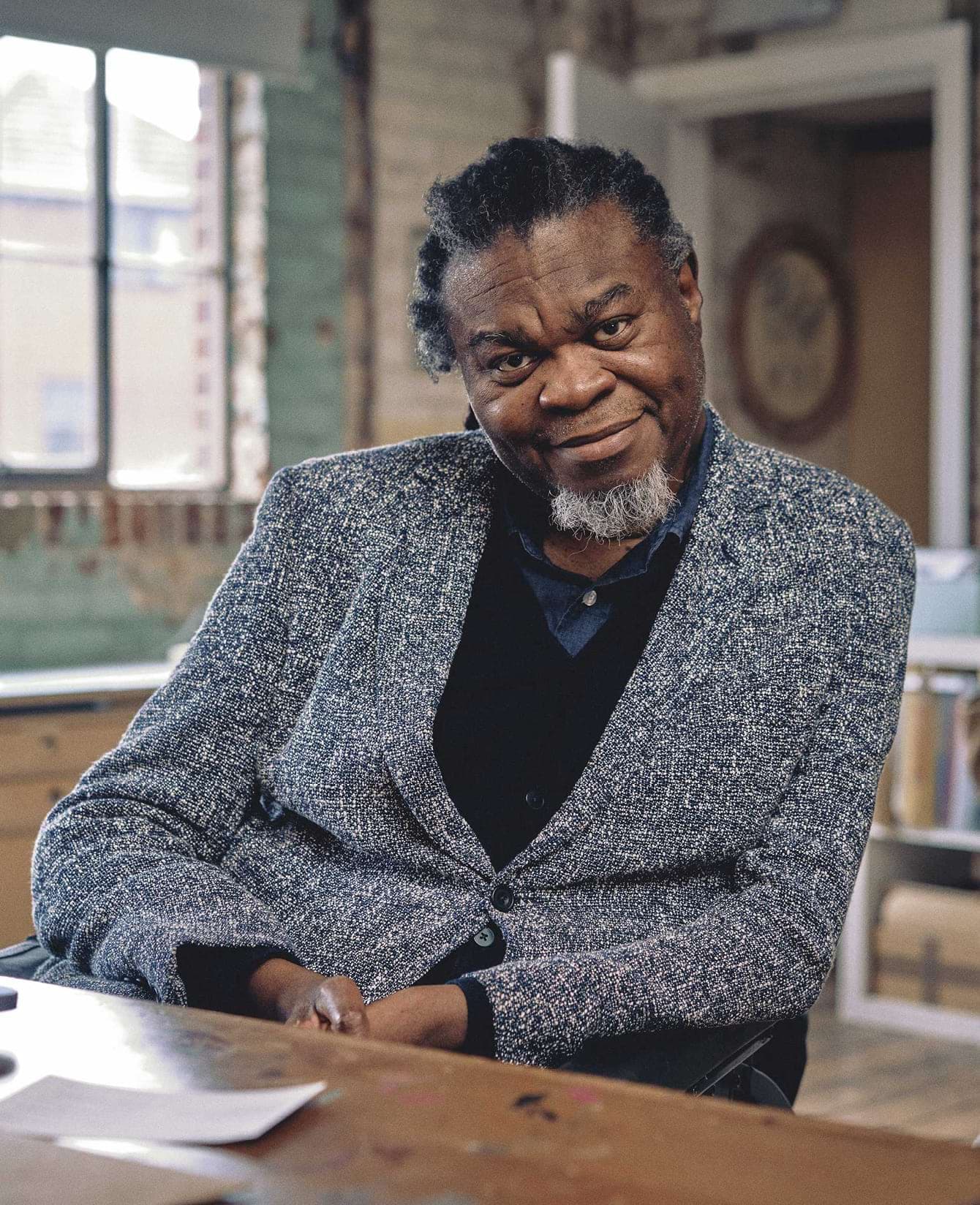
Chorus is a multi-sensory installation emerging from the collective research and residency programme of G.A.S. Foundation, a Lagos- and Ìjẹ̀bú-Òde-based initiative founded by Yinka Shonibare in 2022. Bringing together a wide network of artists, architects and thinkers, the work translates the foundation’s ongoing dialogues around ecology, education, and social infrastructure into a spatial environment. Drawing on the architectural and social traditions of Yorùbá courtyards, Chorus unfolds as a site of gathering and reflection, where sound, image and material form intersect. The installation weaves together multiple voices and perspectives, inviting visitors into a shared space of contemplation shaped by intergenerational exchange, memory, and collective possibility.

Installation View


Shirin Neshat
Do U Dare!
Palazzo Marin, San Marco, Venice
8 May 2026 - 6 September 2026
In addition to our artists participating in Biennale Arte 2026, Shirin Neshat concurrently premieres a new film trilogy this May in Venice, curated by Ilaria Bernardi and Bartolomeo Pietromarchi, organized by Associazione Genesi (founded by Letizia Moratti in 2020) and Banca Ifis, and presented by Gladstone and Lia Rumma Gallery and in collaboration with Magonza publishing house.
Inspired by Neshat’s fascination with the tragic story of Nasim Aghdam, an Iranian-born media personality whose life and artistic practice resonated with Neshat, Do U Dare! explores one artist’s gaze upon another, and the connections that emerge between them. Shot in three different socioeconomic landscapes in New York, the three films investigate the paradox between women’s inner and outer worlds, reality and illusion, and American society and the Iranian female perspective.


Artist Bio
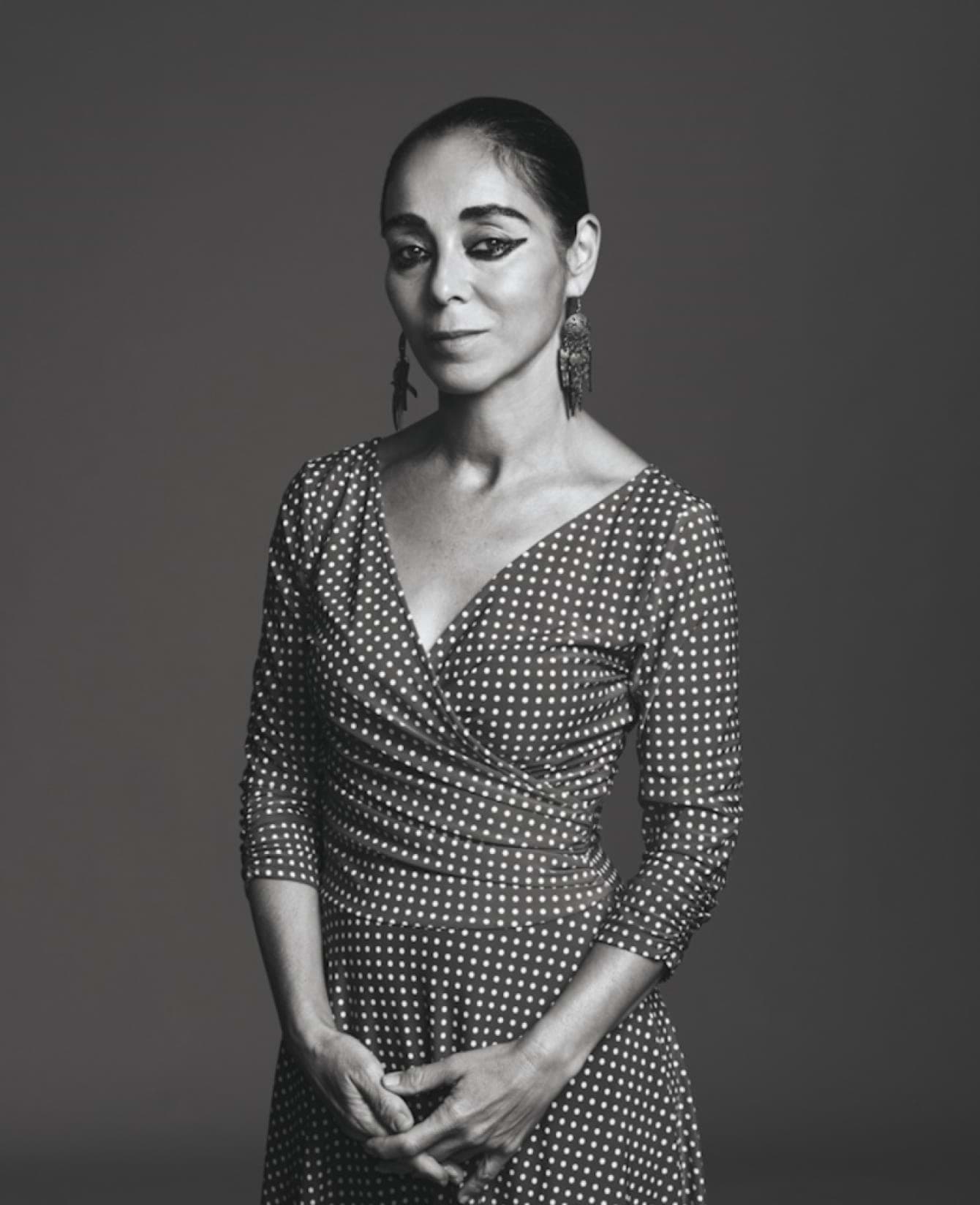
Shirin Neshat (b. 1957, Qazvin, Iran) is an Iranian-born artist and filmmaker living in New York. Neshat’s early photographic works include the Women of Allah series (1993–1997), which explored the question of gender in relation to Islamic fundamentalism and militancy. Her subsequent video works departed from overtly political content or critique in favor of more poetic imagery and narratives. In her practice, she employs poetic imagery to engage with themes of gender and society, the individual and the collective, and the dialectical relationship between past and present, through the lens of her experiences of belonging and exile.
She has mounted numerous solo exhibitions at museums internationally, including: the Hirshhorn Museum and Sculpture Garden, Washington D.C.; Stedelijk Museum, Amsterdam; the Serpentine Gallery, London; Hamburger Bahnhof, Berlin; and the Musée d’art contemporain de Montréal. Recent solo exhibitions include: Kunstraum Dornbirn, Austria; Faurschou Foundation, Copenhagen; Kunsthalle Tübingen, Germany; and Museo Correr,Venice, Italy, which was an official corollary event to the 57th Biennale di Venezia in 2017. A major retrospective of her work was exhibited at the Detroit Institute of Arts in 2013. Neshat was awarded the Golden Lion Award, the First International Prize at the 48th Biennale di Venezia (1999), the Hiroshima Freedom Prize (2005), and the Dorothy and Lillian Gish Prize (2006). In 2009, Neshat directed her first feature-length film, Women Without Men, which received the Silver Lion Award for “Best Director” at the 66th Venice International Film Festival. Dreamers marked her first solo show on the African continent, which exhibited at Goodman Gallery Johannesburg in 2016. That same year, Neshat featured in the 'New Revolutions: Goodman Gallery at 50 exhibition' in Johannesburg and in the Summers group exhibition at Goodman Gallery Cape Town. In 2017, Neshat was awarded the prestigious Praemium Imperiale award for Painting. That same year, Neshat directed Giuseppe Verdi’s Aida at the Salzburg. In 2017, Neshat was awarded the prestigious Praemium Imperiale award for Painting. That same year, Neshat directed Giuseppe Verdi’s Aida at the Salzburg. The Broad Museum in Los Angeles recently hosted a survey exhibition of the last 25 years of Neshat's work, which travelled on to Modern Art Museum of Fort Worth in 2021. This year Neshat was the feature artist and Master of Photography at Photo London festival which took place in Somerset House in September.
Neshat has directed three feature-length films, Women Without Men (2009), which received the Silver Lion Award for Best Director at the 66th Venice International Film Festival, Looking For Oum Kulthum (2017), and most recently Land of Dreams (2021) which premiered at the Venice Film Festival.
The artist lives and works in New York, USA.
