Leonardo Drew: The Alchemy of Ruin
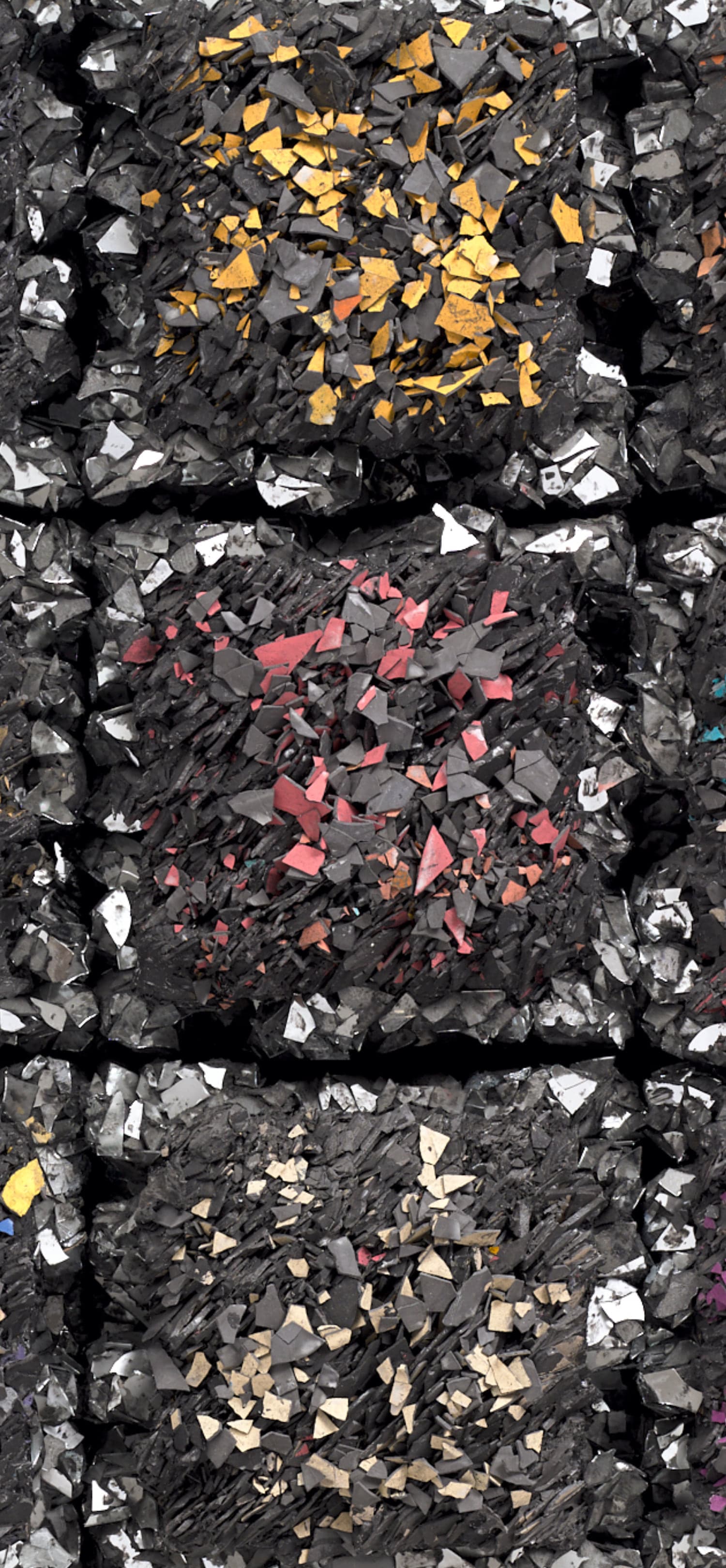
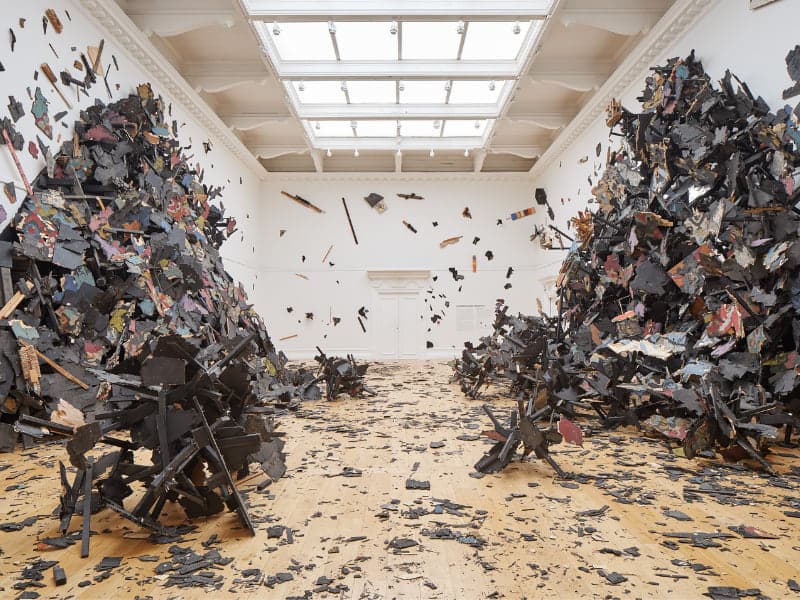
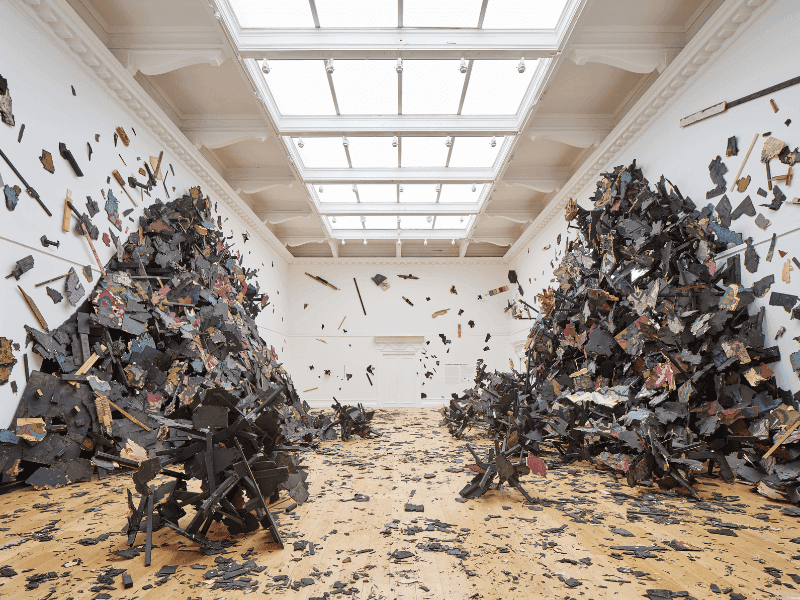
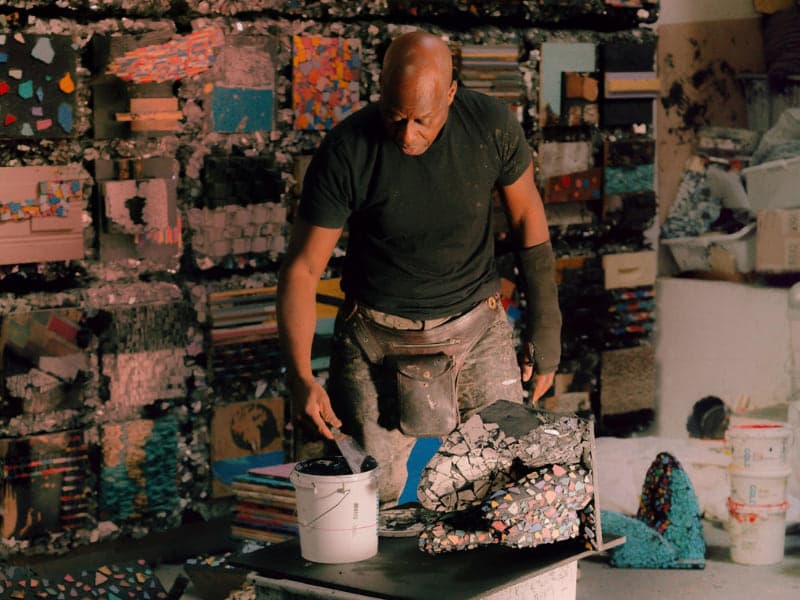
Before ruin became a corrosive condition of the present, it was already being rehearsed in the fragmented languages of modern art. Visible in the densely covered surfaces of American Jackson Pollock’s work, the painting was no longer confrontational, but laid flat on to the studio floor, exposed to the energies and elements of the artist—broken into impulsive gestures that fall like bodies on top of one another, as an accumulation of grievances suffocating the surface of space, and reality out of reach. Whilst for his contemporary, Robert Rauschenberg, the canvas itself gave way to the world, absorbing its rubble and ruin, as fragments of newspapers, fabric, debris and the readymade—were applied onto a surface that was at once honest and undone. In both, their materials ceased to sit quietly; instead, appearing entirely fractured, bruised, broken into new incarnations of meaning. It is within this lineage of breakdown and recomposition that Leonardo Drew can be situated, extending their radical treatment of matter into a more explicitly sculptural and regenerative terrain.
Related Press
See AllLeonardo Drew Finds Order in the Aftermath of Ruin
Art Plugged | Len Gordon13 Mar 2026The best exhibitions in London for September 2025
Condé Nast Traveller01 Sep 2025London art exhibitions to see in August
Wallpaper*01 Aug 2025In the studio: Leonardo Drew and the art of controlled chaos
Art Basel26 Jun 2025In the studio: Leonardo Drew and the art of controlled chaos
Art Basel26 Jun 2025Leonardo Drew is Interviewed by Caroline Roux in the Financial Times
Financial Times10 Jun 2022