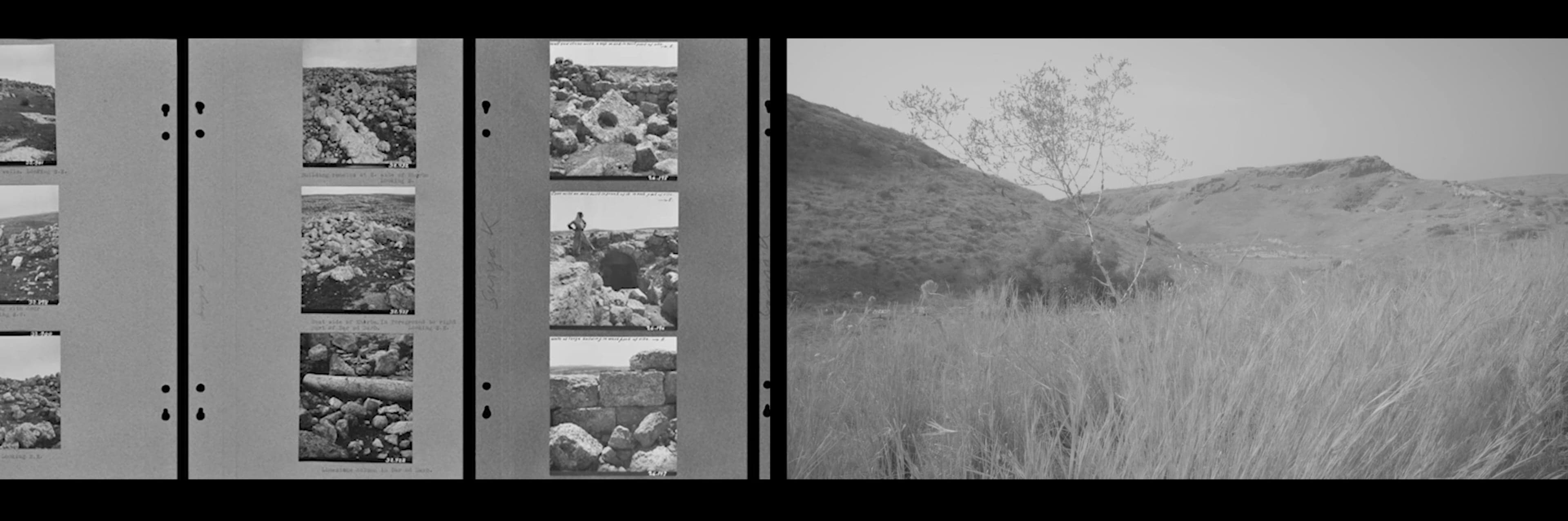

Qalâat Al-Husan (2022) was filmed in ‘Hippos’ on the shortest day of the year. ‘Hippos’, a historical basalt stone built city, is currently an archeological site located between Syria and Israel. The now abandoned city, since its military use, has seen a revival of flora and fauna previously considered extinct. The soundtrack of the video work was composed by recordings of the females from a rare bat species as they navigate at night looking for prey above the basalt city. The movement of light and camera throughout the video varies in cadence, evoking gun turrets scanning for a target, navigation devices, or the frantic commotion of a battlefield. The work also includes the most prominent first modern maps of Palestine were made by German researcher Gottlieb Schumacher dating back to 1885.
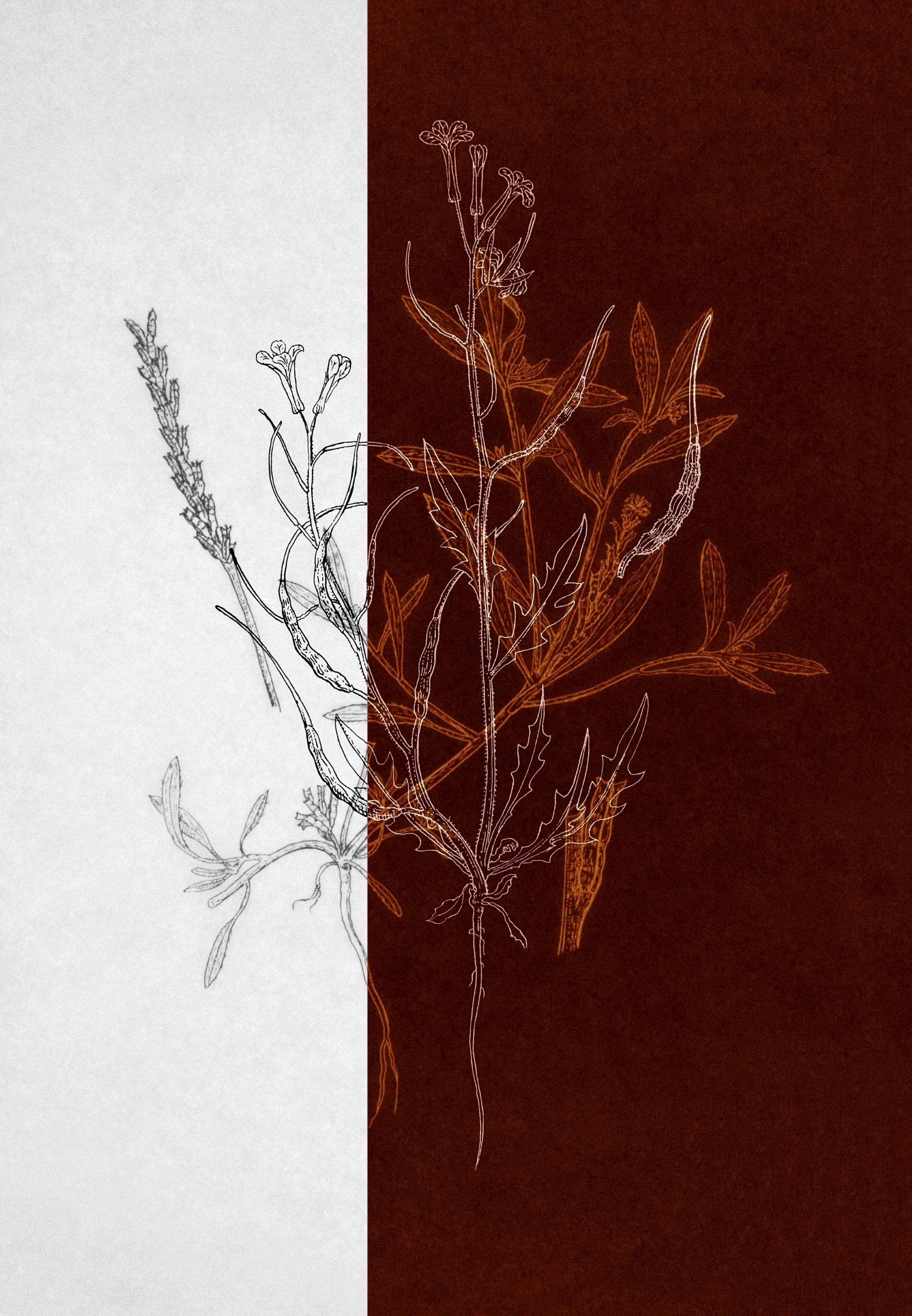
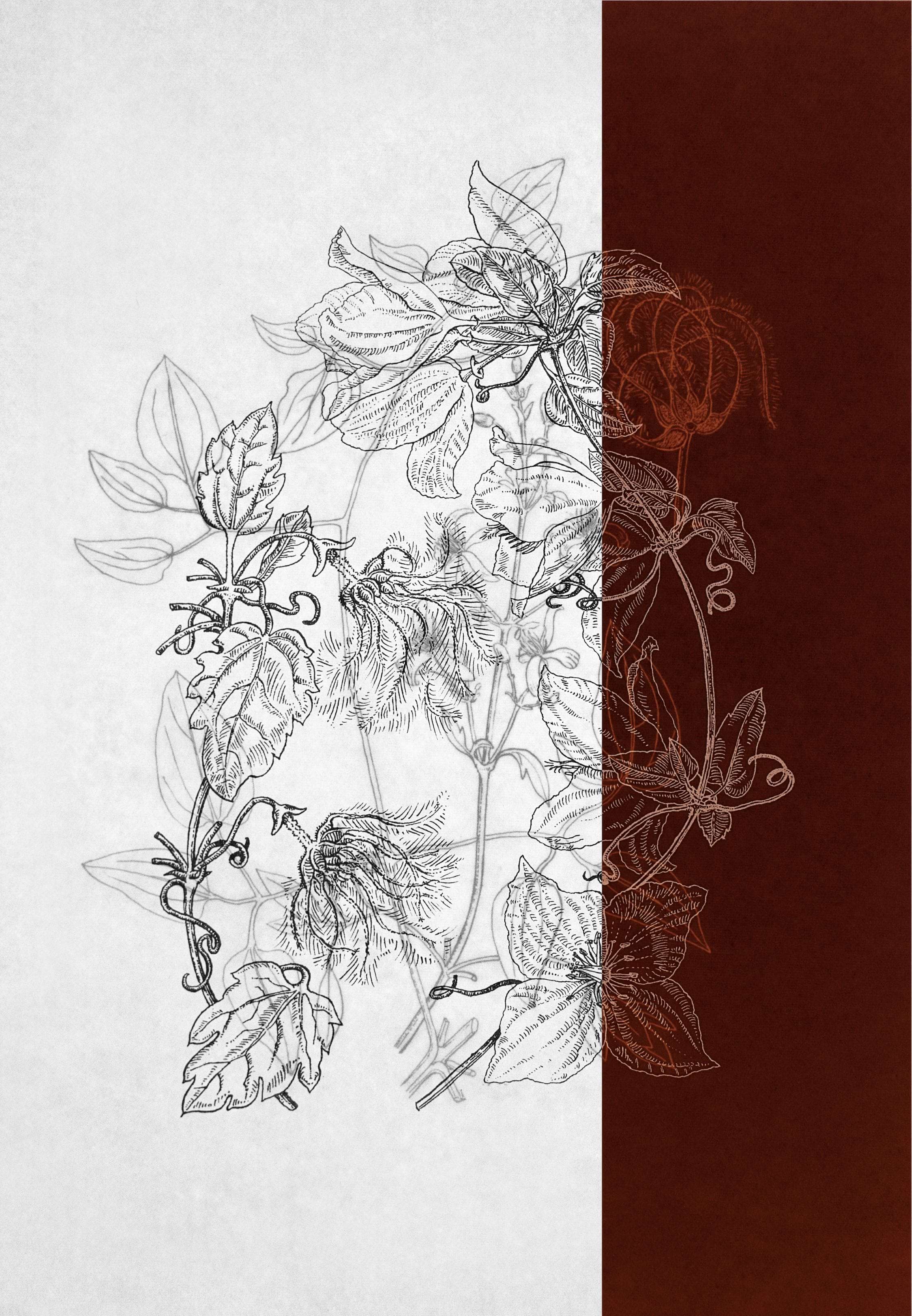
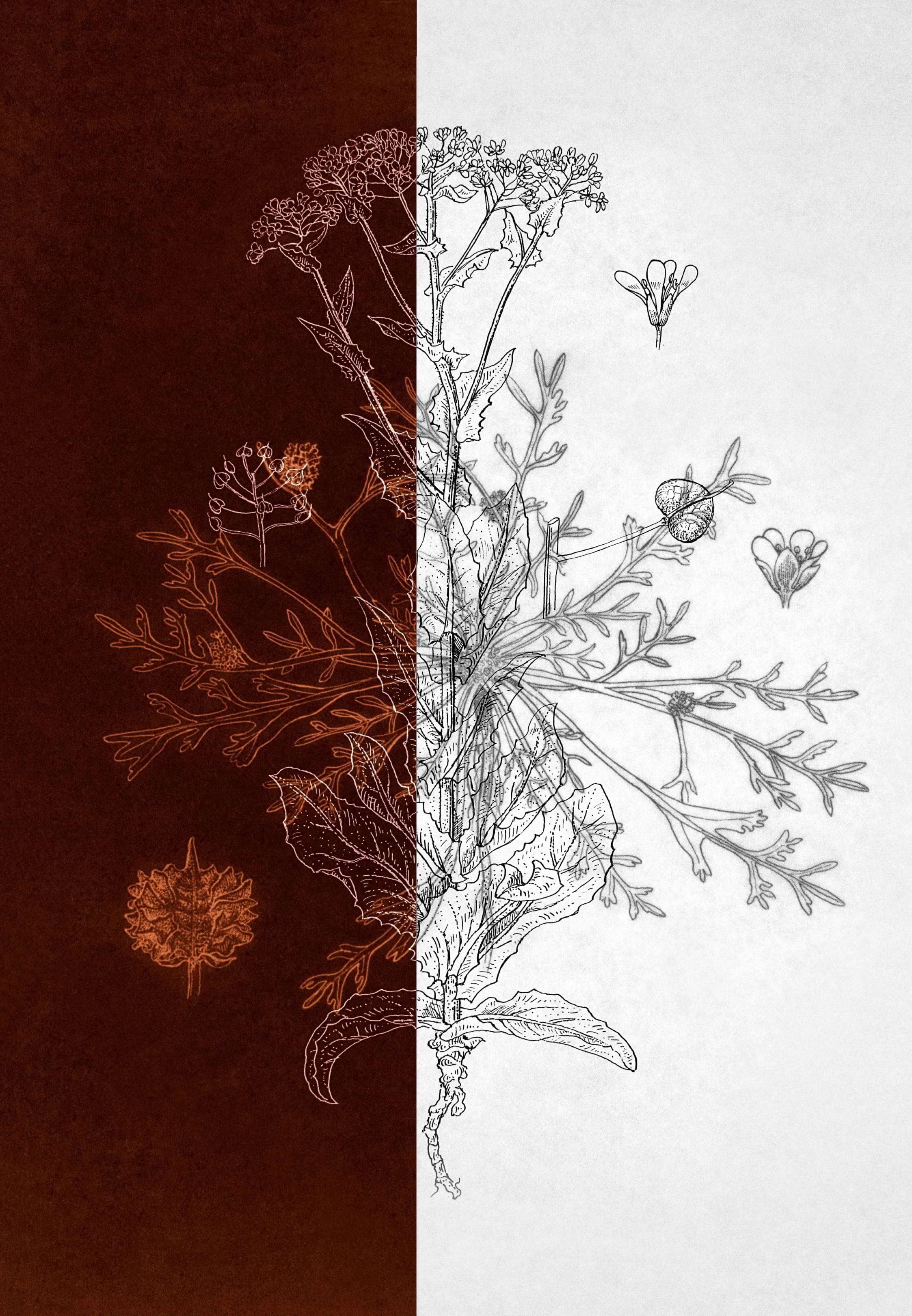
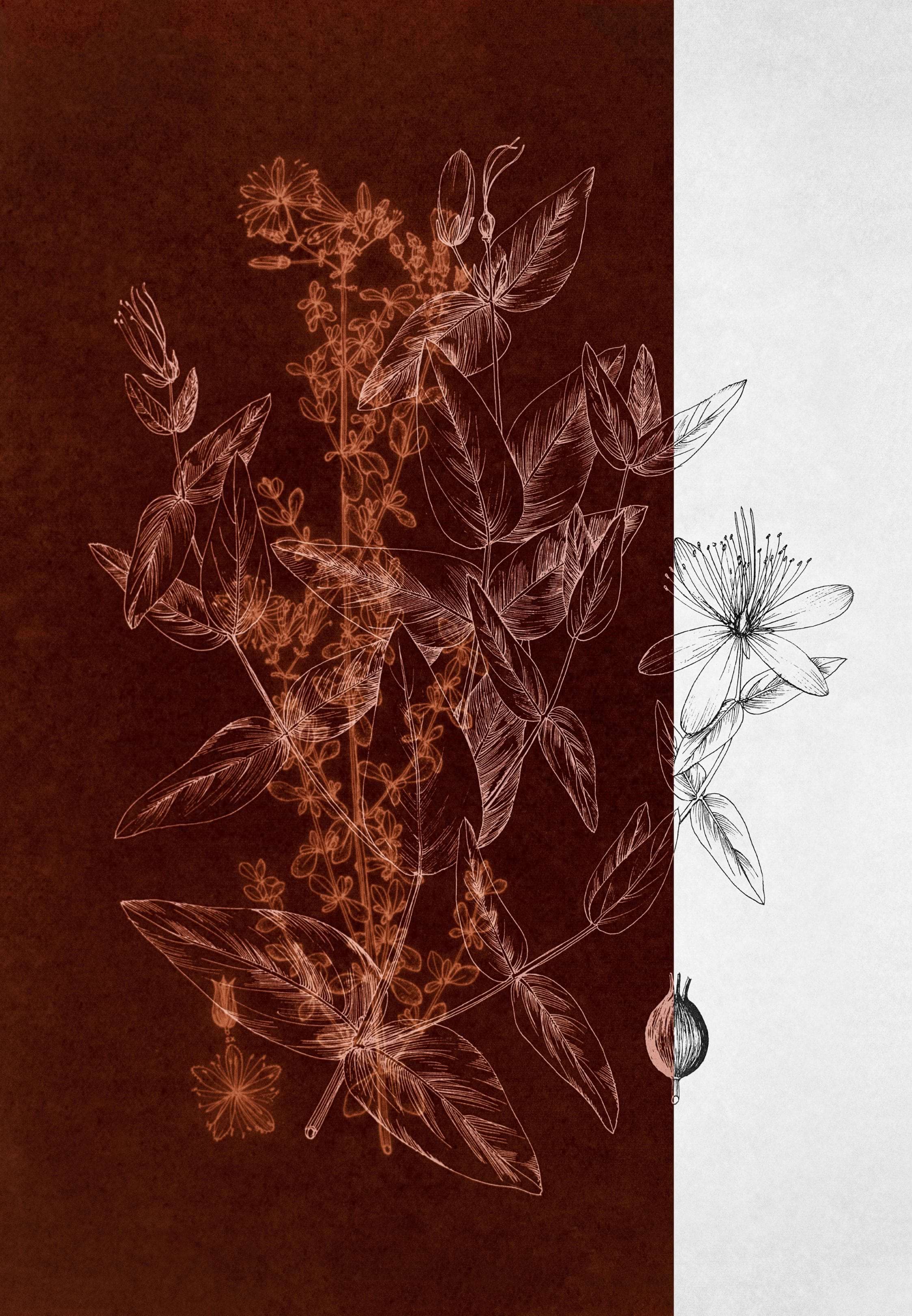
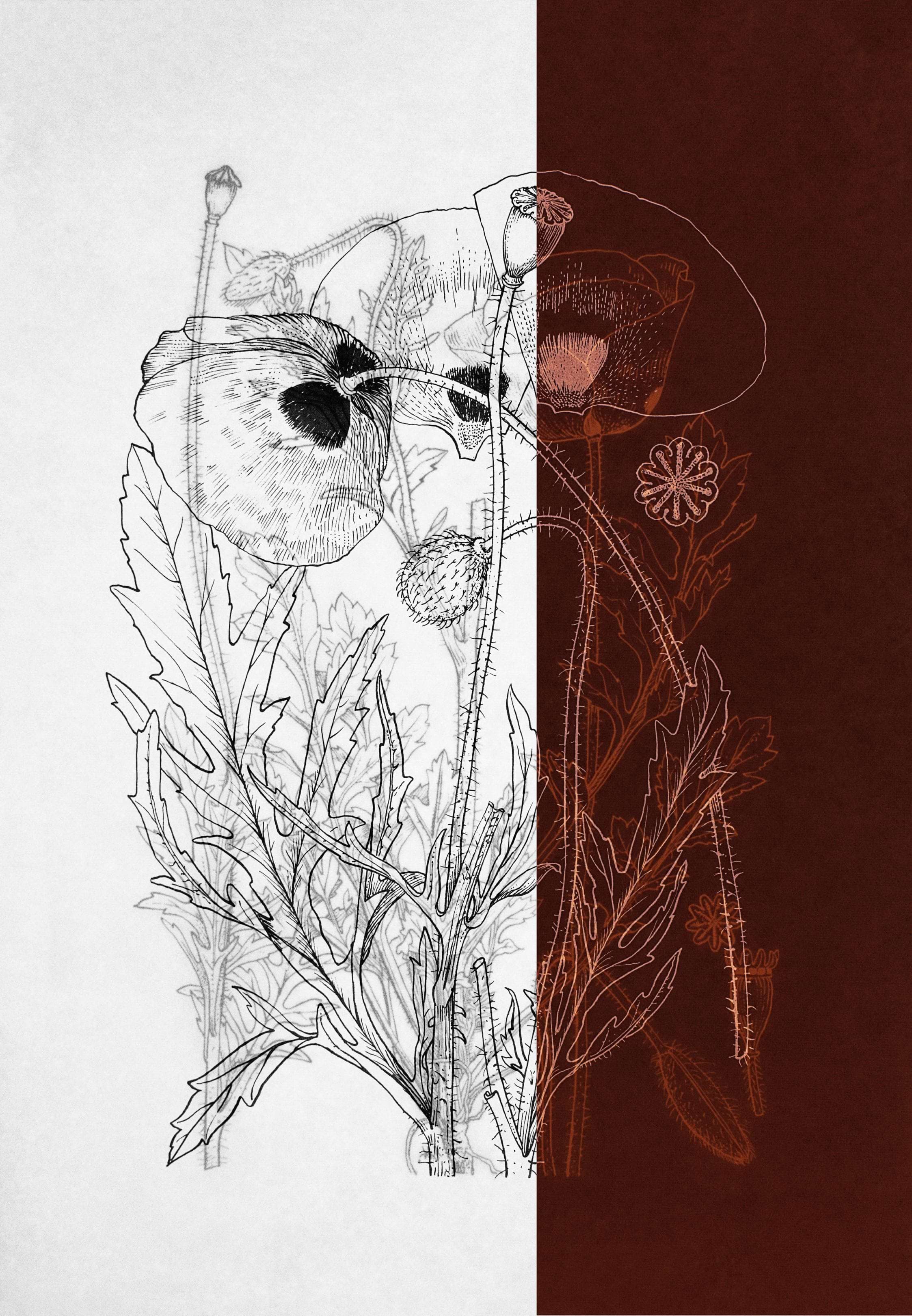
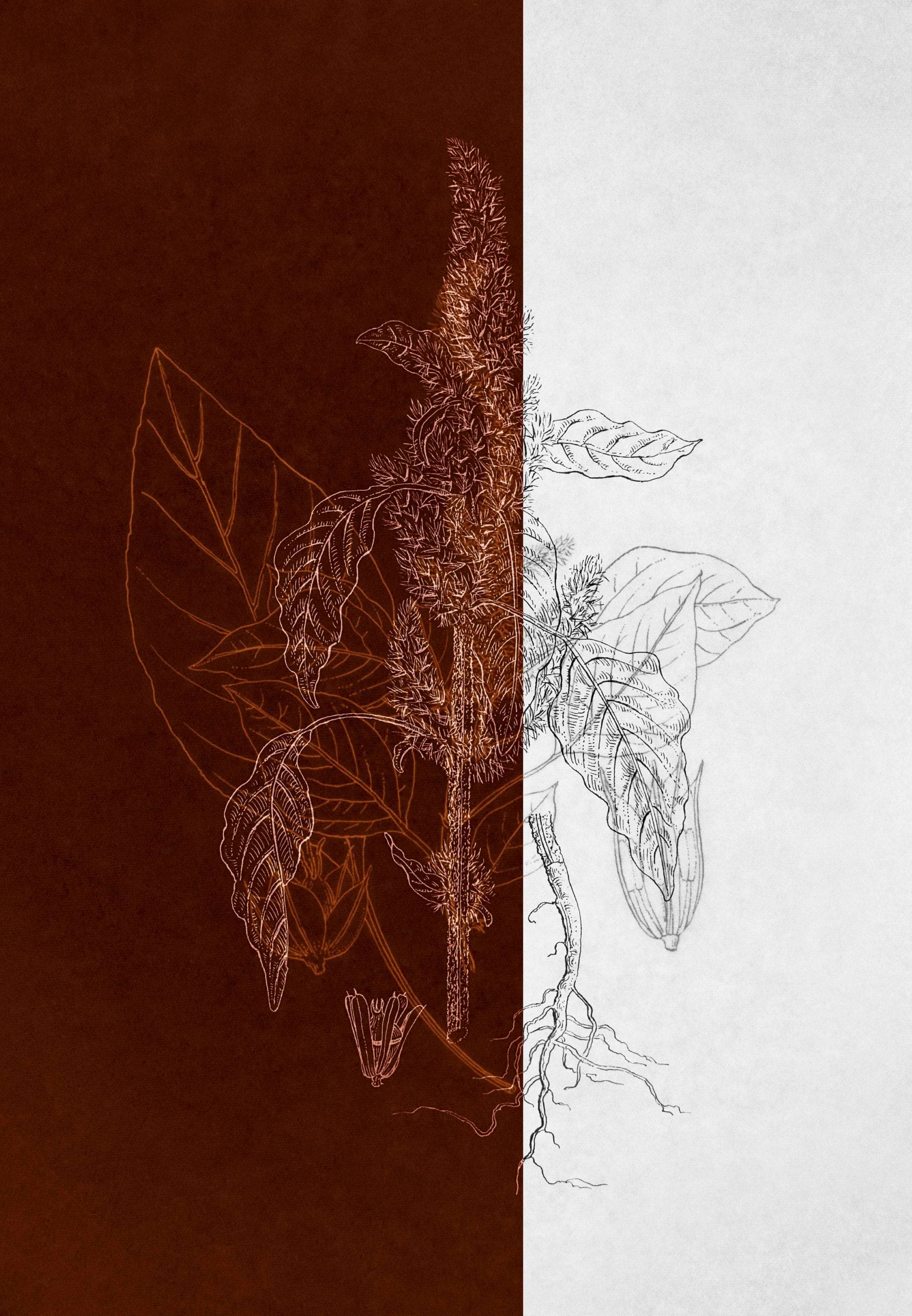
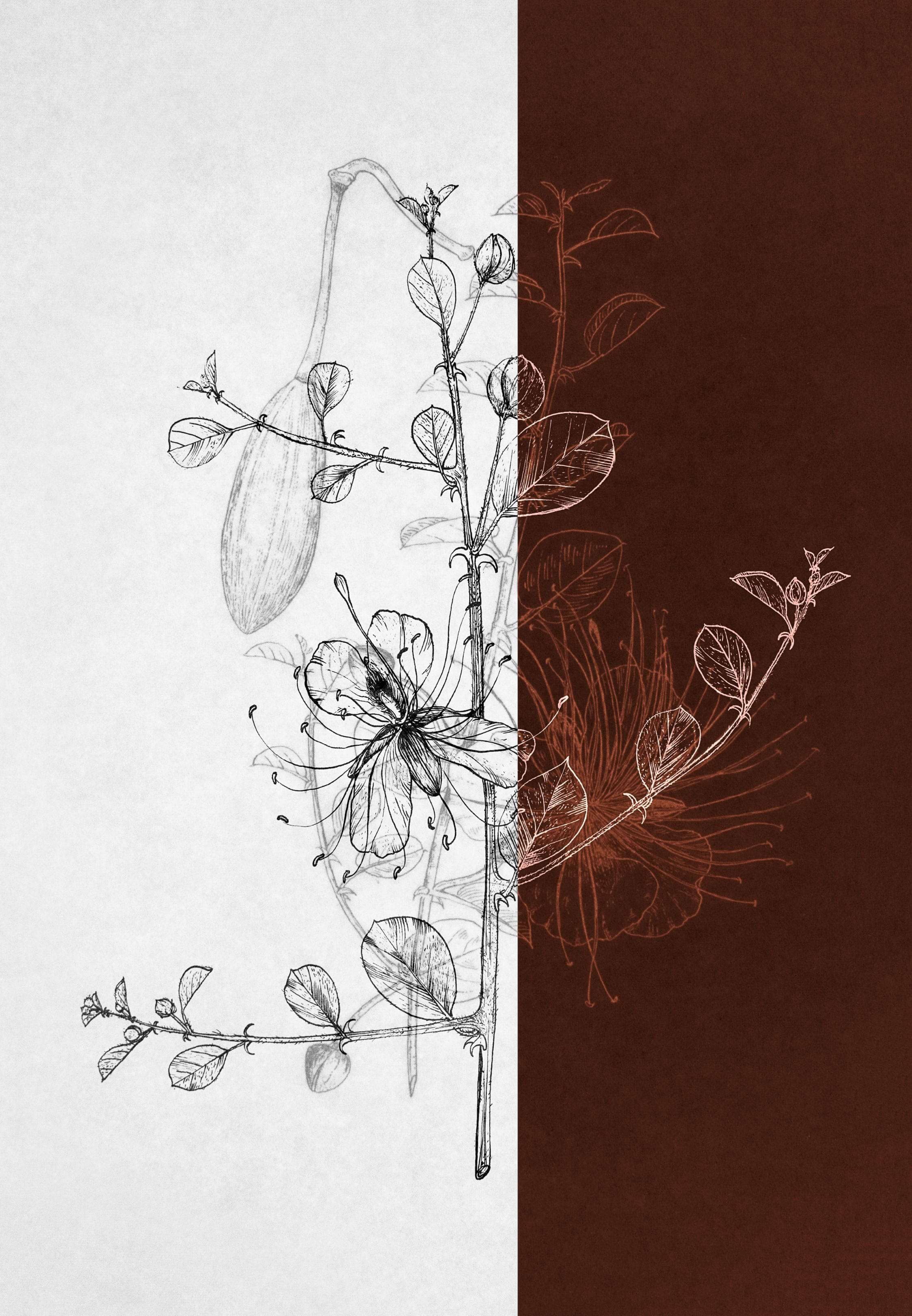
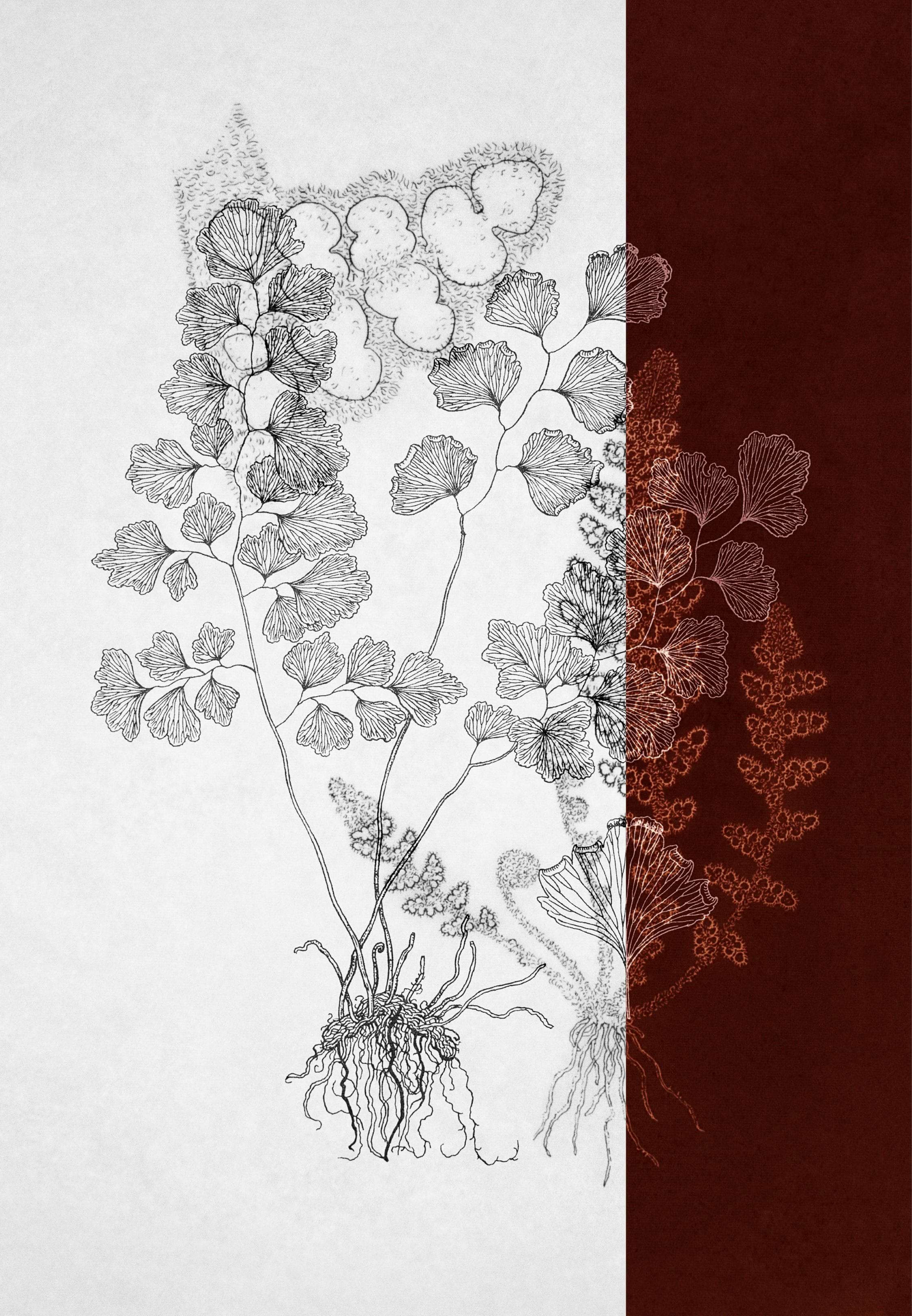
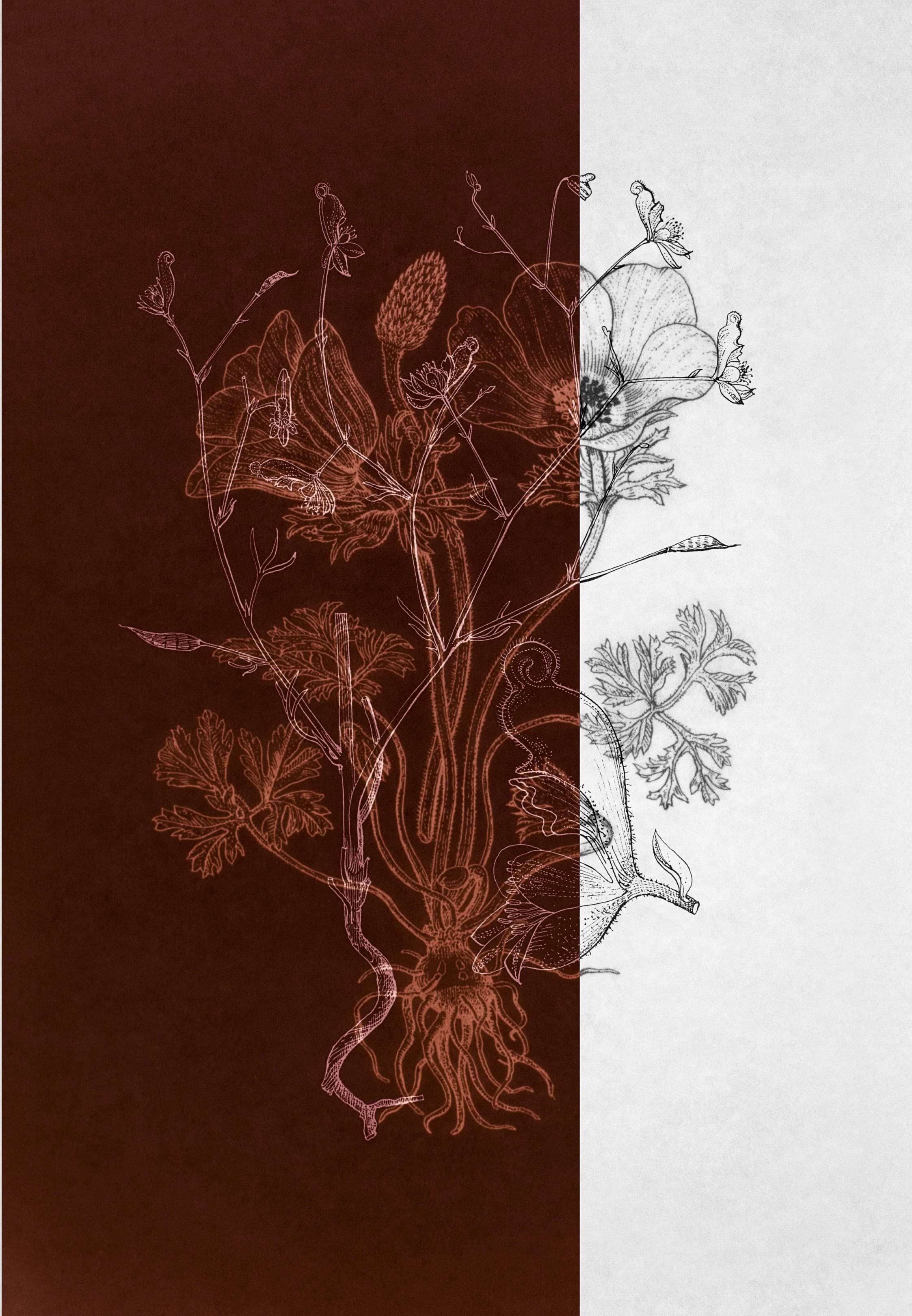
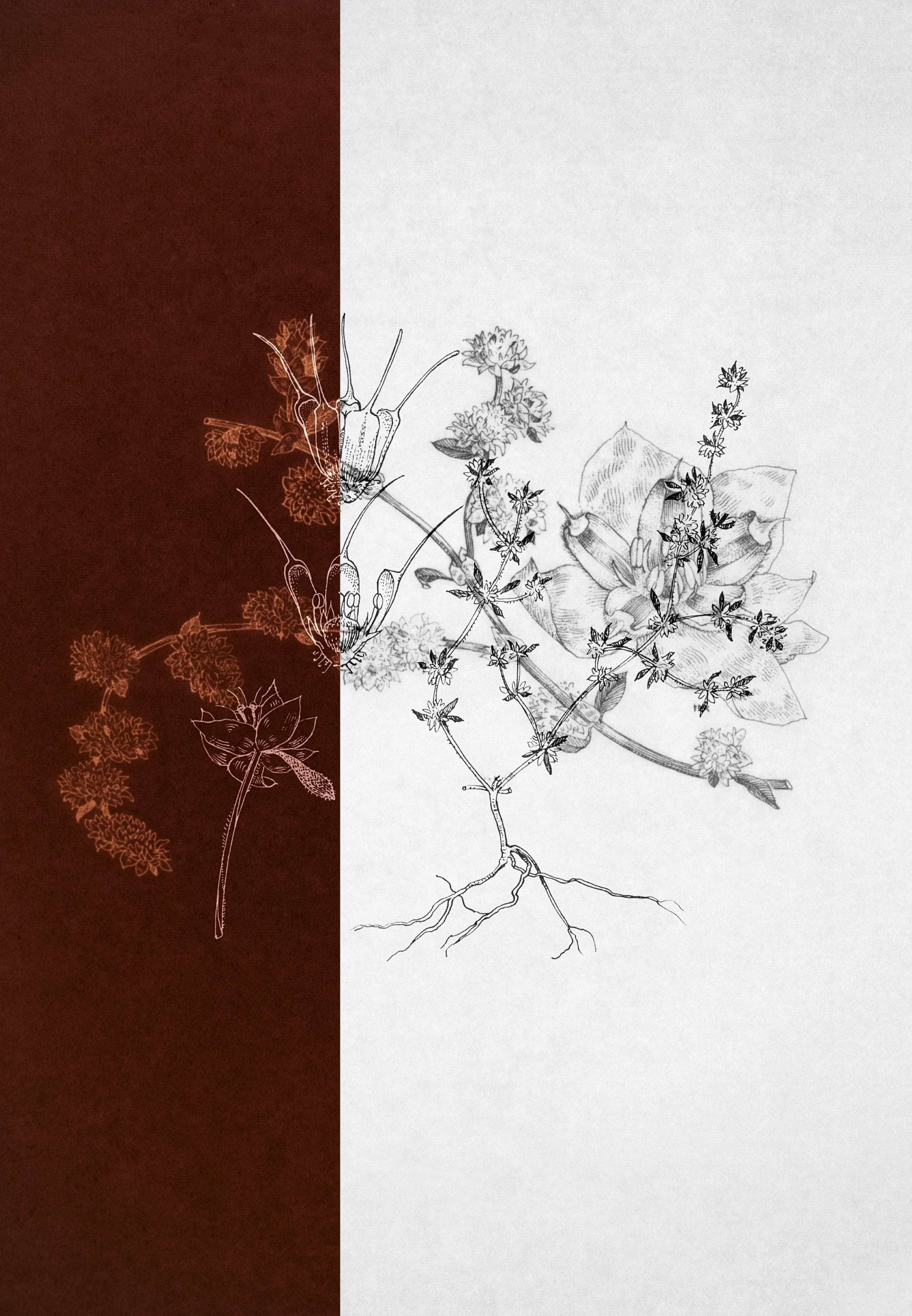
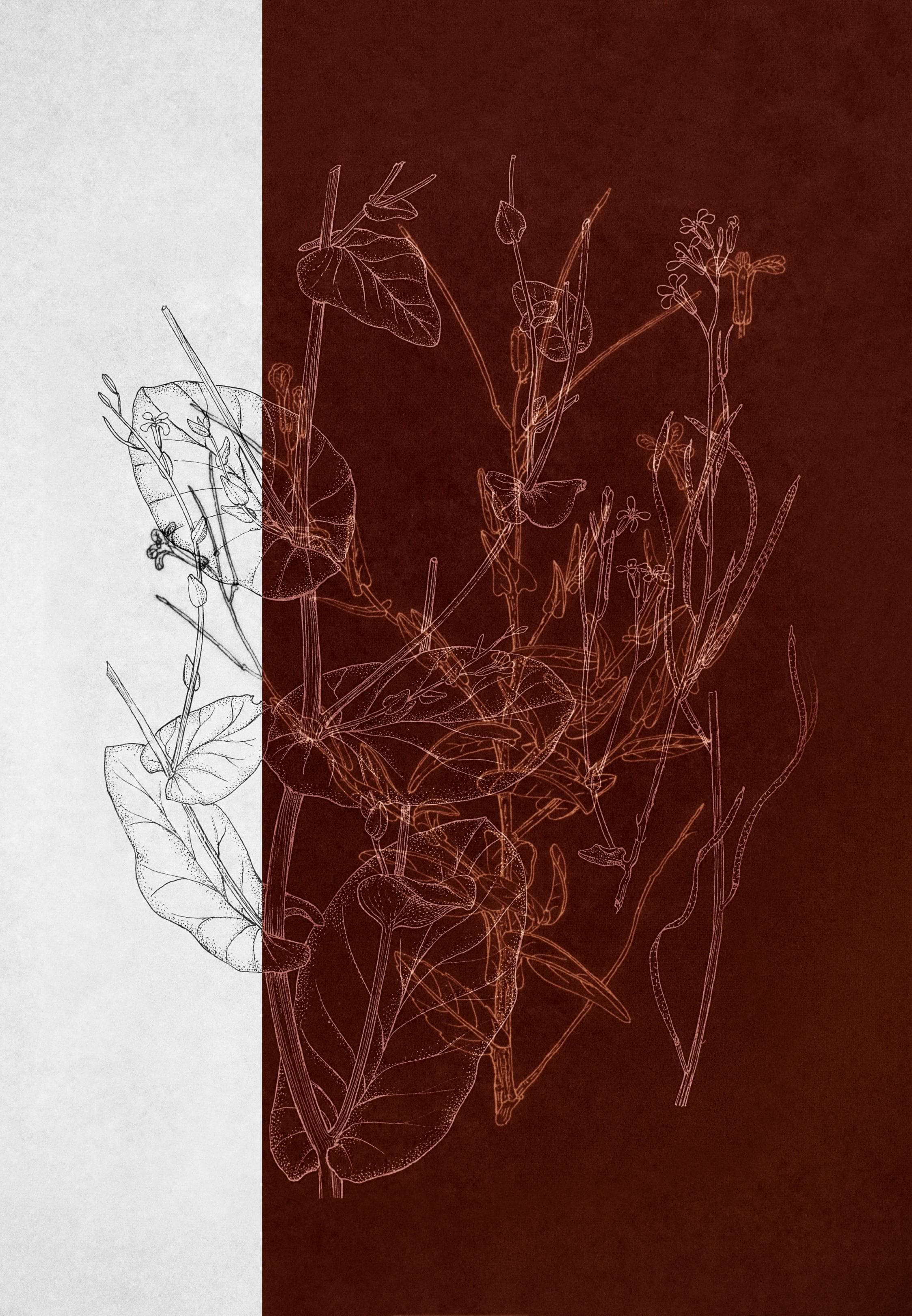
Knowing the Land (2022) is a series of photographs based on a 1960s guide of flora in Palestine. Guez pays attention to plants growing on national border regions in the Levant. The series considers the appropriation of nature to enforce a national identity. Features of the land are often re-named with titles related to specific national ethos, receiving different names on each side of the border. The series reflects this, offering a blend of two different plants, two images that are in close proximity on both sides of the same page, sharing a physical border.
Knowing the Land (2022) is a series of photographs based on a 1960s guide of flora in Palestine. Guez pays attention to plants growing on national border regions in the Levant. The series considers the appropriation of nature to enforce a national identity. Features of the land are often re-named with titles related to specific national ethos, receiving different names on each side of the border. The series reflects this, offering a blend of two different plants, two images that are in close proximity on both sides of the same page, sharing a physical border.
Video
Knowing the Land (2022) is a series of photographs based on a 1960s guide of flora in Palestine. Guez pays attention to plants growing on national border regions in the Levant. The series considers the appropriation of nature to enforce a national identity. Features of the land are often re-named with titles related to specific national ethos, receiving different names on each side of the border. The series reflects this, offering a blend of two different plants, two images that are in close proximity on both sides of the same page, sharing a physical border.
Knowing the Land (2022) is a series of photographs based on a 1960s guide of flora in Palestine. Guez pays attention to plants growing on national border regions in the Levant. The series considers the appropriation of nature to enforce a national identity. Features of the land are often re-named with titles related to specific national ethos, receiving different names on each side of the border. The series reflects this, offering a blend of two different plants, two images that are in close proximity on both sides of the same page, sharing a physical border.
Knowing the Land (2022) is a series of photographs based on a 1960s guide of flora in Palestine. Guez pays attention to plants growing on national border regions in the Levant. The series considers the appropriation of nature to enforce a national identity. Features of the land are often re-named with titles related to specific national ethos, receiving different names on each side of the border. The series reflects this, offering a blend of two different plants, two images that are in close proximity on both sides of the same page, sharing a physical border.
Knowing the Land (2022) is a series of photographs based on a 1960s guide of flora in Palestine. Guez pays attention to plants growing on national border regions in the Levant. The series considers the appropriation of nature to enforce a national identity. Features of the land are often re-named with titles related to specific national ethos, receiving different names on each side of the border. The series reflects this, offering a blend of two different plants, two images that are in close proximity on both sides of the same page, sharing a physical border.
Knowing the Land (2022) is a series of photographs based on a 1960s guide of flora in Palestine. Guez pays attention to plants growing on national border regions in the Levant. The series considers the appropriation of nature to enforce a national identity. Features of the land are often re-named with titles related to specific national ethos, receiving different names on each side of the border. The series reflects this, offering a blend of two different plants, two images that are in close proximity on both sides of the same page, sharing a physical border.
Knowing the Land (2022) is a series of photographs based on a 1960s guide of flora in Palestine. Guez pays attention to plants growing on national border regions in the Levant. The series considers the appropriation of nature to enforce a national identity. Features of the land are often re-named with titles related to specific national ethos, receiving different names on each side of the border. The series reflects this, offering a blend of two different plants, two images that are in close proximity on both sides of the same page, sharing a physical border.
Knowing the Land (2022) is a series of photographs based on a 1960s guide of flora in Palestine. Guez pays attention to plants growing on national border regions in the Levant. The series considers the appropriation of nature to enforce a national identity. Features of the land are often re-named with titles related to specific national ethos, receiving different names on each side of the border. The series reflects this, offering a blend of two different plants, two images that are in close proximity on both sides of the same page, sharing a physical border.
Knowing the Land (2022) is a series of photographs based on a 1960s guide of flora in Palestine. Guez pays attention to plants growing on national border regions in the Levant. The series considers the appropriation of nature to enforce a national identity. Features of the land are often re-named with titles related to specific national ethos, receiving different names on each side of the border. The series reflects this, offering a blend of two different plants, two images that are in close proximity on both sides of the same page, sharing a physical border.
Knowing the Land (2022) is a series of photographs based on a 1960s guide of flora in Palestine. Guez pays attention to plants growing on national border regions in the Levant. The series considers the appropriation of nature to enforce a national identity. Features of the land are often re-named with titles related to specific national ethos, receiving different names on each side of the border. The series reflects this, offering a blend of two different plants, two images that are in close proximity on both sides of the same page, sharing a physical border.
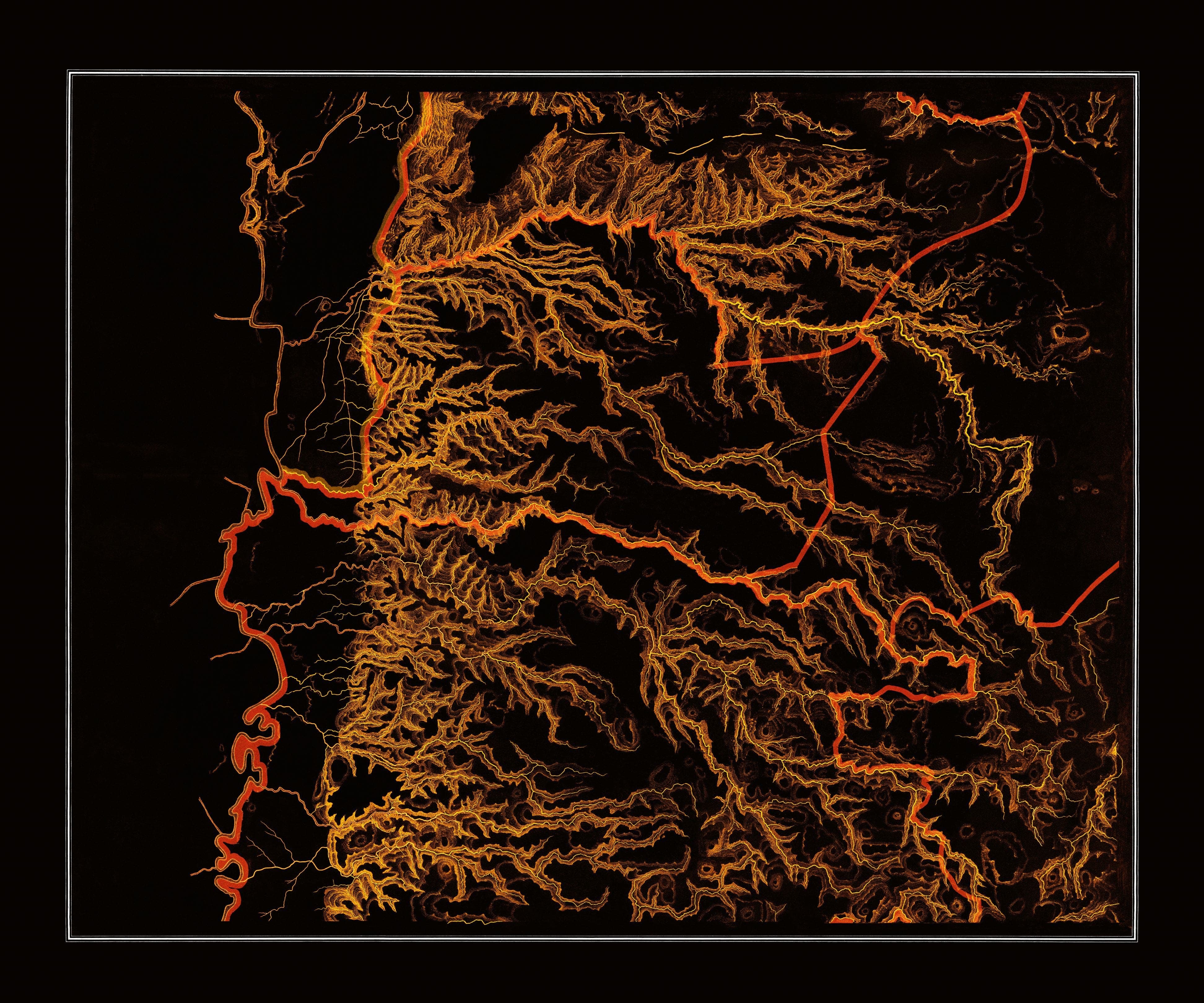
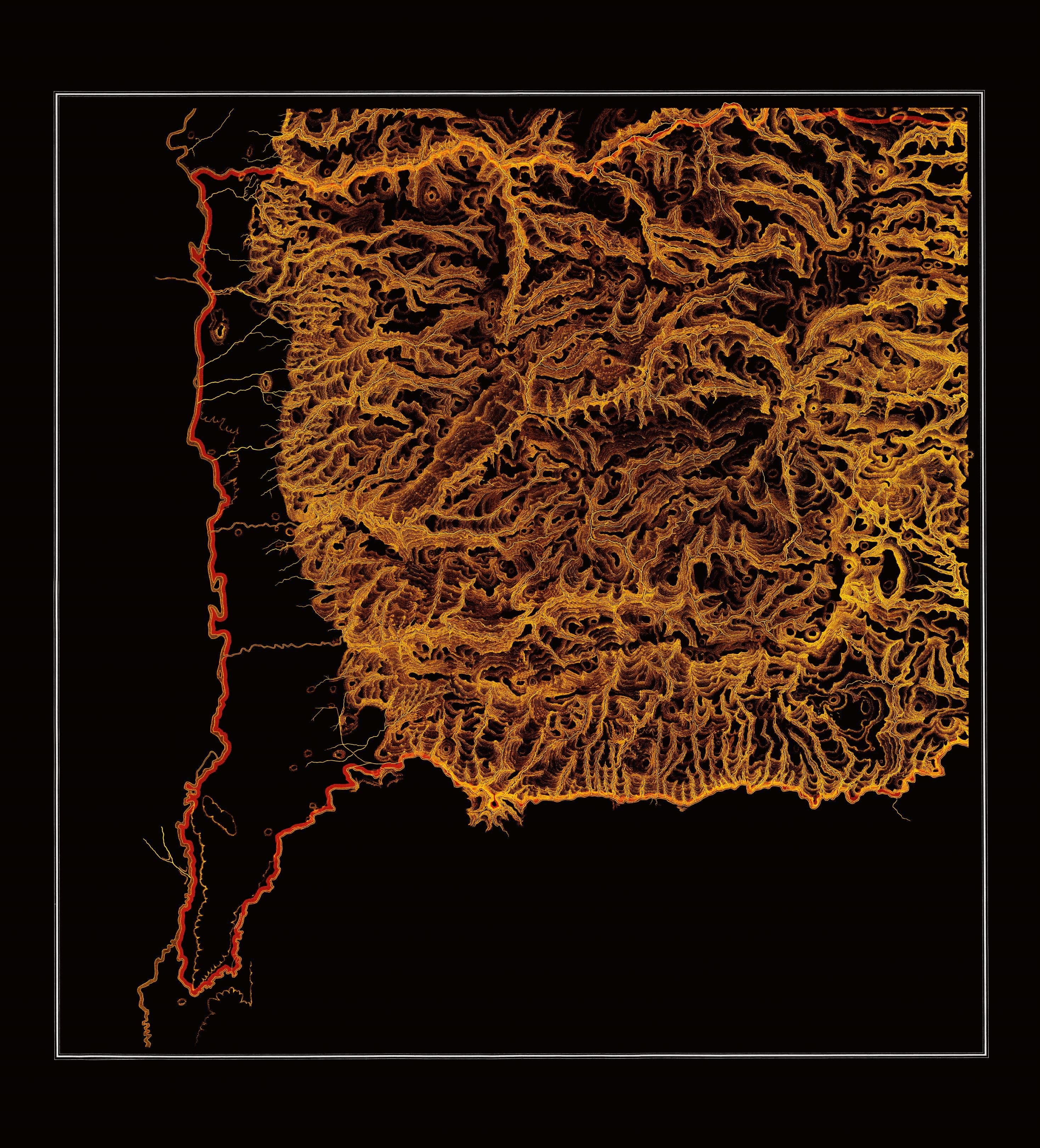
With his series Amid Imperial Grids, Dor Guez critically examines early cartographic representations of Palestine. Drawing from the first modern maps of the region dating back to 1885, Guez engages with the imposition of colonial order through geography, specifically referencing the British Palestine Grid and the French Levant Grid. By stripping the maps of all human markers such as names of towns, roads, borders, and topographical labels, Guez reveals the abstraction and control embedded in imperial mapping practices. The resulting images present a ghostly, decontextualized terrain that prompts viewers to question how land, identity, and history are shaped and erased through systems of classification and visual power.
With his series Amid Imperial Grids, Dor Guez critically examines early cartographic representations of Palestine. Drawing from the first modern maps of the region dating back to 1885, Guez engages with the imposition of colonial order through geography, specifically referencing the British Palestine Grid and the French Levant Grid. By stripping the maps of all human markers such as names of towns, roads, borders, and topographical labels, Guez reveals the abstraction and control embedded in imperial mapping practices. The resulting images present a ghostly, decontextualized terrain that prompts viewers to question how land, identity, and history are shaped and erased through systems of classification and visual power.
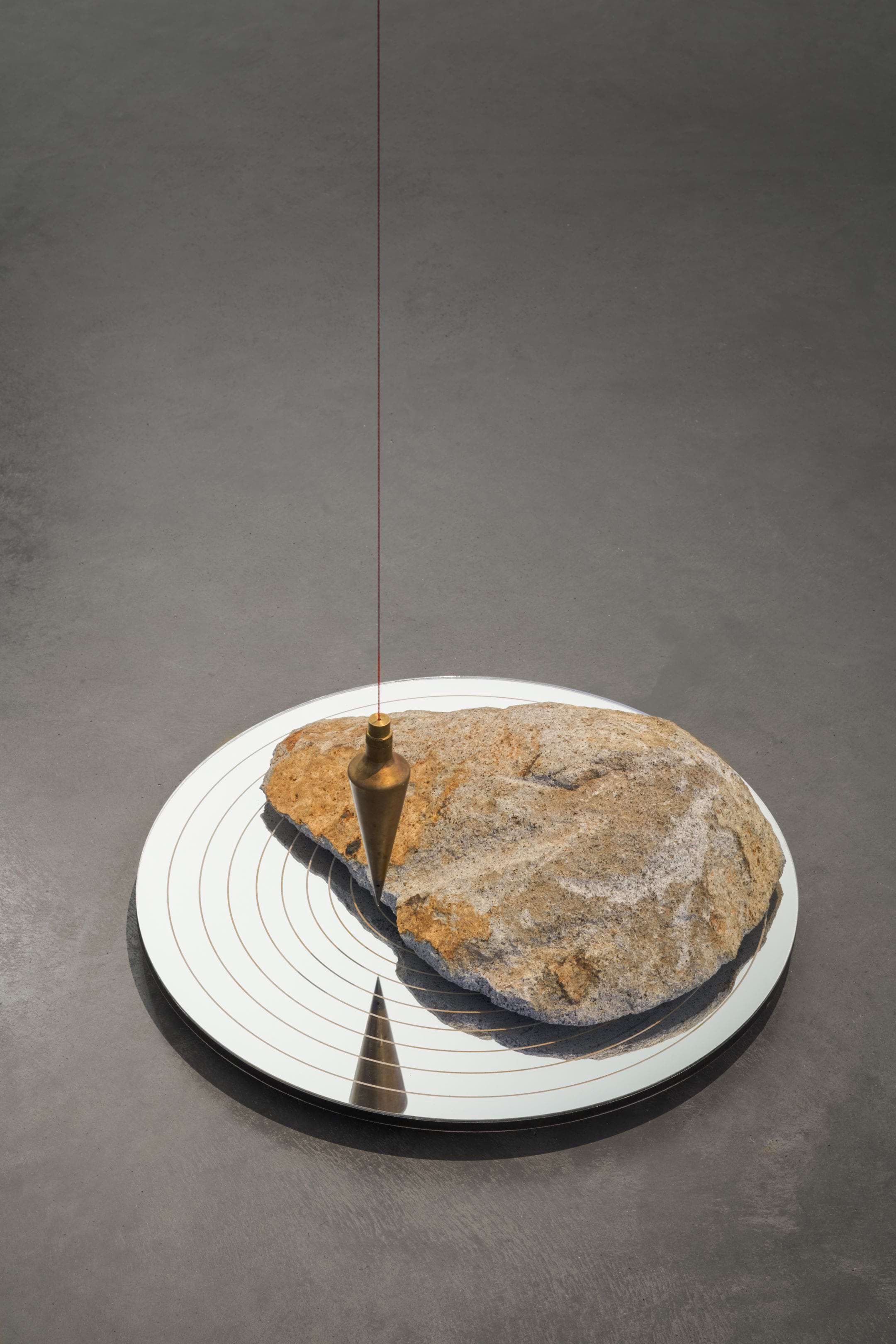
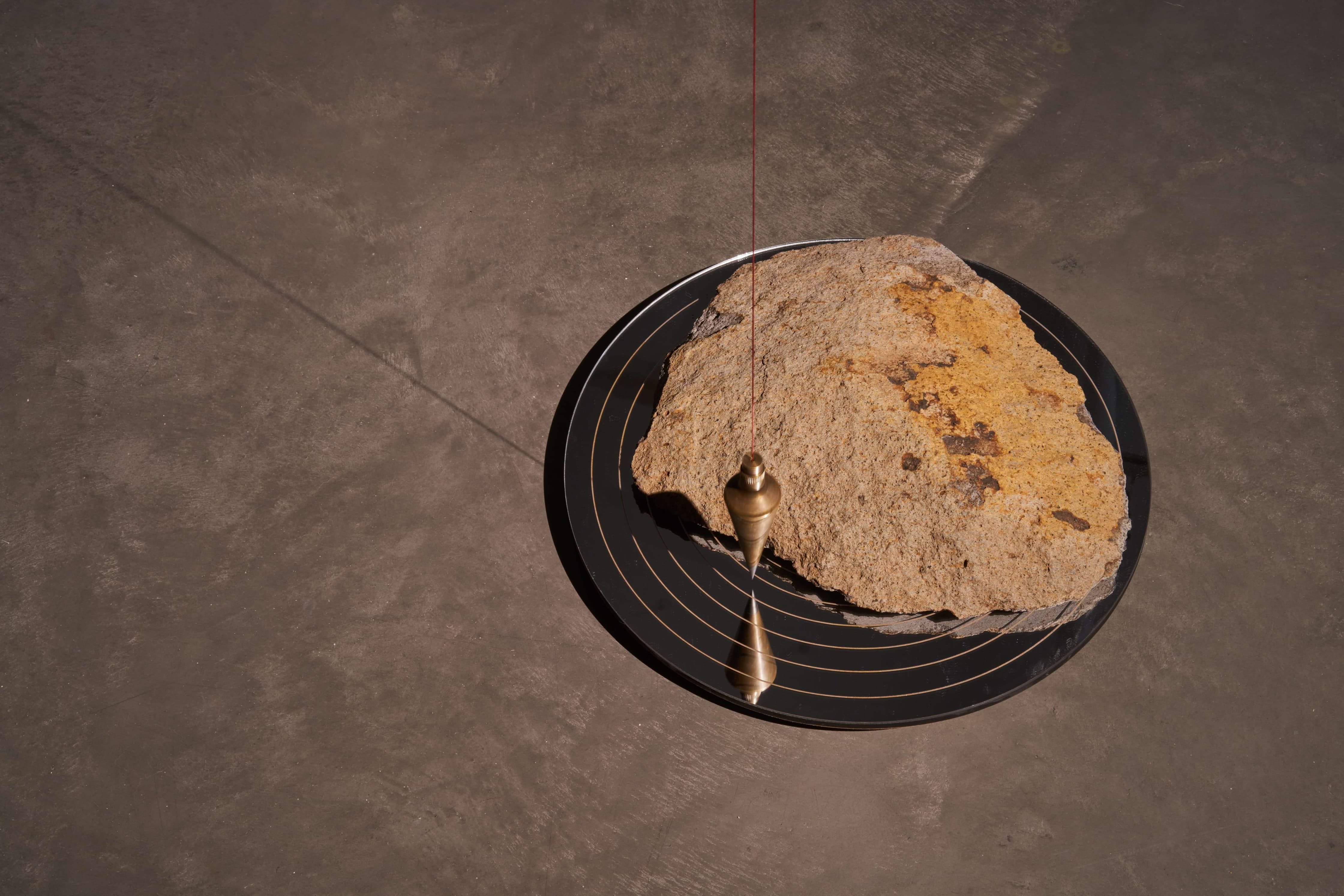
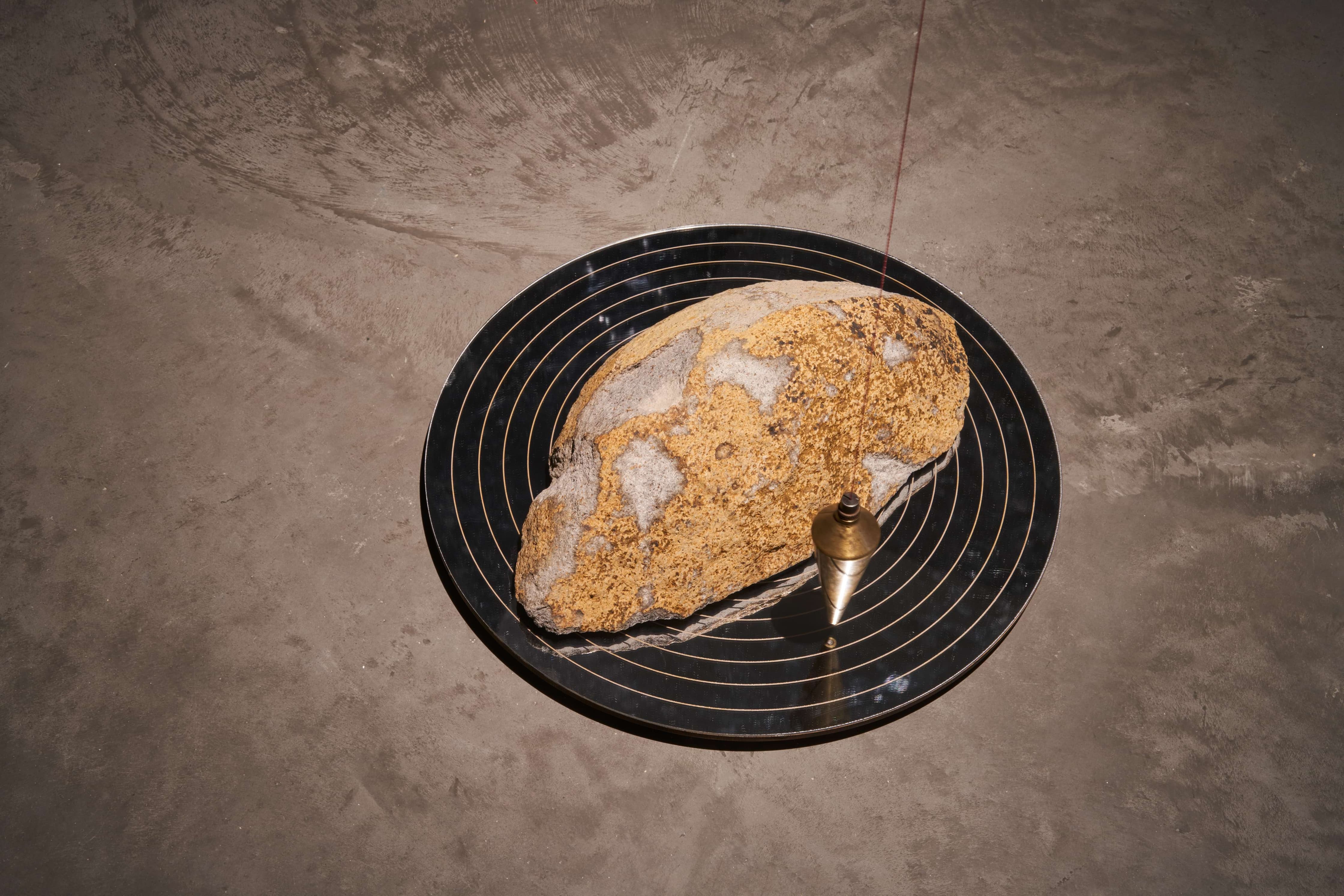
In "90° away from the Sun" (2022) Guez uses sliced basalt rocks from the Israel-Syria border and ancient measuring instruments. The basalt, which is unique to this area, creates a magnetic field that disrupts the functionality of a compass which has made it challenging for military forces to navigate in the area. In 90° away from the Sun, the basalt natural shape rocks float above a reflective mirror-like surface that simulates lines of topographic maps. The measuring device hanging above is a pointed weight designed to help mark a straight vertical lineusing gravity.
In "90° away from the Sun" (2022) Guez uses sliced basalt rocks from the Israel-Syria border and ancient measuring instruments. The basalt, which is unique to this area, creates a magnetic field that disrupts the functionality of a compass which has made it challenging for military forces to navigate in the area. In 90° away from the Sun, the basalt natural shape rocks float above a reflective mirror-like surface that simulates lines of topographic maps. The measuring device hanging above is a pointed weight designed to help mark a straight vertical lineusing gravity.