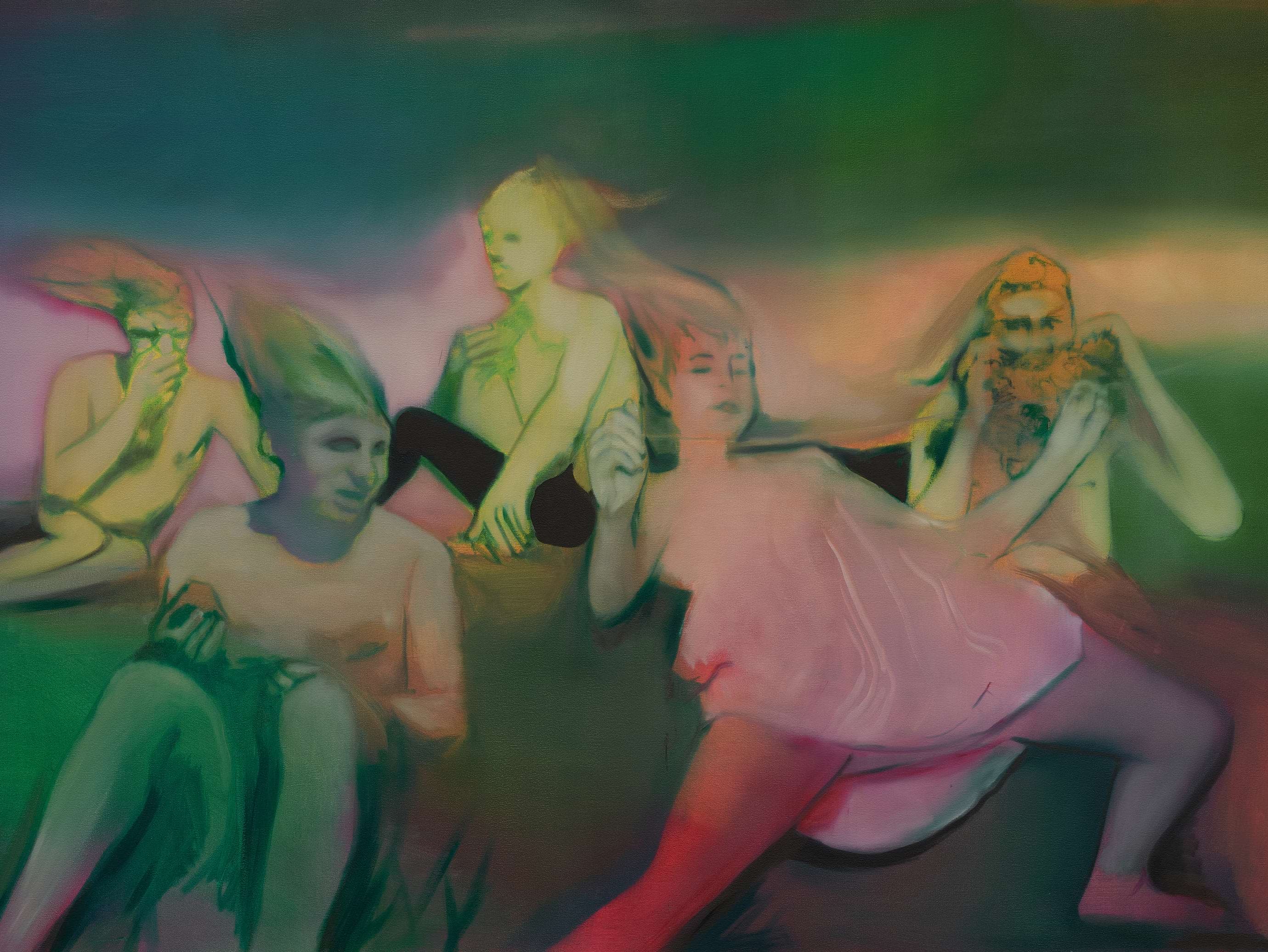
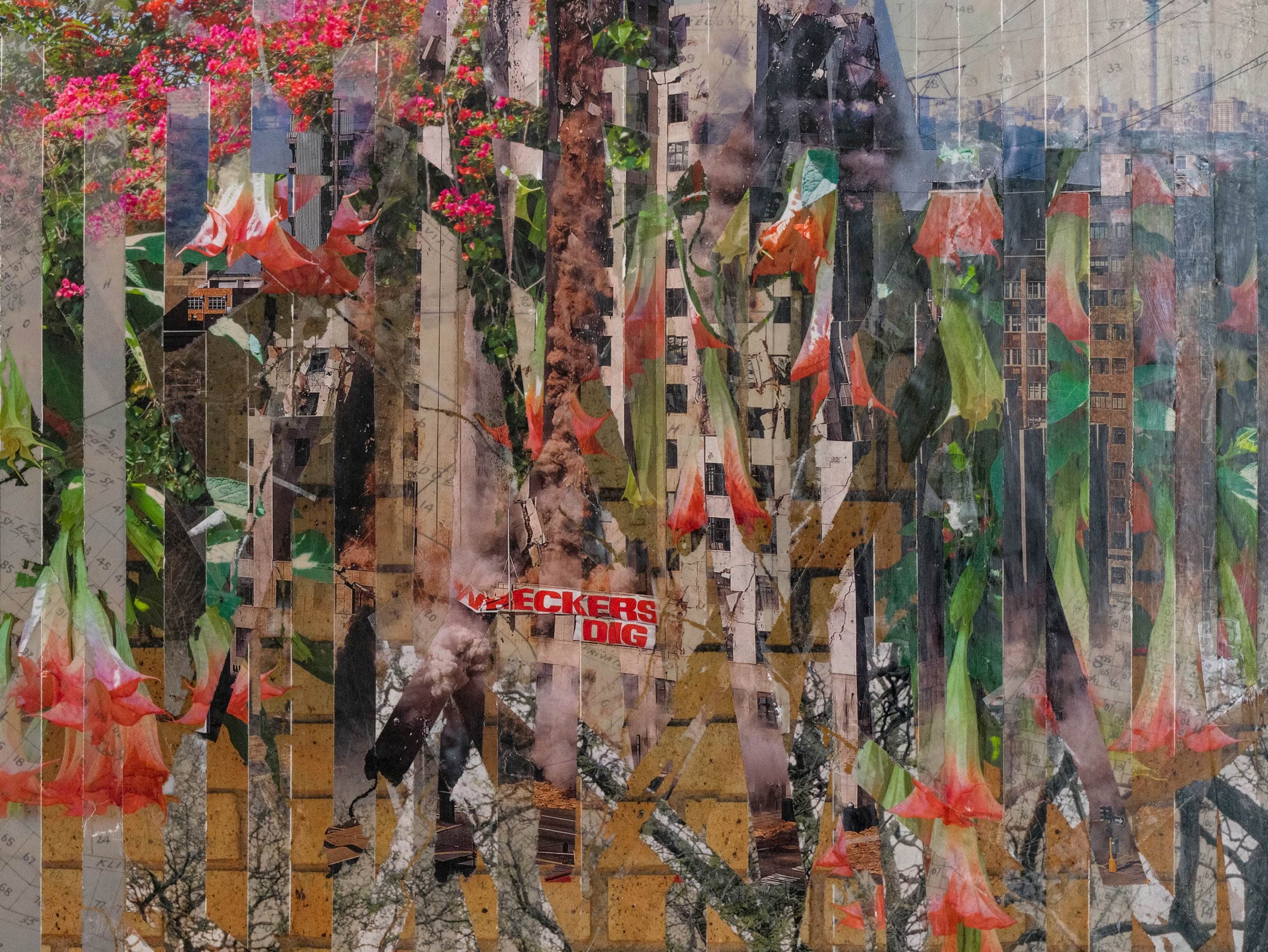
Misheck MasamvuNaked
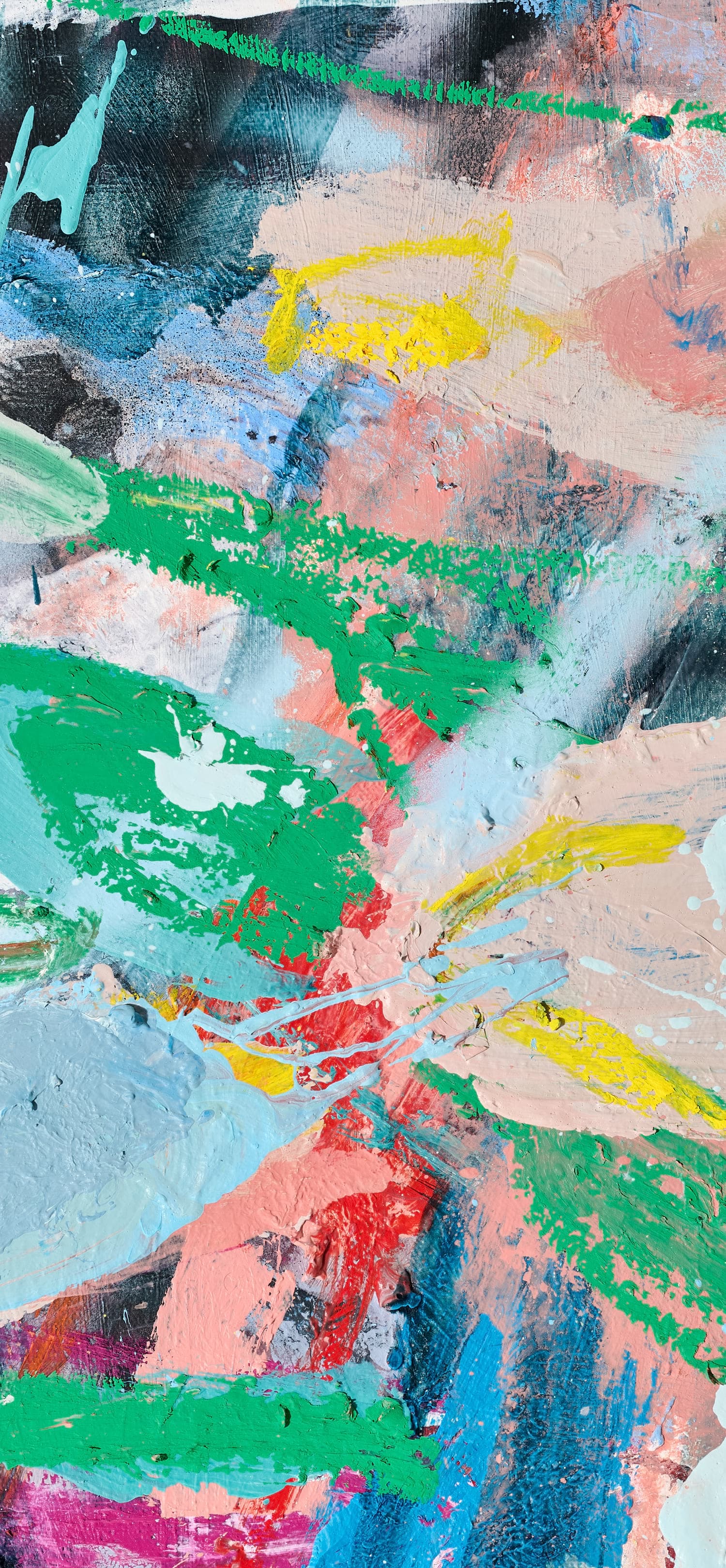
Goodman Gallery Cape Town is pleased to present Naked, acclaimed painter Misheck Masamvu’s ninth solo exhibition with the gallery. Comprising a dozen paintings, many executed in his characteristically vibrant palette, the exhibition brings together recent works on Belgian linen made over the last two years alongside earlier canvas paintings from 2016–19, reworked during a 2026 residency in Johannesburg.

Misheck Masamvu: Naked
Featured Artworks
Create a Goodman Gallery account to view our full selection of available works, access pricing and check out online.
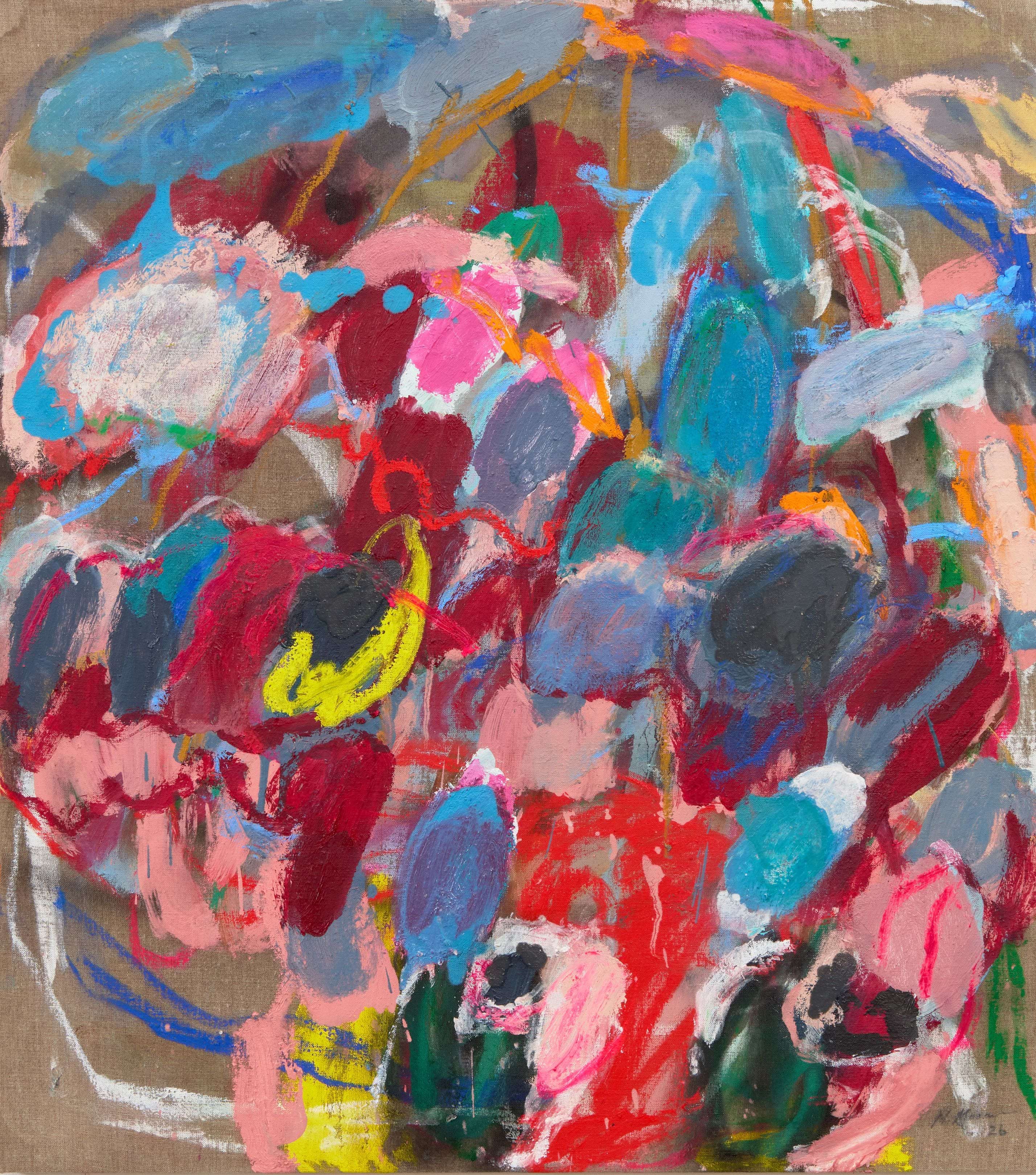
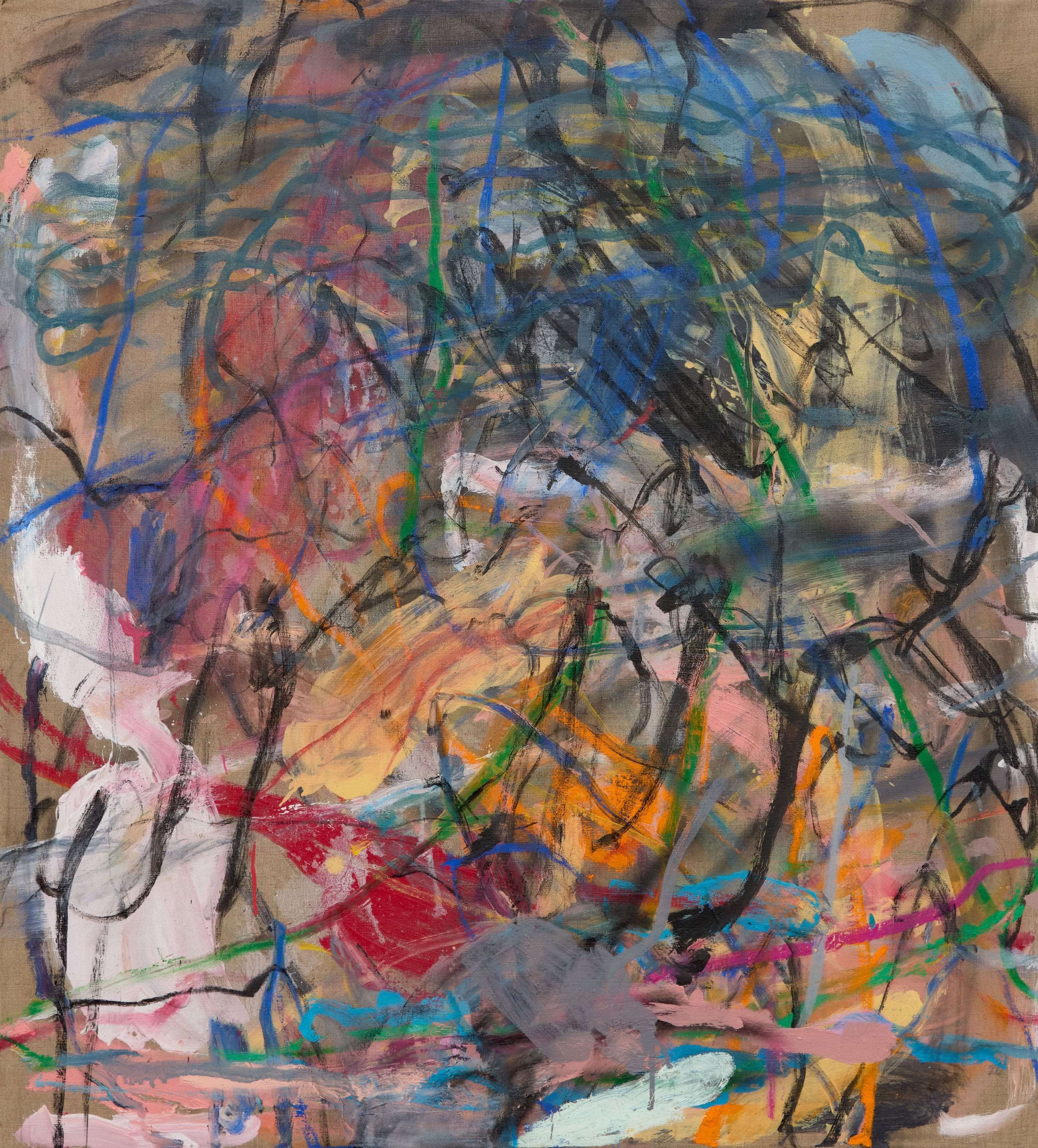
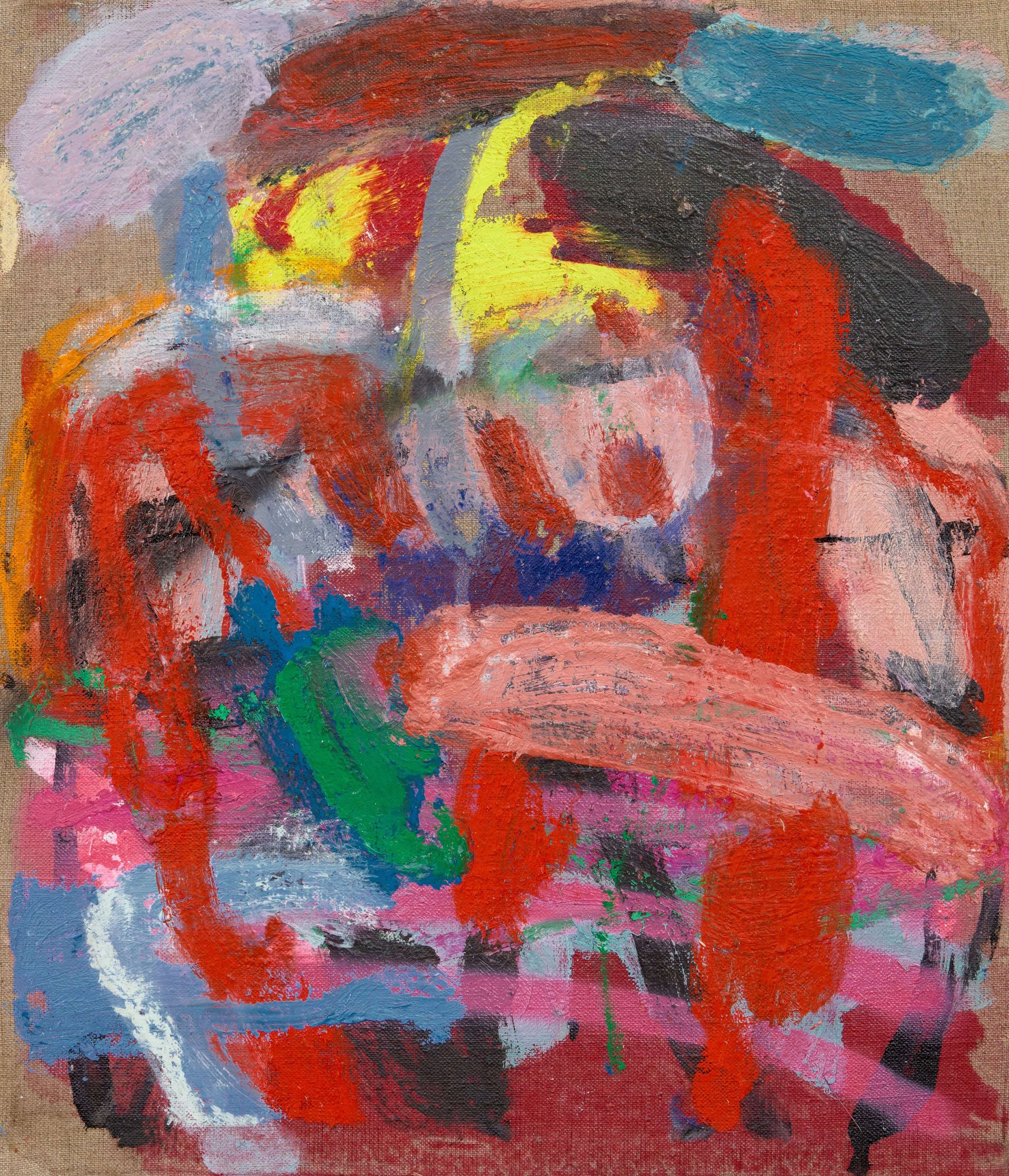
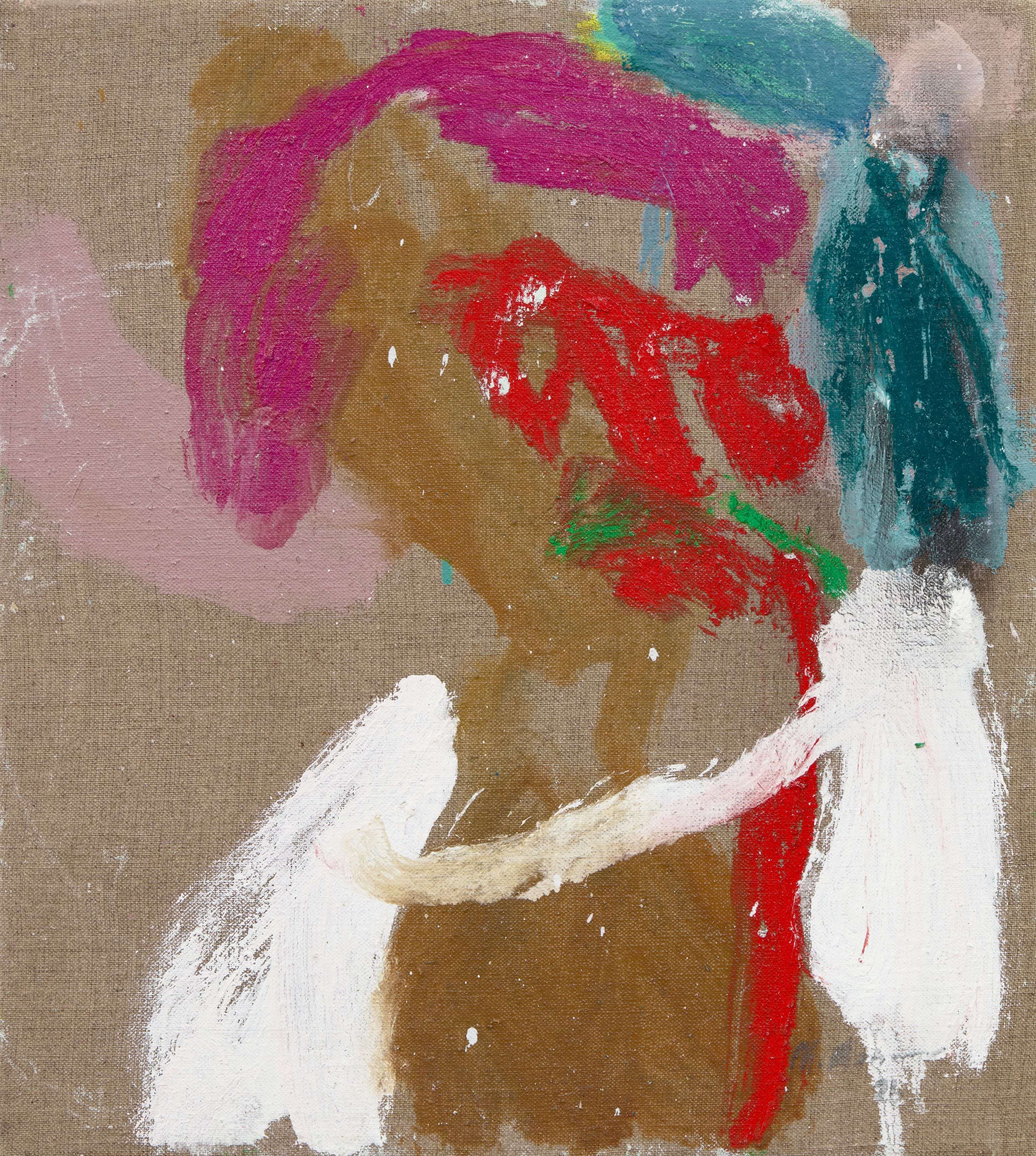
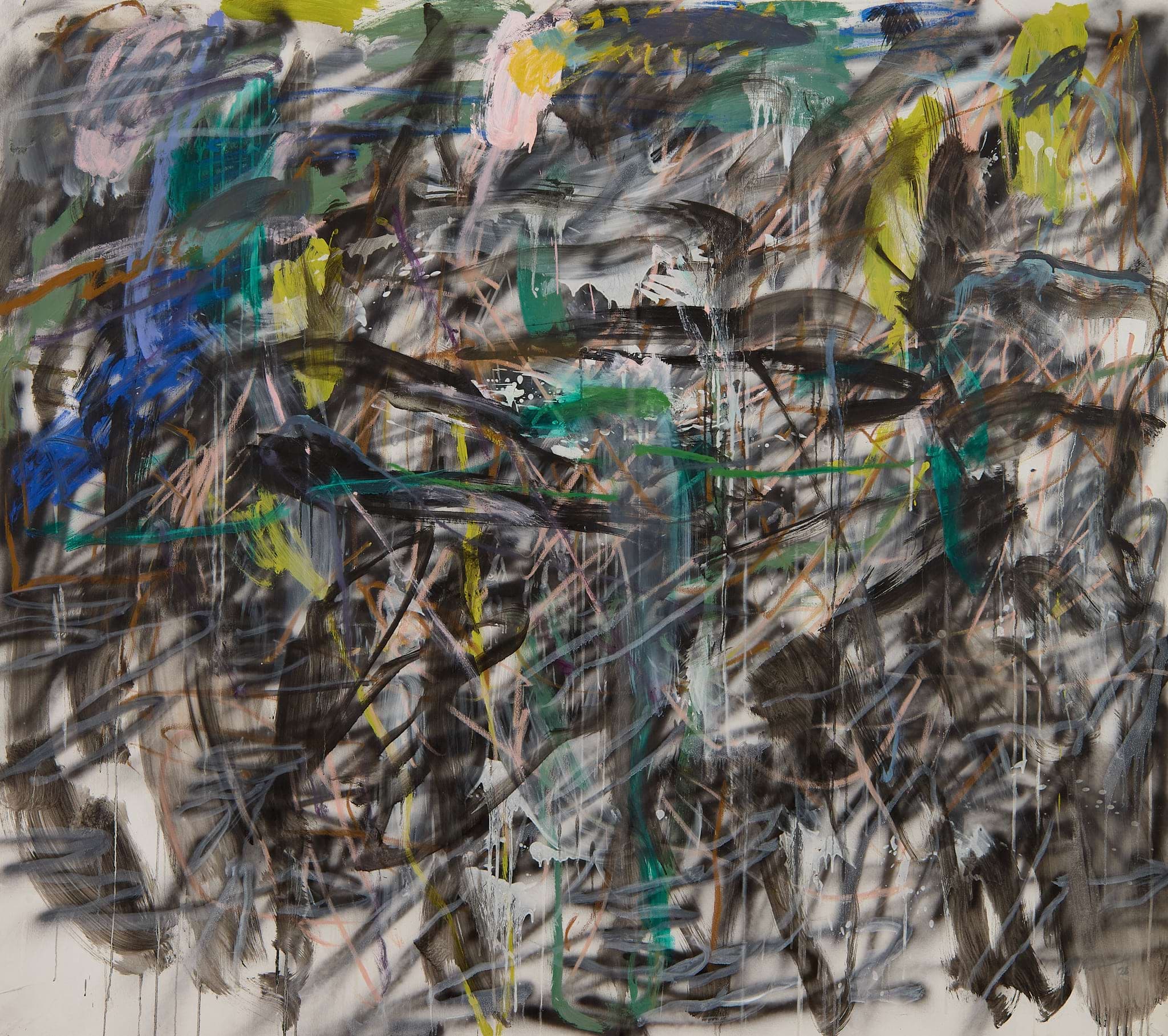
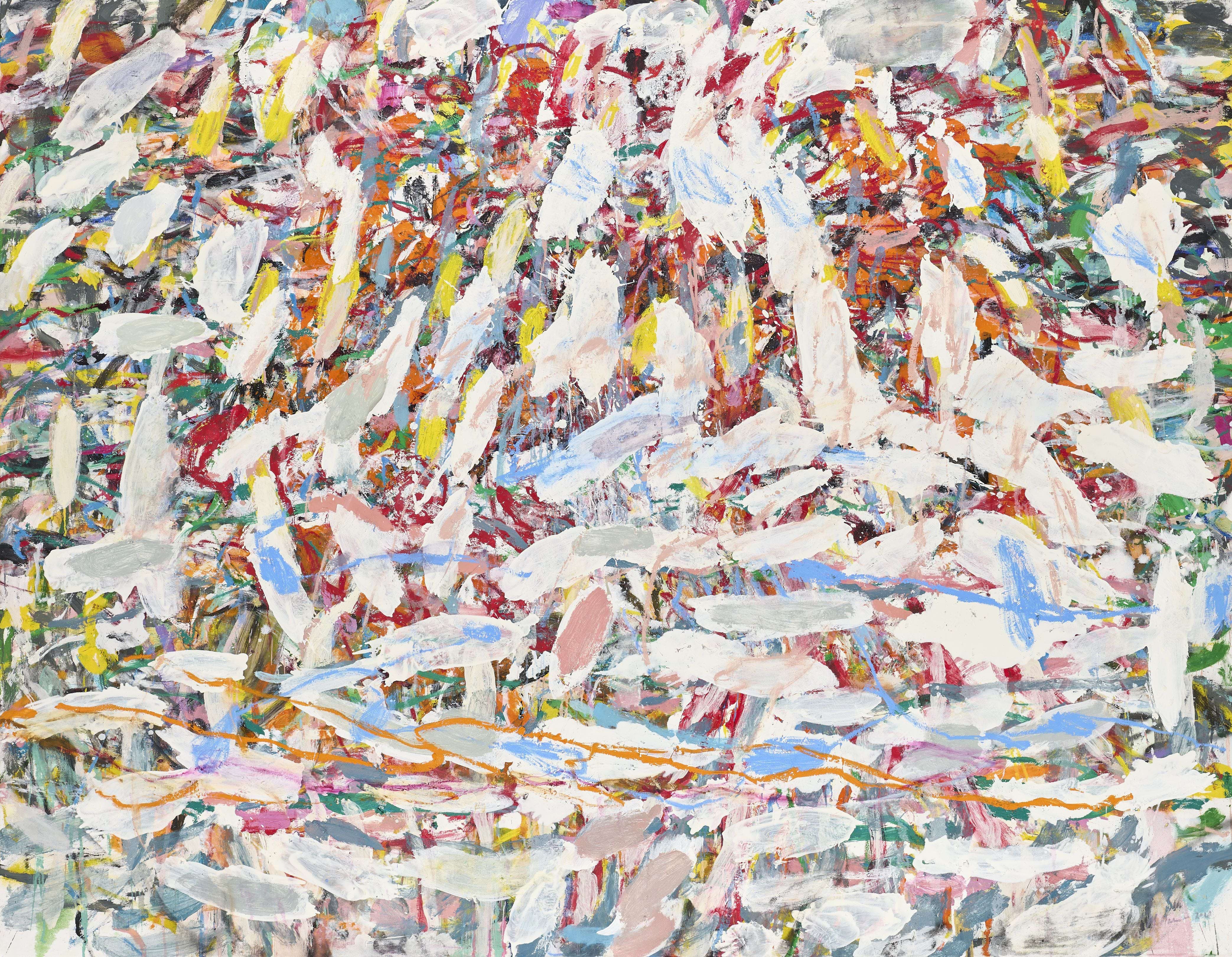
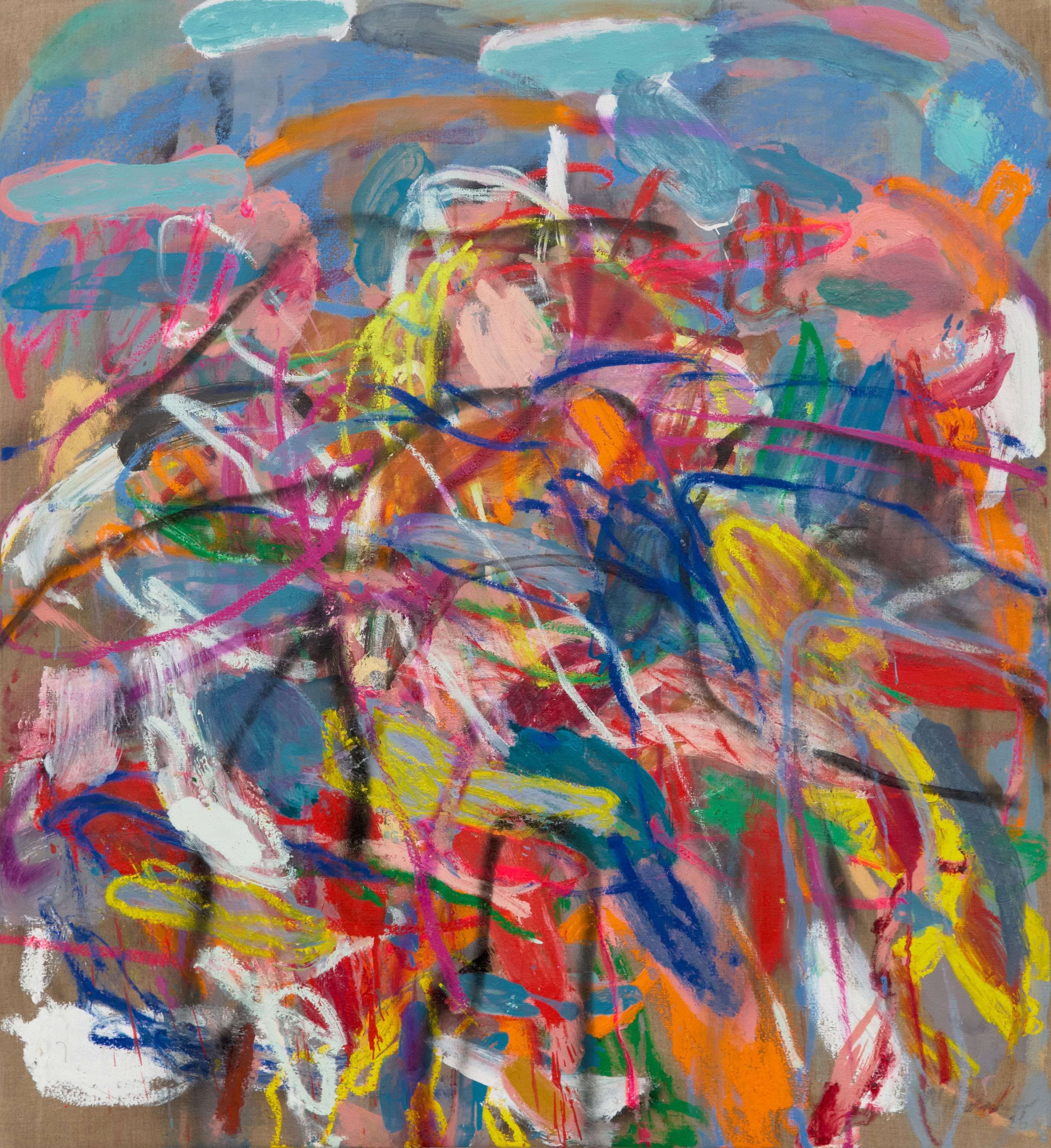
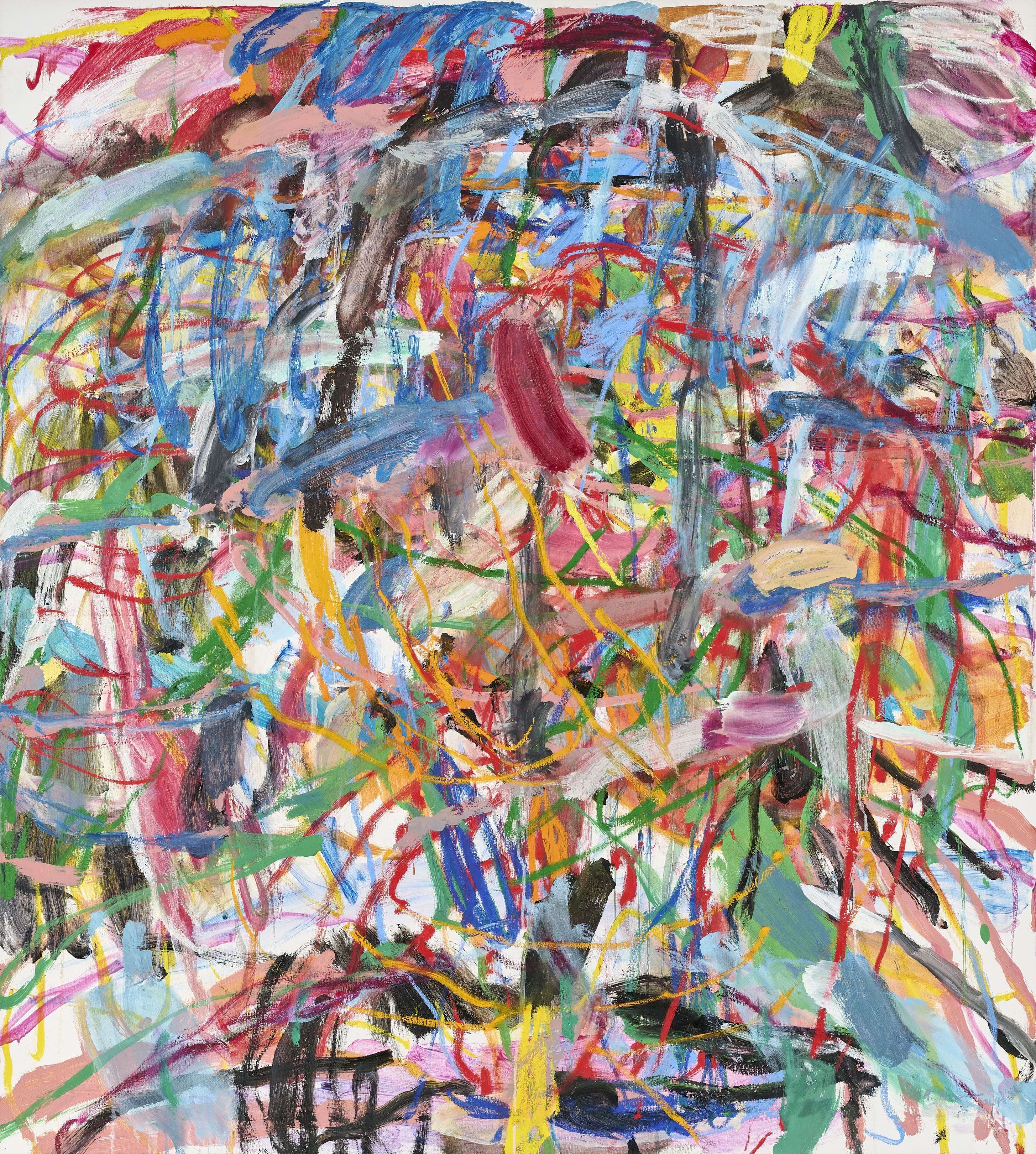
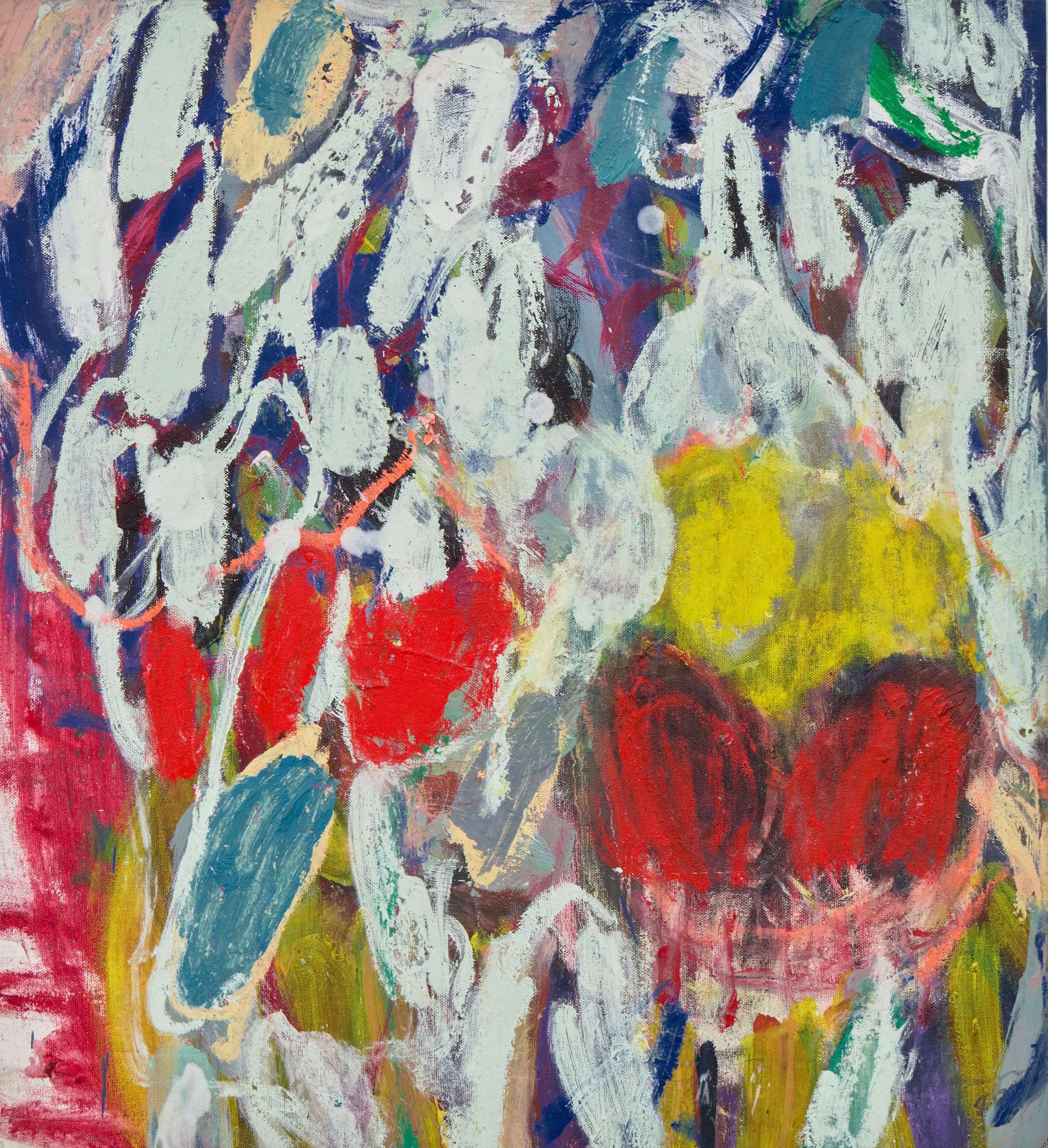
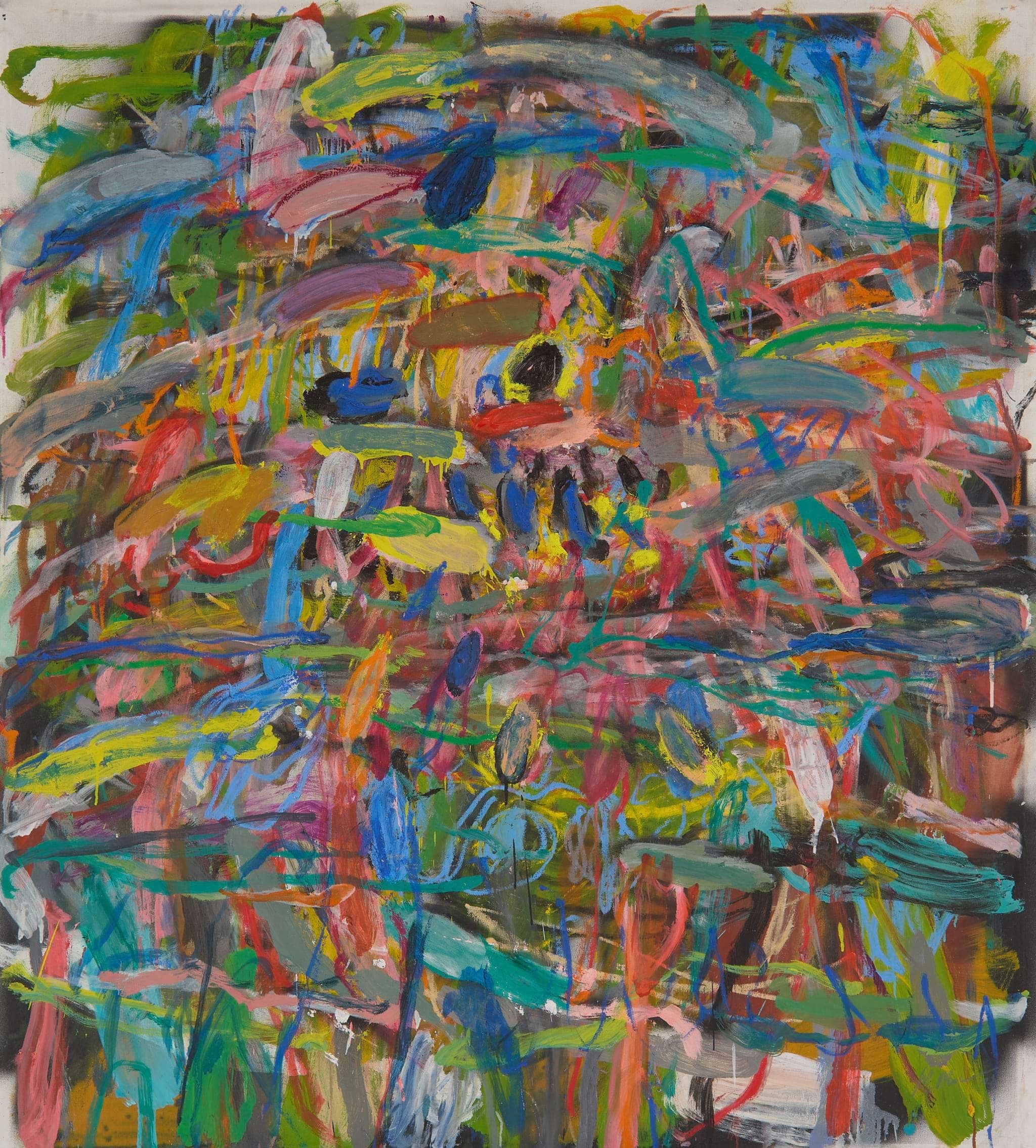
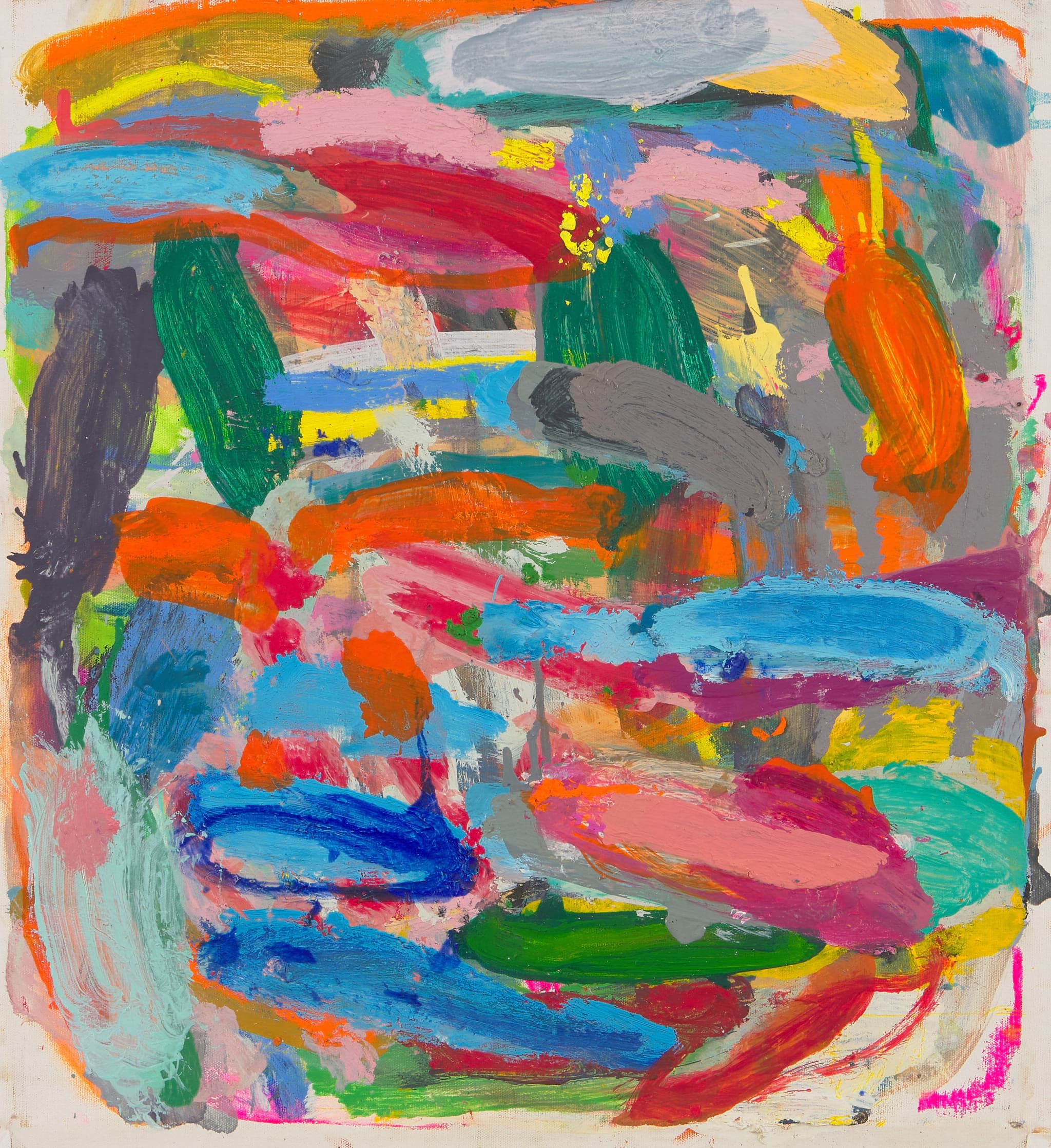
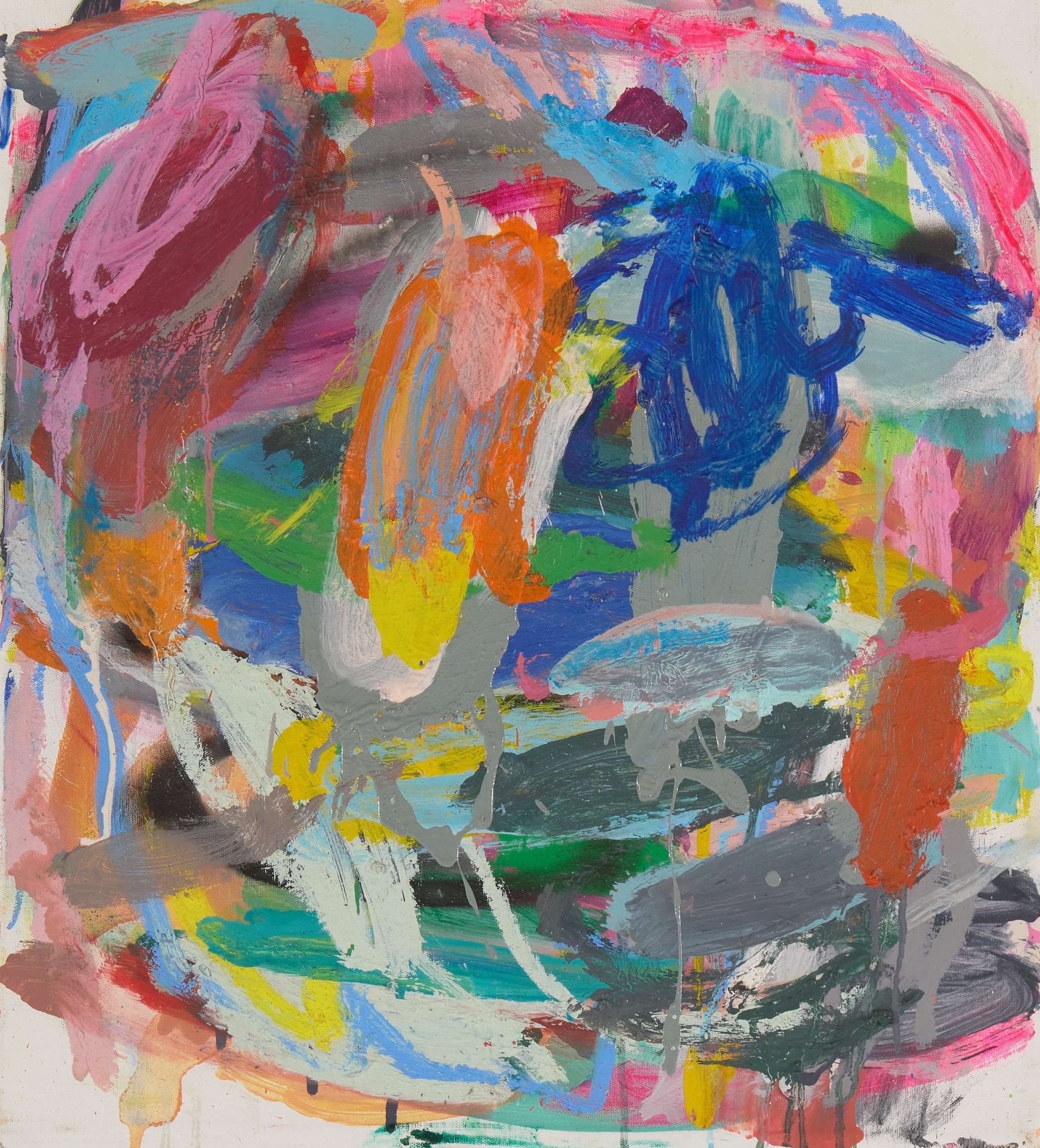
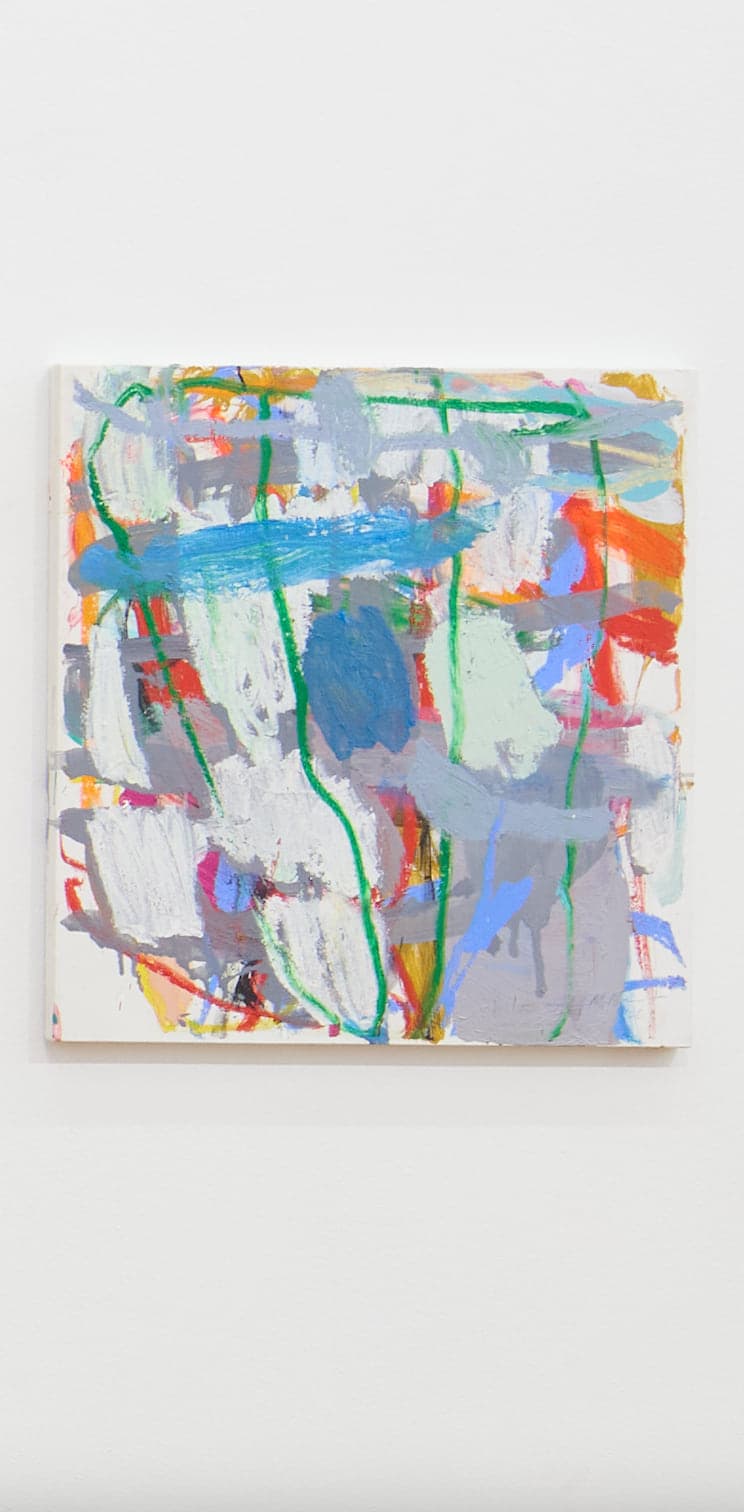
The exhibition includes a group of new works incorporating black, ranging from the dense matte blacks achieved with oil stick to muted areas realised with spray-paint. This exploration of blackness marks a notable shift for an artist widely recognised as a colourist. Goodman Gallery will present a new large-scale composition in this mode at Art Basel in June. The dual presentation in Cape Town and Basel honours Masamvu’s position as both an influential painter and a catalyst for artistic community.


In 2009, Masamvu and his partner, Georgina Maxim, founded Village Unhu, an artist-run space in Harare. Since its inception, Village Unhu has served as an incubator for numerous artists who have subsequently achieved international prominence. Masamvu likens the initiative to the wooden frame supporting a painting: the structure that sustains collective life, with its people, aspirations and shared experiences functioning as the canvas.
This idea of an energised artistic community, which Masamvu extends to his newer operations in Mutare, is central to his biography and to the conceptual framework of Naked. The exhibition title recalls two formative early exhibitions in Zimbabwe: Naked Mind I, presented in 2002 at the National Gallery of Zimbabwe in Bulawayo, and Naked Mind II, held at Delta Gallery in 2003.
Presented in the aftermath of Zimbabwe’s contentious 2000 constitutional referendum, Naked Mind I emerged during a period of intensifying political and economic instability, a situation that persists. Masamvu remembers the exhibition as a rare and trusted space in which young people could gather and articulate divergent viewpoints outside institutional constraint.
Naked Mind II marked a return to Delta Gallery, where Masamvu had first attended Saturday workshops as a teenager. Born shortly after Zimbabwean independence in 1980, he came of age within the orbit of the pioneering Harare space established in 1975 by painters Helen Lieros and Derek Huggins. In 1999, he participated in a Delta workshop led by Jerry Zeniuk, the German-American abstract painter under whom he later studied at Munich’s Academy of Fine Arts.


Writing in a 2000 issue of Zimbabwe’s now-defunct Gallery magazine, Zeniuk remarked on the “colours being revealed in combinations unfamiliar to my own experience” in the abstract backgrounds of the figural allegories being produced by Zimbabwean painters. Masamvu’s existentially charged figure paintings, which echoed Zeniuk’s observation, were a highlight of the inaugural Zimbabwe Pavilion at the 54th Venice Biennale in 2011. The presentation introduced international audiences to Zimbabwe’s rich expressionist tradition, of which Masamvu remains a leading exponent.
In the years following Venice, Masamvu’s practice became increasingly abstract. Figures gradually dissolved into the background, resulting in compositions that opened onto a more fluid and hopeful imaginative space. The figure persists in his new work, if not always visibly, then socially and psychologically. These works draw strongly on the visual grammar of the street, with Masamvu favouring direct observation over invention. He likens his layered compositions to weathered billboards: surfaces carrying traces of earlier messages that persist beneath peeling paint and fading colour, inviting viewers to reconstruct meaning rather than receive a fixed statement.
Masamvu likens Belgian linen, with its weathered appearance, to a faded tent, battlefield, ruin or drying leaves. For the artist, it offers a resonant ground through which to “illuminate or draw attention to what might have happened in that space”. He describes painting as an attempt to “drum out” an image from the canvas and values oil sticks for their immediacy and flexibility, allowing for rapid, provisional mark-making that nevertheless becomes permanent. Despite the implied violence of the word “stick”, he is drawn to the medium’s directness, its capacity to function as an extension of the hand rather than as the mediated gesture of a brush.

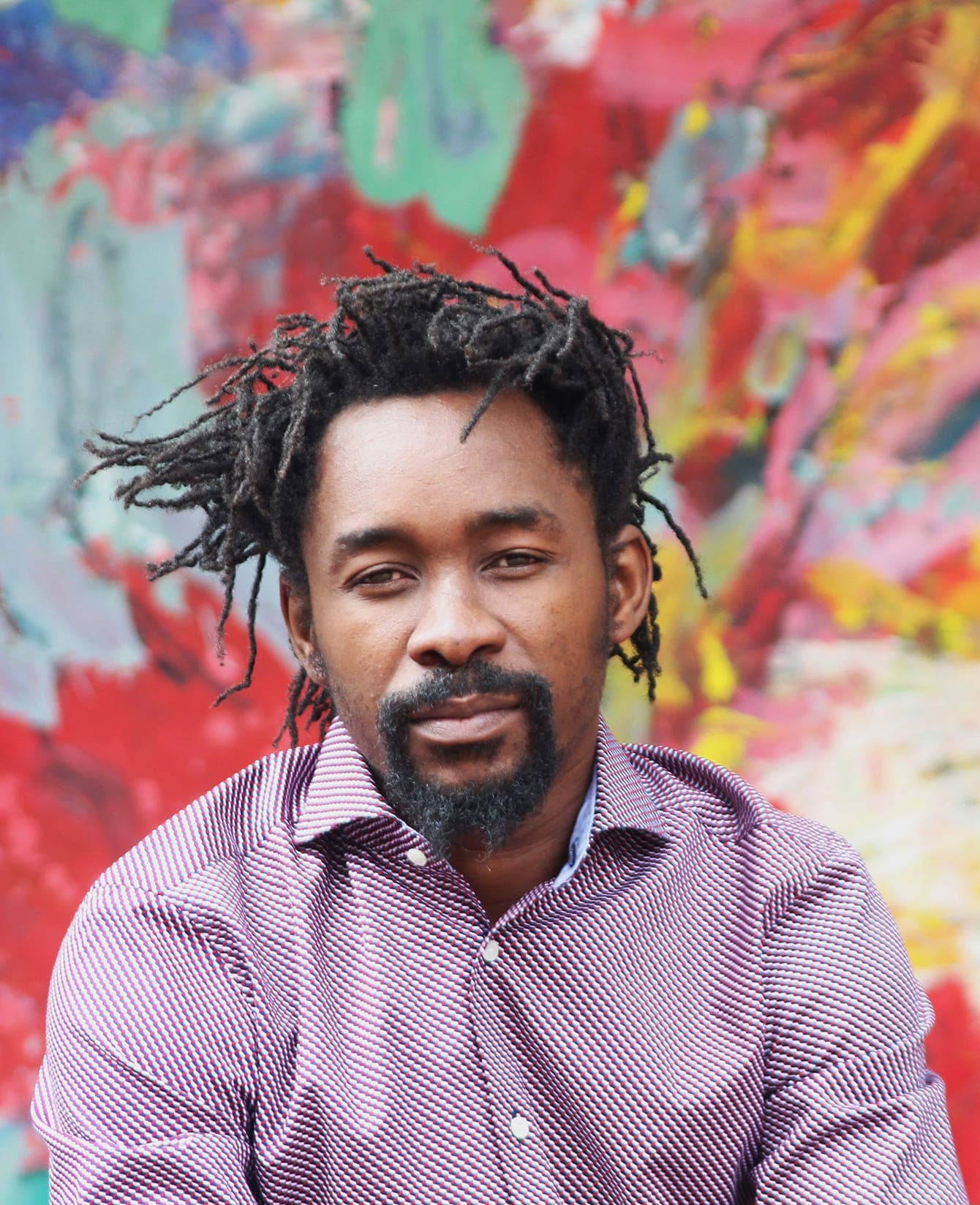
Artist Bio
Oscillating between abstraction and figuration, Misheck Masamvu’s (b. 1980, Mutare, Zimbabwe) works allow him to address the past while searching for a way of being in the world. As one of the most significant artists from Zimbabwe, Masamvu’s work offers a renewed understanding of visual culture in Africa and the decolonial project more broadly. Rhythmic lines and layered fields of colour have become a prominent language for Masamvu to explore structures of power and how history comes to bear on the contemporary moment, but also how one can adapt to a new way of interacting with the world.
Selected solo exhibitions: 'Show me how ruins make a home,' A Gentil Carioca, São Paulo (2024); 'Exit Wounds,' Goodman Gallery, New York (2024); 'Safety Pin,' Goodman Gallery, Cape Town (2023); 'Pivot,' Bernier/Eliades Gallery, Brussels (2023); 'Talk to me while I’m eating,' Goodman
Gallery, London, United Kingdom (2021); 'Hata,' Goodman Gallery, Cape Town (2019); 'Still Still,' Goodman Gallery, Cape Town; 'Misheck Masamvu,' Institut Français, Paris, France (2015); 'Disputed Seats,' Influx Contemporary Art, Lisbon, Portugal (2009).
Notable group exhibitions include: 'Kuvhunura/Kupinda nemwenje mudziva,' Fondation Blachere Bonnieux, France (2024); 'Translations: Afro-Asian Poetics,' The Institutum, Singapore (2024); 'Inside Out,' Fondation Gandur pour l’Art, Geneva (2022); 'Witness: Afro Perspectives,' El Espacio 23, Miami, USA (2020); 'Allied with Power: African and African Diaspora Art from the Jorge M. Pérez Collection,' Pérez Art Museum Miami, Miami (2020); 'Two Together,' Zeitz Museum of Contemporary Art Africa, Cape Town (2020); 'Five Bobh: Painting at the End of an Era,' Zeitz MOCAA, Cape Town (2017); 'Africa 2.0 > is there a Contemporary African art?,' Influx Contemporary Art, Lisbon (2010); 'Art, Migration and Identity,' Africa Museum, Arnhem (2008); and 696, National Gallery of Zimbabwe, Harare (2008).
Major international exhibitions include: 'The ‘t’ is silent,' 8th Biennial of Painting, Museum Dhondt-Dhaenens, Sint-Martens-Latem, Belgium (2022); 'STILL ALIVE,' 5th Aichi Triennale, Aichi, Japan (2022), NIRIN , 22nd Sydney Biennale, Sydney (2020); 'Incerteza Viva (Live Uncertainty),' the 32nd Bienal de São Paulo (2016) and his international debut at Zimbabwe’s inaugural Pavilion at the 54th Venice Biennale (2011).
Collections include: A4 Arts Foundation (Cape Town, South Africa); Braunsfelder Family Collection (Cologne, Germany); Uieshema Collection (Tokyo, Japan); Perez Art Museum (Miami, USA); Pigozzi Collection (Geneva, Switzerland); Taguchi Art Collection (Tokyo, Japan); Fukutake Foundation (Auckland, New Zealand); COMMA Foundation (Damme, Belgium); ANA Collection (Lagos, Nigeria); Sigg Art Foundation, Le Castellet, France; Fondation Gandur pour l’Art (Geneva, Switzerland); and Zeitz Museum of Contemporary Art Africa (Cape Town, South Africa).
Masamvu lives and works in Harare, Zimbabwe.
Other Exhibitions
See All