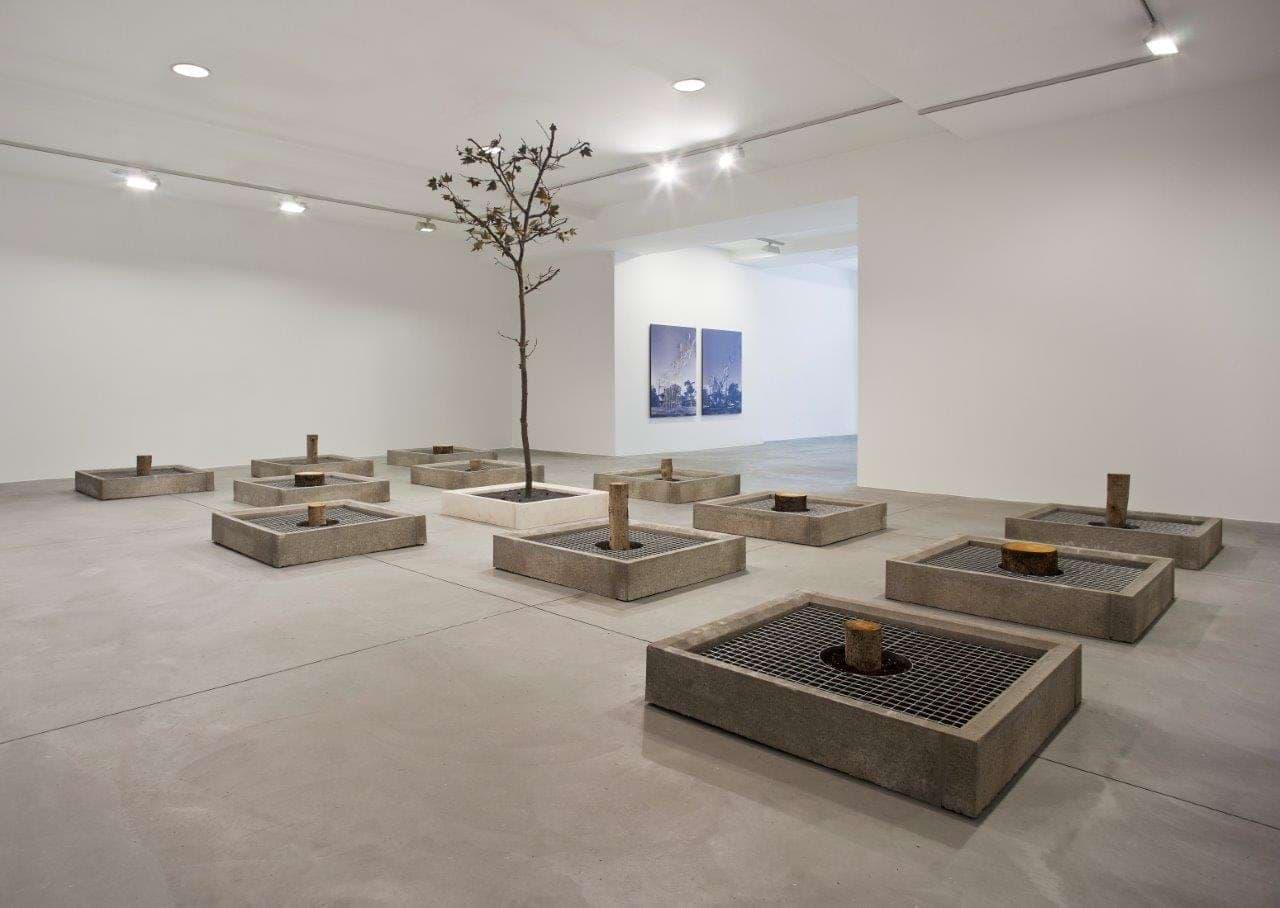
The large-scale installation, Línea rota de horizonte establishes a dialogue between the structures of the city and their relationship with nature — highlighting the ways in which nature is in many cases abused or neglected. The installation is based on the American sycamore tree (Platanus occidentalis), a common sight in the streets of Madrid. Made from bronze, wood, soil, trunks and metal, a single tree emerges from a group of stumps arranged in grids, just as we find the at the urban space and remarking here the compressed landscape.
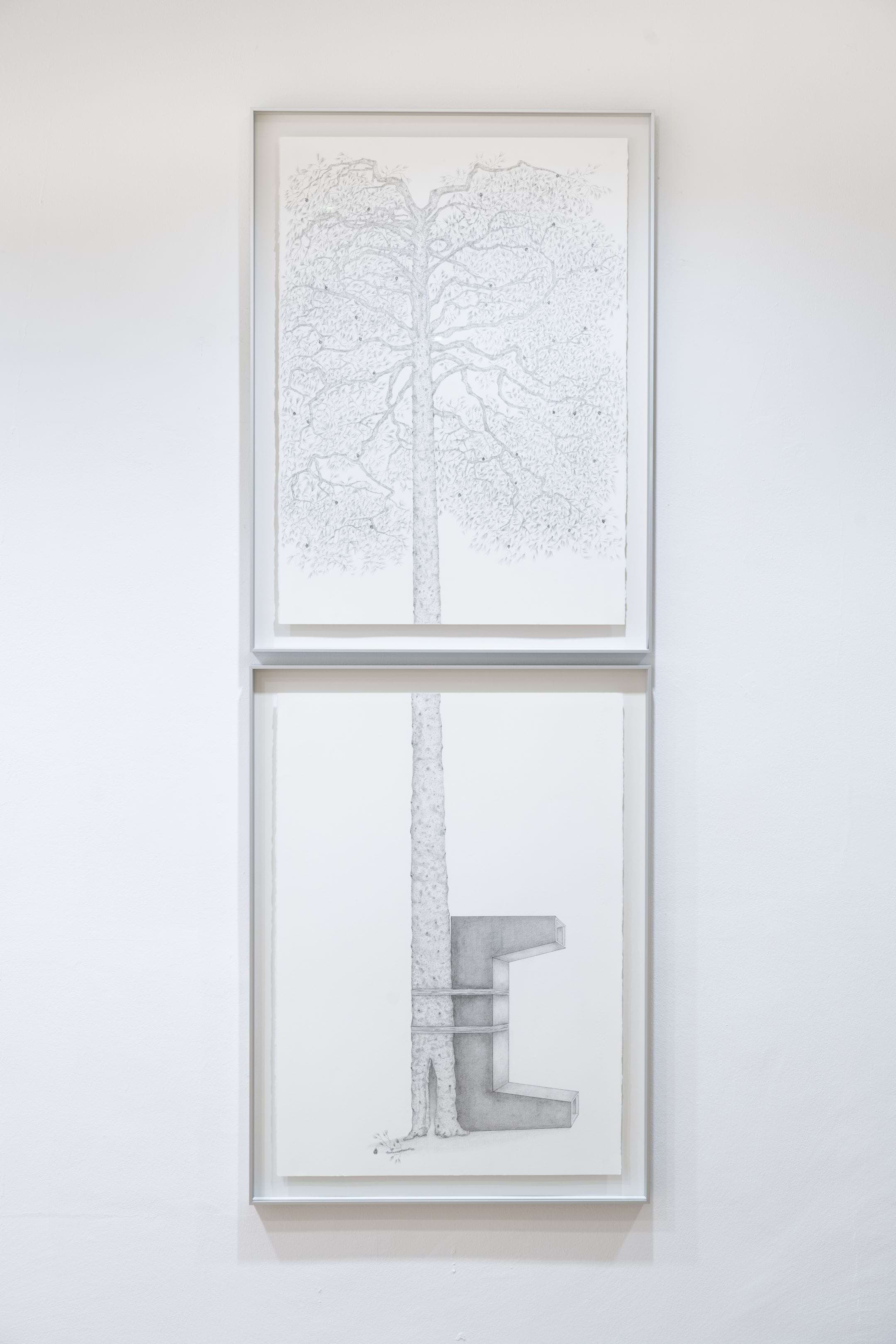
The series of drawings Models C (Models of Confinement), reflects on that desire and that obligation to isolate us, but also talks about that need for solitude woven by our fear of the other. The human being - social animal par excellence - is torn between his sociability and his loneliness; between his need to bond with the other and his need to live absent, alone in his ivory tower, mumbling his egoism in spaces created in his image and likeness.
If these drawings claim anything, it is to bring to the point of paroxysm that argument of solitude, this exile of our gregarious essence. When fear takes its toll on us we tend to close, to draw and plan our escape from the surrounding reality. Imagining and sharing these spaces of "new life" implies proposing a catalyst to this absurd desire to isolate ourselves. It is a response to a melancholic desire to live locked in ourselves. As I walked through the city center, I found the solitude and romanticism of Caspar David Friedrich, the symbolism of the ruins of Claude Lorrain, the inventions of Giovanni Battista Piranesi and some of the empty, cutting shadow squares of Giorgio de Chirico. All of them have tempted me to complete the absurdity and the metaphor of new spaces where we can let our doubts and fears run, where we welcome our melancholic and doubtful gaze on the future to come in order to erect these spaces of confinement in a sort of funeral architecture. Places that harbor the death of an open and unprejudiced man, where you can watch over the social body of a city and over a citizen who refuses to die, who half-opens the door from his tower, leaving that gap where there is no room for drama or lack of faith, where the human being rises with his inventive capacity and his poetic sagacity to remind us that bad dreams are also capable of entertaining our souls.
The drawings in the Models C series, are neither utopias, science fiction, nor a bucolic dream of architectural planning, perhaps they are closer to a moral tale with which to unravel the ball of a nightmare that hangs over each of us and that won’t allow us to glimpse our true fate and our ability to change the order of things.
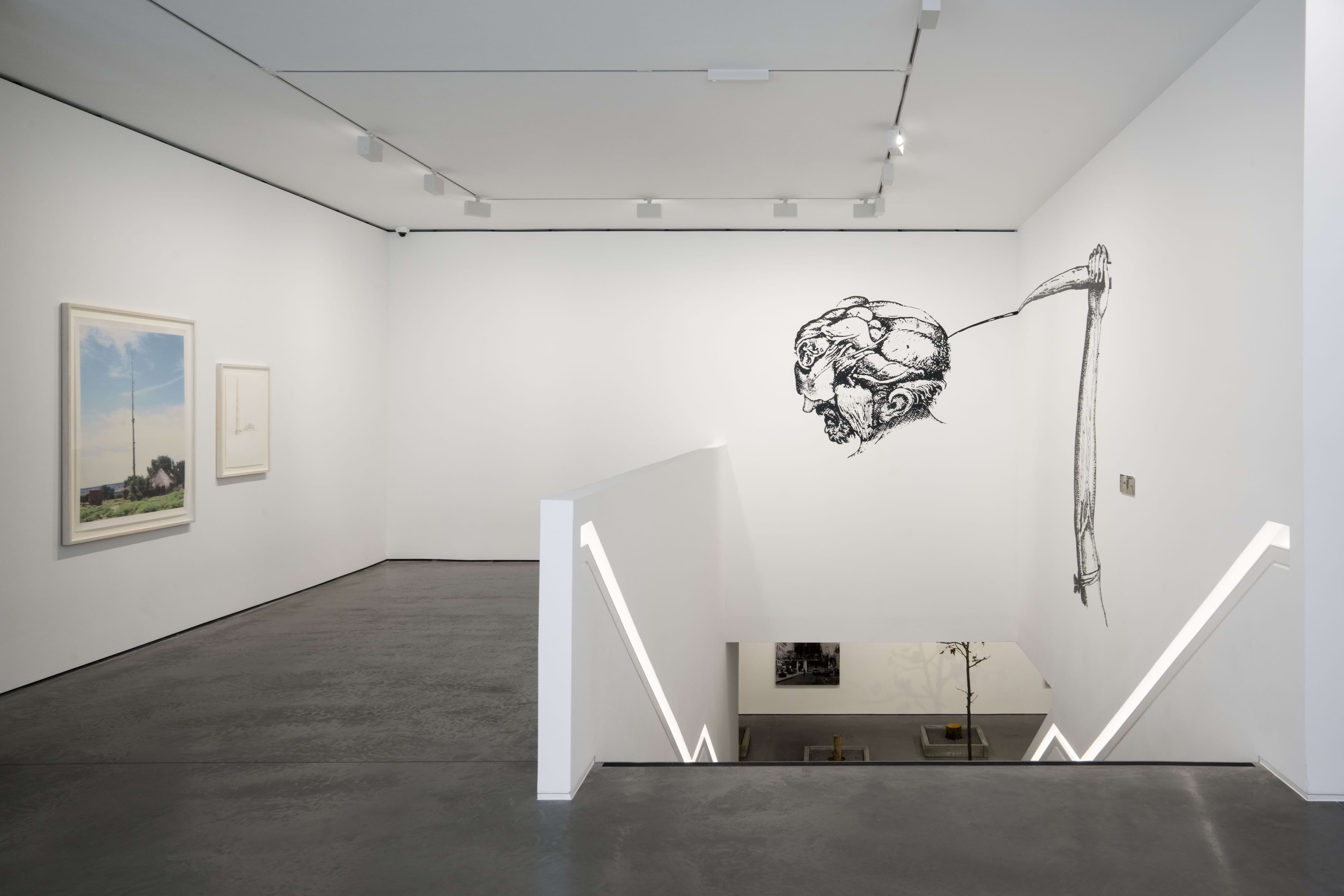
In Instrumento para disolver la memoria / Instrument to dissolve memory (1997), initially created while the artist was in Cuito Cuanavale, Garaicoa merges two models by 16th-century Flemish physician Andrea Vesalius. An anatomical rendering of an arm holds a sharp wooden stick, pointing it to an open skull. With a similar function to a scalpel, the wooden stick is a gesture of violence as well as a tool of examination of the harsh memories of war. The use of Baroque figuration highlights the artist’s interest in the relationship between the violence of modern medicine and the ferocity of war. The drawing is accompanied by a photograph, taken in Cuito Cuanavale, of Garacioa’s own arm holding an ordinary branch and pointing it to the ground.
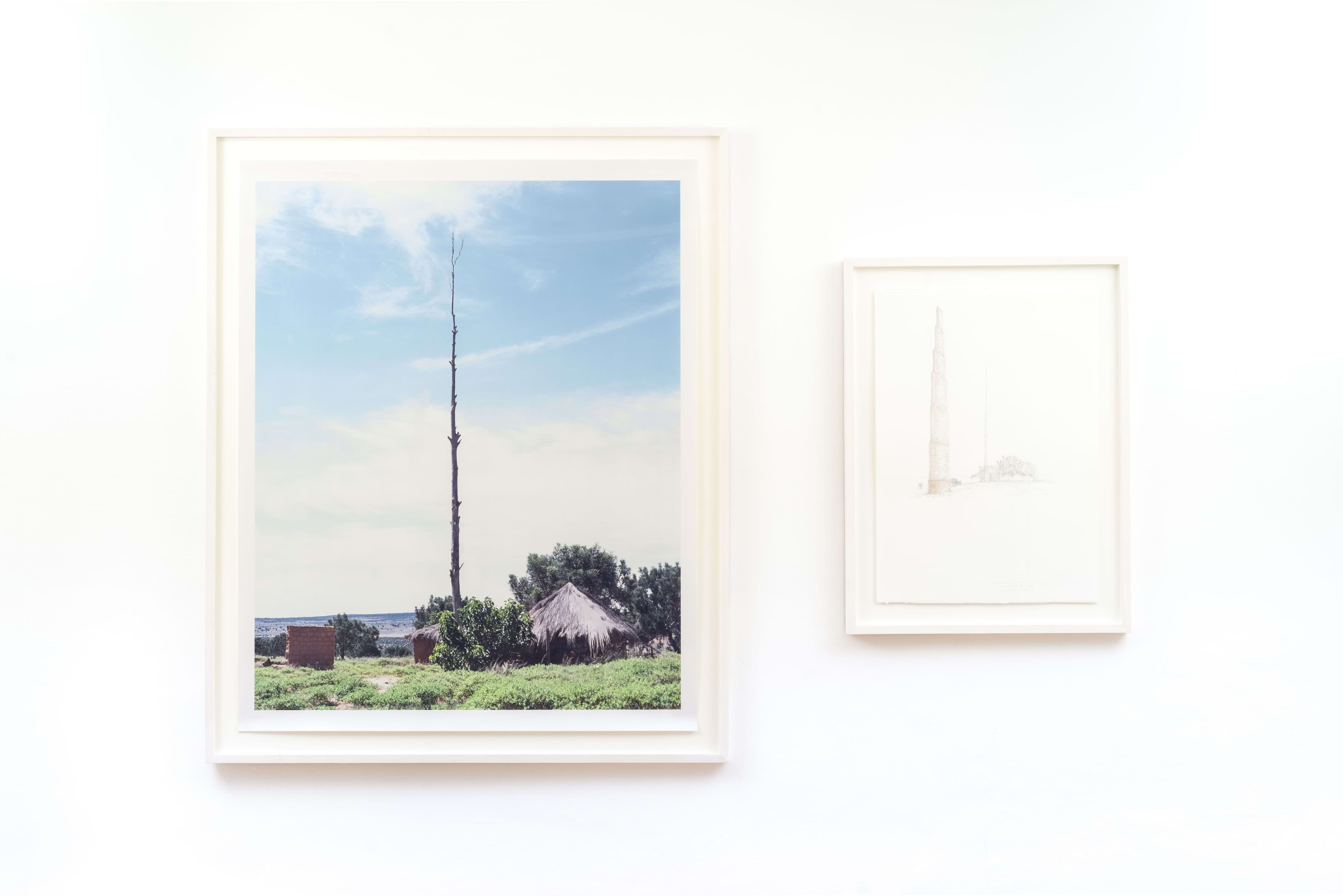
New Architectures for Cuito Cuanavale is part Garaicoa's important project Memorias, Intimas, Marcas from 1996. The photograph dates from the time of the original project and looks at Cuito Cuanavale, the city in Angola in which not a single dwelling or building remained unscathed by the Angolan civil war. The war raged through the African country for nearly three decades from 1974 drew international troops, including 30,000 from Cuba. Garaicoa's detailed graphite drawings is shown alongside the original photograph, exploring memory and traces of histories.
Through a multidisciplinary approach, Carlos Garaicoa addresses issues of culture and politics with a reflexive lens into architecture, urbanism and history. In his essay, ‘Between Apparatus and Subjectivity: Carlos Garaicoa’s Post-Utopian Architecture’, Okwui Enwezor described his practice,“Garaicoa is perhaps one of the most significant artists of his generation to develop a sustained aesthetic and analytical framework that would fuse the heritage of modern Cuban art and its complex political structure.” Garaicoa combines photographs, drawings and mixed media as forms of intervention to examine architecture and urbanism as mirrors of political reality and social development.
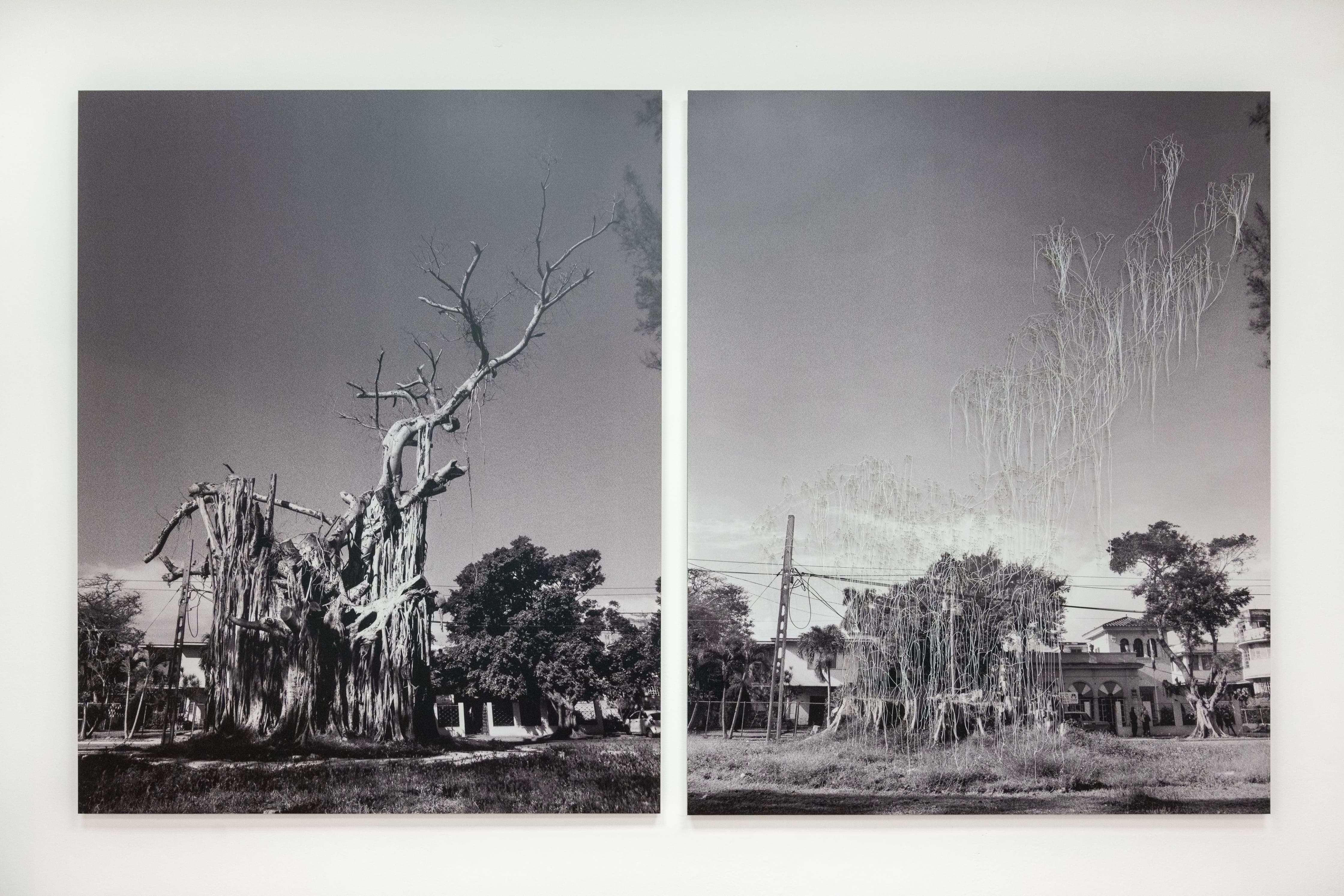
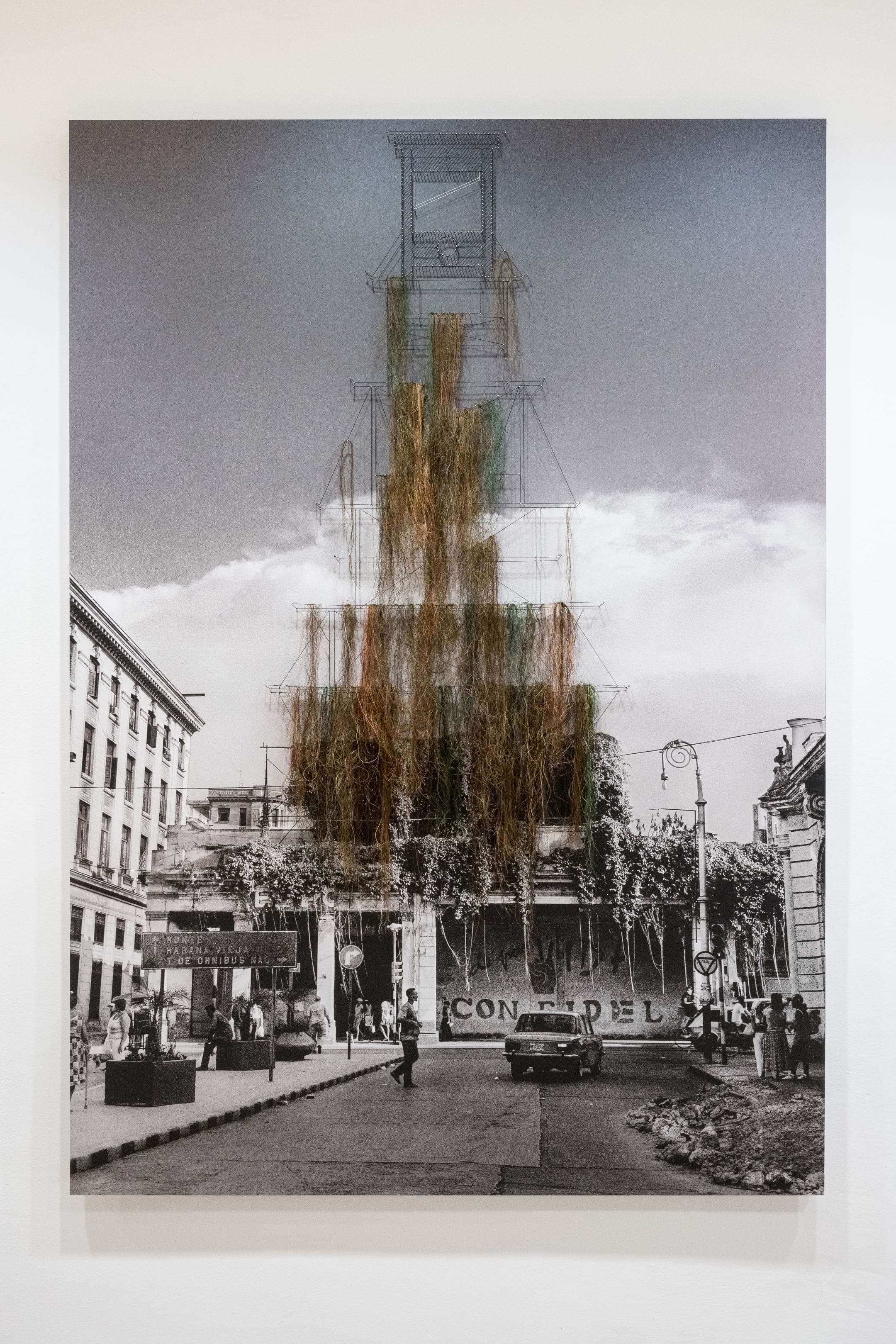
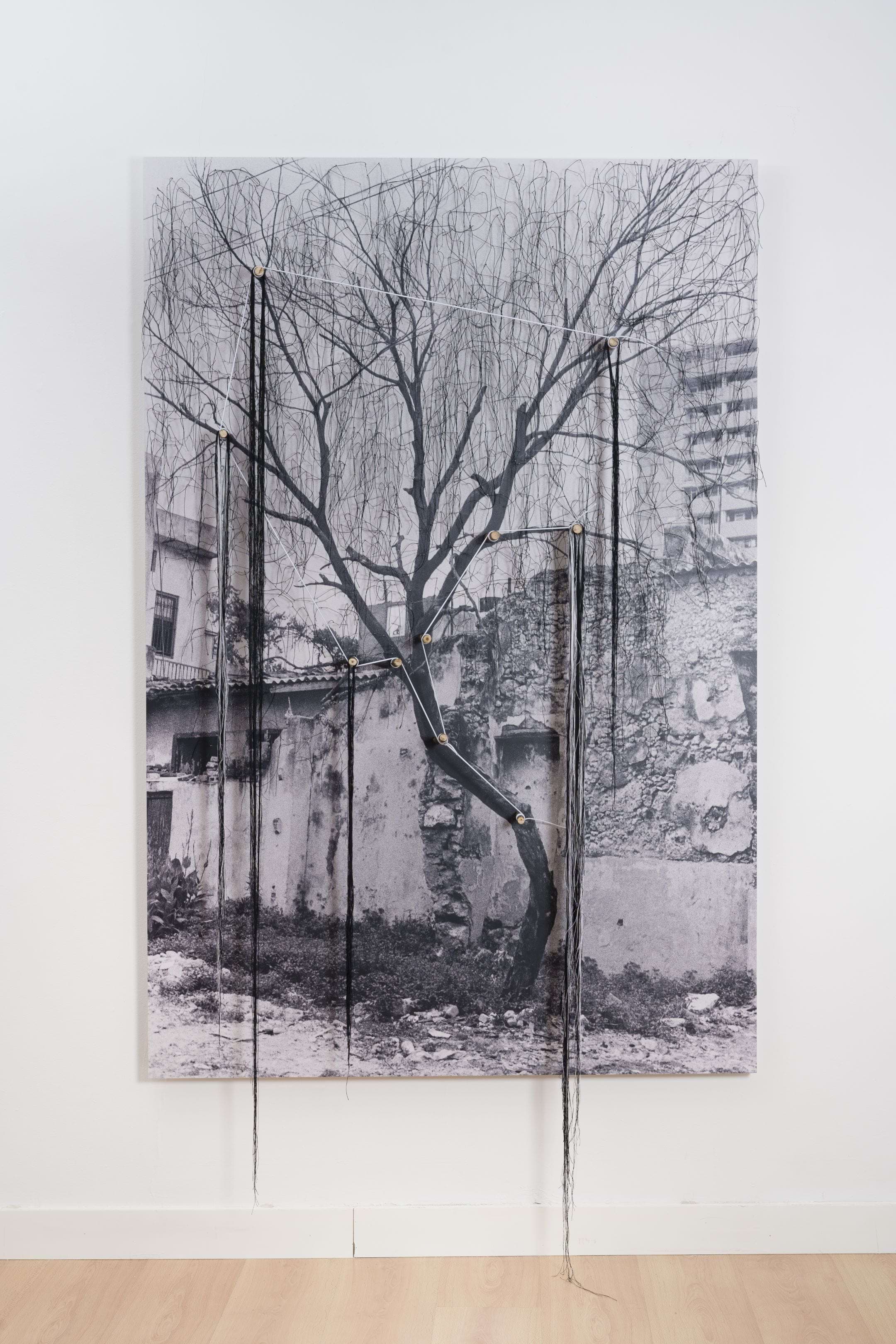
Through black and white photographs, he merges imagery of dilapidated buildings and structures with imaginary buildings whose construction was never completed. The work is a form of criticism against the government, which has not prevented the decay of Havana, since the Cuban revolution. For various years, Garaicoa has been working on a series of black and white mural photographs of different buildings in Havana integrated with thread drawings. In his work, what may seem at first glance as diametrical opposition produces generative intrapsychic tensions that can be explored and reconfigured —cityscape against nature, history against futurity, reconstruction and ruination— sitting squarely at the centre of these tensions.
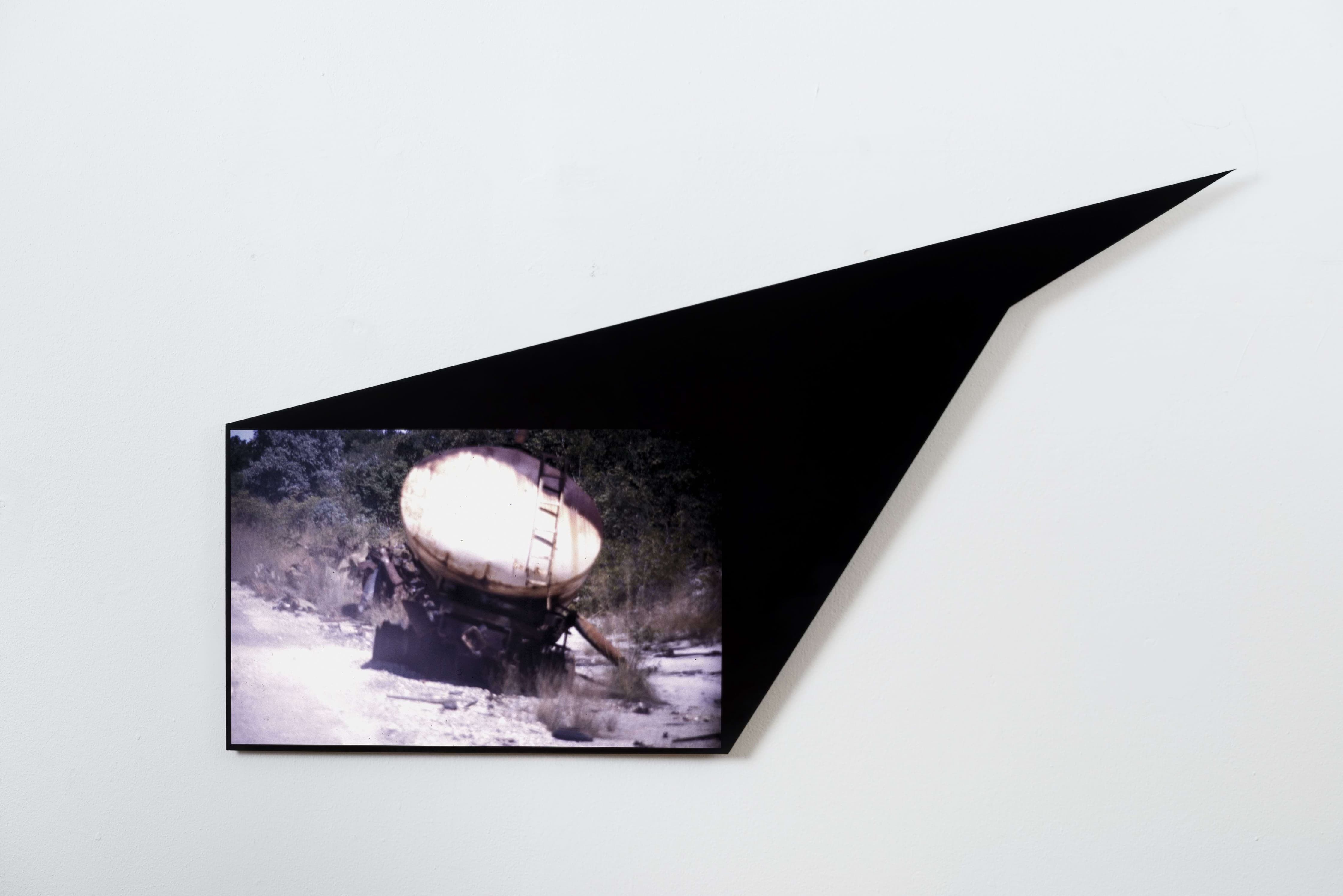
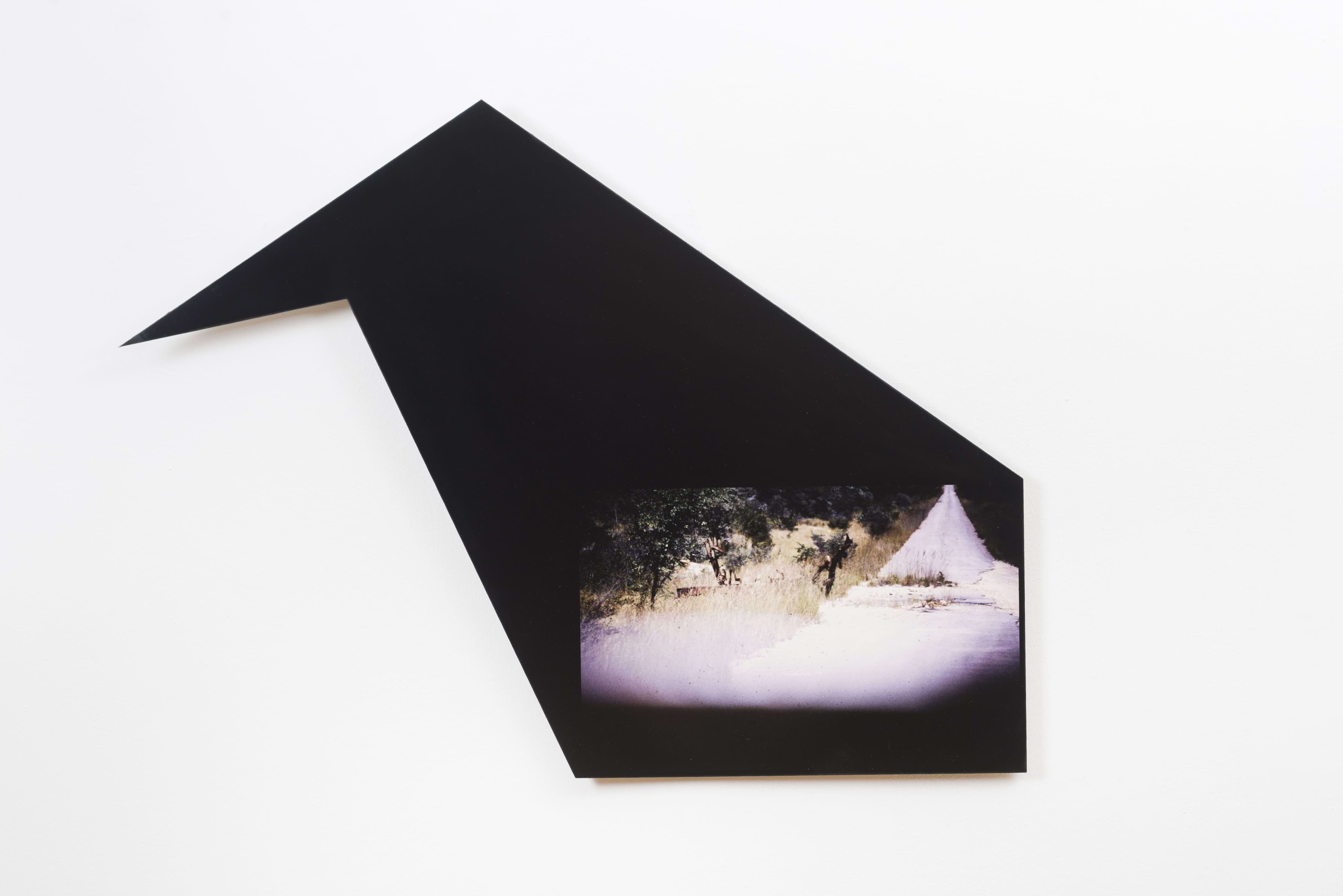
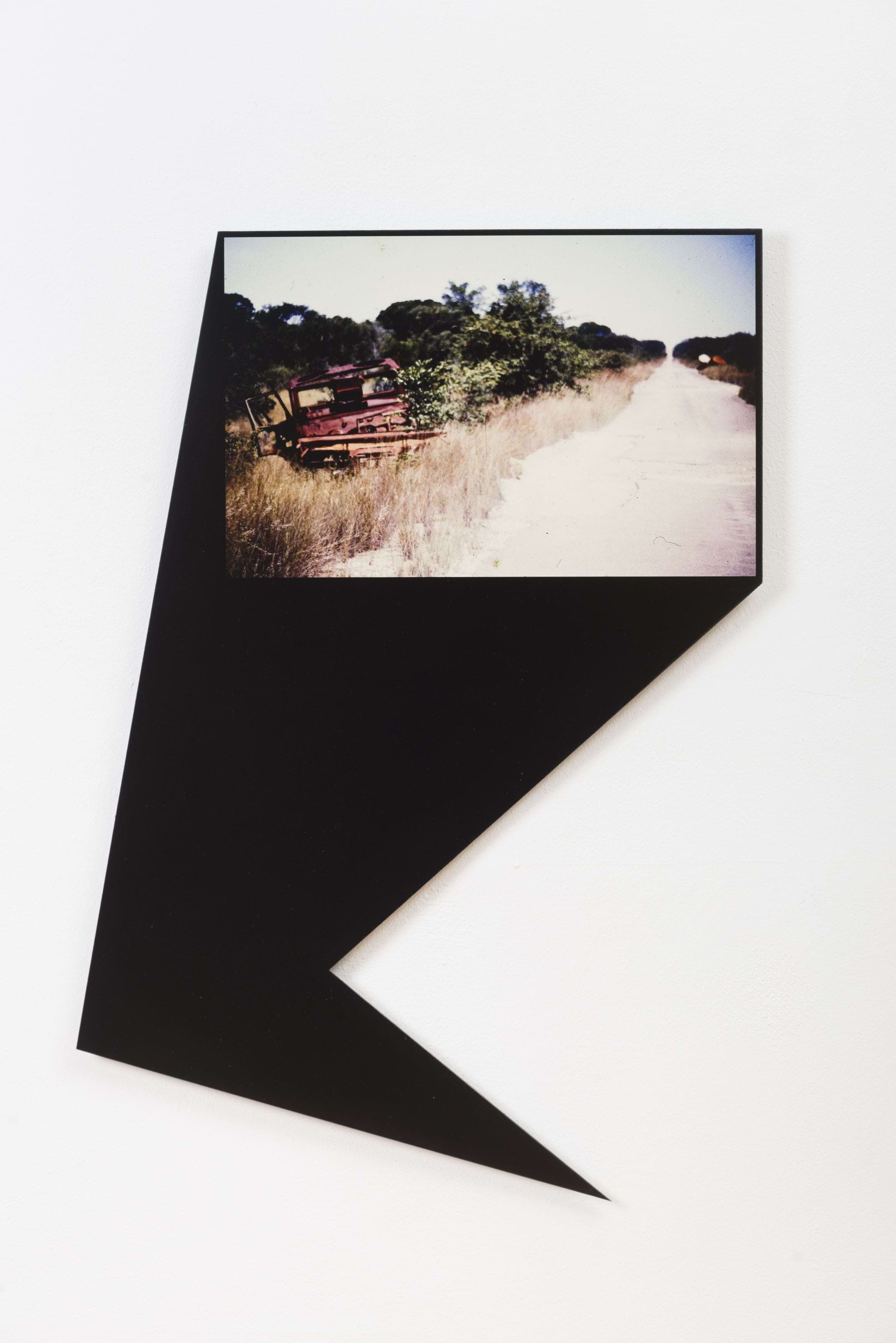
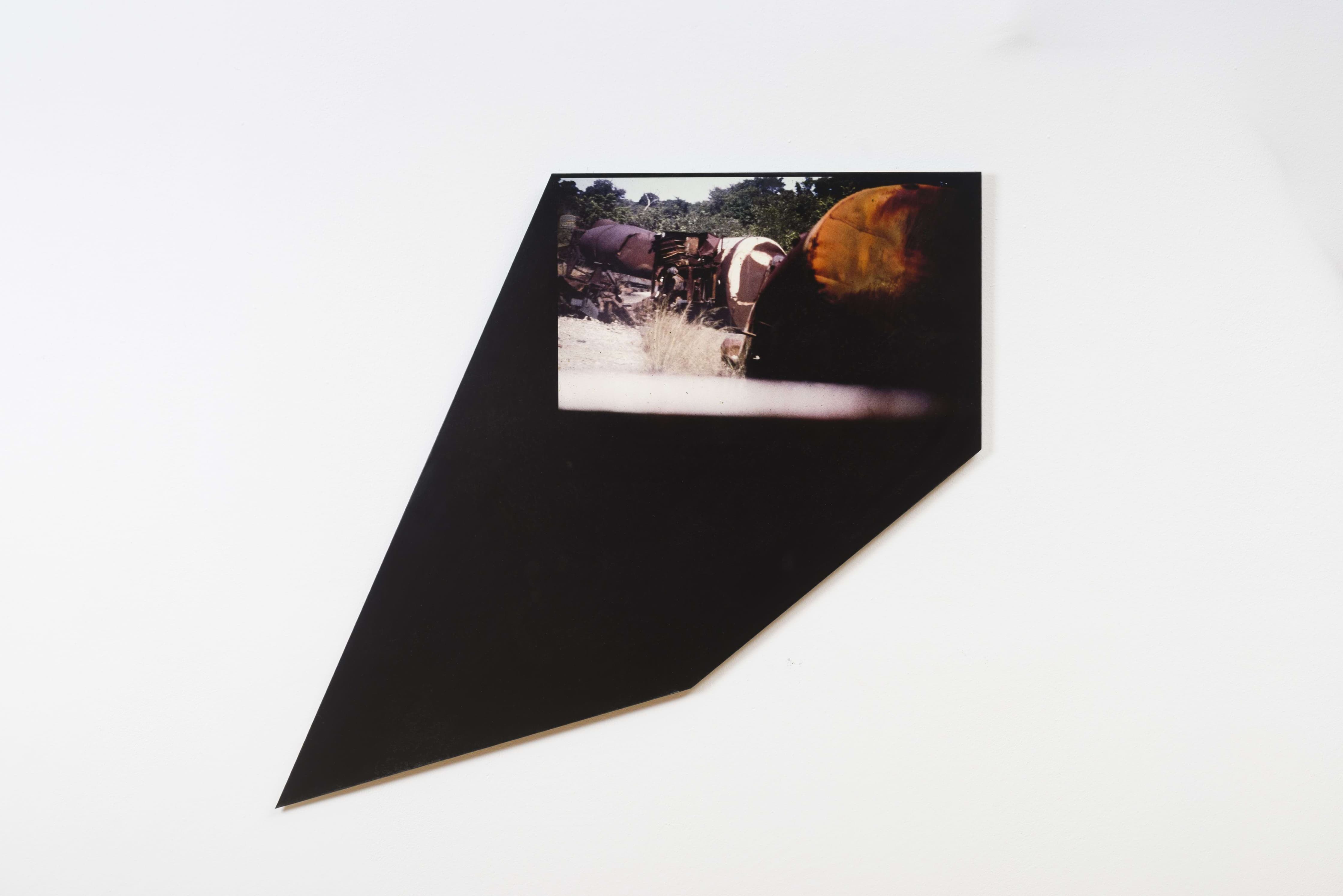
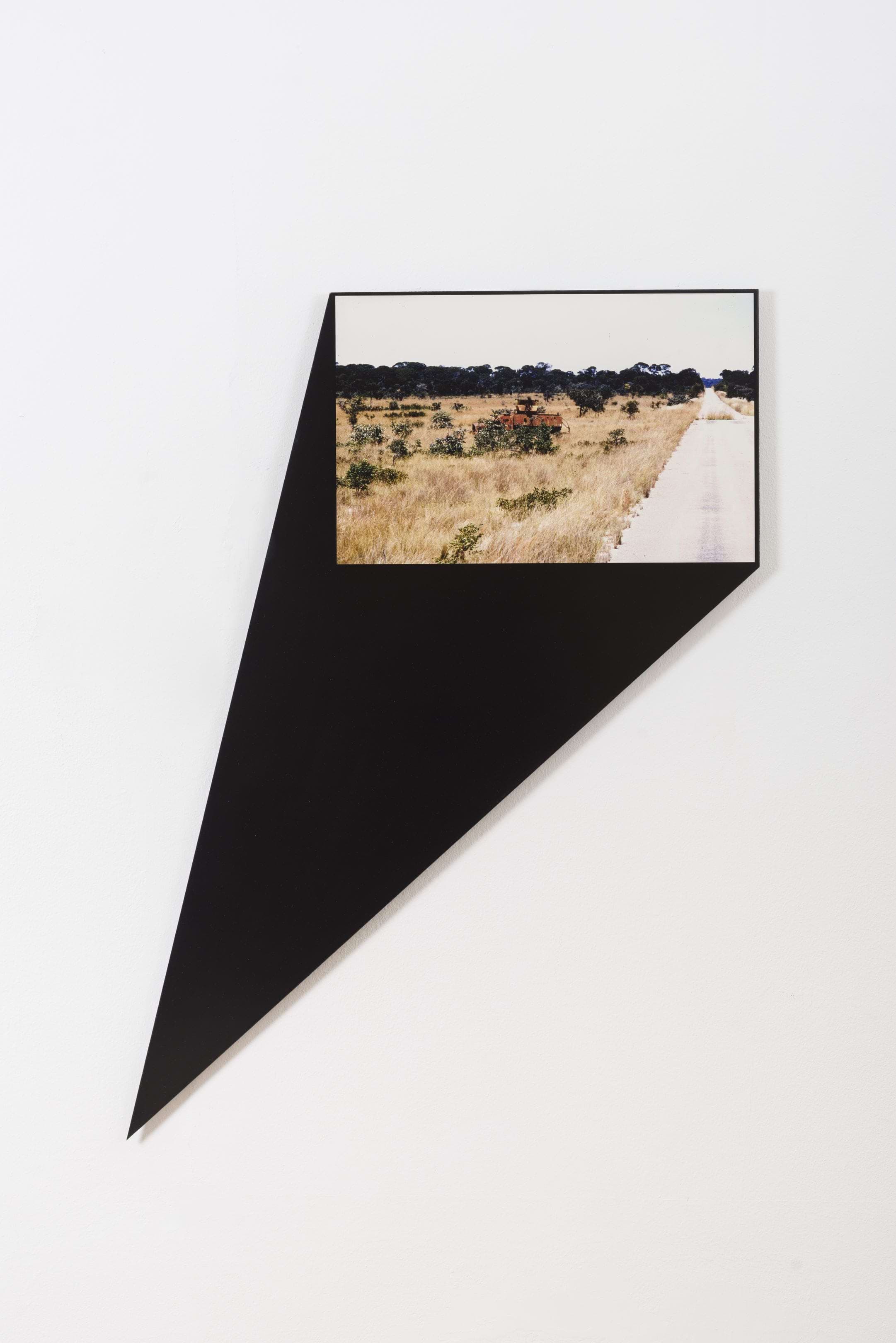
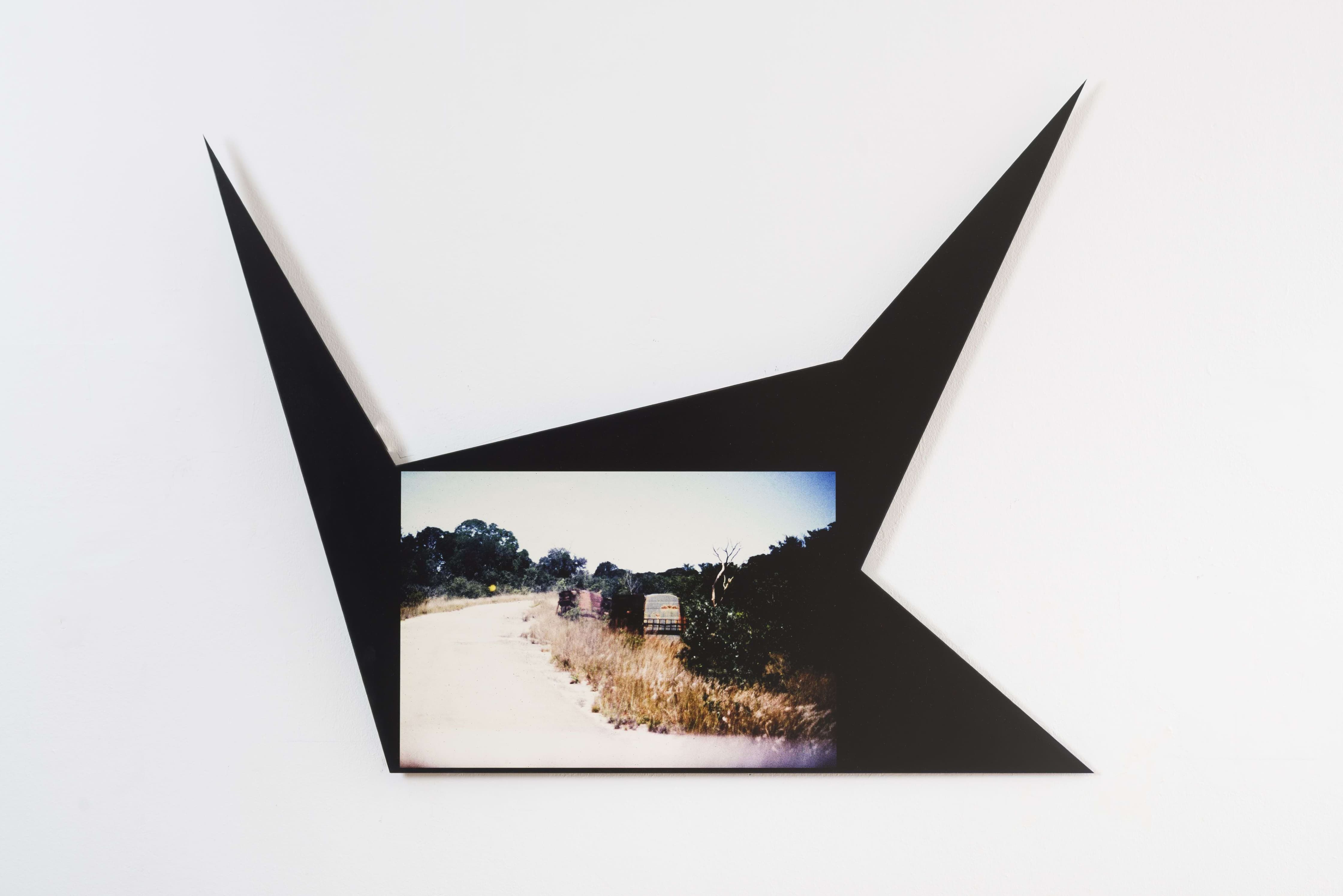
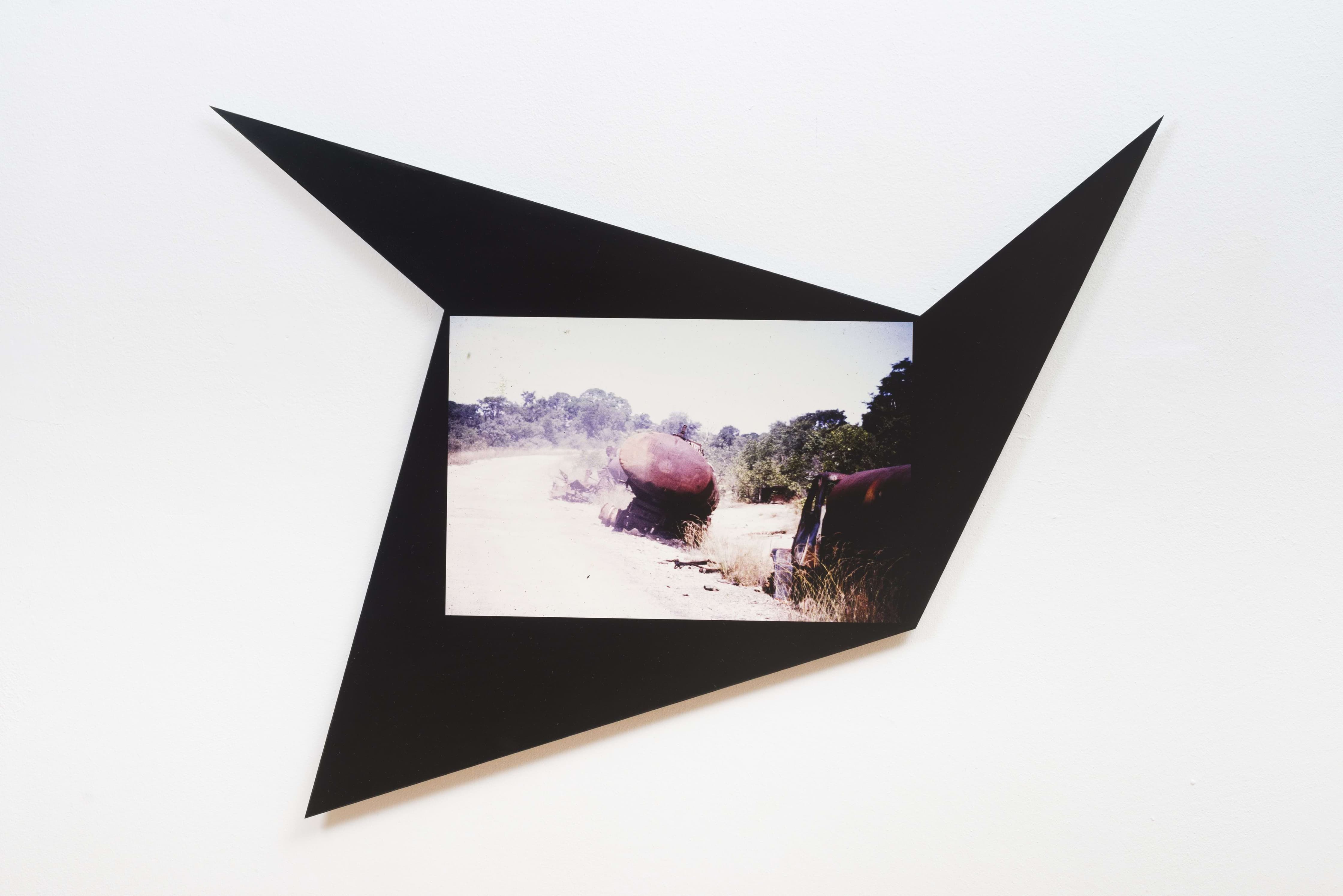
Garaicoa’s understanding of transitions and the multiplicity of place is reflected in works such as Esquirlas/Splinters. The series of photographs sourced from his archive were taken during his trip to Angola in 1996. The work proposes an archaeology of the Cuito-Menongue road, which served as a road for transporting military supplies and contributed to keeping an active first line of battle, during the Angolan war. The route along the Cuito-Menongue road consisted of abandoned war materials exposing the structures and genealogies associated with war together with geopolitics that caused them. Printed on metal in irregular shapes that seem to fly in the air, the photographs explore the idea of fragments that come to us in the form of memory, narrating stories that seem lost in time.
Esquirlas/Splinters is a series of photographs sourced from Carlos Garaicoa’s archive, taken during his trip to Angola in 1996. The work proposes an archaeology of the Cuito-Menongue road, which served as a road for transporting military supplies and contributed to keeping an active first line of battle, during the Angolan war. The route along the Cuito-Menongue road consists of fragmentation of abandoned war material exposing the structures and genealogies associated with war together with geopolitics that cause them. Printed on metal, the irregular shapes that seem to fly in the air explore the idea of fragments that comes to us in the form of memory, narrating a story that seems lost in time. A story that always comes back to us in the form of new conflicts and new wars of the present.
Esquirlas/Splinters is a series of photographs sourced from Carlos Garaicoa’s archive, taken during his trip to Angola in 1996. The work proposes an archaeology of the Cuito-Menongue road, which served as a road for transporting military supplies and contributed to keeping an active first line of battle, during the Angolan war. The route along the Cuito-Menongue road consists of fragmentation of abandoned war material exposing the structures and genealogies associated with war together with geopolitics that cause them. Printed on metal, the irregular shapes that seem to fly in the air explore the idea of fragments that comes to us in the form of memory, narrating a story that seems lost in time. A story that always comes back to us in the form of new conflicts and new wars of the present.
Esquirlas/Splinters is a series of photographs sourced from Carlos Garaicoa’s archive, taken during his trip to Angola in 1996. The work proposes an archaeology of the Cuito-Menongue road, which served as a road for transporting military supplies and contributed to keeping an active first line of battle, during the Angolan war. The route along the Cuito-Menongue road consists of fragmentation of abandoned war material exposing the structures and genealogies associated with war together with geopolitics that cause them. Printed on metal, the irregular shapes that seem to fly in the air explore the idea of fragments that comes to us in the form of memory, narrating a story that seems lost in time. A story that always comes back to us in the form of new conflicts and new wars of the present.
Esquirlas/Splinters is a series of photographs sourced from Carlos Garaicoa’s archive, taken during his trip to Angola in 1996. The work proposes an archaeology of the Cuito-Menongue road, which served as a road for transporting military supplies and contributed to keeping an active first line of battle, during the Angolan war. The route along the Cuito-Menongue road consists of fragmentation of abandoned war material exposing the structures and genealogies associated with war together with geopolitics that cause them. Printed on metal, the irregular shapes that seem to fly in the air explore the idea of fragments that comes to us in the form of memory, narrating a story that seems lost in time. A story that always comes back to us in the form of new conflicts and new wars of the present.
Esquirlas/Splinters is a series of photographs sourced from Carlos Garaicoa’s archive, taken during his trip to Angola in 1996. The work proposes an archaeology of the Cuito-Menongue road, which served as a road for transporting military supplies and contributed to keeping an active first line of battle, during the Angolan war. The route along the Cuito-Menongue road consists of fragmentation of abandoned war material exposing the structures and genealogies associated with war together with geopolitics that cause them. Printed on metal, the irregular shapes that seem to fly in the air explore the idea of fragments that comes to us in the form of memory, narrating a story that seems lost in time. A story that always comes back to us in the form of new conflicts and new wars of the present.
Esquirlas/Splinters is a series of photographs sourced from Carlos Garaicoa’s archive, taken during his trip to Angola in 1996. The work proposes an archaeology of the Cuito-Menongue road, which served as a road for transporting military supplies and contributed to keeping an active first line of battle, during the Angolan war. The route along the Cuito-Menongue road consists of fragmentation of abandoned war material exposing the structures and genealogies associated with war together with geopolitics that cause them. Printed on metal, the irregular shapes that seem to fly in the air explore the idea of fragments that comes to us in the form of memory, narrating a story that seems lost in time. A story that always comes back to us in the form of new conflicts and new wars of the present.