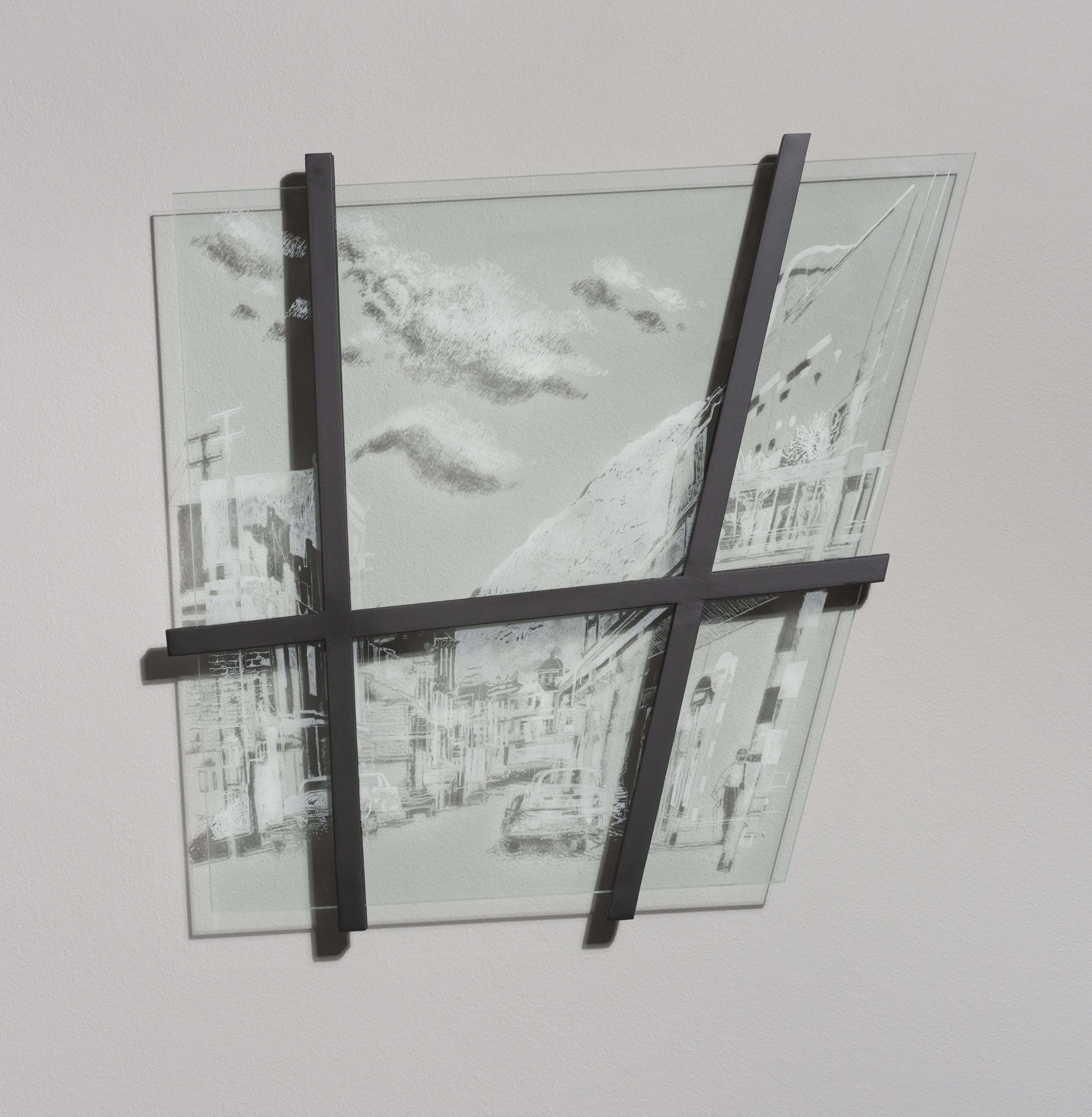
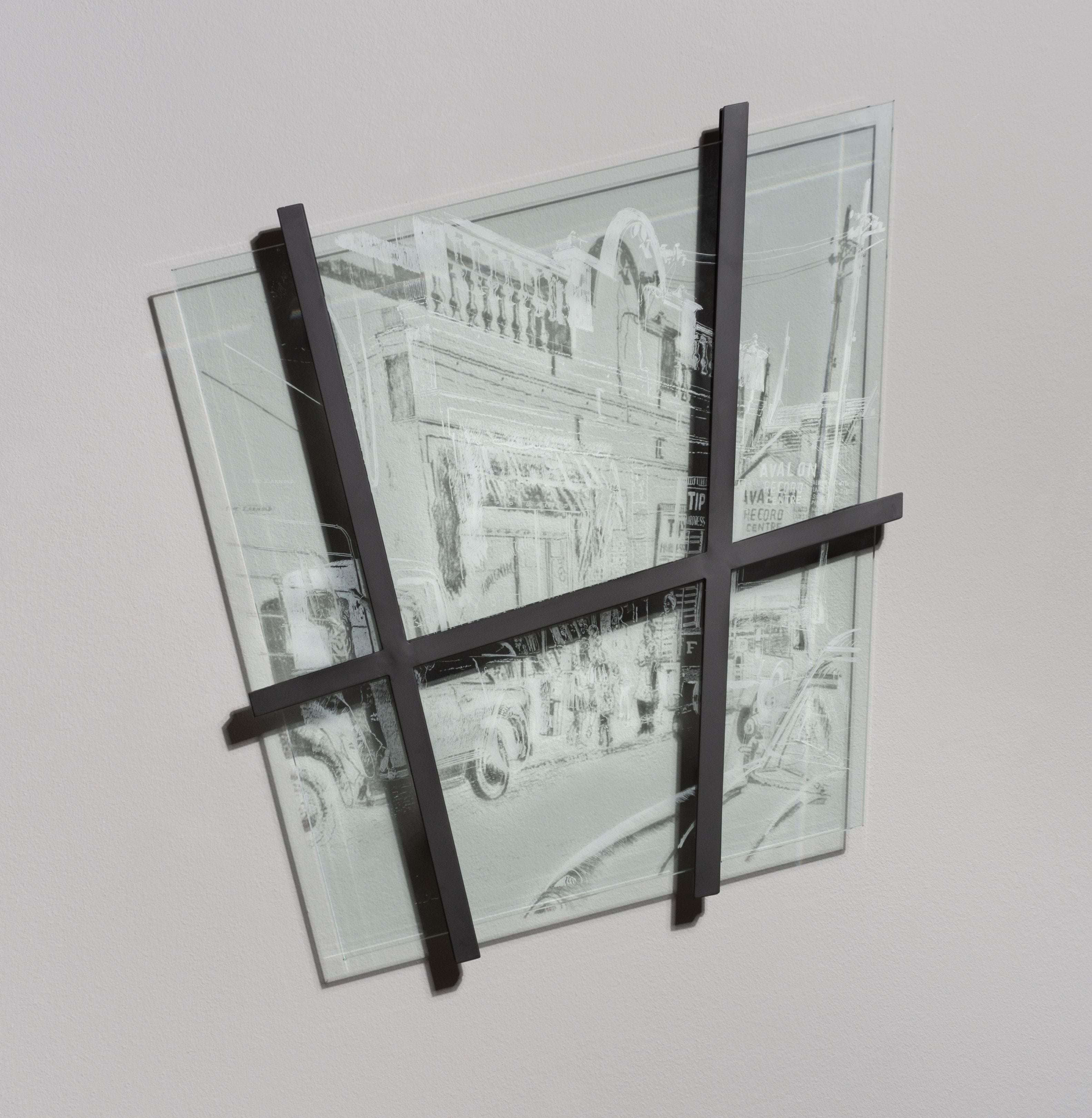
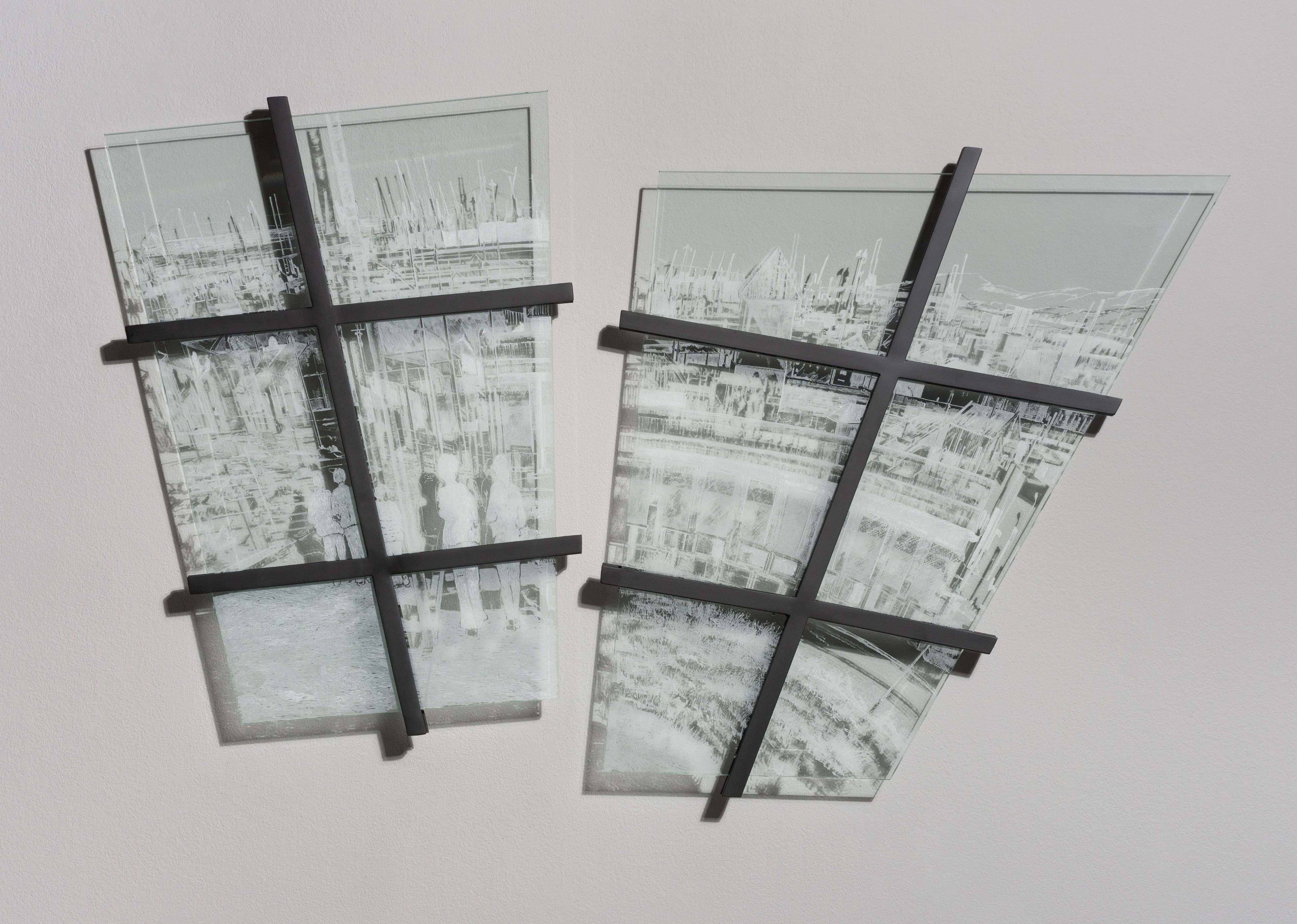
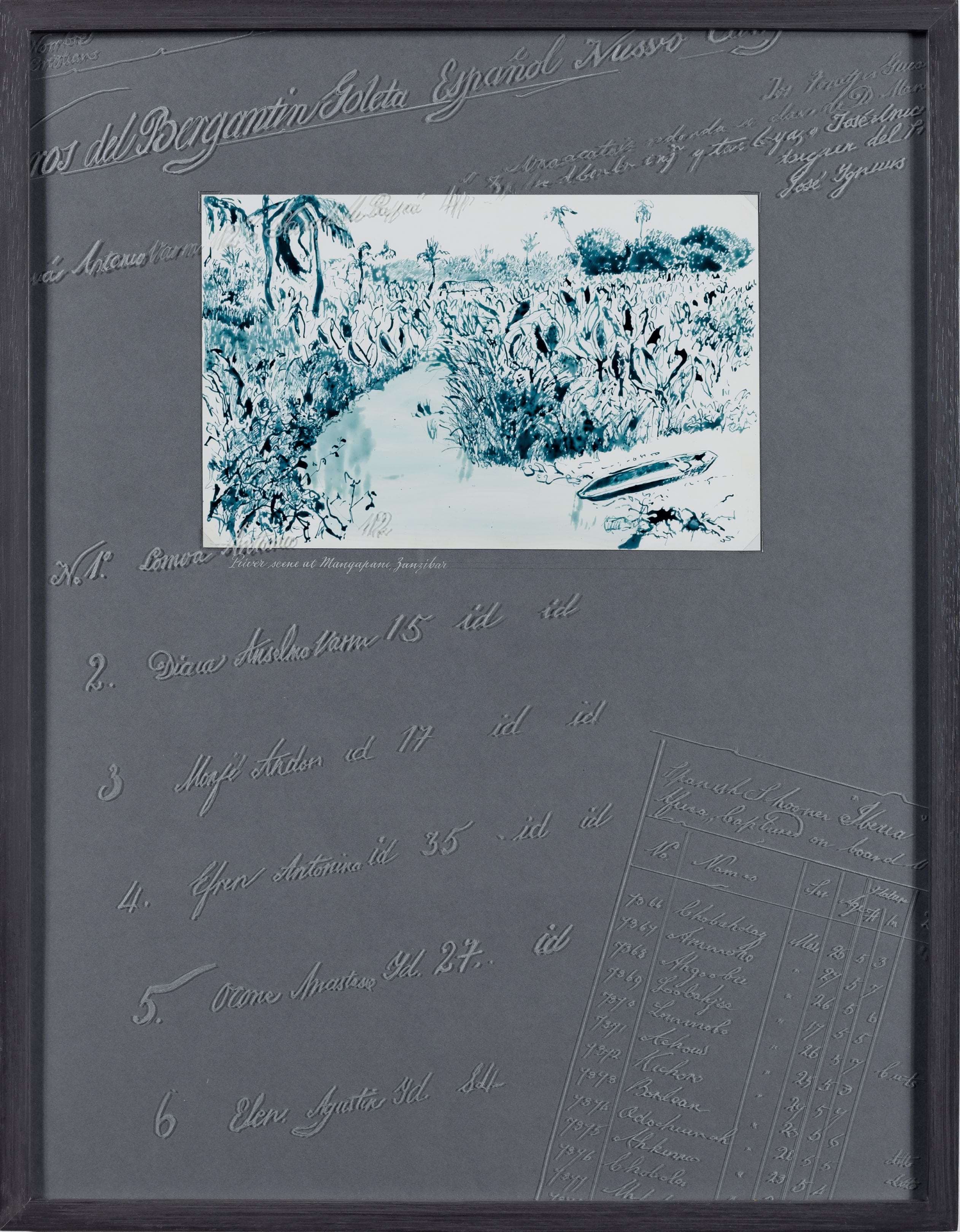
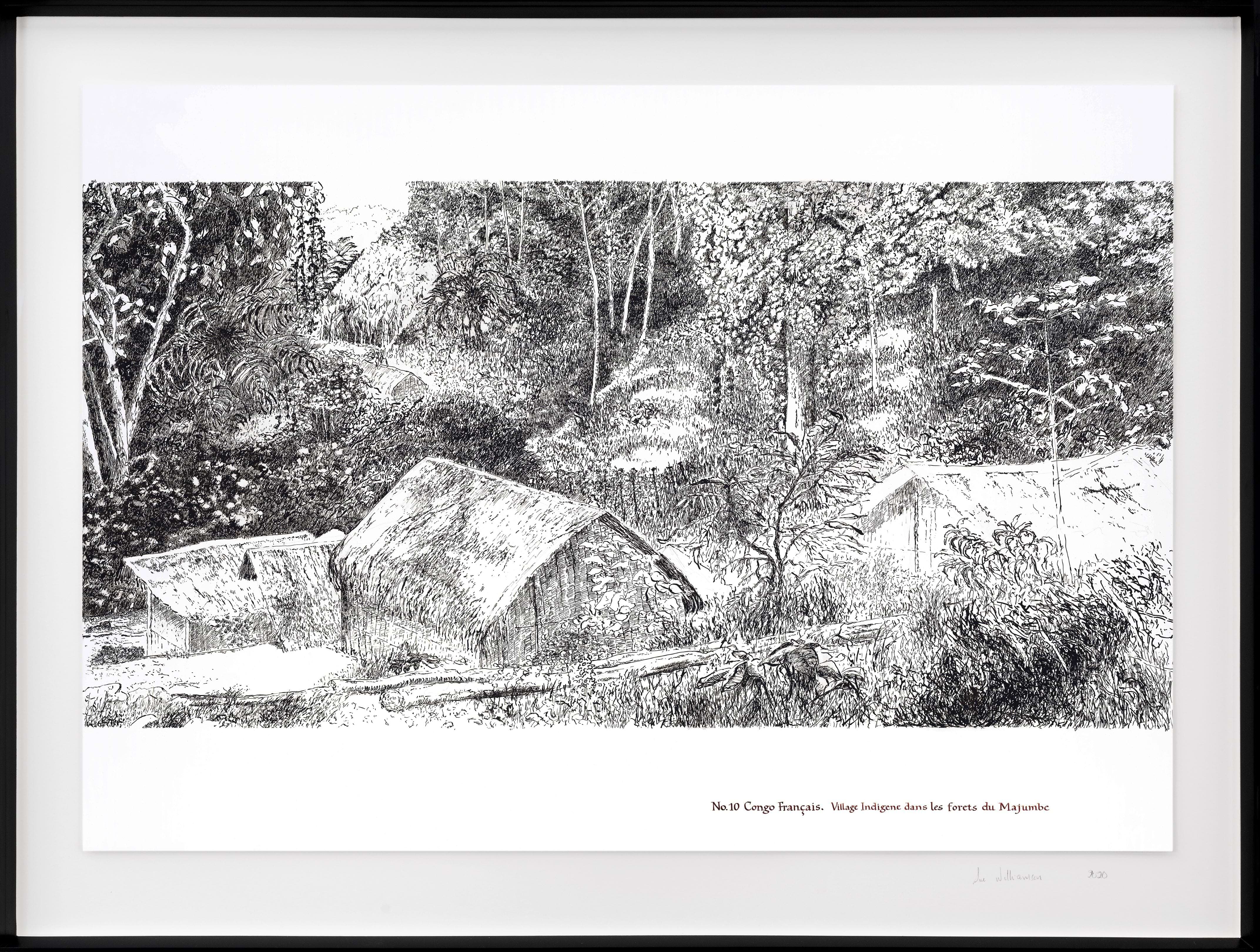
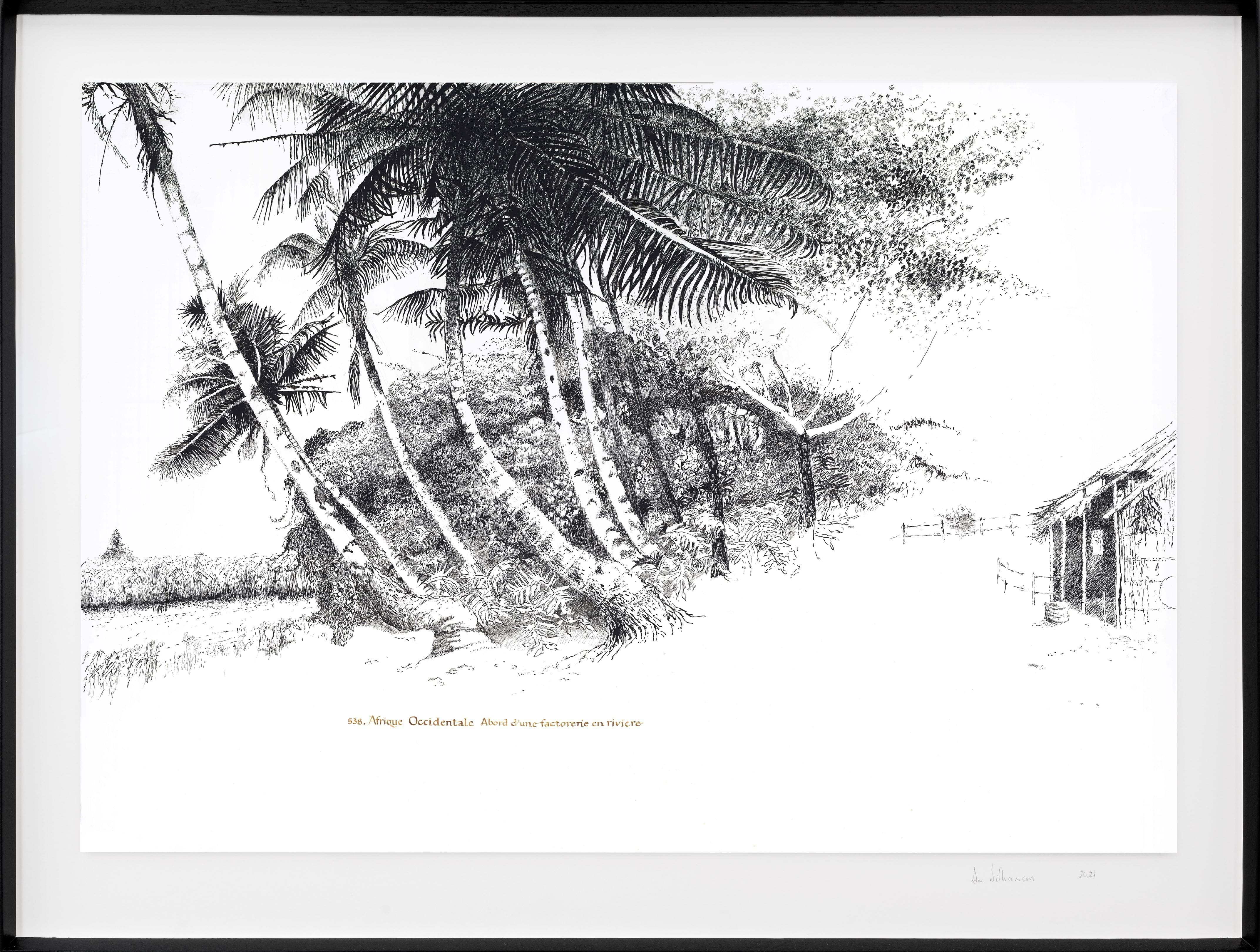
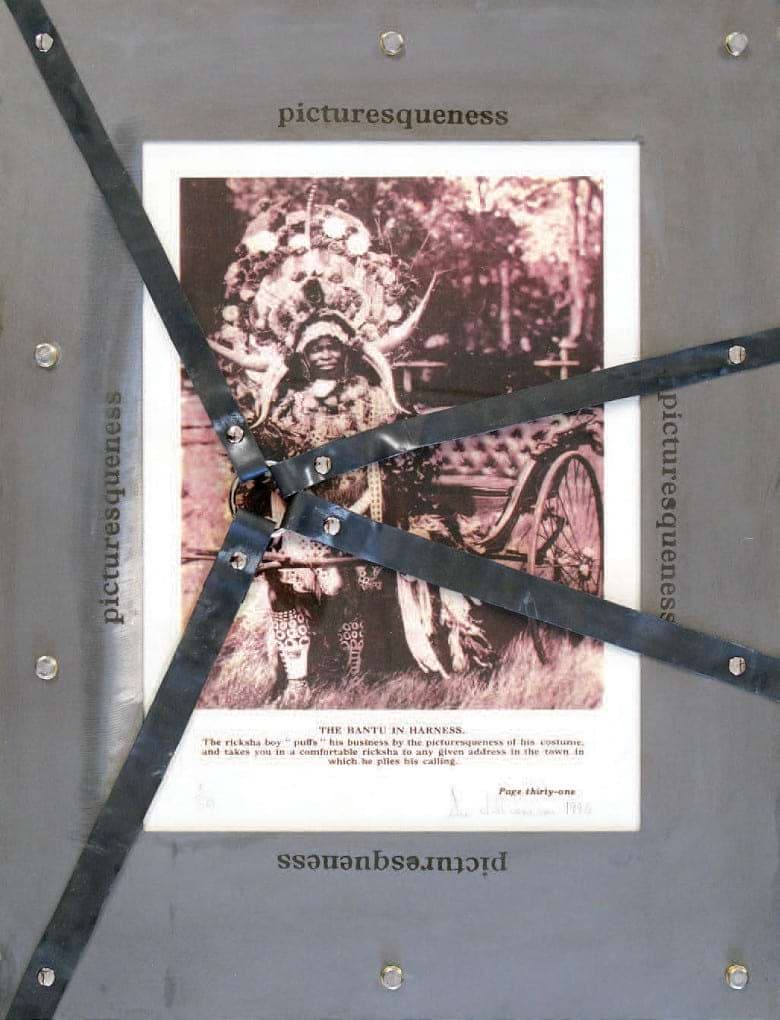
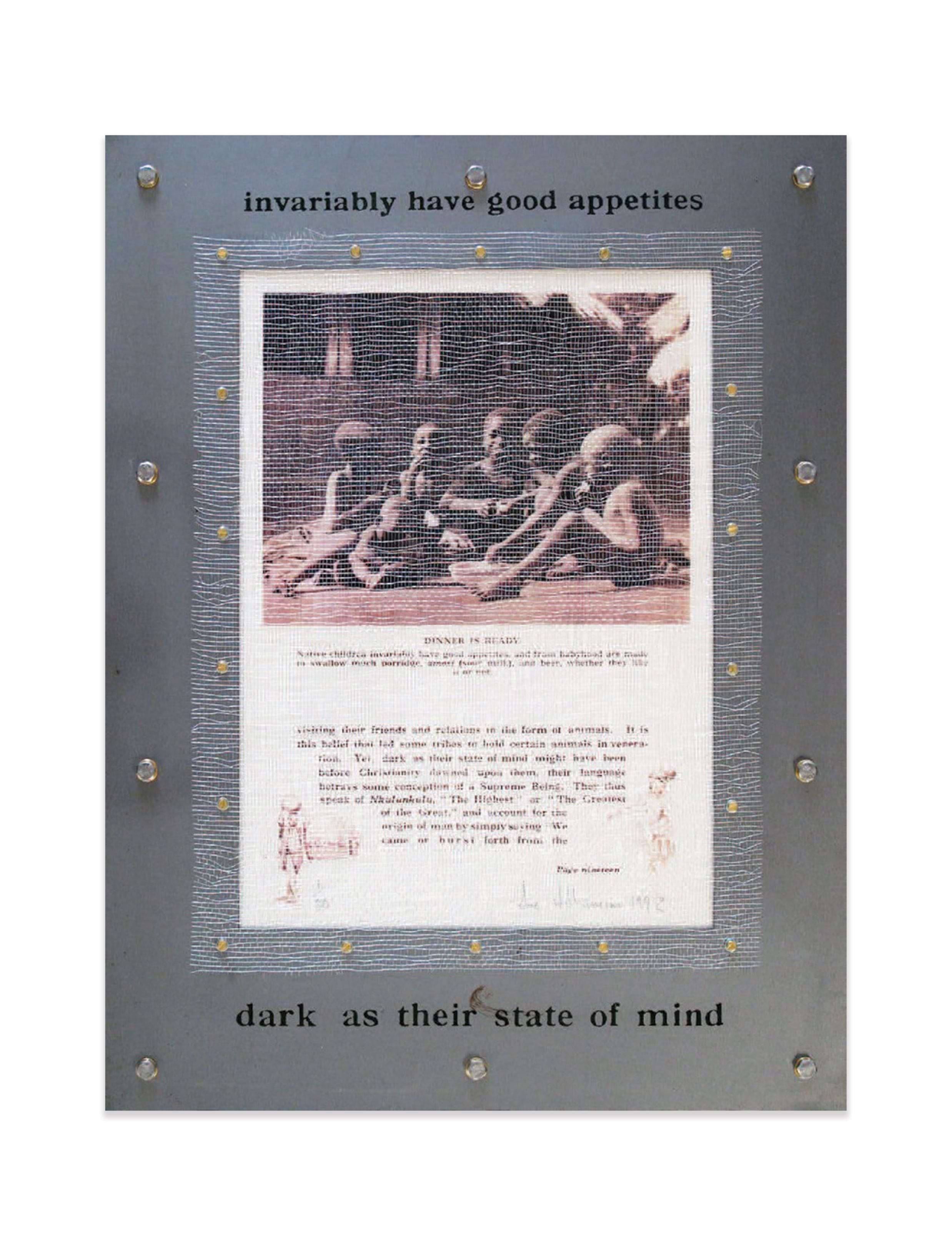
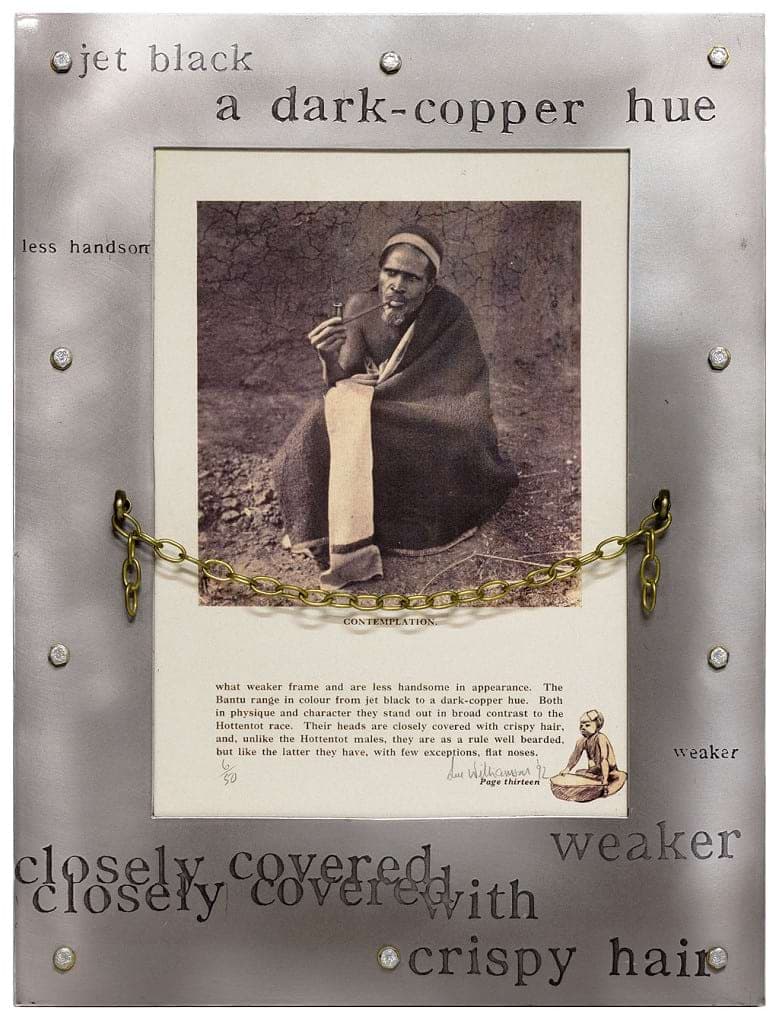
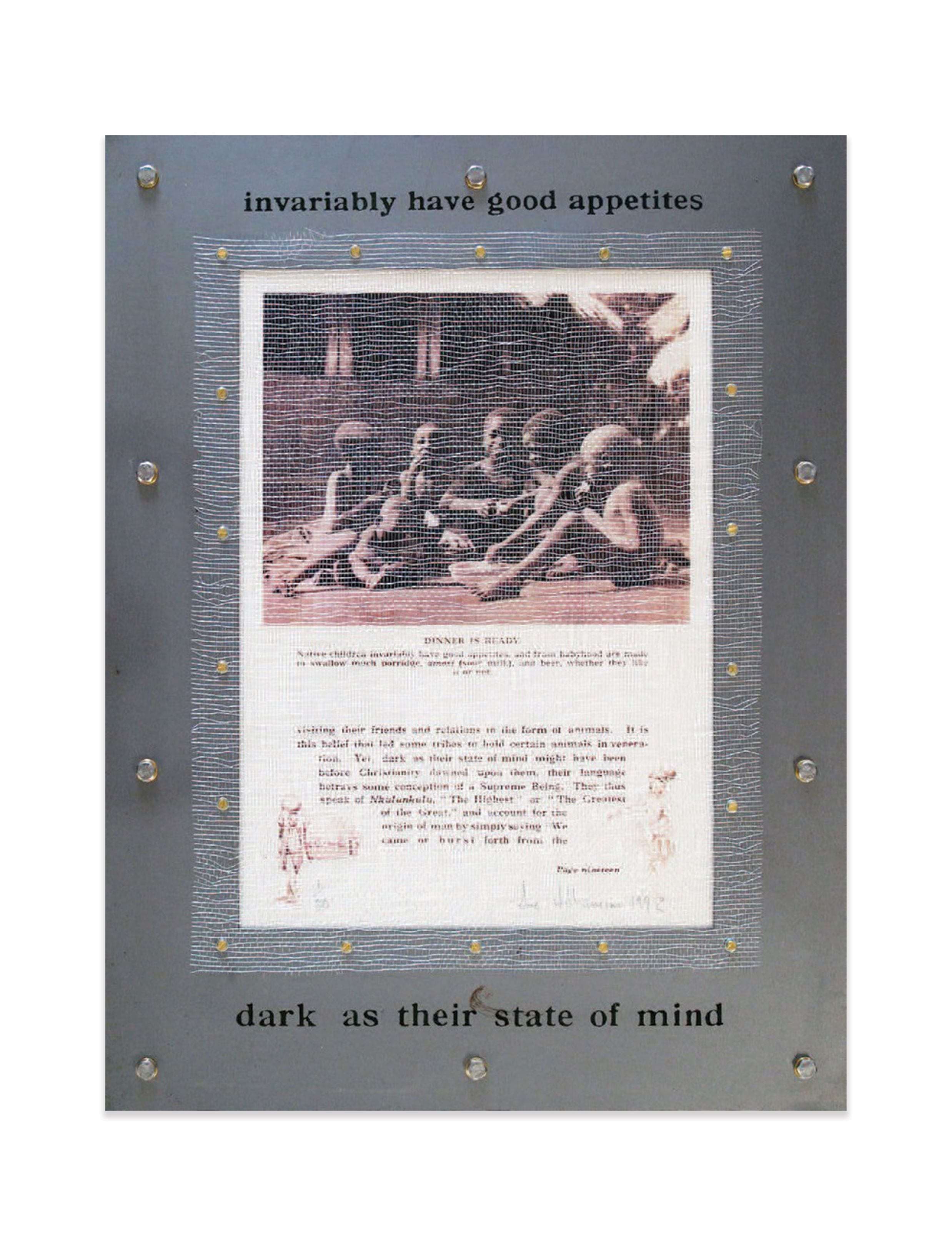
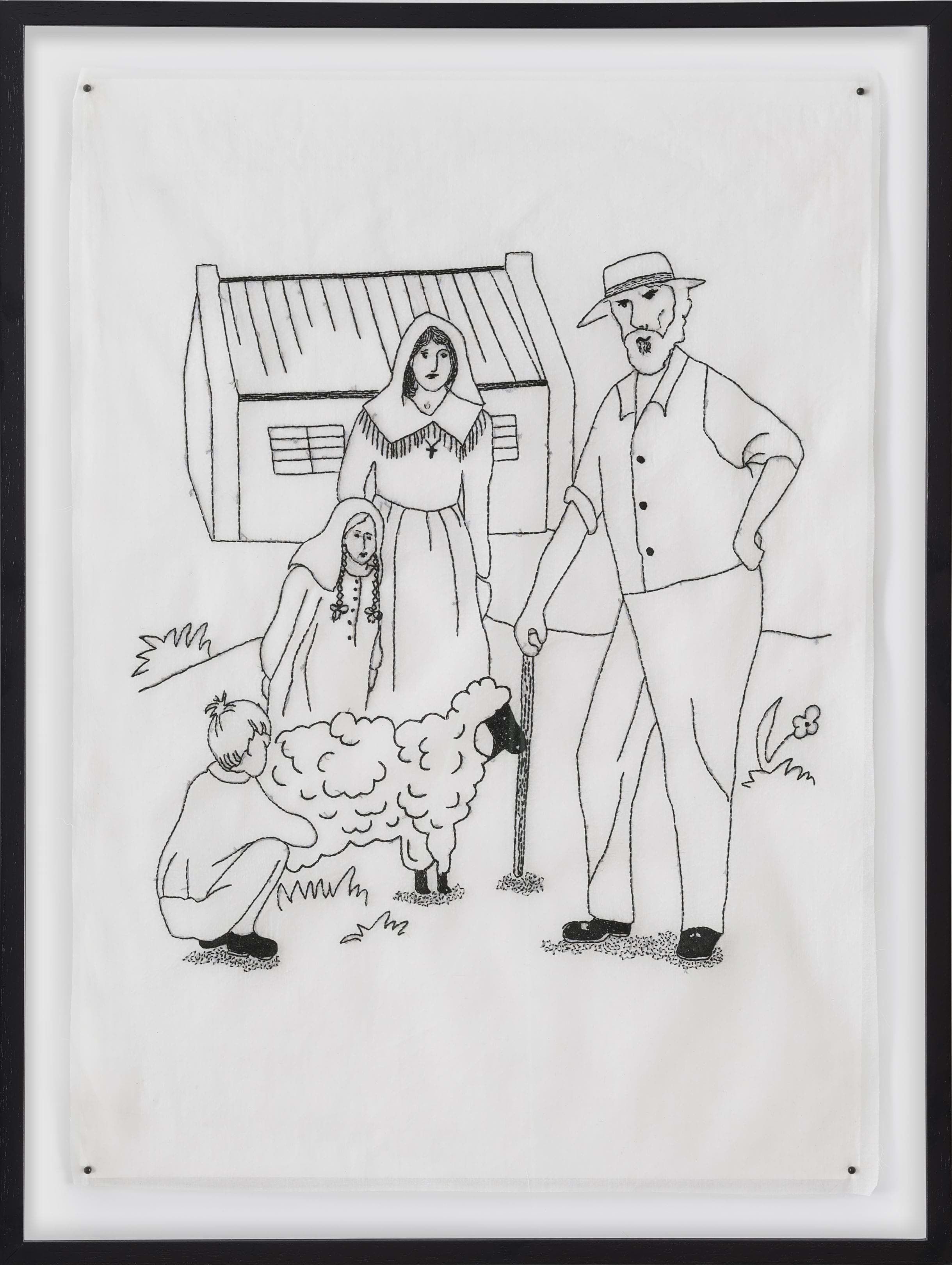
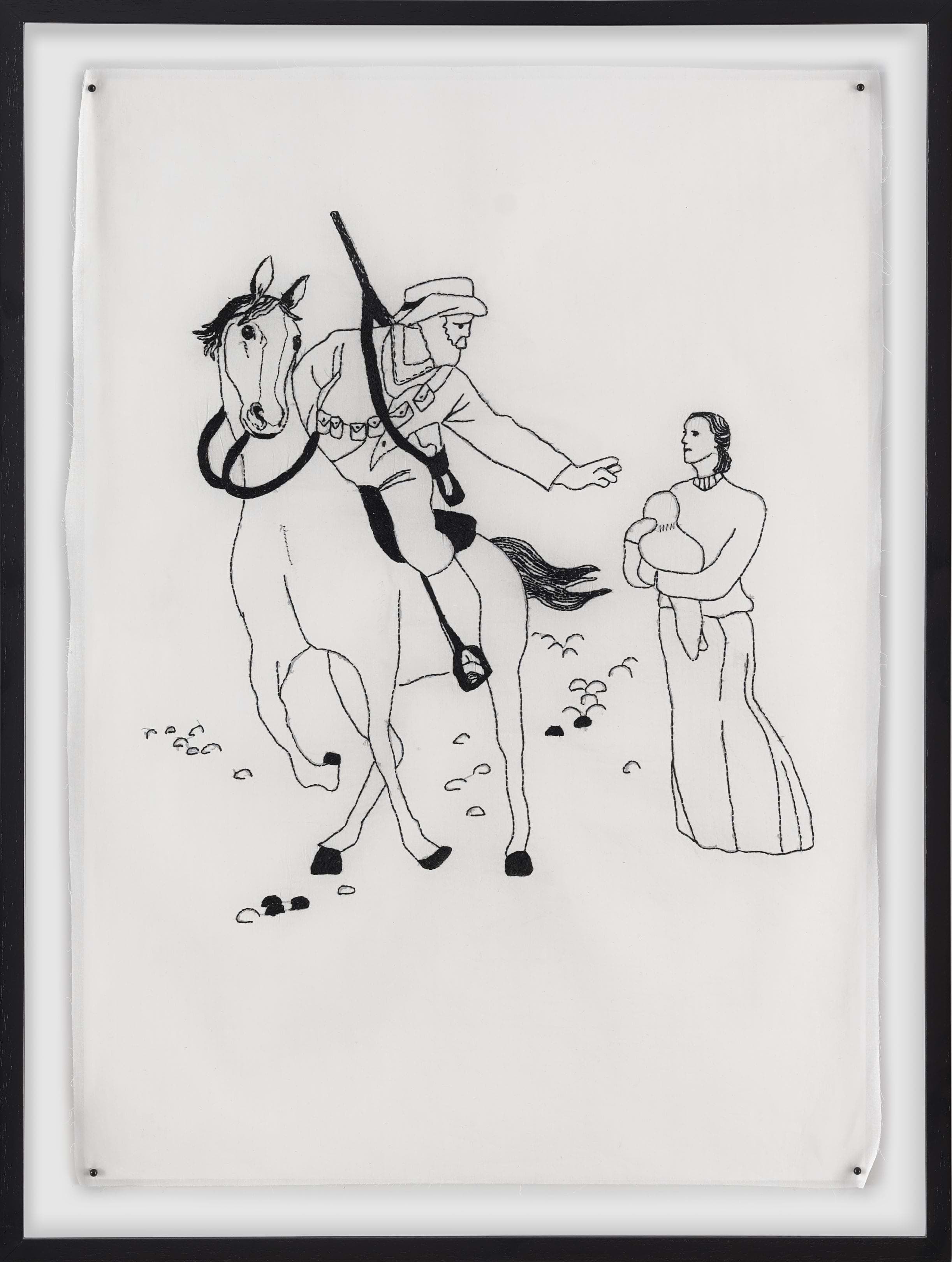
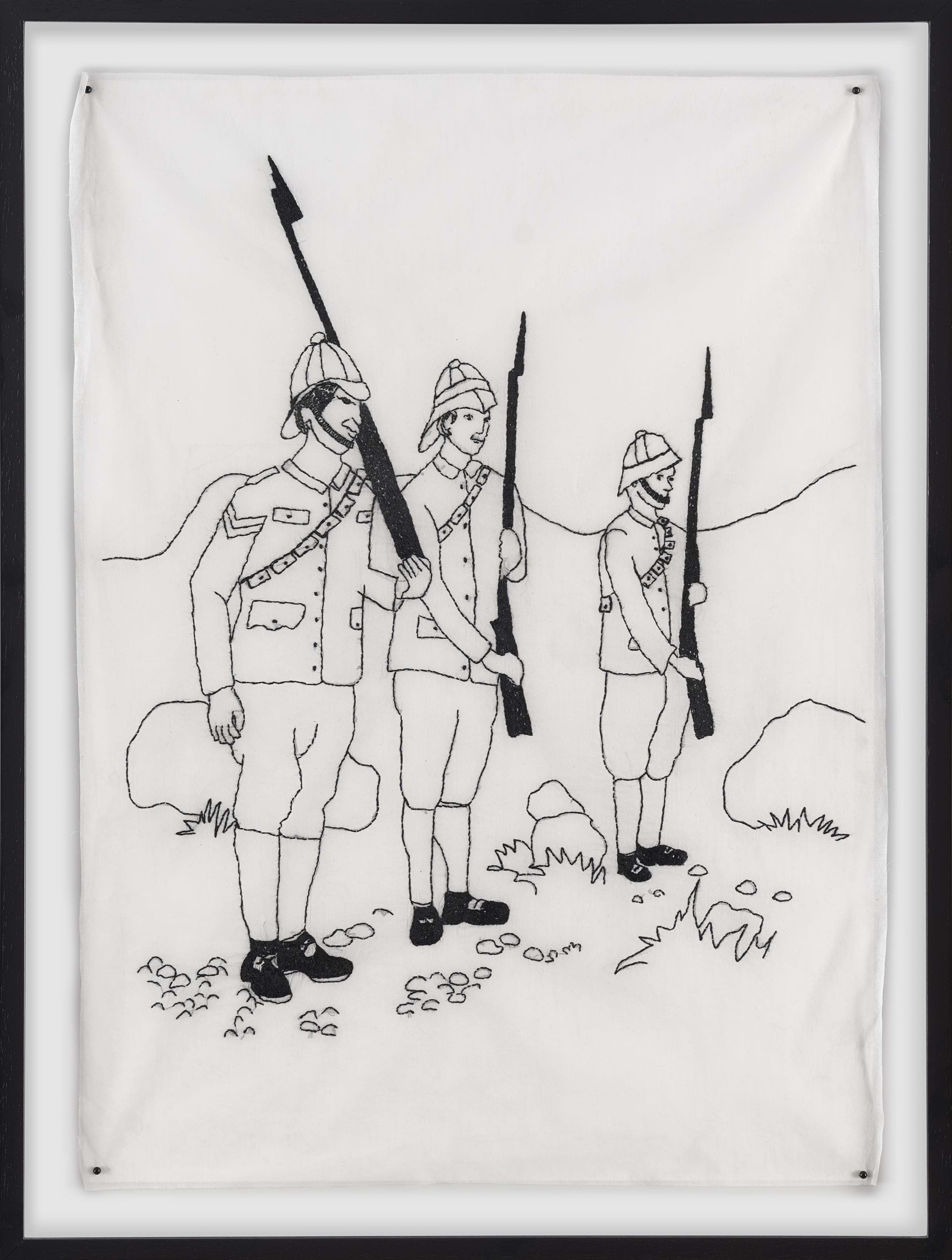
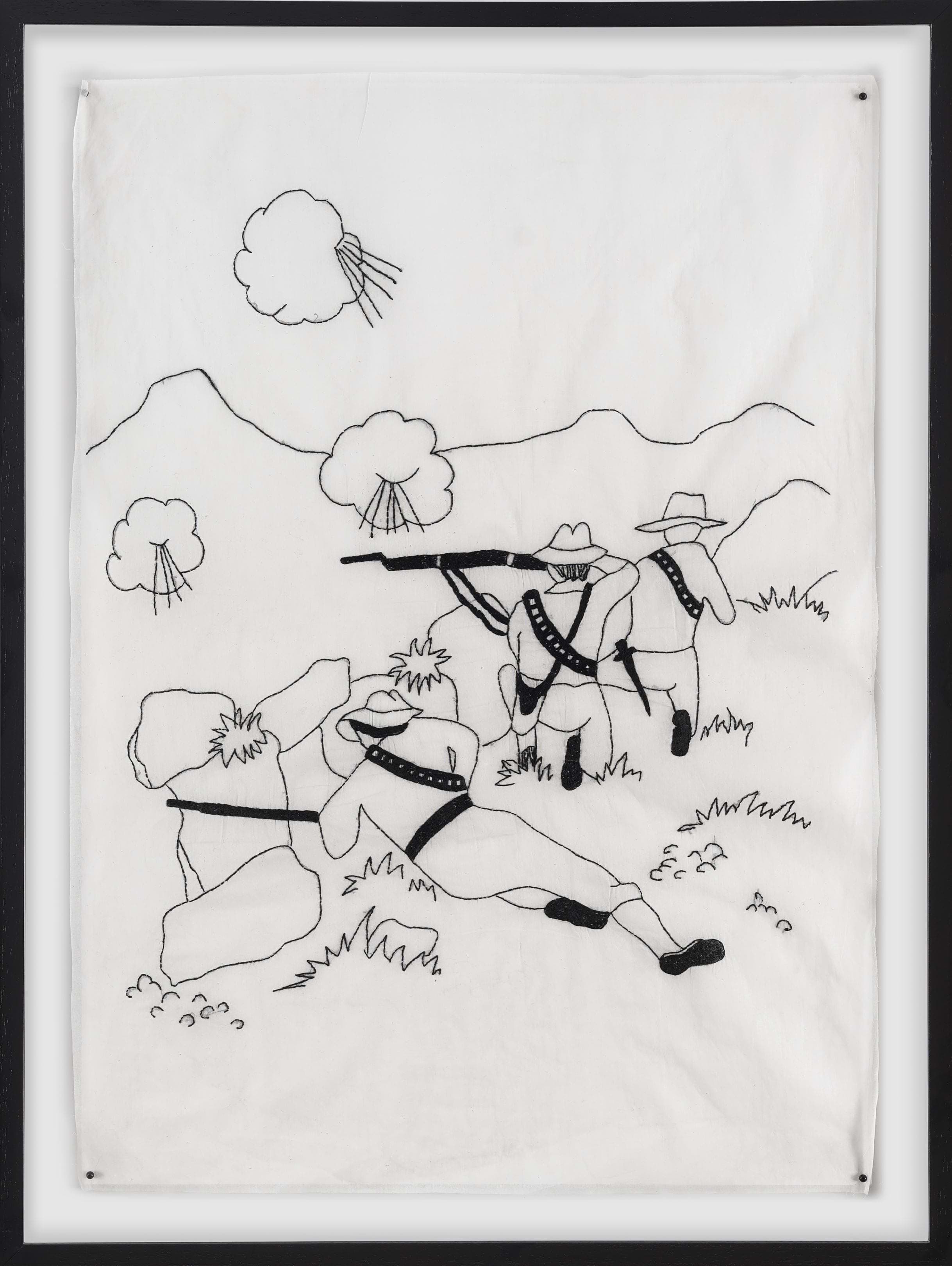
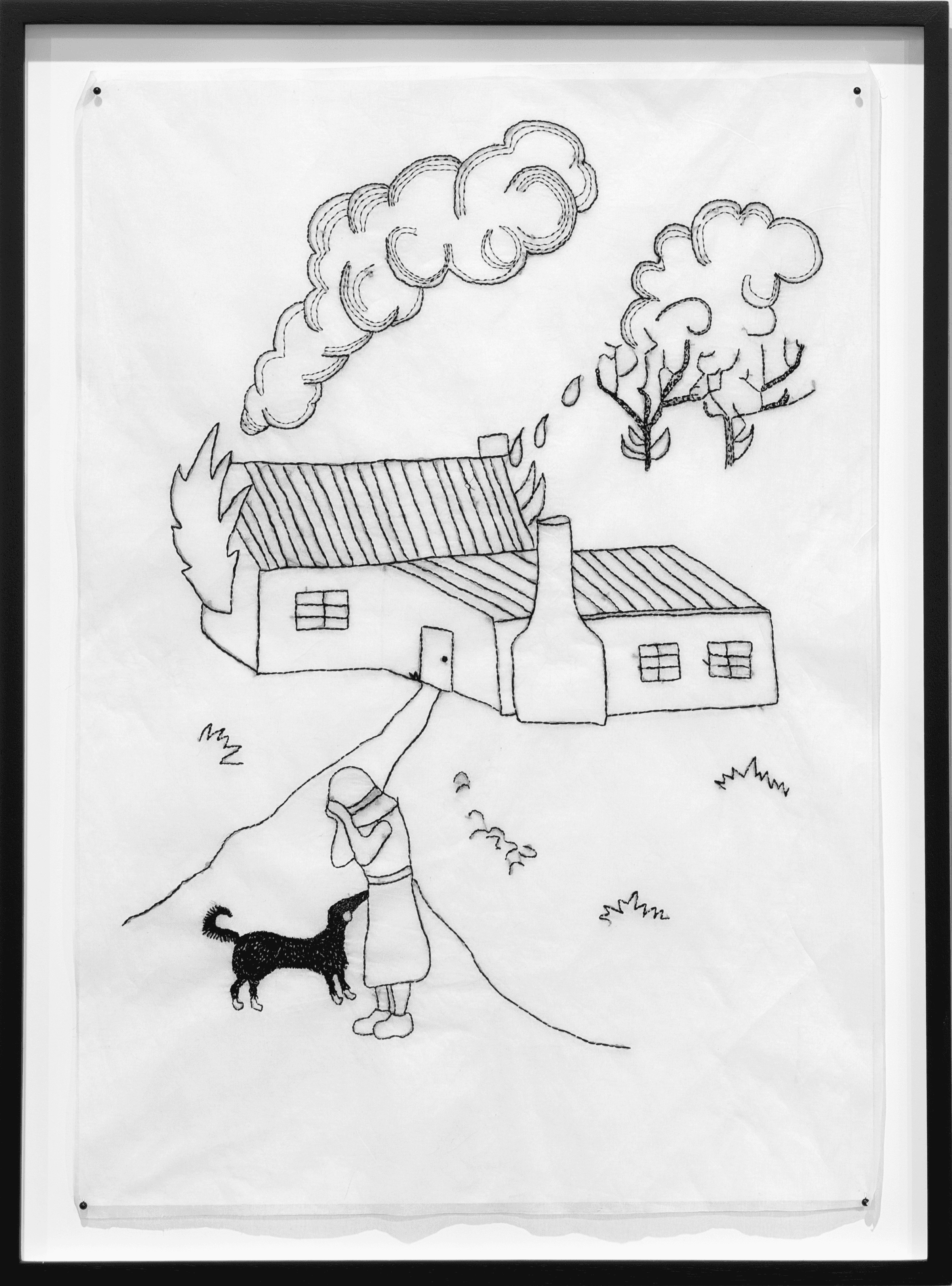
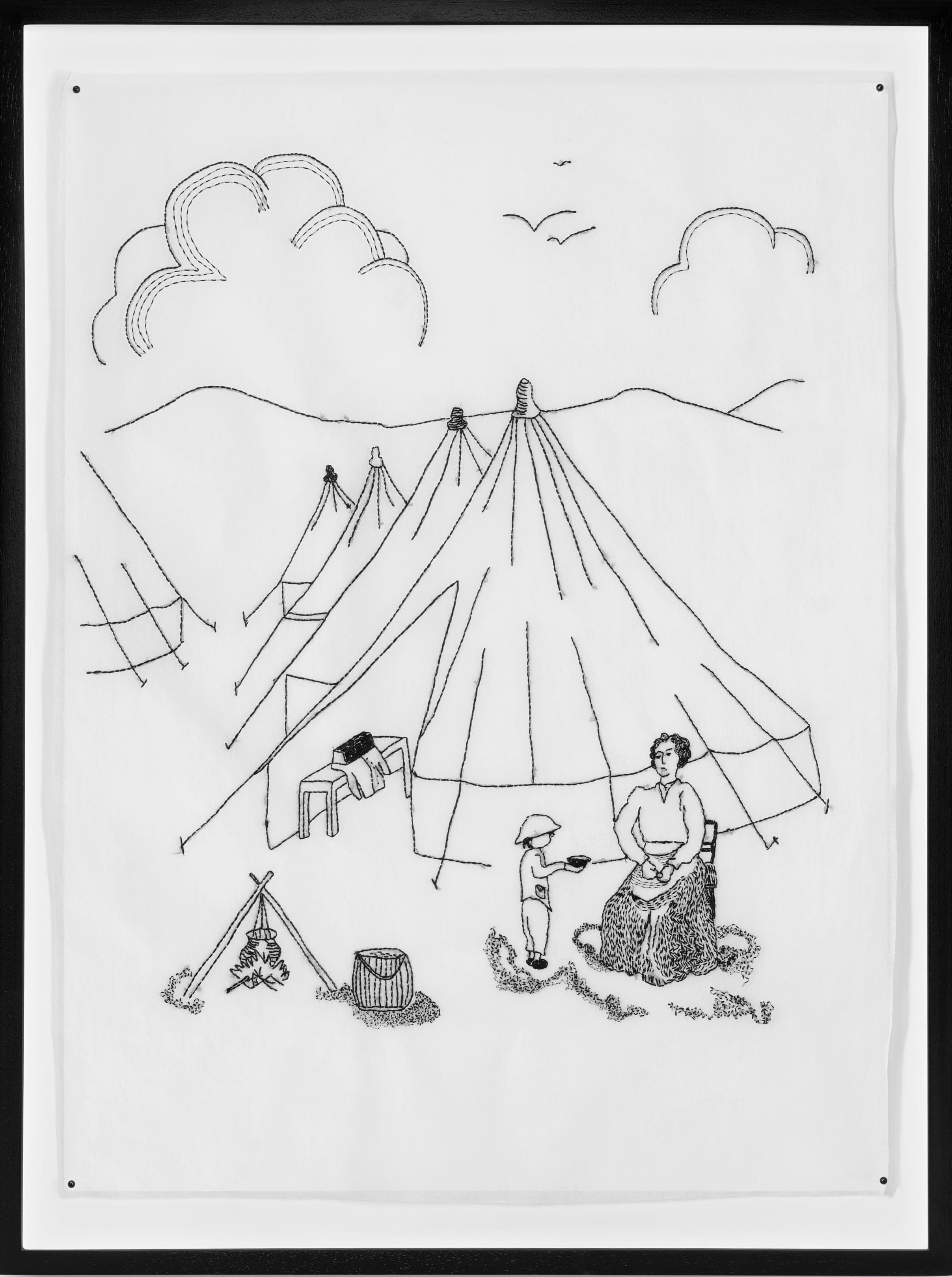
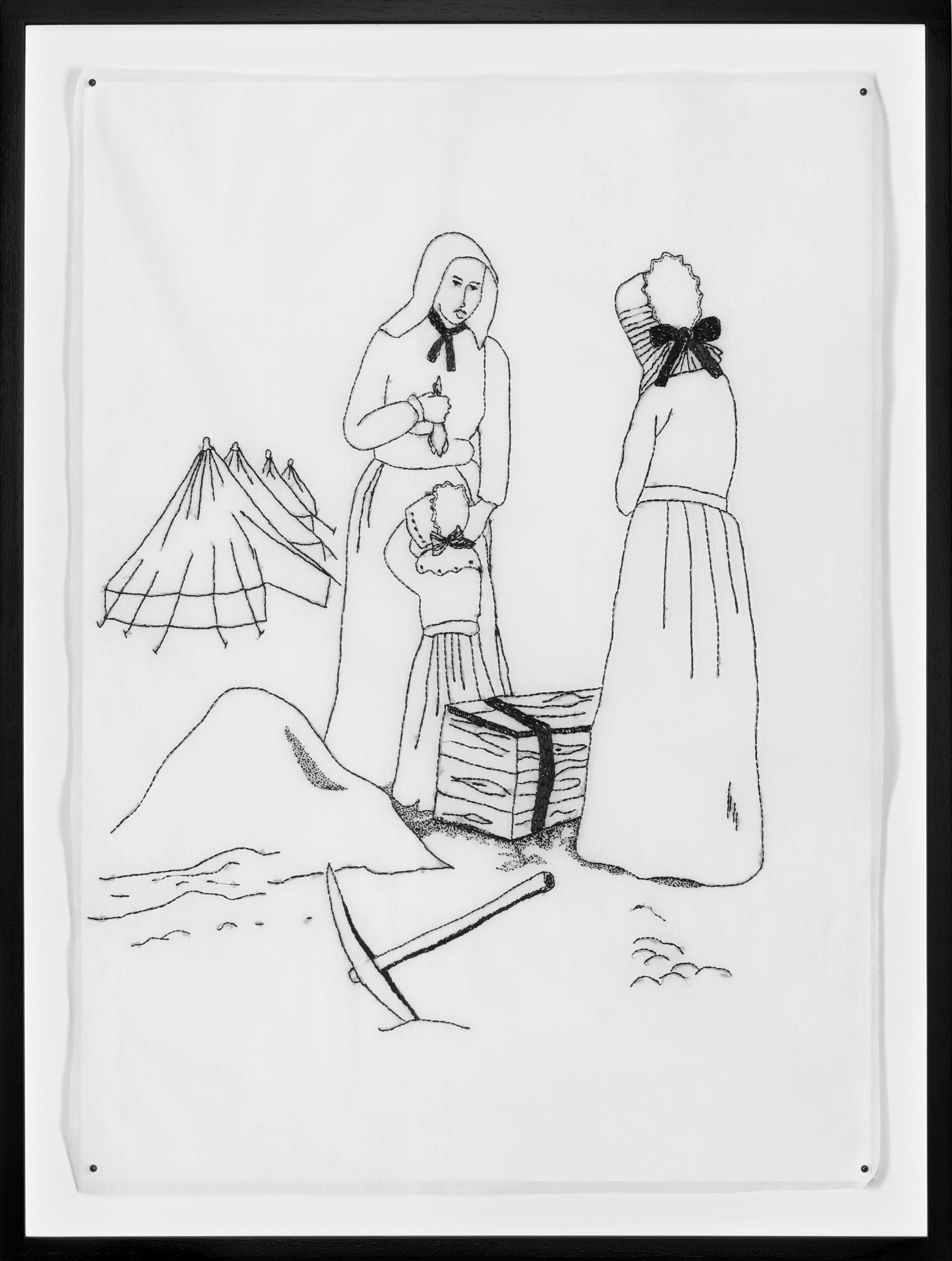
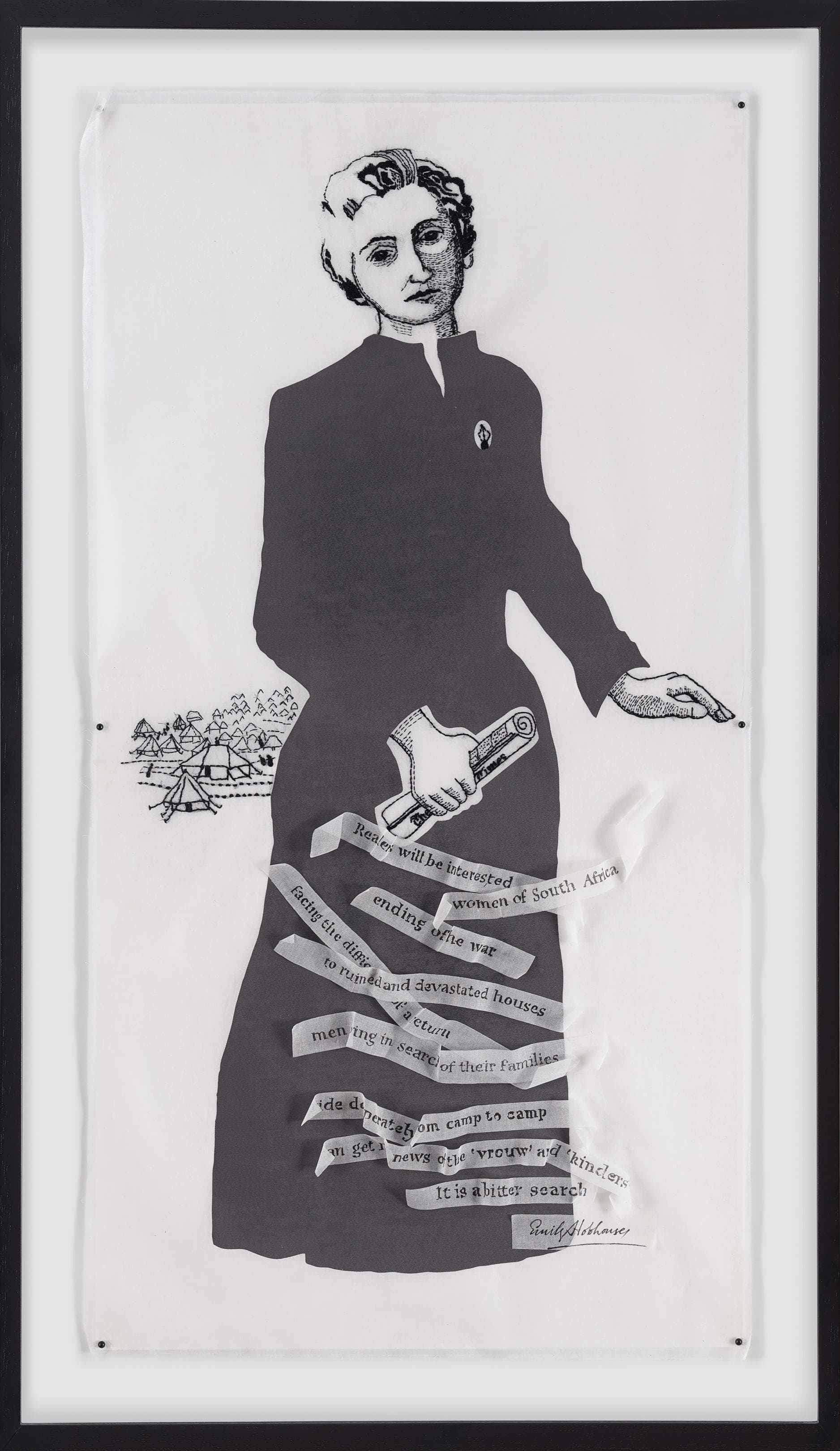
In the series Postcards from Africa, Sue Williamson turns her attention to vintage postcards of photographs taken by European colonizers in Africa in the first decades of the 20th century. Part of a global craze for postcards, these were sent out as examples which supposedly demonstrated the civilizing effect of colonisation on the colonised, or presented views of exotic Africa for the edification of the folks back home.
Using museum archives or the internet to source the postcards, Williamson reverts to classic drawing technique, dipping her pens and brushes into bottles of ink to build up images with layers of intricate cross hatching and adding colour from a limited palette.
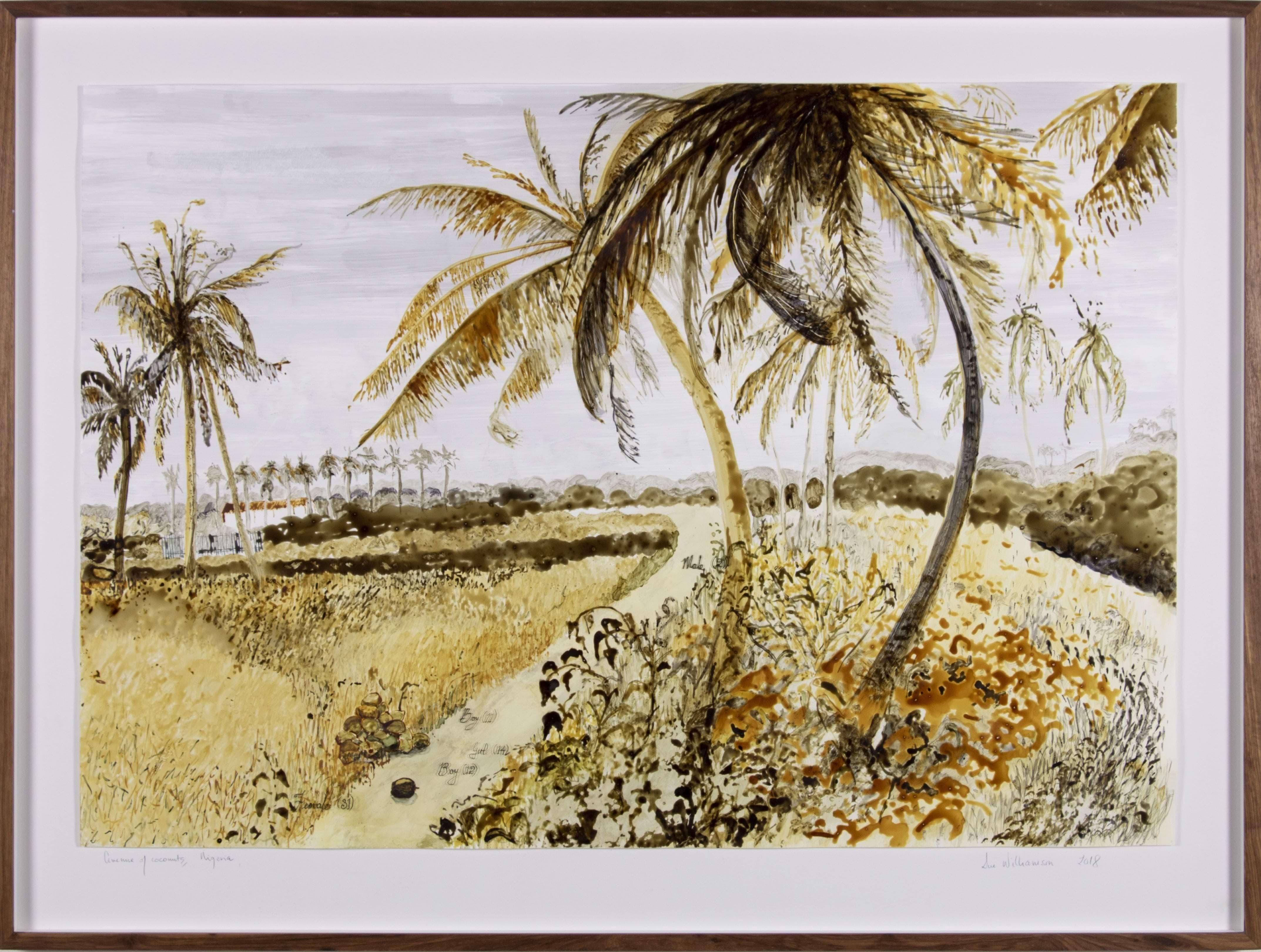
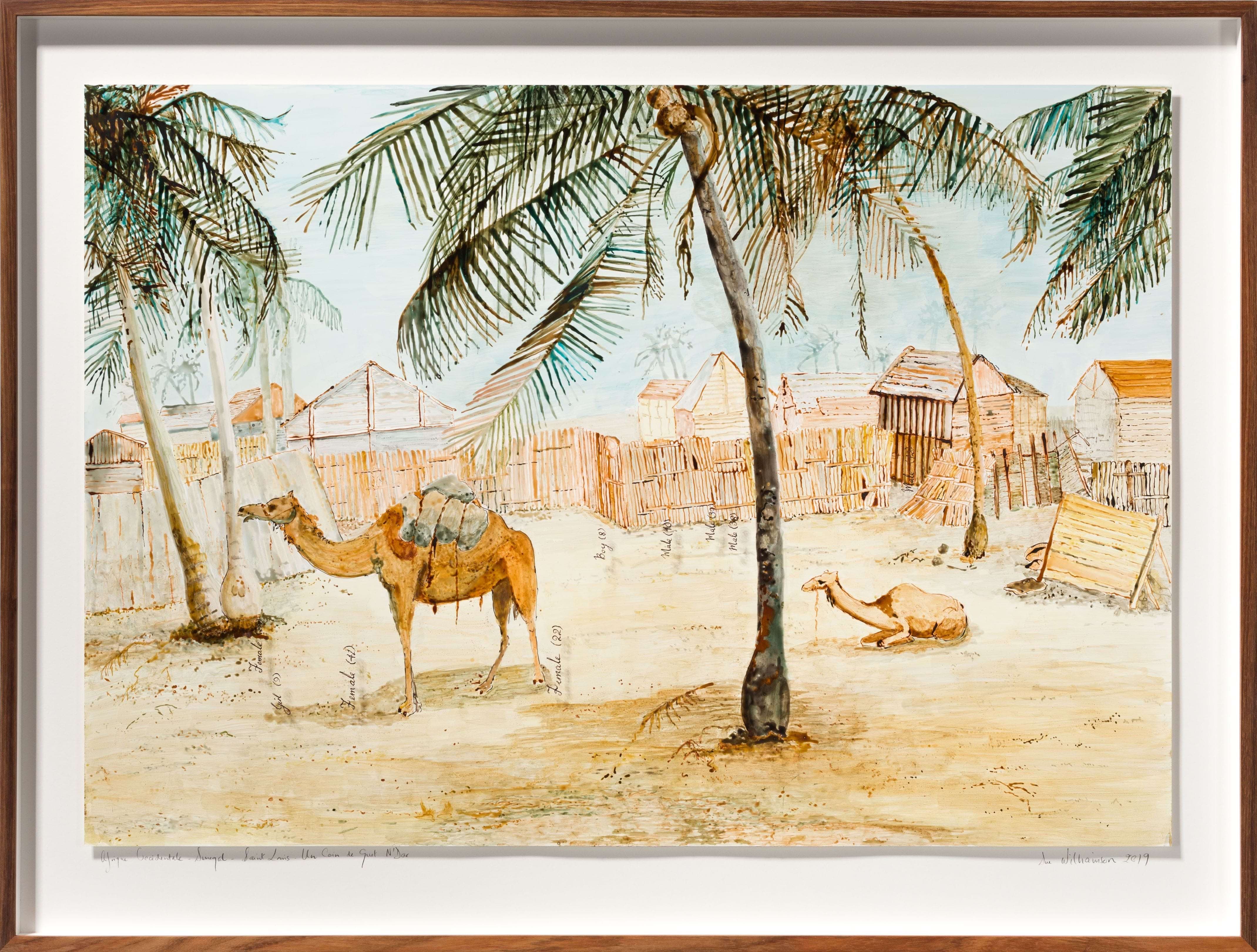
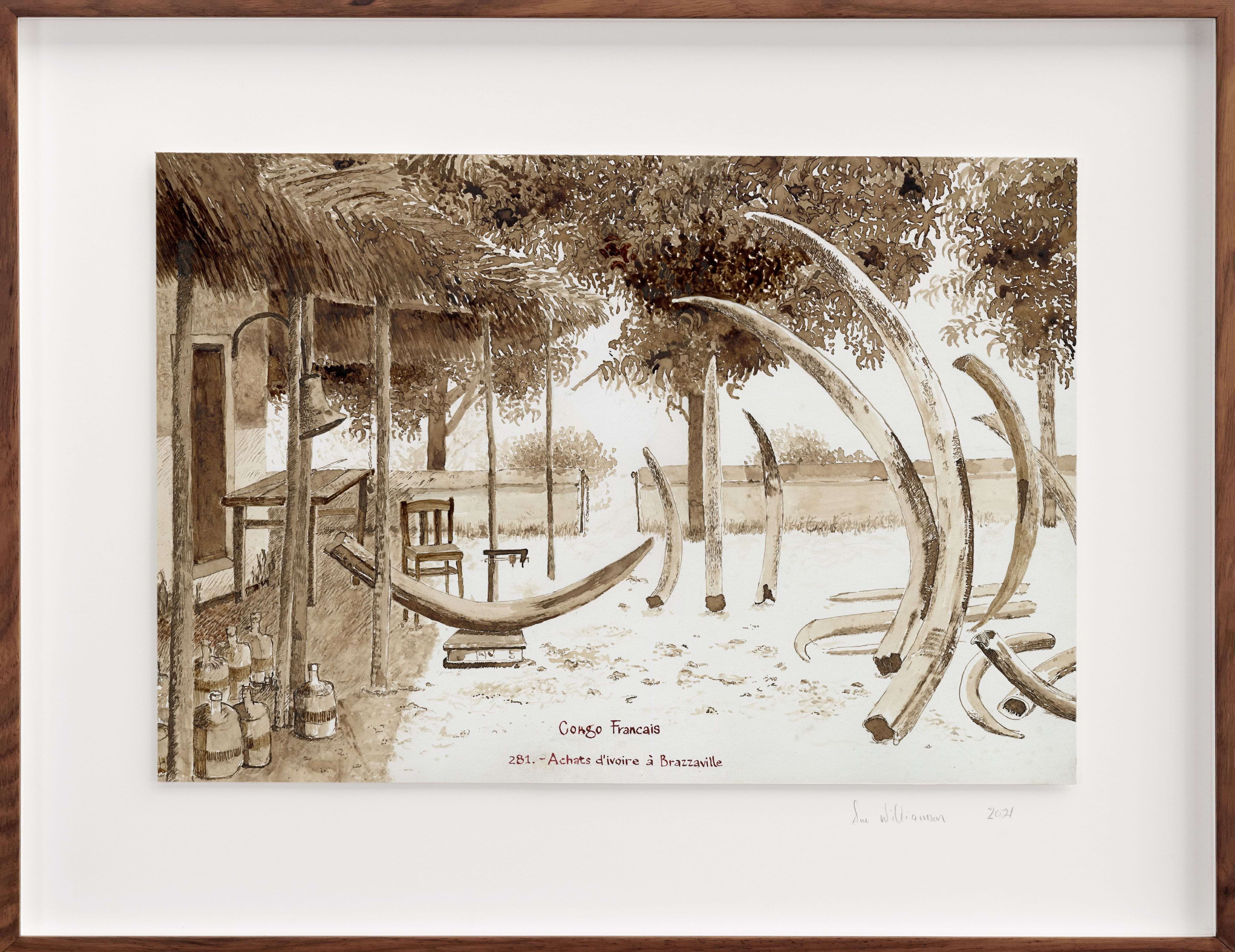
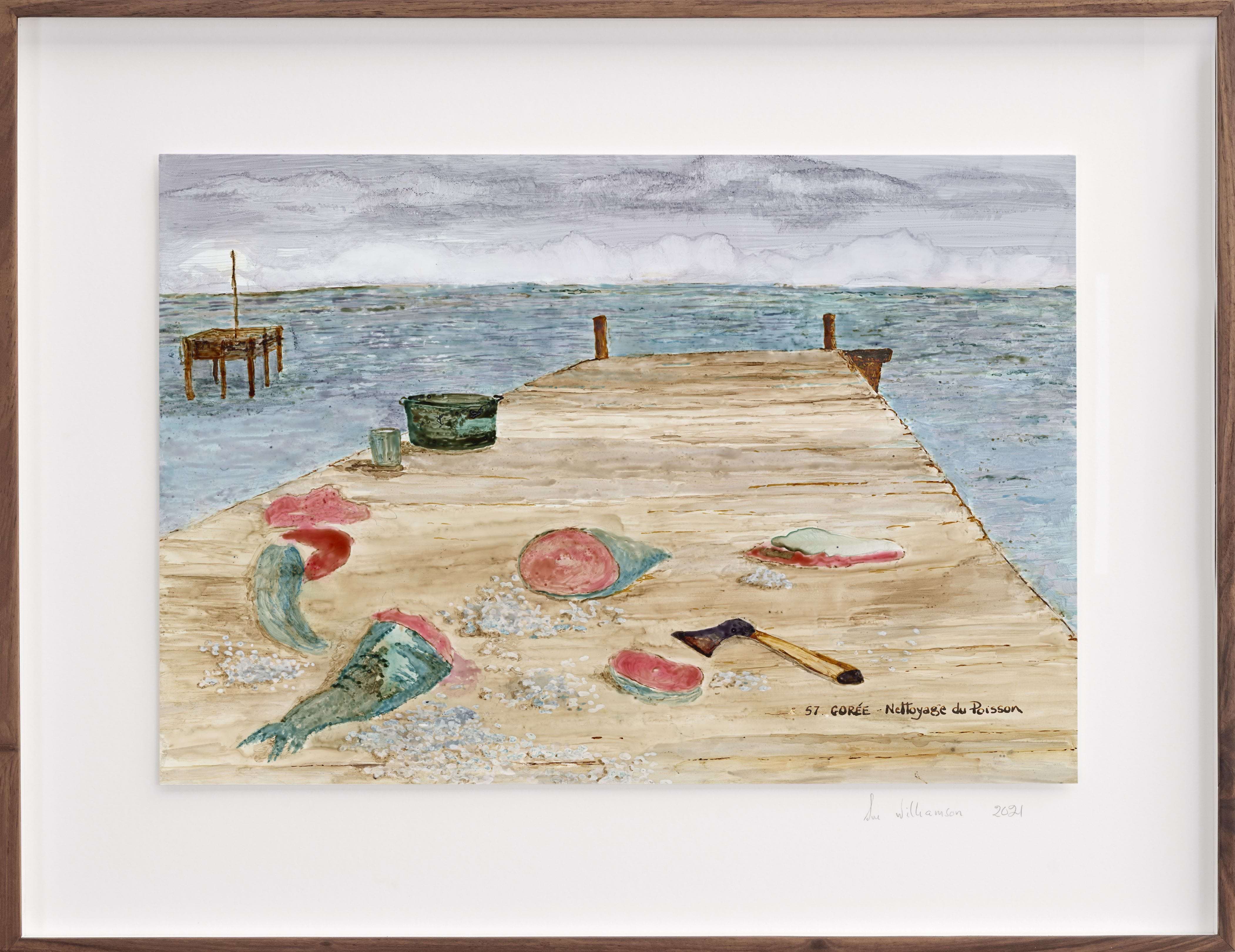
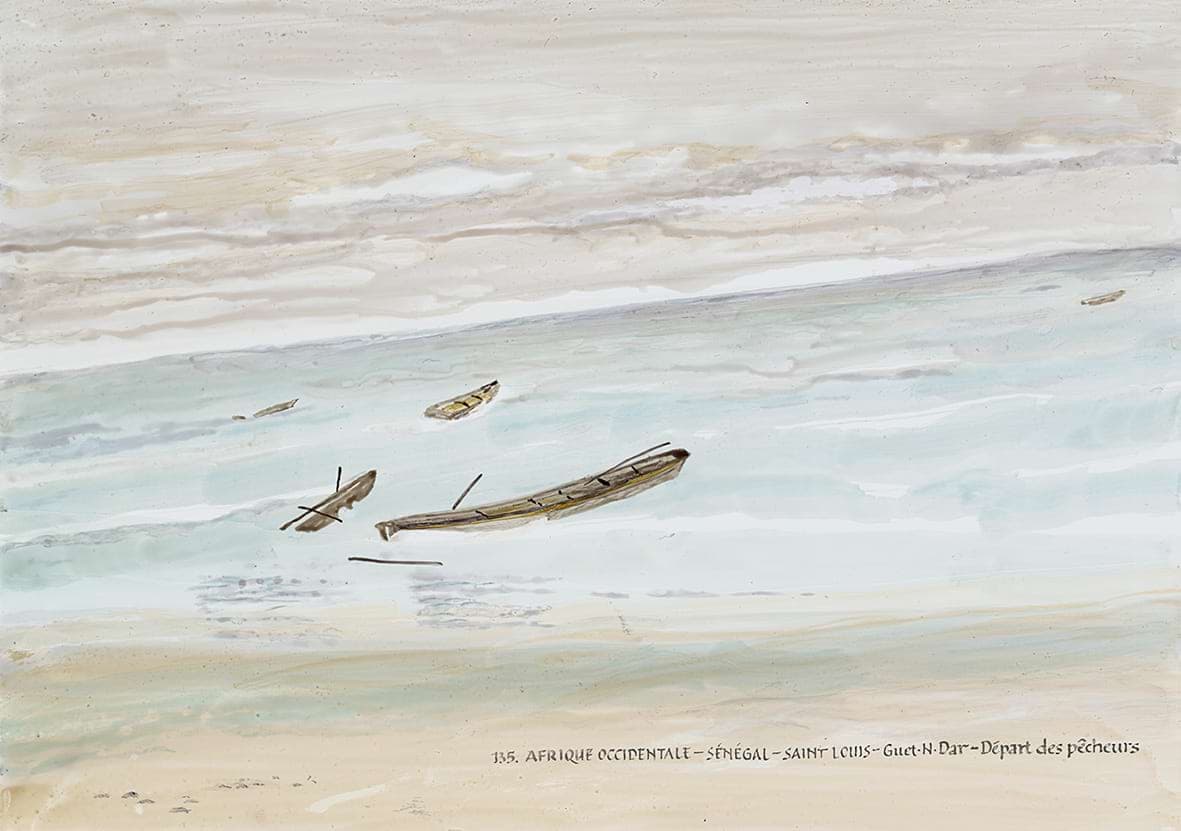
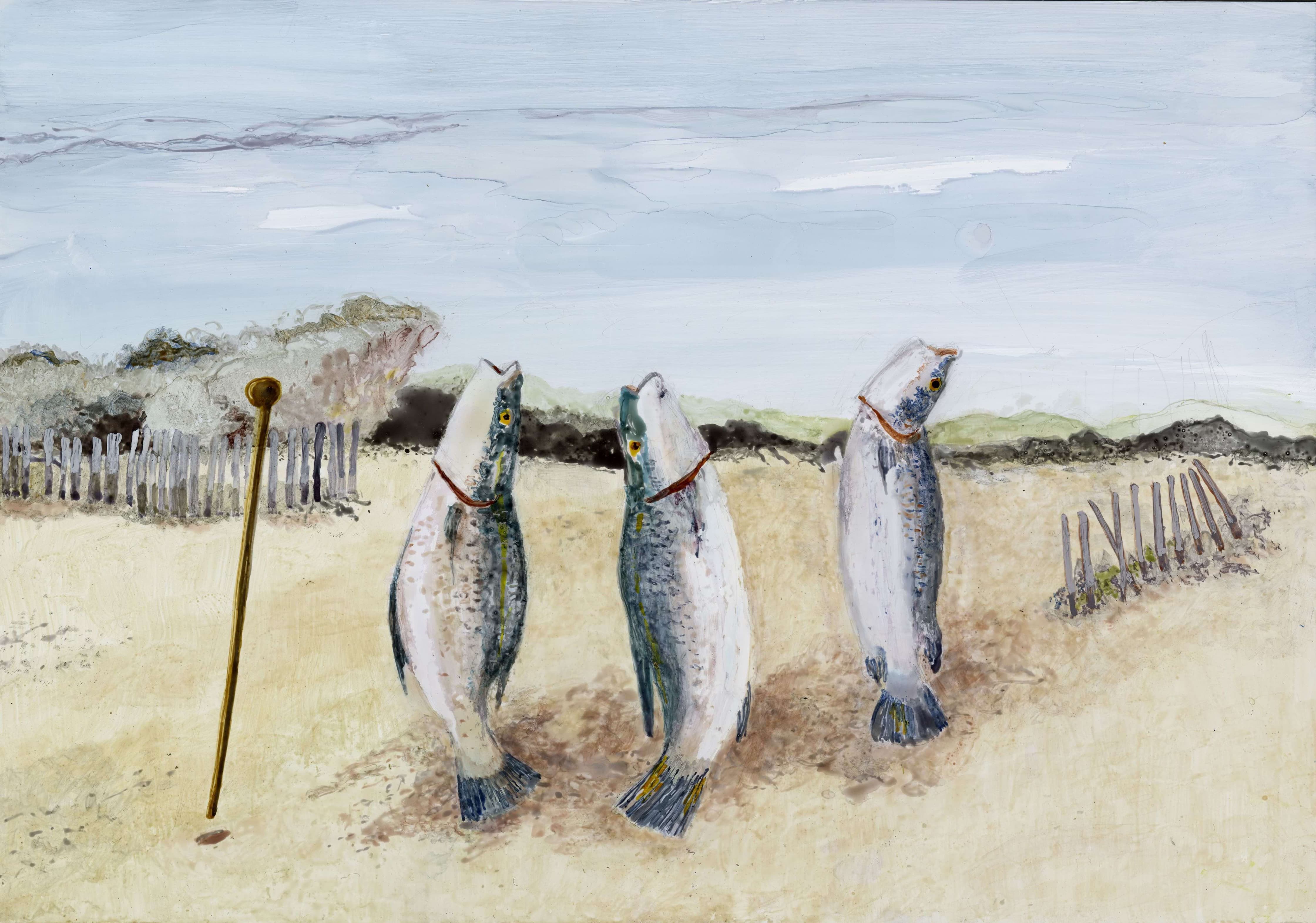
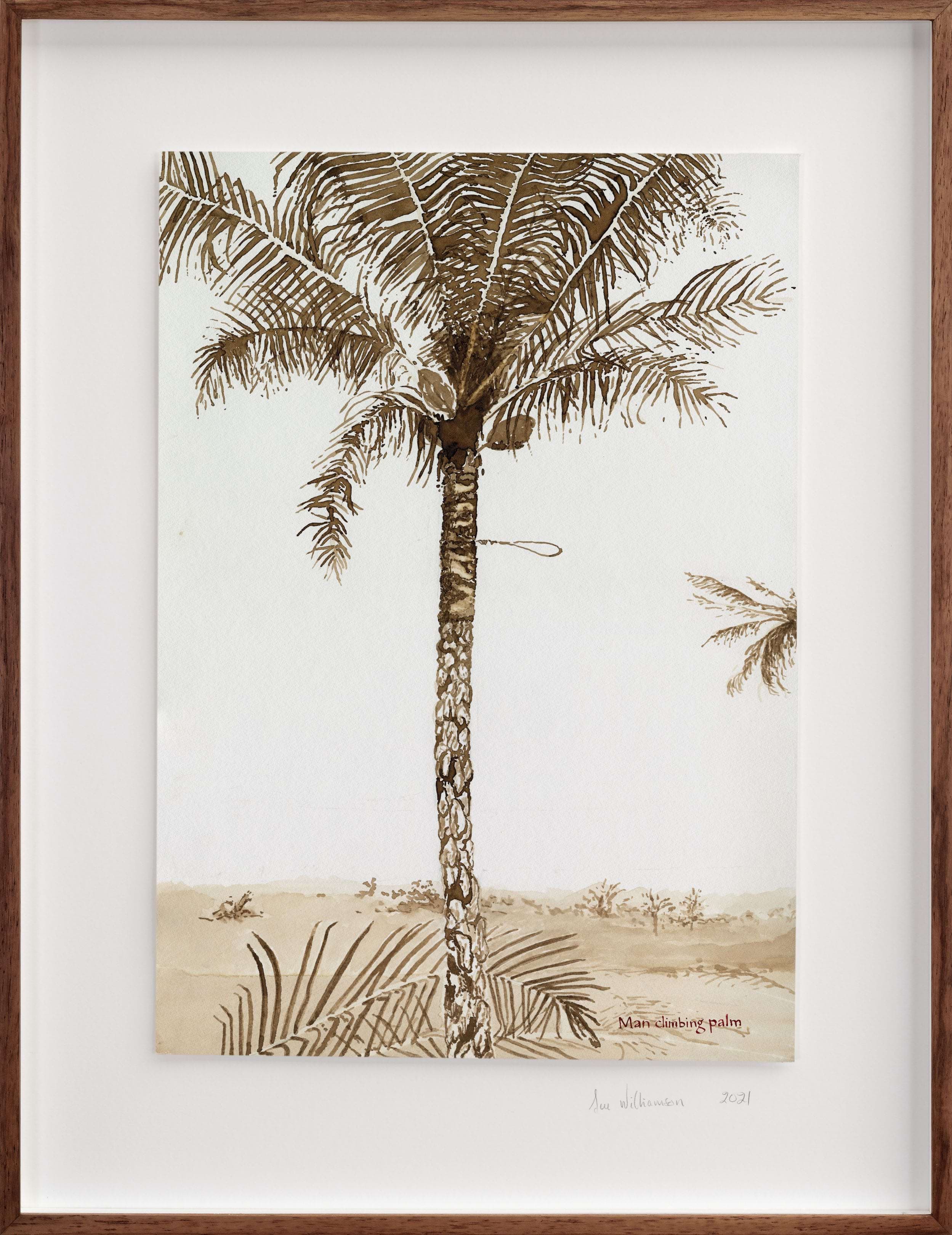
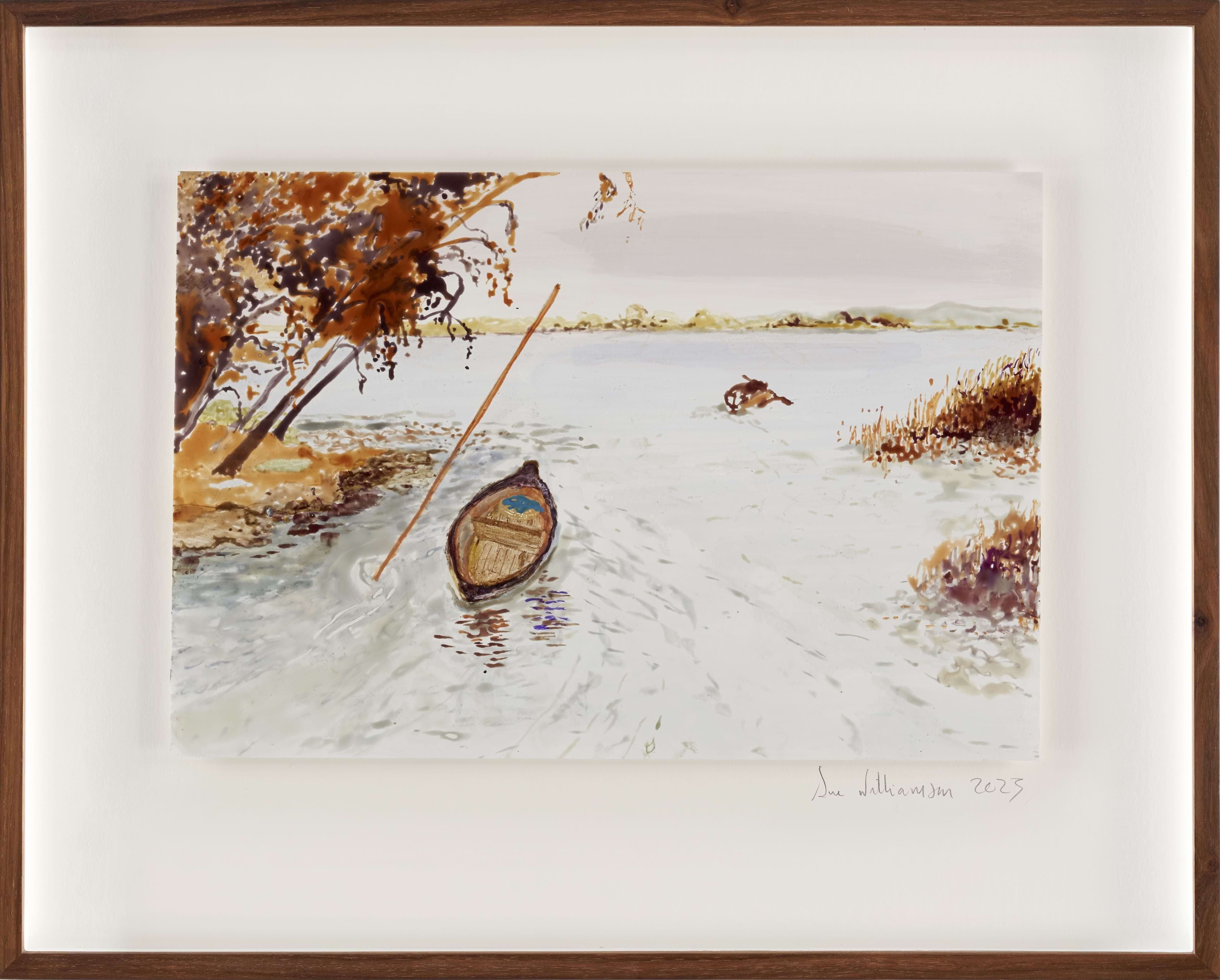
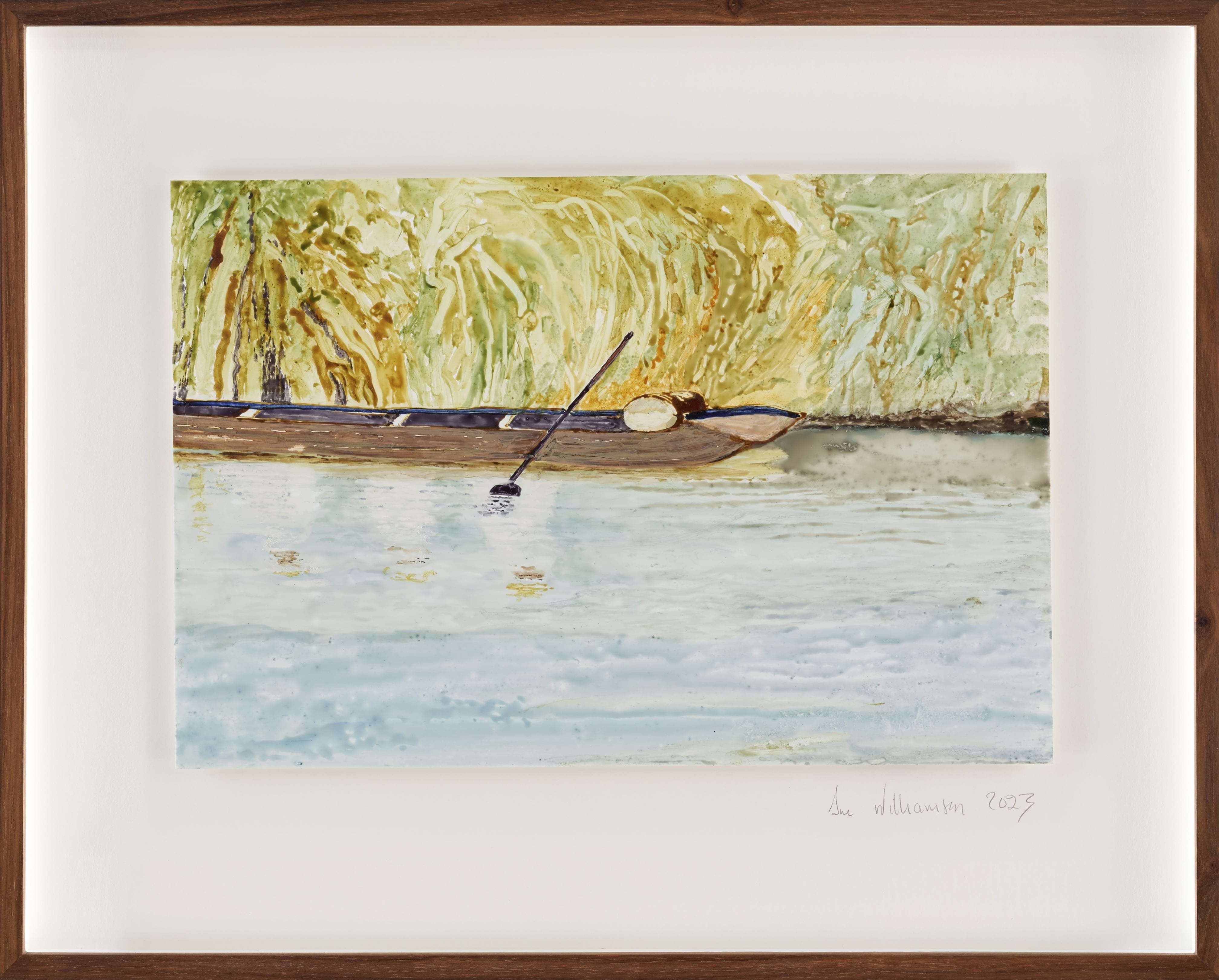
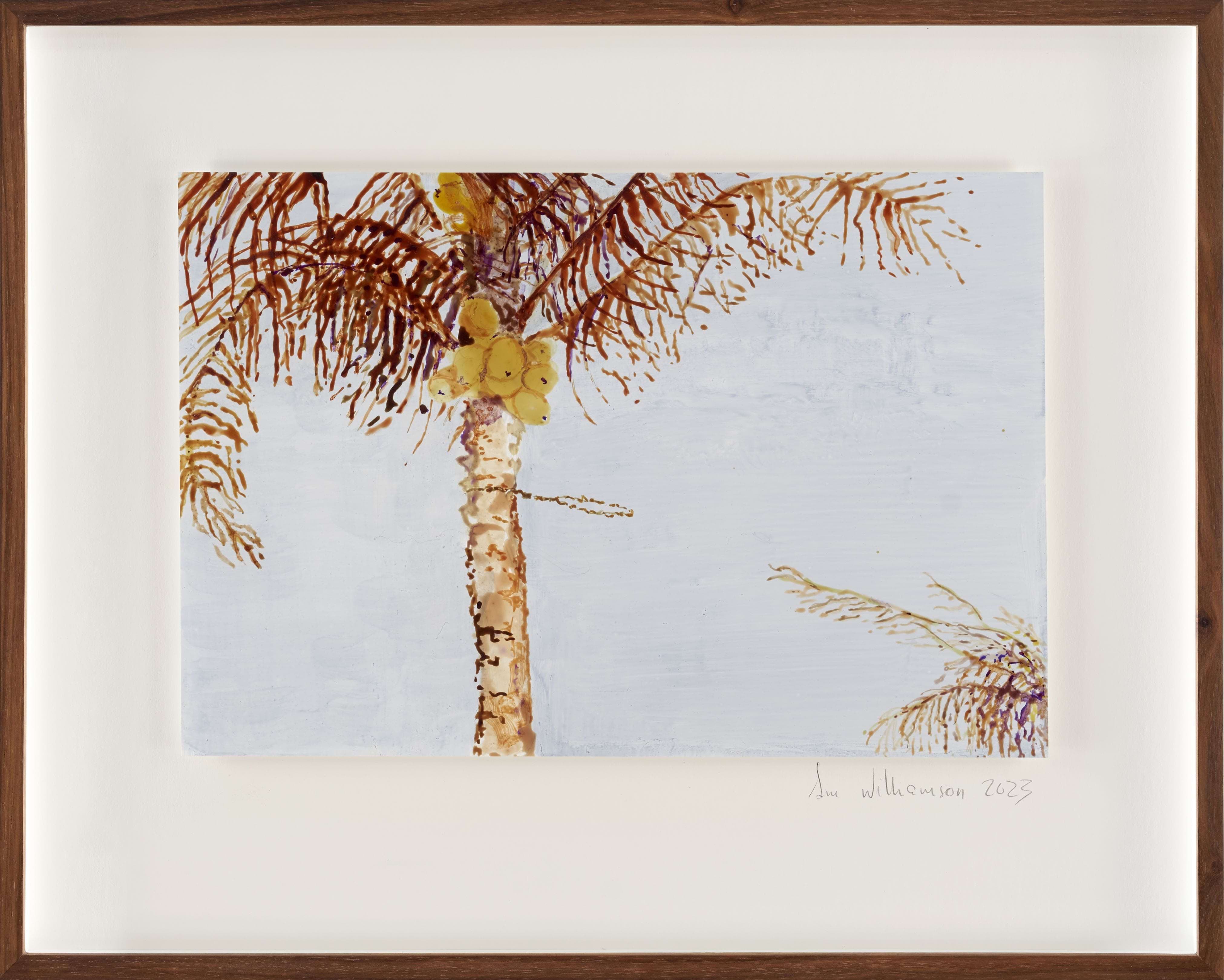
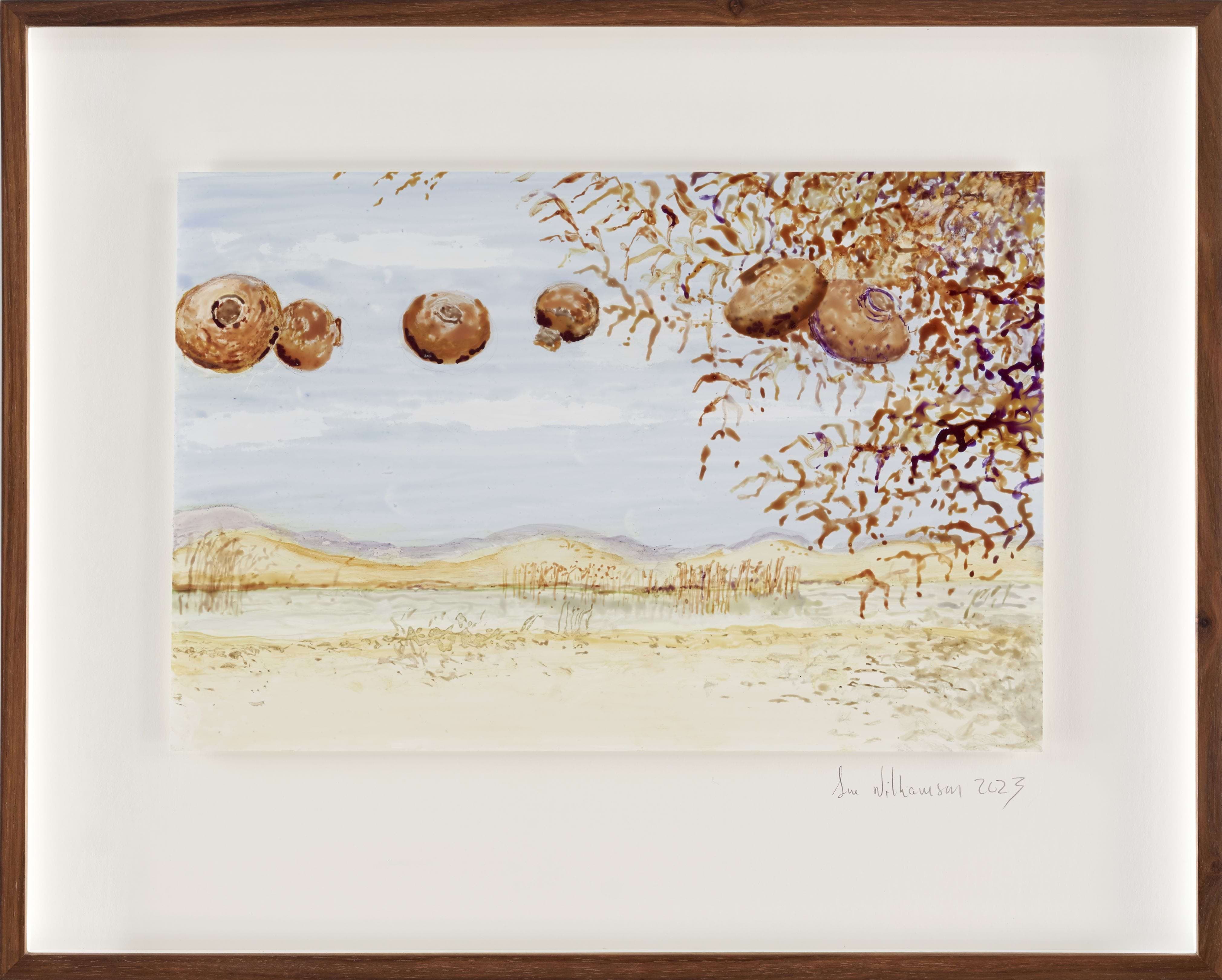
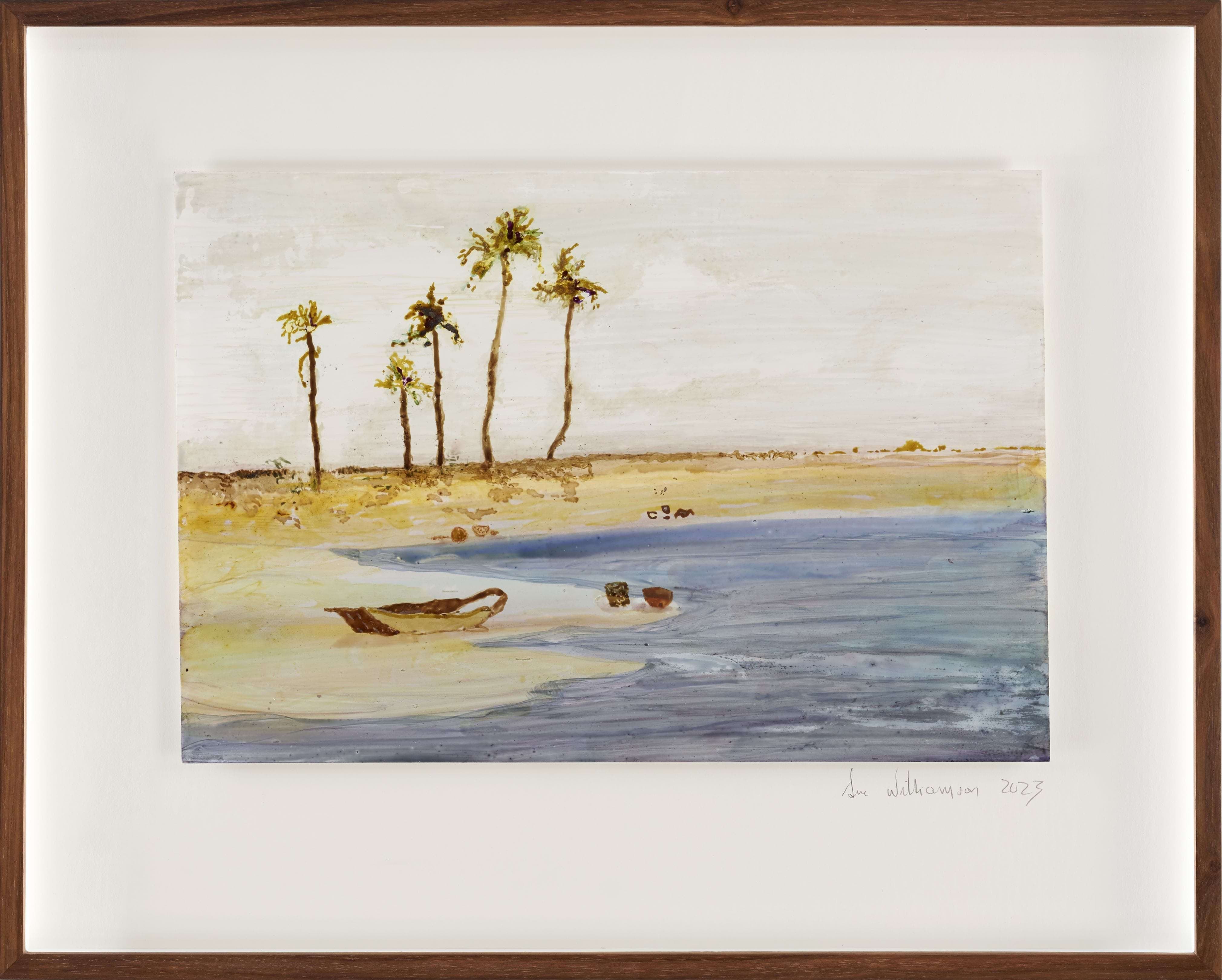
In each drawing, signs of habitation remain visible —dwellings, boats, a pile of coconuts — but the people who appeared on the original postcard no longer appear. The absence of the people from the landscape presents an uncomfortable tension from which a series of questions emerge — where are the people who used to live here? What happened to them? These questions point to the complexity of subverting the colonial gaze —how does one challenge the gaze while also taking care not to perpetuate violence through recirculation of images that re- invoke their original racist and oppressive context?
Postcards from Africa is a series of new ink drawings based on postcards from the early 1900s, produced for residents and travellers in Africa as well as for collectors who had never set foot on the continent. These postcards, which peaked in popularity at that time, now contribute to understanding political and cultural changes in Africa as the rise of the new medium coincided with the expansion and consolidation of colonial rule. In Williamson's re-drawn scenes from these postcards, all the figures have been left out: a reference to the scourge of slavery, which saw 12.5 million people shipped from the continent to the Americas.
Williamson’s new series of drawings, Postcards from Africa, continues the artist’s interest in the power of a small printed image to carry news of a specific moment in time to a far off audience, sometimes current, sometimes separated from the event by a century. Her early series of etchings The Modderdam Postcards (1978) was based on sketches made over seven days while witnessing the destruction by the apartheid state of an informal settlement near the airport in Cape Town.
Postcards made from A Few South Africans (1983-86), mixed media portraits of heroic women active in the struggle for liberation, were distributed not only across the country but the world. Most recently, the artist has turned her attention to vintage postcards of photographs taken by European colonisers in Africa in the first decades of the 20th century, who used the postcards as examples of the success of their missions, supposedly demonstrating the civilising effect of colonisation on the colonised, or presenting views of exotic Africa.
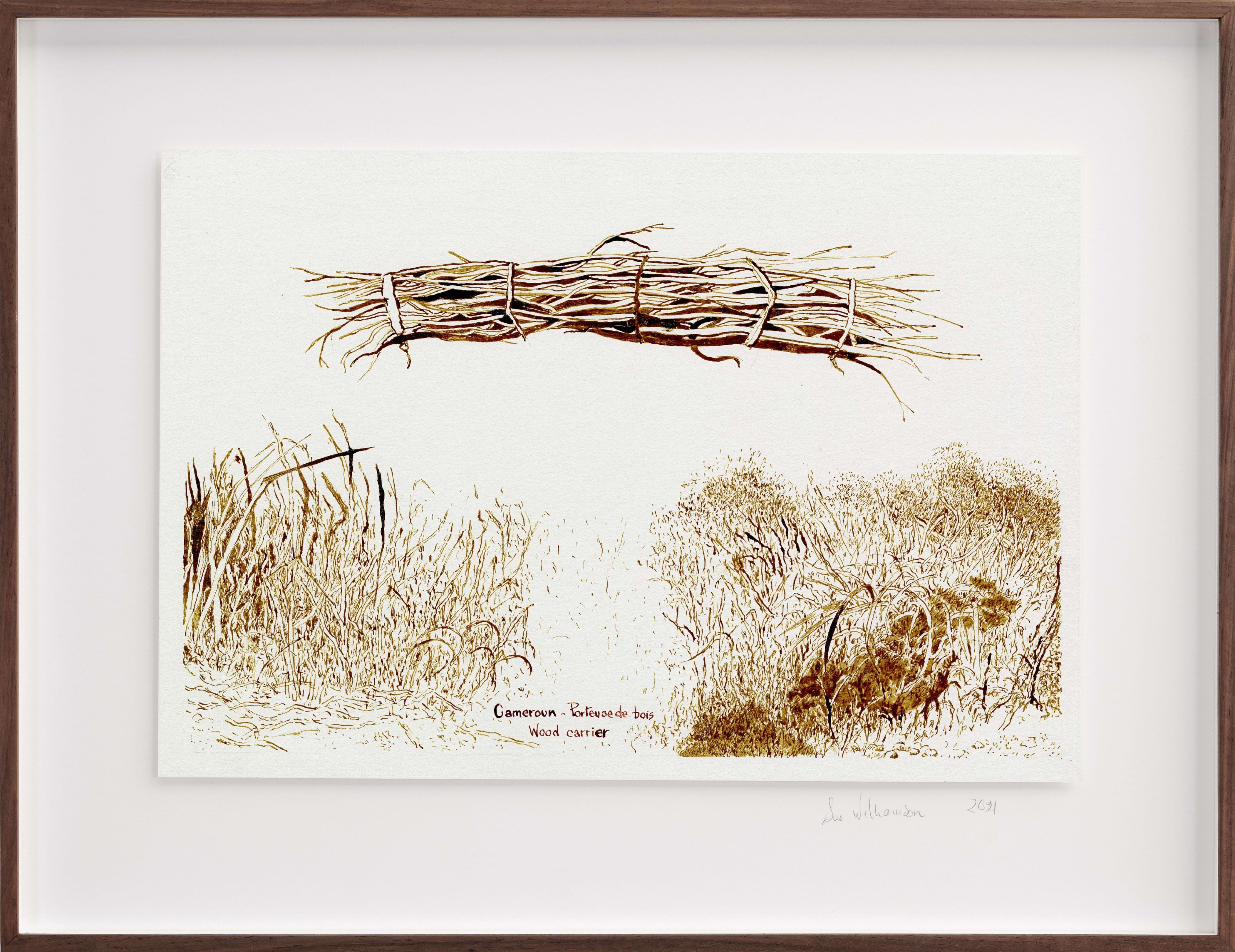
Sourcing these postcards from museum archives or from the internet, Williamson reverts to classic drawing techniques. She dips her pen into a bottle of ink, building up images with layers of intricate cross-hatching, adding colour from a limited palette to reproduce the rural landscapes on the postcards, or capture the scenes of daily community life: harvesting, swimming, gathering wood.
Williamson’s new series of drawings, Postcards from Africa, continues the artist’s interest in the power of a small printed image to carry news of a specific moment in time to a far off audience, sometimes current, sometimes separated from the event by a century. Her early series of etchings The Modderdam Postcards (1978) was based on sketches made over seven days while witnessing the destruction by the apartheid state of an informal settlement near the airport in Cape Town.
Postcards made from A Few South Africans (1983-86), mixed media portraits of heroic women active in the struggle for liberation, were distributed not only across the country but the world. Most recently, the artist has turned her attention to vintage postcards of photographs taken by European colonisers in Africa in the first decades of the 20th century, who used the postcards as examples of the success of their missions, supposedly demonstrating the civilising effect of colonisation on the colonised, or presenting views of exotic Africa.
Sourcing these postcards from museum archives or from the internet, Williamson reverts to classic drawing techniques. She dips her pen into a bottle of ink, building up images with layers of intricate cross-hatching, adding colour from a limited palette to reproduce the rural landscapes on the postcards, or capture the scenes of daily community life: harvesting, swimming, gathering wood.
Williamson’s new series of drawings, Postcards from Africa, continues the artist’s interest in the power of a small printed image to carry news of a specific moment in time to a far off audience, sometimes current, sometimes separated from the event by a century. Her early series of etchings The Modderdam Postcards (1978) was based on sketches made over seven days while witnessing the destruction by the apartheid state of an informal settlement near the airport in Cape Town.
Postcards made from A Few South Africans (1983-86), mixed media portraits of heroic women active in the struggle for liberation, were distributed not only across the country but the world. Most recently, the artist has turned her attention to vintage postcards of photographs taken by European colonisers in Africa in the first decades of the 20th century, who used the postcards as examples of the success of their missions, supposedly demonstrating the civilising effect of colonisation on the colonised, or presenting views of exotic Africa.
Sourcing these postcards from museum archives or from the internet, Williamson reverts to classic drawing techniques. She dips her pen into a bottle of ink, building up images with layers of intricate cross-hatching, adding colour from a limited palette to reproduce the rural landscapes on the postcards, or capture the scenes of daily community life: harvesting, swimming, gathering wood.
The ongoing series ‘Postcards from Africa’ engages with vintage postcards from the early 20th century, originally produced by European colonists and photographers. Part of a global craze for this new form of communication, these postcards were intended to demonstrate colonisation’s civilising effect on the dark continent, or to depict Africa as an exotic landscape for European audiences. Sourcing these images from archives, Williamson reimagines them through intricate ink drawings, layering cross-hatching and a faded palette. The drawings retain traces of habitation or recent activity — ripples in the water suggest children at play, a canoe floats on a lagoon at dusk, on a deck, fish are being chopped up, a load of wood floats in mid air, —but the people once pictured as part of the landscape are absent.
In a text by Nkopoleng Moloi for Williamson’s exhibition, ‘Distant Visions’ in 2021, “Postcards hold traces of historical memory, and through her evocative ink drawings with their deliberate erasures, Williamson seeks to confront the painful and unresolved legacies of colonialism — an important juncture in world history that has never been fully reckoned with, and whose catastrophic effects continue to be felt by millions of dispossessed peoples across the globe. In this instance, the absence makes the violence visible”.
Williamson’s new series of drawings, Postcards from Africa, continues the artist’s interest in the power of a small printed image to carry news of a specific moment in time to a far off audience, sometimes current, sometimes separated from the event by a century. Her early series of etchings The Modderdam Postcards (1978) was based on sketches made over seven days while witnessing the destruction by the apartheid state of an informal settlement near the airport in Cape Town.
Postcards made from A Few South Africans (1983-86), mixed media portraits of heroic women active in the struggle for liberation, were distributed not only across the country but the world. Most recently, the artist has turned her attention to vintage postcards of photographs taken by European colonisers in Africa in the first decades of the 20th century, who used the postcards as examples of the success of their missions, supposedly demonstrating the civilising effect of colonisation on the colonised, or presenting views of exotic Africa.
Sourcing these postcards from museum archives or from the internet, Williamson reverts to classic drawing techniques. She dips her pen into a bottle of ink, building up images with layers of intricate cross-hatching, adding colour from a limited palette to reproduce the rural landscapes on the postcards, or capture the scenes of daily community life: harvesting, swimming, gathering wood.
Williamson’s new series of drawings, Postcards from Africa, continues the artist’s interest in the power of a small printed image to carry news of a specific moment in time to a far off audience, sometimes current, sometimes separated from the event by a century. Her early series of etchings The Modderdam Postcards (1978) was based on sketches made over seven days while witnessing the destruction by the apartheid state of an informal settlement near the airport in Cape Town.
Postcards made from A Few South Africans (1983-86), mixed media portraits of heroic women active in the struggle for liberation, were distributed not only across the country but the world. Most recently, the artist has turned her attention to vintage postcards of photographs taken by European colonisers in Africa in the first decades of the 20th century, who used the postcards as examples of the success of their missions, supposedly demonstrating the civilising effect of colonisation on the colonised, or presenting views of exotic Africa.
Sourcing these postcards from museum archives or from the internet, Williamson reverts to classic drawing techniques. She dips her pen into a bottle of ink, building up images with layers of intricate cross-hatching, adding colour from a limited palette to reproduce the rural landscapes on the postcards, or capture the scenes of daily community life: harvesting, swimming, gathering wood.
Williamson’s new series of drawings, Postcards from Africa, continues the artist’s interest in the power of a small printed image to carry news of a specific moment in time to a far off audience, sometimes current, sometimes separated from the event by a century. Her early series of etchings The Modderdam Postcards (1978) was based on sketches made over seven days while witnessing the destruction by the apartheid state of an informal settlement near the airport in Cape Town.
Postcards made from A Few South Africans (1983-86), mixed media portraits of heroic women active in the struggle for liberation, were distributed not only across the country but the world. Most recently, the artist has turned her attention to vintage postcards of photographs taken by European colonisers in Africa in the first decades of the 20th century, who used the postcards as examples of the success of their missions, supposedly demonstrating the civilising effect of colonisation on the colonised, or presenting views of exotic Africa.
Sourcing these postcards from museum archives or from the internet, Williamson reverts to classic drawing techniques. She dips her pen into a bottle of ink, building up images with layers of intricate cross-hatching, adding colour from a limited palette to reproduce the rural landscapes on the postcards, or capture the scenes of daily community life: harvesting, swimming, gathering wood.
Williamson’s new series of drawings, Postcards from Africa, continues the artist’s interest in the power of a small printed image to carry news of a specific moment in time to a far off audience, sometimes current, sometimes separated from the event by a century. Her early series of etchings The Modderdam Postcards (1978) was based on sketches made over seven days while witnessing the destruction by the apartheid state of an informal settlement near the airport in Cape Town.
Postcards made from A Few South Africans (1983-86), mixed media portraits of heroic women active in the struggle for liberation, were distributed not only across the country, but the world. Most recently, the artist has turned her attention to vintage postcards of photographs taken by European colonisers in Africa in the first decades of the 20th century, who used the postcards as examples of the success of their missions, supposedly demonstrating the civilising effect of colonisation on the colonised, or presenting views of exotic Africa for the edification of folks back home.
Sourcing these postcards from museum archives or from the internet, Williamson reverts to classic drawing techniques. She dips her pen into a bottle of ink, building up images with layers of intricate cross-hatching, adding colour from a limited palette to reproduce the rural landscapes on the postcards, or capture the scenes of daily community life: harvesting, swimming, gathering wood.
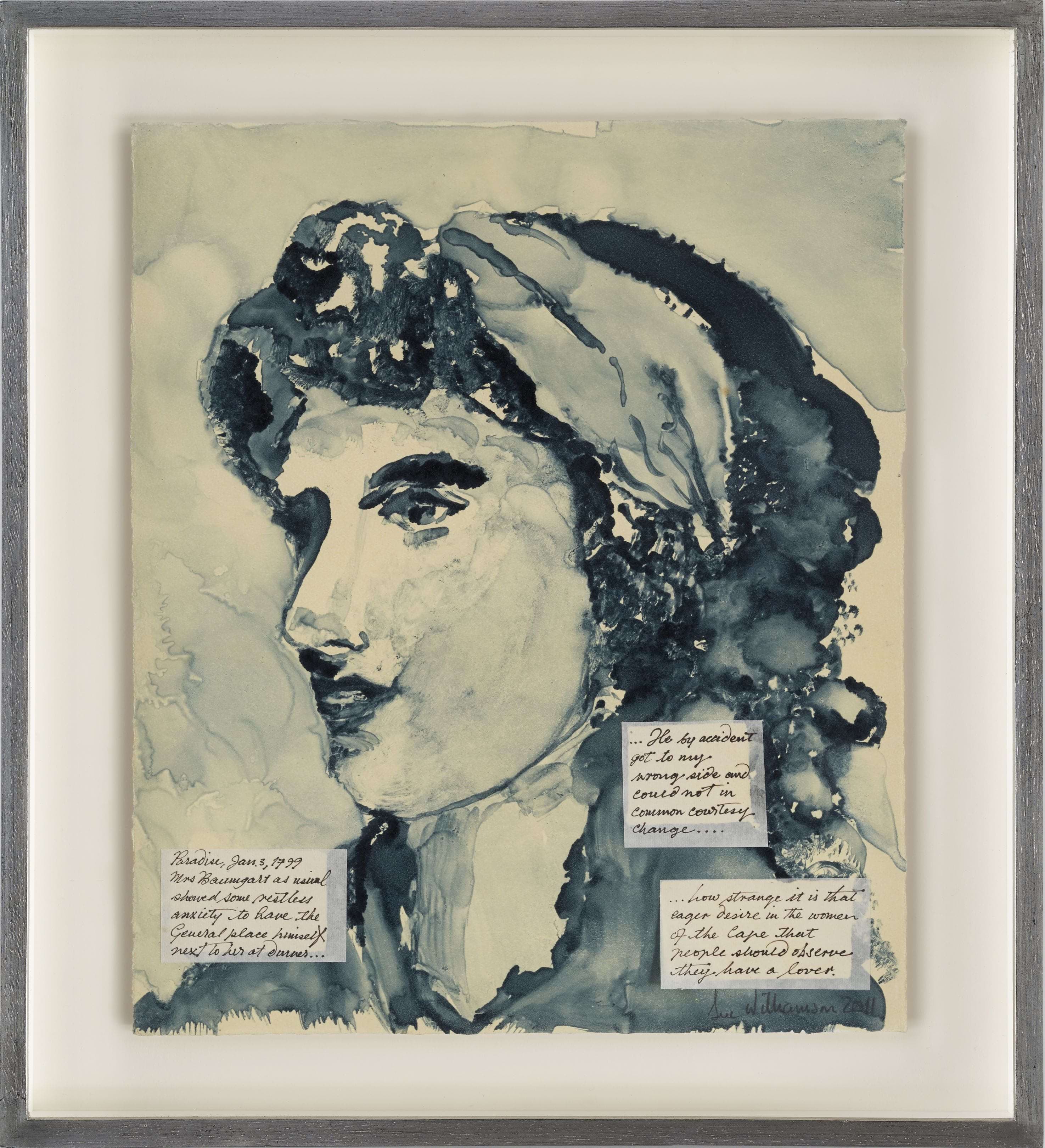
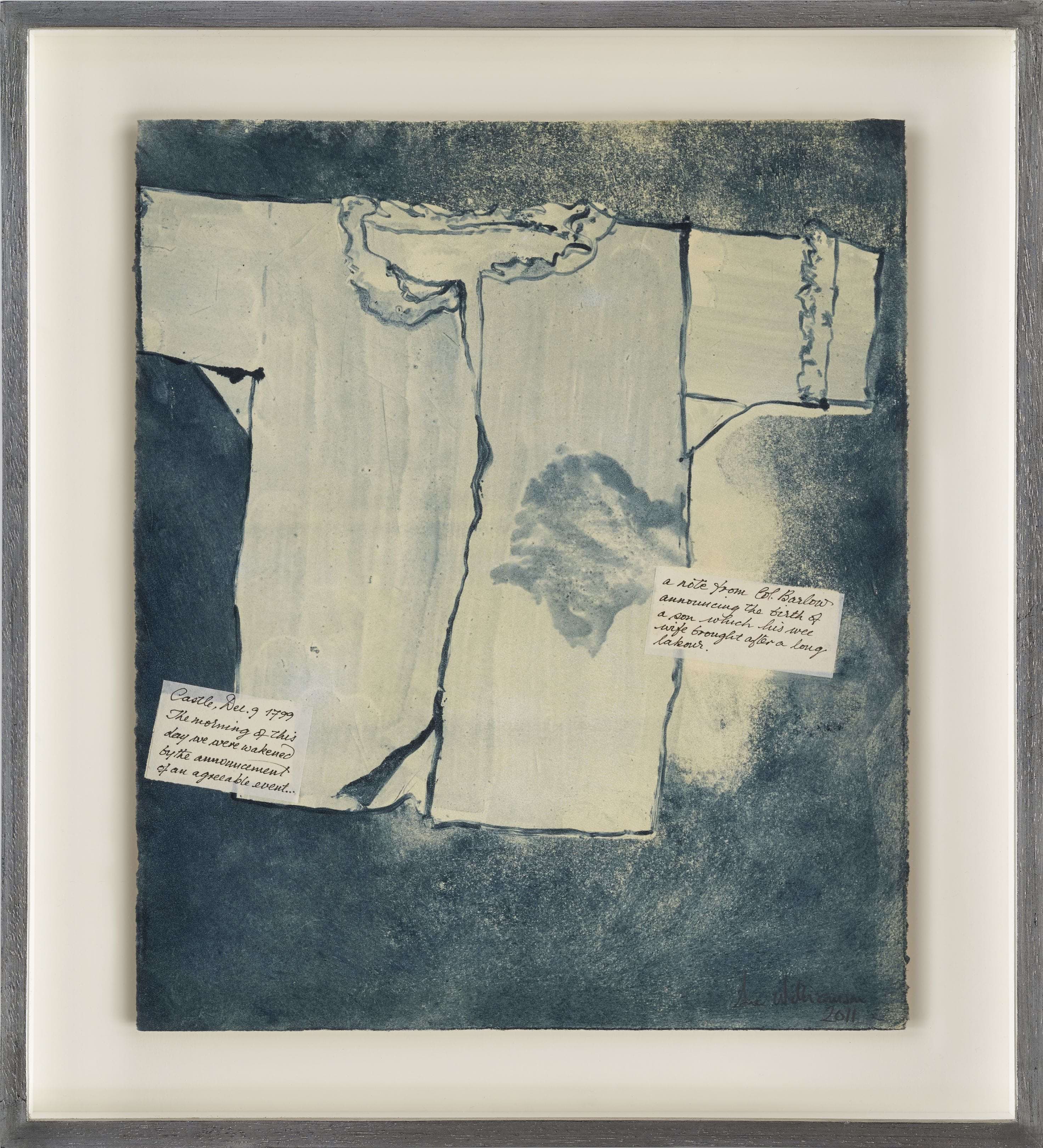
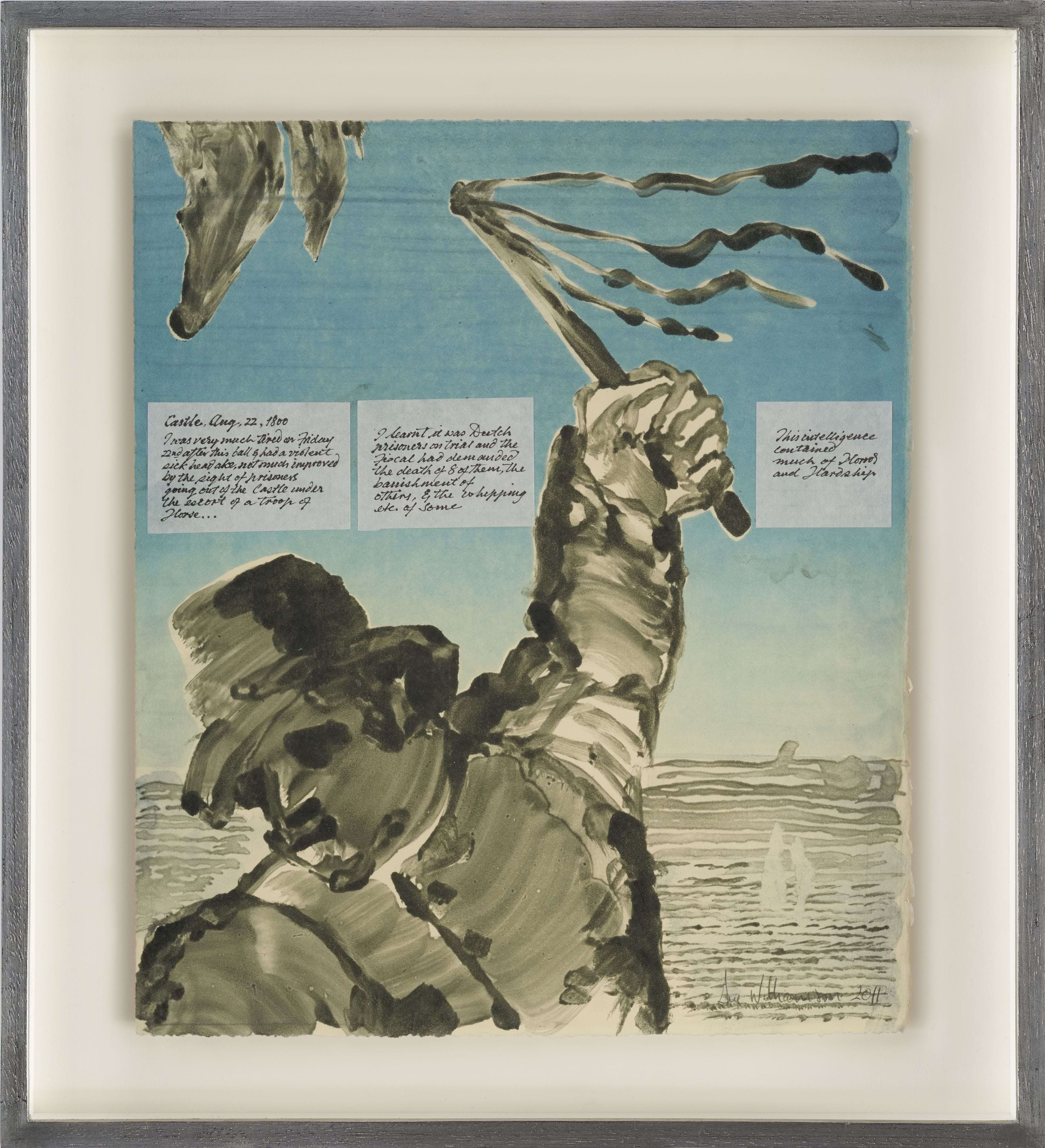
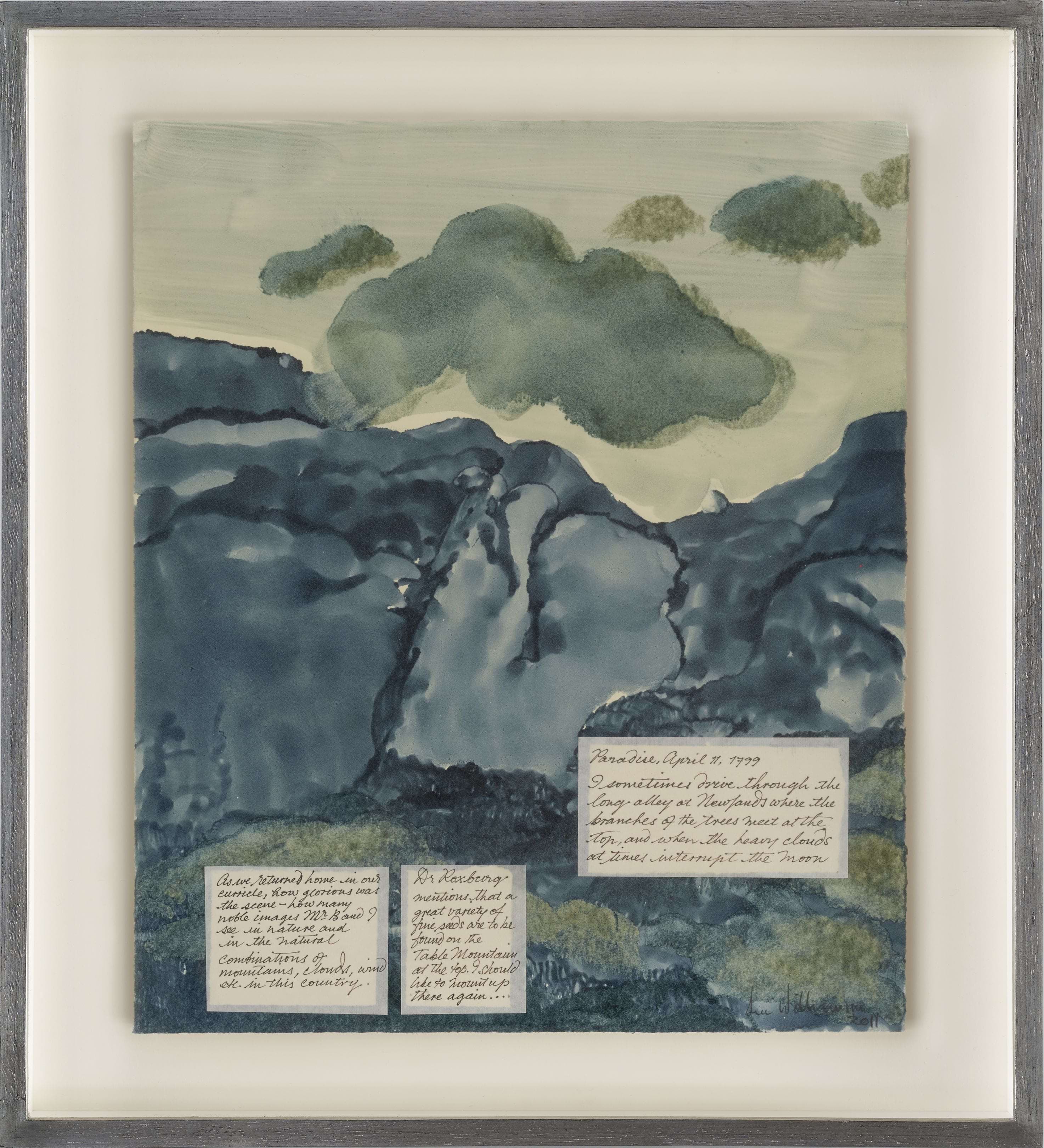
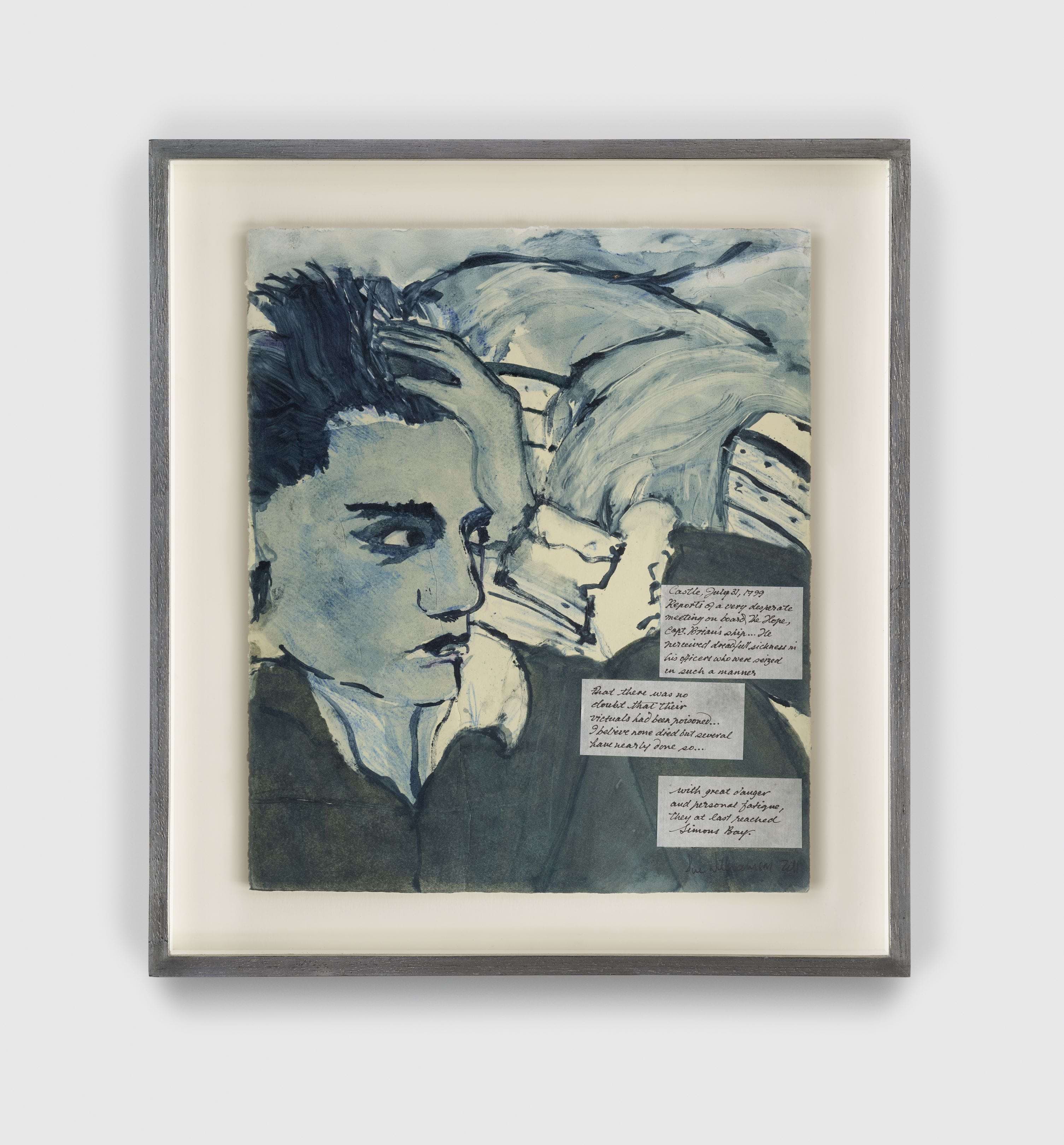
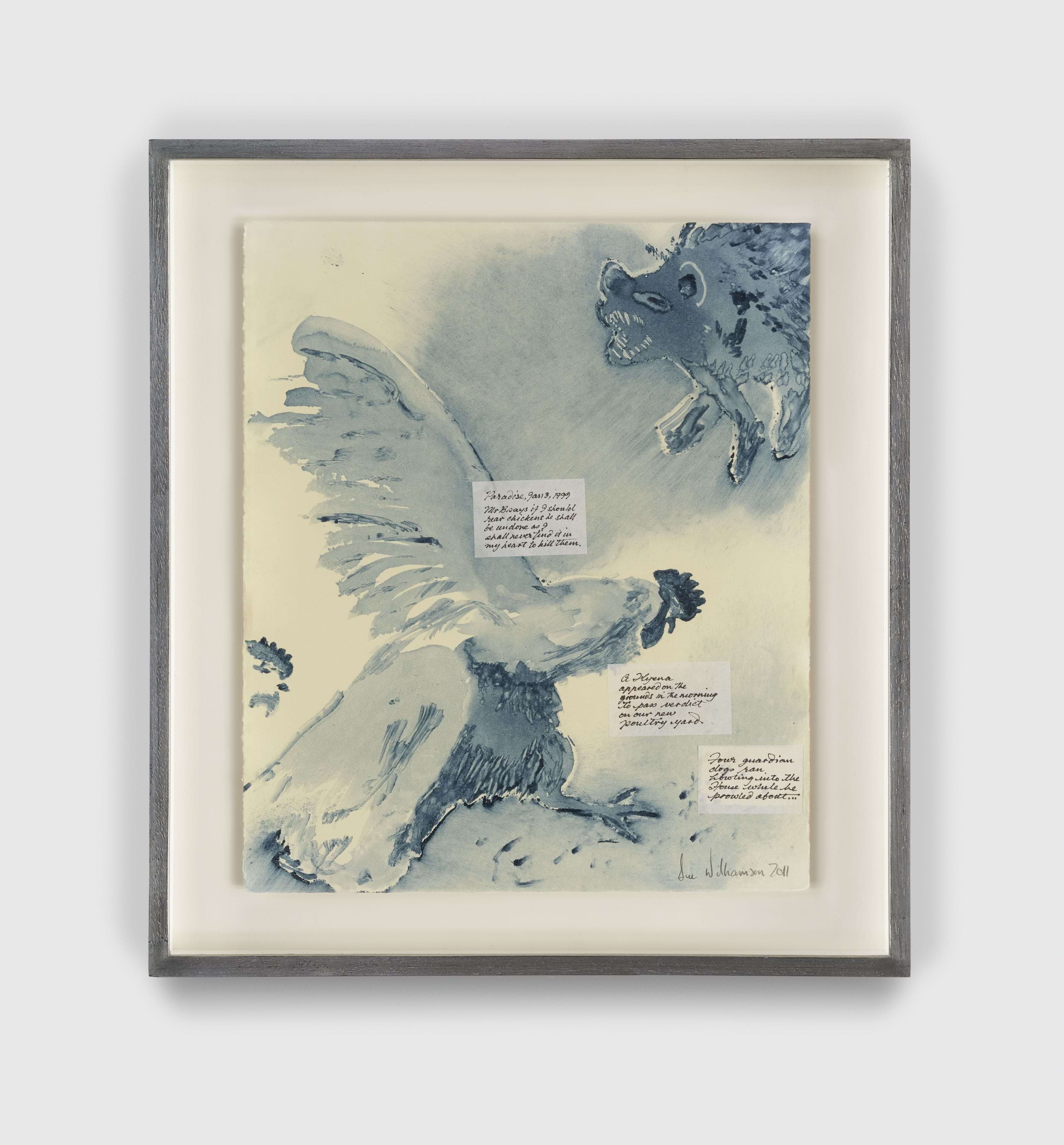
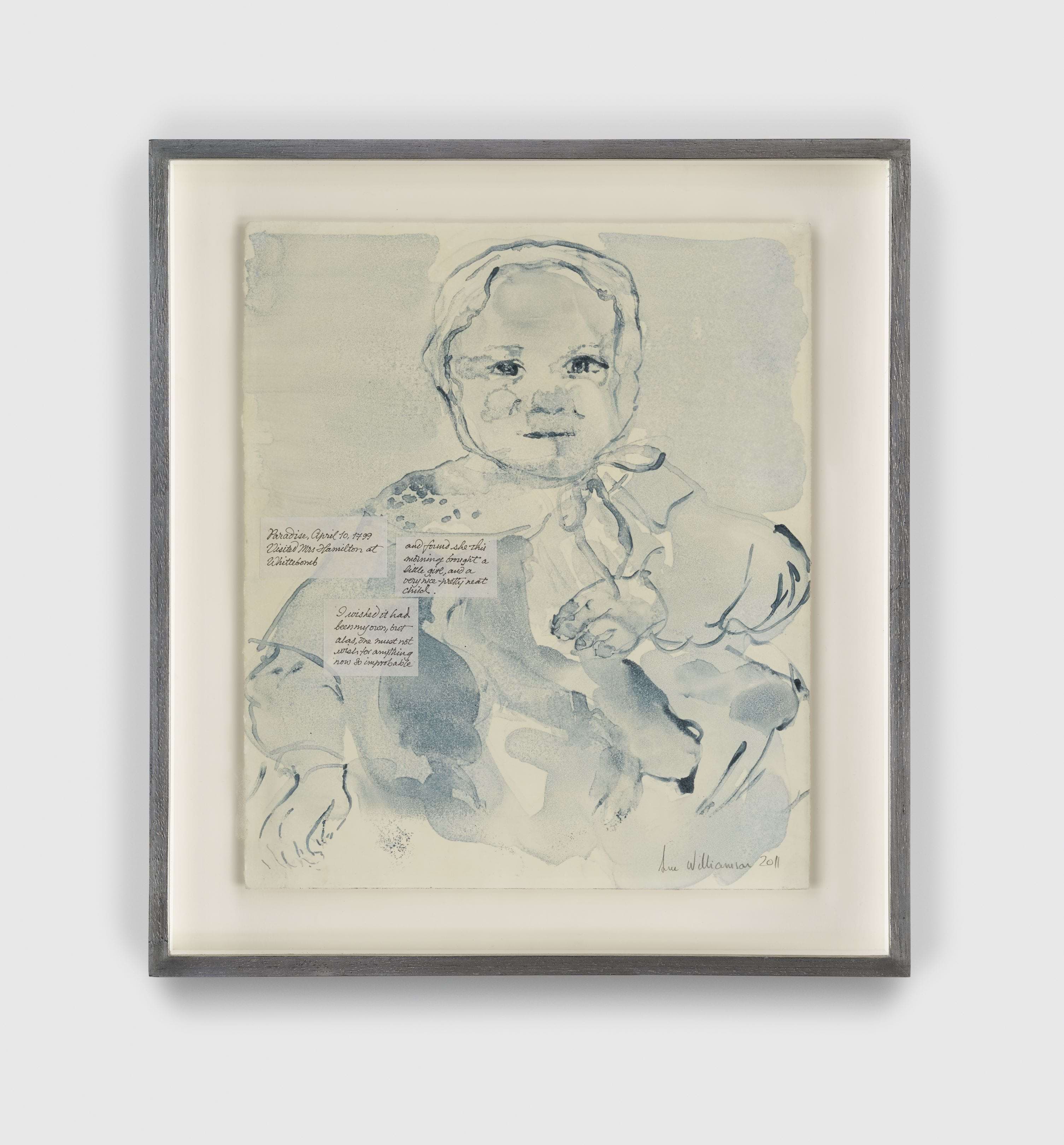
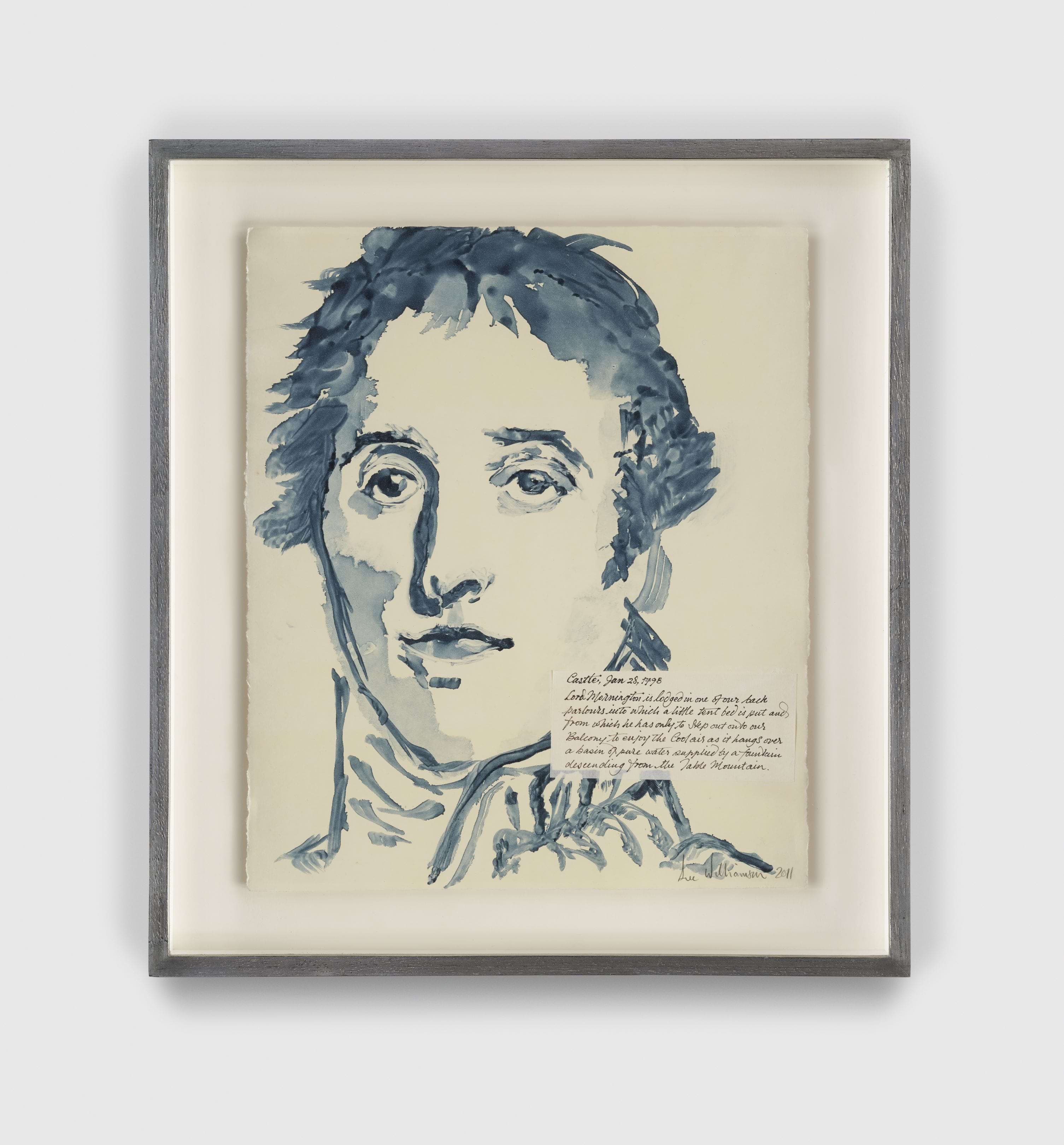
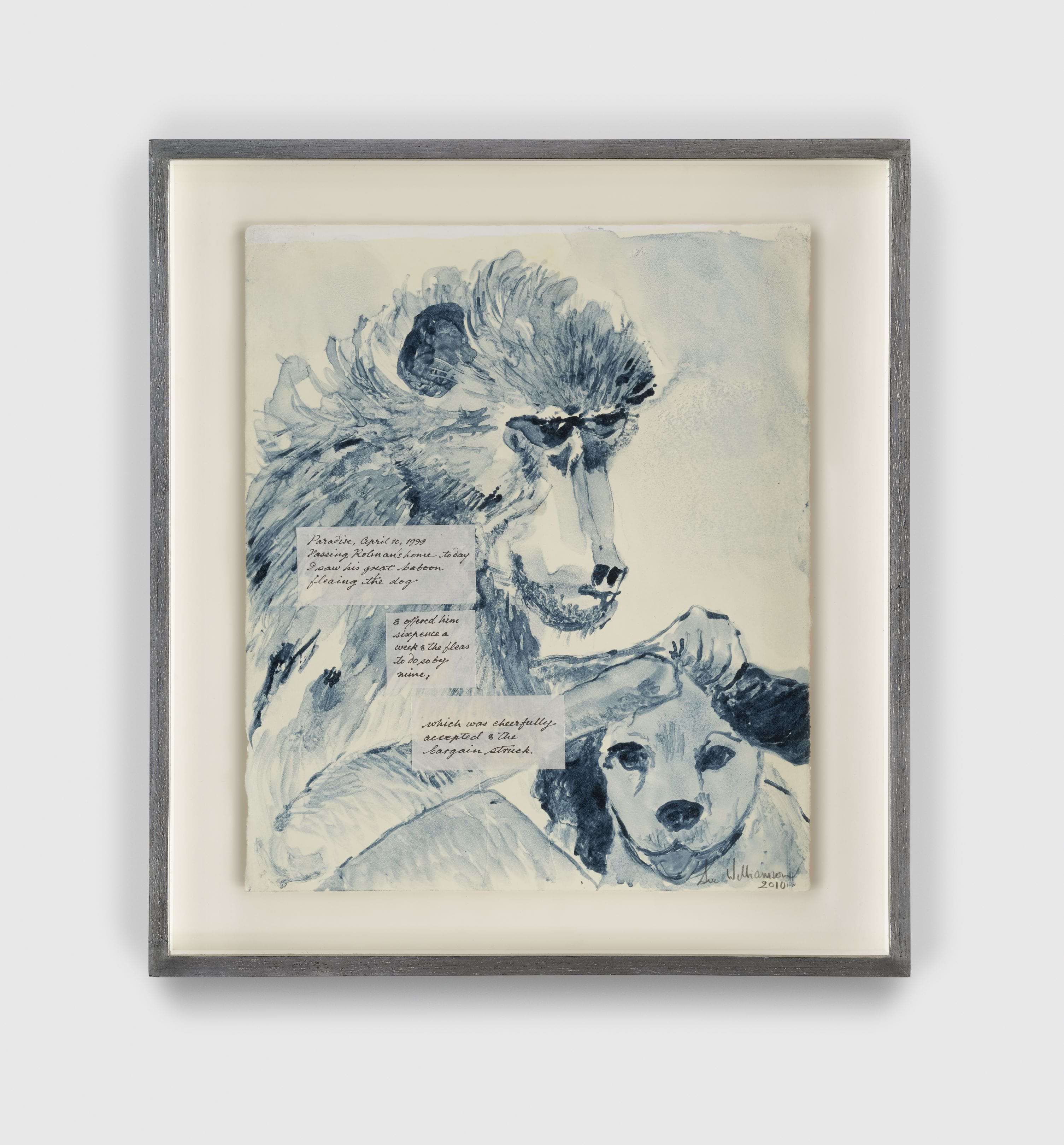
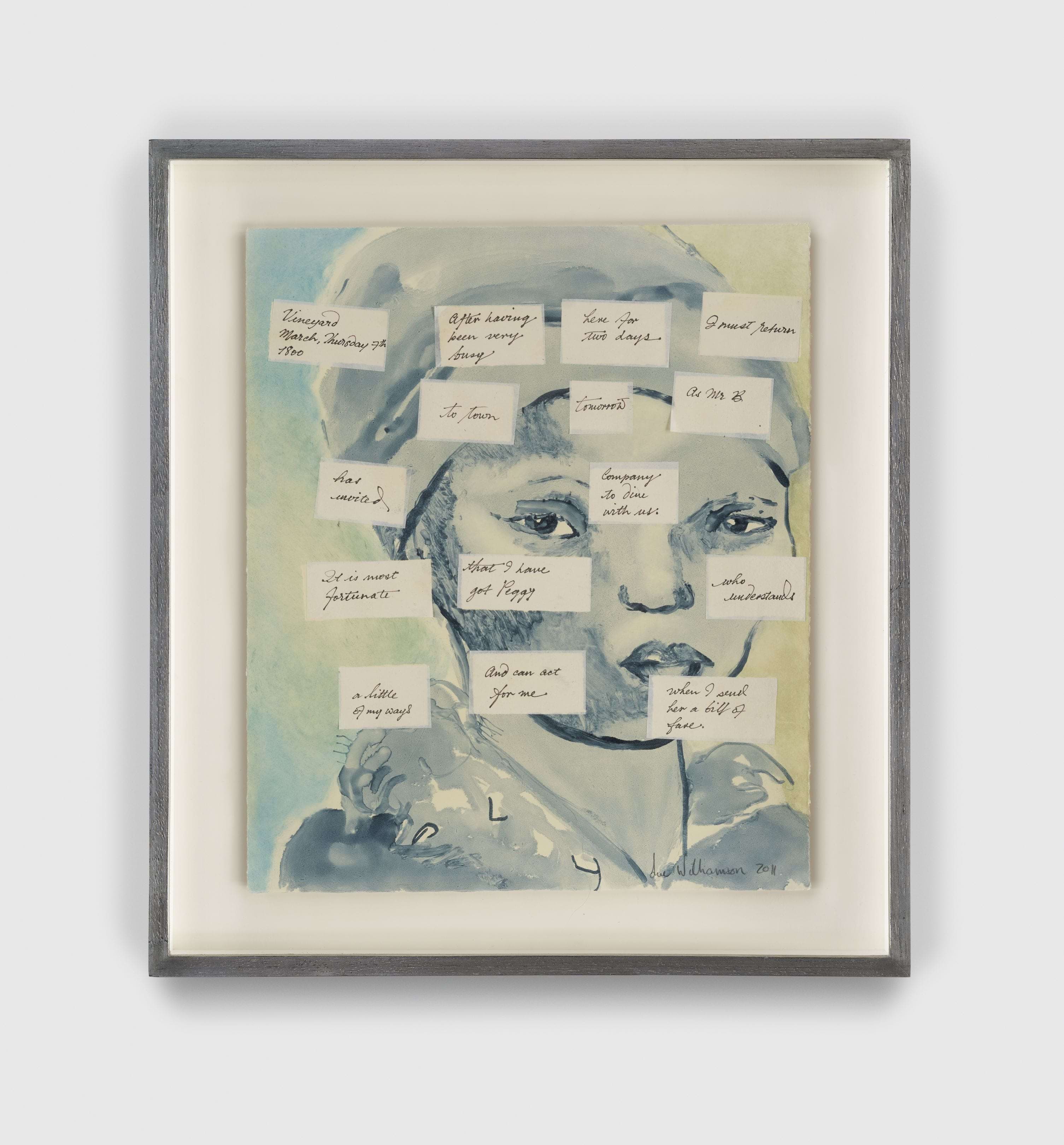
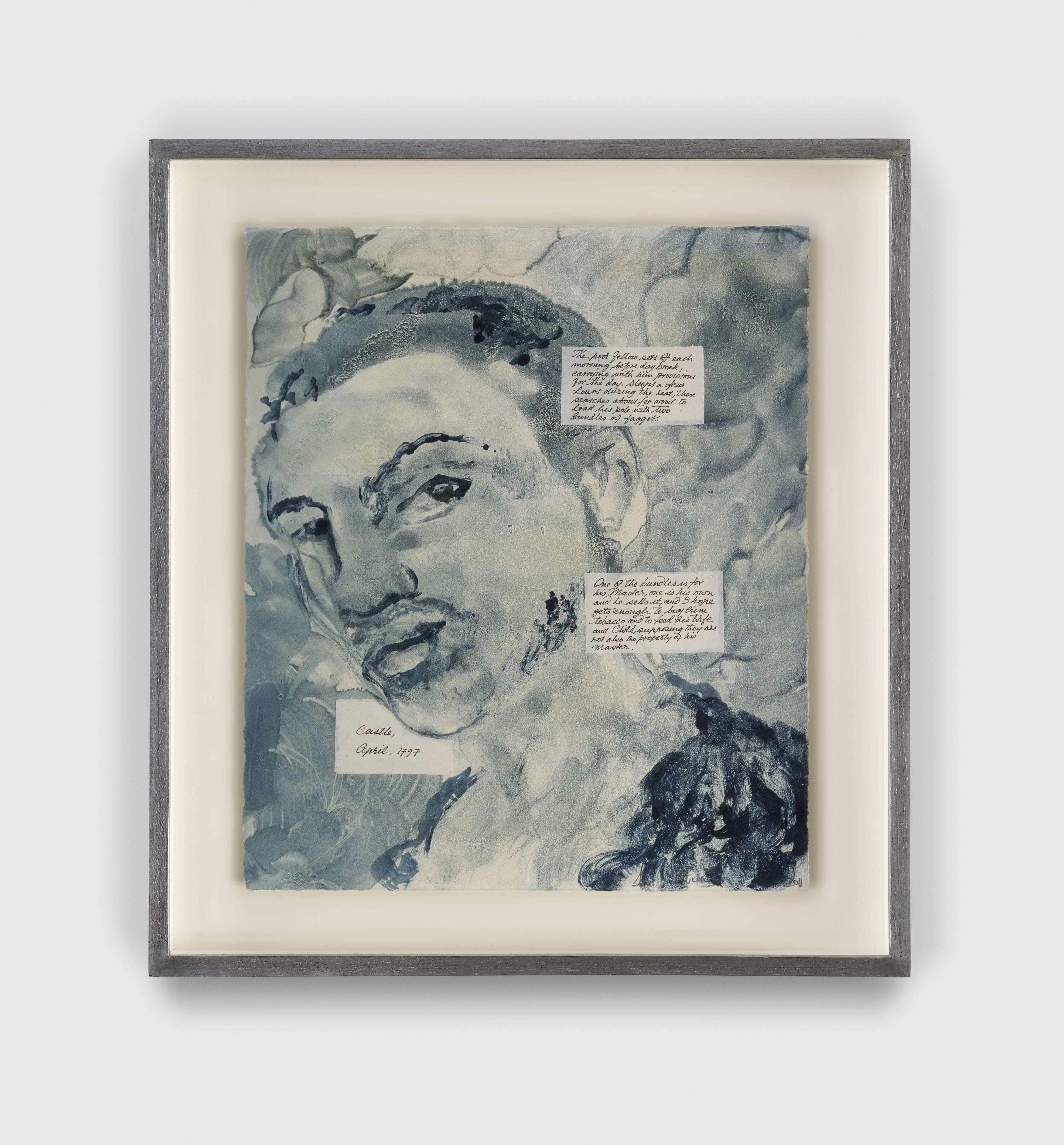
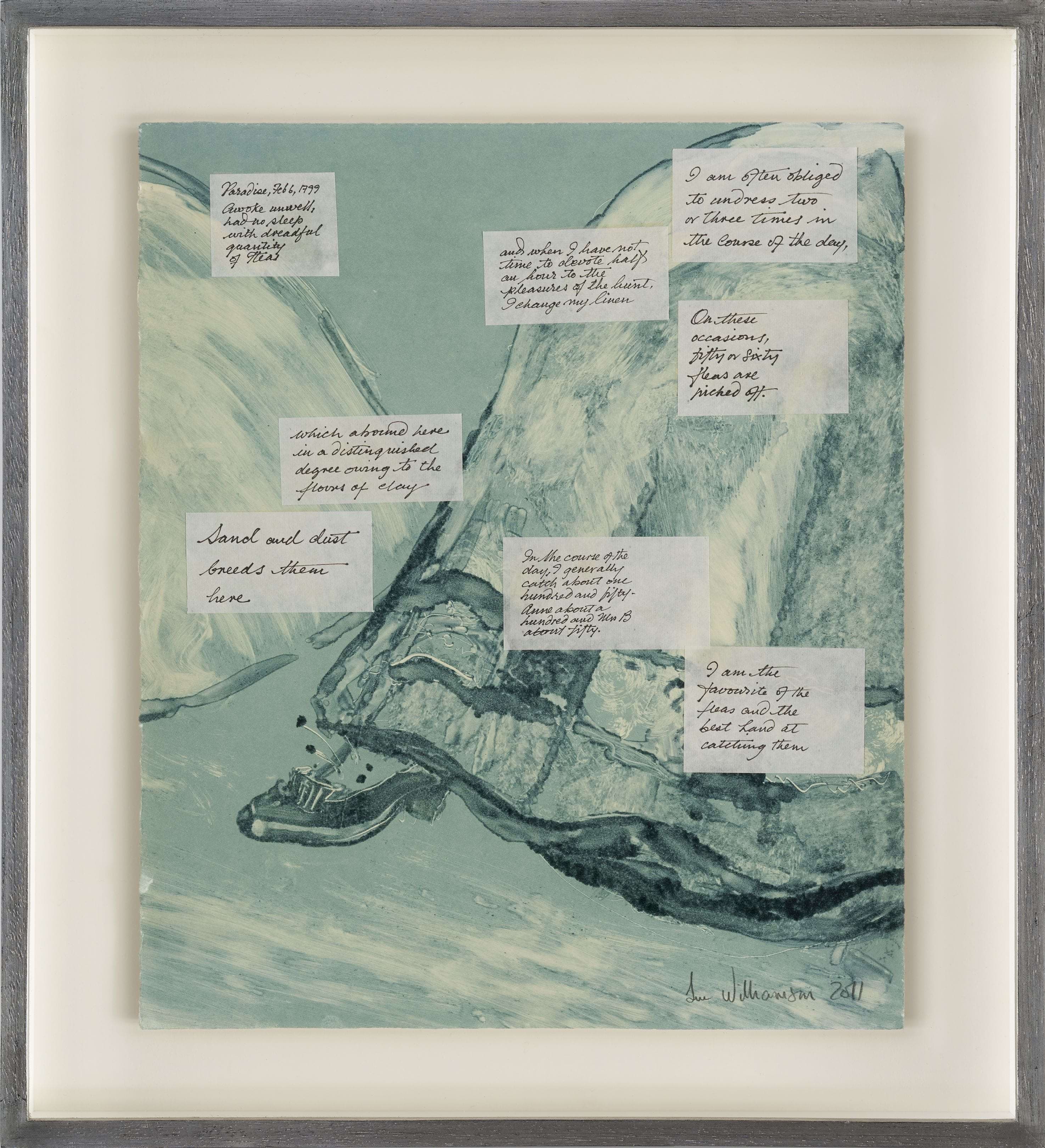
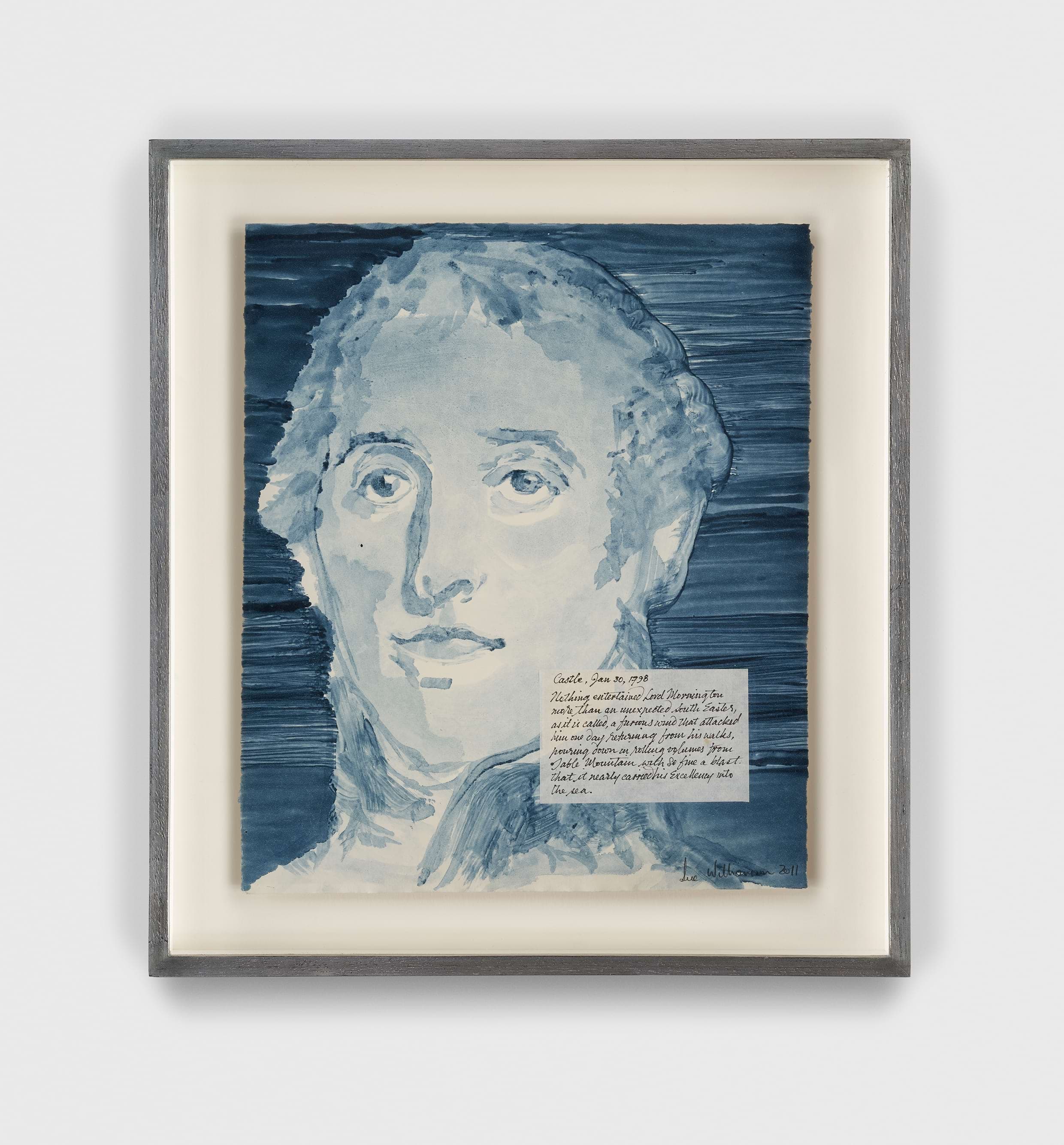
'The Diaries of Lady Anne B' is a series of unique monotypes made by the artist in the studios of master printers Mark Attwood of the Artists Press and Zhane Warren of Warren Editions in 2010 -11. The unconventional and progressive Lady Anne Barnard was the wife of Andrew Barnard, who was appointed first colonial secretary of the Cape of Good Hope in 1797, when the British won the Cape from the Dutch. The Barnards sailed to Cape Town and took up residence in the Castle of Good Hope.
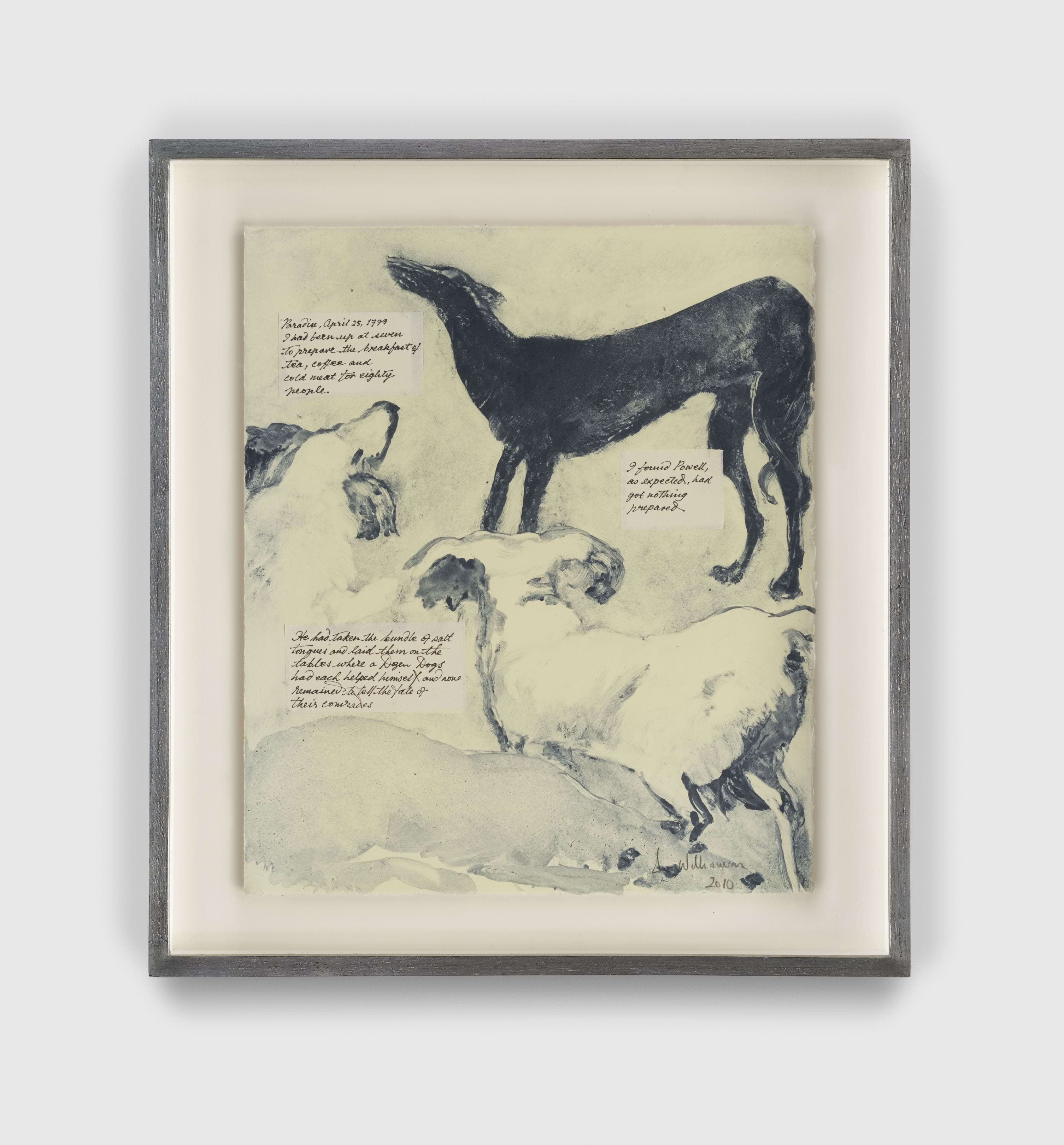
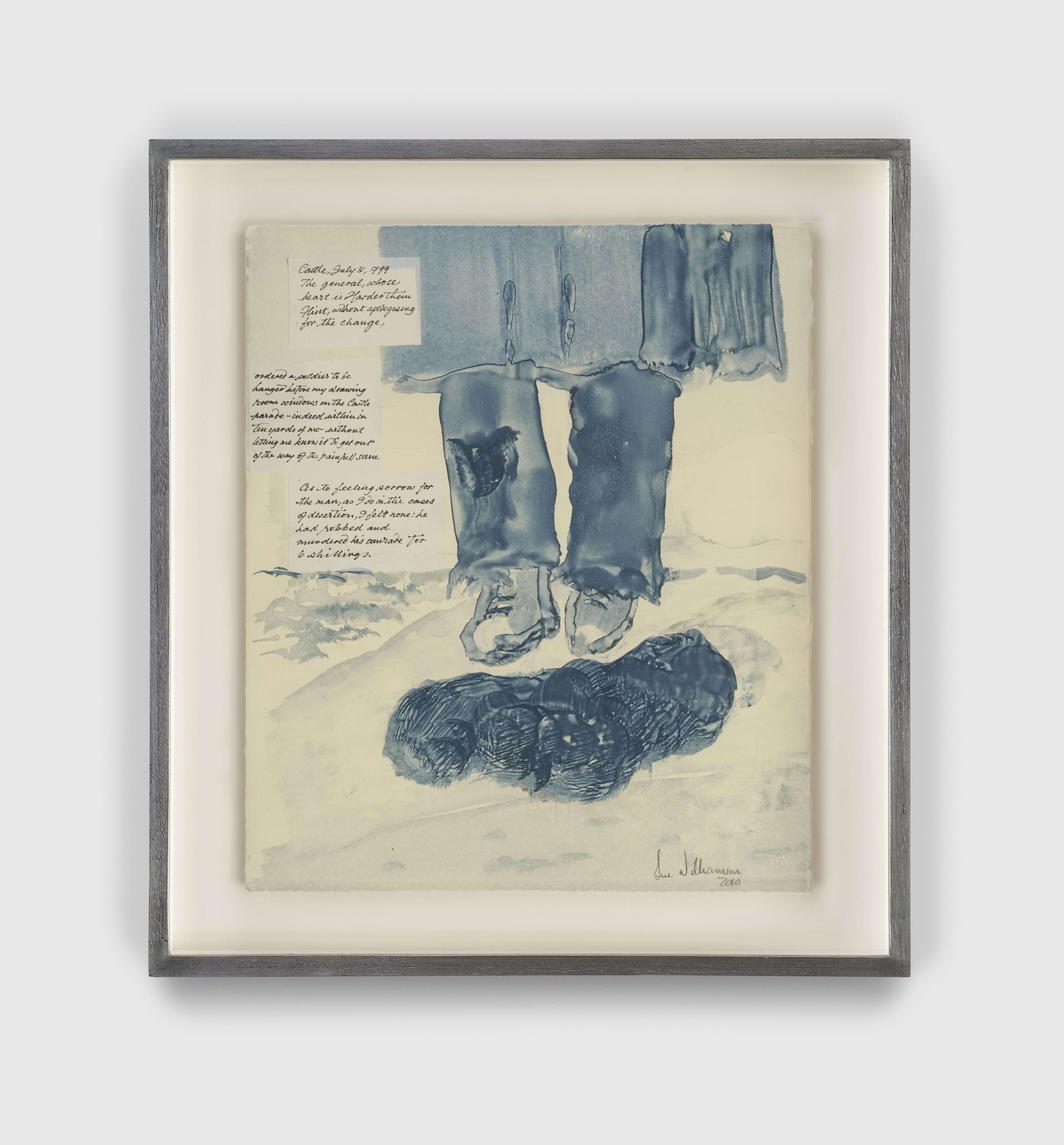
Incidents drawn from the three volumes of Lady Anne's diaries are illustrated with lively images casting a light onto life in Cape Town at the turn of the 18th century ... a hyena chases Lady Anne's chickens, visitors like Lord Mornington pass through and are commented on, the hangman inconveniently carries out his job ten yards from Lady Anne’s drawing room window, a mutiny at sea is described, a careless cook allows the family dogs to eat all the cold meats prepared for guests.
In a 2023 reworking of these prints, notes in a facsimile of Lady Anne’s handwriting give clues to these events, floating over cream rectangles in the images.
'The Diaries of Lady Anne B' is a series of unique monotypes made by the artist in the studios of master printers Mark Attwood of the Artists Press and Zhane Warren of Warren Editions in 2010 -11. The unconventional and progressive Lady Anne Barnard was the wife of Andrew Barnard, who was appointed first colonial secretary of the Cape of Good Hope in 1797, when the British won the Cape from the Dutch. The Barnards sailed to Cape Town and took up residence in the Castle of Good Hope.
Incidents drawn from the three volumes of Lady Anne's diaries are illustrated with lively images casting a light onto life in Cape Town at the turn of the 18th century ... a hyena chases Lady Anne's chickens, visitors like Lord Mornington pass through and are commented on, the hangman inconveniently carries out his job ten yards from Lady Anne’s drawing room window, a mutiny at sea is described, a careless cook allows the family dogs to eat all the cold meats prepared for guests.
In a 2023 reworking of these prints, notes in a facsimile of Lady Anne’s handwriting give clues to these events, floating over cream rectangles in the images.
'The Diaries of Lady Anne B' is a series of unique monotypes made by the artist in the studios of master printers Mark Attwood of the Artists Press and Zhane Warren of Warren Editions in 2010 -11. The unconventional and progressive Lady Anne Barnard was the wife of Andrew Barnard, who was appointed first colonial secretary of the Cape of Good Hope in 1797, when the British won the Cape from the Dutch. The Barnards sailed to Cape Town and took up residence in the Castle of Good Hope.
Incidents drawn from the three volumes of Lady Anne's diaries are illustrated with lively images casting a light onto life in Cape Town at the turn of the 18th century ... a hyena chases Lady Anne's chickens, visitors like Lord Mornington pass through and are commented on, the hangman inconveniently carries out his job ten yards from Lady Anne’s drawing room window, a mutiny at sea is described, a careless cook allows the family dogs to eat all the cold meats prepared for guests.
In a 2023 reworking of these prints, notes in a facsimile of Lady Anne’s handwriting give clues to these events, floating over cream rectangles in the images.
'The Diaries of Lady Anne B' is a series of unique monotypes made by the artist in the studios of master printers Mark Attwood of the Artists Press and Zhane Warren of Warren Editions in 2010 -11. The unconventional and progressive Lady Anne Barnard was the wife of Andrew Barnard, who was appointed first colonial secretary of the Cape of Good Hope in 1797, when the British won the Cape from the Dutch. The Barnards sailed to Cape Town and took up residence in the Castle of Good Hope.
Incidents drawn from the three volumes of Lady Anne's diaries are illustrated with lively images casting a light onto life in Cape Town at the turn of the 18th century ... a hyena chases Lady Anne's chickens, visitors like Lord Mornington pass through and are commented on, the hangman inconveniently carries out his job ten yards from Lady Anne’s drawing room window, a mutiny at sea is described, a careless cook allows the family dogs to eat all the cold meats prepared for guests.
In a 2023 reworking of these prints, notes in a facsimile of Lady Anne’s handwriting give clues to these events, floating over cream rectangles in the images.
'The Diaries of Lady Anne B' is a series of unique monotypes made by the artist in the studios of master printers Mark Attwood of the Artists Press and Zhane Warren of Warren Editions in 2010 -11. The unconventional and progressive Lady Anne Barnard was the wife of Andrew Barnard, who was appointed first colonial secretary of the Cape of Good Hope in 1797, when the British won the Cape from the Dutch. The Barnards sailed to Cape Town and took up residence in the Castle of Good Hope.
Incidents drawn from the three volumes of Lady Anne's diaries are illustrated with lively images casting a light onto life in Cape Town at the turn of the 18th century ... a hyena chases Lady Anne's chickens, visitors like Lord Mornington pass through and are commented on, the hangman inconveniently carries out his job ten yards from Lady Anne’s drawing room window, a mutiny at sea is described, a careless cook allows the family dogs to eat all the cold meats prepared for guests.
In a 2023 reworking of these prints, notes in a facsimile of Lady Anne’s handwriting give clues to these events, floating over cream rectangles in the images.
'The Diaries of Lady Anne B' is a series of unique monotypes made by the artist in the studios of master printers Mark Attwood of the Artists Press and Zhane Warren of Warren Editions in 2010 -11. The unconventional and progressive Lady Anne Barnard was the wife of Andrew Barnard, who was appointed first colonial secretary of the Cape of Good Hope in 1797, when the British won the Cape from the Dutch. The Barnards sailed to Cape Town and took up residence in the Castle of Good Hope.
Incidents drawn from the three volumes of Lady Anne's diaries are illustrated with lively images casting a light onto life in Cape Town at the turn of the 18th century ... a hyena chases Lady Anne's chickens, visitors like Lord Mornington pass through and are commented on, the hangman inconveniently carries out his job ten yards from Lady Anne’s drawing room window, a mutiny at sea is described, a careless cook allows the family dogs to eat all the cold meats prepared for guests.
In a 2023 reworking of these prints, notes in a facsimile of Lady Anne’s handwriting give clues to these events, floating over cream rectangles in the images.
'The Diaries of Lady Anne B' is a series of unique monotypes made by the artist in the studios of master printers Mark Attwood of the Artists Press and Zhane Warren of Warren Editions in 2010 -11. The unconventional and progressive Lady Anne Barnard was the wife of Andrew Barnard, who was appointed first colonial secretary of the Cape of Good Hope in 1797, when the British won the Cape from the Dutch. The Barnards sailed to Cape Town and took up residence in the Castle of Good Hope.
Incidents drawn from the three volumes of Lady Anne's diaries are illustrated with lively images casting a light onto life in Cape Town at the turn of the 18th century ... a hyena chases Lady Anne's chickens, visitors like Lord Mornington pass through and are commented on, the hangman inconveniently carries out his job ten yards from Lady Anne’s drawing room window, a mutiny at sea is described, a careless cook allows the family dogs to eat all the cold meats prepared for guests.
In a 2023 reworking of these prints, notes in a facsimile of Lady Anne’s handwriting give clues to these events, floating over cream rectangles in the images.
'The Diaries of Lady Anne B' is a series of unique monotypes made by the artist in the studios of master printers Mark Attwood of the Artists Press and Zhane Warren of Warren Editions in 2010 -11. The unconventional and progressive Lady Anne Barnard was the wife of Andrew Barnard, who was appointed first colonial secretary of the Cape of Good Hope in 1797, when the British won the Cape from the Dutch. The Barnards sailed to Cape Town and took up residence in the Castle of Good Hope.
Incidents drawn from the three volumes of Lady Anne's diaries are illustrated with lively images casting a light onto life in Cape Town at the turn of the 18th century ... a hyena chases Lady Anne's chickens, visitors like Lord Mornington pass through and are commented on, the hangman inconveniently carries out his job ten yards from Lady Anne’s drawing room window, a mutiny at sea is described, a careless cook allows the family dogs to eat all the cold meats prepared for guests.
In a 2023 reworking of these prints, notes in a facsimile of Lady Anne’s handwriting give clues to these events, floating over cream rectangles in the images.
'The Diaries of Lady Anne B' is a series of unique monotypes made by the artist in the studios of master printers Mark Attwood of the Artists Press and Zhane Warren of Warren Editions in 2010 -11. The unconventional and progressive Lady Anne Barnard was the wife of Andrew Barnard, who was appointed first colonial secretary of the Cape of Good Hope in 1797, when the British won the Cape from the Dutch. The Barnards sailed to Cape Town and took up residence in the Castle of Good Hope.
Incidents drawn from the three volumes of Lady Anne's diaries are illustrated with lively images casting a light onto life in Cape Town at the turn of the 18th century ... a hyena chases Lady Anne's chickens, visitors like Lord Mornington pass through and are commented on, the hangman inconveniently carries out his job ten yards from Lady Anne’s drawing room window, a mutiny at sea is described, a careless cook allows the family dogs to eat all the cold meats prepared for guests.
In a 2023 reworking of these prints, notes in a facsimile of Lady Anne’s handwriting give clues to these events, floating over cream rectangles in the images.
'The Diaries of Lady Anne B' is a series of unique monotypes made by the artist in the studios of master printers Mark Attwood of the Artists Press and Zhane Warren of Warren Editions in 2010 -11. The unconventional and progressive Lady Anne Barnard was the wife of Andrew Barnard, who was appointed first colonial secretary of the Cape of Good Hope in 1797, when the British won the Cape from the Dutch. The Barnards sailed to Cape Town and took up residence in the Castle of Good Hope.
Incidents drawn from the three volumes of Lady Anne's diaries are illustrated with lively images casting a light onto life in Cape Town at the turn of the 18th century ... a hyena chases Lady Anne's chickens, visitors like Lord Mornington pass through and are commented on, the hangman inconveniently carries out his job ten yards from Lady Anne’s drawing room window, a mutiny at sea is described, a careless cook allows the family dogs to eat all the cold meats prepared for guests.
In a 2023 reworking of these prints, notes in a facsimile of Lady Anne’s handwriting give clues to these events, floating over cream rectangles in the images.
'The Diaries of Lady Anne B' is a series of unique monotypes made by the artist in the studios of master printers Mark Attwood of the Artists Press and Zhane Warren of Warren Editions in 2010 -11. The unconventional and progressive Lady Anne Barnard was the wife of Andrew Barnard, who was appointed first colonial secretary of the Cape of Good Hope in 1797, when the British won the Cape from the Dutch. The Barnards sailed to Cape Town and took up residence in the Castle of Good Hope.
Incidents drawn from the three volumes of Lady Anne's diaries are illustrated with lively images casting a light onto life in Cape Town at the turn of the 18th century ... a hyena chases Lady Anne's chickens, visitors like Lord Mornington pass through and are commented on, the hangman inconveniently carries out his job ten yards from Lady Anne’s drawing room window, a mutiny at sea is described, a careless cook allows the family dogs to eat all the cold meats prepared for guests.
In a 2023 reworking of these prints, notes in a facsimile of Lady Anne’s handwriting give clues to these events, floating over cream rectangles in the images.
Sue Williamson (b. 1941, Lichfield, UK) emigrated with her family to South Africa in 1948. In the 1970s, Williamson started to make work which addressed social change and by the late 1980s she was well known for her series of portraits of women involved in the country’s political struggle, titled A Few South Africans (1980s).
A major retrospective of her five-decades long career will be shown at Iziko South African National Gallery in 2025 following her UK and US institutional exhibitions in 2023 at The Box, Plymouth and The Barnes Foundation, Philadelphia.
Postcards from Africa is a series of ink drawings based on postcards from the early 1900s, produced for residents and travellers in Africa as well as for collectors who had never set foot on the continent. These postcards, which peaked in popularity at that time, now contribute to understanding political and cultural changes in Africa as the rise of the new medium coincided with the expansion and consolidation of colonial rule. In Williamson's re-drawn scenes from these postcards, all the figures have been left out: a reference to the scourge of slavery, which saw 12.5 million people shipped from the continent to the Americas.
Sue Williamson (b. 1941, Lichfield, UK) emigrated with her family to South Africa in 1948. In the 1970s, Williamson started to make work which addressed social change and by the late 1980s she was well known for her series of portraits of women involved in the country’s political struggle, titled A Few South Africans (1980s).
A major retrospective of her five-decades long career will be shown at Iziko South African National Gallery in 2025 following her UK and US institutional exhibitions in 2023 at The Box, Plymouth and The Barnes Foundation, Philadelphia.
Postcards from Africa is a series of ink drawings based on postcards from the early 1900s, produced for residents and travellers in Africa as well as for collectors who had never set foot on the continent. These postcards, which peaked in popularity at that time, now contribute to understanding political and cultural changes in Africa as the rise of the new medium coincided with the expansion and consolidation of colonial rule. In Williamson's re-drawn scenes from these postcards, all the figures have been left out: a reference to the scourge of slavery, which saw 12.5 million people shipped from the continent to the Americas.
Important international solo exhibitions include: Between Memory and Forgetting, Plymouth (2023); Can’t Remember, Can’t Forget, Apartheid Museum, Johannesburg (2017); Other Voices, Other Cities, SCAD Museum of Art, Georgia (2015), Messages from the Moat, Den Haag, (2003) and The Last Supper Revisited, National Museum of African Art, Smithsonian Institute, Washington D.C. (2002).
Sue Williamson (b. 1941, Lichfield, UK) emigrated with her family to South Africa in 1948. In the 1970s, Williamson started to make work which addressed social change and by the late 1980s she was well known for her series of portraits of women involved in the country’s political struggle, titled A Few South Africans (1980s).
A major retrospective of her five-decades long career will be shown at Iziko South African National Gallery in 2025 following her UK and US institutional exhibitions in 2023 at The Box, Plymouth and The Barnes Foundation, Philadelphia.
Postcards from Africa is a series of ink drawings based on postcards from the early 1900s, produced for residents and travellers in Africa as well as for collectors who had never set foot on the continent. These postcards, which peaked in popularity at that time, now contribute to understanding political and cultural changes in Africa as the rise of the new medium coincided with the expansion and consolidation of colonial rule. In Williamson's re-drawn scenes from these postcards, all the figures have been left out: a reference to the scourge of slavery, which saw 12.5 million people shipped from the continent to the Americas.
'The Diaries of Lady Anne B' is a series of unique monotypes made by the artist in the studios of master printers Mark Attwood of the Artists Press and Zhane Warren of Warren Editions in 2010 -11. The unconventional and progressive Lady Anne Barnard was the wife of Andrew Barnard, who was appointed first colonial secretary of the Cape of Good Hope in 1797, when the British won the Cape from the Dutch. The Barnards sailed to Cape Town and took up residence in the Castle of Good Hope.
Incidents drawn from the three volumes of Lady Anne's diaries are illustrated with lively images casting a light onto life in Cape Town at the turn of the 18th century ... a hyena chases Lady Anne's chickens, visitors like Lord Mornington pass through and are commented on, the hangman inconveniently carries out his job ten yards from Lady Anne’s drawing room window, a mutiny at sea is described, a careless cook allows the family dogs to eat all the cold meats prepared for guests.
In a 2023 reworking of these prints, notes in a facsimile of Lady Anne’s handwriting give clues to these events, floating over cream rectangles in the images.
'The Diaries of Lady Anne B' is a series of unique monotypes made by the artist in the studios of master printers Mark Attwood of the Artists Press and Zhane Warren of Warren Editions in 2010 -11. The unconventional and progressive Lady Anne Barnard was the wife of Andrew Barnard, who was appointed first colonial secretary of the Cape of Good Hope in 1797, when the British won the Cape from the Dutch. The Barnards sailed to Cape Town and took up residence in the Castle of Good Hope.
Incidents drawn from the three volumes of Lady Anne's diaries are illustrated with lively images casting a light onto life in Cape Town at the turn of the 18th century ... a hyena chases Lady Anne's chickens, visitors like Lord Mornington pass through and are commented on, the hangman inconveniently carries out his job ten yards from Lady Anne’s drawing room window, a mutiny at sea is described, a careless cook allows the family dogs to eat all the cold meats prepared for guests.
In a 2023 reworking of these prints, notes in a facsimile of Lady Anne’s handwriting give clues to these events, floating over cream rectangles in the images.