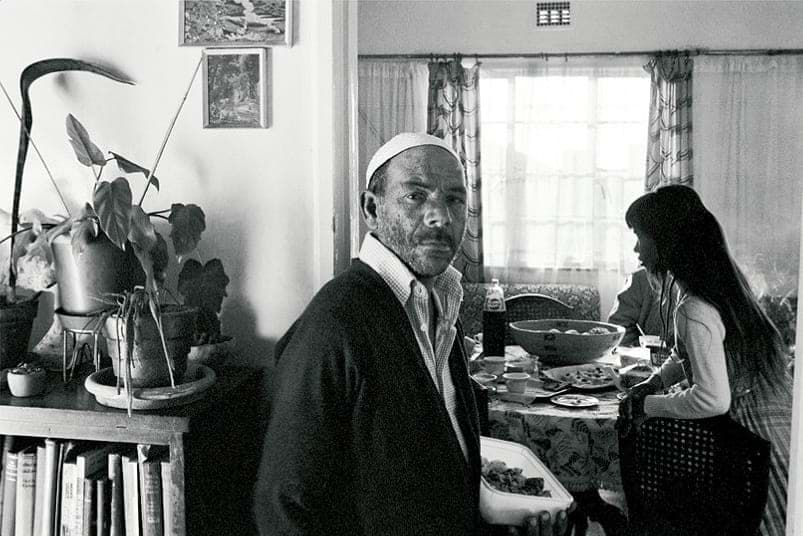
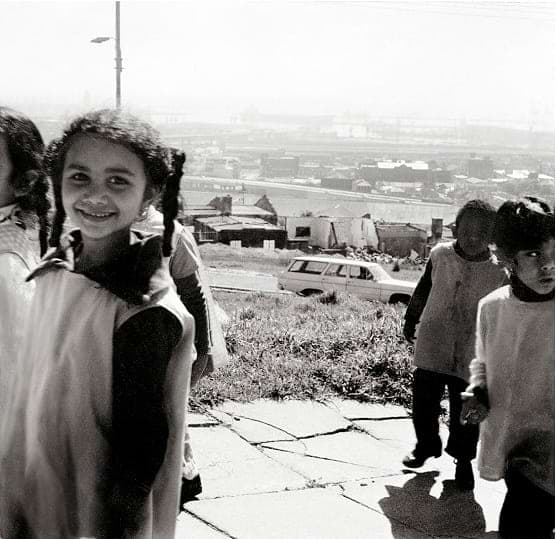
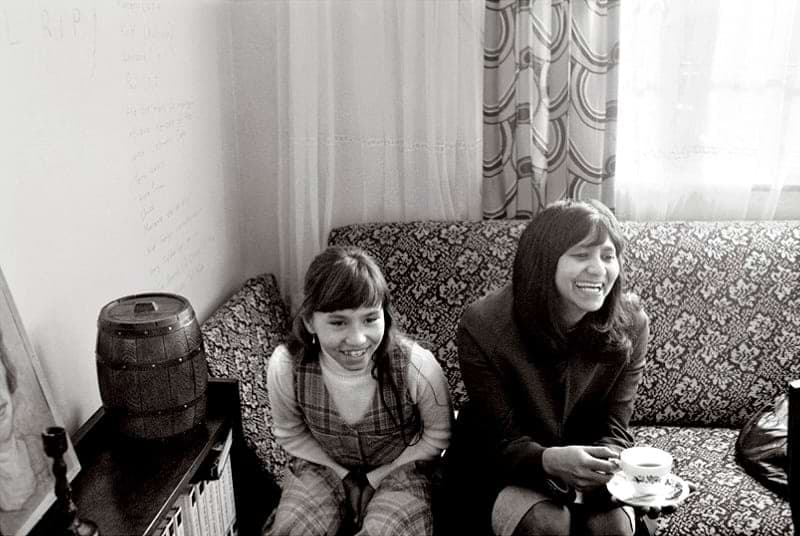
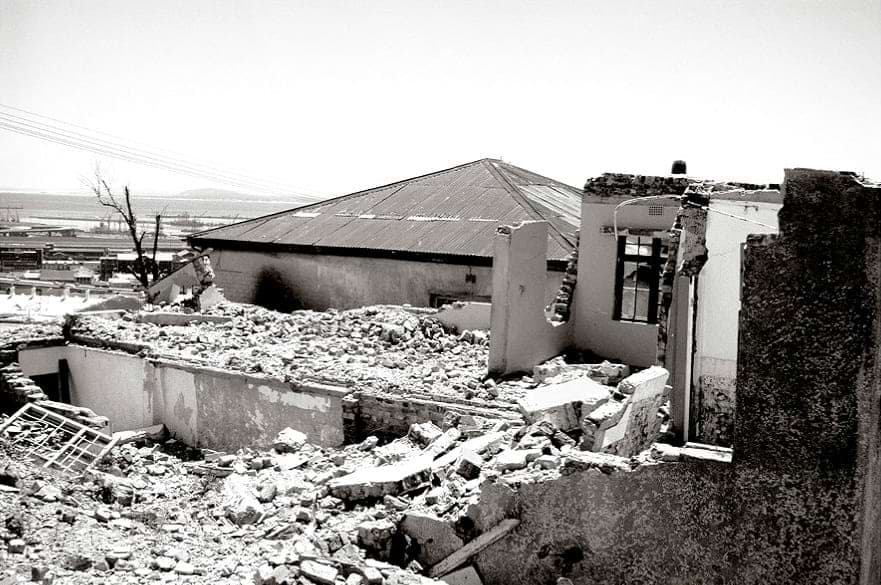
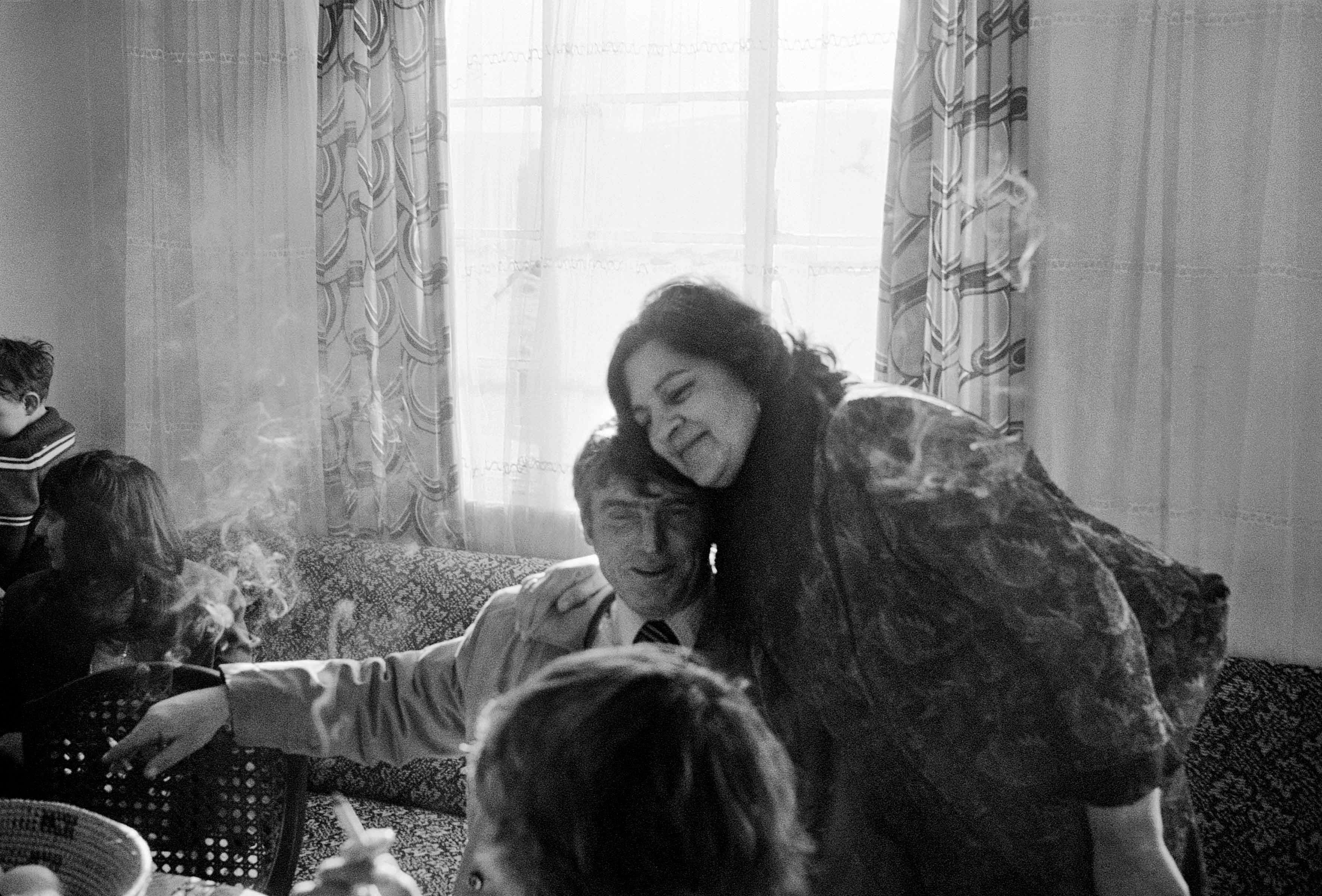
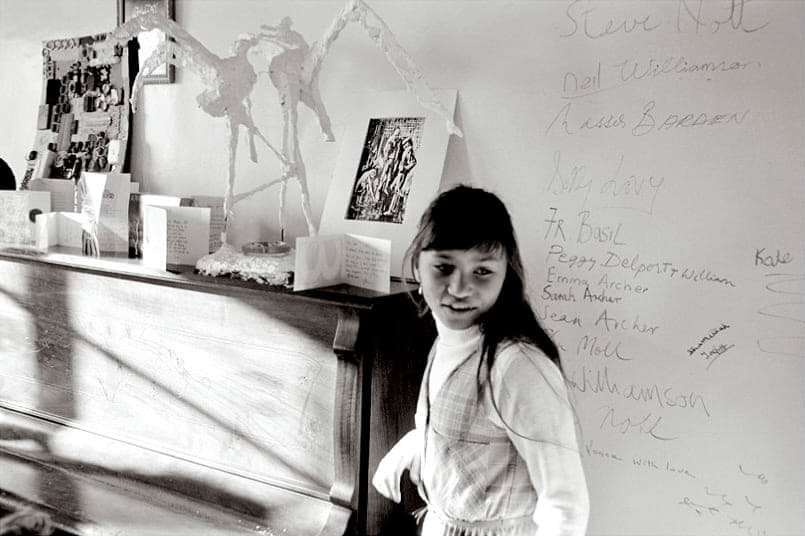
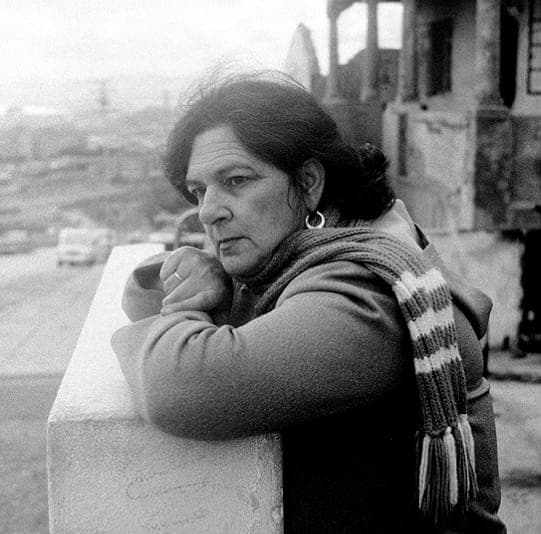
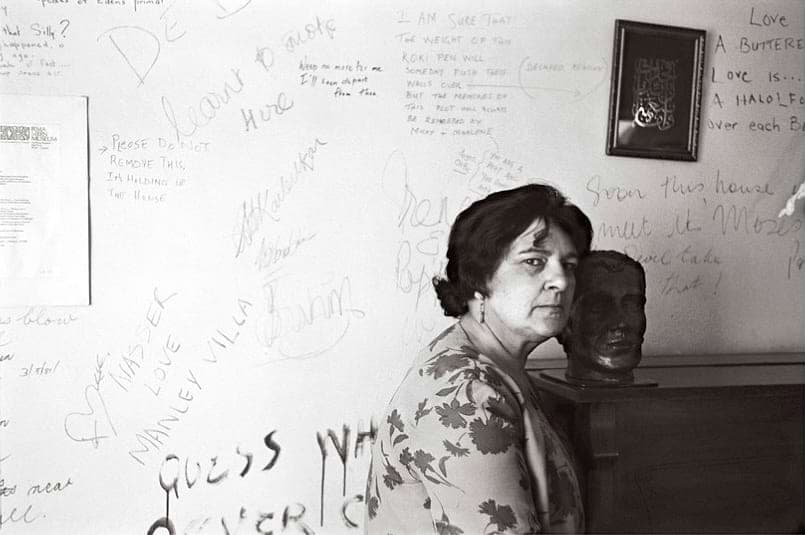
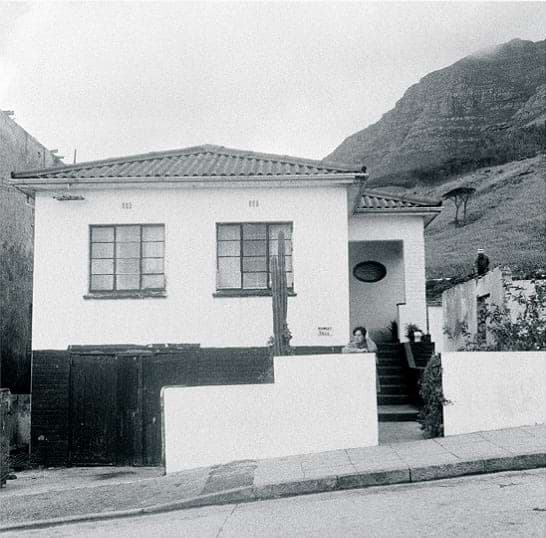
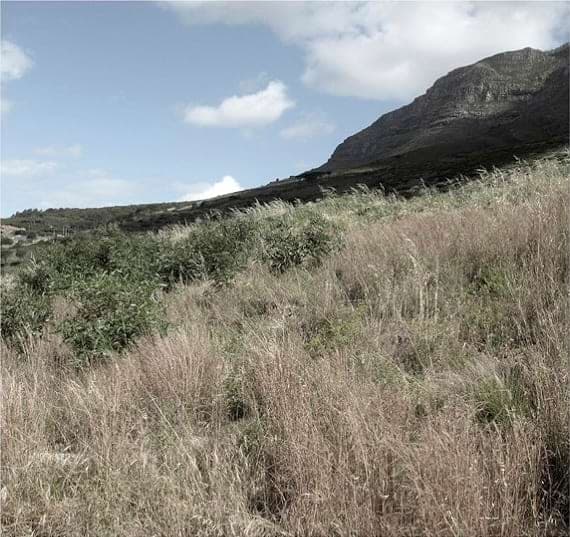
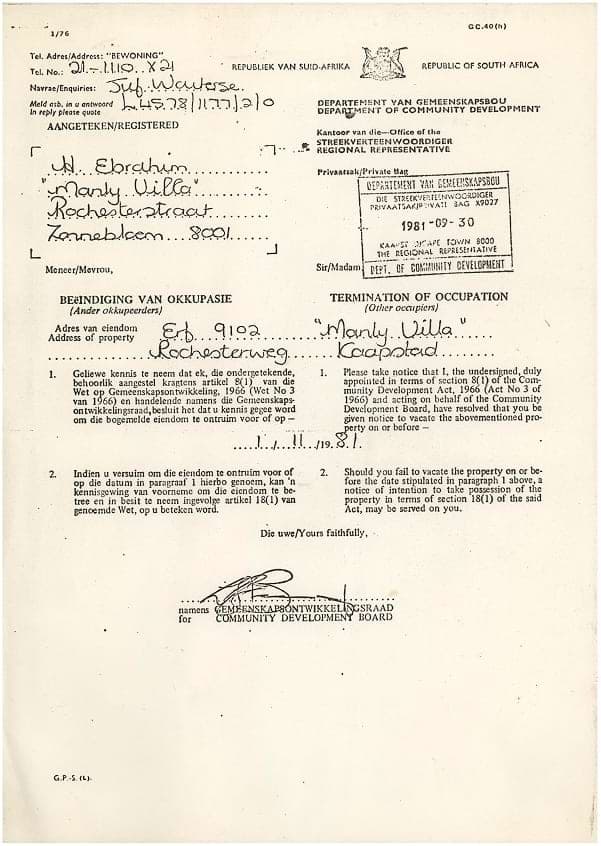
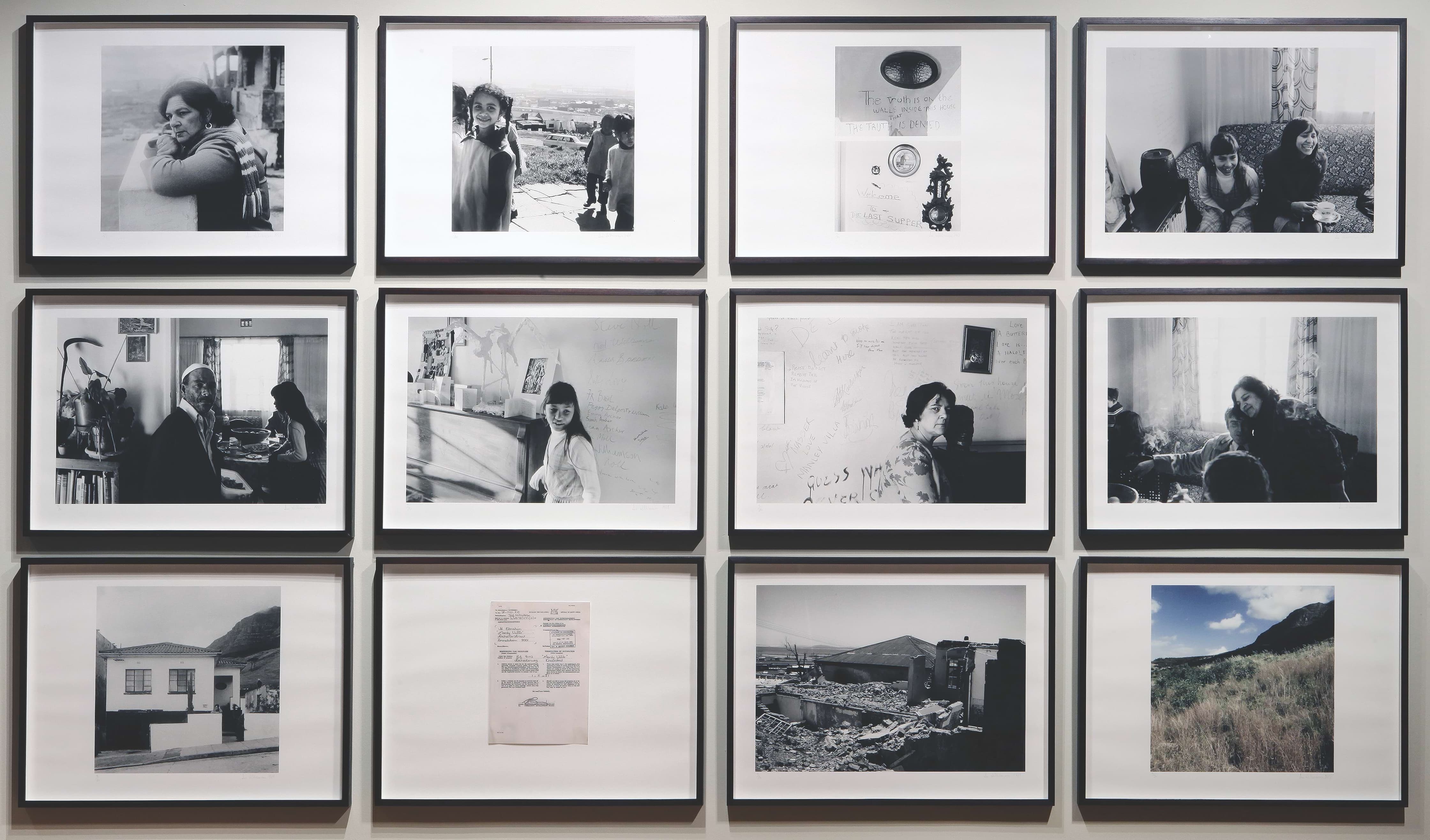















Last Supper at Manley Villa, 1981 – 2008 is a portfolio of ten black and white photographs taken on and around the final celebration of Eid in August 1981, at Manley Villa, District Six, Cape Town, a facsimile of an eviction notice, and a colour photograph taken in 2008 showing the empty land where Manley Villa once stood. Manley Villa had been the home of Naz and Hari Ebrahim and their family for more than thirty years.
In terms of a proclamation from the Aparthied government, District Six had been declared for whites only, and 60 000 residents of mixed race were moved out.
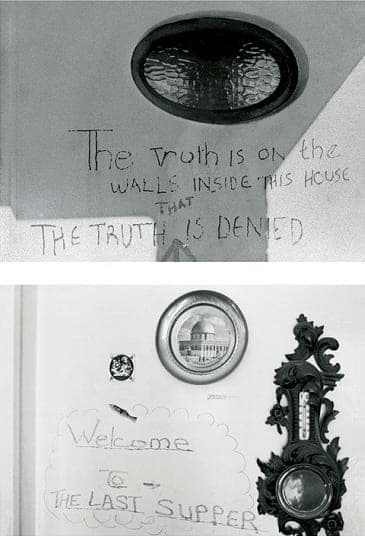
On the morning of August 2, as Naz was preparing the Eid feast for family and friends, there was a knock on the door, and an official handed over an eviction notice. Naz slammed the door in his face, and grabbing a marker wrote 'Welcome to the Last Supper' in the entrance hall of the house. A friend ran outside and wrote next to the front door, THE TRUTH IS ON THE WALLS INSIDE THIS HOUSE, THE TRUTH THAT IS DENIED. That day, and in the weeks following, friends and family added their own contrributions.
In her autobiography, The Truth is on the Walls, Naz says, 'I wrote all the things I dared not say out loud, but which burned within me. Messages, epigrams, poetry prose, the names of friends who had frequented Manley Villa covered every available bit of wall space'. Manley Villa was demolished the following year.
Last Supper at Manley Villa, 1981 – 2008 is a portfolio of ten black and white photographs taken on and around the final celebration of Eid in August 1981, at Manley Villa, District Six, Cape Town, a facsimile of an eviction notice, and a colour photograph taken in 2008 showing the empty land where Manley Villa once stood. Manley Villa had been the home of Naz and Hari Ebrahim and their family for more than thirty years.
In terms of a proclamation from the Aparthied government, District Six had been declared for whites only, and 60 000 residents of mixed race were moved out.
On the morning of August 2, as Naz was preparing the Eid feast for family and friends, there was a knock on the door, and an official handed over an eviction notice. Naz slammed the door in his face, and grabbing a marker wrote 'Welcome to the Last Supper' in the entrance hall of the house. A friend ran outside and wrote next to the front door, THE TRUTH IS ON THE WALLS INSIDE THIS HOUSE, THE TRUTH THAT IS DENIED. That day, and in the weeks following, friends and family added their own contrributions.
In her autobiography, The Truth is on the Walls, Naz says, 'I wrote all the things I dared not say out loud, but which burned within me. Messages, epigrams, poetry prose, the names of friends who had frequented Manley Villa covered every available bit of wall space'. Manley Villa was demolished the following year.
Last Supper at Manley Villa, 1981 – 2008 is a portfolio of ten black and white photographs taken on and around the final celebration of Eid in August 1981, at Manley Villa, District Six, Cape Town, a facsimile of an eviction notice, and a colour photograph taken in 2008 showing the empty land where Manley Villa once stood. Manley Villa had been the home of Naz and Hari Ebrahim and their family for more than thirty years.
In terms of a proclamation from the Aparthied government, District Six had been declared for whites only, and 60 000 residents of mixed race were moved out.
On the morning of August 2, as Naz was preparing the Eid feast for family and friends, there was a knock on the door, and an official handed over an eviction notice. Naz slammed the door in his face, and grabbing a marker wrote 'Welcome to the Last Supper' in the entrance hall of the house. A friend ran outside and wrote next to the front door, THE TRUTH IS ON THE WALLS INSIDE THIS HOUSE, THE TRUTH THAT IS DENIED. That day, and in the weeks following, friends and family added their own contrributions.
In her autobiography, The Truth is on the Walls, Naz says, 'I wrote all the things I dared not say out loud, but which burned within me. Messages, epigrams, poetry prose, the names of friends who had frequented Manley Villa covered every available bit of wall space'. Manley Villa was demolished the following year.
Last Supper at Manley Villa, 1981 – 2008 is a portfolio of ten black and white photographs taken on and around the final celebration of Eid in August 1981, at Manley Villa, District Six, Cape Town, a facsimile of an eviction notice, and a colour photograph taken in 2008 showing the empty land where Manley Villa once stood. Manley Villa had been the home of Naz and Hari Ebrahim and their family for more than thirty years.
In terms of a proclamation from the Aparthied government, District Six had been declared for whites only, and 60 000 residents of mixed race were moved out.
On the morning of August 2, as Naz was preparing the Eid feast for family and friends, there was a knock on the door, and an official handed over an eviction notice. Naz slammed the door in his face, and grabbing a marker wrote 'Welcome to the Last Supper' in the entrance hall of the house. A friend ran outside and wrote next to the front door, THE TRUTH IS ON THE WALLS INSIDE THIS HOUSE, THE TRUTH THAT IS DENIED. That day, and in the weeks following, friends and family added their own contrributions.
In her autobiography, The Truth is on the Walls, Naz says, 'I wrote all the things I dared not say out loud, but which burned within me. Messages, epigrams, poetry prose, the names of friends who had frequented Manley Villa covered every available bit of wall space'. Manley Villa was demolished the following year.
Last Supper at Manley Villa, 1981 – 2008 is a portfolio of ten black and white photographs taken on and around the final celebration of Eid in August 1981, at Manley Villa, District Six, Cape Town, a facsimile of an eviction notice, and a colour photograph taken in 2008 showing the empty land where Manley Villa once stood. Manley Villa had been the home of Naz and Hari Ebrahim and their family for more than thirty years.
In terms of a proclamation from the Aparthied government, District Six had been declared for whites only, and 60 000 residents of mixed race were moved out.
On the morning of August 2, as Naz was preparing the Eid feast for family and friends, there was a knock on the door, and an official handed over an eviction notice. Naz slammed the door in his face, and grabbing a marker wrote 'Welcome to the Last Supper' in the entrance hall of the house. A friend ran outside and wrote next to the front door, THE TRUTH IS ON THE WALLS INSIDE THIS HOUSE, THE TRUTH THAT IS DENIED. That day, and in the weeks following, friends and family added their own contrributions.
In her autobiography, The Truth is on the Walls, Naz says, 'I wrote all the things I dared not say out loud, but which burned within me. Messages, epigrams, poetry prose, the names of friends who had frequented Manley Villa covered every available bit of wall space'. Manley Villa was demolished the following year.
Last Supper at Manley Villa, 1981 – 2008 is a portfolio of ten black and white photographs taken on and around the final celebration of Eid in August 1981, at Manley Villa, District Six, Cape Town, a facsimile of an eviction notice, and a colour photograph taken in 2008 showing the empty land where Manley Villa once stood. Manley Villa had been the home of Naz and Hari Ebrahim and their family for more than thirty years.
In terms of a proclamation from the Aparthied government, District Six had been declared for whites only, and 60 000 residents of mixed race were moved out.
On the morning of August 2, as Naz was preparing the Eid feast for family and friends, there was a knock on the door, and an official handed over an eviction notice. Naz slammed the door in his face, and grabbing a marker wrote 'Welcome to the Last Supper' in the entrance hall of the house. A friend ran outside and wrote next to the front door, THE TRUTH IS ON THE WALLS INSIDE THIS HOUSE, THE TRUTH THAT IS DENIED. That day, and in the weeks following, friends and family added their own contrributions.
In her autobiography, The Truth is on the Walls, Naz says, 'I wrote all the things I dared not say out loud, but which burned within me. Messages, epigrams, poetry prose, the names of friends who had frequented Manley Villa covered every available bit of wall space'. Manley Villa was demolished the following year.
Last Supper at Manley Villa, 1981 – 2008 is a portfolio of ten black and white photographs taken on and around the final celebration of Eid in August 1981, at Manley Villa, District Six, Cape Town, a facsimile of an eviction notice, and a colour photograph taken in 2008 showing the empty land where Manley Villa once stood. Manley Villa had been the home of Naz and Hari Ebrahim and their family for more than thirty years.
In terms of a proclamation from the Aparthied government, District Six had been declared for whites only, and 60 000 residents of mixed race were moved out.
On the morning of August 2, as Naz was preparing the Eid feast for family and friends, there was a knock on the door, and an official handed over an eviction notice. Naz slammed the door in his face, and grabbing a marker wrote 'Welcome to the Last Supper' in the entrance hall of the house. A friend ran outside and wrote next to the front door, THE TRUTH IS ON THE WALLS INSIDE THIS HOUSE, THE TRUTH THAT IS DENIED. That day, and in the weeks following, friends and family added their own contrributions.
In her autobiography, The Truth is on the Walls, Naz says, 'I wrote all the things I dared not say out loud, but which burned within me. Messages, epigrams, poetry prose, the names of friends who had frequented Manley Villa covered every available bit of wall space'. Manley Villa was demolished the following year.
Last Supper at Manley Villa, 1981 – 2008 is a portfolio of ten black and white photographs taken on and around the final celebration of Eid in August 1981, at Manley Villa, District Six, Cape Town, a facsimile of an eviction notice, and a colour photograph taken in 2008 showing the empty land where Manley Villa once stood. Manley Villa had been the home of Naz and Hari Ebrahim and their family for more than thirty years.
In terms of a proclamation from the Aparthied government, District Six had been declared for whites only, and 60 000 residents of mixed race were moved out.
On the morning of August 2, as Naz was preparing the Eid feast for family and friends, there was a knock on the door, and an official handed over an eviction notice. Naz slammed the door in his face, and grabbing a marker wrote 'Welcome to the Last Supper' in the entrance hall of the house. A friend ran outside and wrote next to the front door, THE TRUTH IS ON THE WALLS INSIDE THIS HOUSE, THE TRUTH THAT IS DENIED. That day, and in the weeks following, friends and family added their own contrributions.
In her autobiography, The Truth is on the Walls, Naz says, 'I wrote all the things I dared not say out loud, but which burned within me. Messages, epigrams, poetry prose, the names of friends who had frequented Manley Villa covered every available bit of wall space'. Manley Villa was demolished the following year.
Last Supper at Manley Villa, 1981 – 2008 is a portfolio of ten black and white photographs taken on and around the final celebration of Eid in August 1981, at Manley Villa, District Six, Cape Town, a facsimile of an eviction notice, and a colour photograph taken in 2008 showing the empty land where Manley Villa once stood. Manley Villa had been the home of Naz and Hari Ebrahim and their family for more than thirty years.
In terms of a proclamation from the Aparthied government, District Six had been declared for whites only, and 60 000 residents of mixed race were moved out.
On the morning of August 2, as Naz was preparing the Eid feast for family and friends, there was a knock on the door, and an official handed over an eviction notice. Naz slammed the door in his face, and grabbing a marker wrote 'Welcome to the Last Supper' in the entrance hall of the house. A friend ran outside and wrote next to the front door, THE TRUTH IS ON THE WALLS INSIDE THIS HOUSE, THE TRUTH THAT IS DENIED. That day, and in the weeks following, friends and family added their own contrributions.
In her autobiography, The Truth is on the Walls, Naz says, 'I wrote all the things I dared not say out loud, but which burned within me. Messages, epigrams, poetry prose, the names of friends who had frequented Manley Villa covered every available bit of wall space'. Manley Villa was demolished the following year.
Last Supper at Manley Villa, 1981 – 2008 is a portfolio of ten black and white photographs taken on and around the final celebration of Eid in August 1981, at Manley Villa, District Six, Cape Town, a facsimile of an eviction notice, and a colour photograph taken in 2008 showing the empty land where Manley Villa once stood. Manley Villa had been the home of Naz and Hari Ebrahim and their family for more than thirty years.
In terms of a proclamation from the Aparthied government, District Six had been declared for whites only, and 60 000 residents of mixed race were moved out.
On the morning of August 2, as Naz was preparing the Eid feast for family and friends, there was a knock on the door, and an official handed over an eviction notice. Naz slammed the door in his face, and grabbing a marker wrote 'Welcome to the Last Supper' in the entrance hall of the house. A friend ran outside and wrote next to the front door, THE TRUTH IS ON THE WALLS INSIDE THIS HOUSE, THE TRUTH THAT IS DENIED. That day, and in the weeks following, friends and family added their own contrributions.
In her autobiography, The Truth is on the Walls, Naz says, 'I wrote all the things I dared not say out loud, but which burned within me. Messages, epigrams, poetry prose, the names of friends who had frequented Manley Villa covered every available bit of wall space'. Manley Villa was demolished the following year.
Last Supper at Manley Villa, 1981 – 2008 is a portfolio of ten black and white photographs taken on and around the final celebration of Eid in August 1981, at Manley Villa, District Six, Cape Town, a facsimile of an eviction notice, and a colour photograph taken in 2008 showing the empty land where Manley Villa once stood. Manley Villa had been the home of Naz and Hari Ebrahim and their family for more than thirty years.
In terms of a proclamation from the Aparthied government, District Six had been declared for whites only, and 60 000 residents of mixed race were moved out.
On the morning of August 2, as Naz was preparing the Eid feast for family and friends, there was a knock on the door, and an official handed over an eviction notice. Naz slammed the door in his face, and grabbing a marker wrote 'Welcome to the Last Supper' in the entrance hall of the house. A friend ran outside and wrote next to the front door, THE TRUTH IS ON THE WALLS INSIDE THIS HOUSE, THE TRUTH THAT IS DENIED. That day, and in the weeks following, friends and family added their own contrributions.
In her autobiography, The Truth is on the Walls, Naz says, I wrote all the things I dared not say out loud, but which burned within me. Messages, epigrams, poetry prose, the names of friends who had frequent Manley Villa covered every available bit of wall space'. Manley Villa was demolished the following year.
Last Supper at Manley Villa, 1981 – 2008 is a portfolio of ten black and white photographs taken on and around the final celebration of Eid in August 1981, at Manley Villa, District Six, Cape Town, a facsimile of an eviction notice, and a colour photograph taken in 2008 showing the empty land where Manley Villa once stood. Manley Villa had been the home of Naz and Hari Ebrahim and their family for more than thirty years.
In terms of a proclamation from the Aparthied government, District Six had been declared for whites only, and 60 000 residents of mixed race were moved out.
On the morning of August 2, as Naz was preparing the Eid feast for family and friends, there was a knock on the door, and an official handed over an eviction notice. Naz slammed the door in his face, and grabbing a marker wrote 'Welcome to the Last Supper' in the entrance hall of the house. A friend ran outside and wrote next to the front door, THE TRUTH IS ON THE WALLS INSIDE THIS HOUSE, THE TRUTH THAT IS DENIED. That day, and in the weeks following, friends and family added their own contrributions.
In her autobiography, The Truth is on the Walls, Naz says, I wrote all the things I dared not say out loud, but which burned within me. Messages, epigrams, poetry prose, the names of friends who had frequent Manley Villa covered every available bit of wall space'. Manley Villa was demolished the following year.
Last Supper at Manley Villa, 1981 – 2008 is a portfolio of ten black and white photographs taken on and around the final celebration of Eid in August 1981, at Manley Villa, District Six, Cape Town, a facsimile of an eviction notice, and a colour photograph taken in 2008 showing the empty land where Manley Villa once stood. Manley Villa had been the home of Naz and Hari Ebrahim and their family for more than thirty years.
In terms of a proclamation from the Aparthied government, District Six had been declared for whites only, and 60 000 residents of mixed race were moved out.
On the morning of August 2, as Naz was preparing the Eid feast for family and friends, there was a knock on the door, and an official handed over an eviction notice. Naz slammed the door in his face, and grabbing a marker wrote 'Welcome to the Last Supper' in the entrance hall of the house. A friend ran outside and wrote next to the front door, THE TRUTH IS ON THE WALLS INSIDE THIS HOUSE, THE TRUTH THAT IS DENIED. That day, and in the weeks following, friends and family added their own contrributions.
In her autobiography, The Truth is on the Walls, Naz says, 'I wrote all the things I dared not say out loud, but which burned within me. Messages, epigrams, poetry prose, the names of friends who had frequented Manley Villa covered every available bit of wall space'. Manley Villa was demolished the following year.
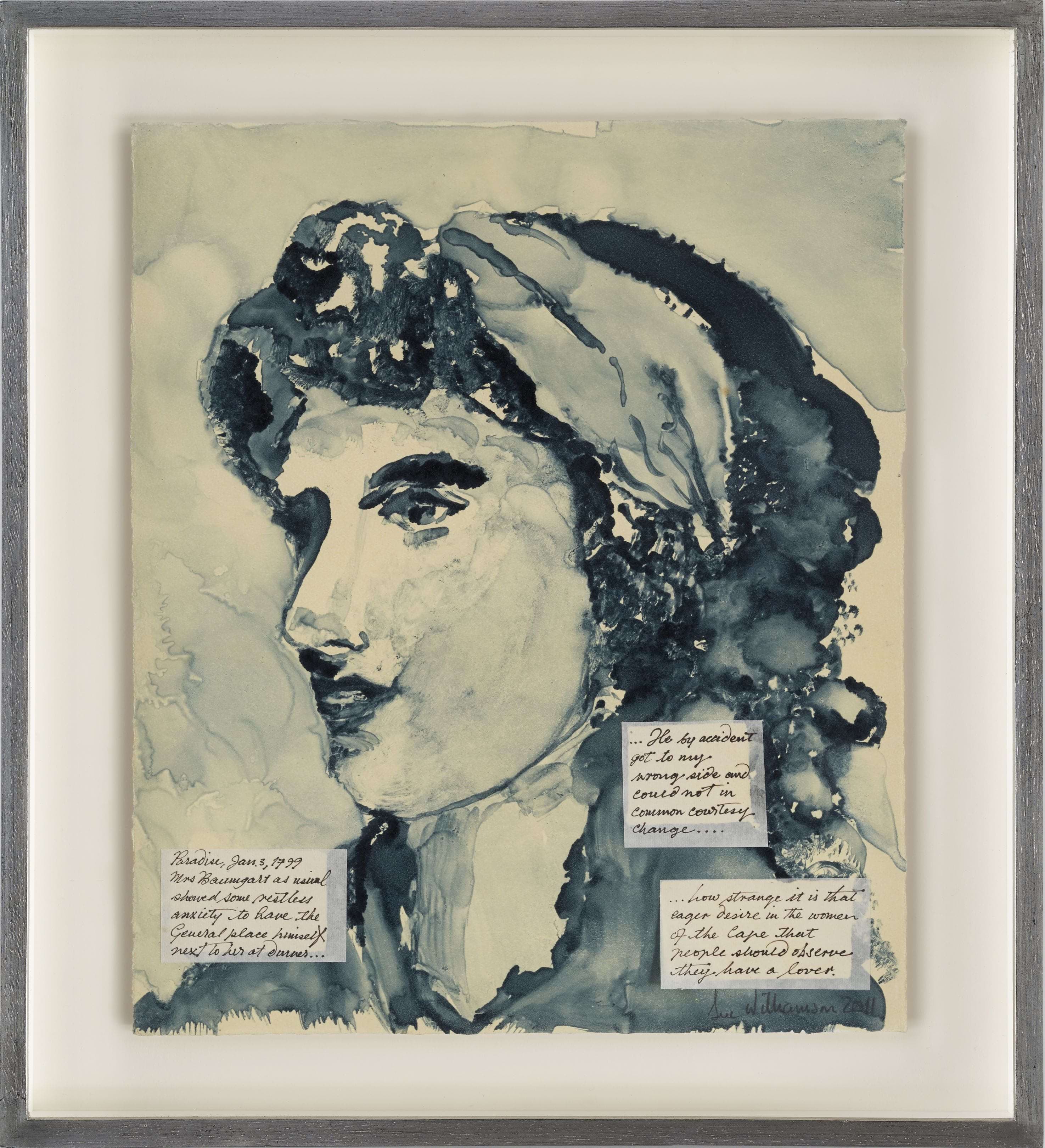
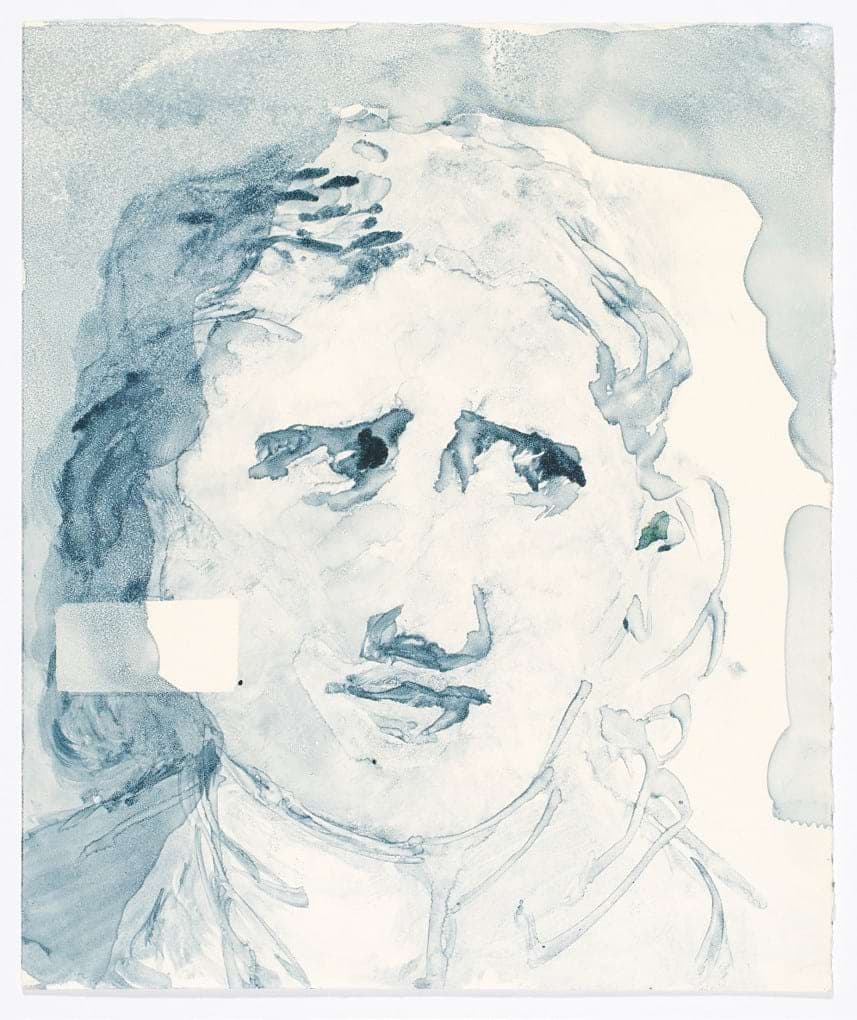
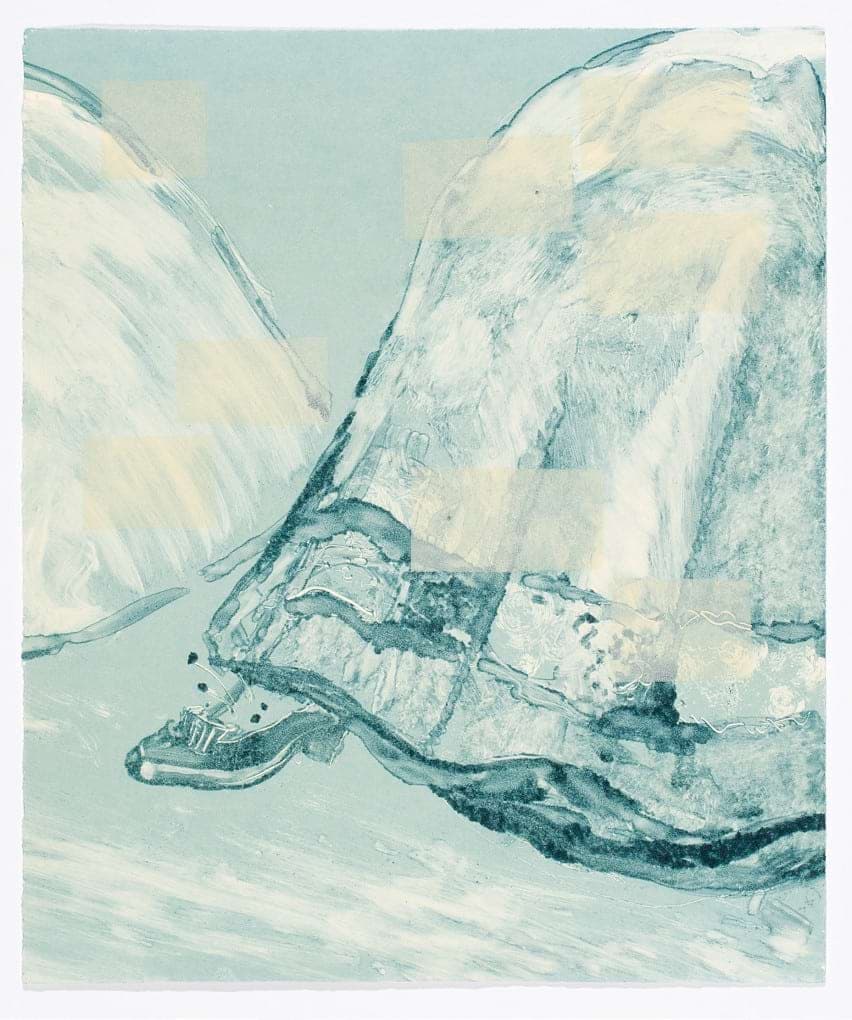
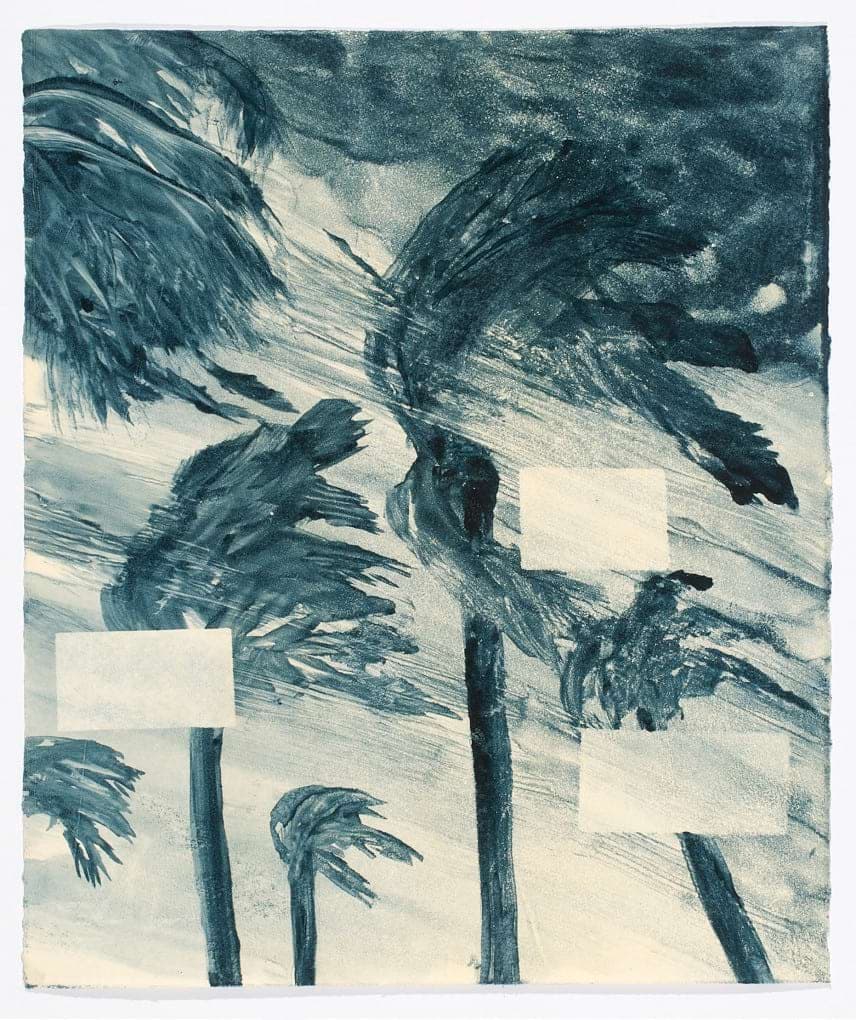
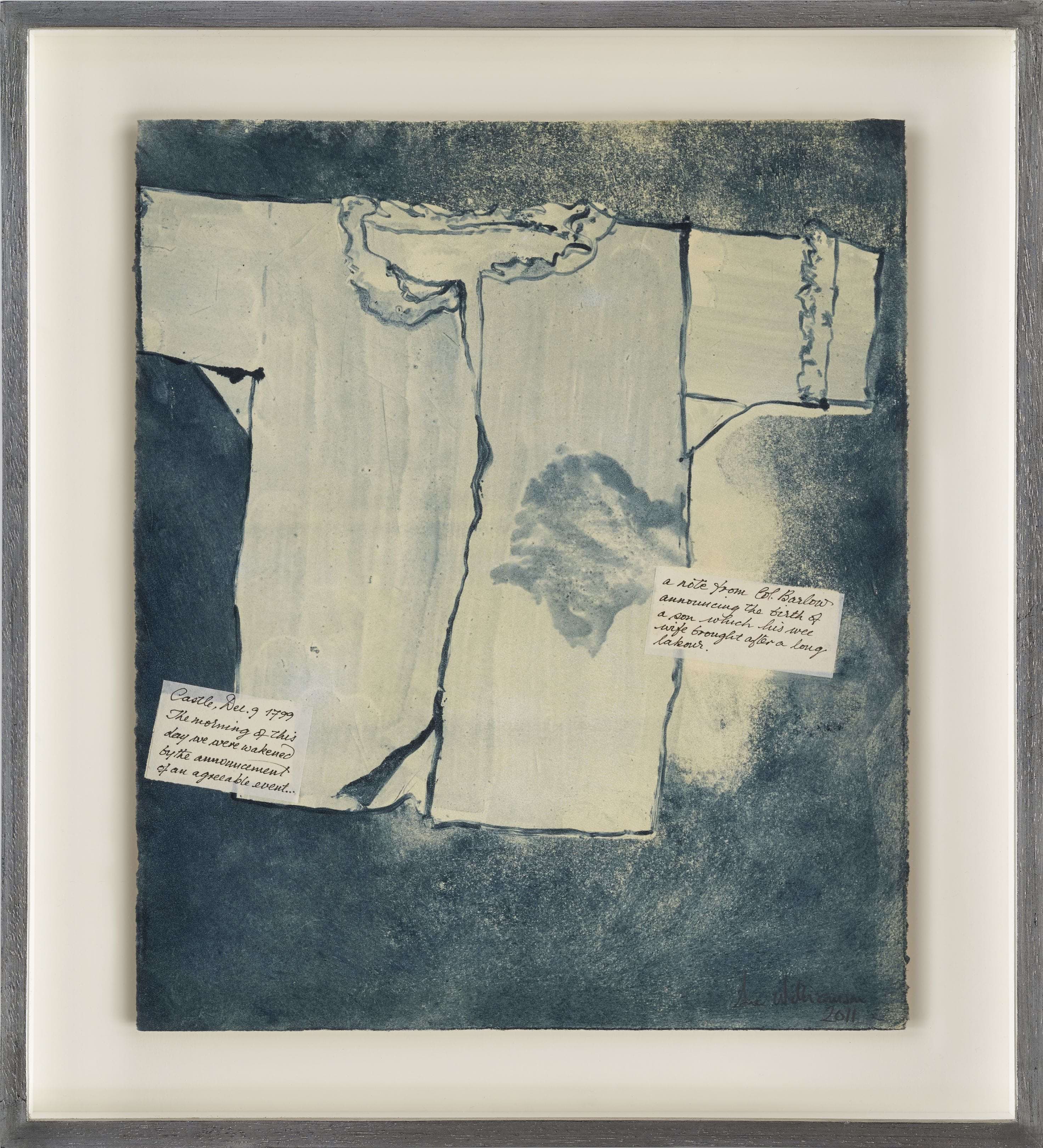
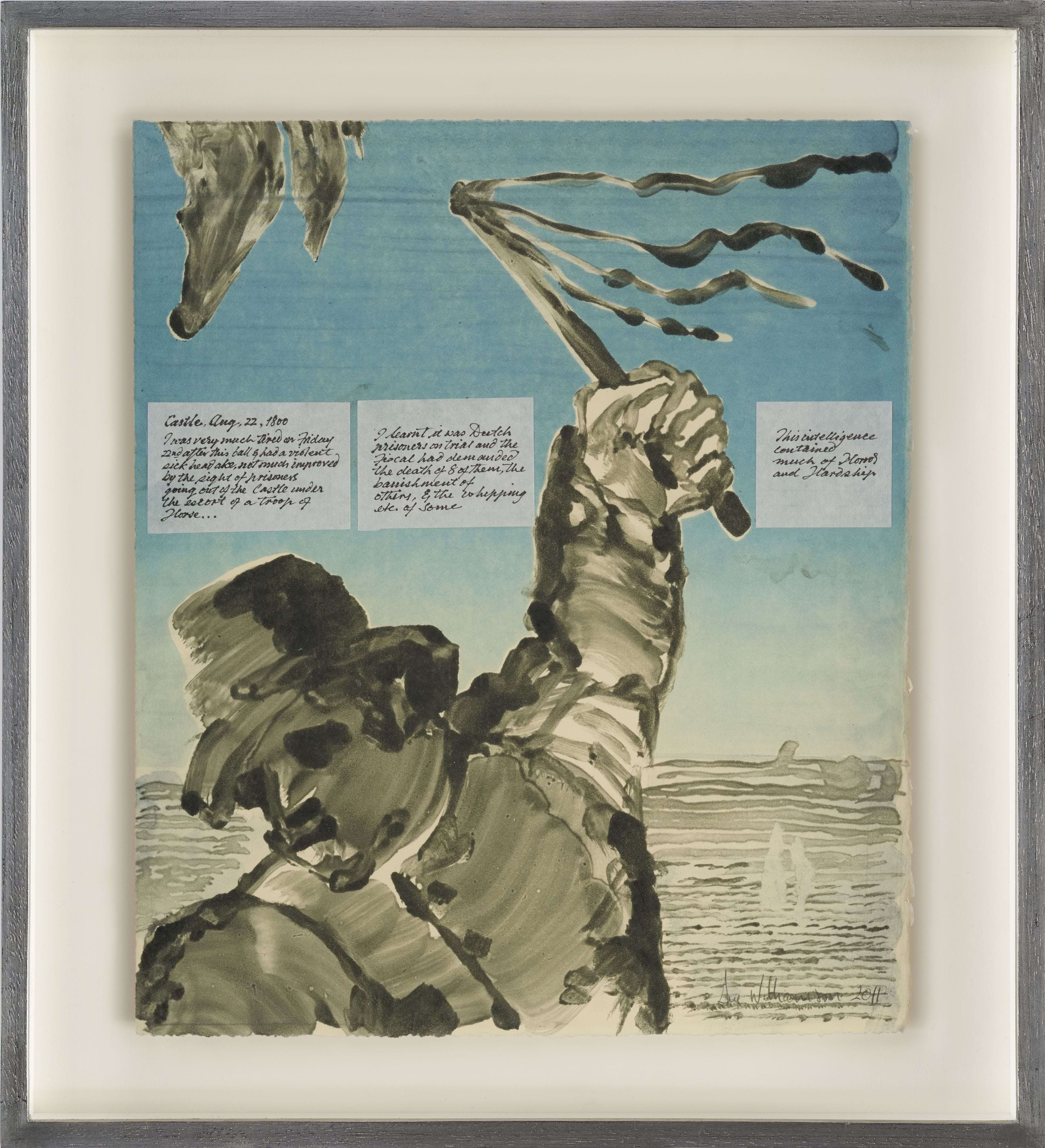
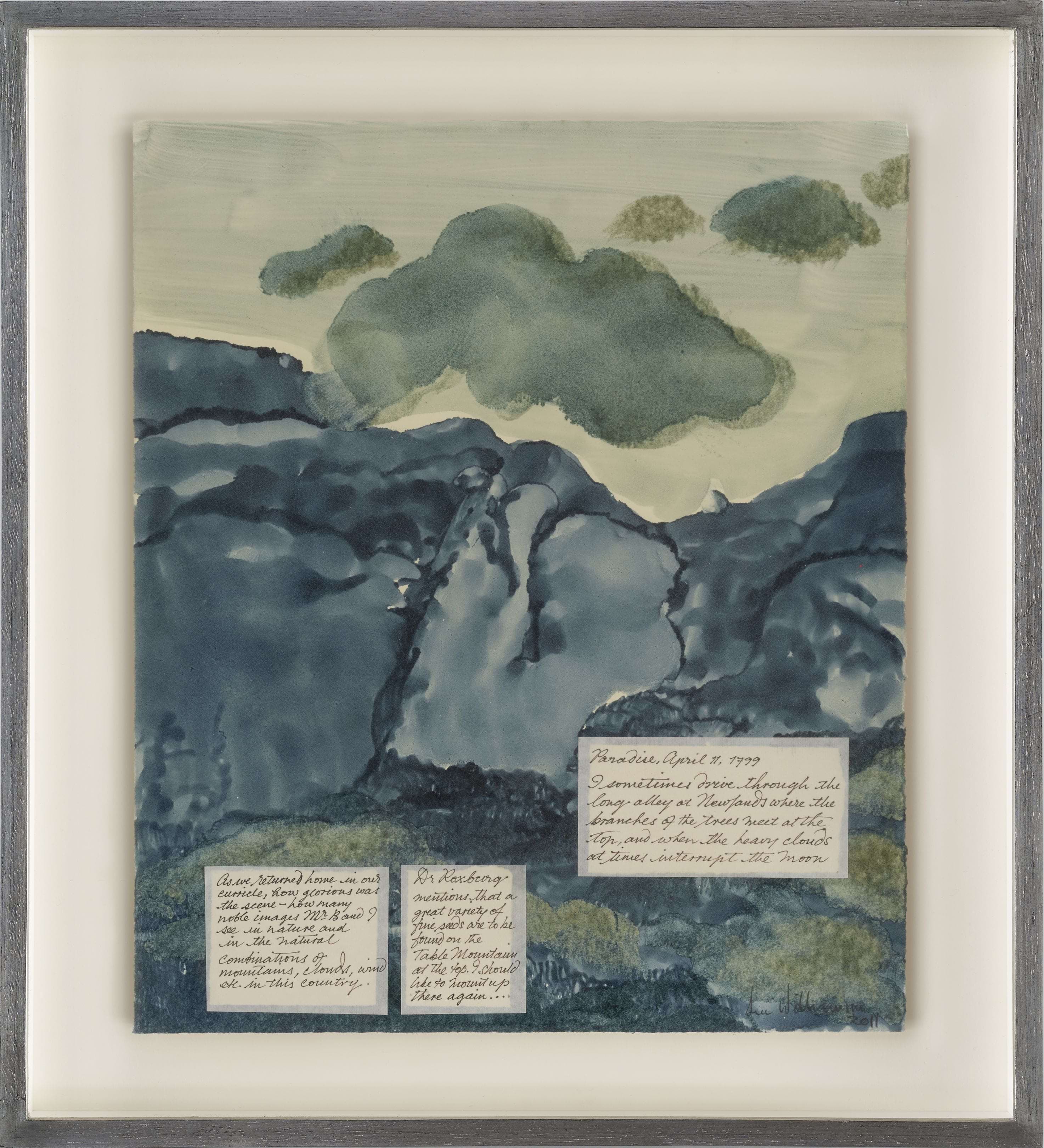
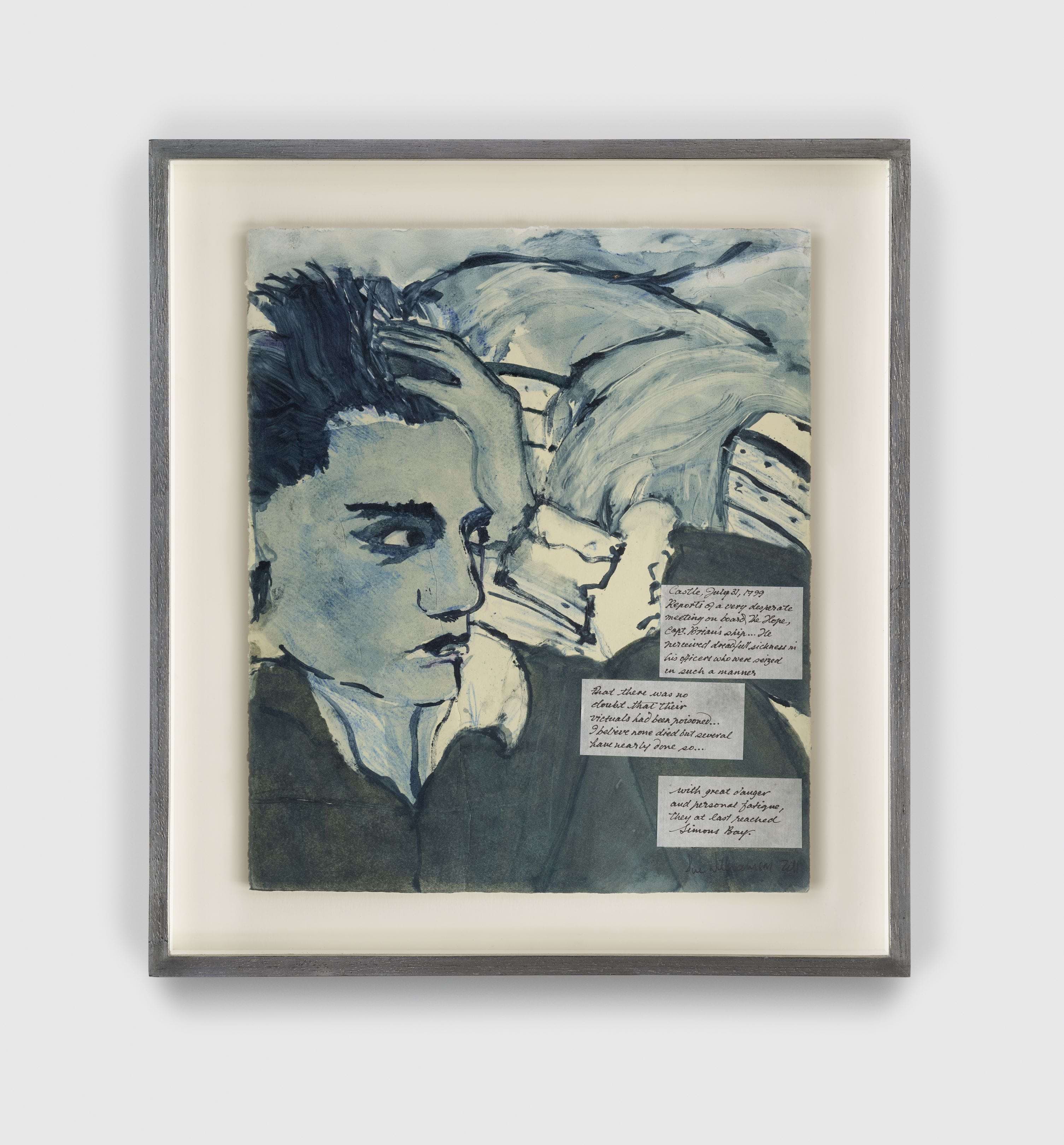
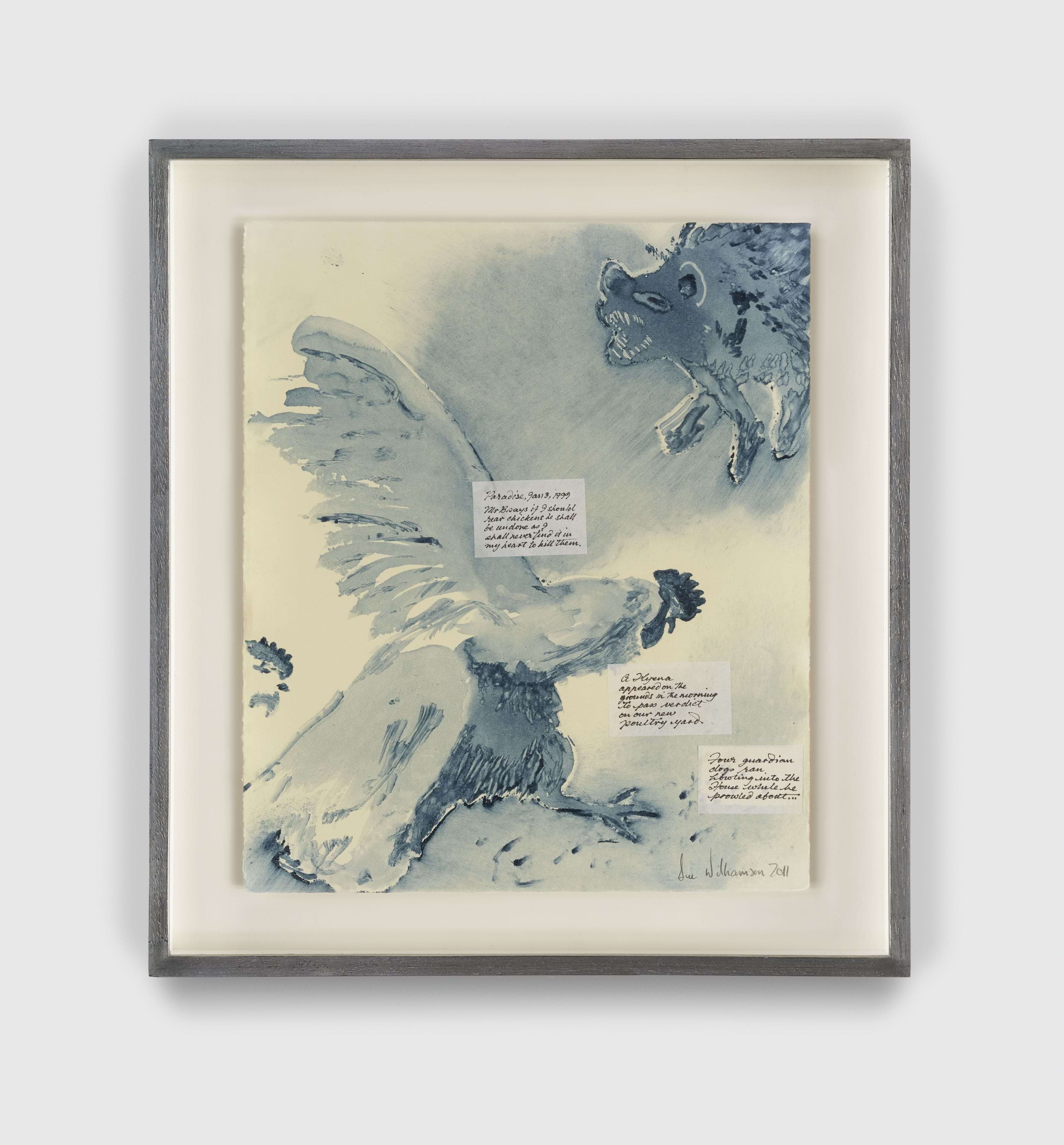
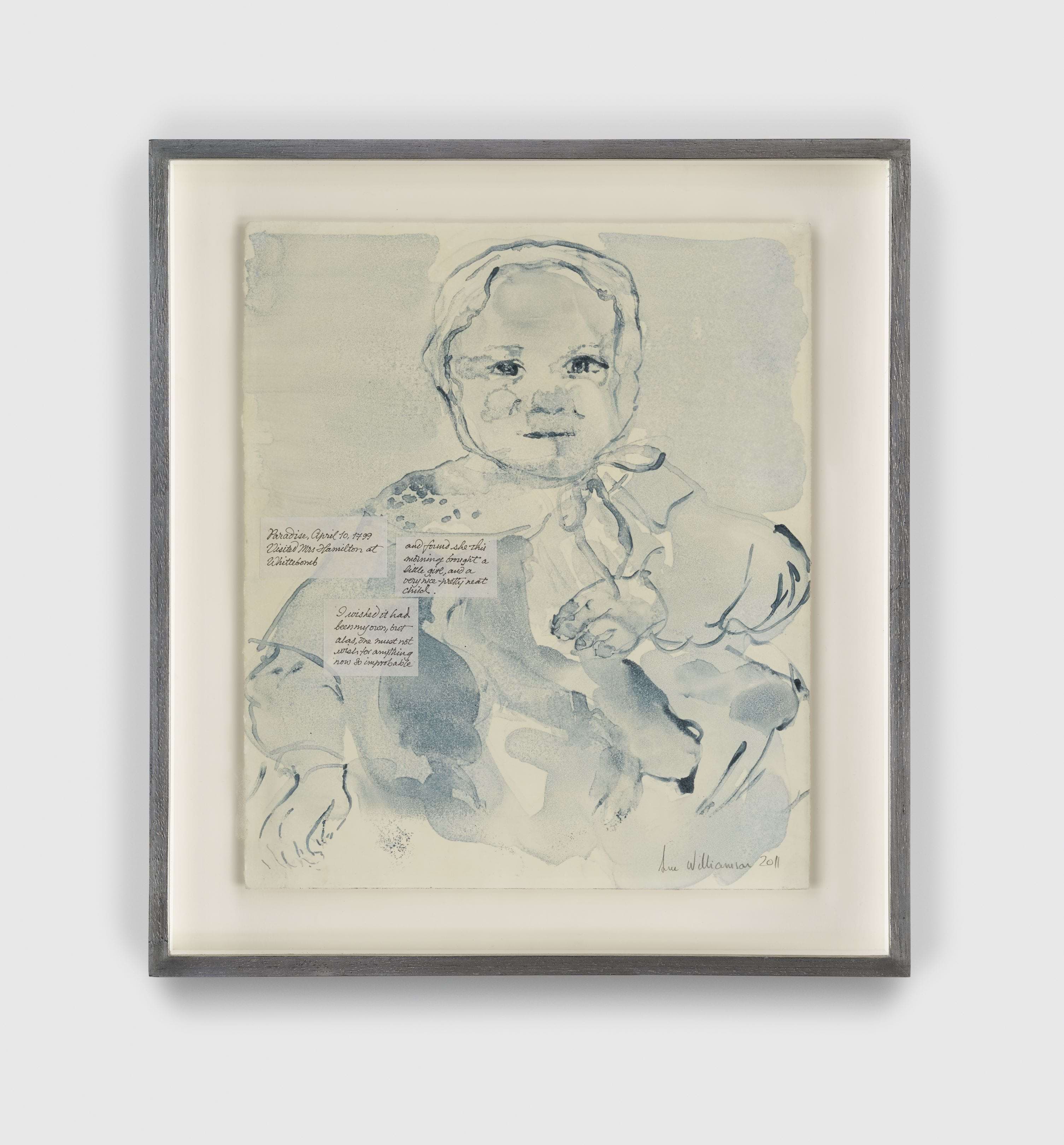
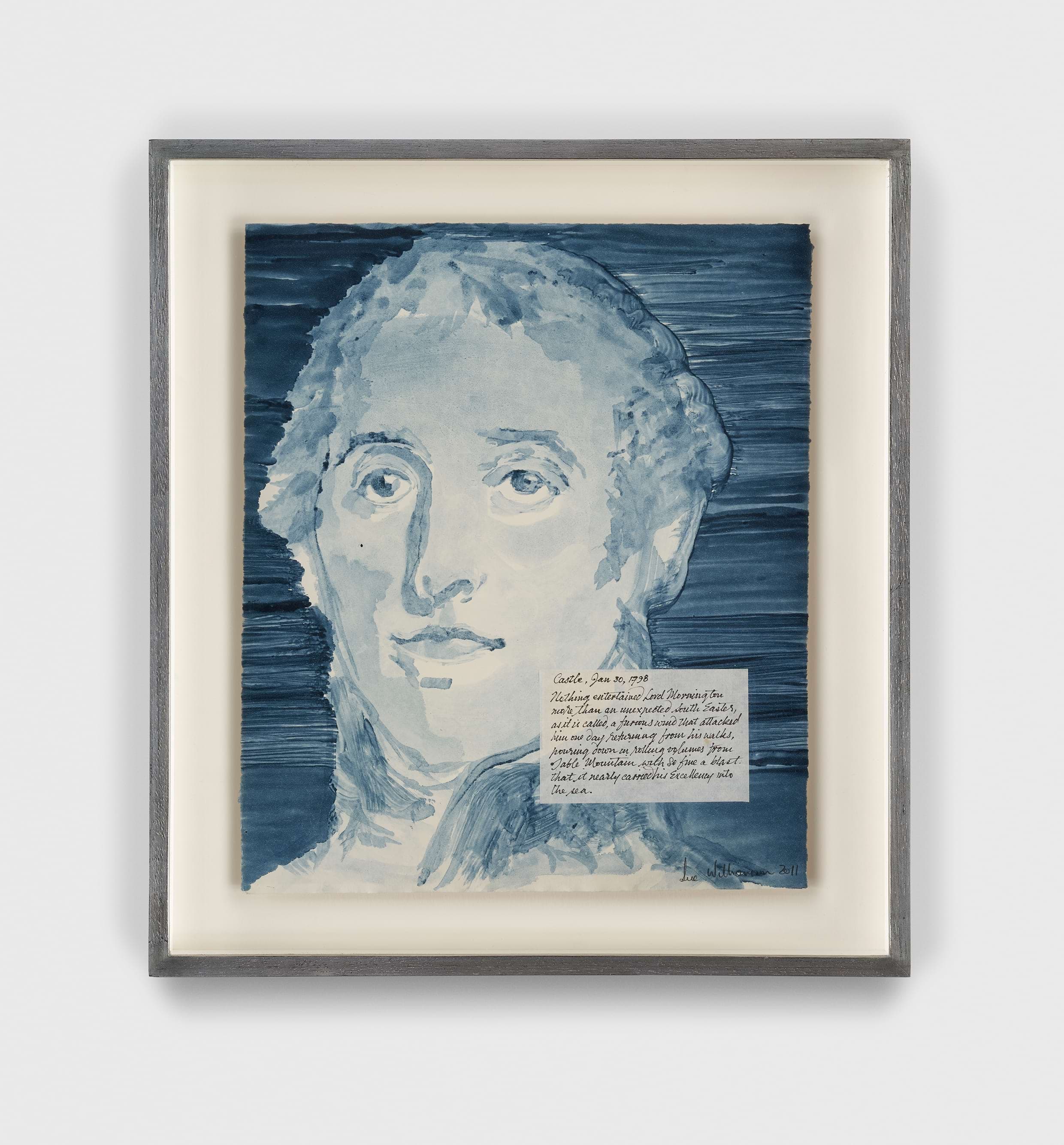
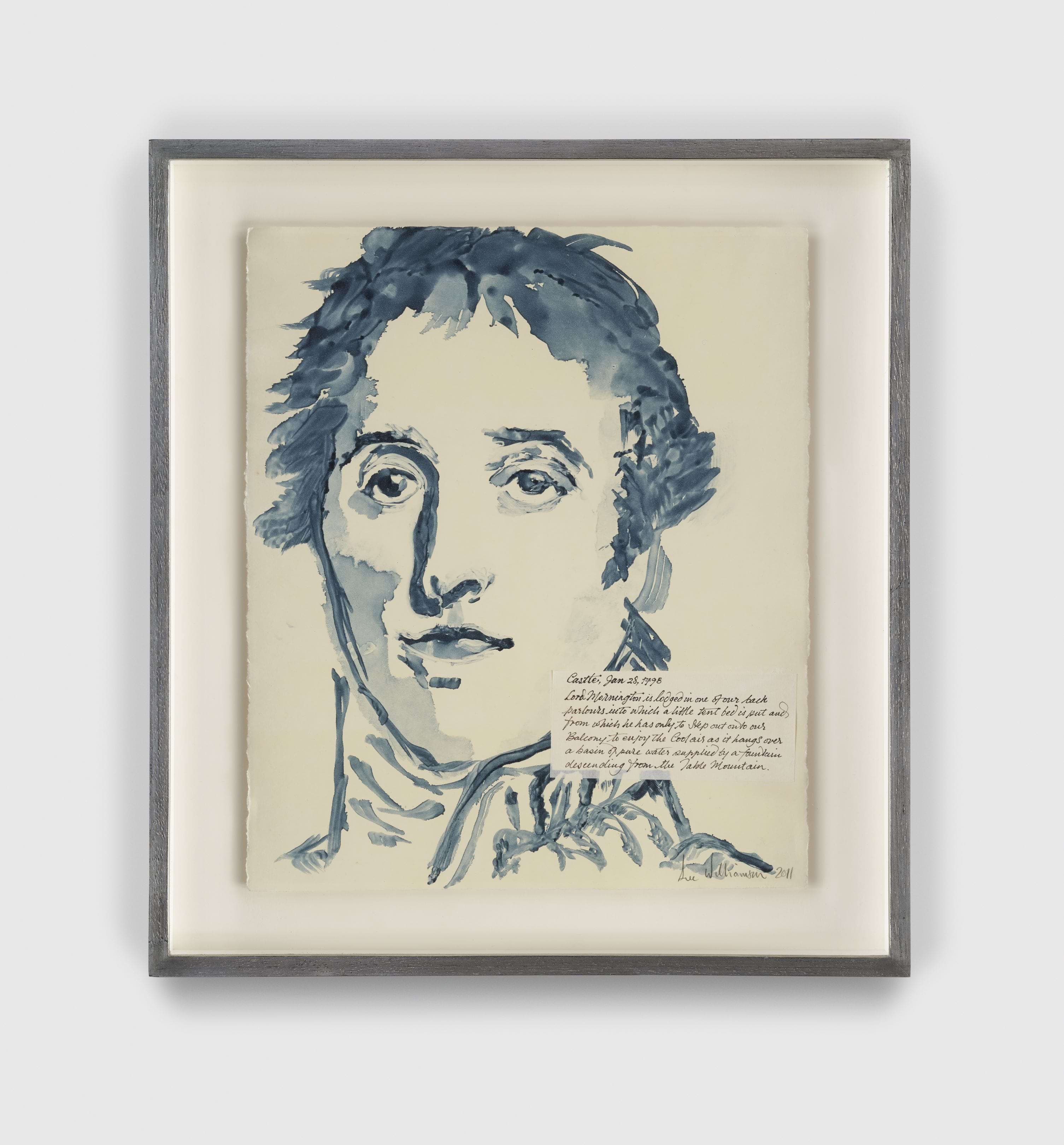
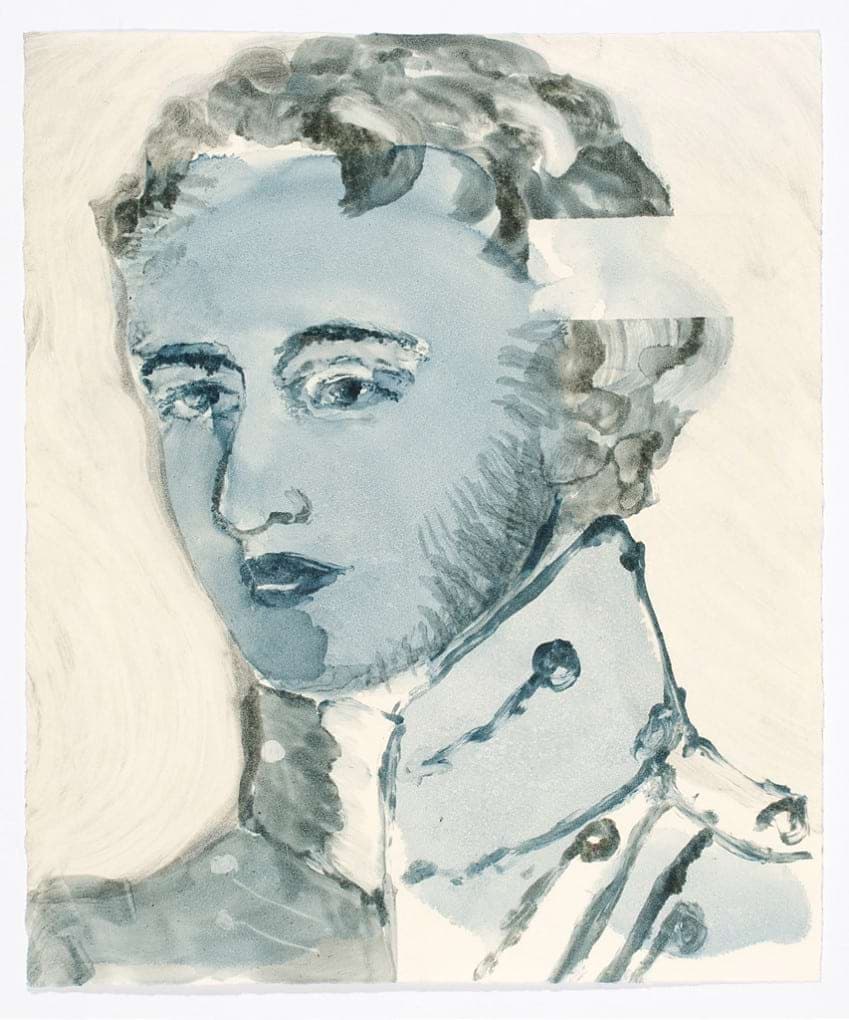
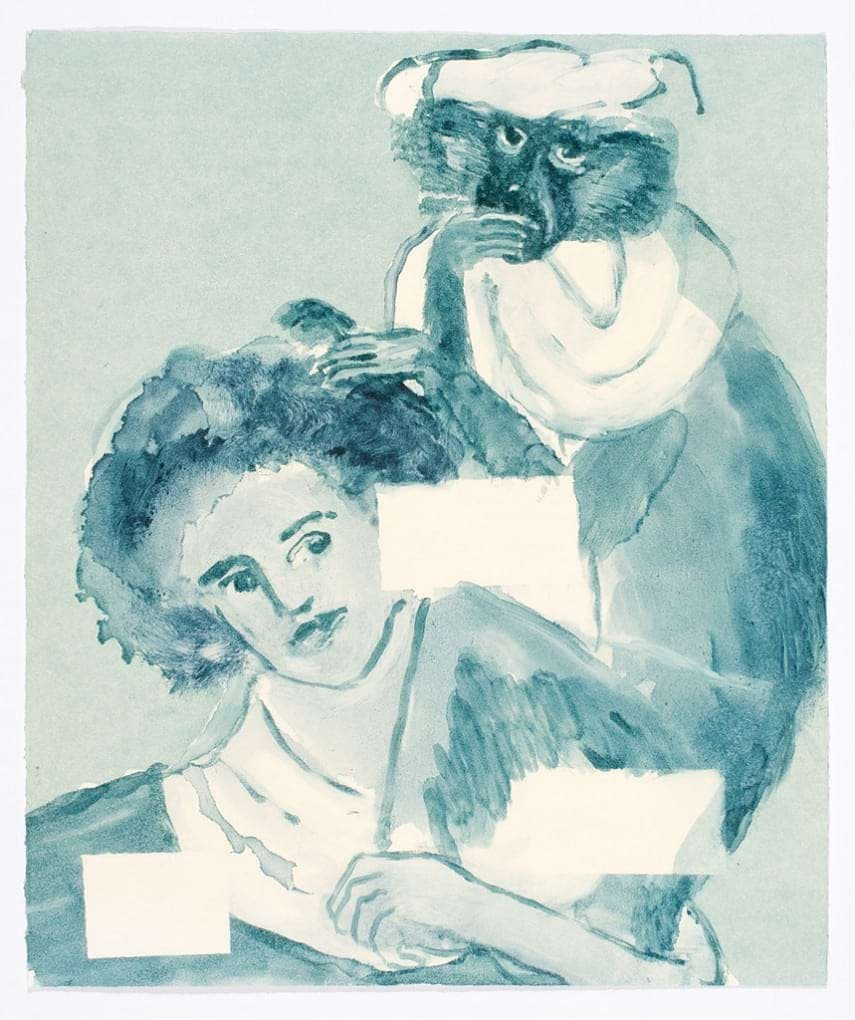
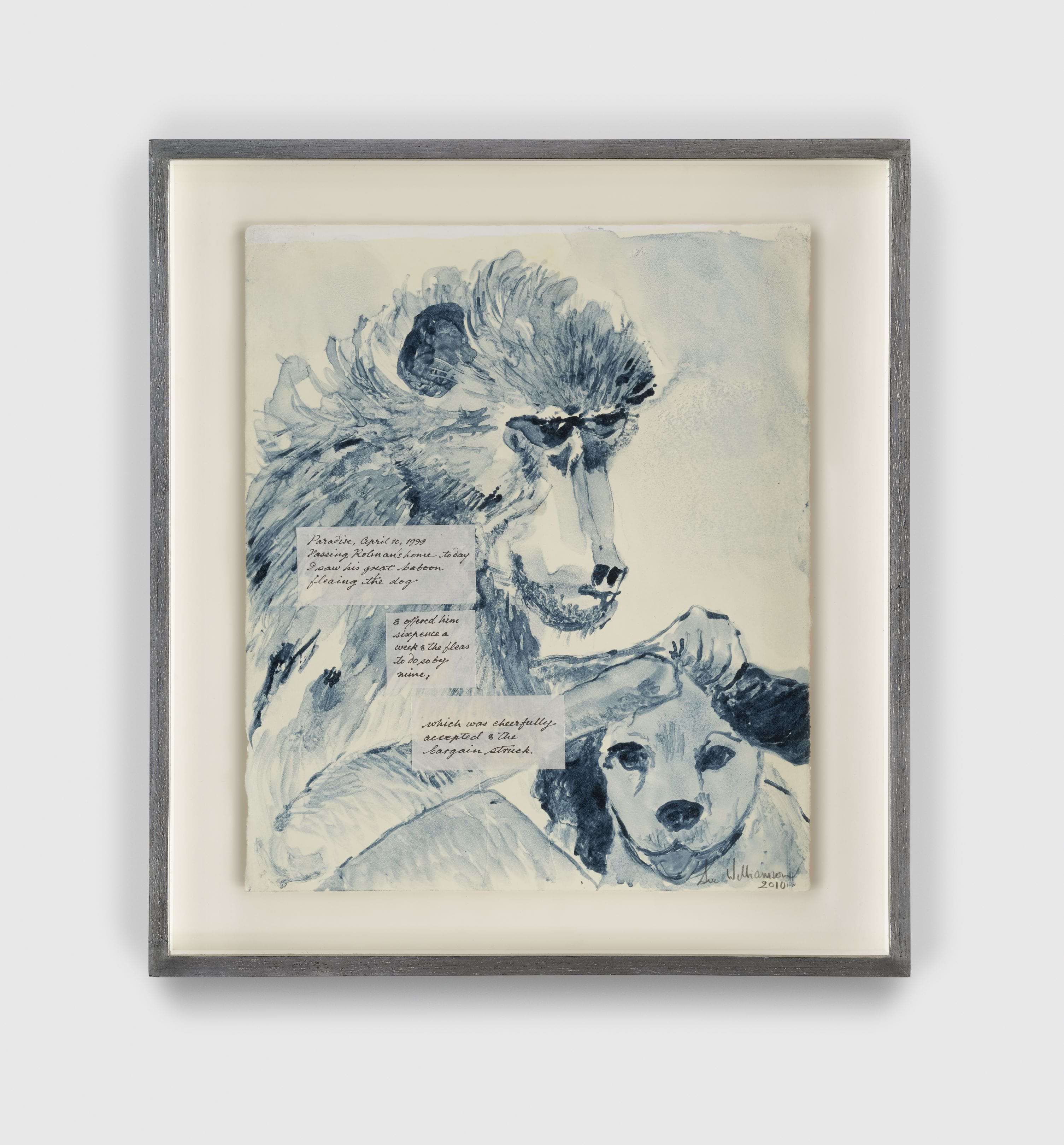
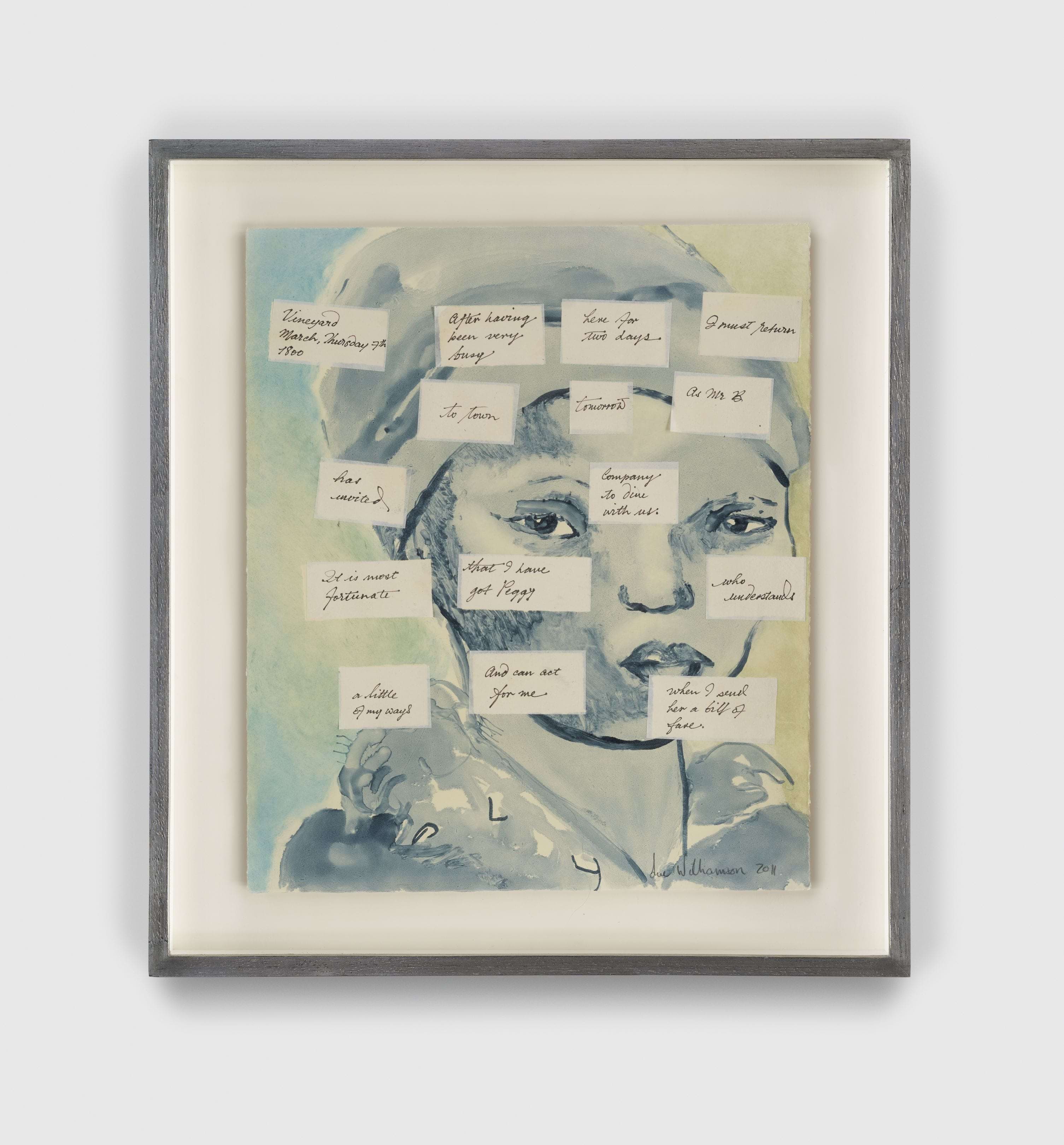
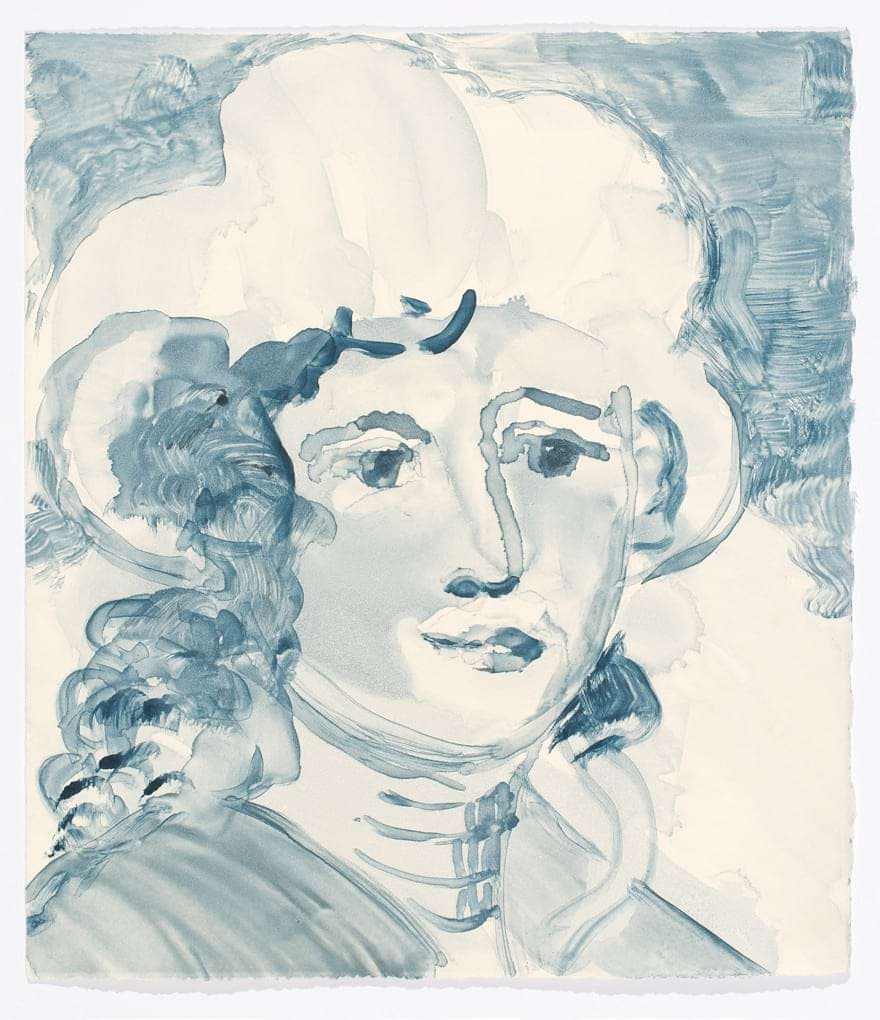
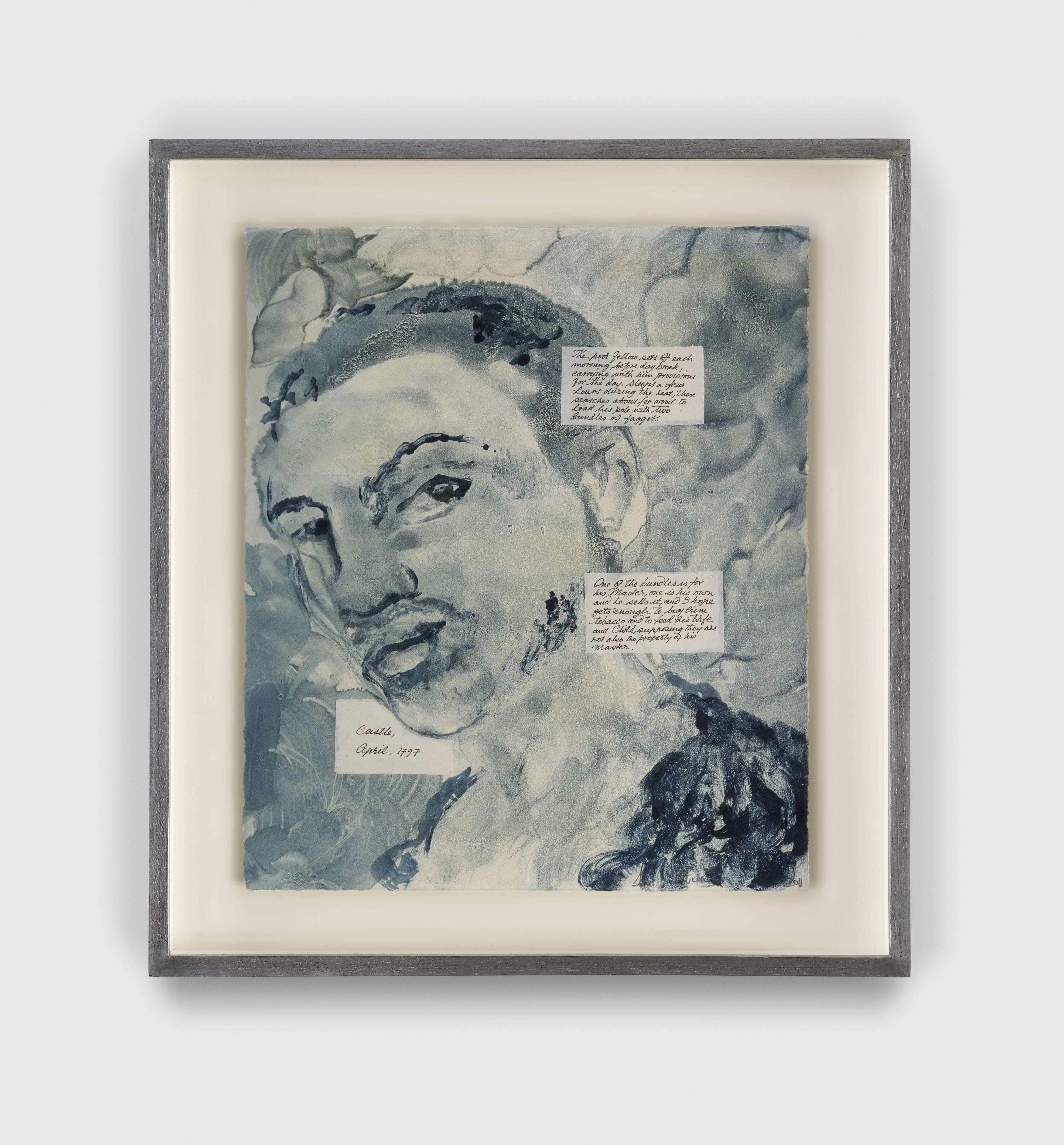
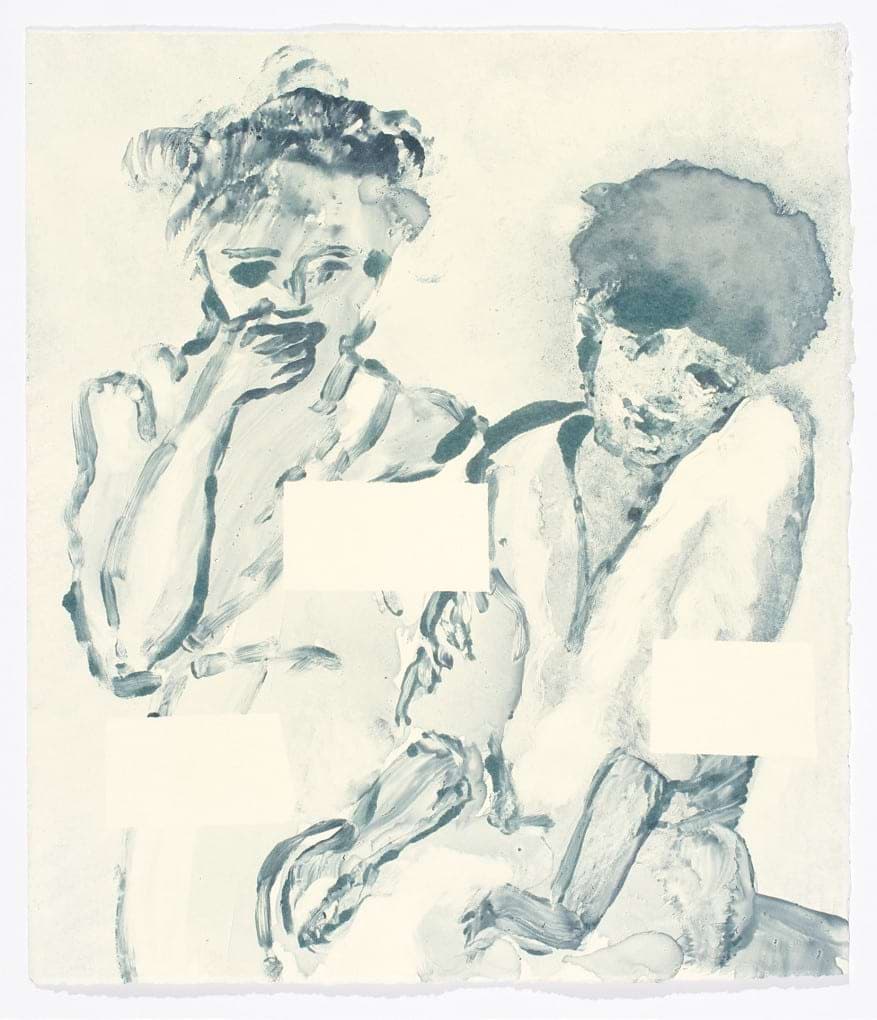
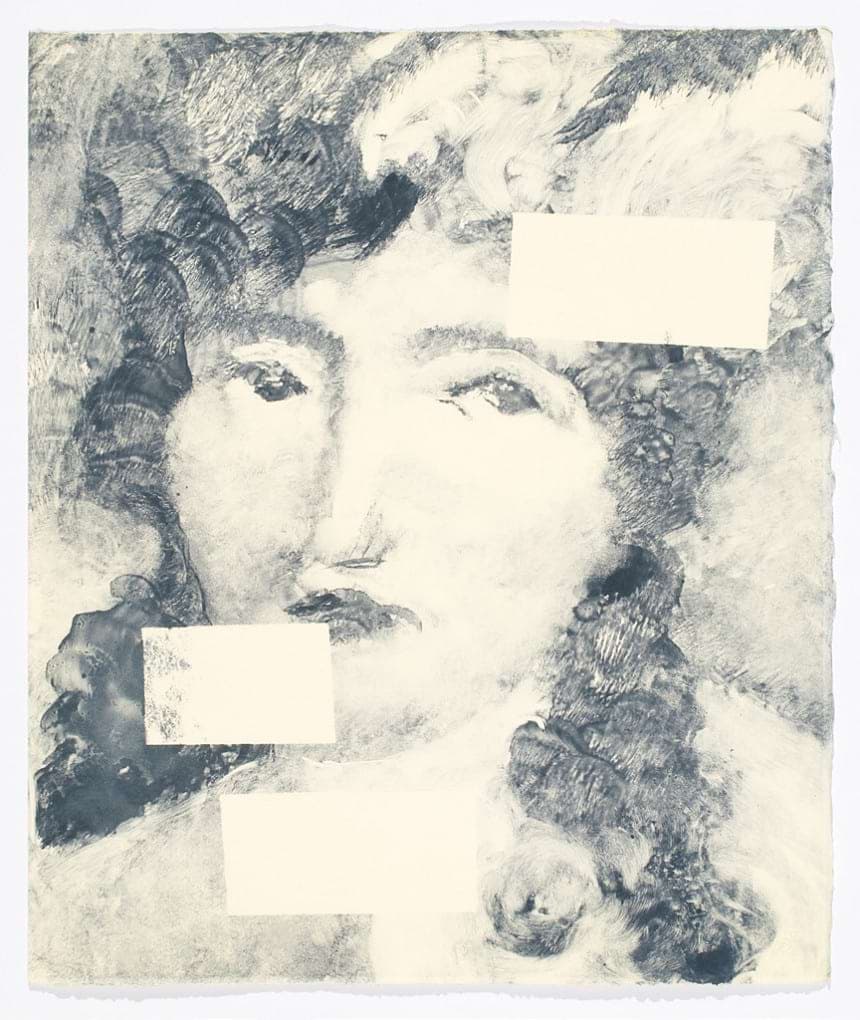
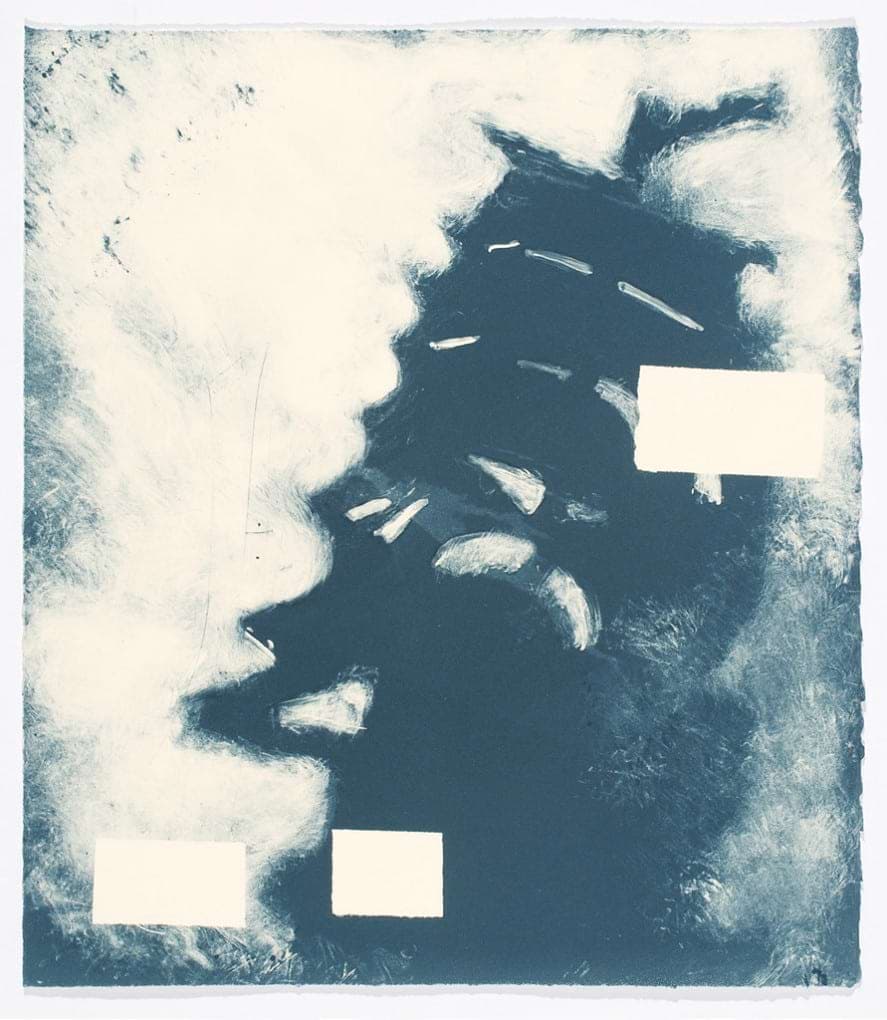
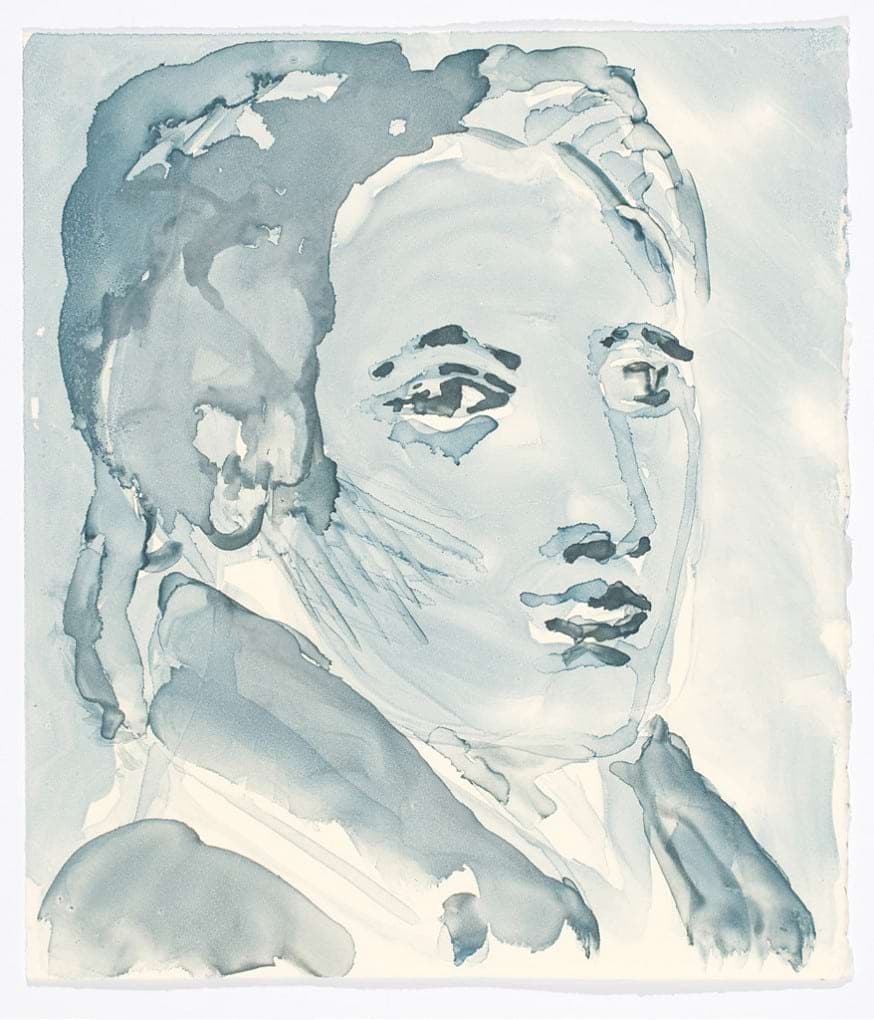
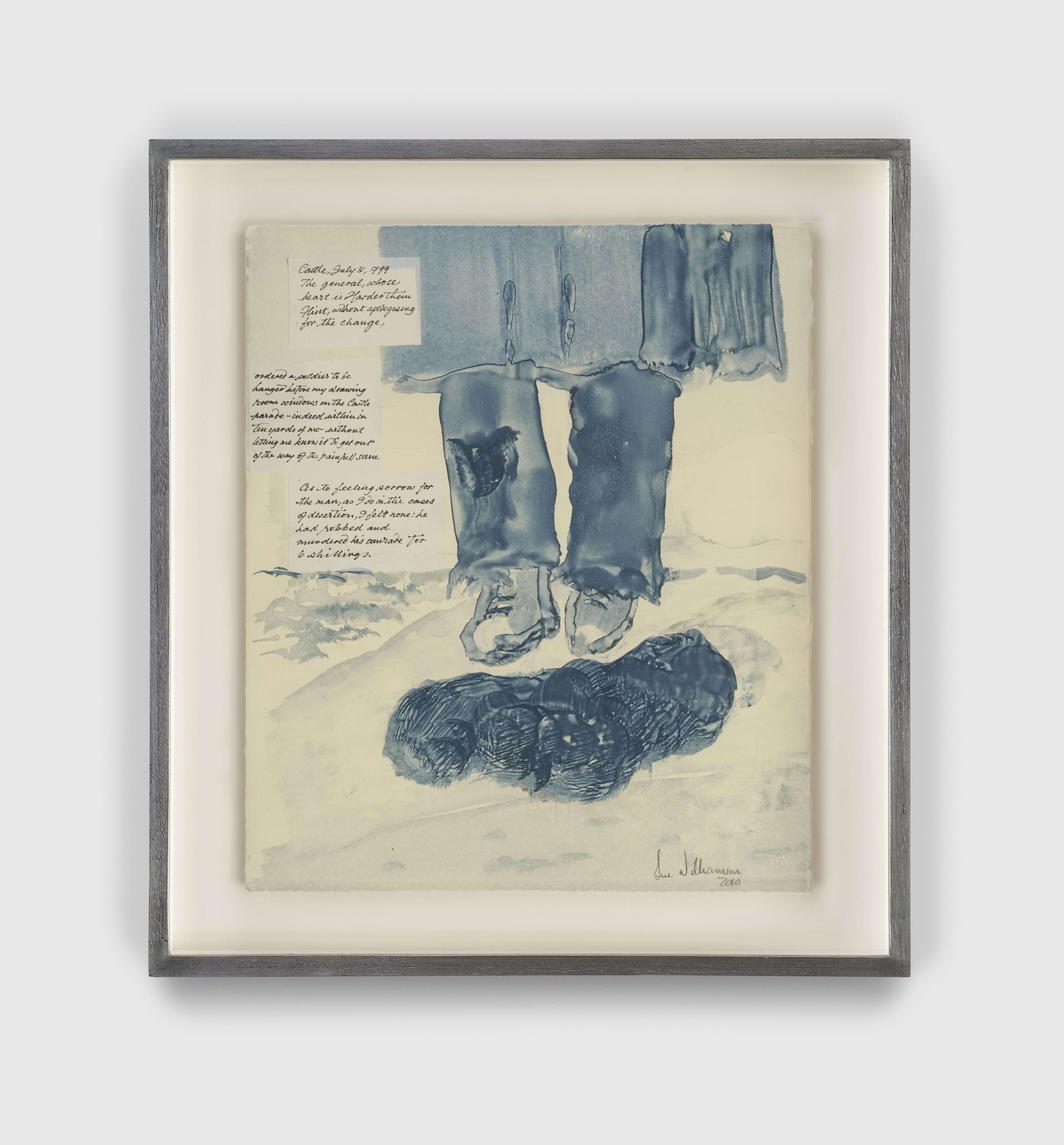
'The Diaries of Lady Anne B' is a series of unique monotypes made by the artist in the studios of master printers Mark Attwood of the Artists Press and Zhane Warren of Warren Editions in 2010 -11. The unconventional and progressive Lady Anne Barnard was the wife of Andrew Barnard, who was appointed first colonial secretary of the Cape of Good Hope in 1797, when the British won the Cape from the Dutch. The Barnards sailed to Cape Town and took up residence in the Castle of Good Hope.
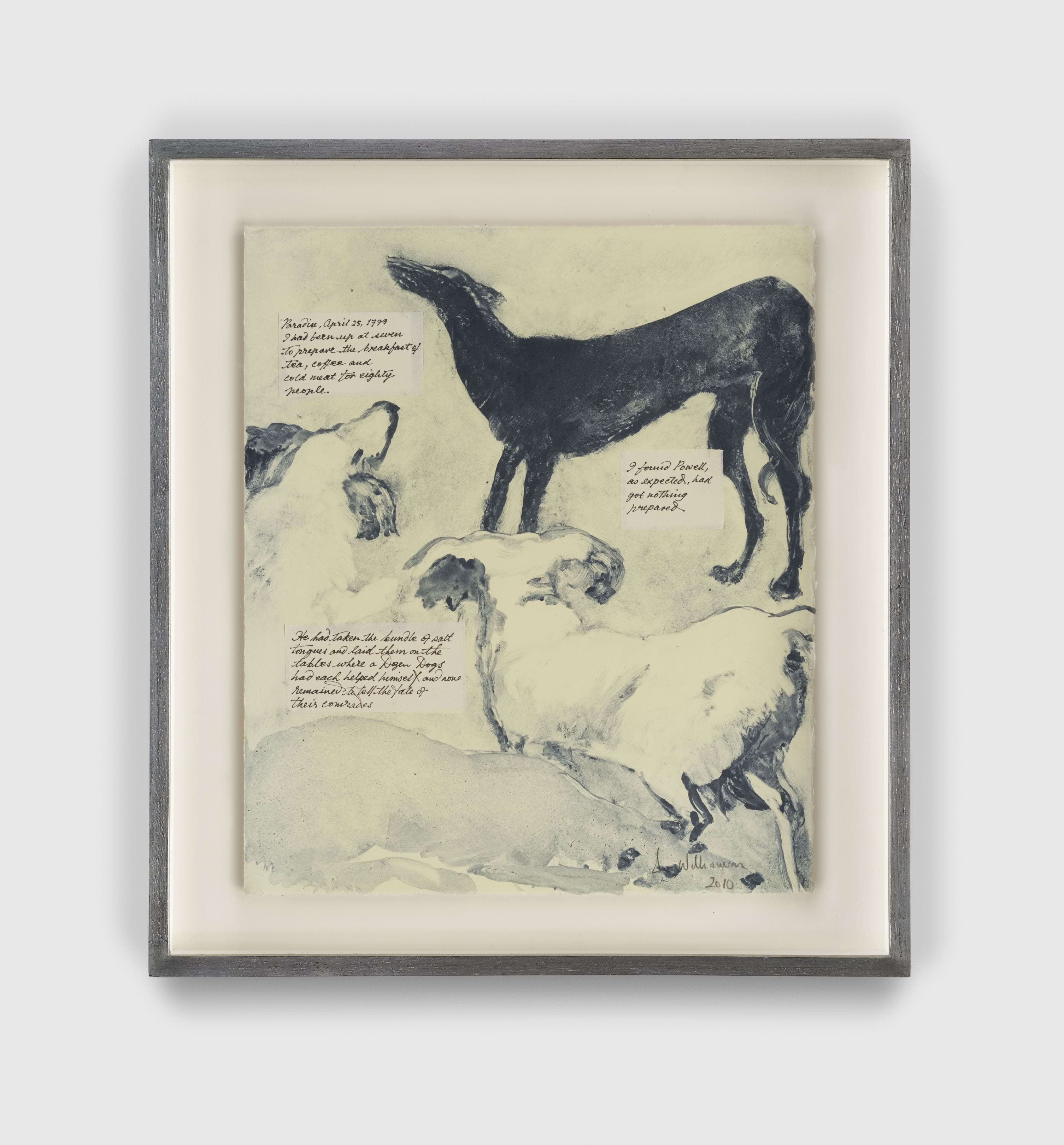
Incidents drawn from the three volumes of Lady Anne's diaries are illustrated with lively images casting a light onto life in Cape Town at the turn of the 18th century ... a hyena chases Lady Anne's chickens, visitors like Lord Mornington pass through and are commented on, the hangman inconveniently carries out his job ten yards from Lady Anne’s drawing room window, a mutiny at sea is described, a careless cook allows the family dogs to eat all the cold meats prepared for guests.
In a 2023 reworking of these prints, notes in a facsimile of Lady Anne’s handwriting give clues to these events, floating over cream rectangles in the images.
'The Diaries of Lady Anne B' is a series of unique monotypes made by the artist in the studios of master printers Mark Attwood of the Artists Press and Zhane Warren of Warren Editions in 2010 -11. The unconventional and progressive Lady Anne Barnard was the wife of Andrew Barnard, who was appointed first colonial secretary of the Cape of Good Hope in 1797, when the British won the Cape from the Dutch. The Barnards sailed to Cape Town and took up residence in the Castle of Good Hope.
Incidents drawn from the three volumes of Lady Anne's diaries are illustrated with lively images casting a light onto life in Cape Town at the turn of the 18th century ... a hyena chases Lady Anne's chickens, visitors like Lord Mornington pass through and are commented on, the hangman inconveniently carries out his job ten yards from Lady Anne’s drawing room window, a mutiny at sea is described, a careless cook allows the family dogs to eat all the cold meats prepared for guests.
In a 2023 reworking of these prints, notes in a facsimile of Lady Anne’s handwriting give clues to these events, floating over cream rectangles in the images.
'The Diaries of Lady Anne B' is a series of unique monotypes made by the artist in the studios of master printers Mark Attwood of the Artists Press and Zhane Warren of Warren Editions in 2010 -11. The unconventional and progressive Lady Anne Barnard was the wife of Andrew Barnard, who was appointed first colonial secretary of the Cape of Good Hope in 1797, when the British won the Cape from the Dutch. The Barnards sailed to Cape Town and took up residence in the Castle of Good Hope.
Incidents drawn from the three volumes of Lady Anne's diaries are illustrated with lively images casting a light onto life in Cape Town at the turn of the 18th century ... a hyena chases Lady Anne's chickens, visitors like Lord Mornington pass through and are commented on, the hangman inconveniently carries out his job ten yards from Lady Anne’s drawing room window, a mutiny at sea is described, a careless cook allows the family dogs to eat all the cold meats prepared for guests.
In a 2023 reworking of these prints, notes in a facsimile of Lady Anne’s handwriting give clues to these events, floating over cream rectangles in the images.
'The Diaries of Lady Anne B' is a series of unique monotypes made by the artist in the studios of master printers Mark Attwood of the Artists Press and Zhane Warren of Warren Editions in 2010 -11. The unconventional and progressive Lady Anne Barnard was the wife of Andrew Barnard, who was appointed first colonial secretary of the Cape of Good Hope in 1797, when the British won the Cape from the Dutch. The Barnards sailed to Cape Town and took up residence in the Castle of Good Hope.
Incidents drawn from the three volumes of Lady Anne's diaries are illustrated with lively images casting a light onto life in Cape Town at the turn of the 18th century ... a hyena chases Lady Anne's chickens, visitors like Lord Mornington pass through and are commented on, the hangman inconveniently carries out his job ten yards from Lady Anne’s drawing room window, a mutiny at sea is described, a careless cook allows the family dogs to eat all the cold meats prepared for guests.
In a 2023 reworking of these prints, notes in a facsimile of Lady Anne’s handwriting give clues to these events, floating over cream rectangles in the images.
'The Diaries of Lady Anne B' is a series of unique monotypes made by the artist in the studios of master printers Mark Attwood of the Artists Press and Zhane Warren of Warren Editions in 2010 -11. The unconventional and progressive Lady Anne Barnard was the wife of Andrew Barnard, who was appointed first colonial secretary of the Cape of Good Hope in 1797, when the British won the Cape from the Dutch. The Barnards sailed to Cape Town and took up residence in the Castle of Good Hope.
Incidents drawn from the three volumes of Lady Anne's diaries are illustrated with lively images casting a light onto life in Cape Town at the turn of the 18th century ... a hyena chases Lady Anne's chickens, visitors like Lord Mornington pass through and are commented on, the hangman inconveniently carries out his job ten yards from Lady Anne’s drawing room window, a mutiny at sea is described, a careless cook allows the family dogs to eat all the cold meats prepared for guests.
In a 2023 reworking of these prints, notes in a facsimile of Lady Anne’s handwriting give clues to these events, floating over cream rectangles in the images.
'The Diaries of Lady Anne B' is a series of unique monotypes made by the artist in the studios of master printers Mark Attwood of the Artists Press and Zhane Warren of Warren Editions in 2010 -11. The unconventional and progressive Lady Anne Barnard was the wife of Andrew Barnard, who was appointed first colonial secretary of the Cape of Good Hope in 1797, when the British won the Cape from the Dutch. The Barnards sailed to Cape Town and took up residence in the Castle of Good Hope.
Incidents drawn from the three volumes of Lady Anne's diaries are illustrated with lively images casting a light onto life in Cape Town at the turn of the 18th century ... a hyena chases Lady Anne's chickens, visitors like Lord Mornington pass through and are commented on, the hangman inconveniently carries out his job ten yards from Lady Anne’s drawing room window, a mutiny at sea is described, a careless cook allows the family dogs to eat all the cold meats prepared for guests.
In a 2023 reworking of these prints, notes in a facsimile of Lady Anne’s handwriting give clues to these events, floating over cream rectangles in the images.
'The Diaries of Lady Anne B' is a series of unique monotypes made by the artist in the studios of master printers Mark Attwood of the Artists Press and Zhane Warren of Warren Editions in 2010 -11. The unconventional and progressive Lady Anne Barnard was the wife of Andrew Barnard, who was appointed first colonial secretary of the Cape of Good Hope in 1797, when the British won the Cape from the Dutch. The Barnards sailed to Cape Town and took up residence in the Castle of Good Hope.
Incidents drawn from the three volumes of Lady Anne's diaries are illustrated with lively images casting a light onto life in Cape Town at the turn of the 18th century ... a hyena chases Lady Anne's chickens, visitors like Lord Mornington pass through and are commented on, the hangman inconveniently carries out his job ten yards from Lady Anne’s drawing room window, a mutiny at sea is described, a careless cook allows the family dogs to eat all the cold meats prepared for guests.
In a 2023 reworking of these prints, notes in a facsimile of Lady Anne’s handwriting give clues to these events, floating over cream rectangles in the images.
'The Diaries of Lady Anne B' is a series of unique monotypes made by the artist in the studios of master printers Mark Attwood of the Artists Press and Zhane Warren of Warren Editions in 2010 -11. The unconventional and progressive Lady Anne Barnard was the wife of Andrew Barnard, who was appointed first colonial secretary of the Cape of Good Hope in 1797, when the British won the Cape from the Dutch. The Barnards sailed to Cape Town and took up residence in the Castle of Good Hope.
Incidents drawn from the three volumes of Lady Anne's diaries are illustrated with lively images casting a light onto life in Cape Town at the turn of the 18th century ... a hyena chases Lady Anne's chickens, visitors like Lord Mornington pass through and are commented on, the hangman inconveniently carries out his job ten yards from Lady Anne’s drawing room window, a mutiny at sea is described, a careless cook allows the family dogs to eat all the cold meats prepared for guests.
In a 2023 reworking of these prints, notes in a facsimile of Lady Anne’s handwriting give clues to these events, floating over cream rectangles in the images.
'The Diaries of Lady Anne B' is a series of unique monotypes made by the artist in the studios of master printers Mark Attwood of the Artists Press and Zhane Warren of Warren Editions in 2010 -11. The unconventional and progressive Lady Anne Barnard was the wife of Andrew Barnard, who was appointed first colonial secretary of the Cape of Good Hope in 1797, when the British won the Cape from the Dutch. The Barnards sailed to Cape Town and took up residence in the Castle of Good Hope.
Incidents drawn from the three volumes of Lady Anne's diaries are illustrated with lively images casting a light onto life in Cape Town at the turn of the 18th century ... a hyena chases Lady Anne's chickens, visitors like Lord Mornington pass through and are commented on, the hangman inconveniently carries out his job ten yards from Lady Anne’s drawing room window, a mutiny at sea is described, a careless cook allows the family dogs to eat all the cold meats prepared for guests.
In a 2023 reworking of these prints, notes in a facsimile of Lady Anne’s handwriting give clues to these events, floating over cream rectangles in the images.
'The Diaries of Lady Anne B' is a series of unique monotypes made by the artist in the studios of master printers Mark Attwood of the Artists Press and Zhane Warren of Warren Editions in 2010 -11. The unconventional and progressive Lady Anne Barnard was the wife of Andrew Barnard, who was appointed first colonial secretary of the Cape of Good Hope in 1797, when the British won the Cape from the Dutch. The Barnards sailed to Cape Town and took up residence in the Castle of Good Hope.
Incidents drawn from the three volumes of Lady Anne's diaries are illustrated with lively images casting a light onto life in Cape Town at the turn of the 18th century ... a hyena chases Lady Anne's chickens, visitors like Lord Mornington pass through and are commented on, the hangman inconveniently carries out his job ten yards from Lady Anne’s drawing room window, a mutiny at sea is described, a careless cook allows the family dogs to eat all the cold meats prepared for guests.
In a 2023 reworking of these prints, notes in a facsimile of Lady Anne’s handwriting give clues to these events, floating over cream rectangles in the images.
'The Diaries of Lady Anne B' is a series of unique monotypes made by the artist in the studios of master printers Mark Attwood of the Artists Press and Zhane Warren of Warren Editions in 2010 -11. The unconventional and progressive Lady Anne Barnard was the wife of Andrew Barnard, who was appointed first colonial secretary of the Cape of Good Hope in 1797, when the British won the Cape from the Dutch. The Barnards sailed to Cape Town and took up residence in the Castle of Good Hope.
Incidents drawn from the three volumes of Lady Anne's diaries are illustrated with lively images casting a light onto life in Cape Town at the turn of the 18th century ... a hyena chases Lady Anne's chickens, visitors like Lord Mornington pass through and are commented on, the hangman inconveniently carries out his job ten yards from Lady Anne’s drawing room window, a mutiny at sea is described, a careless cook allows the family dogs to eat all the cold meats prepared for guests.
In a 2023 reworking of these prints, notes in a facsimile of Lady Anne’s handwriting give clues to these events, floating over cream rectangles in the images.
'The Diaries of Lady Anne B' is a series of unique monotypes made by the artist in the studios of master printers Mark Attwood of the Artists Press and Zhane Warren of Warren Editions in 2010 -11. The unconventional and progressive Lady Anne Barnard was the wife of Andrew Barnard, who was appointed first colonial secretary of the Cape of Good Hope in 1797, when the British won the Cape from the Dutch. The Barnards sailed to Cape Town and took up residence in the Castle of Good Hope.
Incidents drawn from the three volumes of Lady Anne's diaries are illustrated with lively images casting a light onto life in Cape Town at the turn of the 18th century ... a hyena chases Lady Anne's chickens, visitors like Lord Mornington pass through and are commented on, the hangman inconveniently carries out his job ten yards from Lady Anne’s drawing room window, a mutiny at sea is described, a careless cook allows the family dogs to eat all the cold meats prepared for guests.
In a 2023 reworking of these prints, notes in a facsimile of Lady Anne’s handwriting give clues to these events, floating over cream rectangles in the images.
'The Diaries of Lady Anne B' is a series of unique monotypes made by the artist in the studios of master printers Mark Attwood of the Artists Press and Zhane Warren of Warren Editions in 2010 -11. The unconventional and progressive Lady Anne Barnard was the wife of Andrew Barnard, who was appointed first colonial secretary of the Cape of Good Hope in 1797, when the British won the Cape from the Dutch. The Barnards sailed to Cape Town and took up residence in the Castle of Good Hope.
Incidents drawn from the three volumes of Lady Anne's diaries are illustrated with lively images casting a light onto life in Cape Town at the turn of the 18th century ... a hyena chases Lady Anne's chickens, visitors like Lord Mornington pass through and are commented on, the hangman inconveniently carries out his job ten yards from Lady Anne’s drawing room window, a mutiny at sea is described, a careless cook allows the family dogs to eat all the cold meats prepared for guests.
In a 2023 reworking of these prints, notes in a facsimile of Lady Anne’s handwriting give clues to these events, floating over cream rectangles in the images.
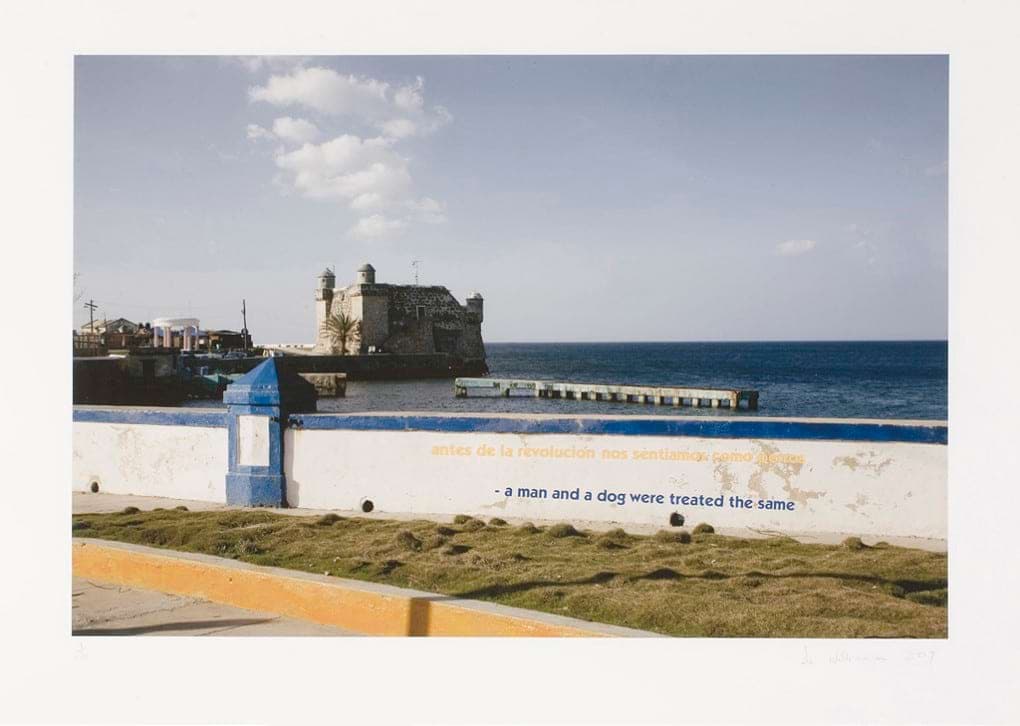
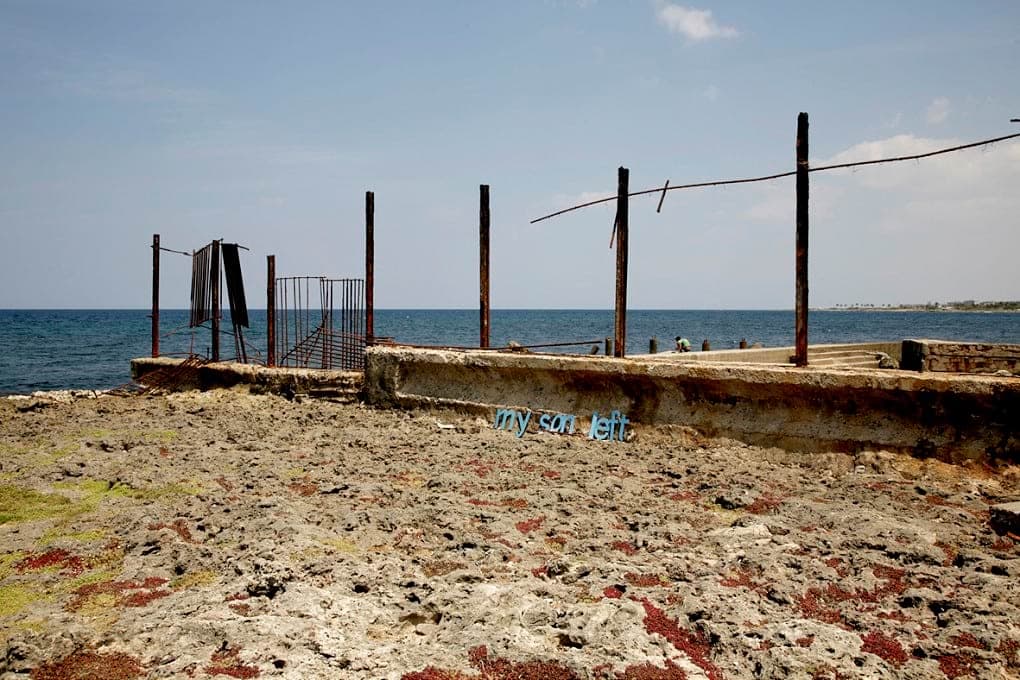
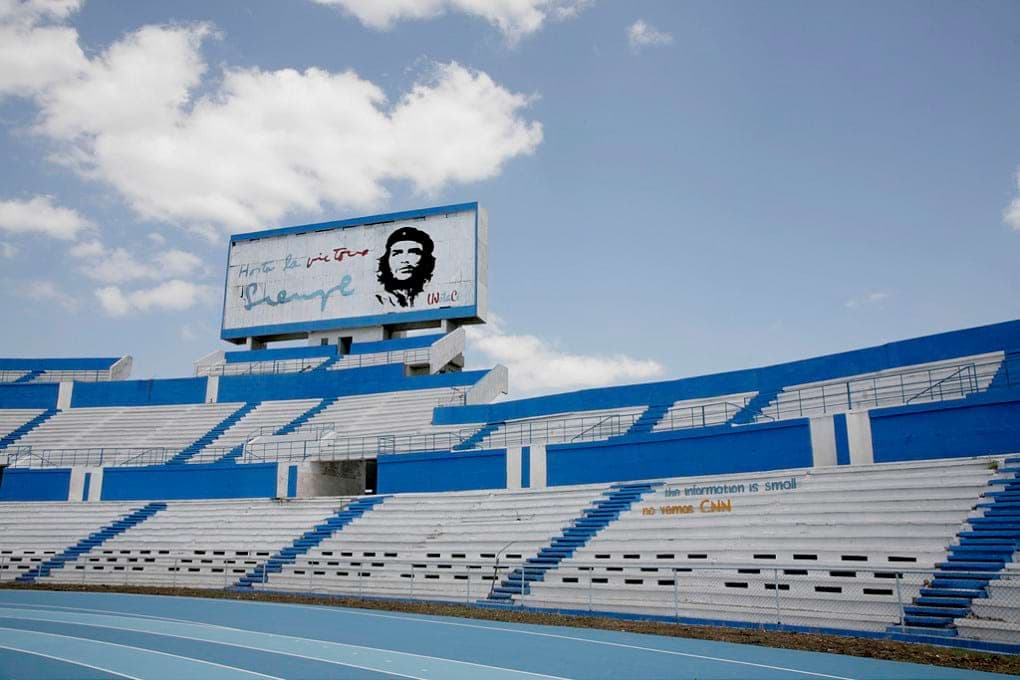
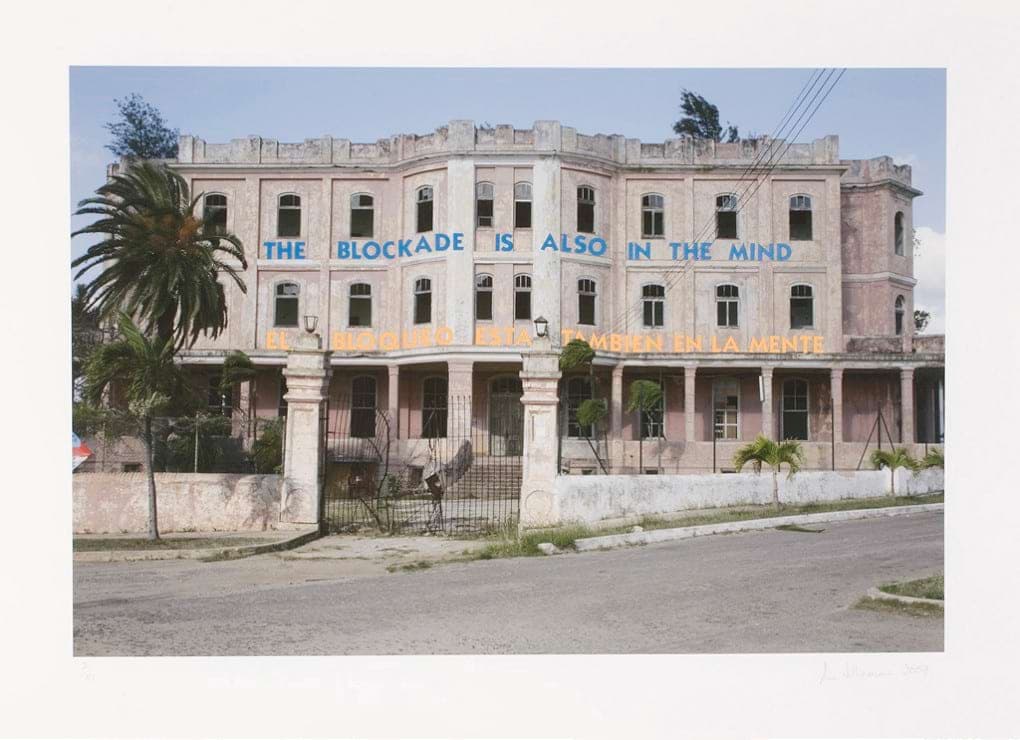
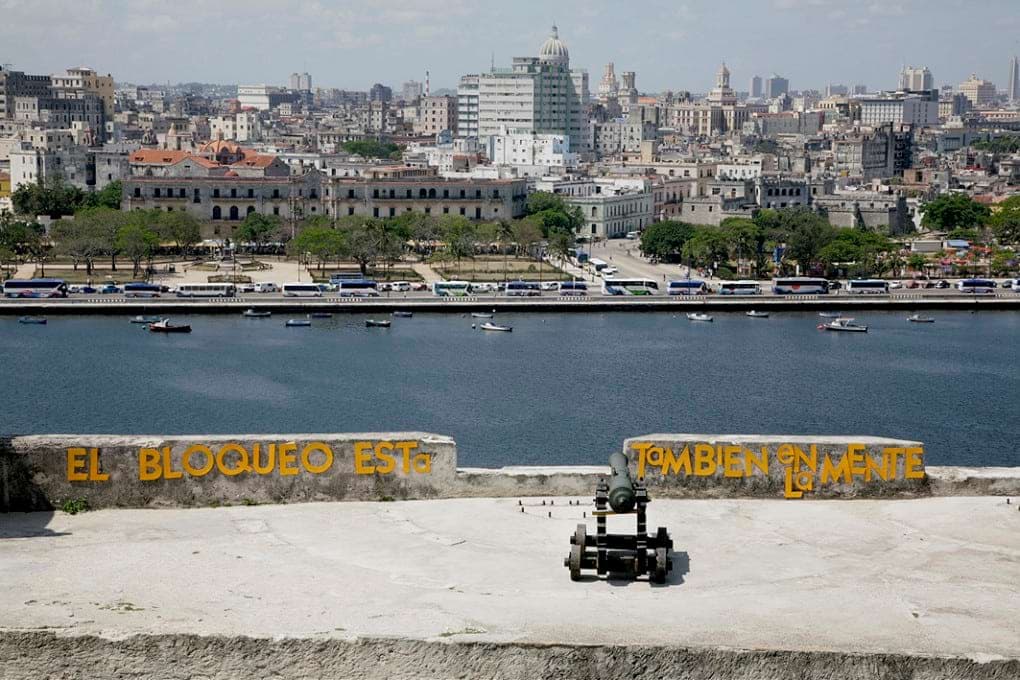
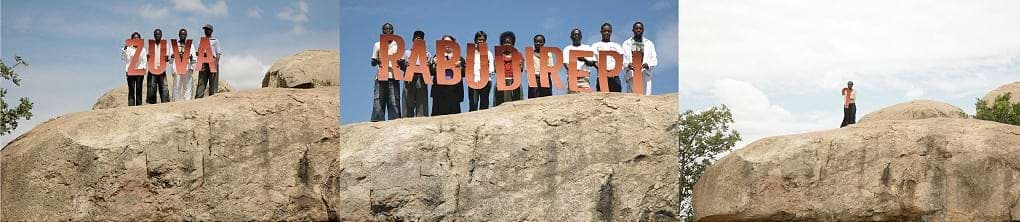
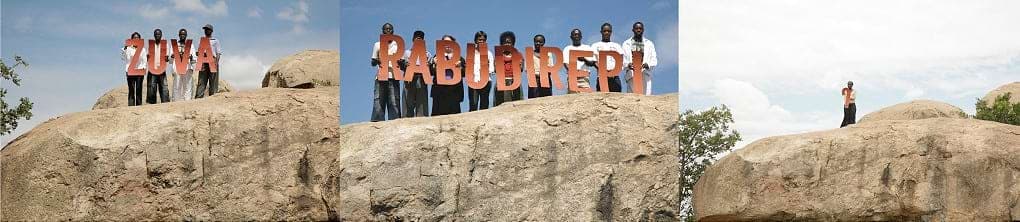
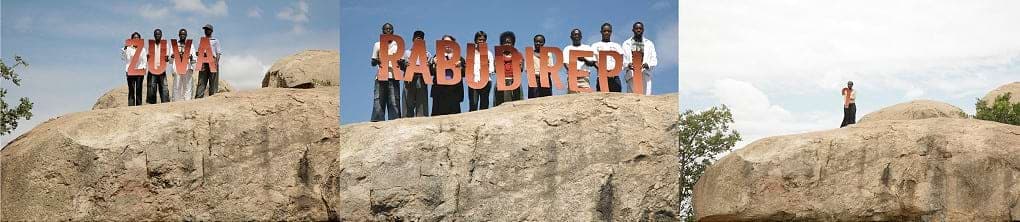
“In the following days, working with South African photographers Hassan and Husain Essop, I put up two more statements, taken from my interviews with local residents.
The first, The information is small, No vemos CNN (We don't see CNN) referred to the strict control over foreign news and information in Havana. This one, I propped up on the seats of a baseball stadium underneath a poster of Che Guevara and his inspirational quote "hasta la victoria siempre", which in plain English means "until victory always".
The second says simply, my son left. It was the statement of Amalia Rodrigues of Cojimar, and we photographed her words on the beach from where the young man had left his family on a small boat to emigrate to Miami, never to return.” Sue Williamson
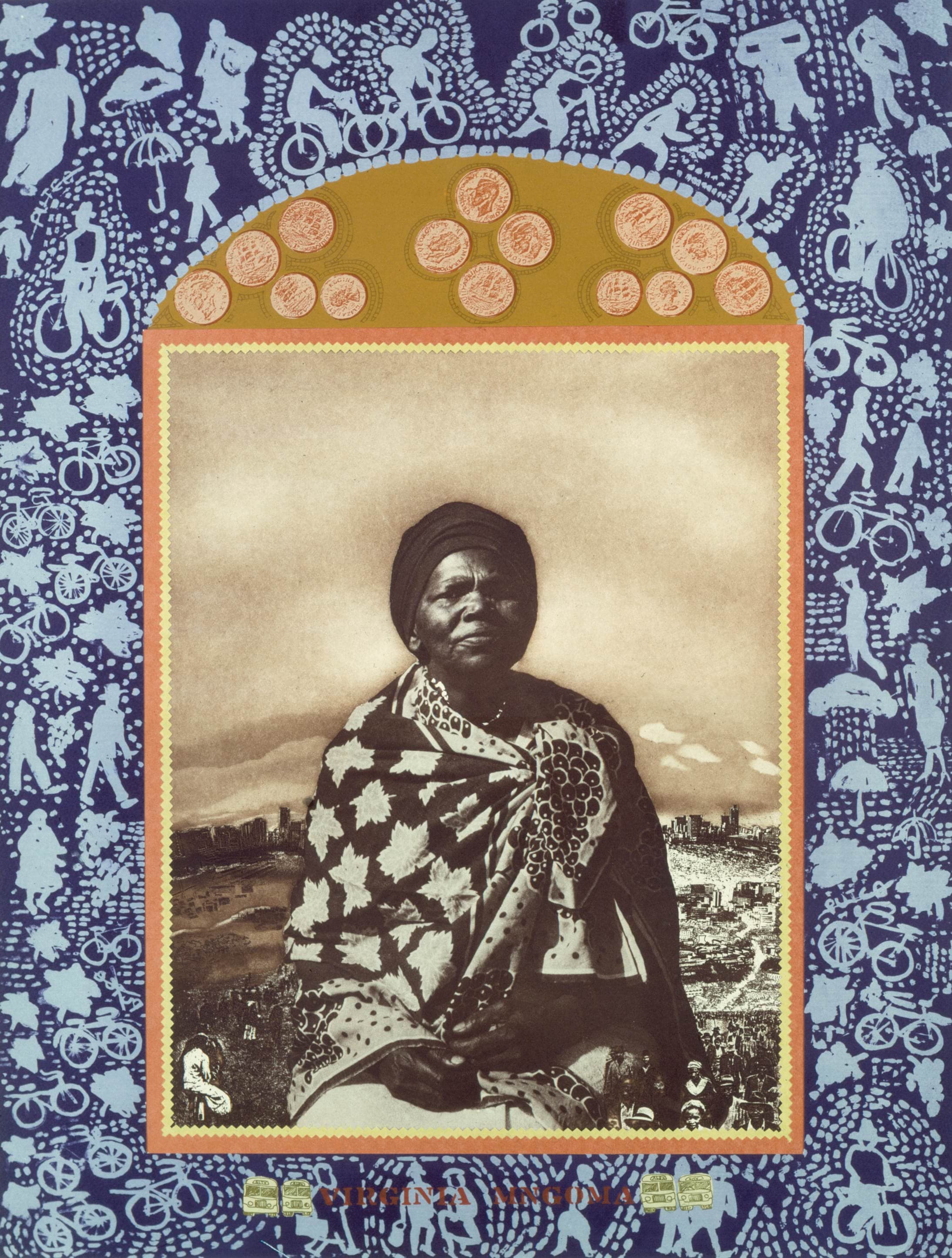
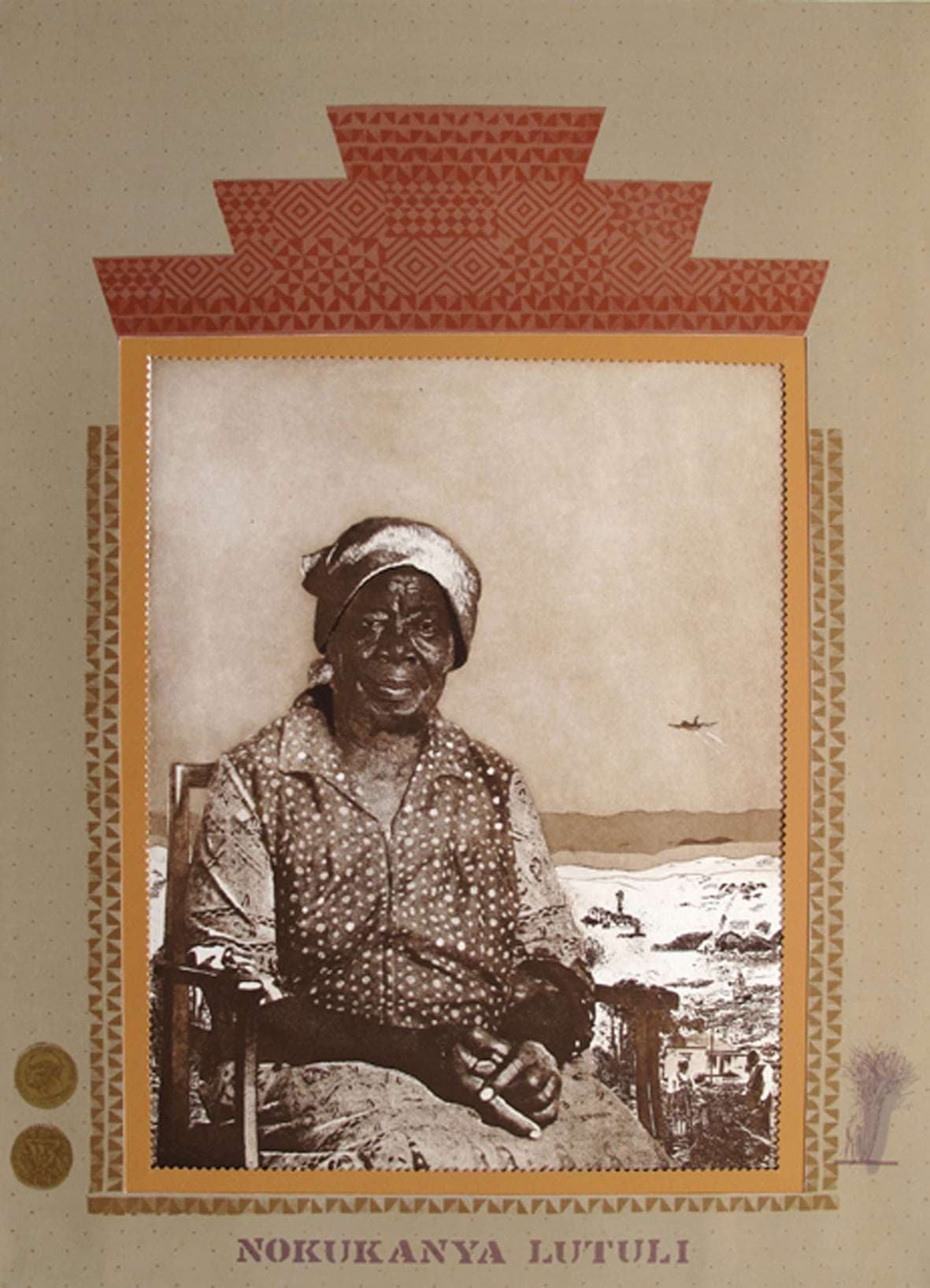
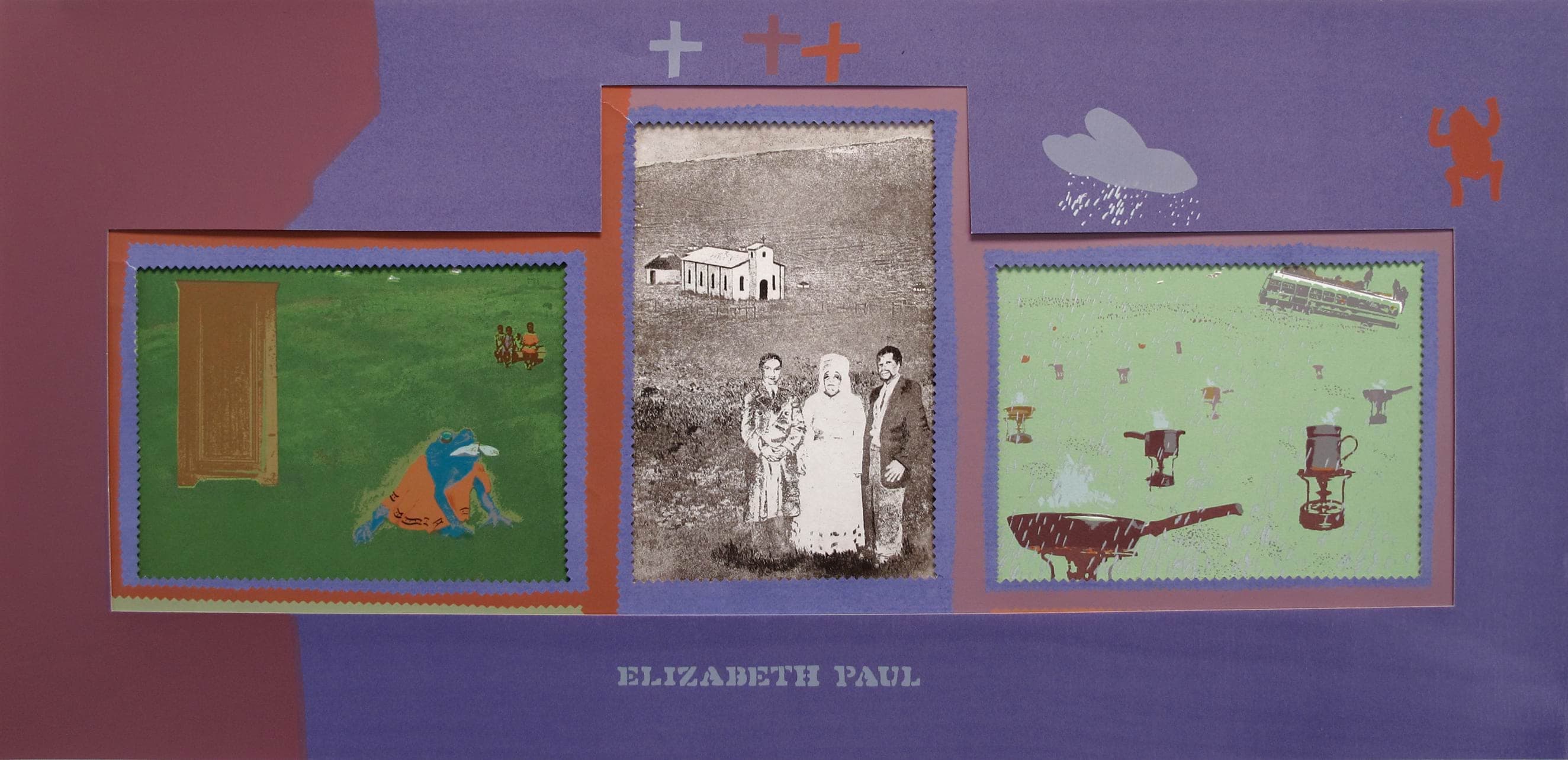
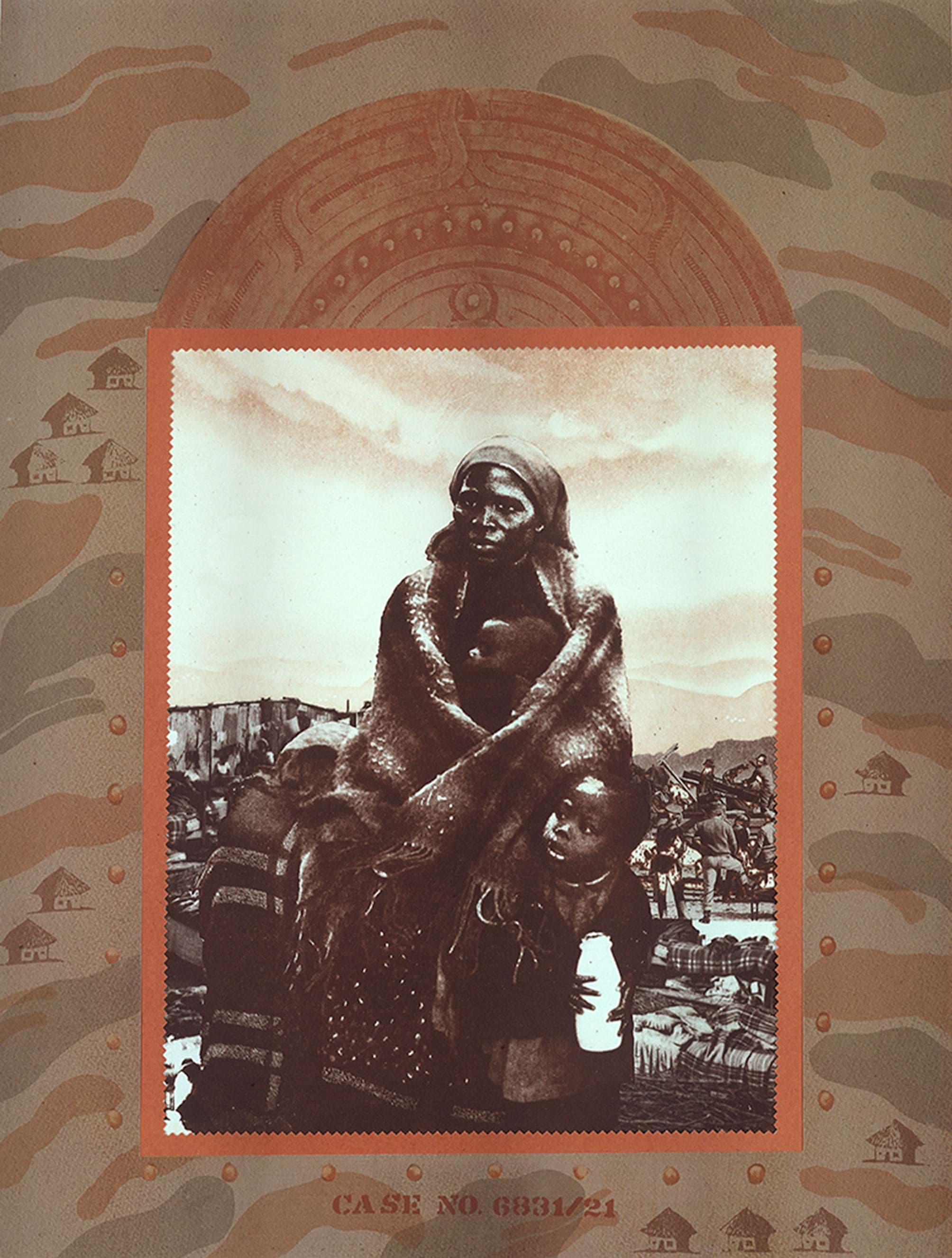
In 1982, Sue Williamson spent much of her time in Crossroads, an informal Cape Town community marked for destruction by the apartheid state. She was working with residents on strategies to oppose the demolitions. It was there that she first encountered the image of Elizabeth Paul – a Xhosa faith healer whose faded photo adorned the walls in many homes. This repetition marked Elizabeth as an important figure in the community, a person to be honoured and remembered.
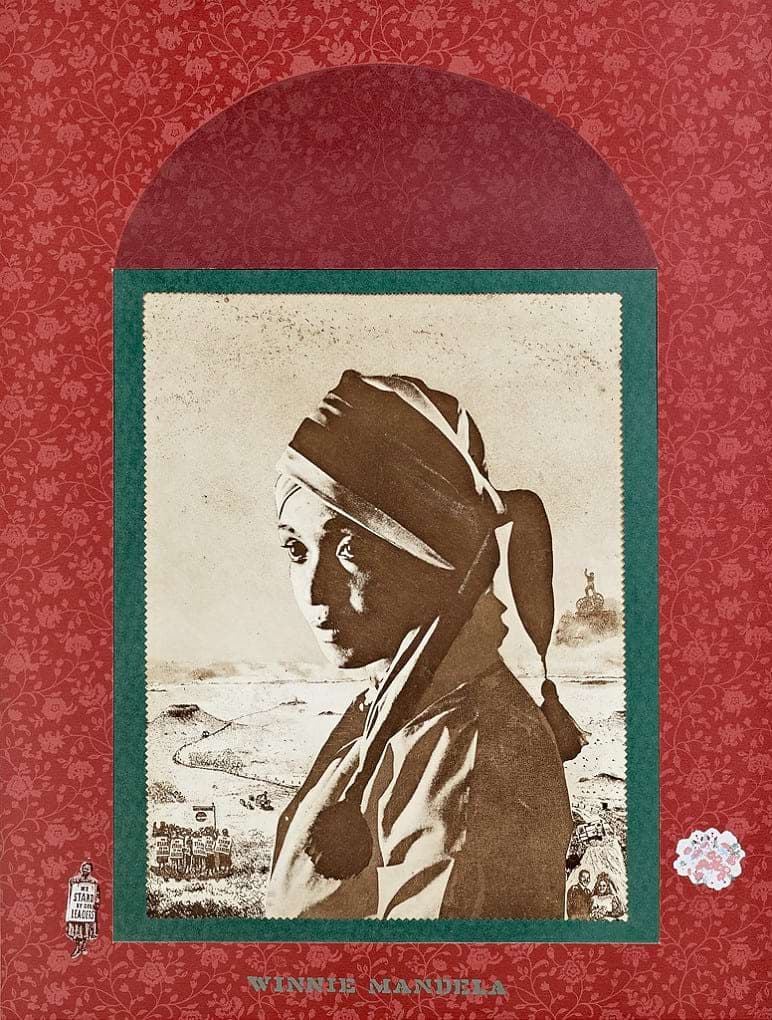
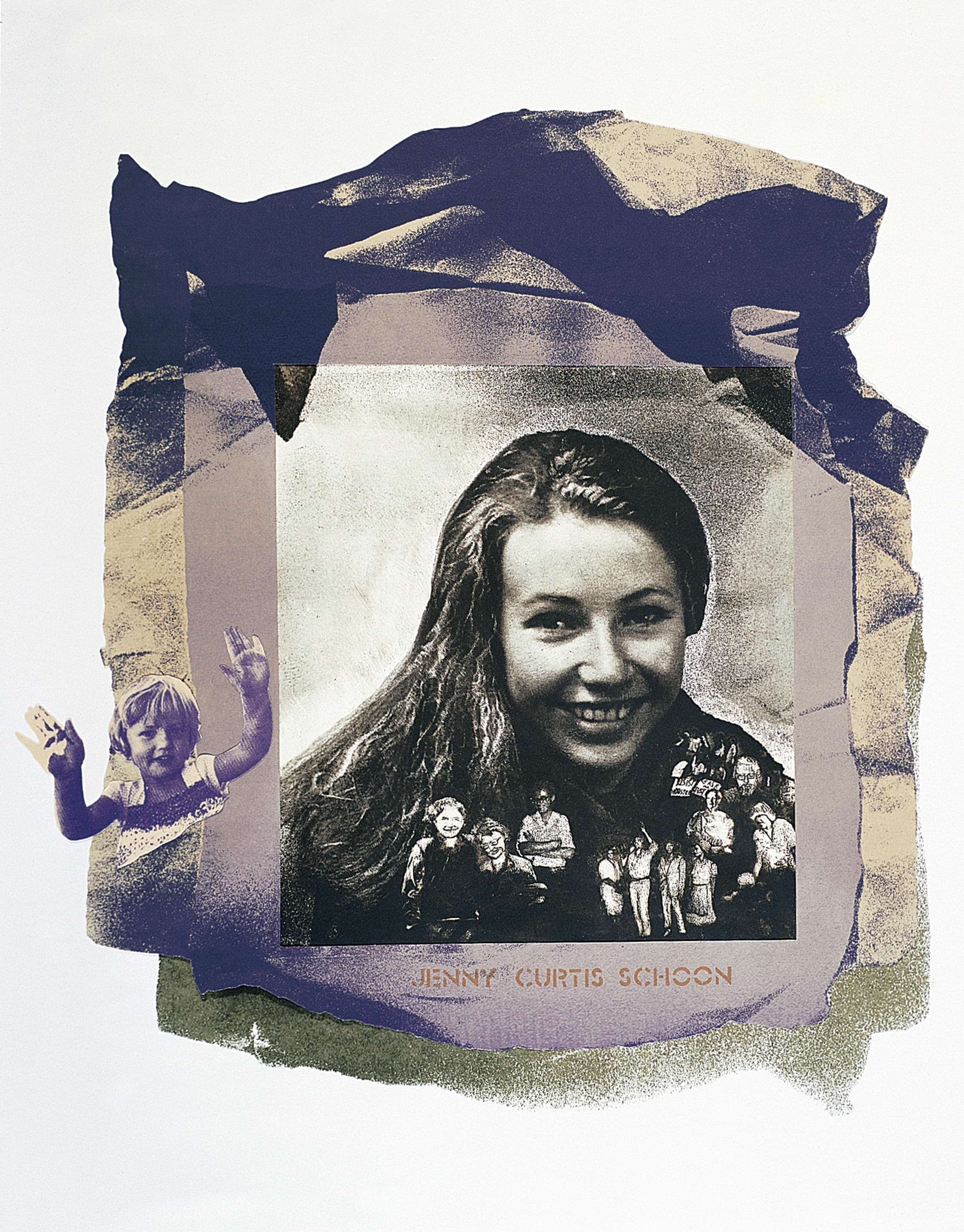
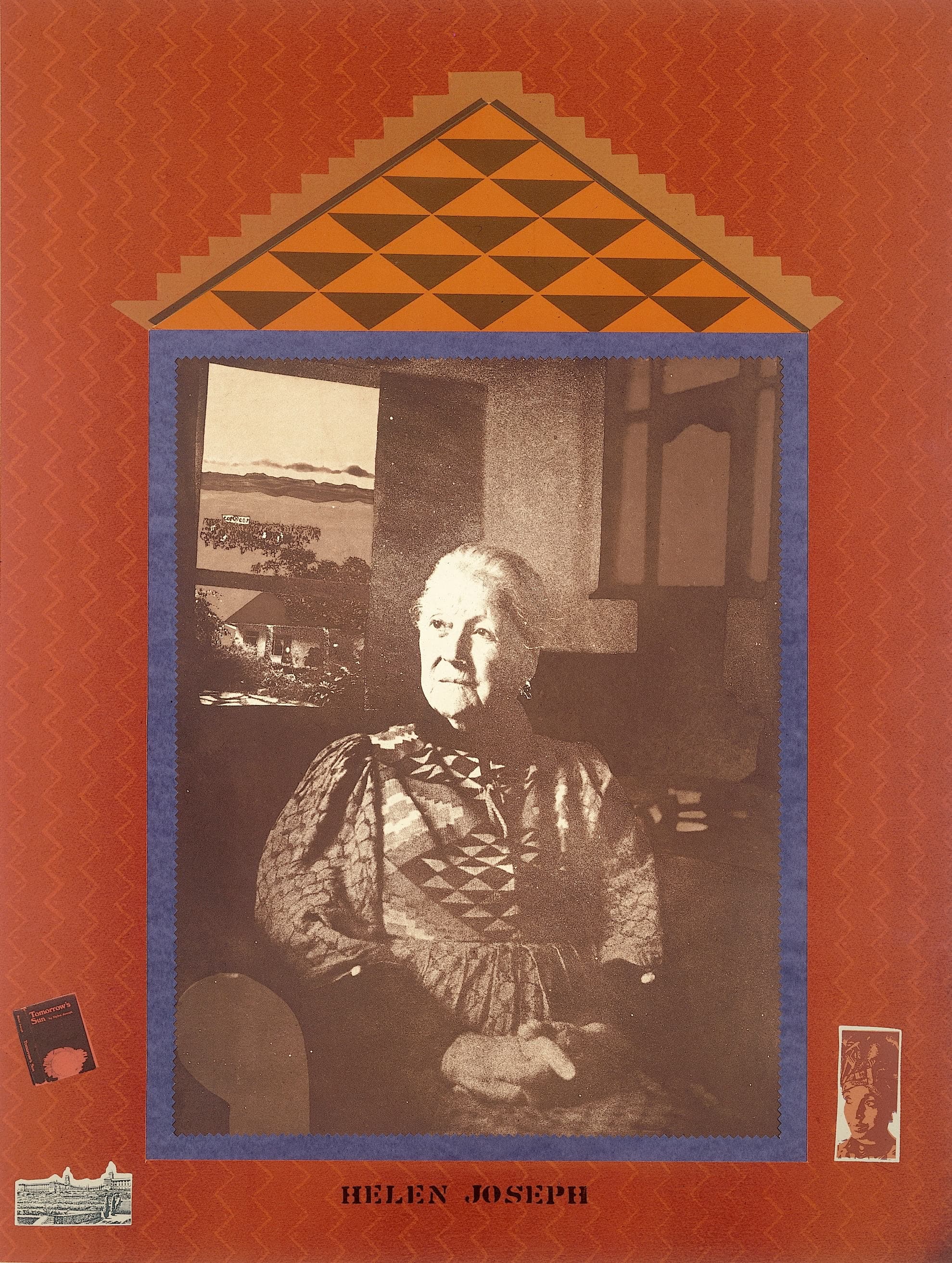
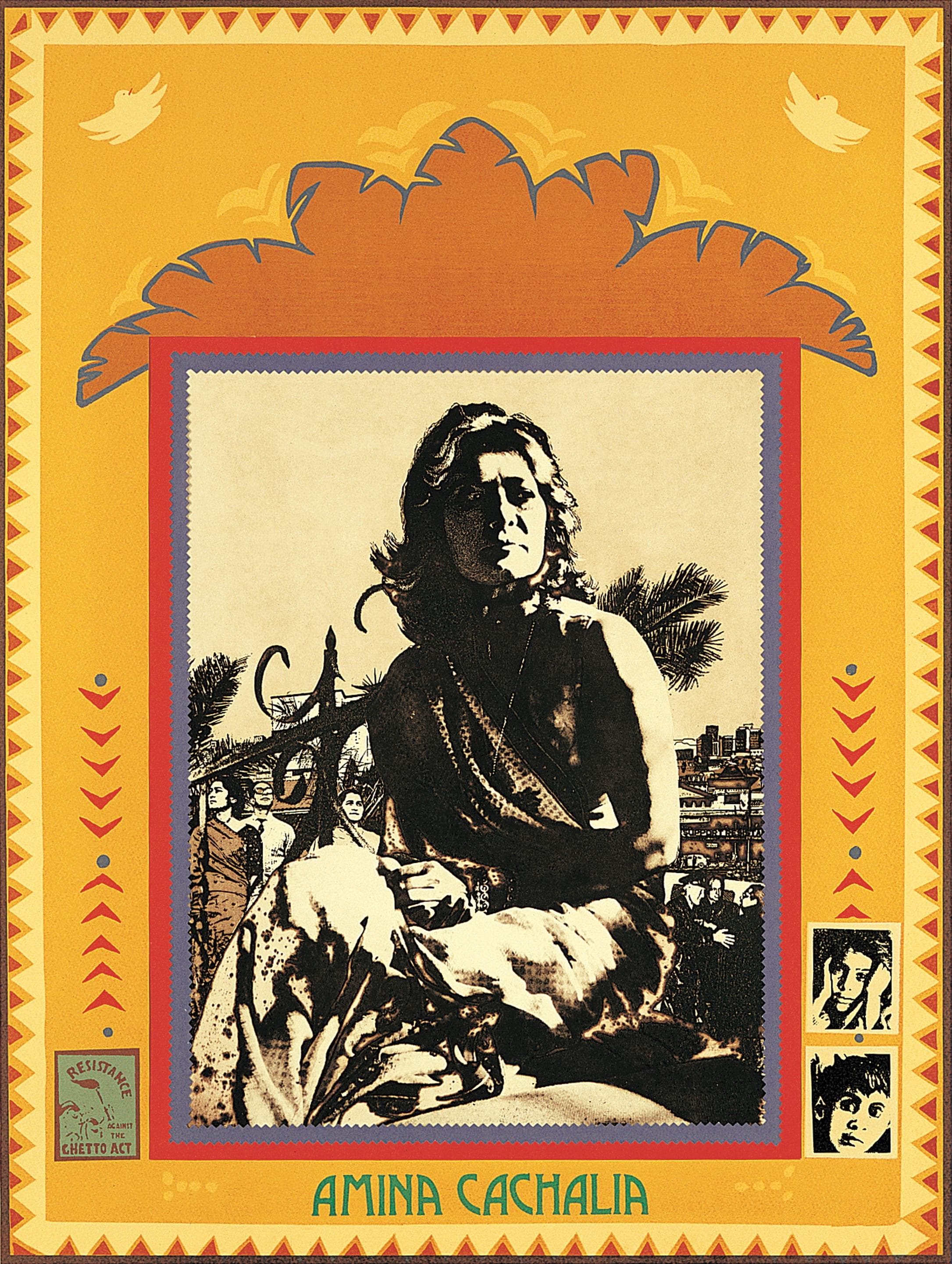
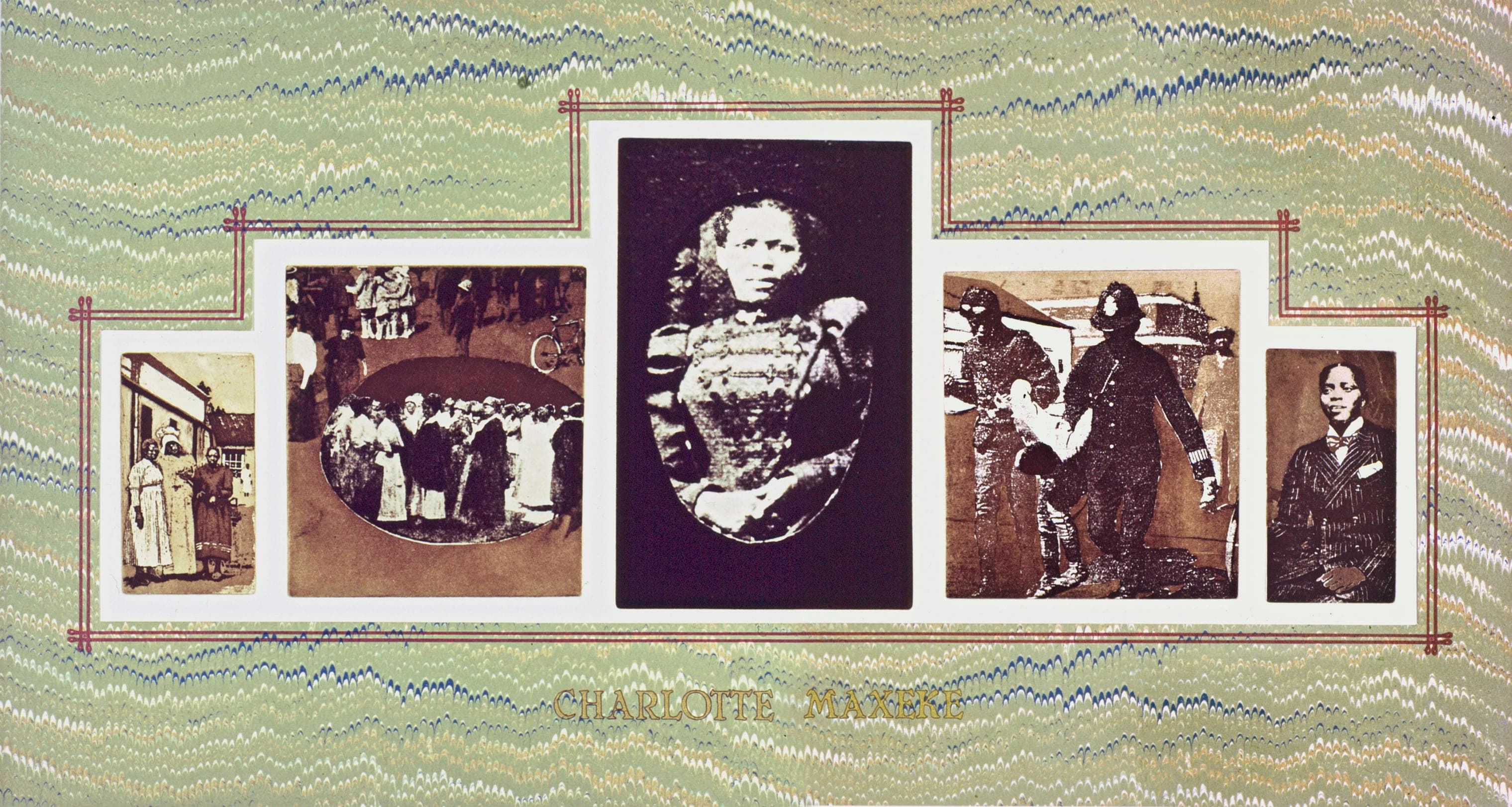
Williamson began a series of photo-etched portraits with screen-printed frames, with the first in the series, a portrait of Elizabeth Paul. Each was a tribute to a woman who inspired others through her leadership, often in the struggle for liberation: Helen Joseph, Winnie Mandela, Annie Silinga, Mamphela Ramphele. Their names are familiar today, but in the 1980s they were largely invisible. Williamson’s work sought to give them visibility, and to honour them.
Her influences were many. Renaissance portraiture offered structure; the inventive frames of Crossroads homes provided texture. But more than technique, it was the desire to make these women known that shaped the work. In mass- producing and distributing postcard versions of the portraits, Williamson made the series portable, ensuring that these stories could travel, unbound by gallery walls.
In 1982, Sue Williamson spent much of her time in Crossroads, an informal Cape Town community marked for destruction by the apartheid state. She was working with residents on strategies to oppose the demolitions. It was there that she first encountered the image of Elizabeth Paul – a Xhosa faith healer whose faded photo adorned the walls in many homes. This repetition marked Elizabeth as an important figure in the community, a person to be honoured and remembered.
Williamson began a series of photo-etched portraits with screen-printed frames, with the first in the series, a portrait of Elizabeth Paul. Each was a tribute to a woman who inspired others through her leadership, often in the struggle for liberation: Helen Joseph, Winnie Mandela, Annie Silinga, Mamphela Ramphele. Their names are familiar today, but in the 1980s they were largely invisible. Williamson’s work sought to give them visibility, and to honour them.
Her influences were many. Renaissance portraiture offered structure; the inventive frames of Crossroads homes provided texture. But more than technique, it was the desire to make these women known that shaped the work. In mass- producing and distributing postcard versions of the portraits, Williamson made the series portable, ensuring that these stories could travel, unbound by gallery walls.
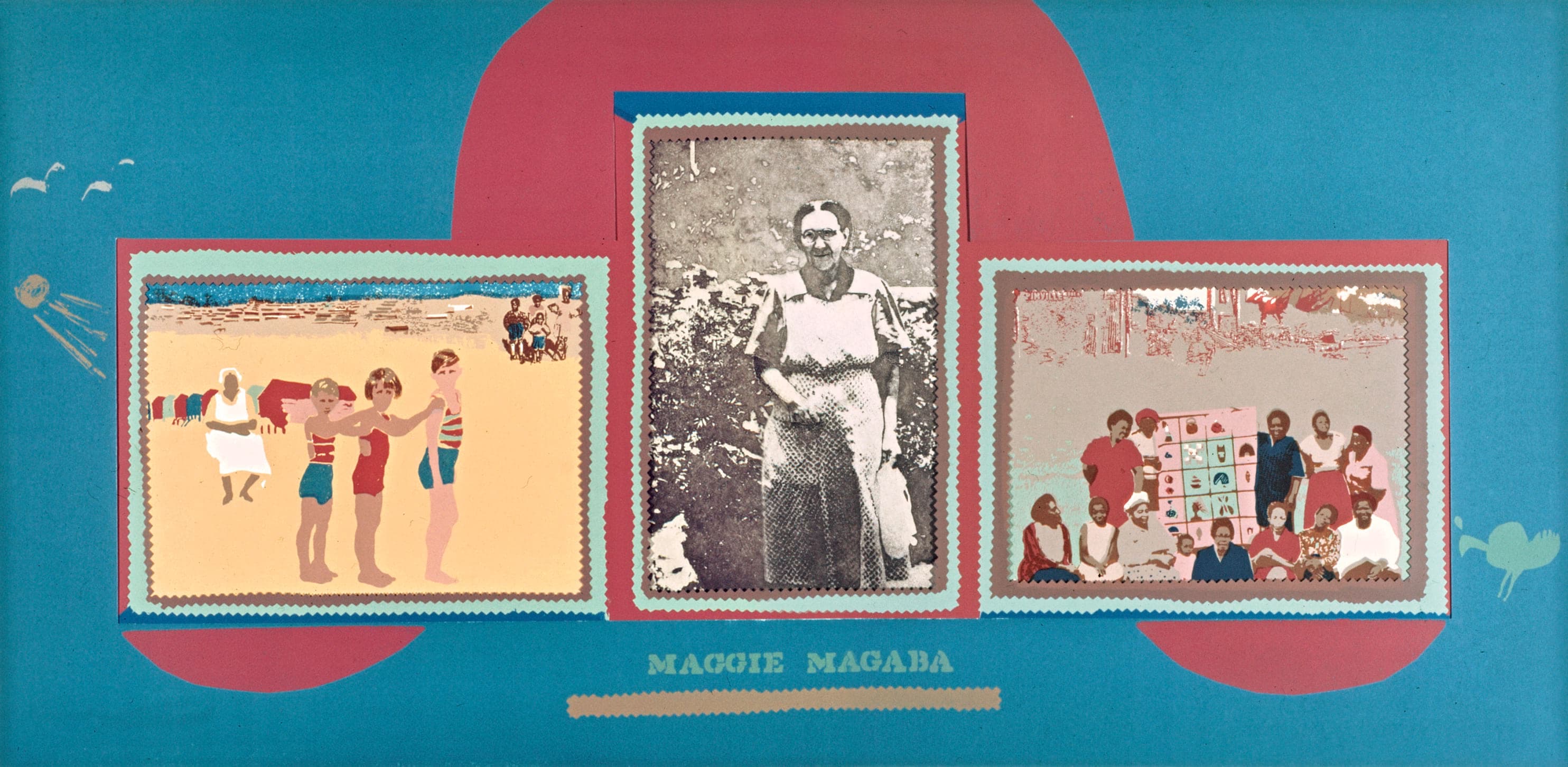
Maggie Magaba was one of a vast army of black South African women who spend their lives dedicated to domestic service for a white employer. The daughter of the family for whom Maggie worked tells her story:
“Maggie Magaba came to work for my mother in 1926, the years of my parent’s marriage. She was exactly the same age as my mother, and worked as a cook.
“Maggie lived in the backyard of our house in a tiny room for over thirty years. During that time she saved every penny to educate her own children, with whom she was never able to live, and also to buy a small plot in Craddock, where she was born. She wanted to spend her remaining years there. When the time came she had to dispose of the plot because the area had been declared ‘white.’
“My own mother died when I was a young child, and Maggie was more of a mother to me than to her own children. In spite of all her suffering, she was a truly compassionate woman, and gave her love and strength to us as children. Whatever bitterness she might have felt, she did not show it towards us.”
In honour of this fine woman, the daughter formed the Maggie Magaba Trust, which sponsors bursaries for black students, and also groups such as the Zamani Soweto Sisters. The Zamani Sisters came into being when after the violence of Soweto in 1976, a group of women pledged themselves not to be bitter, but to take positive action. It consists of many small groups of women working together in various parts of Soweto. Skills are taught and beautiful clothes and patchwork items are made. Remembering a new vision of independence for the future.
-Sue Williamson 1983
In 1982, Sue Williamson spent much of her time in Crossroads, an informal Cape Town community marked for destruction by the apartheid state. She was working with residents on strategies to oppose the demolitions. It was there that she first encountered the image of Elizabeth Paul – a Xhosa faith healer whose faded photo adorned the walls in many homes. This repetition marked Elizabeth as an important figure in the community, a person to be honoured and remembered.
Williamson began a series of photo-etched portraits with screen-printed frames, with the first in the series, a portrait of Elizabeth Paul. Each was a tribute to a woman who inspired others through her leadership, often in the struggle for liberation: Helen Joseph, Winnie Mandela, Annie Silinga, Mamphela Ramphele. Their names are familiar today, but in the 1980s they were largely invisible. Williamson’s work sought to give them visibility, and to honour them.
Her influences were many. Renaissance portraiture offered structure; the inventive frames of Crossroads homes provided texture. But more than technique, it was the desire to make these women known that shaped the work. In mass- producing and distributing postcard versions of the portraits, Williamson made the series portable, ensuring that these stories could travel, unbound by gallery walls.
Tula, tula Winnie tula
Tula Winnie tula
Bamtatha bamtatha bambeka e Brandfort
Wamku Wakala wathi amandla
Winnie, keep quiet
They took you and put you in Brandfort And you shouted and cried out ‘Power!’
This song of tribute marks the deep feeling of the people for Nomzamo Winnie Mandela, wife of the great political leader, Nelson Mandela.
In over 20 years of marriage, the Mandelas have had only about two years together – when he was not in prison, Nelson Mandela was underground. Winnie herself has been free of all restrictions for only 11 months of the 19 years since her husband was imprisoned. A key person in many black organizations now banned, she has been repeatedly subject to detention, house arrest and imprisonment.
Since 1977 she had been banished to the small, dusty Afrikaner dorp of Brandfort in the Orange Free State, where she lived in house No. 802 in the treeless location outside the town. Perpetual harassment has extended even to the confiscation of a bedspread in the colours of the African National Congress, and a conviction on a charge of contravening her banning orders when called at a neighbour’s house regarding a chicken.
But nothing had been able to crush the indomitable Winnie Mandela, or prevent her from speaking out fearlessly when she has been able to.
She remained a powerful symbol of the African struggle.
- Sue Williamson 1983
In 1982, Sue Williamson spent much of her time in Crossroads, an informal Cape Town community marked for destruction by the apartheid state. She was working with residents on strategies to oppose the demolitions. It was there that she first encountered the image of Elizabeth Paul – a Xhosa faith healer whose faded photo adorned the walls in many homes. This repetition marked Elizabeth as an important figure in the community, a person to be honoured and remembered.
Williamson began a series of photo-etched portraits with screen-printed frames, with the first in the series, a portrait of Elizabeth Paul. Each was a tribute to a woman who inspired others through her leadership, often in the struggle for liberation: Helen Joseph, Winnie Mandela, Annie Silinga, Mamphela Ramphele. Their names are familiar today, but in the 1980s they were largely invisible. Williamson’s work sought to give them visibility, and to honour them.
Her influences were many. Renaissance portraiture offered structure; the inventive frames of Crossroads homes provided texture. But more than technique, it was the desire to make these women known that shaped the work. In mass- producing and distributing postcard versions of the portraits, Williamson made the series portable, ensuring that these stories could travel, unbound by gallery walls.
Born in 1949, Jenny Curtis was an activist from her student days, and instrumental in the fledgling trade union movement. She was arrested in 1976, released without charge after two months but then banned for five years. In 1977, Jenny married Marius Schoon, but as both were banned, they fled first to Botswana, then Angola. In 1984, Jenny opened a parcel bomb addressed to her husband, sent by a security police assassin. It killed her and her small daughter Katryn.
In 1982, Sue Williamson spent much of her time in Crossroads, an informal Cape Town community marked for destruction by the apartheid state. She was working with residents on strategies to oppose the demolitions. It was there that she first encountered the image of Elizabeth Paul – a Xhosa faith healer whose faded photo adorned the walls in many homes. This repetition marked Elizabeth as an important figure in the community, a person to be honoured and remembered.
Williamson began a series of photo-etched portraits with screen-printed frames, with the first in the series, a portrait of Elizabeth Paul. Each was a tribute to a woman who inspired others through her leadership, often in the struggle for liberation: Helen Joseph, Winnie Mandela, Annie Silinga, Mamphela Ramphele. Their names are familiar today, but in the 1980s they were largely invisible. Williamson’s work sought to give them visibility, and to honour them.
Her influences were many. Renaissance portraiture offered structure; the inventive frames of Crossroads homes provided texture. But more than technique, it was the desire to make these women known that shaped the work. In mass- producing and distributing postcard versions of the portraits, Williamson made the series portable, ensuring that these stories could travel, unbound by gallery walls.
In 1982, Sue Williamson spent much of her time in Crossroads, an informal Cape Town community marked for destruction by the apartheid state. She was working with residents on strategies to oppose the demolitions. It was there that she first encountered the image of Elizabeth Paul – a Xhosa faith healer whose faded photo adorned the walls in many homes. This repetition marked Elizabeth as an important figure in the community, a person to be honoured and remembered.
Williamson began a series of photo-etched portraits with screen-printed frames, with the first in the series, a portrait of Elizabeth Paul. Each was a tribute to a woman who inspired others through her leadership, often in the struggle for liberation: Helen Joseph, Winnie Mandela, Annie Silinga, Mamphela Ramphele. Their names are familiar today, but in the 1980s they were largely invisible. Williamson’s work sought to give them visibility, and to honour them.
Her influences were many. Renaissance portraiture offered structure; the inventive frames of Crossroads homes provided texture. But more than technique, it was the desire to make these women known that shaped the work. In mass- producing and distributing postcard versions of the portraits, Williamson made the series portable, ensuring that these stories could travel, unbound by gallery walls.
In 1982, Sue Williamson spent much of her time in Crossroads, an informal Cape Town community marked for destruction by the apartheid state. She was working with residents on strategies to oppose the demolitions. It was there that she first encountered the image of Elizabeth Paul – a Xhosa faith healer whose faded photo adorned the walls in many homes. This repetition marked Elizabeth as an important figure in the community, a person to be honoured and remembered.
Williamson began a series of photo-etched portraits with screen-printed frames, with the first in the series, a portrait of Elizabeth Paul. Each was a tribute to a woman who inspired others through her leadership, often in the struggle for liberation: Helen Joseph, Winnie Mandela, Annie Silinga, Mamphela Ramphele. Their names are familiar today, but in the 1980s they were largely invisible. Williamson’s work sought to give them visibility, and to honour them.
Her influences were many. Renaissance portraiture offered structure; the inventive frames of Crossroads homes provided texture. But more than technique, it was the desire to make these women known that shaped the work. In mass- producing and distributing postcard versions of the portraits, Williamson made the series portable, ensuring that these stories could travel, unbound by gallery walls.
Amina Cachalia grew up in a politically aware family and was one of the leaders of the Federation of South African Women, a broad-based organisation which opposed apartheid. She was banned in 1963. Her husband, Yusuf, was under house arrest and her sister, Zainab, who lived next door, was also banned. After the first democratic election, in 1994, Amina accompanied Nelson Mandela on a visit to the widow of Hendrik Verwoerd, the architect of apartheid, in a classic action of reconciliation.
In 1982, Sue Williamson spent much of her time in Crossroads, an informal Cape Town community marked for destruction by the apartheid state. She was working with residents on strategies to oppose the demolitions. It was there that she first encountered the image of Elizabeth Paul – a Xhosa faith healer whose faded photo adorned the walls in many homes. This repetition marked Elizabeth as an important figure in the community, a person to be honoured and remembered.
Williamson began a series of photo-etched portraits with screen-printed frames, with the first in the series, a portrait of Elizabeth Paul. Each was a tribute to a woman who inspired others through her leadership, often in the struggle for liberation: Helen Joseph, Winnie Mandela, Annie Silinga, Mamphela Ramphele. Their names are familiar today, but in the 1980s they were largely invisible. Williamson’s work sought to give them visibility, and to honour them.
Her influences were many. Renaissance portraiture offered structure; the inventive frames of Crossroads homes provided texture. But more than technique, it was the desire to make these women known that shaped the work. In mass- producing and distributing postcard versions of the portraits, Williamson made the series portable, ensuring that these stories could travel, unbound by gallery walls.
Charlotte Maxeke was born in 1874, and, as a young woman, toured England, Canada and the United States as part of an African choir. She remained in the US to study, and graduated from Wilberforce College in Ohio with a BA degree. Returning to South Africa, she married a fellow graduate and together they founded the first college for Africans in 1908 – Wilberforce Institute at Evaton. She was the first president of the National Council of African Women in 1935, and is remembered as “the Mother of African freedom in this country”.
In 1982, Sue Williamson spent much of her time in Crossroads, an informal Cape Town community marked for destruction by the apartheid state. She was working with residents on strategies to oppose the demolitions. It was there that she first encountered the image of Elizabeth Paul – a Xhosa faith healer whose faded photo adorned the walls in many homes. This repetition marked Elizabeth as an important figure in the community, a person to be honoured and remembered.
Williamson began a series of photo-etched portraits with screen-printed frames, with the first in the series, a portrait of Elizabeth Paul. Each was a tribute to a woman who inspired others through her leadership, often in the struggle for liberation: Helen Joseph, Winnie Mandela, Annie Silinga, Mamphela Ramphele. Their names are familiar today, but in the 1980s they were largely invisible. Williamson’s work sought to give them visibility, and to honour them.
Her influences were many. Renaissance portraiture offered structure; the inventive frames of Crossroads homes provided texture. But more than technique, it was the desire to make these women known that shaped the work. In mass- producing and distributing postcard versions of the portraits, Williamson made the series portable, ensuring that these stories could travel, unbound by gallery walls.
Elizabeth Paul was born in Tsolo, in the Eastern Cape, in 1906, and became an Anglican faith healer, with a large following of adherents across South Africa, who prayed for her intervention in their problems. In her photo, she stands between her husband, and Chief Sabata, of the Transkei, a man who had not believed in her powers until he became ill, and she prayed by his bedside, and he recovered. She was canonised by the Anglican Church in 2013, and is still celebrated at a yearly festival in Tsolo.
n 1982, Sue Williamson spent much of her time in Crossroads, an informal Cape Town community marked for destruction by the apartheid state. She was working with residents on strategies to oppose the demolitions. It was there that she first encountered the image of Elizabeth Paul – a Xhosa faith healer whose faded photo adorned the walls in many homes. This repetition marked Elizabeth as an important figure in the community, a person to be honoured and remembered.
Williamson began a series of photo-etched portraits with screen-printed frames, with the first in the series, a portrait of Elizabeth Paul. Each was a tribute to a woman who inspired others through her leadership, often in the struggle for liberation: Helen Joseph, Winnie Mandela, Annie Silinga, Mamphela Ramphele. Their names are familiar today, but in the 1980s they were largely invisible. Williamson’s work sought to give them visibility, and to honour them.
Her influences were many. Renaissance portraiture offered structure; the inventive frames of Crossroads homes provided texture. But more than technique, it was the desire to make these women known that shaped the work. In mass- producing and distributing postcard versions of the portraits, Williamson made the series portable, ensuring that these stories could travel, unbound by gallery walls.
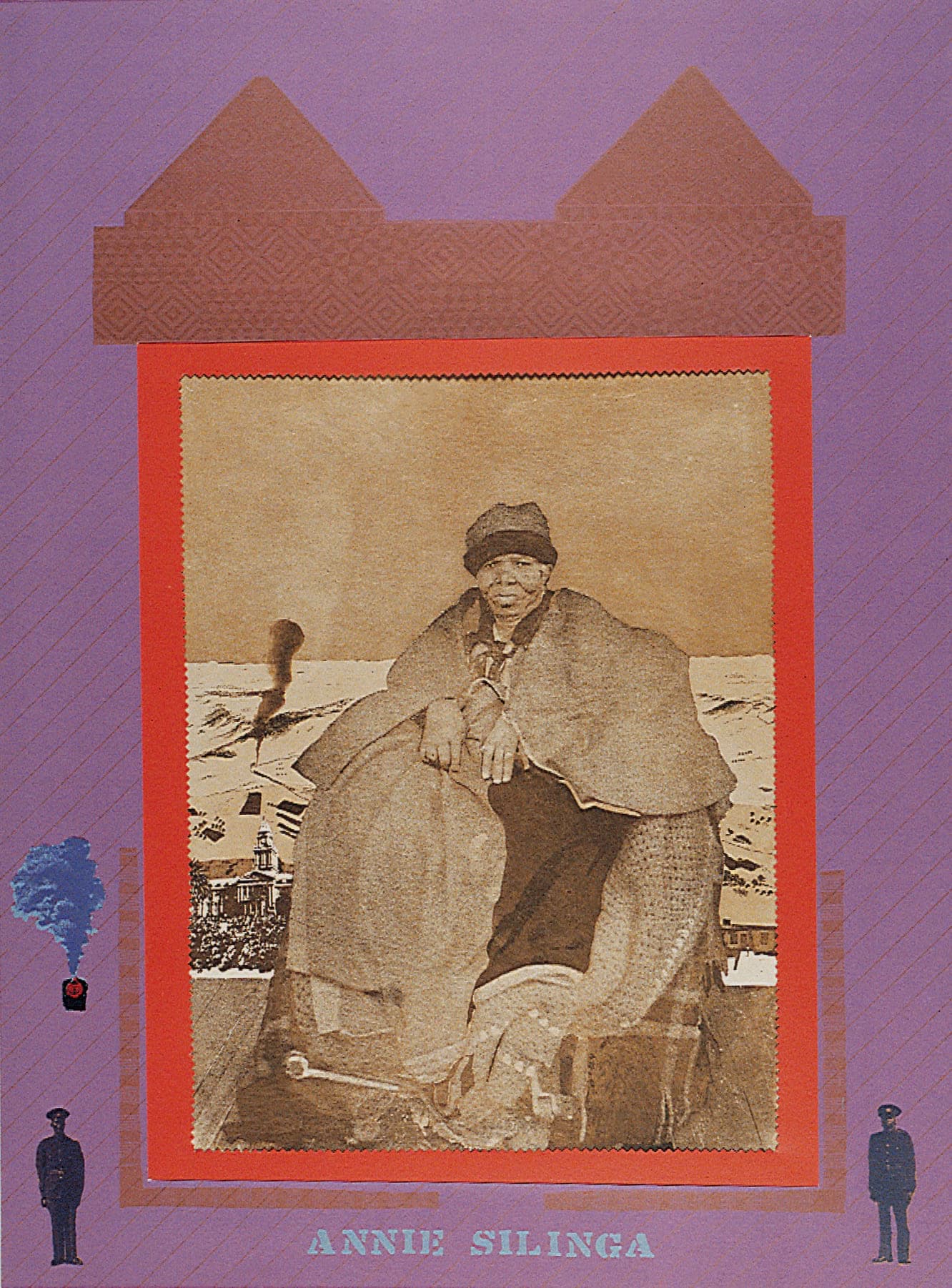
“I will carry a pass the day the Prime Minister’s wife carries a pass.” Annie Silinga told the huge crowd gathered outside the Cape Town City Hall during the Defiance Campaign in 1952. And to this day, neither of them do.
For her steadfast refusal to submit to the indignity of the hated pass, Annie was arrested many times and sent away from her family back to the Transkei. “My children are orphans whose mother still lives and my husband is a widower though his wife is alive,” she declared, before returning to Cape Town once more to take her place in her family home and wait to be arrested again.
“Mayibuye iAfrika” – Africa must come back – she cried good humouredly as white policemen came to arrest her for sitting on a Whites Only railway station bench. She was fearless in her fight for justice, and today, old and bedridden in her house in Jungle Walk, Langa, she has not changed. Although officials have urged her to take a pass so she may qualify for a pension, she laughs them away. “After all these years? No thank you.”
A founder member of the South African Federation of Women, one of the 20 000 who marched to Pretoria on August 9, 1956 to protest the carrying of passes by women, and one of those who was to spend over a year in court as an accused in the Treason Trial, Annie’s cheerfulness, clarity of vision and refusal to submit to oppression have always directed her life. She remains a source of strength and inspiration to women everywhere.
“Annie Silinga aknal’o ipasi Akalifundi, akanatyala”
Annie Silinga hasn’t got a pass And she doesn’t need it.
She’s not guilty.
Note:
Annie Silinga died in her home at Langa in 1984. The love felt for her by the community was attested to by the enormous crowd at her funeral.
n 1982, Sue Williamson spent much of her time in Crossroads, an informal Cape Town community marked for destruction by the apartheid state. She was working with residents on strategies to oppose the demolitions. It was there that she first encountered the image of Elizabeth Paul – a Xhosa faith healer whose faded photo adorned the walls in many homes. This repetition marked Elizabeth as an important figure in the community, a person to be honoured and remembered.
Williamson began a series of photo-etched portraits with screen-printed frames, with the first in the series, a portrait of Elizabeth Paul. Each was a tribute to a woman who inspired others through her leadership, often in the struggle for liberation: Helen Joseph, Winnie Mandela, Annie Silinga, Mamphela Ramphele. Their names are familiar today, but in the 1980s they were largely invisible. Williamson’s work sought to give them visibility, and to honour them.
Her influences were many. Renaissance portraiture offered structure; the inventive frames of Crossroads homes provided texture. But more than technique, it was the desire to make these women known that shaped the work. In mass- producing and distributing postcard versions of the portraits, Williamson made the series portable, ensuring that these stories could travel, unbound by gallery walls.
In 1982, Sue Williamson spent much of her time in Crossroads, an informal Cape Town community marked for destruction by the apartheid state. She was working with residents on strategies to oppose the demolitions. It was there that she first encountered the image of Elizabeth Paul – a Xhosa faith healer whose faded photo adorned the walls in many homes. This repetition marked Elizabeth as an important figure in the community, a person to be honoured and remembered.
Williamson began a series of photo-etched portraits with screen-printed frames, with the first in the series, a portrait of Elizabeth Paul. Each was a tribute to a woman who inspired others through her leadership, often in the struggle for liberation: Helen Joseph, Winnie Mandela, Annie Silinga, Mamphela Ramphele. Their names are familiar today, but in the 1980s they were largely invisible. Williamson’s work sought to give them visibility, and to honour them.
Her influences were many. Renaissance portraiture offered structure; the inventive frames of Crossroads homes provided texture. But more than technique, it was the desire to make these women known that shaped the work. In mass- producing and distributing postcard versions of the portraits, Williamson made the series portable, ensuring that these stories could travel, unbound by gallery walls.
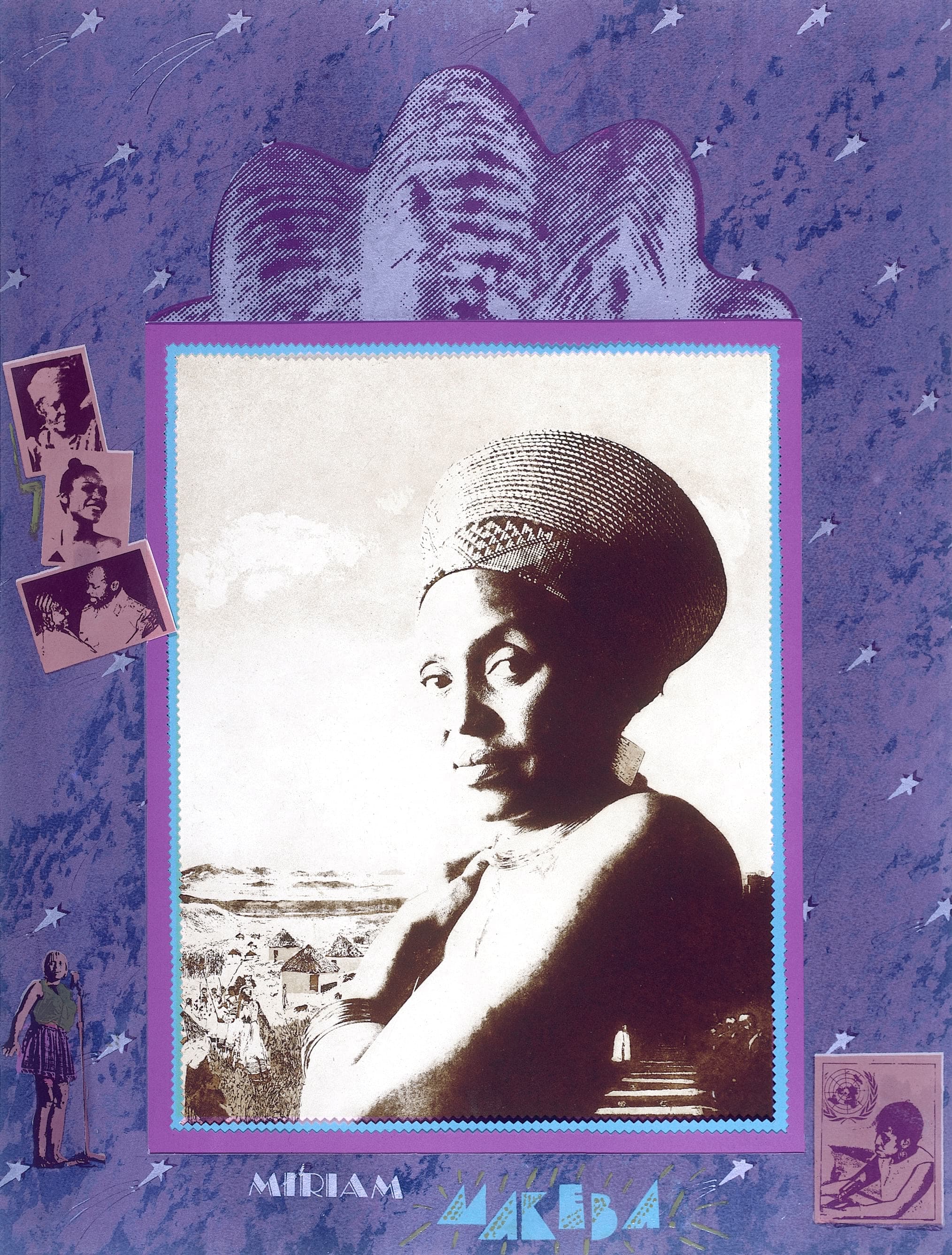
Born in Johannesburg in 1932, vocalist Miriam Zenzile Makeba was 27 when she became the star of King Kong, a South African musical about a black boxer. After the show toured first to London and then the United States, she became internationally famous as a singer and songwriter. Nicknamed “Mama Africa”, she was associated with musical genres including Afropop, jazz, and world music.
Miriam was also a civil rights activist. After giving evidence at the United Nations against apartheid, her South African passport was withdrawn, and she was not allowed to enter the country even to attend her mother’s funeral. After apartheid ended, Miriam received a huge welcome when she returned home.
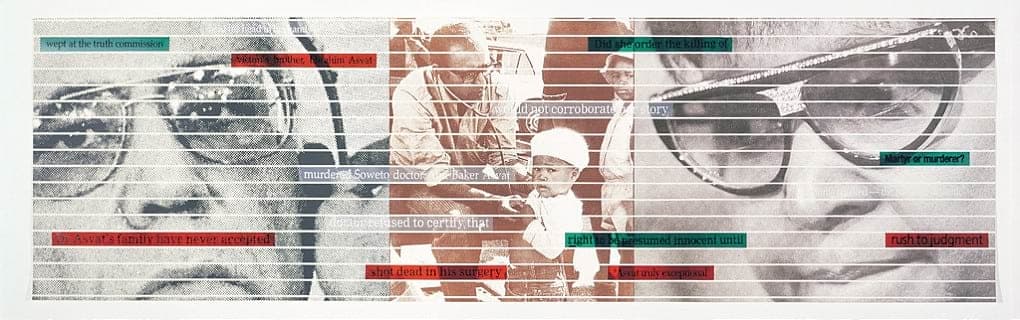
This lithograph, produced in 1999 at the Rutgers Center for Innovative Print and Paper, responds to Winnie Madikizela-Mandela’s testimony before the Truth and Reconciliation Commission concerning the death of Dr Abu Baker Asvat.
A deeply respected Soweto doctor, Asvat was assassinated in his clinic in 1989, with many believing his murder was linked to his refusal to falsify medical records that could distance Madikizela-Mandela from the killing of teenager Stompie Seipei.
In this work, as in all the Truth Games works, the elements have been sourced from press reports and photographs. On the left is the brother of Dr Abu Baker Asvat, Dr Ebrahim Asvat, gazing upwards as he listens to the evidence being given at the TRC hearing. In the centre is Dr Abu Baker Asvat, listening to the breathing of a Soweto child through his stethoscope. On the right, biting her lip as she refuses to acknowledge responsibility in the matter, is Winnie Mandela.
The textual elements of the work reflect contrasting media responses: the white press took a critical stance, while the Black press offered a more forgiving view.