Notes from the Archive: Four decades at Art Basel
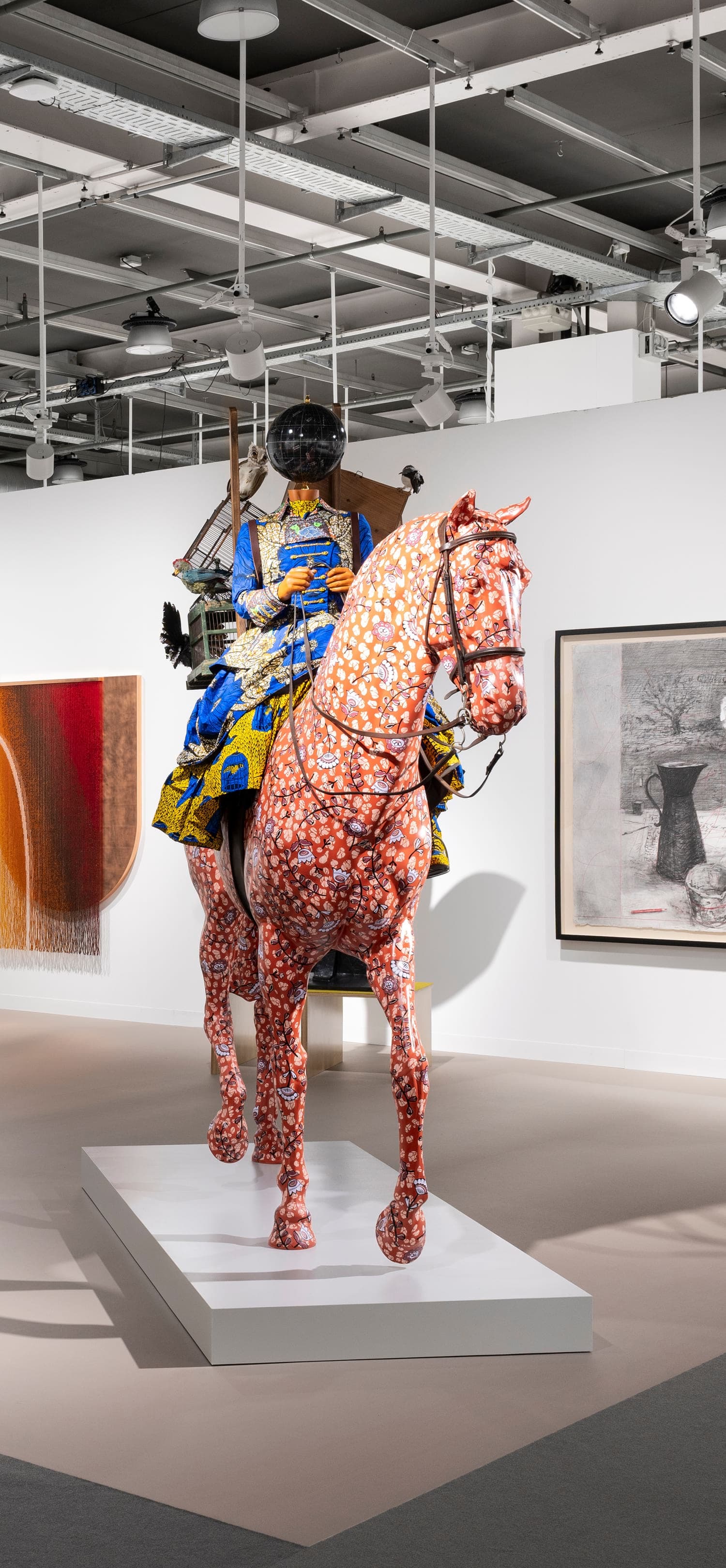
As Art Basel week approaches, it is worth looking back at the four decades in which Goodman Gallery has returned to the fair. Marking its 60th anniversary this year, the gallery enters the 2026 edition not only with a presentation that reflects the breadth of its current programme, but with a history of participation that stretches back to 1984.
Across the years, Art Basel has changed dramatically. What began as a predominantly European fair has expanded into a global platform through which artists, galleries and institutions negotiate questions of visibility, value and international exchange. Goodman Gallery's presence within this context offers an opportunity to consider not simply individual presentations, but the longer trajectory of a gallery that has consistently worked to position artists from Southern Africa within broader international conversations.
The gallery’s archive preserves traces of this history. An exhibition invitation from the gallery's first participation in 1984 records an early moment of engagement with the fair. A VHS recording from the following year captures Basel at a time before the digital image became the dominant form of documentation. Subsequent catalogues, installation photographs and working records trace a relationship with the fair that has developed across four decades. Among them are photographs of founder Linda Givon (1936 - 2020) at the fair in 1988, images documenting works from the “Fragile Paradise” series of paintings by painter and art critic Andrew Verster (1937 - 2020) in preparation for presentation in 1991, and a catalogue relating to the inclusion of sculptor and sangoma Percy Konqobe's works in 1992. Individually, these objects appear modest. Together, they reveal something more significant: the gradual accumulation of an institutional history built through return.


What emerges from this record is not simply continuity, but transformation. Under Linda Givon's leadership, Goodman Gallery's presence at Basel was defined by a commitment to introducing South African artists to international audiences during a period in which such representation remained limited. In subsequent decades, under the direction of Liza Essers, the gallery expanded its programme beyond national frameworks, developing a roster that reflects increasingly transnational artistic dialogues while maintaining a commitment to artists whose practices engage questions of history, identity, social justice and cultural exchange.


Seen from this perspective, the gallery's history at Art Basel mirrors larger shifts within contemporary art itself. The movement is not from local to global, but from a model of representation centred on geography toward one shaped by networks, affiliations and shared concerns across borders. Throughout these changes, Goodman Gallery has remained committed to creating platforms through which artists from Africa and the diaspora can participate in and shape international discourse.
Certain editions make these broader currents especially visible. In 2017, Goodman presented Constellations (Black Liberation Zodiac), a monumental site-specific mural by the then 29-year-old Nolan Oswald Dennis. Reimagining the familiar zodiac from a southern rather than northern perspective, the work proposed an alternative way of mapping the world, inviting viewers to reconsider whose knowledge systems have historically shaped our understanding of place and orientation. Acquired on the fair's opening day by collector Jean Pigozzi, the work exemplified the gallery's commitment to presenting artists whose practices challenge inherited ways of seeing while opening new conversations within an international context.

The contrast between the gallery's first and most recent Basel presentations tells only part of the story. Equally significant are the continuities. Across four decades, Goodman has returned with artists whose practices engage memory, history, politics, materiality and social change, while remaining attentive to the specific conditions from which those practices emerge.
The gallery's 2026 presentation continues this trajectory, bringing together artists whose practices explore movement, memory, exchange and historical transformation. Featuring significant works by El Anatsui, Kapwani Kiwanga, William Kentridge, Carrie Mae Weems and others, the presentation reflects the gallery's enduring role as a commercial space, cultural platform and site of assembly through which artists have negotiated the relationship between local histories and global audiences.

Looking back through the archive, what becomes visible is not simply a chronology of participation but a record of persistence. The catalogues, photographs and recordings that remain are fragments of a larger story: one in which repeated presence, sustained commitment and long-term relationships have enabled Goodman Gallery to occupy a distinctive position within the international art world. As the gallery marks sixty years, its history at Art Basel offers a reminder that institutions are built not only through singular milestones, but through the cumulative force of returning, year after year, to the conversations that shape contemporary culture.