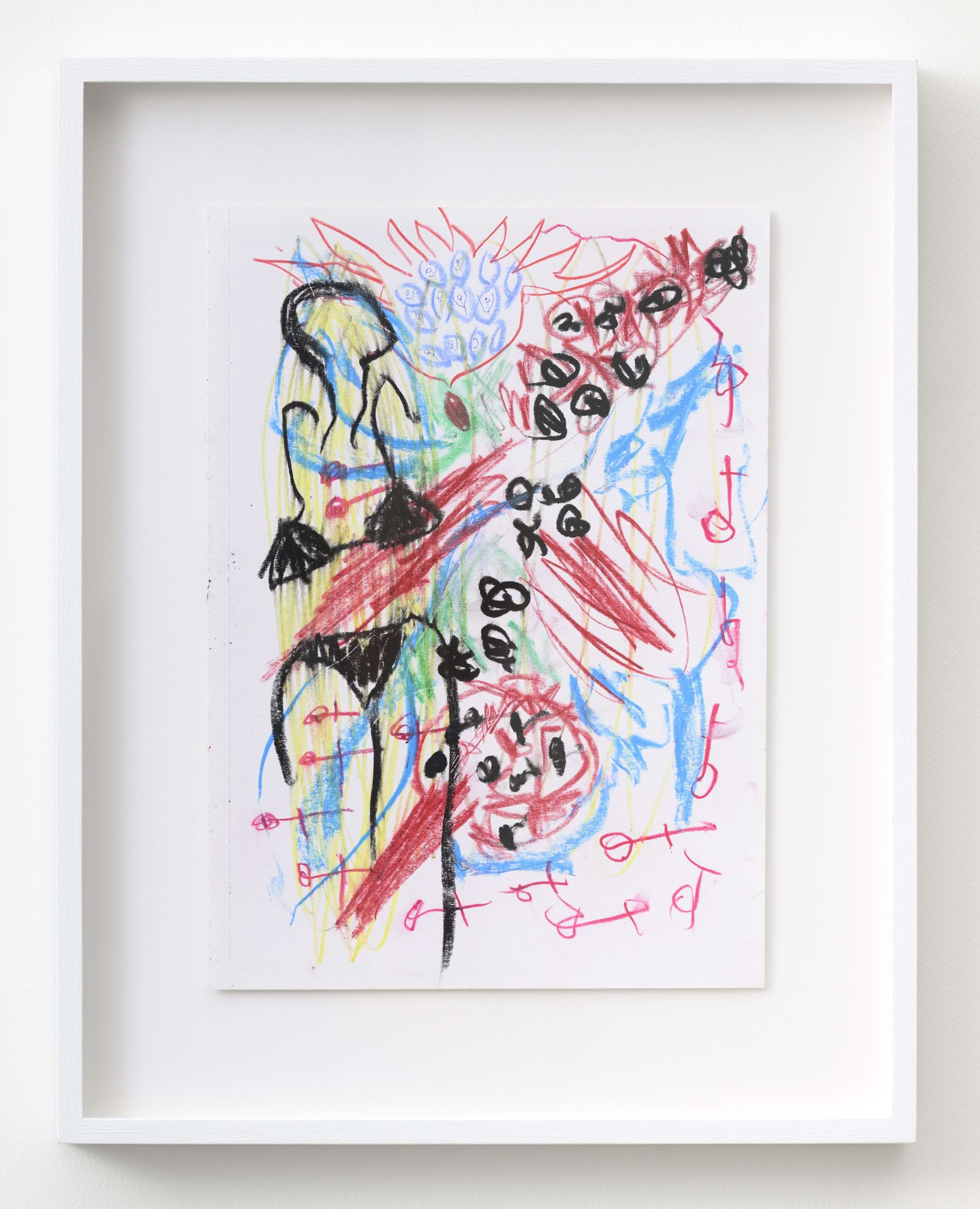
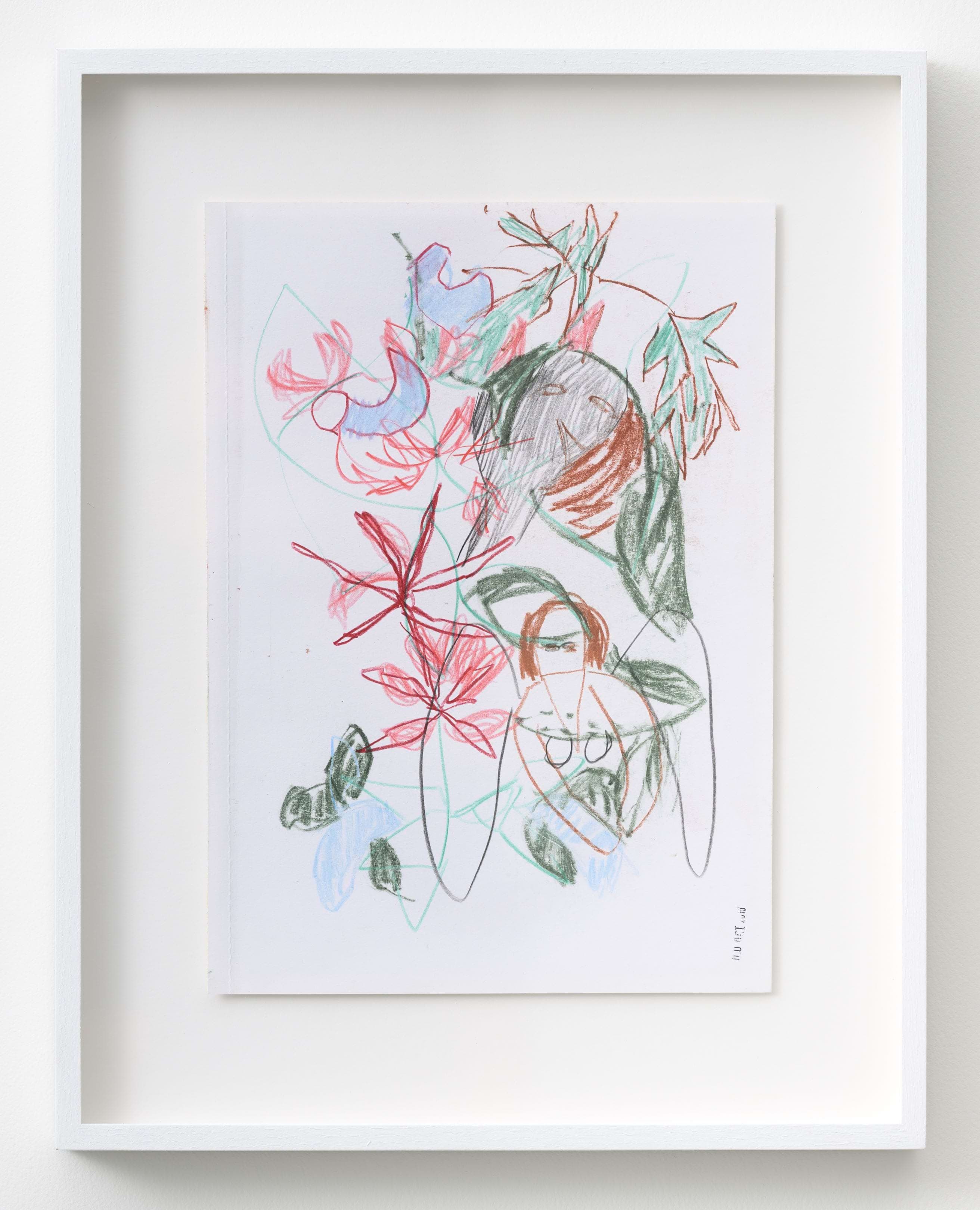
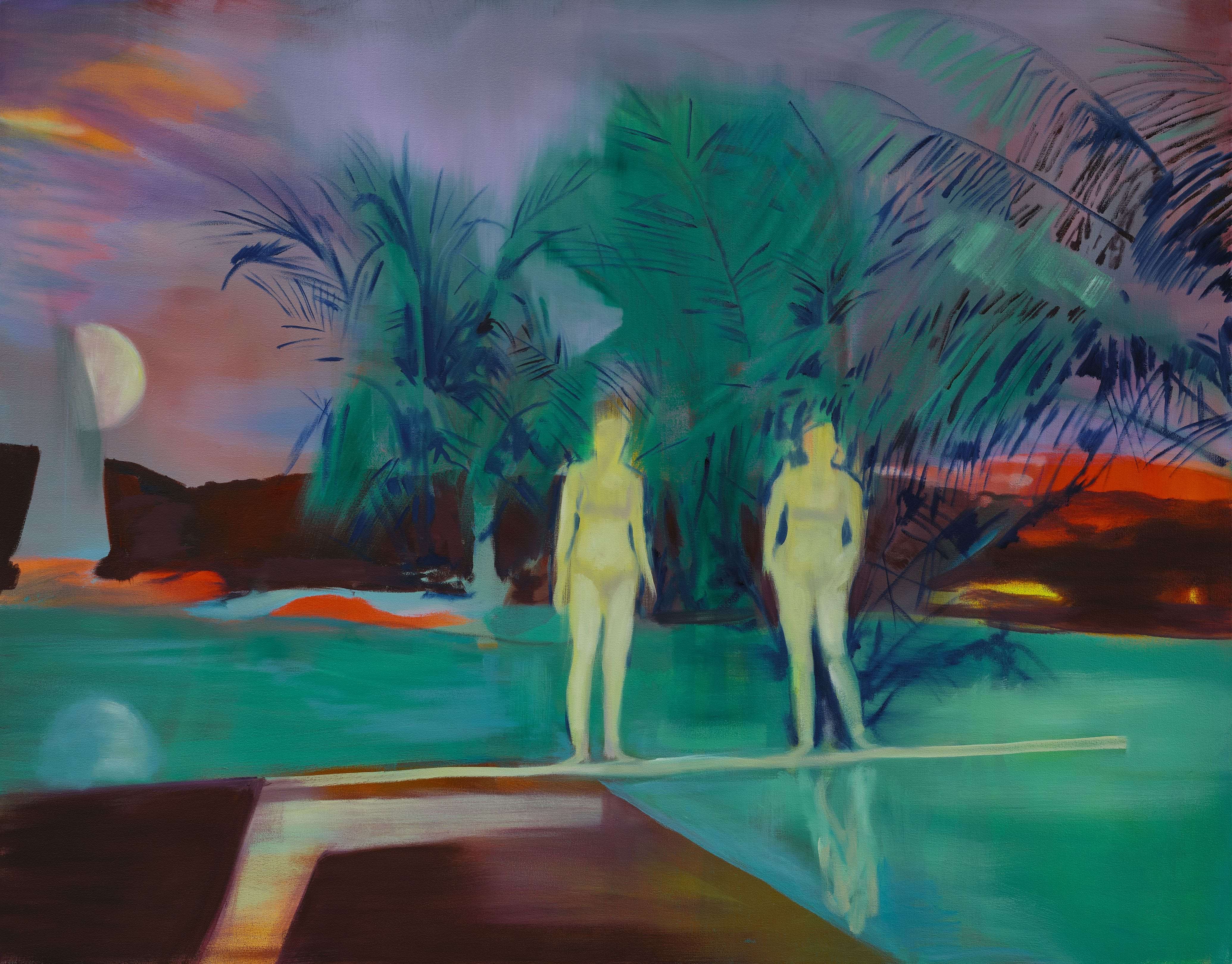
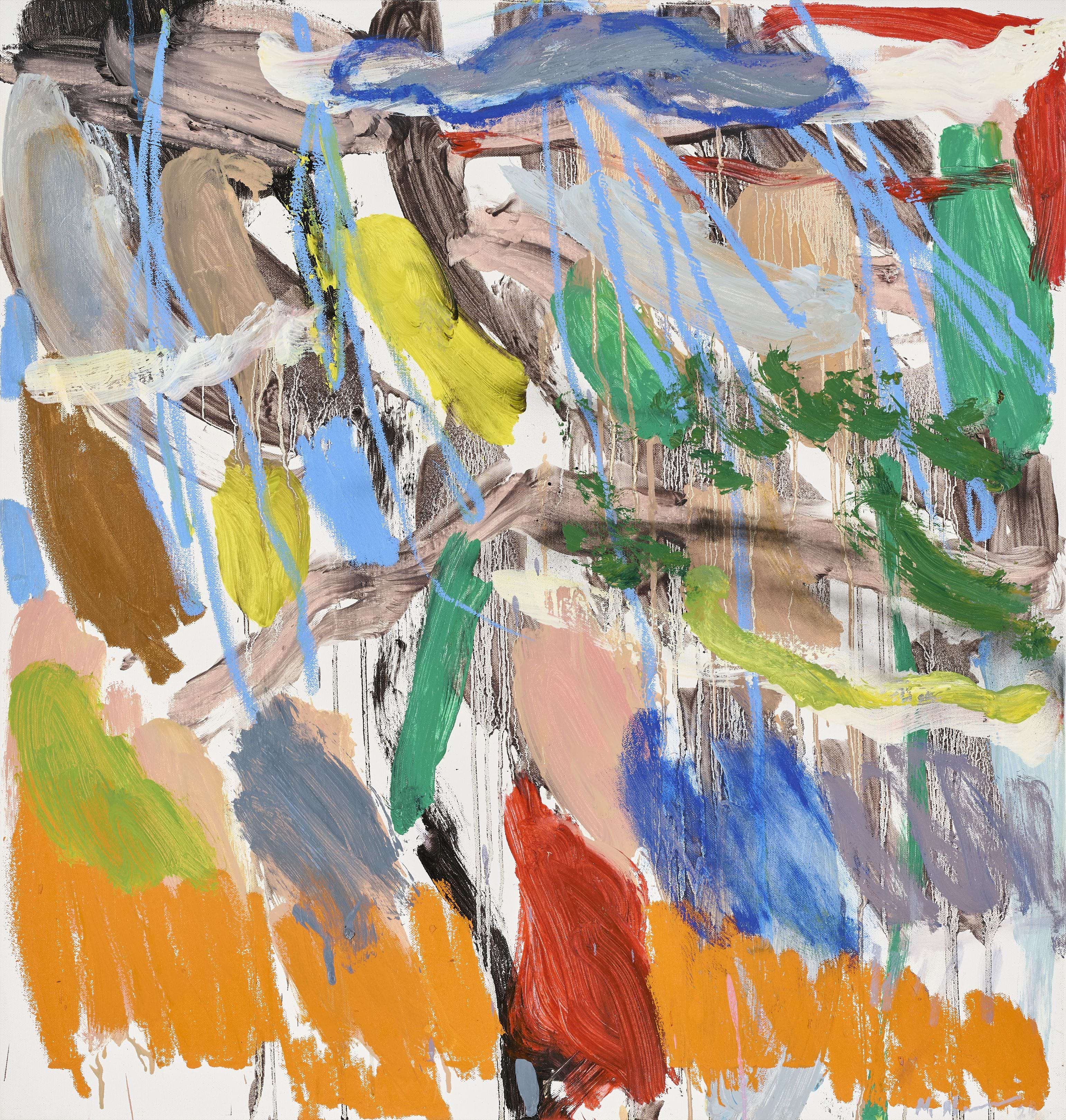

Misheck Masamvu’s practice is rooted in the expressive potential of gesture, material, and process. Oscillating between abstraction and figuration, his work engages with personal and collective memory while searching for new ways of being in the present. Through dense layering and intuitive brushwork, Masamvu creates surfaces that feel both immediate and reflective, where the act of painting becomes a site for recording time, emotion, and thought.
At the core of his practice is a commitment to uncertainty. Masamvu’s compositions resist fixed interpretation, instead unfolding through textured marks and fluid forms that mirror the contradictions of lived experience. His paintings operate as open structures – simultaneously forming and unravelling – where identity, language, and history are never fully resolved but constantly shifting. This approach reflects a broader interrogation of the psychological and political forces that shape life in postcolonial southern Africa. Masamvu’s work invites viewers into a space of active engagement. His tangled lines and gestural marks speak to internal conflict, resilience, and the quiet negotiations between self and world. Rather than offering answers, his practice encourages introspection.
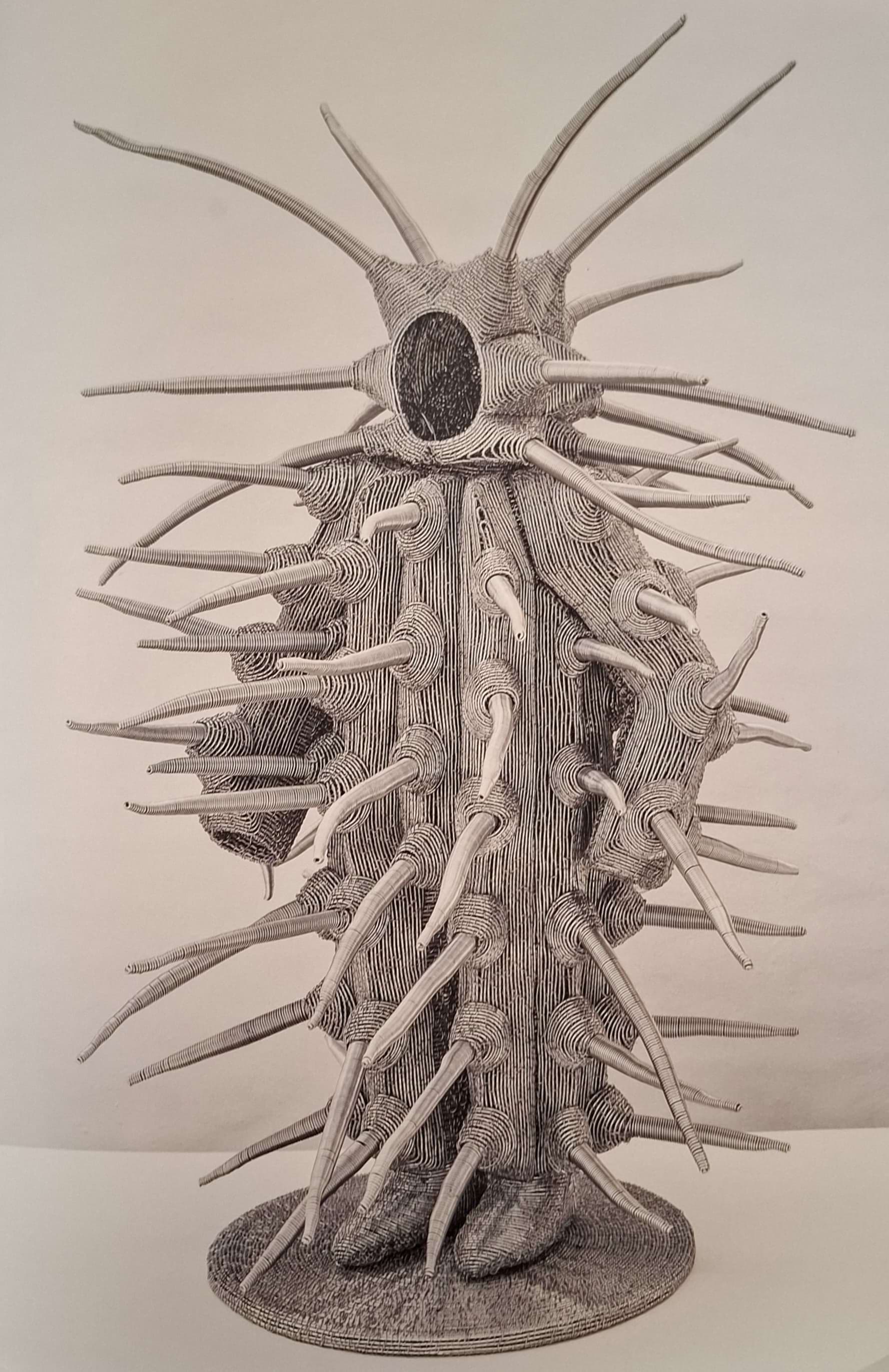
Of his intricate and carefully woven insects suits, Oltmann has noted that the slow and painstaking process of creating them acts as a parallel to the processes of metamorphosis and hatching seen in insect life. In a 2014 interview with Cintia Vargas, Oltmann states “My caterpillar suits explore a hybrid crossing-over between insect and human. They look like empty shells that remain behind following larval molting processes. At the time of weaving the suits I was also interested in looking at the elaborate suits worn by the first Europeans who arrived on African shores. A key influence on my caterpillar suits was a Benin carved ivory salt cellar which represents the foreigner in a conquistador-like garment, giving it an air of masculine power and authority. The African carver’s interpretation of the foreign European represents an inversion of the relations of power which characterizes the representations of ‘exotic’ people by colonial artists, and I liked this ironic inversion of the depiction of the exotic ‘other’ where the gaze is reverted back onto the European explorer as something foreign and alien.”