
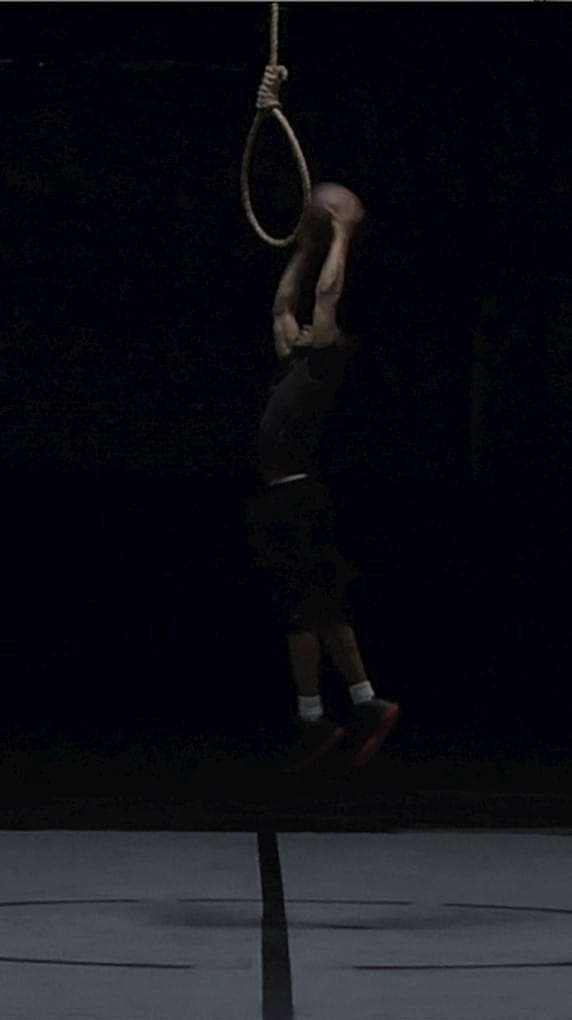


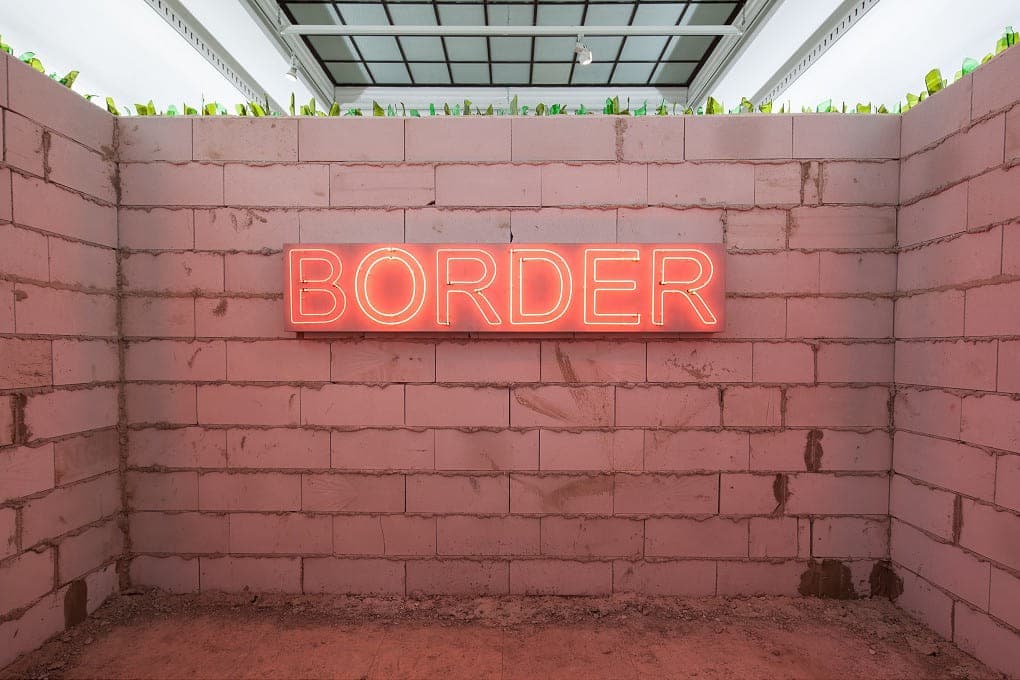
Be Afraid of the Enormity of the Possible (2015) is a work in neon that furthers Jaar’s preoccupation with provocation and sloganeering, themes informed by his well-quoted statement that ‘images are never innocent’.
The main focus of Jaar’s oeuvre is the politics of images and their effect on modern society that is in his words “bombarded by thousands of images without warning, without mercy, containing messages of consumption crafted by marketing and communications experts”.
The phrase 'Be Afraid of the Enormity of the Possible' is derived from the writings of Romanian philosopher Emil Cioran (1911–1995). This work is part of collections at Toledo Museum of Art and The Alfond Collection of Contemporary Art at Rollins College.
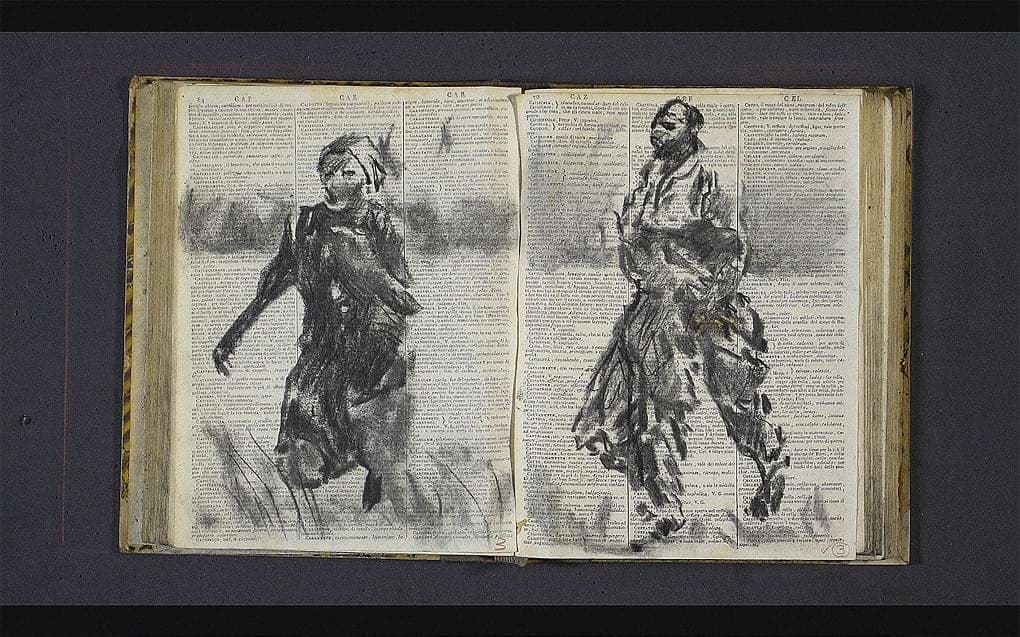
William Kentridge’s new single channel film, Soft Dictionary, is from his series of “flip book films”, which are characterised by drawings in ink and charcoal and text, which dance across the pages of found books. Brought to life once opened by the artist’s hand, the pages of these books turn by themselves, presenting fragmented anti-narratives of text and images.
Soft Dictionary is a visual record of a series of thoughts emerging and disappearing – lists of drawings made and never made, historical figures, personal references. The film tries to document fragments of the non-sequiturs lodged in our heads, all of which are props in our efforts to understand the world: the very randomness of thoughts providing some of the richness of understanding. In its attempt to follow multiple streams of consciousness, it travels the boundary between incoherence, in the arbitrariness of images and references; and our constant need to make connections between images and references.
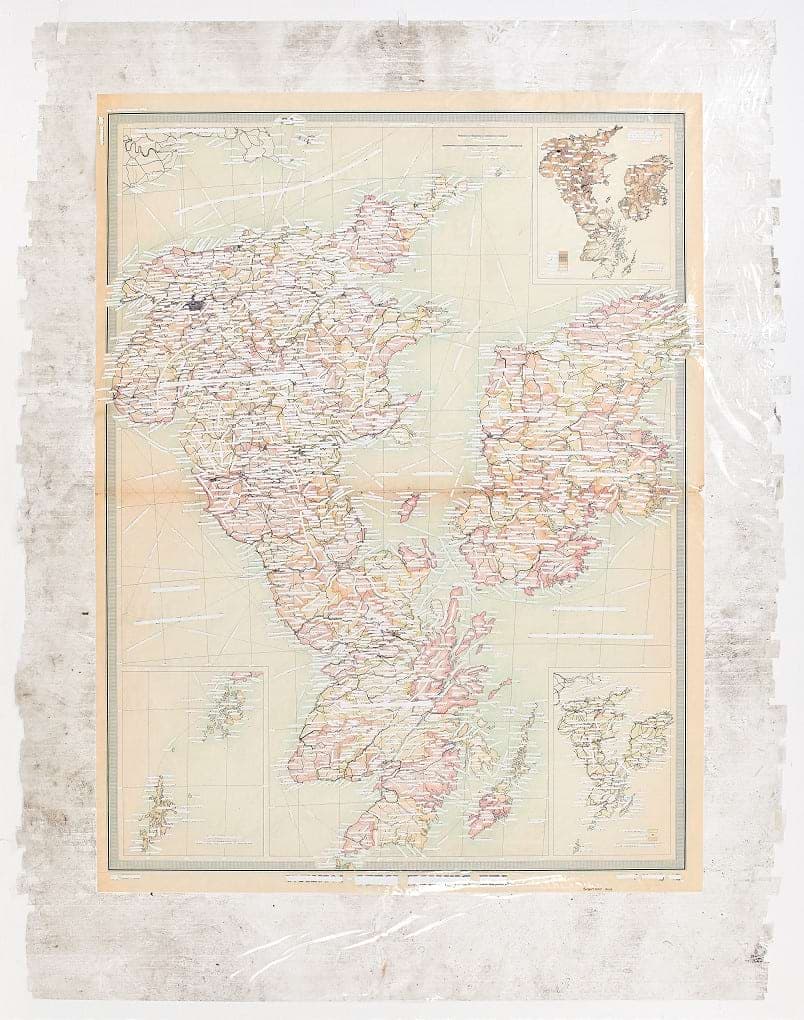
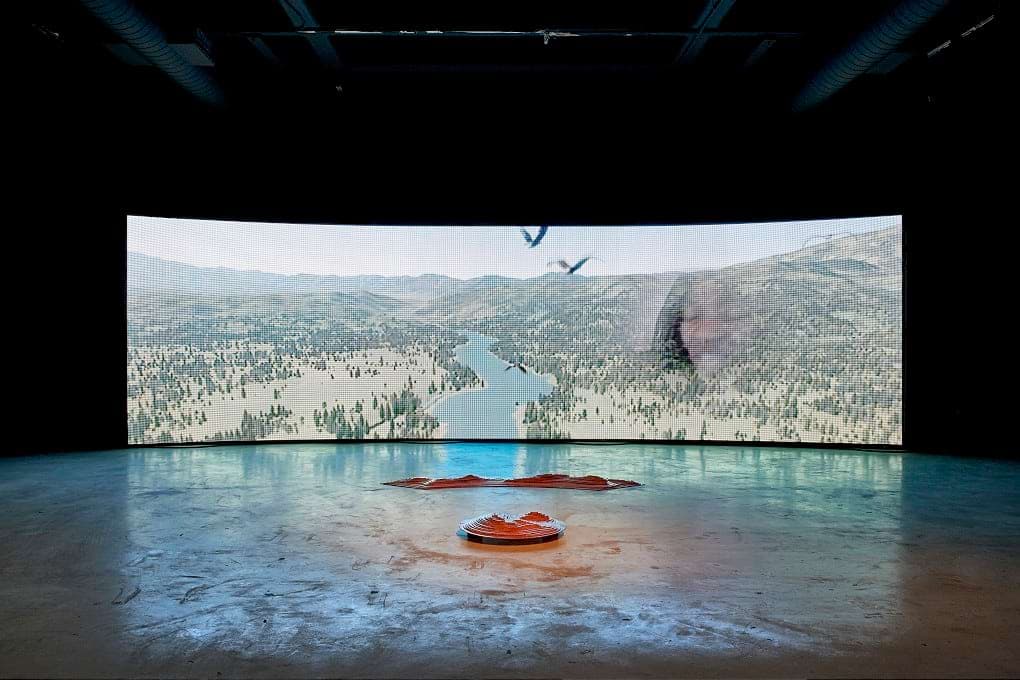
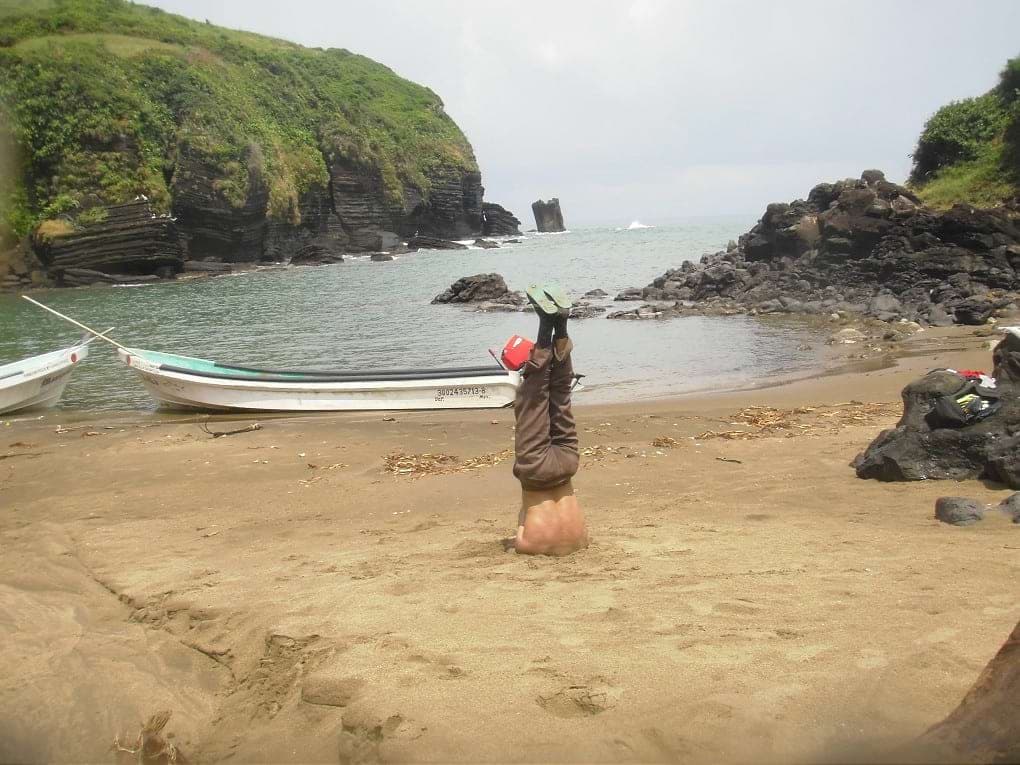
The act of drawing a map is the ultimate form of asserting ownership of land. The Sticky-Tape Transfer maps I have made are all futile attempts to defamiliarise our representations of the land. My film installation WYE (2016) brought together three narratives where the protagonist’s gazes at the landscapes of England, South Africa and Australia; each of these landscapes is loaded with the weight of the colonial project and white subjectivity. I made a Sticky-Tape Transfer map of each of these three territories, turned upside down and with all their names erased, in a futile attempt to look at them without the knowledge of the projects of ownership.
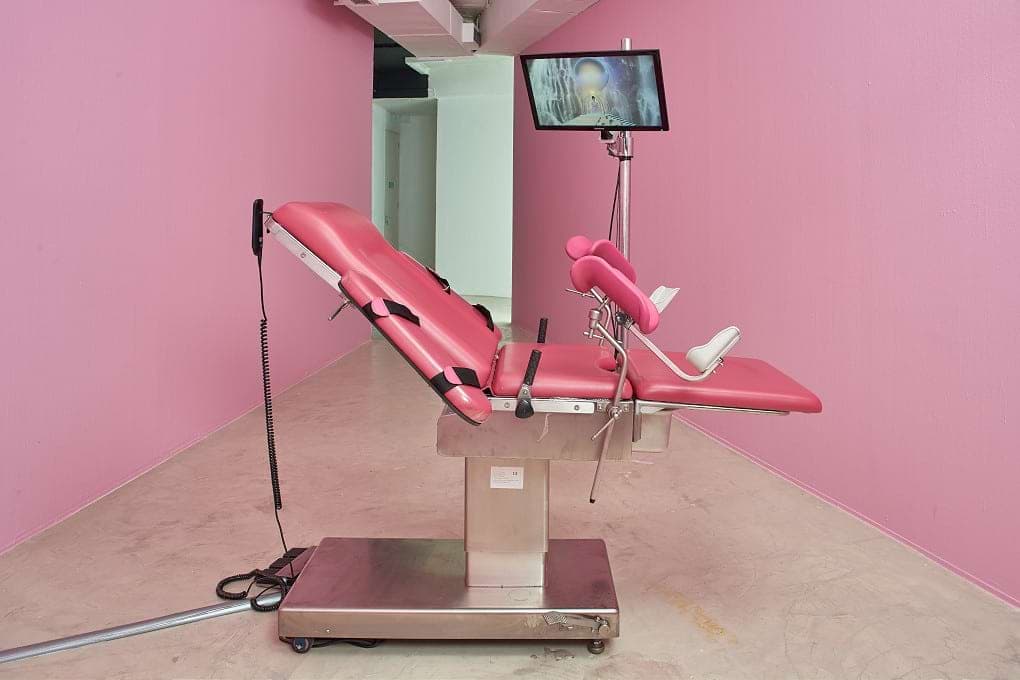
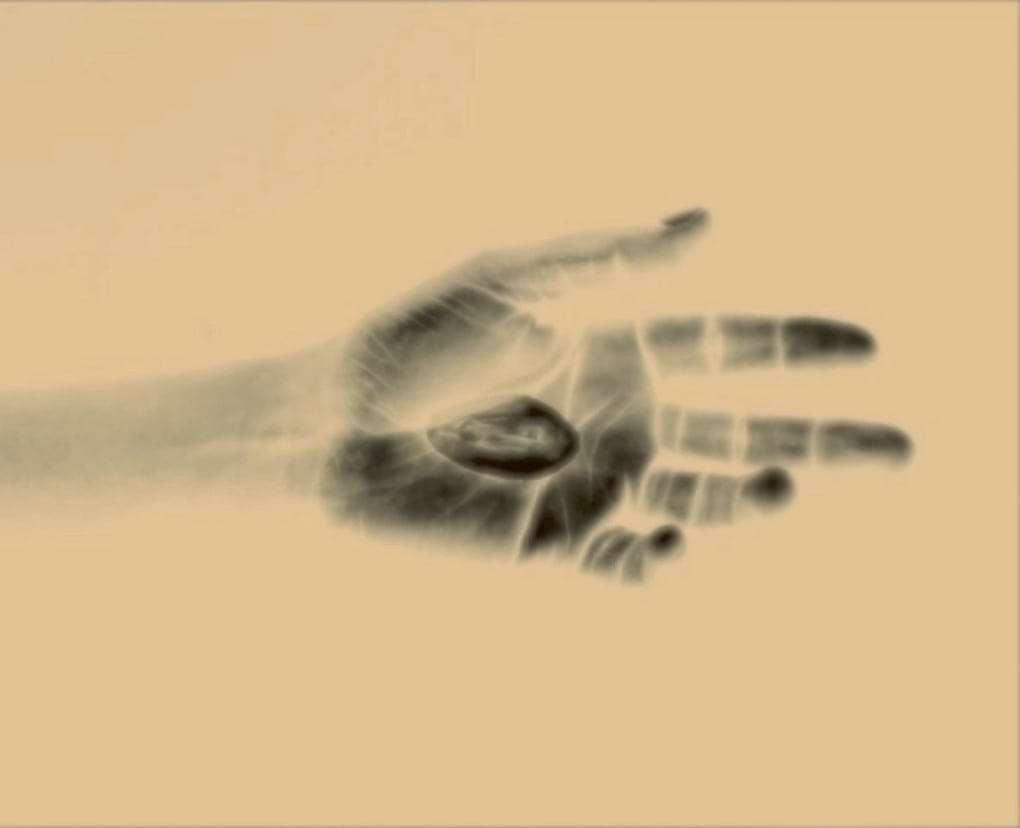
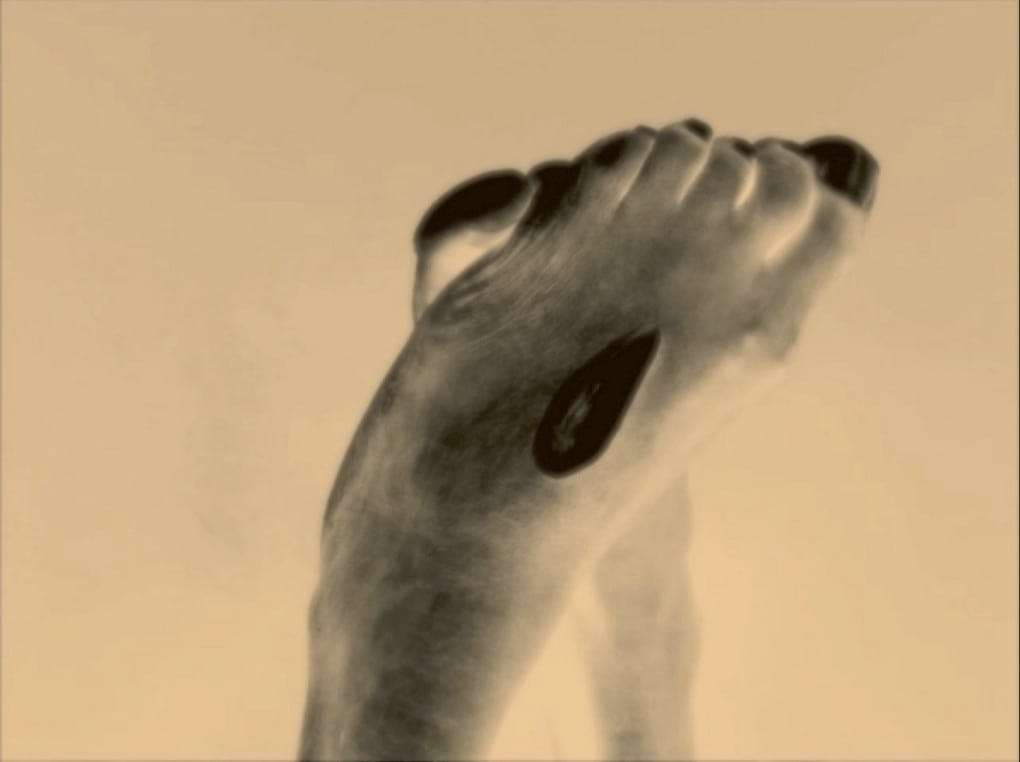
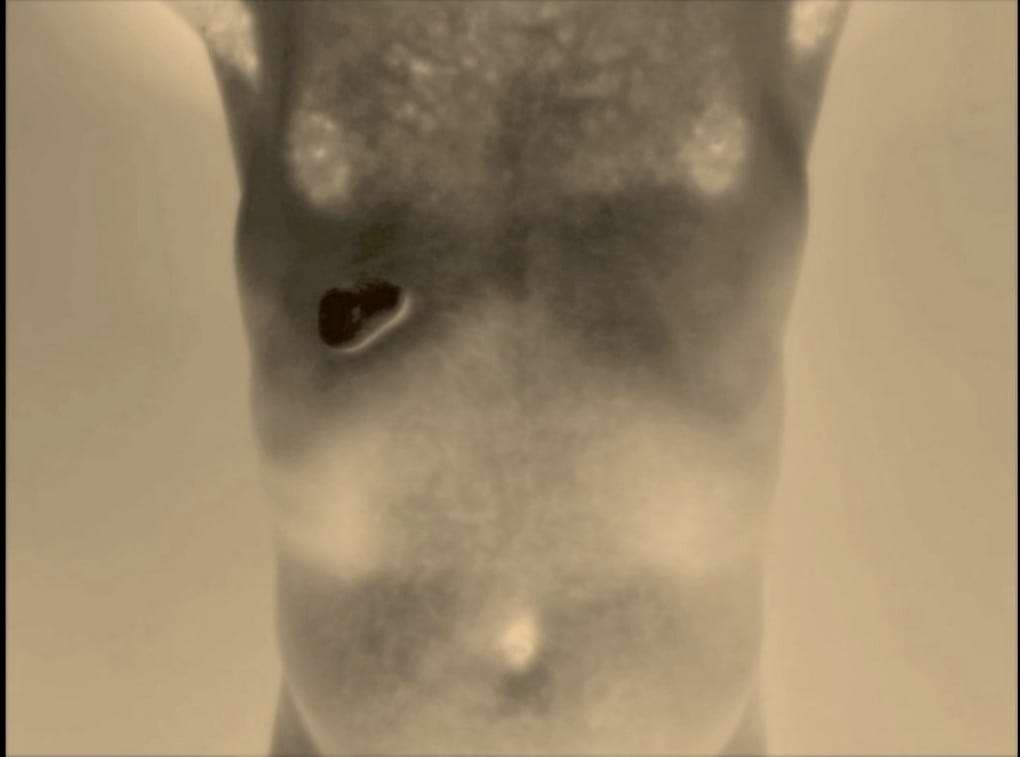
‘Sugar Walls Teardom’ explores the contributions of Black women’s wombs to the advancement of modern medical science and technology. On ‘Sugar Walls Teardom’, Rezaire writes, ‘During slavery, Black women’s bodies have been used and abused as commodities for laborious work in plantations, sexual slavery, reproductive exploitation and medical experiments. Anarcha, Betsey and Lucy, were among the captive guinea pigs of Dr. Marion Sims - the so called ‘father of modern gynecology’- who mutilated and tortured countless slave women in the name of science.
Unacknowledged, Black women’s wombs have been central to the biomedical economy as the story of Henrietta Lacks – who had her cervix cells unknowingly stolen, after which they became the first immortal cells leading to medical breakthrough - reminds us. Biological warfare against Black women is still pervasive in today’s pharmaceutical testing, forced sterilizations, contraceptive experiments, among other malicious health practices. ‘Sugar Walls Teardom’ commemorates ‘herstory’ and celebrates womb technology through an account of coercive anatomic politics.
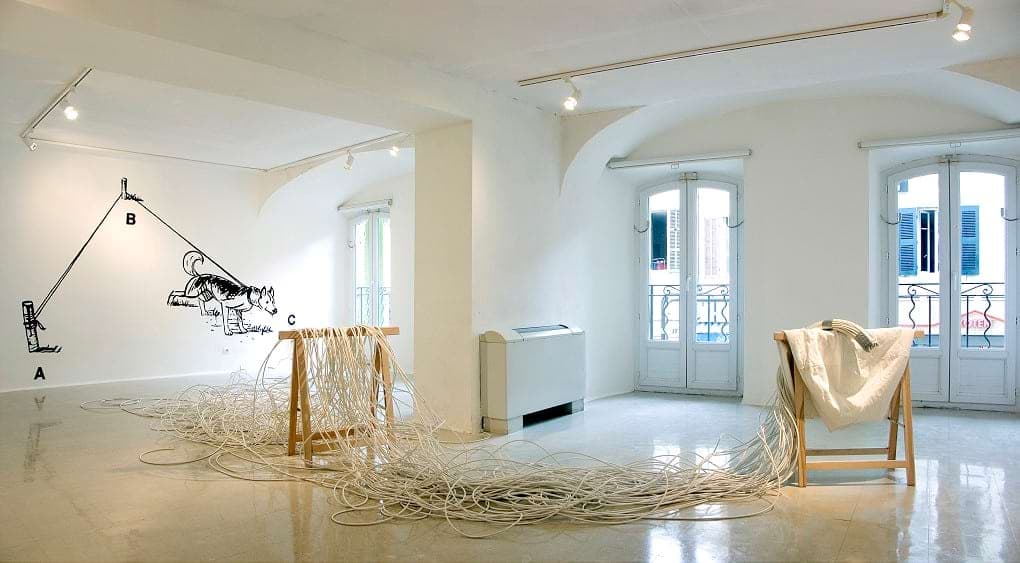
‘Deep Down Tidal’ explores trans-coceanic networks examining the political and technological effects of water as a conductive interface for communication. From fibre optic cables to sunken cities, drowned bodies, hidden histories of navigation and sacred signal transmissions, the ocean is home to a complex set of communication networks. As modern information and communication technologies become omnipresent in Western lifestyles, we urgently need to understand the cultural, political and environmental forces that shape them.
Looking at the infrastructure of submarine fibre optic cables that carries and transfers our digital data, the artist considers that the cables are layered onto colonial shipping routes. The bottom of the sea becomes the interface of painful yet celebrated advancements masking the violent deeds of modernity. ‘Deep Down Tidal’ navigates the ocean as a graveyard for Black knowledge and technologies. From Atlantis, to the ‘Middle passage’, or refuge seekers presently drowning in the Mediterranean, the ocean abyss carries pains, lost histories and memories while simultaneously providing the global infrastructure for our current telecommunications. Research suggests that water has the ability to memorise and copy information, disseminating it through its streams. ’Deep Down Tidal’ enquires the complex cosmological, spiritual, political and technological entangled narratives sprung from water as an interface to understand the legacies of colonialism.
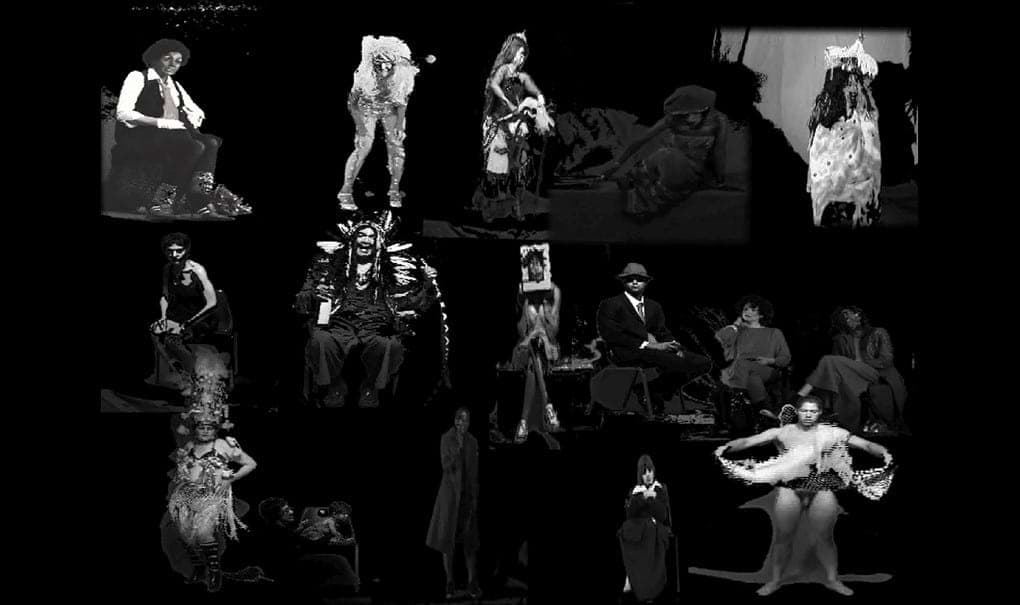
The performance of The Cunt Show takes the place of an artist talk meant to be part of a series of presentations accompanying the 2007 exhibition Global Feminisms at the Brooklyn Museum of Art. In lieu of a presentation of her work in this overly thematized context, Rose shows up as Mami, a character recurrent in her work since the series Ciao Bella (2001), and slips on two differently coloured socks as puppets (one pink and the other blue). The
sock-puppets are given life and voice by the artist, and they engage in a hilarious conversation that pitches a mostly American version of feminism against starker realities of global inequalities along racial divides.
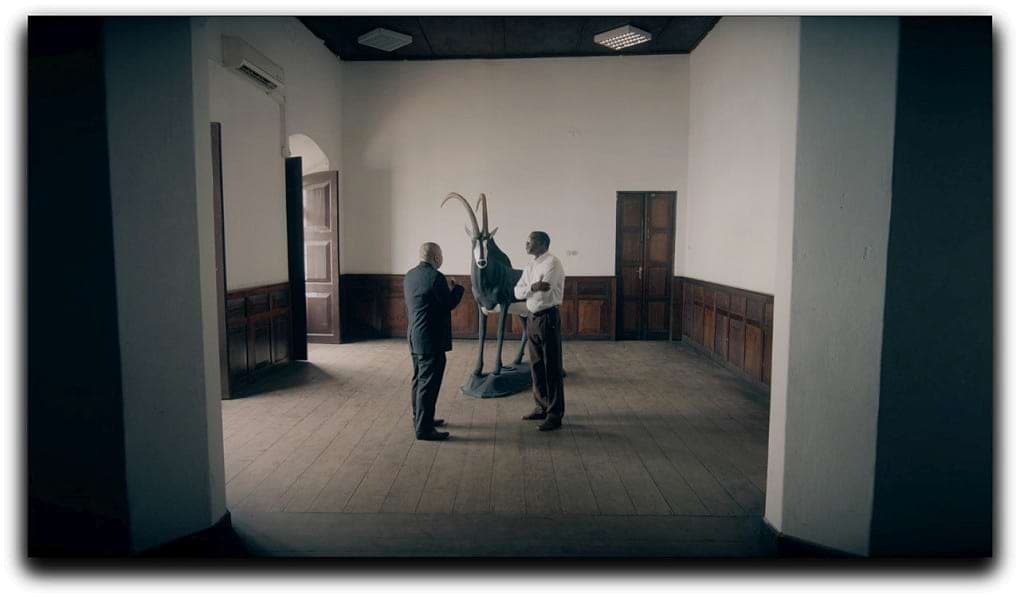
Havemos de Voltar is part of a trilogy that approaches contemporary Angola and its violent past, which the country has attempted to brush over, in the rush to join the ranks of “successful” global nations.
Angola's complex history is seen through the eyes of a fake taxidermy sable antelope. She takes us on a journey that links colonial ideas from the past with contemporary reality. This short contemplation on the conservation of memory is a mix of static painted, staged histories, and a physical parade through the streets.
The video takes its title from a poem by Agostinho Neto, the country’s first president and one of its most prolific poets. Written in exile in a Lisbon prison, Neto’s text appeals to Angolans to find true independence and freedom by returning to their African traditions. A time-hopping travelogue between colonized, militarized and representational environments, Havemos de Voltar explores the seductive relationships between art, history and nostalgia.
HD Colour, stereo film