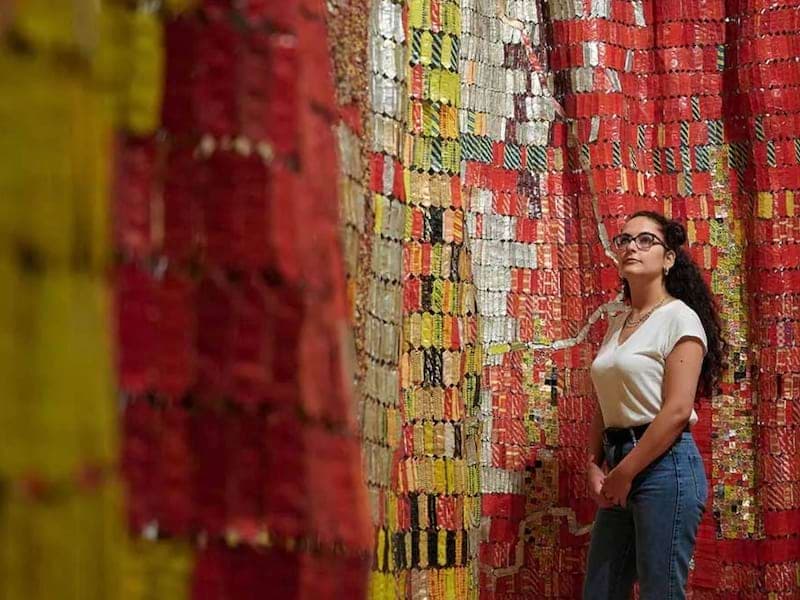
El Anatsui: Weaving memory from metal
Memory is humanity's oldest archive. Long before libraries acquired shelves and catalogues, memory had already been arranging experience into patterns of recall. Long before historians learned to periodise time, memory had already been sequencing events into intelligible narrative. And long before museums learned to preserve objects, memory had already been preserving meaning in ways that are fragile, mobile, and stubbornly persistent. Yet, memory is never stable. It is always under pressure of time, of forgetting,
of reinterpretation. And so societies, at decisive moments, return to acts of reconstruction, acts that gather scattered recollections and bind them, however imperfectly, into a form that can endure.
Every culture, therefore, is partly an exercise in remembering itself. This is especially true when a society turns its attention to its icons. For iconic figures do not simply belong to biography. They drift into collective imagination. They become symbols through which communities narrate themselves to themselves. At that point, writing about them becomes a delicate act, too little reverence reduces them; too much reverence issolves them into myth. The task of the reviewer, then, is not to inflate greatness but to interpret it. Not to canonise the subject but to understand the conditions of their emergence and the meanings of their endurance.
Related Press
See AllMet Gala 2026: 11 Art-Inspired Looks That Turned the Red Carpet into a Museum
Architectural Digest | Stephanie Sporn05 May 2026Miami collectors donate 36 works by African and diaspora artists to Tate
The Art Newspaper03 Nov 2025Nigerian Art Is Centre Stage in London This Autumn
Frieze08 Oct 2025African art finds a global stage in Johannesburg, featuring Goodman Gallery
Art Basel05 Sep 2025Big Colour: El Anatsui at Talbot Rice Gallery Edinburgh
Art Mag25 Jul 2024How El Anatsui Broke the Seal on Contemporary Art
The New Yorker11 Jan 2021